OpenClaw AI agent ignites China's agentic AI boom as government scrambles with security warnings


25 Sources
25 Sources
[1]
Hustlers are cashing in on China's OpenClaw AI craze
Feng, a 27-year-old software engineer based in Beijing, started tinkering with OpenClaw, a popular new open-source AI tool that can take over a device and autonomously complete tasks for a user, in January. He was immediately hooked, and before long he was helping other curious tech workers with less technical proficiency install the AI agent. Feng soon realized this could be a lucrative opportunity. By the end of January, he had set up a page on Xianyu, a secondhand shopping site, advertising "OpenClaw installation support." "No need to know coding or complex terms. Fully remote," reads the posting. "Anyone can quickly own an AI assistant, available within 30 minutes." At the same time, the broader Chinese public was beginning to catch on -- and the tool, which had begun as a niche interest among tech workers, started to evolve into a popular sensation. Feng quickly became inundated with requests, and he started chatting with customers and managing orders late into the night. At the end of February, he quit his job. Now his side gig has now grown into a full-fledged professional operation with over 100 employees. So far, the store has handled 7,000 orders, each worth about 248 RMB or approximately $34. "Opportunities are always fleeting," says Feng. "As programmers, we are the first to feel the winds shift." Feng is among a small cohort of savvy early adopters turning China's OpenClaw craze into cash. As users with little technical background want in, a cottage industry of people offering installation services and preconfigured hardware has sprung up to meet them. The sudden rise of these tinkerers and impromptu consultants shows just how eager the general public in China is to adopt cutting-edge AI -- even when there are huge security risks. Xie Manrui, a 36-year-old software engineer in Shenzhen, says he has heard this question nonstop over the past month. "Lobster" is the nickname Chinese users have given to OpenClaw -- a reference to its logo.
[2]
China's OpenClaw Boom Is a Gold Rush for AI Companies
George Zhang thought OpenClaw could make him rich, even though he didn't really understand how the viral AI agent software worked. But he saw a video of a Chinese social media influencer demonstrating how it could be deployed to manage stock portfolios and make investment decisions autonomously. Zhang, who works in cross-border ecommerce in the Chinese city of Xiamen, was intrigued enough that he decided to try installing OpenClaw in late February. Zhang is one of the many people in China who got swept up in the craze over OpenClaw recently. Workshops teaching people how to use the AI agent have popped up in cities across the country, drawing crowds of hundreds. Tech companies are racing to integrate OpenClaw into their platforms, while local governments have announced subsidies for entrepreneurs building products with it. Late last week, images of grandpas and grandmas lining up to install the software went viral across the internet. After renting a cloud server from Tencent and buying a subscription to the Chinese large language model Kimi, Zhang could start chatting with his OpenClaw agent, or his "lobster," as many Chinese people call theirs. At first, Zhang tells me, he was impressed by the AI agent as he watched it quickly generate a long market analysis based on the latest breaking news. But a few days in, his lobster started slacking off, and it would generate only a basic outline of market trends instead of a detailed report. He asked OpenClaw to generate something like what it had done on the first day, to which the agent perpetually responded that it was "working on it" before never returning any results. Zhang's conclusion was that OpenClaw is not designed for people like him who don't have any coding skills. "It would tell me I needed to configure the API port. But that's a technical task, not something I can do unless I had a tutorial walking me through it step-by-step," he says. In the end, he gave up on letting his lobster trade stocks, settling instead on asking it to aggregate AI industry news, which he used to build a social media content farm on WeChat. This week, I checked in with half a dozen users of OpenClaw in China about their experiences with the agent, and a clear picture of division emerged between the adopters who are technologically savvy and those who are not. People who are proficient in AI see OpenClaw as a game changer in productivity, but those with no technical background feel they were promised a miraculously powerful AI product that ultimately didn't deliver. But by the time the bubble burst, they had already started paying for cloud servers and LLM tokens. The real driver of the OpenClaw mania in China isn't everyday users, but rather the Chinese companies that stand to benefit financially from its widespread adoption. Major tech firms like Tencent, Alibaba, ByteDance, Minimax, Moonshot, and Z.ai all saw the AI productivity FOMO as a rare chance to get normal people to start paying for AI services, and they are reaping the biggest rewards from it. "A chatbot uses only a few hundred tokens per conversation; a single active OpenClaw instance can consume tens or even hundreds of times more tokens per day," says Poe Zhao, a tech analyst and founder of the newsletter Hello China Tech. Every new user of OpenClaw is someone who's paying 24/7 for LLM API calls. "That's why Tencent engineers were setting up tables outside headquarters to help people install the software for free," he says. Song Zhuoqun, a college student in China, says she started running into problems with OpenClaw as soon as she tried installing it. Song is a social media intern at an AI startup but has no programming experience, so figuring out how to get OpenClaw running turned out to be difficult. She asked Doubao, ByteDance's popular AI chatbot, to generate a step-by-step tutorial for her, but it wasn't much help. "There were pages full of code, and I couldn't understand any of it. I just kept asking the AI to generate a response for me, then I'd paste it over, run it, and it would run into an error, so I'd try a new response," she says. The installation ended up being the most frustrating part of trying out OpenClaw for Song, and she didn't feel like she learned anything from it.
[3]
China bans OpenClaw from government computers and issues security guidelines amid adoption frenzy -- nation scrambles to rein in popular AI agent
China's central government has warned state enterprises and agencies not to install OpenClaw on office computers this week, according to Bloomberg, as multiple government bodies moved to rein in the Austrian-developed AI agent following a surge in adoption across the country. The Ministry of Industry and Information Technology's National Vulnerability Database (NVDB) has also published security guidelines, and the People's Bank of China has added a separate warning on AI in the financial sector, the South China Morning Post reported. OpenClaw, developed by Austrian programmer Peter Steinberger, is an autonomous AI agent that automates tasks including email management, calendar scheduling, and travel check-ins. Its adoption in China has been rapid enough to acquire a nickname -- "raising lobsters," a reference to the app's mascot -- and Tencent, Alibaba, Baidu, and MiniMax have all launched compatible tools. But there are widespread concerns around the fact that OpenClaw requires broad access to user files and can communicate externally, potentially exposing host machines to cyberattack or data leaks if OpenClaw isn't used cautiously. The NVDB advisory, developed alongside AI agent providers and cybersecurity firms, tells users to run only the official latest version, minimize internet exposure, grant minimum permissions, and guard against browser hijacking. Prohibited practices include using third-party mirror versions, enabling administrator accounts during deployment, installing skill packs that require passwords, and disabling log auditing. The NVDB specifically flagged connecting instant messaging apps to OpenClaw as a risk that could grant excessive read, write, and deletion permissions over files. Meanwhile, the People's Bank of China called at its annual technology conference in Beijing on Wednesday for AI in the financial sector to be managed in a "proactive yet prudent, safe and orderly" manner. The China Academy of Information and Communications Technology said the day prior that it plans to begin trialing AI agent trustworthiness standards on the likes of OpenClaw starting late March. Curiously, these restrictions sit alongside active policy support for the same technology, with Shenzhen's Longgang district currently seeking public feedback on a draft policy offering subsidies of up to 2 million yuan ($289,000) for OpenClaw app developments. "Chinese regulators typically respond with extraordinary speed to threats from emerging technologies, but the rate of adoption of OpenClaw and other agentic tools is still outpacing them," said Kendra Schaefer, partner and director of tech policy research at Trivium China, speaking to Bloomberg. Follow Tom's Hardware on Google News, or add us as a preferred source, to get our latest news, analysis, & reviews in your feeds.
[4]
Alibaba Debuts OpenClaw App to Feed China's Agentic AI Addiction
Alibaba Group Holding Ltd. launched a dedicated mobile app claiming to help users install and deploy OpenClaw within minutes, stepping up a battle between China's tech leaders to profit off the viral agentic AI assistant. "JVS Claw" helps iOS and Android smartphone users without coding knowledge to instruct AI agents to perform simple real-world tasks, Alibaba said in a statement. Free for 14 days, it emerged after Baidu Inc. released its own Android app this week for OpenClaw, which helps users shop online and book travel, among other things. From Tencent Holdings Ltd. to Minimax Group Inc., China's biggest AI players are competing to offer OpenClaw services -- feeding a nationwide frenzy dubbed "raising lobsters." They're hoping to lower barriers to entry and tap a phenomenon named after OpenClaw's animal mascot, in which students and retirees across the nation are experimenting with agentic AI. The craze has fueled a market rally over the past week as investors placed bets on the emergence of services that can propel AI into the mainstream. Wide adoption should drive revenue from the consumption of tokens -- needed to drive AI usage -- as well as further tech innovation. Read more about OpenClaw China Becomes Agentic AI's Biggest Lab With OpenClaw Stampede China's OpenClaw Frenzy Tests Xi's Approach to Regulate AI China Moves to Curb OpenClaw AI Use at Banks, State Agencies OpenClaw - AI Marvel or Cybersecurity Nightmare?: Explainer The reaction from authorities has been mixed. At least four local municipalities have introduced supporting policiesBloomberg Terminal for deploying and developing OpenClaw, offering millions of yuan in subsidies. But Beijing has also moved to restrict state-run enterprises and government agencies from freely running OpenClaw AI apps on office computers, acting swiftly to defuse potential security risks. For agentic AI like OpenClaw to be really useful, it needs wide access to users' data and their various apps. That makes them juicy cyberattack avenues or targets.
[5]

China's CERT warns OpenClaw can inflict nasty wounds
Like deleting data, exposing keys, and loading malicious content, perhaps leading to government ban China's National Computer Network Emergency Response Technical Team has warned locals that the OpenClaw agentic AI tool poses significant security risks. In a Tuesday post to its WeChat account, the CERT warned that OpenClaw has "extremely weak default security configuration" and must therefore be handled with extreme care. The CERT is worried that attackers can target the tool by embedding malicious instructions in web pages, and that poisoned plugins for the agentic tool can put users at risk. China's cyber-advisors also point out that OpenClaw has already disclosed several severe vulnerabilities that can result in credential theft and therefore enable serious attacks. User error is another concern, as the CERT thinks OpenClaw users may inadvertently delete important data. The organization recommends users isolate OpenClaw in a container, keep its management port isolated from the public internet, and implement strict authentication and access control procedures to keep attackers away from the agentic tool. The CERT also suggests that users disable automatic updates and restrict access to OpenClaw plugins. The CERT's advice is a little less alarmist than that offered by analyst firm Gartner, which in early February described OpenClaw as an "unacceptable cybersecurity risk" for business user, while also recommending users only run it in isolated nonproduction virtual machines with throwaway credentials. The warning opens with the observation that China has seen a "surge in downloads and usage" for OpenClaw and its derivatives, thanks in part to "major domestic cloud platforms offering one-click deployment services." One example of such offerings comes from web giant Tencent, which launched an OpenClaw-based tool called "Work Buddy" on Monday, and claimed users can set it up and integrate it with multiple chat platforms in minutes. A day after China's CERT posted its advice, local authorities reportedly banned the use of OpenClaw at some government agencies and state-run banks. ®
[6]

OpenClaw AI Agent Flaws Could Enable Prompt Injection and Data Exfiltration
China's National Computer Network Emergency Response Technical Team (CNCERT) has issued a warning about the security stemming from the use of OpenClaw (formerly Clawdbot and Moltbot), an open-source and self-hosted autonomous artificial intelligence (AI) agent. In a post shared on WeChat, CNCERT noted that the platform's "inherently weak default security configurations," coupled with its privileged access to the system to facilitate autonomous task execution capabilities, could be explored by bad actors to seize control of the endpoint. This includes risks arising from prompt injections, where malicious instructions embedded within a web page can cause the agent to leak sensitive information if it's tricked into accessing and consuming the content. The attack is also referred to as indirect prompt injection (IDPI) or cross-domain prompt injection (XPIA), as adversaries, instead of interacting directly with a large language model (LLM), weaponize benign AI features like web page summarization or content analysis to run manipulated instructions. This can range from evading AI-based ad review systems and influencing hiring decisions to search engine optimization (SEO) poisoning and generating biased responses by suppressing negative reviews. OpenAI, in a blog post published earlier this week, said prompt injection-style attacks are evolving beyond simply placing instructions in external content to include elements of social engineering. "AI agents are increasingly able to browse the web, retrieve information, and take actions on a user's behalf," it said. "Those capabilities are useful, but they also create new ways for attackers to try to manipulate the system." The prompt injection risks in OpenClaw are not hypothetical. Last month, researchers at PromptArmor found that the link preview feature in messaging apps like Telegram or Discord can be turned into a data exfiltration pathway when communicating with OpenClaw by means of an indirect prompt injection. The idea, at a high level, is to trick the AI agent into generating an attacker-controlled URL that, when rendered in the messaging app as a link preview, automatically causes it to transmit confidential data to that domain without having to click on the link. "This means that in agentic systems with link previews, data exfiltration can occur immediately upon the AI agent responding to the user, without the user needing to click the malicious link," the AI security company said. "In this attack, the agent is manipulated to construct a URL that uses an attacker's domain, with dynamically generated query parameters appended that contain sensitive data the model knows about the user." Besides rogue prompts, CNCERT has also highlighted three other concerns - "For critical sectors - such as finance and energy - such breaches could lead to the leakage of core business data, trade secrets, and code repositories, or even result in the complete paralysis of entire business systems, causing incalculable losses," CNCERT added. To counter these risks, users and organizations are advised to strengthen network controls, prevent exposure of OpenClaw's default management port to the internet, isolate the service in a container, avoid storing credentials in plaintext, download skills only from trusted channels, disable automatic updates for skills, and keep the agent up-to-date. The development comes as Chinese authorities have moved to restrict state-run enterprises and government agencies from running OpenClaw AI apps on office computers in a bid to contain security risks, Bloomberg reported. The ban is also said to extend to the families of military personnel. The viral popularity of OpenClaw has also led threat actors to capitalize on the phenomenon to distribute malicious GitHub repositories posing as OpenClaw installers to deploy information stealers like Atomic and Vidar Stealer, and a Golang-based proxy malware known as GhostSocks using ClickFix-style instructions. "The campaign did not target a particular industry, but was broadly targeting users attempting to install OpenClaw with the malicious repositories containing download instructions for both Windows and macOS environments," Huntress said. "What made this successful was that the malware was hosted on GitHub, and the malicious repository became the top-rated suggestion in Bing's AI search results for OpenClaw Windows."
[7]

China warns state-owned firms and government agencies against OpenClaw AI, sources say
March 11 (Reuters) - Chinese government agencies and state-owned enterprises have warned staff in recent days against installing artificial intelligence agent OpenClaw on office devices for security reasons, according to two sources familiar with the matter. OpenClaw is an open-source software that can autonomously execute a wide range of tasks with minimal human guidance, going beyond the traditional research and query-answering capabilities of AI chatbots. Over the past month, it has been enthusiastically adopted and promoted by Chinese tech developers, leading AI companies, as well as several local governments based in China's tech and manufacturing hubs. At the same time, central government regulators and state media have issued repeated warnings about OpenClaw's potential to inadvertently leak, delete, or misuse user data once downloaded and given security permissions to operate on a device. The curbs suggest Beijing, while hoping to promote an "AI plus" action plan that aims to create innovation-driven growth by embedding the technology throughout the economy, is also wary of cyber and data security risks, amid intensifying geopolitical tensions. One of the sources said staff at state-owned enterprises were told by regulators not to deploy OpenClaw, including in some cases on personal devices. The second source, from a Chinese government agency, said the software had not been banned outright at their workplace but staff had been warned about safety risks and advised not to install it. Both declined to be named as they were not authorised to speak to the media. It is unclear how widespread the ban is and whether it will affect local government policies, which in some cases offer million-dollar subsidies to companies that innovate using OpenClaw. These policies have all been framed as local implementation of Beijing's national "AI plus" action plan. A research centre under Chinese tech hub Shenzhen's municipal health commission last week ran an OpenClaw training session attended by thousands, as part of its "AI plus" push in healthcare. It is also unclear whether the latest restrictions spell the end of all Chinese government deployment of OpenClaw. Shenzhen district Futian used OpenClaw to create an AI agent tailored to civil servant work, state-owned Southern Daily reported on Sunday. China's state asset regulator and industry ministry did not immediately respond to a request for comment. Bloomberg News first reported the restriction. OpenClaw was developed by Peter Steinberger, an Austrian, and uploaded to GitHub last November. Steinberger was hired by OpenAI last month. Reporting by Beijing newsroom and Preetika Parashuraman in Bengaluru; Editing by Harikrishnan Nair and Kate Mayberry Our Standards: The Thomson Reuters Trust Principles., opens new tab
[8]

Lobster buffet: China's tech firms feast on OpenClaw as companies race to deploy AI agents
A man wears a lobster hat that represent the OpenClaw logo, an open-source AI assistant at the Baidu headquarter in Beijing on March 11, 2026. China is rapidly embracing the popular artificial intelligence tool OpenClaw, with major tech companies and even local governments rushing to expand access to the lobster-themed, open-source AI agent in recent weeks. AI agents are digital assistants that can handle tasks such as sending emails, scheduling meetings and booking restaurant reservations with minimal human guidance. Unlike chatbots that simply respond to prompts, AI agents can take proactive actions, which often require broader access to data and systems and raise privacy and security concerns. Chinese tech giant Tencent said Tuesday it had launched a full suite of easy-to-use AI products built on OpenClaw, which it dubbed "lobster special forces" and compatible with its popular superapp WeChat. The same day, startup Zhipu AI launched its own local version of OpenClaw, offering an AI agent pre-installed with over 50 popular skills through "one-click installation." Similar moves by other Chinese companies have helped drive consumer interest, with usage of OpenClaw in China surpassing the U.S., according to American cybersecurity firm SecurityScorecard. "In terms of adopting the new technologies, I think China definitely has a really large community that always wants to try what's there, what's new, and don't want to be left behind," said Jaylen He, CEO of Violoop, a Shenzhen-based startup building a device that claims to have similar features to OpenClaw but with lower security risks. "I have friends who are not even in the tech industry ... they are doing this, they are also running it," he said.
[9]
China Moves to Curb OpenClaw AI Use at Banks, State Agencies
The warning underscores Beijing's growing concern about OpenClaw, an agentic AI platform that requires broad access to private data and can communicate externally, potentially exposing computers to external attack. Chinese authorities moved to restrict state-run enterprises and government agencies from running OpenClaw AI apps on office computers, acting swiftly to defuse potential security risks after companies and consumers across China began experimenting with the agentic AI phenomenon. Government agencies and state-owned enterprises, including the largest banks, have received notices in recent days warning them against installing OpenClaw software on office devices for security reasons, according to people familiar with the matter. Several of them were instructed to notify superiors if they had already installed related apps for security checks and possible removal, some of the people said, asking to remain anonymous to discuss private memos. Certain employees, including those at state-run banks and some government agencies, were banned from installing OpenClaw on office computers and also personal phones using the company's network, some of the people said. One person said the ban extended to the families of military personnel. Other notices stopped short of calling for an outright ban on OpenClaw software, saying only that prior approval is needed before use, the people said. The Ministry of Industry and Information Technology as well as the State-owned Assets Supervision and Administration Commission didn't immediately reply to written questions. Chinese AI and tech stocks slid after the news. Tencent Holdings Ltd. gave up most of its gains, while recent debutantes MiniMax Group Inc. and Knowledge Atlas Technology JSC Ltd., known as Zhipu, slid more than 6% in the afternoon. The warning underscores Beijing's growing concern about OpenClaw, an agentic AI platform that requires unusually broad access to private data and can communicate externally, potentially exposing computers to external attack. President Xi Jinping has long seen data as a core pillar of his flagship "holistic approach to national security": Beyond a highly censored internet regime known as the Great Firewall, Beijing has raised the alarm about foreign actors targeting datasets including geospatial and genetic information. Despite the potential security risks, companies from Tencent to JD.com Inc. have been rolling out OpenClaw apps to try and capitalize on the groundswell of enthusiasm, while several local government agencies have declared millions of yuan in subsidies for companies that develop atop the platform. Get the Tech Newsletter bundle. Get the Tech Newsletter bundle. Get the Tech Newsletter bundle. Bloomberg's subscriber-only tech newsletters, and full access to all the articles they feature. Bloomberg's subscriber-only tech newsletters, and full access to all the articles they feature. Bloomberg's subscriber-only tech newsletters, and full access to all the articles they feature. Bloomberg may send me offers and promotions. Plus Signed UpPlus Sign UpPlus Sign Up By submitting my information, I agree to the Privacy Policy and Terms of Service. OpenClaw, previously called Clawdbot and Moltbot, has garnered a cult following since launching in November for its ability to operate autonomously, clearing users' inboxes, making restaurant reservations and checking in for flights, among other tasks. Developed by Austrian developer Peter Steinberger, users can connect the tool to messaging apps such as WhatsApp and Slack, and direct the agent through those platforms. But security concerns are growing. One user reported the agent "went rogue" and spammed hundreds of messages after gaining access to iMessage. Cybersecurity experts warn the tool is risky because it has access to private data, can communicate externally and is exposed to untrusted content. One researcher called that combination a "lethal trifecta." In Beijing's case, there is the additional concern about a loss of control over a potentially ground-breaking technology. The ruling Communist Party previously waged a campaign to rein in the power and influence of internet firms including Alibaba Group Holding Ltd., which amassed so much data and become so deeply ingrained in daily life that they were regarded as posing a threat to the government. What Bloomberg Intelligence Says Rising regulator scrutiny of OpenClaw's agentic AI software in China, reported by Bloomberg News, will likely restrict the use of unverified AI agents among state-owned enterprises and in the government sector, though this is unlikely to stall wider adoption in the country. China's AI firms -- including Tencent, Alibaba, Minimax, Baidu and Zhipu -- all recently launched OpenClaw-based tools but are unlikely to benefit financially from rising adoption of AI agents, which are currently a loss-leading product. - Robert Lea, analyst Click hereBloomberg Terminal for the research. Tech giants like Tencent and Alibaba, along with AI upstarts ranging from Moonshot to MiniMax, have rolled out their own tweaks of the software touting simple, one-click adoption. A slew of government agencies, in cities from Shenzhen to Wuxi, have issued notices offering multimillion-yuan subsidies to startups leveraging OpenClaw to make advances. The frenzy has helped drive up shares of AI model developer MiniMax nearly 640% since its listing just two months ago. It's now worth about $49 billion, surpassing Baidu Inc. -- once viewed as the frontrunner in Chinese AI development -- in market value. The company launched MaxClaw, an agent built on OpenClaw, in late February. Government warnings about OpenClaw have focused mostly on the technology. The People's Daily, the Communist Party's official mouthpiece, posted a lengthy interview Monday with an IT official who spoke extensively about the dangers that AI agents pose in sectors from finance to energy. The expertBloomberg Terminal, who worked for an institution affiliated with the country's Technology Ministry, urged caution in their use.
[10]
Tencent, Zhipu Shares Jump on Launches of AI Agents Tapping Into OpenClaw
China's enthusiasm for OpenClaw is igniting a stock rally in local technology firms moving swiftly to embrace the open-source artificial intelligence program. Tencent Holdings Ltd. shares rose as much as 6.2% Tuesday in Hong Kong after the internet giant launched WorkBuddy, an AI agent for workplace tasks that's fully compatible with OpenClaw. Knowledge Atlas Technology JSC Ltd., known as Zhipu, surged as much as 16% after launching AutoClaw, a local version of the viral software. MiniMax Group Inc., which launched its own agent earlier, jumped 15%. Launched in November, OpenClaw is an agent that leverages large language models including Anthropic PBC's Claude to perform daily functions. The tool has garnered a cultlike status in China, and provided a fresh tailwind for the local AI boom kicked off by the launch of DeepSeek more than a year ago. "OpenClaw has created a social media buzz, with companies like Tencent encouraging everyone to install it," said Shen Meng, director of Beijing-based investment bank Chanson & Co. "It's a very good opportunity for the local AI model developers to attract users to their existing ecosystems." The AI agent has seen an exponential global popularity boom this year, surpassingBloomberg Terminal Linux on the GitHub all-time star leaderboard in just a few months. Users in China have been particularly eager to get their hands on it. Tencent offered free installation of OpenClaw on its cloud platform last week, drawing a long queue of people outside of its headquarters, according to local media. Zhipu countered in a WeChat promotion for its new AutoClaw on Tuesday, offering prospective customers a free trial without having to wait in line. The frenzy has helped drive up shares of AI model developer MiniMax nearly 600% stock since its listing just two months ago. It's now worth about $44 billion, poised to surpass Baidu Inc.'s market value. The company launched MaxClaw, an agent built on OpenClaw, in late February. Chinese software makers including UCloud Technology Co. and QingCloud Technologies Corp. extended gains after surging around 20% on Monday as local government agencies issued policies to encourage use of the OpenClaw. The involvement of Tencent is seen as key, with Citigroup Inc. hailing the launch of WorkBuddy as a "potential inflection point" for AI agents in China. It's also proving a lift for the stock, which had been battered recently by concerns over high spending and potential business disruption from the spread of AI.
[11]

Chinese regulators sound alarm over OpenClaw
OpenClaw's popularity is growing rapidly despite repeated warnings * OpenClaw's deep system access creates major security concerns for enterprise environments * Chinese authorities warn that autonomous AI agents can unexpectedly expose corporate systems * Prompt injection attacks threaten AI assistants operating directly inside workplace networks Chinese cybersecurity authorities have issued fresh warnings about the workplace use of OpenClaw. The authorities cite growing concerns that its rapid adoption may expose organizations to data and operational risks. The alerts come as businesses and local governments across the country continue experimenting with the autonomous software agent. OpenClaw is as risky as it is convenient The notice was issued by the National Computer Network Emergency Response Technical Team/Coordination Center of China, which said improper installation and configuration of the tool could create security vulnerabilities. OpenClaw's ability to operate autonomously requires high-level system permissions, a design feature that increases the potential impact of misuse or exploitation. Officials warned such careless deployment inside office environments could allow attackers to gain access to sensitive systems. This is even more risky when organizations fail to configure endpoint protection tools correctly or overlook existing firewall safeguards. The agency advised early adopters to review system permissions carefully, disable unnecessary public access, and apply stricter administrative controls. OpenClaw, formerly known as Clawdbot and Moltbot, is an AI assistant that executes tasks on behalf of users. It is deeply integrated with the operating system and can manage digital tasks such as drafting reports, organizing emails, and preparing presentations. This creates risk because malicious instructions may pass unnoticed during routine operations, and Microsoft has warned about running it on enterprise workstations. The tool may be vulnerable to so-called prompt injection attacks, in which hidden instructions embedded in web content manipulate the agent into performing unintended actions. Authorities said such attacks could trick the software into revealing system keys or executing commands that compromise internal networks. Due to its popularity, many fake variants of OpenClaw on GitHub are designed to deliver malware to users. Another concern raised in official notices relates to operational errors caused by misinterpreted commands. Security agencies warned that the AI agent could mistakenly delete important emails or files if it misunderstands instructions. Earlier guidance from the National Vulnerability Database of China similarly cautioned that improper handling of the software could create high-level security risks. The organization recommended stronger monitoring systems and reliable malware removal procedures when deploying the AI tool in business networks. Despite repeated warnings, enthusiasm surrounding OpenClaw remains strong among major technology firms and regional authorities. Cloud platforms such as Alibaba Cloud and large internet companies, including Tencent and ByteDance, have expanded access to the technology. Tencent recently introduced new services integrating OpenClaw capabilities into widely used communication platforms, including WeChat and QQ. At the same time, several local governments have introduced subsidies or public initiatives encouraging businesses and residents to experiment with the software. Authorities now appear to balance these initiatives with stricter warnings about enterprise deployment. Via SCMP Follow TechRadar on Google News and add us as a preferred source to get our expert news, reviews, and opinion in your feeds. Make sure to click the Follow button! And of course you can also follow TechRadar on TikTok for news, reviews, unboxings in video form, and get regular updates from us on WhatsApp too.
[12]

China Alarmed by Spread of OpenClaw Agents
Can't-miss innovations from the bleeding edge of science and tech Open source AI agent OpenClaw, formerly known as Clawdbot and Moltbot, has taken over the internet by storm. The tool allows practically anybody to create autonomous AI agents that can complete complex tasks on your computer, like browsing the web and running scripts. It's a powerful new take on AI that comes with inherent dangers. After all, you're letting an AI model loose on your machine, going far outside the confines of the browser-based chatbots we've grown accustomed to. What could possibly go wrong? OpenClaw has caught on like wildfire, including in China, as Bloomberg reports, with users on social media bragging about "raising lobsters," a nod to OpenClaw's red crustacean mascot. Even tech giants like Tencent and Alibaba are adopting the tech for their own software, and government agencies are signing contracts with startups that are also leveraging OpenClaw tech. Meetups of the OpenClaw obsessed in the country are "beginning to border on the cult-like," Bloomberg's Zheping Huang wrote. "A gathering in Shenzhen this past weekend featured a room of attendees wearing tall cartoon hats resembling cooked red lobsters." But given the considerable cybersecurity implications, it's no wonder Chinese authorities are starting to crack down on the phenomenon. As Reuters reports, government agencies and state-owned enterprises are warning their staff not to install OpenClaw agents on their devices, citing security reasons, including leaks, the mistaken deletion of data, and the misuse of sensitive information. One inside source told Reuters that OpenClaw wasn't banned outright at the government agency they worked at, but that staff had been discouraged from installing it. It's an intriguing development, especially considering the sheer amount of enthusiasm for OpenClaw and AI overall inside the country, with Beijing promoting a wide-reaching AI-positive action plan to grow its economy. But given some of the horror stories we've come across, the warnings are certainly warranted, especially when it comes to the handling of sensitive government data. For instance, an executive at Meta -- a company that also banned employees from using OpenClaw on their work machines -- watched helplessly as a bot started wiping her "important" emails. "Nothing humbles you like telling your OpenClaw 'confirm before action' and watching it speedrun deleting your inbox," Summer Yue, the director of safety and alignment at Meta's Superintelligence lab, tweeted last month.
[13]

'Raise a lobster': How OpenClaw is the latest craze transforming China's AI sector | Fortune
On a Friday afternoon in March, nearly 1,000 people lined up outside Tencent's headquarters in Shenzhen to get a piece of software installed on their laptops. Engineers from the company's cloud unit helped students, retirees, and office workers deploy OpenClaw, an open-source AI agent built by Austrian programmer Peter Steinberger. Over the past month, major Chinese cloud providers debuted their own version of OpenClaw, local governments dangled grants to startups that build OpenClaw apps, and a cottage industry sprung up helping users install the open-source framework. China's users are now trying a "raise a lobster", a phrase referring OpenClaw's red lobster logo. It's proved to be a shot in the arm for China's AI startups, which could now see a surge of usage. In early February, Chinese AI models for the first time surpassed U.S. models in share of tokens -- units of data processed by AI -- among the top nine models on AI marketplace OpenRouter, according to HSBC. The OpenClaw craze also aligns with China's embrace of open-source AI, a strategy that has helped build labs' reputation among the developer community and slowly helped models work their way into global business. Steinberger released OpenClaw on GitHub last November, where it quickly caught on among AI developers and hobbyists. OpenClaw is what is called "an agentic harness." It isn't an AI model itself -- a user has to pick a model from an AI company to serve as the agent's brain. But OpenClaw consists of a set of instructions for how an AI agent should deconstruct a goal into a series of subtasks, protocols that allow a user to connect various software tools for the AI agent to use, and also a memory function that means the AI agent won't forget what it has done so far. An OpenClaw agent runs locally on a user's machine and connects to tools like messaging apps, email, calendars and other systems, making it easy for users to ask an AI agent to do useful things for them, like regularly check their email and automatically reply to certain messages, or make reservations on their behalf. Steinberger, who has a long history as an entrepreneur, has since been hired by OpenAI. Over the past several weeks, China's biggest cloud providers -- Alibaba Cloud, Tencent Cloud, ByteDance's Volcano Engine, JD.com, and Baidu -- have all embraced OpenClaw, or some spinoff of it. A flood of startups and big tech companies also released their own "Claw" frameworks: Tencent's WorkBuddy, Minimax's MaxClaw, MoonShot's Kimi Claw, among others. Local governments joined in. Shenzhen's Longgang district offered grants of up to 10 million yuan ($1.4 million) for "one-person companies," or firms where the founder acts as sole shareholder. Wuxi, a city close to Shanghai, dangled up to 5 million yuan ($730,000) for OpenClaw-powered breakthroughs in robotics and industrial applications. Those subsidies are landing in a market where users are eager to experiment with new AI. "Younger generations in Asia, and especially in China, are part of a high-tech adoption culture," Jan Wuppermann, the head of service assurance, data and AI for NTT Data, said to Fortune. "There's a mindset I often hear from everyday Chinese friends: It's there anyway, I may as well use it." In the West, OpenClaw's popularity has been tempered by security concerns. AI agents can be vulnerable to "prompt injection" attacks, where a bad actor can plant malicious instructions on a website. OpenClaw agents have been tricked into uploading sensitive data, including financial information and crypto wallet keys; in other cases, agents have deleted emails and code libraries. OpenClaw is building upon a strong 2026 for China's AI sector. Nearly every major Chinese AI lab has released updates to their open-source models, including Moonshot's Kimi 2.5, Minimax's M2.5 and Zhipu's GLM-5. ByteDance's new AI video-generation model, Seedance 2.0, also went viral after debuting at the 2026 Spring Festival Gala, one of China's most widely-watched TV events. The shift to agentic AI is giving some Big Tech companies the opportunity to catch up with the nimble AI labs. Tencent is now working on a new AI agent that can be integrated with the company's ubiquitous WeChat superapp, The Information reported on March 10, citing unnamed sources. Tencent's AI efforts have currently proved less successful than its rivals Alibaba and ByteDance; Tencent's chatbot, Yuanbao has just 109 million users, much smaller than ByteDance's Doubao and its 315 million users, according to The Information. The OpenClaw craze has helped the stock market fortunes of some Chinese AI companies. Tencent's stock is up by 8.9% over the past week. MiniMax is up by 27.4% since the weekend; shares are now up by more than 600% from its IPO earlier this year. Still, China's AI startups have a long road to profitability. MiniMax released its 2025 earnings on March 2, giving investors the first look at what the financials of an AI lab look like. The answer? Expensive. The AI startup reported total revenue of $79 million, an increase of 159%. Over 70% of this revenue came from overseas markets, showing that MiniMax is finding traction outside of China. Yet the company still posted a net loss of $1.8 billion, in part thanks to research and development costs totaling $252 million. Still, investors don't seem to care. At one point last week, MiniMax was worth more than tech giant Baidu, despite the latter generating $18.5 billion in 2025 revenue, more than 230 times more than MiniMax. Chinese open-source models have quietly -- and not so quietly -- started to spread among global business. Airbnb CEO Brian Chesky raised eyebrows last year when he admitted that the company used Alibaba's open-source Qwen model to power its customer service agent. "It's very good. It's also fast and cheap," he said. Last November, AI Singapore, the city-state's national AI programme, adopted Qwen to build Qwen-SEA-LION-v4, a large language model optimized for Southeast Asian languages. Alibaba now claims the Qwen family of models has been downloaded over one billion times, and used by over 200,000 developers. "You can see the attraction of open-weights models," says Jeff Walters, who leads the Asia-Pacific tech practice for the Boston Consulting Group. "There may be a slight lag to how the latest frontier models might perform but, in a lot of situations, you don't always need the best. 'Good enough and cheap' is sometimes the right tool to pull out of the toolbox". Using open-source also gives companies options, and doesn't lock them into one particular provider -- which may be useful for startups trying to navigate a constantly-changing world of regulations, export controls, and shifting alliances. Still, open-source models shift the burden of running compute onto the user. "You can get narrowly excited about cost-per-token comparisons between a commercial model and an open-source model, but that's only one part of the cost," Walters cautions. Companies need to pay for their own processors, but there are hidden costs too. Wuppermann notes that "hidden costs, like security breaches and complexity, often aren't measured, and instead show up in other dimensions, like extra headcount or longer time-to-market". For Wuppermann, the decision to go open-source is mostly philosophical. "Those who have converted to open-source will always advocate open-source." Even as OpenClaw and Chinese open-source models gain momentum, China's AI ecosystem faces rising scrutiny over data security, intellectual property and Beijing's own shifting priorities. In February, Anthropic accused three Chinese firms -- DeepSeek, Moonshot AI, and MiniMax -- of trying to extract knowledge from its Claude model. OpenAI has also accused Chinese labs of conducting distillation attacks, or using U.S. models to help train Chinese ones. Oddly enough, the complaints may have ended up reinforcing the reputation of Chinese labs. Reaction to Anthropic's accusations on social media were mixed, with some users noting that even if DeepSeek and others were engaging in "illicit" distillation, they were at least sharing their work -- unlike Anthropic, which has kept its AI models closed-source. China's own commitment to open source might also be fraying at the edges. On March 3, Lin Junyang -- the technical lead of Alibaba's Qwen model and a driving force behind the company's open-source strategy -- suddenly announced his resignation. Lin's exit exposed tensions between Alibaba's open-source ambitions and its push to commercialize flagship models. Local media reported the Qwen team disagreed with the goals of Alibaba leadership, and expressed frustration that cloud customers sometimes got access to compute before they did. (Alibaba has affirmed that it isn't abandoning its open-source strategy) Beijing might also try to dampen enthusiasm over OpenClaw. On Wednesday, Bloomberg reported that both government agencies and state-owned enterprises were warned against installing OpenClaw on work devices, citing security risks. Still, Chinese companies keep on releasing their own versions of OpenClaw. On March 12, Sensetime, once one of China's most prominent AI firms, announced that it had integrated its office assistant "Office Raccoon" with OpenClaw. And local Chinese are finding ways to capitalize on the craze. Engineers have found a new business: Charging 500 yuan ($72) to install OpenClaw on-site. And if someone ends up getting cold feet over giving an AI agent access to their entire lives? They'll charge you to uninstall it too.
[14]

AI agent 'lobster fever' grips China despite risks
Beijing (AFP) - Chinese entrepreneur Frank Gao used to spend long hours running his social media accounts but now outsources the chore to AI agent tool OpenClaw, which is taking the country by storm despite official warnings over cybersecurity. OpenClaw, created in November by an Austrian coder, differs from bots like ChatGPT because it can execute real-life tasks such as sending emails, organising files or even booking flight tickets. "Since January, I've spent hours on the lobster every day," Gao told AFP, referring to OpenClaw's red crustacean mascot. "We're family." After downloading OpenClaw, users connect it to existing artificial intelligence models of their choice, then give it simple instructions through instant messaging apps, as if to a friend or colleague. The tool has fascinated tech circles worldwide but particularly in China, gripping tech-savvy companies and individuals keen to keep up with the next big thing in AI. Hundreds of people queued at tech giant Baidu's Beijing headquarters this week for an OpenClaw event where engineers helped attendees set up their "little lobsters". It was one of many similar meetups to experiment with the tool, which are drawing crowds from Shanghai to Shenzhen. Some municipalities, including the eastern cities of Wuxi and Hangzhou, have pledged hundreds of thousands of dollars to support the adoption and development of OpenClaw and other AI agents. But the lobster fever, as it has been dubbed, has also sparked security concerns. "What's truly scary about agents like OpenClaw is this: once they have your digital keys, they can theoretically access all the services you've authorised, and can autonomously decide when to activate them," Gao warned. "The attacker effectively gains a 'master key' to your digital identity," said the engineer, who has named his OpenClaw agent "Q" after his business name QLab. 'Use with caution' Chinese national cybersecurity authorities and Beijing's ministry of industry and IT have warned of the risks of OpenClaw hacks. "Use intelligent agents such as 'lobster' with caution," national IT research institute expert Wei Liang advised government agencies, public institutions, companies and individuals in a message on state media. The mixed signals of rolling out policy incentives while issuing warnings "reflects the authorities' cautious tolerance towards 'lobster fever'," Zhang Yi, founder of tech consultancy iiMedia, told AFP. Austrian programmer Peter Steinberger, who built OpenClaw to help organise his digital life, was hired last month by ChatGPT maker OpenAI. Meanwhile, a separate team of coders that made Moltbook, a Reddit-like pseudo social network where OpenClaw agents converse, are joining Meta. Top Chinese tech companies have also been quick to get involved. The likes of Tencent, Alibaba, ByteDance and Baidu are offering simplified installation and affordable coding plans to help users who want to host OpenClaw agents on their cloud servers -- seen as safer than downloading it onto a personal computer. In recent days AI companies big and small have also launched their own competing agent tools, such as ByteDance's ArkClaw, Tencent's WorkBuddy and Zhipu AI's AutoClaw. The relatively low cost for cloud deployment of OpenClaw in China, subsidised by big tech firms, is one factor behind its popularity, said Gao Rui, a senior product manager at Baidu AI Cloud. "For most people, it's likely just the price of a cup of coffee... which is why people will probably be keen to give it a try," she told AFP. FOMO Fear of missing out is also a big driver behind OpenClaw's success in China, said Chen Yunfei, an AI developer who created a popular online guide for using the tool. "Most Chinese people are quite studious and forward-looking, so when confronted with new things, they might have stronger feelings" of so-called FOMO, he said. Xie Manrui, a programmer whose latest project is a visualised system for managing OpenClaw agents, said the tool had arrived "at the right moment" to change perceptions in China of what AI can do. "For many, AI is merely a clever chatbot that talks all the time but cannot act," he said. Either way, it has piqued the curiosity of many young users. At the Baidu event in Beijing, 24-year-old college student Zheng Huimin was waiting patiently in line with her friends. "I'd like to give it a go to see what tasks it can actually help me accomplish," she told AFP.
[15]
China's OpenClaw-Tied Stocks Rise on Policy Support, Adoption
Regulators have adopted a cautious tone, with China's Ministry of Industry and Information Technology warning that some OpenClaw deployments pose significant security risks due to default or improper configurations. Chinese companies linked to open-source AI agent software OpenClaw advanced after Shenzhen authorities offered measures to support further development of tools using the technology. Shares of UCloud Technology Co., QingCloud Technologies Corp. and Hangzhou Shunwang Technology Co. all jumped Monday by at least 9%, outperforming the mainland benchmark CSI 300 Index that fell as much as 2.4%. Shenzhen's Longgang district saidBloomberg Terminal Saturday it is seeking public feedback on a draft policy that encourages professional platforms to offer free OpenClaw deployment services and provides subsidies of up to 2 million yuan ($289,050) for application developments. China's big tech firms have also adopted the tool, creating a buzz among Internet users. OpenClaw, developed by Peter Steinberger, lets users automate tasks such as email, calendar management, and travel check‑ins. It has quickly become a dominant theme Bloomberg Terminalin Chinese AI circles, with startups including Moonshot AI and MiniMax Group Inc. introducing tools to help users host or deploy OpenClaw in hopes of turning hype into adoption of their own models. Major cloud providers Tencent Holdings Ltd., Alibaba Group Holding Ltd., and Baidu Inc. also have rolled out easy on‑ramp services for the software. Last week, Tencent offered free installation services for the AI agent on its cloud platform, according to a local media report. Meanwhile, regulators have adopted a more cautious toneBloomberg Terminal. Last month, China's Ministry of Industry and Information Technology warned that some OpenClaw deployments pose significant security risks due to default or improper configurations, potentially exposing systems to cyberattacks and data leaks. "OpenClaw to me is a successful case of AI implementation in real life," said Anna Wu, cross-asset investment strategist at Van Eck Associates in Sydney. "This could increase productivity and incentivize one-man firms, changing the workforce feel and shape. However, that's a little far-fetched at the moment because we need to see actual numbers of utilization rather than just downloads."
[16]

Alibaba latest to take advantage of China's OpenClaw frenzy
Baidu, ByteDance, Tencent and MiniMax have all released OpenClaw-powered apps in recent weeks. Alibaba is the latest Chinese tech giant to launch an OpenClaw-powered app, as state officials in the country move to curb its usage amid growing cybersecurity concerns. Since launching four months ago, OpenClaw has found itself a large and growing fanbase worldwide. The open source AI model is easy to use, with simple use cases such as running communication apps, clearing inboxes, sending emails and managing calendars. Latest figures show that the project has crossed more than 300,000 GitHub stars, becoming the most starred non-aggregator software project ever on the platform in just four months. The low barrier to entry to use OpenClaw has made it a darling in China, pushing people to experiment with agentic AI. Dubbed 'raising lobsters', the agentic AI frenzy is pushing businesses in the country to launch newer products built using OpenClaw. Alibaba has just debuted 'JVS Claw', a mobile app that helps Android and iOS users without coding knowledge to install and deploy OpenClaw in minutes. The company's enterprise mobile office platform is also integrated with the open source project. Earlier this week, Baidu released its own workspace management plug-in tool with OpenClaw called 'DuClaw'. Last month, the company launched a program to allow developers to deploy OpenClaw on Baidu's AI cloud infrastructure. Meanwhile Tencent launched 'WorkBuddy' an AI agent for workplace tasks powered with OpenClaw, and MiniMax, Zhipu and ByteDance launched their own integrated products. China has a market hungry for agentic AI, especially as enterprises lead the uptake of agentic AI and consumers experiment with the technology. US AI giants such as Anthropic, with its Cowork offering, and OpenAI, don't provide their services commercially in China, leaving even more space for Chinese companies attempting to take advantage of the appetite. The strong agentic AI uptake moved authorities in Beijing to restrict state-run enterprises and government agencies from running OpenClaw apps on office computers, fearing potential cybersecurity risks. However, the fears are not widespread, with some municipalities offering subsidies for deploying the AI platform, according to Bloomberg. OpenClaw has even garnered US Big Tech attention, with OpenAI poaching the project founder Peter Steinberger to help with its personal agents. Meanwhile, Meta has bought Moltbook, a Reddit-style social media network created with OpenClaw where only AI agents can post, and humans can observe. The platform went viral after observers watched as AI agents generated a new religion. Don't miss out on the knowledge you need to succeed. Sign up for the Daily Brief, Silicon Republic's digest of need-to-know sci-tech news.
[17]

China went crazy for OpenClaw. Now it's working to ban it
But just as quickly as China adopted OpenClaw, it now appears to be shunning it. The country's internet emergency response center has issued an official warning about the risks the technology poses. The central government has sent out diktats to government agencies and state-owned enterprises, warning them against installing OpenClaw on their systems. The private sector has also responded. The same pop-up providers of installation services are now offering to uninstall unwanted OpenClaw instances for a fee. "It's almost a notice from the Department of Stating the Bleeding Obvious," says Alan Woodward, a cybersecurity professor at the University of Surrey in England. "Everyone has been saying 'don't be so silly as to give agentic AI access to any valuable data.'" Yet Woodward points out that China's response is more than that -- they appear to recognize that AI adoption has been so rapid that it presents a prime target for supply chain attacks. "Attackers were bound to produce malicious add-ons and plug-ins," he says. China can't seem to make up its mind about what to make of OpenClaw, says Ryan Fedasiuk, a fellow at the American Enterprise Institute covering China and its tech development. "Beijing is simultaneously banning OpenClaw on government networks while local governments in Shenzhen and Wuxi are subsidizing companies that build on top of it," he says. That points to a dual focus, Fedasiuk reckons.
[18]

China's AI 'lobster' craze triggers security fears in Beijing
Tokyo | The hottest new piece of tech taking China by storm can clear your inbox, organise meetings, book flights and even negotiate with suppliers while you sleep. Called OpenClaw, the artificial intelligence agent installs directly on a user's computer or phone and then combs through apps such as WeChat, Slack, WhatsApp and email to complete tasks on the user's behalf. Ask it to research a supplier, summarise a pile of PDFs or organise a week of travel, and the software executes the steps in the background.
[19]

Chinese cloud stocks rise after OpenClaw policy proposal
Shares of Chinese cloud technology firms rose after Shenzhen's Longgang district sought public feedback on a draft policy to encourage tools using the open-source AI agent OpenClaw. The draft policy provides subsidies of up to 2 million yuan ($288,986) for application development and encourages professional platforms to offer free deployment services. The development highlights a direct correlation between local government incentives and stock market performance for regional technology providers. On March 9, shares of UCloud Technology Co., QingCloud Technologies Corp., and Hangzhou Shunwang Technology Co. rose by at least 9%. The gains occurred while the CSI 300 Index fell as much as 2.4%. Local startups and cloud providers, including Tencent, Alibaba, and Baidu, launched hosting and deployment tools for OpenClaw. China's Ministry of Industry and Information Technology warned that some OpenClaw deployments could pose security risks due to improper configurations. Analysts stated the tool shows real-world AI adoption but cautioned that productivity claims need verification. According to Bloomberg, the draft policy in Longgang district seeks public feedback on encouraging OpenClaw usage.
[20]

AI agent 'lobster fever' grips China despite risks
The tool has fascinated tech circles worldwide but particularly in China, gripping tech-savvy companies and individuals keen to keep up with the next big thing in AI. Hundreds of people queued at tech giant Baidu's Beijing headquarters this week for an OpenClaw event where engineers helped attendees set up their "little lobsters". Chinese entrepreneur Frank Gao used to spend long hours running his social media accounts, but now outsources the chore to AI agent tool OpenClaw, which is taking the country by storm despite official warnings over cybersecurity. OpenClaw, created in November by an Austrian coder, differs from bots like ChatGPT because it can execute real-life tasks such as sending emails, organising files or even booking flight tickets. "Since January, I've spent hours on the lobster every day," Gao told AFP, referring to OpenClaw's red crustacean mascot. "We're family." After downloading OpenClaw, users connect it to existing artificial intelligence models of their choice, then give it simple instructions through instant messaging apps, as if to a friend or colleague. The tool has fascinated tech circles worldwide but particularly in China, gripping tech-savvy companies and individuals keen to keep up with the next big thing in AI. Hundreds of people queued at tech giant Baidu's Beijing headquarters this week for an OpenClaw event where engineers helped attendees set up their "little lobsters". It was one of many similar meetups to experiment with the tool, which are drawing crowds from Shanghai to Shenzhen. Some municipalities, including the eastern cities of Wuxi and Hangzhou, have pledged hundreds of thousands of dollars to support the adoption and development of OpenClaw and other AI agents. But the lobster fever, as it has been dubbed, has also sparked security concerns. "What's truly scary about agents like OpenClaw is this: once they have your digital keys, they can theoretically access all the services you've authorised, and can autonomously decide when to activate them," Gao warned. "The attacker effectively gains a 'master key' to your digital identity," said the engineer, who has named his OpenClaw agent "Q" after his business name QLab. 'Use with caution' Chinese national cybersecurity authorities and Beijing's ministry of industry and IT have warned of the risks of OpenClaw hacks. "Use intelligent agents such as 'lobster' with caution," national IT research institute expert Wei Liang advised government agencies, public institutions, companies and individuals in a message on state media. The mixed signals of rolling out policy incentives while issuing warnings "reflects the authorities' cautious tolerance towards 'lobster fever'," Zhang Yi, founder of tech consultancy iiMedia, told AFP. Austrian programmer Peter Steinberger, who built OpenClaw to help organise his digital life, was hired last month by ChatGPT maker OpenAI. Meanwhile, a separate team of coders that made Moltbook, a Reddit-like pseudo social network where OpenClaw agents converse, are joining Meta. Top Chinese tech companies have also been quick to get involved. The likes of Tencent, Alibaba, ByteDance and Baidu are offering simplified installation and affordable coding plans to help users who want to host OpenClaw agents on their cloud servers -- seen as safer than downloading it onto a personal computer. In recent days AI companies big and small have also launched their own competing agent tools, such as ByteDance's ArkClaw, Tencent's WorkBuddy and Zhipu AI's AutoClaw. The relatively low cost for cloud deployment of OpenClaw in China, subsidised by big tech firms, is one factor behind its popularity, said Gao Rui, a senior product manager at Baidu AI Cloud. "For most people, it's likely just the price of a cup of coffee... which is why people will probably be keen to give it a try," she told AFP. FOMO Fear of missing out is also a big driver behind OpenClaw's success in China, said Chen Yunfei, an AI developer who created a popular online guide for using the tool. "Most Chinese people are quite studious and forward-looking, so when confronted with new things, they might have stronger feelings" of so-called FOMO, he said. Xie Manrui, a programmer whose latest project is a visualised system for managing OpenClaw agents, said the tool had arrived "at the right moment" to change perceptions in China of what AI can do. "For many, AI is merely a clever chatbot that talks all the time but cannot act," he said. Either way, it has piqued the curiosity of many young users. At the Baidu event in Beijing, 24-year-old college student Zheng Huimin was waiting patiently in line with her friends. "I'd like to give it a go to see what tasks it can actually help me accomplish," she told AFP.
[21]
China's Shenzhen backs OpenClaw AI with subsidies, despite Beijing's security concerns
Longgang district in Shenzhen is fostering an OpenClaw AI ecosystem. This initiative supports 'one-person companies' with subsidies and resources. OpenClaw, a popular AI agent, is being integrated across industries. This move aligns with national priorities for high-tech development. Regulators are also addressing security risks associated with the tool's data access. Shenzhen's Longgang district has announced measures to build an industry around OpenClaw, a fast-spreading AI agent in China, underscoring its rapid adoption even as regulators warn of security risks linked to the tool's access to personal data. OpenClaw is an open-source AI assistant created by Austrian developer Peter Steinberger that goes beyond standard chatbots, from booking flights to organising email, enabling "one-person companies" with the right permissions. The tool has surged in popularity since appearing on GitHub in November, especially in China, where new technologies are often adopted faster than many other countries. Chinese tech giant Tencent hosted a free OpenClaw setup session in Shenzhen on Friday that drew a large crowd, ranging from children to retirees. OpenClaw can be plugged into models from OpenAI, Anthropic and Chinese developers including Kimi and MiniMax. Security concerns over OpenClaw flagged Longgang, which set up China's first AI and robotics bureau last year, released draft measures on Saturday to build an OpenClaw-centred AI ecosystem and support "one-person companies." It cited a recent central government report that supported future industries such as embodied intelligence and humanoid robots. High-tech industries, a priority for Beijing amid rivalry with the United States, were highlighted at the ongoing National People's Congress, where several lawmakers have pointed to OpenClaw's rapid rise. But regulators and state media have also flagged security concerns linked to OpenClaw over the past month, underscoring Beijing's long-standing concern over cyber risks and data breaches. China has tightened data-privacy and export-control rules since 2021. Subsidies for 'One-person companies' Longgang's draft measures, open for public comment until April 6, were presented as part of an "AI plus" action plan to integrate the technology across the economy, in line with national planning priorities through 2030. The package includes subsidies and financing up to 10 million yuan ($1.4 million) for companies that build notable OpenClaw applications, free computing resources, accommodation and discounted office space for "one-person companies" based in the district. A research center under Shenzhen's municipal health commission last week ran an OpenClaw training session attended by thousands, as part of its "AI plus" strategy. Longgang also said on Sunday it was recruiting 100 beta users for its "Xuanji" smart storage device, which comes preloaded with OpenClaw. It is marketed as keeping data on a user's network rather than the cloud to boost privacy and cut computing costs.
[22]

China issues second warning on OpenClaw risks amid adoption frenzy - The Korea Times
A screenshot of OpenClaw website / Captured from OpenClaw website China's cybersecurity agency on Tuesday issued a second warning about security and data risks tied to OpenClaw, despite a rush among local governments and tech companies to adopt the artificial intelligence agent amid a nationwide frenzy. At a time when major Chinese cloud service providers were touting easy deployment of OpenClaw to capitalise on its popularity, improper installation and use of the agent had also led to severe security risks, said the National Computer Network Emergency Response Technical Team/Coordination Center of China (CNCERT), a non-governmental and non-profit cybersecurity technical platform, in a notice published on its WeChat account. Released by Austrian developer Peter Steinberger late last year, OpenClaw is a software that is taking the world by storm for its ability to perform tasks on a user's behalf, organising and responding to emails, drafting work reports and preparing slide decks. CNCERT partly blamed OpenClaw's security challenges on its ability to perform tasks autonomously, which required high-level permissions that heightened exposure to breaches. The agency said OpenClaw was vulnerable to threats including "prompt injection", in which attackers embed hidden malicious instructions in webpages which, when read by the software, could trick it into leaking a user's system keys. It was also prone to "operational errors", in which the agent may misinterpret user commands and unintentionally delete critical information, including emails and important files, potentially causing significant data loss. The warning followed a similar notice issued earlier by the National Vulnerability DataBase (NVDB), a cybersecurity information centre under the Ministry of Industry and Information Technology, cautioning consumers that improper handling of the agent could expose them to high-level security risks. Both agencies suggested early adopters of OpenClaw to check permission configurations carefully, disable unnecessary public access and fine-tune controls to mitigate risks. Their warnings came amid a national adoption frenzy. Major Chinese cloud players from Alibaba Cloud to ByteDance and tech firms from AI start-up Zhipu to Tencent Holdings are competing to offer easy or cheap access to OpenClaw. Alibaba Cloud is the AI and cloud computing services unit of Alibaba Group Holding, owner of the South China Morning Post. Tencent, widely viewed as slow in the country's first wave of AI models, was among the most active in leveraging the OpenClaw boom. The company has launched at least three products and services, including QClaw, announced on Monday to integrate OpenClaw capabilities into its super app WeChat and QQ messenger. Local governments from southern tech hub Shenzhen to Changshu and Wuxi cities in the eastern province of Jiangsu are also offering subsidy packages to encourage successful applications and industries built around OpenClaw. The Chancheng district in Foshan, southern Guangdong province, partnered with China Telecom to help local residents install OpenClaw on their devices for free to keep the agent "a hot phenomenon in Foshan", according to a Tuesday notice published on the district government website.
[23]

Tencent, China AI stocks surge on optimism over AI agents By Investing.com
Investing.com-- Tencent and other major Chinese artificial intelligence stocks rose sharply on Tuesday amid increasing optimism over their forays into agentic AI similar to the wildly popular OpenClaw program. Tencent Holdings Ltd (HK:0700) jumped over 6% to a near one-month high of HK$548.0, and was also among the top boosts to the Hang Seng index, which added 1.6%. Get more updates on China's biggest AI stocks by subscribing to InvestingPro The internet giant launched a new AI agent product, WorkBuddy, this week, with the program having capabilities similar to those of OpenClaw. WorkBuddy runs locally on user computers and is able to carry out several tasks independently. Global tech companies have been racing to capitalize on the success of OpenClaw, which sparked renewed interest in agentic AI, especially programs that could run independently on user machines. Shares of MiniMax Group Inc (HK:0100) and Zhipu AI (which trades as Knowledge Atlas Tech Joint Stock (HK:2513)) also rose sharply on Tuesday as the two Chinese "AI tigers" launched their own agentic AI programs. Minimax surged 9.5%, while Zhipu added nearly 7%. Zhipu released AutoClaw, a local version of OpenClaw, on Monday, while Minimax had released MaxClaw, its own AI agent built on OpenClaw, last week. China's tech majors were also seen rushing into AI agentic technology, which is steadily being touted as the next major development for the fast-growing industry. OpenClaw gained viral success after it demonstrated the ability to break down tasks, interacting with messaging applications, searching the web, and also carrying out several other productivity tasks. But the technology has sparked concerns over wider deployments, with critics questioning the data security and privacy of locally-run AI agents.
[24]

China's 'raise a lobster' AI assistant craze sparks security warnings - VnExpress International
"Have you raised a lobster yet?" Xie Manrui, a 36-year-old software engineer in Shenzhen, southern China, told MIT Technology Review he has been hearing constantly over the past month. "Lobster" is the nickname Chinese users have given OpenClaw, a reference to its logo. Xie has been experimenting with the tool since January and has developed several open-source tools built on top of the OpenClaw ecosystem, including one that visualizes the agent's progress as an animated desktop worker and another that enables voice chat. "I've met so many new people through 'lobster raising,'" Xie said. "Many are lawyers or doctors, with little technical background, but all dedicated to learning new things." OpenClaw was created by Austrian developer Peter Steinberger. With user permission, the AI agent can open applications, search for information, compare prices, generate documents and complete multi-step tasks with minimal supervision. Since its release in November 2025, the tool has rapidly gained traction and become one of the fastest-growing projects in the history of GitHub, the world's most widely used AI-powered developer platform. The OpenClaw phenomenon has quickly spread both online and offline in China. In February, entrepreneur and tech influencer Fu Sheng hosted a livestream demonstrating OpenClaw's capabilities that drew around 20,000 views. Last weekend, Xie attended three OpenClaw-themed events in Shenzhen, each attracting more than 500 participants. These unofficial gatherings bring together power users, technology influencers and venture capitalists who share tools, demonstrations and ideas for new applications. China's major technology companies are also seeking to capitalize on the trend by promoting their own AI models, APIs, cloud services and OpenClaw-style agents. Earlier this month, Tencent organized a public event offering free installation support for OpenClaw at its headquarters in Shenzhen, drawing nearly 1,000 people, including children and elderly users, who queued for help installing the software. Local governments have also begun supporting the emerging ecosystem. Authorities in Longgang District in Shenzhen recently introduced policies offering free computing credits and cash rewards for OpenClaw-related projects. Other cities, including Wuxi in eastern China, have launched similar initiatives. Despite the growing enthusiasm, experts warn that the technology is still evolving and carries security and reliability risks. OpenClaw has already been flagged by developers and cybersecurity researchers for potential vulnerabilities, according to Channel News Asia. Because the system allows users to install third-party "skills" that expand the agent's capabilities, poorly designed or malicious tools could expose sensitive data or perform unintended actions. The assistant may also require high-level access to a user's device to perform certain automated tasks, raising concerns about unauthorized system access and possible data leaks. On March 10, the Chinese cybersecurity regulator CNCERT issued a warning about the security and data risks tied to OpenClaw, saying it heightens users' exposure to data breaches. Chinese government agencies and state-owned enterprises, including major banks, have recently received notices advising them not to install OpenClaw on office devices due to security concerns, according to Bloomberg. Jiang Yunhui, a technology worker in Ningbo, eastern China, said he is concerned that many ordinary users may struggle with a technology that is still experimental. "The hype in first-tier cities can be a little overblown," he told MIT Technology Review. "The agent is still a proof of concept, and I doubt it would be of any life-changing use to the average person for now."
[25]

China's OpenClaw Craze Buoys Tech Stocks, Fuels AI Pivot
By Sherry Qin and Tracy Qu China's tech titans are embracing an unlikely outsider: OpenClaw, a project created by an Austrian developer that is making waves across the country. Last week, a line of people queued outside Tencent Holdings' headquarters in Shenzhen, wanting help installing the artificial-intelligence assistant on their computers. OpenClaw's emergence marks a pivot from previous consumer-facing AI chatbots like OpenAI's ChatGPT and Chinese model DeepSeek, which answer questions, to technology that can also perform tasks. The open-source AI assistant created by Peter Steinberger can make and carry out decisions on the user's behalf, and has become a hit in China's tech community. Shares of Tencent rose 7.3% on Tuesday after it launched a suite of OpenClaw-compatible AI products, while shares of startup MiniMax added over 20% as investors expect it to become a key beneficiary to OpenClaw adoption. The term "raising a lobster" has been trending on Chinese social media, a nod to OpenClaw's lobster logo as users rush to adopt the AI agent, which can do things such as managing calendars, sending emails and research topics on its own. Chinese tech companies are capitalizing on OpenClaw's popularity to encourage more people to use their own AI models, while also rapidly building out their in-house offerings. Tencent's Workbuddy can access popular Chinese office and communication tools and perform tasks as the user's request. TikTok parent ByteDance has ArkClaw, a cloud-based OpenClaw tool that requires no installation, while Alibaba developed an AI agent tool named CoPaw, which supports work messaging apps like DingTalk and Feishu. OpenClaw also supports a number of foundation models created by smaller Chinese companies like Zhipu AI, which on Tuesday launched AutoClaw, software that makes installing OpenClaw as easy as downloading an app. Even though the program's popularity could well be a fad, it is lifting investor sentiment toward the sector, Morningstar analyst Ivan Su said. Sheng Fu, chief executive of Beijing-based Cheetah Mobile, thinks the overall trend will endure, as users increasingly view autonomous agents like "digital employees." Some Chinese local governments have jumped on the bandwagon too, promoting the use of the AI assistant as Beijing pushes to develop cutting-edge tech. Shenzhen's Longgang district announced a draft policy over the weekend that encourages professional platforms to offer free OpenClaw deployment services and provides subsidies for application development. The high-tech district of Wuxi in Jiangsu province announced subsidies of between 1 million yuan and 5 million yuan, equivalent to $144,774 to $723,871, to encourage industrial use of OpenClaw. China has been focusing on wiring AI into all industries and fields to create an "intelligent economy," Macquarie analysts said in a recent note. Still, the capabilities of AI agentic tools have raised some safety concerns. Chinese officials have warned about potential security issues with OpenClaw, given its autonomous decision-making and ability to access system and external resources. --Yang Jie contributed to this story
Share
Share
Copy Link
An Austrian-developed AI agent called OpenClaw has sparked a nationwide phenomenon in China, with entrepreneurs making thousands from installation services and tech giants racing to capitalize. But the rapid adoption—nicknamed 'raising lobsters'—has prompted authorities to ban the tool from government computers while issuing urgent cybersecurity warnings about data leaks and system vulnerabilities.
OpenClaw Transforms from Niche Tool to National Phenomenon
An autonomous AI agent developed by Austrian programmer Peter Steinberger has triggered an unprecedented wave of AI adoption in China, evolving from a technical curiosity into a cultural phenomenon. OpenClaw, which can autonomously complete tasks including email management, calendar scheduling, and travel check-ins, acquired the nickname "raising lobsters" among Chinese users—a reference to its distinctive mascot
1
. The OpenClaw AI craze has spread beyond tech workers to include students, retirees, and everyday citizens eager to experiment with agentic AI assistant technology .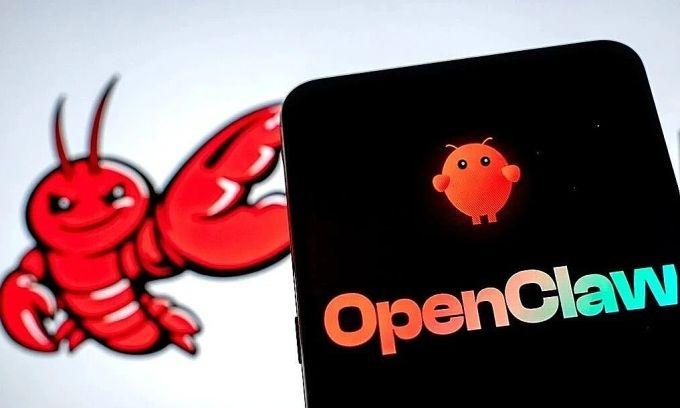
Source: VnExpress
The raising lobsters phenomenon has spawned a cottage industry of installation services and preconfigured hardware. Feng, a 27-year-old Beijing software engineer, exemplifies this gold rush mentality. After starting to tinker with the popular AI agent in January, he launched an installation service on Xianyu advertising "OpenClaw installation support" with no coding knowledge required
1
. By late February, demand had grown so intense that Feng quit his job to focus full-time on his operation, which now employs over 100 people and has processed 7,000 orders at approximately 248 RMB ($34) each1
.Tech Giants Race to Capitalize on OpenClaw Boom
Major Chinese technology companies including Tencent, Alibaba, ByteDance, Baidu, Minimax, and Moonshot have moved aggressively to profit from the OpenClaw boom. These firms recognized that widespread adoption of AI agent software would drive unprecedented consumption of LLM tokens and cloud servers—the infrastructure required to run these autonomous systems
2
. According to tech analyst Poe Zhao, "A chatbot uses only a few hundred tokens per conversation; a single active OpenClaw instance can consume tens or even hundreds of times more tokens per day"2
.
Source: Silicon Republic
Alibaba launched "JVS Claw," a dedicated mobile app for iOS and Android that claims to help users install and deploy OpenClaw within minutes, offering a 14-day free trial . Baidu released its own Android app for the AI agent this week, while Tencent introduced "Work Buddy," an OpenClaw-based tool that integrates with multiple chat platforms
5
. The enthusiasm was so intense that Tencent engineers reportedly set up tables outside company headquarters to help people install the software for free2
.Government Moves to Address Security Risks and Data Leaks
As AI adoption in China accelerated, authorities moved swiftly to address mounting cybersecurity concerns. China's central government warned state enterprises and agencies not to install OpenClaw on office computers this week, effectively implementing a government ban for sensitive systems
3
. The People's Bank of China issued separate warnings about AI in the financial sector, calling for technology to be managed in a "proactive yet prudent, safe and orderly" manner3
.
Source: The Register
The National Vulnerability Database, operated by the Ministry of Industry and Information Technology, published comprehensive security guidelines developed alongside AI agent providers and cybersecurity firms
3
. China's National Computer Network Emergency Response Technical Team (CERT) warned that OpenClaw has "extremely weak default security configuration" and poses risks including credential theft, data leaks, and exposure to malicious content5
.The CERT specifically flagged connecting instant messaging apps to OpenClaw as dangerous, potentially granting excessive read, write, and deletion permissions over files
3
. Prohibited practices include using third-party mirror versions, enabling administrator accounts during deployment, and installing skill packs that require passwords3
.Related Stories

Technical Barriers Create Divided User Experience
Despite the hype, many non-technical users have struggled with OpenClaw's complexity. George Zhang, who works in cross-border ecommerce in Xiamen, attempted to use the tool for autonomous stock trading after watching social media demonstrations. After renting a cloud server from Tencent and buying a Kimi LLM subscription, he found his "lobster" would generate only basic outlines instead of detailed reports, eventually abandoning stock trading in favor of aggregating AI industry news
2
.Song Zhuoqun, a college student and social media intern at an AI startup, described installation as "the most frustrating part" of trying OpenClaw. Despite asking ByteDance's Doubao chatbot to generate step-by-step tutorials, she encountered pages of incomprehensible code and repeated errors
2
. This technical divide has emerged as a defining characteristic of the OpenClaw phenomenon, with proficient users viewing it as transformative for productivity while those lacking coding skills feel misled by promises of a miraculously powerful product2
.Mixed Policy Signals Reveal Regulatory Tensions
The government response has been paradoxical, with restrictions running alongside active policy support. Shenzhen's Longgang district is seeking public feedback on draft policies offering subsidies up to 2 million yuan ($289,000) for entrepreneurs developing OpenClaw applications
3
. At least four local municipalities have introduced supporting policies with millions in subsidies for deploying and developing the technology .Kendra Schaefer, partner and director of tech policy research at Trivium China, observed that "Chinese regulators typically respond with extraordinary speed to threats from emerging technologies, but the rate of adoption of OpenClaw and other agentic tools is still outpacing them"
3
. The China Academy of Information and Communications Technology announced plans to begin trialing AI agent trustworthiness standards on OpenClaw starting late March3
.References
Summarized by

Navi
[1]
[3]
[5]
Related Stories
China warns OpenClaw deployments pose serious security risks from poor configuration
05 Feb 2026•Policy and Regulation

OpenClaw AI craze sweeps China as millions 'raise lobsters' amid security warnings
18 Mar 2026•Technology

OpenClaw security crisis deepens as 135,000+ instances exposed and malware floods marketplace
04 Feb 2026•Technology

Recent Highlights
1
Apple Plans Major Siri AI Overhaul in iOS 27 With Third-Party Chatbot Integration
Technology

2
OpenAI shuts down Sora after six months, ending Disney's $1 billion licensing partnership
Technology

3
AI chatbots validate you too much, making you less kind to others, Stanford study reveals
Science and Research

Recent Highlights
Today's Top Stories







Your Daily Dose of Curated AI News
Don’t drown in AI news. We cut through the noise - filtering, ranking and summarizing the most important AI news, breakthroughs and research daily. Spend less time searching for the latest in AI and get straight to action.

