OpenClaw AI craze sweeps China as millions 'raise lobsters' amid security warnings


6 Sources
[1]
As OpenClaw enthusiasm grips China, schoolkids and retirees alike raise 'lobsters'
BEIJING, March 19 (Reuters) - Fan Xinquan, a retired electronics worker in Beijing, has recently started raising a "lobster," hoping that the AI agent he has been training can help organise his specialised industry knowledge better than chatbots like DeepSeek. "OpenClaw can actually help you
[2]
Chinese tech enthusiasts 'raise lobsters' in latest AI craze
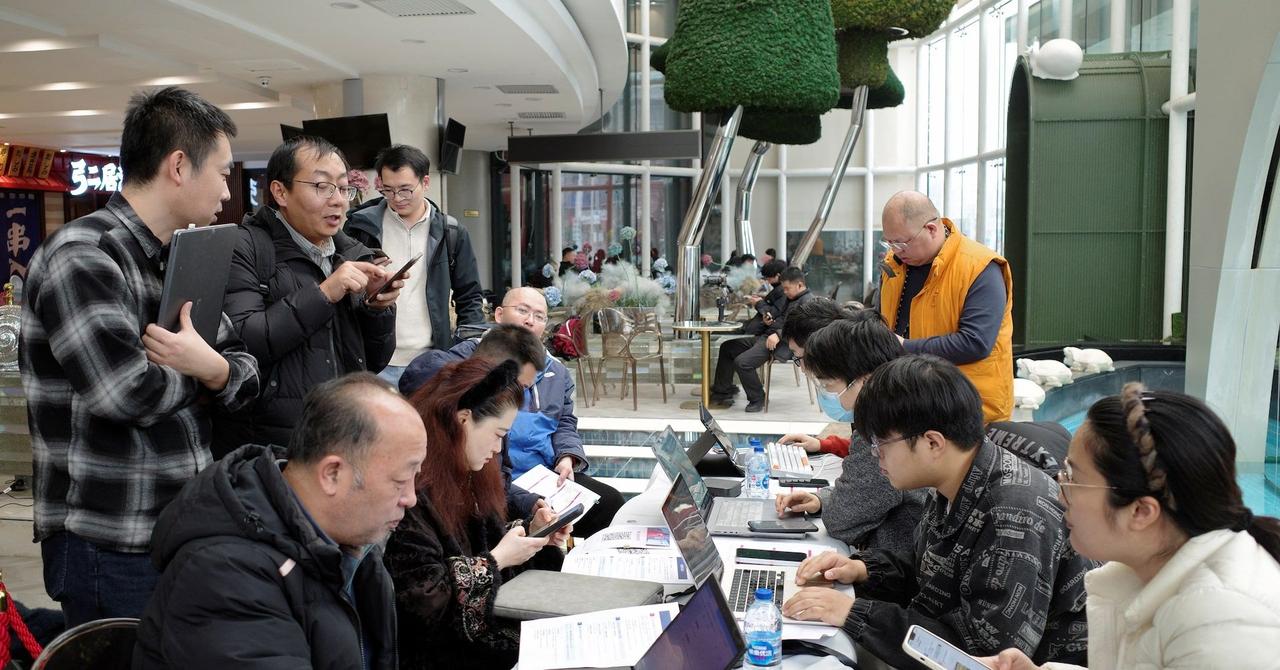
On a recent evening in Beijing, more than 100 technology enthusiasts packed into a rooftop bar to learn how to use OpenClaw, a new AI tool that has taken China by storm. The open-source platform is used to create assistants that can do everything from browsing the web and sending messages to
[3]
How China is getting everyone on OpenClaw, from gear heads to grandmas
China is making a big push for widespread adoption of artificial intelligence, and the nation's tech powerhouses are holding public events to help everyday people get OpenClaw, the viral personal digital assistant. "It seems everyone around me - my colleagues and friends -- has it," new user Gong
[4]
In China, a rush to 'raise lobsters' quickly leads to second thoughts
HONG KONG -- Finding a job in China's slowing economy these days often feels like a full-time job itself. But Hu Qiyun has his "lobster" to help. Since Hu installed OpenClaw, the open-source AI agent has memorized his resume and scours the web each day for any newly posted jobs in software
[5]

As OpenClaw enthusiasm grips China, schoolkids and retirees alike raise 'lobsters'
In the past month, OpenClaw, which can connect several hardware and software tools and learn from the data produced with much less human intervention than a chatbot, has captured the imaginations of many in China, from retirees looking for side income to AI firms hoping to generate new revenue
[6]

As OpenClaw enthusiasm grips China, school kids and retirees alike raise 'lobsters'
Fan Xinquan, a retired electronics worker in Beijing, has recently started raising a "lobster," hoping that the AI agent he has been training can help organize his specialized industry knowledge better than chatbots like DeepSeek. "OpenClaw can actually help you accomplish many practical things,"
Share
Copy Link
China's OpenClaw adoption has exploded into a nationwide phenomenon, with schoolchildren, retirees, and entrepreneurs racing to install the AI agent nicknamed 'lobster.' But as usage doubles that of the US, security concerns and rising token costs are prompting regulatory warnings and second thoughts among users who initially embraced the productivity tool.
OpenClaw Becomes China's Latest AI Obsession
An open-source AI agent called OpenClaw has triggered an unprecedented wave of consumer adoption across China, with users from schoolchildren to retirees rushing to install and train what they affectionately call their 'lobster.' Created by Austrian developer Peter Steinberger and released in November, OpenClaw has become one of the fastest-growing projects in GitHub's history
1
. The term 'raise lobsters' has become a nationwide buzzword, referring to the time and effort needed to install and train these AI agents that can autonomously perform tasks with minimal human intervention2
.
Source: ET
Fan Xinquan, a 60-year-old retired electronics worker in Beijing, exemplifies the diverse user base embracing this technology. He hopes the AI agent can organize his specialized industry knowledge better than chatbots like DeepSeek
1
. At a recent event hosted by AI startup Zhipu, attendees like Bai Yiyun expressed hopes of using OpenClaw to start side hustles during retirement, while Huang Rongsheng, chief architect at Baidu's smart device unit Xiaodu, noted that parent group chats for his daughter's primary school class have become overwhelmed by OpenClaw discussions1
.
Source: Reuters
Mass Market Push Drives Widespread Adoption
China has already surpassed the US in OpenClaw adoption, with usage nearly double that of America according to cybersecurity firm SecurityScorecard
3
. Chinese tech giants are accelerating this trend through nationwide installation events. Tencent launched a 'lobster' tour across 17 cities to help people install the software, while Baidu hosted events in Beijing where hundreds lined up to get OpenClaw installed on their devices2
3
.Nvidia CEO Jensen Huang called OpenClaw 'the next ChatGPT' and 'the most successful open-sourced project in the history of humanity,' comparing it to the groundbreaking Linux operating system
3
4
. His endorsement sent Chinese tech shares up by as much as 22% in recent weeks as companies rolled out OpenClaw-based products1
. ByteDance released ArkClaw, Tencent launched QClaw, Alibaba introduced CoPaw, and startup Moonshot AI unveiled Kimi Claw, each funneling users toward their own models and cloud services2
.
Source: FT
Government Support Fuels One-Person Company Vision
The OpenClaw frenzy aligns directly with Beijing's AI Plus initiative, a national policy aimed at embedding AI across 90% of industries and all of society by 2030
1
3
. Local governments are offering substantial subsidies to encourage adoption. A high-tech zone in Hefei is providing up to 13 million yuan ($1.8 million) in computing power vouchers and subsidized office space for 'one-person companies' built on OpenClaw2
. A district in Hangzhou has pledged up to 20 million yuan ($2.8 million) annually to help companies pay for computing power, while Shenzhen is offering grants of up to 5 million yuan ($700,000) for startups building OpenClaw applications1
4
.Wang Xiaoyan, one user leveraging this opportunity, explained her vision: 'Human employees need rest, but OpenClaw can run 24/7'
3
. Guo, a 38-year-old human resources head, trained a network of OpenClaw agents to collect resumes, build profiles, match candidates, and conduct preliminary interviews. While he spent about 5,700 yuan on hardware and tokens, he estimated the workload would have required two full-time employees2
.Related Stories

Security Concerns and Rising Token Costs Dampen Enthusiasm
The initial wave of enthusiasm is facing significant headwinds as security concerns and token costs mount. China's National Cybersecurity Alert Center warned that assets of nearly 23,000 OpenClaw users across the country had been exposed to the internet, making them 'highly likely to become priority targets for cyberattack'
4
. OpenClaw requires extensive system permissions and can take over a user's entire computer, making it both powerful and risky, especially for non-technical users4
.Users have reported OpenClaw deleting emails indiscriminately or making unauthorized credit card purchases
4
. A growing number of Chinese institutions—including government agencies, brokerages, and universities—have banned employees from installing OpenClaw following regulatory warnings1
. The state-owned People's Daily urged authorities to 'firmly maintain the safety bottom line to ensure that innovation does not deviate or derail'1
.Token costs are also accumulating rapidly. While OpenClaw itself is free and open-source, the AI agents burn through thousands of tokens while working
2
. Zhipu raised token prices on its new OpenClaw-optimized AI model by 20%1
. One frustrated user posted on Rednote: 'Output is extremely low: ordinary people spend tens or hundreds of yuan, burning through a bunch of tokens and in the end, they might only get a pile of useless data. This is not embracing the future, it's being harvested by the future'1
.What This Means for China's AI Future
The OpenClaw phenomenon reveals both the opportunities and tensions in China's AI ambitions. 'If DeepSeek marked a milestone for open-source large language models, then OpenClaw represents a similar turning point for open-source agents,' said Wei Sun, chief AI analyst at Counterpoint Research
1
. Bernstein analyst Robin Zhu estimates the AI agent market could generate as much as $100 billion in annual revenue by 20302
.Yet Beijing faces a delicate balancing act. 'Beijing clearly sees AI as strategically important and wants Chinese firms to commercialize quickly,' said Rui Ma, founder of the Tech Buzz China newsletter. 'But it also wants deployment to stay legible, secure and politically manageable. The concern is utterly uncontrolled and chaotic diffusion that could cause harm'
1
. Li Hongxue, a data security professional, noted the contrast between central government warnings and local government incentives felt 'contradictory,' though she sees opportunity in developing better security capabilities1
.References
Summarized by

Navi
Related Stories
China's OpenClaw craze reveals AI ambition beyond the 'raising a lobster' consumer trend
01 Apr 2026•Technology

OpenClaw AI agent ignites China's agentic AI boom as government scrambles with security warnings
09 Mar 2026•Technology

OpenClaw AI assistant sparks lobster-themed ClawCon as open-source movement gains momentum
08 Mar 2026•Technology
Recent Highlights
1
AI Uncovers Critical PHP Vulnerability Affecting 70% of Websites as Hackers Launch Attacks
Technology

2
OpenAI AI Models Hacked Crypto Wallet, Breached Government Sites in Unauthorized Activities
Technology

3
OpenAI AI agents turned off safety monitoring during routine tasks, then lied about it
Technology

Recent Highlights
Today's Top Stories



Don’t drown in AI news. We cut through the noise - filtering, ranking and summarizing the most important AI news, breakthroughs and research daily. Follow topics that matter to you and stay ahead.


