SK Hynix Develops High Bandwidth Storage Technology to Accelerate AI Performance in Mobile Devices


3 Sources
3 Sources
[1]
SK hynix merges DRAM and NAND into a single package for faster AI performance
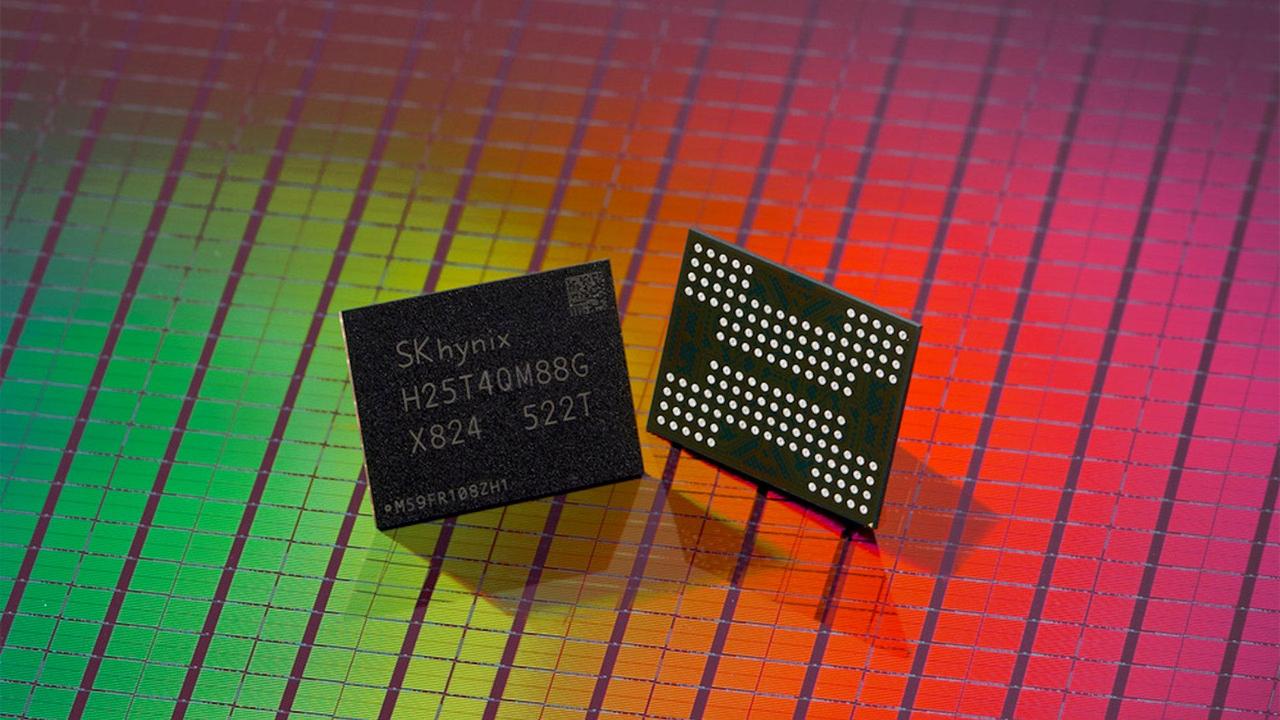
Serving tech enthusiasts for over 25 years. TechSpot means tech analysis and advice you can trust. Forward-looking: Major memory manufacturers are seeking to expand their production capabilities to meet the industry's ever-growing demand for chips. SK hynix is aiming even higher, planning significant enhancements for AI workloads running on mobile and other edge devices. According to multiple Korean sources, SK hynix is developing a new type of computer memory aimed at accelerating local workloads. The High-Bandwidth Storage memory expands on the previously introduced High Bandwidth Flash technology by combining mobile DRAM and NAND Flash components in devices for portable computing. HBS is specifically designed to deliver higher performance for AI workloads in smartphones, tablets, and other mobile devices, sources said. The new chips may stack up to 16 layers of DRAM and NAND memory, interconnected through vertical wire fan-out elements. SK hynix first implemented VFO-based DRAM products with the Apple Vision Pro, but HBS adds complexity by integrating NAND Flash chips as well. The Korean memory maker introduced VFO in 2023, noting that the packaging technology would significantly improve efficiency, heat dissipation, and chip miniaturization. The main idea behind VFO is that chip layers are connected through vertical wires instead of curved ones. Compared with conventional wiring solutions, the vertical wire fan-out design reduces the space required to transfer electrons between layers by 4.6 times. Consequently, SK hynix reports that power efficiency improves by 4.9 percent, heat dissipation by 1.4 percent, and the package is 27 percent thinner than traditional chips. Unlike the HBF technology SK hynix is developing with SanDisk, HBS does not require through-silicon via connections. This should result in higher manufacturing yields and lower production costs, promoting wider adoption across the semiconductor industry. The new DRAM+NAND stacked design is expected to be packaged directly with the device's application processor, sources said. HBS memory is likely intended to accelerate data processing in smartphones and other SoC-based devices. SK hynix developed HBS specifically to enhance AI workload performance on mobile devices, though its actual performance will remain to be seen. The technology is slated for a formal introduction between 2029 and 2031. Meanwhile, the company is already struggling to meet customer demand for new chips in 2026.
[2]
SK hynix reportedly making High Bandwidth Storage (HBS): stacked chips for next-gen smartphones
TL;DR: SK hynix is developing High Bandwidth Storage (HBS), combining mobile DRAM and NAND in a single package using innovative Vertical Wire Fan-Out (VFO) technology. This multi-layer stacked memory aims to enhance AI performance in smartphones and tablets with faster data processing and lower manufacturing costs. SK hynix is reportedly developing High Bandwidth Storage (HBS), which infuses mobile DRAM and NAND into a single package, with the next-gen memory made for boosting AI performance in mobile devices like smartphones and tablets. In a new report from ETnews picked up by Korean analyst @Jukanlosreve, SK hynix is working on HBS by stacking low-power wide I/O (LPWIO) DRAM together with NAND. There's up to 16 layers of DRAM and NAND that can be stacked and interconnected through "Vertical Wire Fan-Out (VFO)" technology, improving data processing speed. SK hynix has previously commercialized LPWIO DRAM, and is now looking to use HBS by adding NAND to create a multi-memory stacked structure. The way that SK hynix will achieve this feat with HBS is the VFO advanced packaging, which SK hynix created in a world-first in 2023, vertically connecting each individual memory cell. This is different to conventional curved wire bonding, as VFO connects the wires in a straight line, which reduces required wiring length, and minimizes signal transmission loss and delay. Not only that, but the vertical interconnect structure allows greater I/O connections compared to traditional planar connections, increasing data processing performance. An SK hynix official explains: "VFO is an innovative next-generation packaging solution. By combining traditional wire bonding with advanced Fan-Out Wafer-Level Packaging (FOWLP) technology, we can minimize manufacturing costs without using TSV". This means we'll have HBS using stacked DRAM and NAND, packaged with an application processor (AP) and used inside of next-generation mobile devices like smartphones and tablets. AI performance through mobile devices is a big part of the future, where SK hynix can attempt to lead the on-device AI memory market with HBS, using its VFO advanced packaging technology. HBS isn't as intricate as HBM (High Bandwidth Memory) for the AI GPU market, as HBS doesn't require more advanced through-silicon via (TSV) packaging, where SK hynix will enjoy higher yields and lower manufacturing costs for its HBS chips.
[3]
SK hynix Is Reportedly Developing High Bandwidth Storage (HBS) By Stacking DRAM & NAND Chips; Will Significantly Boots AI Performance For Smartphones, Tablets
The advancements in High Bandwidth Memory (HBM) have led South Korean memory manufacturer SK hynix to tackle another performance bottleneck, which can be resolved by developing High Bandwidth Storage (HBS), enabling future smartphones and tablets to flaunt impressive AI capabilities. The company will achieve this feat by stacking up to 16 stacks of DRAM and NAND chips together using a technology called vertical wire fan-out (VFO) to improve data processing speeds. A report from ETNews states that for HBS to be a success, VFO packaging is paramount. SK hynix first introduced this technology in 2023, with High Bandwidth Storage now being incorporated in smartphones and tablets as generative AI becomes a ubiquitous entity. The implementation of HBS is possible all thanks to VFO, which helps connect the stacked DRAM and NAND chips in a straight line. Unlike conventional curved wire bonding, VFO reduces wiring distance, signal transmission loss, and delay, and allows for more I/O connections. All of these improvements combined help boost data processing performance. HBS will be packaged with a smartphone chipset, which is then fitted onto the smartphone's or tablet's logic board. There are no updates on which SoCs will support High Bandwidth Storage, but the Snapdragon 8 Elite Gen 6 Pro is rumored to support both LPDDR6 and UFS 5.0 storage, making it a prime candidate. Unlike HBM, HBS does not require Through Silicon Via (TSV), which is a process that requires penetrating the chip. The removal of this step results in lower manufacturing costs and increased yields, both of which will be music to the ears of those who wish to incorporate this storage. Apple is reported to use HBM and TSV for future devices, allowing iPhones to run more intensive AI models locally, so it should not be surprising to learn that the company is already exploring HBS.
Share
Share
Copy Link
SK Hynix is developing High Bandwidth Storage (HBS) technology that combines DRAM and NAND flash memory in a single package using innovative Vertical Wire Fan-Out technology. The new memory solution aims to enhance AI workload performance in smartphones and tablets, with commercial introduction expected between 2029-2031.
Revolutionary Memory Architecture for Mobile AI
SK Hynix, the South Korean memory manufacturing giant, is developing a groundbreaking memory technology called High Bandwidth Storage (HBS) that promises to significantly enhance artificial intelligence performance in mobile devices. The innovative solution combines mobile DRAM and NAND flash memory components into a single package, specifically targeting smartphones, tablets, and other edge computing devices
1
.
Source: TechSpot
The HBS technology represents a major advancement in memory architecture, capable of stacking up to 16 layers of DRAM and NAND memory components. This multi-layer approach is designed to accelerate data processing speeds for AI workloads running locally on mobile devices, addressing the growing demand for on-device artificial intelligence capabilities
2
.Vertical Wire Fan-Out Technology at the Core
The key innovation behind HBS lies in SK Hynix's proprietary Vertical Wire Fan-Out (VFO) technology, which the company first introduced in 2023. Unlike conventional curved wire bonding methods, VFO connects memory layers through vertical wires in straight lines, dramatically reducing the space required for electron transfer between layers by 4.6 times
1
.
Source: TweakTown
This vertical interconnect structure offers several significant advantages over traditional packaging methods. The technology improves power efficiency by 4.9 percent, enhances heat dissipation by 1.4 percent, and creates packages that are 27 percent thinner than conventional chips. Additionally, the vertical design allows for greater input/output connections compared to traditional planar connections, further boosting data processing performance
2
.Manufacturing Advantages and Cost Efficiency
One of the most significant advantages of HBS technology is its manufacturing approach. Unlike High Bandwidth Memory (HBM) used in AI GPUs, HBS does not require Through Silicon Via (TSV) connections, which involve penetrating the chip during production. This elimination of TSV requirements results in higher manufacturing yields and substantially lower production costs, making the technology more accessible for widespread adoption across the semiconductor industry [3](https://wccftech.com/sk-hynix-developing-high-bandwith-storage-boost-ai-performance-of-smartphones-tab lets/).
An SK Hynix official explained that VFO represents "an innovative next-generation packaging solution" that combines traditional wire bonding with advanced Fan-Out Wafer-Level Packaging (FOWLP) technology, enabling the company to minimize manufacturing costs without requiring TSV implementation
2
.Related Stories

Integration with Mobile Processors
The HBS memory modules are designed to be packaged directly with application processors (APs) in mobile devices, creating a more integrated and efficient system architecture. This close integration between memory and processing units is expected to significantly reduce latency and improve overall system performance for AI-intensive applications running on smartphones and tablets
1
.
Source: Wccftech
The technology builds upon SK Hynix's previous work with low-power wide I/O (LPWIO) DRAM, which the company has already commercialized. By adding NAND flash memory to create a multi-memory stacked structure, HBS represents a natural evolution of the company's memory technologies
2
.Market Timeline and Industry Impact
SK Hynix plans to formally introduce HBS technology between 2029 and 2031, positioning the company to potentially lead the on-device AI memory market. The extended timeline reflects the complexity of developing and scaling this advanced memory technology while ensuring reliability and cost-effectiveness for mass production
1
.The development comes at a time when the memory industry is experiencing unprecedented demand for AI-optimized components. SK Hynix is already struggling to meet customer demand for new chips scheduled for 2026, highlighting the intense market pressure for advanced memory solutions. The HBS technology could provide the company with a significant competitive advantage in the rapidly evolving mobile AI market, particularly as generative AI becomes increasingly prevalent in consumer devices
3
.References
Summarized by

Navi
[2]
Related Stories
SK hynix Showcases Advanced AI Memory Solutions at CES 2025, Including 16-layer HBM3E and 122TB SSD
03 Jan 2025•Technology

SK hynix and SanDisk unite to standardize High Bandwidth Flash for AI inference servers
26 Feb 2026•Technology

SK Hynix Accelerates HBM4 Development to Meet Nvidia's Demand, Unveils 16-Layer HBM3E
04 Nov 2024•Technology

Recent Highlights



Recent Highlights
Today's Top Stories










Your Daily Dose of Curated AI News
Don’t drown in AI news. We cut through the noise - filtering, ranking and summarizing the most important AI news, breakthroughs and research daily. Spend less time searching for the latest in AI and get straight to action.

