Memory prices spike up to 400% as AI demand creates global shortage lasting through 2026


21 Sources
21 Sources
[1]
RAM and SSD prices are still climbing -- here's our best advice for PC builders
The first few months of 2025 were full of graphics card reviews where we generally came away impressed with performance and completely at a loss on availability and pricing. The testing in these reviews is useful regardless, but when it came to extra buying advice, the best we could do was to compare Nvidia's imaginary pricing to AMD's imaginary pricing and wait for availability to improve. Now, as the year winds down, we're facing price spikes for memory and storage that are unlike anything I've seen in two decades of pricing out PC parts. Pricing for most RAM kits has increased dramatically since this summer, driven by overwhelming demand for these parts in AI data centers. Depending on what you're building, it's now very possible that the memory could be the single most expensive component you buy; things are even worse now than they were the last time we compared prices a few weeks ago. Component Aug. 2025 price Nov. 2025 price Dec. 2025 price Patriot Viper Venom 16GB (2 x 8GB) DDR-6000 $49 $110 $189 Western Digital WD Blue SN5000 500GB $45 $69 $102* Silicon Power 16GB (2 x 8GB) DDR4-3200 $34 $89 $104 Western Digital WD Blue SN5000 1TB $64 $111 $135* Team T-Force Vulcan 32GB DDR5-6000 $82 $310 $341 Western Digital WD Blue SN5000 2TB $115 $154 $190* Western Digital WD Black SN7100 2TB $130 $175 $210 Team Delta RGB 64GB (2 x 32GB) DDR5-6400 $190 $700 $800 Some SSDs are getting to the point where they're twice as expensive as they were this summer (for this comparison, I've swapped the newer WD Blue SN5100 pricing in for the SN5000, since the drive is both newer and slightly cheaper as of this writing). Some RAM kits, meanwhile, are around four times as expensive as they were in August. Yeesh. And as bad as things are, the outlook for the immediate future isn't great. Memory manufacturer Micron -- which is pulling its Crucial-branded RAM and storage products from the market entirely in part because of these shortages -- predicted in a recent earnings call that supply constraints would "persist beyond calendar 2026." Kingston executives believe prices will continue to rise through next year. PR representatives at GPU manufacturer Sapphire believe prices will "stabilize," albeit at a higher level than people might like. I didn't know it when I was writing the last update to our system guide in mid-August, but it turns out that I was writing it during 2025's PC Building Equinox, the all-too-narrow stretch of time where 1080p and 1440p GPUs had fallen to more-or-less MSRP but RAM and storage prices hadn't yet spiked. All in all, it has been yet another annus horribilis for gaming-PC builders, and at this point it seems like the 2020s will just end up being a bad decade for PC building. Not only have we had to deal with everything from pandemic-fueled shortages to tariffs to the current AI-related crunch, but we've also been given pretty underwhelming upgrades for both GPUs and CPUs. It should be a golden age for the gaming PC It's really too bad that building or buying a gaming PC is such an annoying and expensive proposition, because in a lot of ways there has never been a better time to be a PC gamer. It used to be that PC ports of popular console games would come years later or never at all, but these days PC players get games at around the same time as console players, too. Sony, of all companies, has become much better about releasing its games to PC players. And Microsoft seems to be signaling more and more convergence between the Xbox and the PC, to the extent that it is communicating any kind of coherent Xbox strategy at all. The console wars are cooling down, and the PC has been one of the main beneficiaries. That wider game availability is also coming at a time when PC software is getting more flexible and interesting. Traditional Windows-based gaming builds still dominate, of course, and Windows remains the path of least resistance for PC buyers and builders. But Valve's work on SteamOS and the Proton compatibility software has brought a wide swath of PC games to Linux, and SteamOS itself is enabling a simpler and more console-like PC gaming experience for handheld PCs as well as TV-connected desktop computers. And that work is now boomeranging back around to Windows, which is gradually rolling out its own pared-down gamepad-centric frontend. If you've already got a decent gaming PC, you're feeling pretty good about all of this -- as long as the games you want to play don't have Mario or Pikachu in them, your PC is all you really need. It's also not a completely awful time to be upgrading a build you already have, as long as you already have at least 16GB of RAM -- if you're thinking about a GPU upgrade, doing it now before the RAM price spikes can start impacting graphics card pricing is probably a smart move. If you don't already have a decent gaming PC and you can buy a whole PlayStation 5 for the cost of some 32GB DDR5 RAM kits, well, it's hard to look past the downsides no matter how good the upsides are. But it doesn't mean we can't try. What if you want to buy something anyway? Say those upsides are still appealing to you, and you want to build something today. How should you approach this terrible, volatile RAM market? I won't do a full update to August's system guide right now, both because it feels futile to try and recommend individual RAM kits or SSD with prices and stock levels being as volatile as they are, and because aside from RAM and storage I actually wouldn't change any of these recommendations all that much (with the caveat that Intel's Core i5-13400F seems to be getting harder to find; consider an i5-12400F or i5-12600KF instead). So, starting from those builds, here's the advice I would try to give to PC-curious friends: DDR4 is faring better than DDR5. Prices for all kinds of RAM have gone up recently, but DDR4 pricing hasn't gotten quite as bad as DDR5 pricing. That's of no help to you if you're trying to build something around a newer Ryzen chip and a socket AM5 motherboard, since those parts require DDR5. But if you're trying to build a more budget-focused system around one of Intel's 12th-, 13th-, or 14th-generation CPUs, a decent name brand 32GB DDR4-3200 kit comes in around half the price of a similar 32GB DDR5-6000 kit. Pricing isn't great, but it's still possible to build something respectable for under $1,000. Newegg bundles might help. I'm normally not wild about these kinds of component bundles; even if they appear to be a good deal, they're often a way for Newegg or other retailers to get rid of things they don't want by pairing them with things people do want. You also have to deal with less flexibility -- you can't always pick exactly the parts you'd want under ideal circumstances. But if you're already buying a CPU and a motherboard, it might be worth digging through the available deals just to see if you can get a good price on something workable. Don't overbuy (or consider under-buying). Under normal circumstances, anyone advising you on a PC build should be recommending matched pairs of RAM sticks with reasonable speeds and ample capacities (DDR4-3200 remains a good sweet spot, as does DDR5-6000 or DDR5-6400). Matched sticks are capable of dual-channel operation, boosting memory bandwidth and squeezing a bit more performance out of your system. And getting 32GB of RAM means comfortably running any game currently in existence, with a good amount of room to grow. But desperate times call for desperate measures. Slower DDR5 speeds like DDR5-5200 can come in a fair bit cheaper than DDR5-6000 or DDR5-6400, in exchange for a tiny speed hit that's going to be hard to notice outside of benchmarks. You might even consider buying a single 16GB stick of DDR5, and buying it a partner at some point later when prices have calmed down a bit. You'll leave a tiny bit of performance on the table, and a small handful of games want more than 16GB of system RAM. But you'll have something that boots, and the GPU is still going to determine how well most games run. Don't forget that non-binary DDR5 exists. DDR5 sticks come in some in-betweener capacities that weren't possible with DDR4, which means that companies sell it in 24GB and 48GB sticks, not just 16/32/64. And these kits can be a very slightly better deal than the binary memory kits right now; this 48GB Crucial DDR5-6000 kit is going for $470 right now, or $9.79 per gigabyte, compared to about $340 for a similar 32GB kit ($10.63 per GB) or $640 for a 64GB kit ($10 per GB). It's not much, but if you truly do need a lot of RAM, it's worth looking into. Consider pre-built systems. A quick glance at Dell's Alienware lineup and Lenovo's Legion lineup makes it clear that these towers still aren't particularly price-competitive with similarly specced self-built PCs. This was true before there was a RAM shortage, and it's true now. But for certain kinds of PCs, particularly budget PCs, it can still make more sense to buy than to build. For example, when I wrote about the self-built "Steam Machine" I've been using for a few months now, I mentioned some Ryzen-based mini desktops on Amazon. I later tested this one from Aoostar as part of a wider-ranging SteamOS-vs-Windows performance comparison. Whether you're comfortable with these no-name mini PCs is something you'll have to decide for yourself, but that's a fully functional PC with 32GB of DDR5, a 1TB SSD, a workable integrated GPU, and a Windows license for $500. You'd spend nearly $500 just to buy the RAM kit and the SSD with today's component prices; for basic 1080p gaming you could do a lot worse.
[2]
Micron says memory shortage will 'persist' beyond 2026
Micron, one of the three biggest memory suppliers in the world, forecasts rough months ahead for the global RAM supply. As part of its earnings report released on Wednesday, Micron CEO Sanjay Mehrotra said "tight industry conditions" across DRAM and NAND flash memory are expected to "persist through and beyond" 2026 as AI drives up demand. With the AI boom in full swing, Micron is making more money than ever as companies like OpenAI, Meta, Microsoft, and Google fill their data centers with powerful chips that come packaged with high-bandwidth memory (HBM). It once again reported record revenue of $13.64 billion this past quarter, a sizeable jump from the $8.71 billion it made at the same time last year. Micron just shuttered its consumer-facing business, Crucial, as it prioritizes far more lucrative deals involving HBM technology, which uses three times the silicon wafers compared to standard DRAM. That leaves fewer resources for the DRAM in products we use every day, like PCs, smartphones, smart TVs, and even cars. It has already started driving up prices of DDR5 RAM kits, with other devices expected to be impacted soon. "Over the last few months, our customers' AI data center build-out plans have driven a sharp increase in demand forecast for memory and storage," Mehrotra said during the earnings call, adding that "supply will remain substantially short of the demand for the foreseeable future." Micron said in its earnings report that these "memory supply constraints" may affect PC shipments next year. Micron aims to ramp up production and expects to increase its shipments of DRAM and NAND flash memory by 20 percent next year, but that still isn't enough to keep up. "Despite significant efforts, we are disappointed to be unable to meet demand from other customers across all market segments," Mehrotra said. Micron also expects to start production at a new manufacturing facility in Idaho in 2027, followed by a new plant in New York in 2030.
[3]
Here's why HBM is coming for your PC's RAM -- HBM consumes around three times the wafer capacity of DDR5 per gigabyte, as AI supercharges demand for chips and advanced packaging
Surging prices, diverted wafer capacity, and multi-year delays in relief are pushing memory out of reach for consumers. As we detailed in October, the memory and storage markets were expected to face significant supply constraints. In the months following, DDR5 prices have skyrocketed. Kits that had sold comfortably below $100 months earlier were surging into the hundreds by early December. CyberPowerPC, one of the largest system builders in North America, warned in November that contract DRAM prices had jumped 500% since early October, while another report indicated that they had risen 171.8% year over year. The disruption is being driven not by demand from gamers or device makers, but by artificial intelligence. Specifically, by the way hyperscalers are soaking up wafer starts and advanced packaging lines for high-bandwidth memory (HBM) used in AI accelerators. The consequence is that anyone or anything that's not part of that ecosystem -- PC builders, laptop OEMs, and even phone makers -- is fighting over the scraps of a shrinking pool of commodity DRAM. And with new fabs still years from coming online, the shortage is expected to last well into the second half of the decade. The most visible impact can be seen with retailers. A Corsair Vengeance DDR5-6000 32GB (2x16GB) cost $134.99 in September before reaching more than $420 in early December. G.Skill, TeamGroup, and Kingston all adjusted channel pricing by double digits across Q3, citing tightening availability. That translated to a whopping 2-4x price swing for enthusiasts buying RAM, depending on capacity and bin. The G. Skill Trident Z5 Neo RGB DDR5-6000, our tried-and-tested best RAM for gaming, is now only available via third-party sellers through Amazon, with 64GB kits attracting prices beyond $500, with one seller listing them for a whopping $881.87 as of December 18. Suppliers and distributors have sharply tightened allocation of DDR5 memory, with some channel partners reporting severely limited quotes and rollovers on orders as capacity is diverted to AI-driven demand. Reports from Taiwan and broader market tracking show memory modules selling out or being bundled to secure placement, indicating that mainstream buyers are being deprioritized. That squeeze quickly filtered into GPUs, where memory is a major cost driver. AMD board partners raised card prices by around $10 per 8GB of VRAM starting in November. A rumor suggests AMD could increase Radeon RX graphics card prices with 8 GB models up by about $20 and 16 GB models up by about $40 in response to climbing GDDR6 spot prices and memory costs. SSD pricing has also reversed direction. 2TB Gen 4 NVMe drives that had been available for $80 in the summer were back at $130 by November. Contract pricing on NAND rose 60% in November, and module-level spot prices followed. Framework was forced to increase its pricing on the DDR5 memory configurable in Framework Laptop DIY Edition orders by 50% in response to "substantially higher costs" they are facing from suppliers and distributors. Meanwhile, Dell and HP have both flagged component pricing, with HP's CEO stating that memory costs in particular were affecting margin on consumer systems and Dell COO Jeff Clarke saying he's "never seen memory-chip costs rise this fast." Raspberry Pi also raised prices on its 4GB and 8GB boards, citing supply constraints on LPDDR4X. All this is not being caused by insufficient demand for DDR5, but by wafer and packaging capacity being redirected to high-margin, high-volume AI parts. High Bandwidth Memory (HBM) is the main pressure point. HBM differs from conventional DRAM in both structure and cost. Instead of planar dies mounted on PCBs, HBM stacks multiple DRAM dies vertically, linked with through-silicon vias (TSVs), and mounts them on an interposer alongside compute logic. These stacks offer enormous bandwidth and proximity advantages for AI accelerators, but they are incredibly expensive in terms of materials, tooling requirements, and especially wafer area. Each gigabyte of HBM consumes roughly three times the wafer capacity of DDR5. That reflects both yield loss from stacking and the fact that many DRAM dies in HBM stacks are smaller or binned lower than equivalent RAM sticks. The TSV process and wafer thinning introduce additional steps that lengthen production cycles, leading to a catch-22 situation that, even when yields are strong, means the vertical integration of HBM requires advanced packaging lines that remain globally scarce. SK hynix, the largest supplier of HBM to Nvidia, has told investors that its advanced packaging lines are at capacity through 2026. Micron, which supplies HBM3E to Nvidia and other U.S. clients, is in a similar position. Samsung has HBM capacity reserved through its Foundry and Memory business lines for tier-1 cloud clients. These lines are not interchangeable with conventional DRAM; tools, masks, and equipment for HBM production occupy space that would otherwise produce DDR5 or LPDDR5. With wafer starts flat and packaging lines locked, every wafer pushed into HBM removes capacity from commodity DRAM and NAND. And the volume committed to AI is enormous. In July, OpenAI and Microsoft finalized plans for Project Stargate, a multi-site hyperscale AI infrastructure program, with Samsung and SK hynix together committing to up to 900,000 DRAM wafer starts per month to support the buildout "at an accelerated capacity," according to OpenAI. That deal alone represents roughly 35-40% of global DRAM wafer capacity. The wafers will be used not just for HBM stacks, but for LPDDR and ECC DRAM used in adjacent server memory. Nvidia has its own multi-year agreements in place, reportedly accounting for the majority of SK hynix's HBM output through 2026. These allocations are inflexible, with contracts fixed, volumes tiered, and, in many cases, wafers fronted at favorable prices in exchange for capacity guarantees. Naturally, memory vendors are reaping the rewards. Micron posted a record $11.3 billion quarter in Q4 2025, driven by HBM and enterprise DRAM margins. It subsequently announced plans to exit the Crucial consumer brand by early 2026. Executives stated that winding down Crucial would free up wafer supply for strategic accounts. "The AI-driven growth in the data center has led to a surge in demand for memory and storage. Micron has made the difficult decision to exit the Crucial consumer business... to improve supply and support for our larger, strategic customers in faster-growing segments," said Sumit Sadana, EVP and Chief Business Officer. Meanwhile, Samsung has raised its memory chip prices by up to 60% since September, driven almost entirely by the high demand for building new AI-focused data centers. Memory makers are responding to surging demand by building new fabs, but the leadtime on greenfield facilities is long, and -- of course -- virtually all capex is going to go to HBM lines first, because that's where the money is. Among the most notable investments is Micron's $9.6 billion Hiroshima HBM facility, announced in partnership with the Japanese government. Construction of this fab is expected to begin around May 2026, with its first output expected in 2028. Samsung is also committing billions in investments to new DRAM capacity in Pyeongtaek and Taylor, Texas. These sites will include HBM packaging and DRAM wafer lines, but company executives have cautioned that HBM and high-margin enterprise DRAM will receive priority through 2027. The company recently accelerated Phase 4 of its Pyeongtaek expansion in a renewed effort to reclaim leadership in the AI memory space. As for SK hynix, it's expanding in Icheon -- where it was the first memory maker to assemble ASML's High-NA EUV lithography system -- and Cheongju, with new DRAM output slated for 2026-2027. Unfortunately, there's no sign of the DRAM supply shortfall easing up before 2027. TrendForce has cautioned time and time again that capacity growth is limited relative to demand as AI and server requirements absorb a disproportionate share of wafer starts and production resources, and its pricing outlook shows DRAM contract rates continuing to rise through 2026 with constrained supply conditions. A leaked SK hynix internal analysis forecasts PC DRAM supply trailing demand until at least late 2028, and general industry consensus is that meaningful relief for DDR5 and LPDDR5 supply -- at prices suitable for consumer SKUs -- will not come until 2028 or 2029 at the earliest. The situation is similar for NAND, with wafer investment having lagged since the 2022 price collapse. Most new NAND lines being built now are intended for enterprise SSDs or embedded memory for AI accelerators; client SSDs will see higher costs and tighter supply through 2026. The effects of this reallocation are already locked into the next generation of consumer hardware, because memory decisions are made years in advance. Laptop platforms shipping in 2026 and 2027 are being finalized now, at a moment when DRAM and NAND supply are both constrained and volatile. That will have consequences that go beyond pricing. Memory configurations that require large, predictable allocations of DRAM are riskier in a market where suppliers are prioritizing AI contracts and spot pricing can move sharply month to month. These conditions favor fewer SKUs and longer reuse of validated configurations rather than aggressive spec increases. Meanwhile, DDR4, which was expected to fade out quickly after DDR5 adoption ramped, is now likely to persist far longer in entry-level and midrange systems simply because its supply chain is more stable. GPUs are in a similar bind. GDDR6 and GDDR6X, while not interchangeable with HBM, compete for wafer capacity and backend resources at the same suppliers. That makes large VRAM increases expensive at exactly the moment when software requirements are rising. This won't necessarily mean fewer GPUs, but it could lead to slower movement at the top end of memory configurations, with vendors prioritizing yield and availability over aggressive capacity scaling. NAND is under comparable pressure as investment in new client-focused capacity slowed down after oversupply and subsequent pricing collapse in 2022. What capacity is coming online is disproportionately aimed at enterprise SSDs and embedded storage tied to accelerators, where margins are higher, and contracts are longer. That leaves consumer SSDs exposed to price swings and supply tightening, particularly at higher capacities, even as PCIe generations continue to advance. The problem is that none of these pressures are transient shocks that can clear in a quarter or two. The fabs that would meaningfully expand DRAM and NAND supply are not scheduled to come online until 2027 at the earliest, and even then, priority will remain with HBM and enterprise products. Consumer markets are now an afterthought among memory makers and, given the current state of AI, it's difficult to see that changing.
[4]
Buckle up, memory prices aren't easing anytime soon
If you were hoping for some relief from stratospheric memory pricing, don't hold your breath. DRAM prices aren't expected to peak until at least 2026, TechInsights analyst James Sanders tells El Reg. DRAM is an incredibly broad category and includes everything from the DDR5 found in desktops and servers to the GDDR7 and HBM used by graphics cards and AI accelerators. The market is also notoriously volatile and prone to wild swings in pricing, spiking as inventories are drawn down and cratering as new capacity is brought online, Sanders explains. According to TechInsights, memory pricing was already on the rise in 2024, growing 88 percent from a rather steep valley the year prior. Based on previous DRAM booms, one might expect it to grow at a slower pace in 2025, before contracting in 2026 or 2027. However, Sanders tells us that's unlikely to happen this time around. "I think we're looking at the peak in 2026," he said, adding that even then he only expects DRAM prices to settle in 2027 before rising again in 2028. So what's to blame for the sky-high memory prices? Well, as you might have already guessed, it's AI. But it's not the full story. Timing is also a factor. According to Sanders, the AI boom kicked off at what was very possibly the worst time for memory vendors. "This demand started in the Valley for the DRAM industry. That makes financially trying to build additional capacity really challenging," he said. "If you're rushing, the time to bring additional capacity online is about three years. It's a quirk of bad timing that's led to the circumstances that we're in now." More realistically, DRAM vendors, like Samsung, SK Hynix, and Micron, are looking at four or five years to ramp production at a new fab, at which time the market conditions could have changed considerably. Timing is also why the DRAM shortage is hitting some harder than others. "The consumer market is in the stratosphere, whereas OEMs are about a year out, and they're not getting heartburn quite yet," he explained. In other words, giant hardware vendors like Dell and HP aren't suffering nearly as much because they tend to lock in their orders early, while smaller vendors are at the mercy of spot pricing. In fact, ahead of the Christmas holiday, G.Skill, a supplier of memory for gamers, issued a statement pinning the blame for jacking the price of its products on AI. "DRAM prices are experiencing significant industry-wide volatility, due to severe global supply constraints and shortages, driven by unprecedented high demand from the AI industry," the company wrote. "As a result, G.Skill procurement and sourcing costs have substantially increased. G.Skill pricing reflects industry-wide component cost increases from IC suppliers and is subject to change without notice based on market conditions." What's more, AI is driving demand for a different class of memory that, unlike traditional DRAM, isn't much use in most consumer applications. "This is a little bit different from previous boom-bust cycles, in that wafers are being redirected toward HBM and away from consumer-grade memory," Sanders said. High-bandwidth memory consists of multiple layers of DRAM, which as the name implies, enables it to achieve much higher bandwidth than a typical DRAM module you might find in a notebook or RDIMM. With HBM3e, it's not uncommon to see a single 36 GB chip deliver 1 TB/s of bandwidth. By comparison, a single 8 GB LPDDR5x module might be able to achieve 140 GB/s. HBM is used almost exclusively in high-end datacenter GPUs and AI accelerators, like Nvidia's B300, AMD's MI355X, or Amazon's Trainium3. Because of this, Sanders says, the memory market is rapidly diverging. "Because there's no consumer demand for HBM -- the consumer market can't bear that price at all -- it is really becoming two markets that are detached from each other," he said. Memory vendors are currently in the midst of a memory transition as they prepare to ramp production of HBM4 modules, which will power chips like Nvidia's Vera Rubin and AMD's MI400s starting next year. Initially, Sanders says these chips will command a price premium. And while TechInsights does expect the memory market to settle in 2027, it won't last. As you may recall, Nvidia plans to cram 576 Rubin-Ultra GPUs each equipped with a terabyte of HBM4e memory into a single rack starting in, that's right, 2027. This might explain why Micron CEO Sanjay Mehrotra recently told investors that due to strong AI datacenter demand, "aggregate industry supply will remain substantially short of the demand for the foreseeable future." Not that he's really complaining. While end customers are grappling with memory prices that have gone up 3x in just a few months, the memory fabs are raking in the cash. In Micron's Q1 2026 earnings call this month, the company saw revenues rise 56 percent while net income more than doubled from $1.87 billion this time last year to $5.24 billion. And while memory vendors may now have the capital necessary to finance additional fabs, it'll be at least three more years before they enter production. And even when they do, the bulk of capacity is likely to be allocated toward HBM and other enterprise products. One wildcard in all of this is China's CXMT, Sanders explains. "CXMT doesn't necessarily play by the same set of rules that everyone else does," he explained. For one, they don't have any meaningful HBM output at this time. Second, many had expected the company to focus heavily on DDR4, but instead, Sanders says the company now appears to be transitioning to DDR5. Today, CXMT isn't a very large player in the DRAM business. It certainly doesn't help that the company is subject to United States export controls. Despite this, TechInsights expects the company to grow considerably by the end of the decade from five to 10 percent of the market, which should in theory help grow the supply of DDR5 overall. ®
[5]

6 silent victims of the looming memory crisis
If you thought the GPU shortage of 2021 was a headache, we are currently watching hardware OEMs feed the insatiable hunger of artificial intelligence. AI isn't fun chatbots and image generation trends anymore, because it is worryingly vacuuming up every silicon wafer usable for RAM available on Earth, well into 2026. It has directly caused fabs to retool and pump out HBM (High Bandwidth Memory) frantically for Nvidia's latest accelerators because that's where the profits are greatest, so much so that Micron, the company behind the Crucial brand of SSDs, shut its consumer-facing operations to focus on AI hardware demand. As a result, the production capacity for standard DDR5 and the low-power LPDDR memory that lives in literally everything else is evaporating, and simple 2x16GB DDR4 kits, which aren't even current cost, are as much as a mid-range GPU used to be. The Big Three in the memory fab world -- Samsung, SK Hynix, and Micron -- have flipped the average consumer the proverbial bird. Specifically, Micron's exit removes a massive RAM supply buffer from the supply chain for most consumer tech products, and we must now put up with the surviving duopoly. While we're all groaning about the price of desktop upgrades, there are massive categories of tech that are about to get hit hard, and nobody seems worried about them yet. Forget VRAM -- these 5 GPU trends are way more disturbing It's not looking good for gaming GPUs, and it might get worse Posts 1 By Tanveer Singh Sep 24, 2025 The NAS and routers powering your home lab Soon to become a very expensive privilege For the past five years, the home lab community has thrived on the abundance of cheap, high-density memory. We got used to stuffing 64GB of RAM into a Synology NAS or a custom TrueNAS build just because we could. Those days are officially over. Network-attached storage devices and high-end consumer routers run on thin margins and rely heavily on standard DDR4 and DDR5 SODIMMs. With spot prices doubling, manufacturers like QNAP and Ubiquiti will soon face a grim choice: raise prices significantly or ship hardware with anemic memory configurations that choke on basic Docker containers. Following the flak Synology took for hardware lock-in and shrinking features, price hikes seem certain in this segment. If you were planning to build that killer pfSense router or upgrade your Plex server's cache, do it yesterday. The era of "over-provisioning just to be safe" is dead, at least in the short term. Reuters reports that SK Hynix predicts this shortage will last until late 2027, and Micron has already pre-sold its entire HBM production capacity for 2026. As for routers, they don't seem to require much RAM at all, but they use under a gigabyte of typically DDR SDRAM each, and that's among the segments affected. If you need a router in the next three years, we suggest copying one immediately to ensure you won't see "Out of Stock" when it becomes an immediate need. I kicked my Synology NAS to the curb and replaced it with a custom-built server running Proxmox and I should have done it sooner It's time to reclaim control of my data Posts 26 By Joe Rice-Jones Nov 1, 2025 Raspberry Pi and SBCs Raiding the tinkerer's arsenal Single-board computers look cheap until you remember what they really are: a tightly integrated SoC + RAM design that relies on predictable component availability. When memory allocation gets ugly upstream, low-margin boards are the first to get treated like background noise. Unfortunately, the Raspberry Pi has always been a low-cost board, making the foundation uniquely vulnerable in the coming months. These boards rely on LPDDR (Low-Power DDR) memory soldered directly to the PCB, just like the ones smartphone OEMs are already struggling to stockpile. When Samsung and SK Hynix allocate their LPDDR production lines to Apple and Samsung Mobile, niche players like Raspberry Pi get deprioritized. We are likely looking at a return to the dark ages of 2021-2022, where finding a Pi in stock at MSRP was rare. Refrigerators and smart TVs This is frightening Modern appliances are terrifyingly dependent on compute, and your next fridge could be costlier because the manufacturer paid more than usual to outfit it with enough RAM for smart features. Smart TVs are mini PCs in disguise with a bloated OS lock-in, and they need way more memory per unit than a fridge. A smart TV OS relies on RAM for responsiveness, and as costs rise, they will protect their bottom line by raising prices or cutting corners. We will see a wave of premium home appliances with the bare minimum memory, leading to sluggish interfaces, crashing apps, and worsening of the smart interfaces we don't think of highly. 4 ways your smart TV can benefit from your home lab Your home lab just might be the one device your smart TV really needs. Posts 1 By Madeline Ricchiuto Nov 5, 2025 Cars More electric, more RAM Modern vehicles are essentially data centers on wheels. Between the infotainment system, digital dashboard replacements, and ADAS or self-driving systems, a new EV packs more DRAM than your average gaming PC. Automakers rely on the same LPDDR4x and LPDDR5 chips that power AI accelerators and premium smartphones. However, their rigid supply chain demands will force automakers to strip features as the shortage worsens, or push prices higher if they secure supply somehow. The argument for software-first vehicles sounds fun until the hardware running that software becomes too expensive to justify. Handheld gaming consoles They are essentially miniaturized gaming PCs The steam gathered by the handheld market in recent years -- pun intended -- could fizzle out quickly amidst this memory shortage. PC-grade GPUs are already in short supply in a crisis like it's 2021 again, GPUs may ship to board partners sans memory, and modern handhelds also need memory to perform the same way. With LPDDR prices skyrocketing, the next generation of handhelds faces an existential crisis. Manufacturers will have to launch at significantly higher price points, potentially killing the mass-market appeal these devices finally achieved, or delay their launches until the memory market stabilizes. The dream of a $400 powerhouse handheld is fading fast, and you can blame AI for it. With the current RAM shortages, now is the best time to buy a PS5 The PC gaming industry is facing yet another crisis, while Sony's console emerges unscathed as a better deal than ever. Posts By Samarveer Singh Dec 7, 2025 Medical equipment A real pain point This is the one that actually hurts. Ultrasound machines, MRI scanners, and smart patient monitors are increasingly computerized, relying on standard PC architectures and, you guessed it, RAM. Unlike consumer tech, this sector cannot compromise on quality or reliability, meaning they will pay whatever the market demands to secure supply. However, because their volume is low compared to that of a smartphone giant, they have zero leverage. Customers availing healthcare services at new establishments may bear the brunt of cascading cost spikes. It seems dystopian when a diagnostic imaging machine becomes a few thousand dollars costlier because it's rivaling chatbot farms for memory modules. Paying more for the same, for two years to come The RAM shortage guarantees that your next laptop, PC upgrade, or even your next car is going to cost more, and you'll likely get less for your money. The silent victims -- routers, appliances, and healthcare -- will degrade the quality of our daily tech life in subtle, annoying ways. From a buyer's perspective, the choices are annoyingly unromantic: pay the already-rising prices for what you need now, or wait and hope for a mix of capacity expansion, saner allocation, and maybe some regulatory scrutiny to cool the AI-driven supply chain frenzy. Someone, somewhere, had to pay for the memory, and it won't be Big Tech.
[6]

Micron predicts the memory crisis will last beyond 2026, says it can't meet full demand
Serving tech enthusiasts for over 25 years. TechSpot means tech analysis and advice you can trust. Forward-looking: The memory crisis isn't going to alleviate until at least 2027. That's the opinion of Micron CEO Sanjay Mehrotra, who also revealed that the company will only be able to meet half to two-thirds of demand from its "key customers." That's bad news for PC fans, but good news for Micron, which reported record revenue during the quarter. Micron, which retired its popular Crucial brand earlier this month after almost 30 years, reported revenue of $13.64 billion for the first fiscal quarter, up 57% year-over-year. Net income was up from $2 billion to $5.2 billion, and earnings per share were $4.78, beating the expected $3.94. Micron said the impressive results were due to massive demand from AI data centers, resulting in higher memory prices. "Over the last few months, our customers' AI data center build-out plans have driven a sharp increase in demand forecast for memory and storage," Mehrotra said. The CEO added that industry supply will remain substantially short of the demand for the foreseeable future - "beyond calendar 2026." Mehrotra said the two fabs it was working on in Idaho and plans for a fab in New York were progressing well; they will start making memory in 2026 and 2027. He added that efforts to create HBM4 memory are also going well, with yields increasing faster than when Micron started production of HBM3. A sobering sight on Newegg Despite the expansion, Mehrotra said Micron's customers are concerned about long-term access to memory, and that it would only be able to meet "half to two-thirds" of demand from its key customers, many of whom are securing multi-year contracts. Mehrotra also said that the increasing use of AI to produce videos and the move from AI training to inferencing will increase demand for solid-state disks. He expects smartphone and PC manufacturers will want more memory to ensure they can handle AI tasks, too. DRAM prices are already stupidly high as the AI boom continues to drive demand. It was reported last month that some physical retailers weren't even listing DDR5 prices as they were changing so quickly. It's now at the point where 64GB of DRR5 can cost more than a PS5 or even a mid- to higher-end graphics card.
[7]
Micron says memory shortages won't go away any time soon
Even with its new fabs coming online, demand will exceed supply Memory-maker Micron Technology has predicted that RAM shortages are here to stay, meaning higher prices for servers probably are, too. As The Register has previously reported, memory-makers are shifting production to the high-bandwidth memory needed for AI applications, which they can sell for fat profits. That move means they've reduced production of other forms of memory even as the AI boom also creates demand for servers. The result is higher memory prices, leading major server-makers to warn that the prices they charge will have to rise by up to 15 percent. In its Q1 2026 earnings announcement on Wednesday, Micron suggested this is the new normal. "Over the last few months, our customers' AI data center build-out plans have driven a sharp increase in demand forecast for memory and storage," CEO Sanjay Mehrotra told investors. "We believe that the aggregate industry supply will remain substantially short of the demand for the foreseeable future." That's not necessarily bad news for Micron, which won $13.64 billion of revenue for the quarter, a 56 percent jump from Q1 2025's $8.7 billion. Net income leapt from last year's $2 billion to $5.2 billion. Earnings per share reached $4.78, well beyond the expected $3.94. The company forecast Q2 revenue will reach $18.7 billion, which, if achieved would represent 133 percent year-over-year growth. No wonder the company's share price popped eight percent in after-hours trading. Micron execs reported good progress at new fabs it's currently building, which will start making memory in 2026 and 2027. Mehrotra said the company's efforts to create HBM4 memory are also going well, with yields improving faster than was the case when Micron started production of HBM3 and increased volume of production likely from Q2. But even with its manufacturing facilities firing on all cylinders, Micron sees more demand it may struggle to meet. Mehrotra said the increasing use of AI to produce videos will increase buyers' hunger for solid-state disks. So will the shift from AI training to inferencing. The CEO also expects that manufacturers of smartphones and PCs will want to include more memory, to ensure AI workloads perform well on those devices. More memory will, of course, increase the price of those machines, too, and help Micron to the 67 or 68 percent gross margin it predicts for its next quarter. ®
[8]

The Worst Thing About the RAM Shortage That Nobody’s Talking About
The ongoing RAM shortageâ€"which is driving up prices on PC components from DRAM to SSDsâ€"hasn’t yet reached its peak. Already, companies are debating how long the price surge will last. The thing is, just because cost inflation may eventually recede, consumers will inevitably be screwed by higher prices for PCs, laptops, consoles, and practically every other computing device long after the AI bubble bursts. Over the weekend, Edward Crislerâ€"the PR lead for major AMD AIB (add-in board) supplier Sapphireâ€"went on the Hardware Unboxed YouTube channel to calm consumers’ nerves about the ongoing PC parts price surge. Crisler says the “black hole†of AI “sucking everything into it†will hurt gamers for six months, but after that “the market will start to stabilize.†Nobody can debate the facts: AI data centers are paying such a high premium for memory that the major producersâ€"Samsung, SK Hynix, and Micronâ€"are all refocusing their businesses for the sake of AI. That has led to a major deficit in DRAM (dynamic random access memory) as well as NAND flash storage and skyrocketing prices. The prices are already starting to impact other forms of storage, like HDDs (hard disk drives) and SSDs (solid state drives). Now the question is when consumers can expect to pay an acceptable price for RAM. One leaker on X, BullsLab (via Wccftech), screenshotted a reported internal analysis that suggested consumer DRAM would be “constrained†through 2028. Beyond PCs, the RAM crunch will impact every computing device. Laptop brands like Framework have suggested they will have to raise prices, but the company promised to keep prices contained. Business Insider reported last week that Dell plans to raise prices on its devices starting Wednesday, Dec. 17. Meanwhile, multiple analyst firms, including IDC and Counterpoint Research, have shown that smartphone prices will likely go up in 2026 by 10, 25, or 25% depending on the amount of memory inside. Counterpoint also said memory prices could rise another 40% through the second quarter of 2026. So whether or not we see prices “stabilize†over time, computing will still be more expensive on the whole. Crisler isn’t talking explicitly about prices coming back down to where they were before the memory crunch. RAM prices already fluctuate with the market, even before the boom in AI data centers. The Sapphire PR lead also mentions that the last big issue with PC pricing is tariffs. “It wasn’t the tariff wars that were creating the mess; it was the uncertaintyâ€"the prices were changing almost every single day,†he said. If prices ever go down, that’s not deflation but merely “disinflation,†aka a drop in the inflation rate. It doesn’t impact the new normal. In 2025, we watched laptops and handheld gaming PCs slowly mark up over the course of the year, primarily incentivized by tariffs. For instance, Lenovo announced its Legion Go S with SteamOS would start at a promised $550. That became $600 on release. The price tag finally ended at $650 a few months after launch, $100 more than when it started. The cost of hardware isn’t coming down over time like it used to. Devices like the MSI Claw 8 AI+, which came out in 2024, now cost more in 2025 than they did at release. Even the pandemic-era GPU shortage wasn’t this bad. A combination of constrained supply chains, a boom in demand from crypto miners, and a horrific scalper situation made GPUs shoot through the roof back in 2020 and 2021. Prices eventually calmed down to near MSRP (manufacturer suggested retail price) more than two years after launch. Costs are not coming down nearly as fast in today’s inflated economy. Today’s sales are equivalent to the pre-tariff prices. Even when prices “normalize,†they won’t ever truly be the normal we had just a year before now.
[9]
AI-driven chip shortage could mean your next smartphone or laptop will have less RAM
Serving tech enthusiasts for over 25 years. TechSpot means tech analysis and advice you can trust. Facepalm: Next year's batch of flagship smartphones could ship with less memory than devices currently on sale. Worse yet, you may be asked to pay just as much - if not more - for a phone with less RAM than the one you're using now, and it's all thanks to AI. The ongoing global memory shortage has been well documented. The response from most manufacturers thus far has been to simply raise prices but what do you do when that becomes untenable? According to South Korean tech leaker Lanzuk, the next step may involve dialing back memory capacity. The leaker believes we're not far from a reality in which production of smartphones with 12GB of memory dips significantly and lower-end handsets with 4GB of RAM scale up to fill the void. High-end models with 16B of memory could become scarce, and variants that do stick around are almost certainly going to get a price bump. It's not just smartphones that could see memory specs adjusted to help deal with the shortage. Although TrendForce notes that while entry-level laptops with 8GB of RAM will be difficult to reduce further in the short term due to operating system limitations and processor pairing needs, shipments in the mid-range are increasingly shifting toward 8GB as the norm rather than the exception. In the high-end segment, expect to see models favor 16GB of memory instead of 32GB or even 64GB. Memory prices have skyrocketed in response to the ongoing shortage, and the hikes have already started trickling down to consumer products. DDR5 memory kits, for example, have been hit especially hard as of late. When I built my latest PC during the holidays in 2023, I paid under $150 for a 48GB kit of Patriot Viper Elite DDR5-6000. Today, a comparable kit will set you back closer to $450. Given the current market, it'd probably be best to hold off on purchasing a new phone, laptop, or computer memory until supply stabilizes and prices come back down from the stratosphere.
[10]

How the AI boom is making your phone, PC and console more expensive
The big picture: AI needs data centers, and those data centers need memory to support their heavy-duty computing. * That insatiable demand has hit an inflection point, where the world's memory makers have little choice but to cut off consumer supplies to feed more lucrative business demand. * The rising prices and shortages are a tangible example of how the AI boom could impact you -- even if you're not using AI at all. By the numbers: Prices for RAM, the memory modules crucial to consumer PCs, have roughly quadrupled in the last two months. * Micron Technology shocked the market when it discontinued its popular Crucial brand earlier this month, but even before that prices had been skyrocketing. * The popular tech website Tom's Guide calls the crisis "RAMageddon." How it works: Many of these companies are shifting their RAM resources from consumer products to data centers, which causes the manufacturers of devices like laptops, PCs, smartphones and gaming consoles to raise their prices because of the shortage. * The shortage may also mean that consumer products may also be made with less memory than before -- regardless of their price changes. So far, the dwindling RAM resources have hit gamers, graphic artists and others who use PCs at maximum intensity. But soon, it'll come for everyone else. Here's how it'll impact your smartphone, video game console and PC. Smartphones Zoom in: Counterpoint Research, in a new paper Tuesday, estimated global cell phone shipments will decline about 2% next year -- not because of weak demand, but for a lack of memory to put in the phones. * That will result in a roughly 7% increase in the average selling price of a phone, Counterpoint estimated. * The firm estimated surging memory prices have already increased the bill of materials for a low-end phone by 25%, with more to come in 2026. This could mean that phones won't see an increase in memory space in new models. * Right now, the iPhone 17 Pro Max and Samsung Galaxy S25 both have 12GB of RAM. Due to the shortage, the next version might also come with 12GB of RAM -- instead of increasing to 16GB, according to a TrendForce research report. * Mid-range phones may soon be capped at 8GB of RAM, and lower-end phones could see 6GB RAM. The 4GB phone could also make a comeback. What they're saying: "Apple and Samsung are best positioned to weather the next few quarters," said senior analyst Yang Wang in the Counterpoint Research paper. "But it will be tough for others that don't have as much wiggle room to manage market share versus profit margins." PCs Major PC companies are already sounding the alarm on rising RAM prices, which will hit customers who build their own custom computers. * CyberPowerPC, a retailer for PCs and gaming products, announced in December that it planned to raise prices across all of its systems, though they would likely "adjust back accordingly when market conditions change." * Similarly, laptop maker Framework paused its direct-to-consumer RAM sales over pricing hikes. * AMD, a major tech company that builds computer chips for gaming and personal use, is reportedly expected to raise prices for graphics products in 2026 by 10% or more. * Multiple reports suggest Samsung and SK Hynix, two of the biggest memory makers globally, may be raising prices, too, with the latter not seeing an end up to the shortage until possibly 2028. Zoom in: "[M]edium- and long-term adjustments, such as lowering specifications or raising prices, are inevitable," an analysis from the intelligence firm TrendForce says. * The report adds that "cutting down on specifications or postponing upgrades has become an essential cost-saving measure for smartphone and laptop manufacturers." Video game consoles Like their PC brethren, gamers using hardware like the Xbox or Switch might face some trickle-down effects of the RAM shortage. * Nintendo saw a 41% price hike for RAM in the current quarter for its Switch 2 console, Bloomberg reports. * A TrendForce report suggests there may be slower video game console sales overall in 2026 because of the RAM shortage. Friction point: For years, custom-built PCs have towered over gaming consoles in terms of specs and value. But because of the ongoing RAM shortage, some experts suggest a device like the PlayStation 5 might be better value because of its lower sticker price. The bottom line: The AI boom is in many ways driving the entire economy -- but it's probably going to cost you money in the process.
[11]

Rising memory costs could impact your next Android smartphone's price and performance
As memory prices surge worldwide, phone makers are quietly rethinking RAM configurations, a move that could reshape performance, multitasking, and on-device AI in 2026 and beyond. Smartphone specifications are on the verge of moving backward in the near future, not due to a lack of innovation, but to the dramatic rise in the cost of a key component: memory. DRAM and NAND prices are rising sharply and are expected to stay high through at least the first half of 2026. Suppliers are raising prices due to a surge in demand for AI servers, data centers, and enterprise hardware solutions. The pressure first showed up in PC RAM prices; it is now spilling over into devices like smartphones, tablets, and smartwatches. All the popular brands you know will respond by doing one of three: raising prices, cutting margins, or quietly downgrading the RAM in upcoming models. While cutting margins is the least likely scenario, manufacturers are likely to increase prices or decrease device memory capacity, especially for devices that account for a significant share of their sales. Recommended Videos For smartphones, this means you might not find 16GB of RAM anymore, even on top models (a few exceptions may exist), fewer 12GB RAM models (by over 40%), and 8GB models reduced by over 50% (via a post on the Korean blog Naver). Lesser RAM could be a bottleneck for on-device AI features To mitigate price impacts, Xiaomi has already been considering trimming RAM on specific 2026 smartphone models (via GizChina). Along with it, other Chinese smartphone giants like OnePlus, Vivo, Oppo, and global brands like Samsung and Google, should also face the heat, leading to a rare moment in smartphone history where specs may stagnate or even regress, even as software demands continue to rise. Unlike cloud-based AI, on-device models require substantial memory, which is why you see flagship Android devices, or even the midrange ones, featuring more than 8GB of RAM. If smartphone makers reduce the device's physical memory, it would leave less room for the AI model and apps to coexist, leading to aggressive RAM management, app reloads, or sluggish AI features. Moreover, the growing number of on-device AI features and the looming threat of supply chain constraints on memory could push smartphone specifications back by at least a few years (with software progressing to 2026). Even if the manufacturers decide to retain a similar memory, there's a good chance that they'll pass on the additional cost to customers. To put it simply, your next Android smartphone could either be more expensive or noticeably less responsive. While companies often sell flagships at higher margins, leaving more room for cost adjustments, the impact could be worse on midrange devices, which are often sold at lower margins: buyers might end up paying more for lower specifications. A problem centered on the midrange segment Strictly speaking, in the United States market, the memory conundrum matters most in the $400 to $800 segment, where Android smartphones prioritize performance per dollar and longevity above all else. And yes, Apple's iPhones could also get a taste of it, as the company leans on tighter software optimization and chipset efficiency than onboard memory. But that doesn't mean that the company is entirely immune either. If the condition doesn't improve and the price of high-quality RAM goes up, Apple buyers might have to pay a premium for the level of performance they're used to. Laptop makers could also focus more on reducing shipments with over 16GB of RAM (by over 60%). Instead, the brands could concentrate more on 8GB RAM variants, primarily due to the high volume of onboard models, but a price hike could accompany them. If memory prices remain high, manufacturers will have to make long-term decisions about the kind of smartphones, tablets, and other consumer devices that they want to ship. We could see sharper segmentation, with premium models retaining higher RAM, tighter software optimization, and fewer AI-based features on lower-memory or budget-centric devices. Memory as a bottleneck could also compel Google to rethink how the Gemini Nano model is deployed on devices and the amount of system resources it consumes. The industry as a whole could adopt hybrid AI approaches, in which some features are handled on the device, and others are outsourced to the cloud. Will manufacturers reserve certain AI-based features for the top trims of their models?
[12]

Add it to the pile: G.Skill issues statement on surging DRAM memory prices and the company totally blames AI
G.Skill has issued a statement directly addressing the recent spike in its DRAM memory pricing. The company writes: "DRAM prices are experiencing significant industry-wide volatility, due to severe global supply constraints and shortages." I'll give you three guesses as to who G.Skill says is behind the memory shortage. If you guessed "unprecedented high demand from the AI industry", then give yourself a shiny gold star. The memory company goes on to say, "As a result, G.Skill procurement and sourcing costs have substantially increased. G.Skill's pricing reflect industry-wide component cost increases from IC suppliers and is subject to change without notice based on market conditions." G.Skill are just the latest memory manufacturer to speak on the subject of surging DRAM prices -- add this statement to the pile. G.Skill joins modular laptop makers Framework, which has raised the price of its RAM options by 50% (though, somehow, this is still below the market rate). The market is so volatile right now that Samsung and SK Hynix are opting to "minimize the risk of oversupply" to avoid getting burned by another sea change -- though that could drag out supply issues into 2028. As the memory apocalypse rages on, you'd be forgiven for having a foreboding sense of deja vu. That's because it's not just system memory AI datacentres are so hungry for, but storage too. For instance, Kingston recently shared that it has seen a 246% increase in NAND wafer prices, with the biggest increase 'within the last 60 days.' As a result, 2026 is shaping up to be a very expensive year for any consumer looking to upgrade their gaming rig or pick up a brand new system. Lenovo and HP have already warned customers to expect PC price hikes in January, though Dell got in on that action early. Both Acer and Asus have confirmed they will be passing some of the burden of spiking memory costs on to consumers as well. In fact, both Acer CEO Jason Chen and Asus co-CEO Samson Hu have expressed that this is increasingly becoming an industry-wide consensus. For just the icing on a fairly rubbish-looking cake, Goldman Sachs research also suggests both DRAM and SSD pricing will continue to spike next year as demand simply outstrips the supply. So, what can you do? Kingston's Datacentre SSD Business Manager Cameron Crandall recently said anyone looking to upgrade should "Do it now and [don't] wait, because prices are going to continue to go up."
[13]

DRAM suppliers are the new Santa Claus, HBM is a 'black hole' for DRAM production capacity
TL;DR: DRAM suppliers like Samsung, SK hynix, and Micron control chip allocation amid tight production capacity, driven by surging AI demand for HBM memory. This has caused widespread shortages and soaring prices in consumer PC products, with supply constraints expected to persist until at least 2028. DRAM suppliers are truly the new Santa Claus as they pick and choose who they're providing chips to, with HBM being a "black hole" to DRAM production capacity says the chairman of Etron. Etron is a famous Taiwanese IC company that specializes in DRAM and SoC design, with its chairman, Lu Chao-Chun, who has said that DRAM giants Samsung and SK hynix are the new "Santa Claus". He added that memory customers are now "grateful" for even getting supply allocated, which is one of the reasons he calls Samsung, SK hynix, and Micron the new "Santa Claus". Etron's chairman says that one of the main reasons the DRAM supply chain has been completely disrupted is from a few years ago, where DRAM manufacturers weren't worried about increasing production capacity, as demand was at a new all-time low because of the COVID-19 pandemic. Once things had calmed down, the main aim for DRAM suppliers was to make their profits back, which is why expansion hasn't been a priority. But, in the new AI-focused world that has been experiencing unstoppable demand, boosting production capacity isn't something that can happen overnight, it could take many, many years. DRAM shortages have been heavily driven because of the AI industry, as NVIDIA, AMD, and other AI chip makers have been tripping over themselves trying to secure HBM. In comparison, general-purpose DRAM products are easier to make, as HBM needs many more modules on-board, which is why most of the DRAM demand is because of the AI sector. However, the average consumer -- gamers, general users -- are suffering, as the DRAM supply constraints are hitting PC products like RAM, laptops, graphics cards, and virtually anything else that uses DRAM. We have been told to expect high prices and DRAM shortages through until 2028, which is just depressing, and we're still years away from any relief.
[14]
Micron says memory shortages will persist beyond 2026 but 'more memory is essential' for the 'AI experience'
One of the largest memory manufacturers in the world, Micron, has confirmed the obvious: memory shortages are likely to extend beyond next year as manufacturers struggle to keep up with burgeoning demand from AI. "Sustained and strong industry demand, along with supply constraints, are contributing to tight market conditions and we expect these conditions to persist beyond calendar 2026," Micron CEO, Sanjay Mehrotra, said in the company's earnings call (via Seeking Alpha). Mehrotra went on to say: "Over the last few months, our customers' AI data center buildout plans have driven a sharp increase in demand forecast for memory and storage. We believe that the aggregate industry supply will remain substantially short of the demand for the foreseeable future." And, again, in case the horse isn't dead yet: "Together, these demand and supply factors are driving tight industry conditions across DRAM and NAND and we expect tightness to persist through and beyond calendar 2026." And, lastly, I swear, "Despite significant efforts, we are disappointed to be unable to meet demand from our customers across all market segments." Micron is not the only company to make such stark warnings. Samsung and SK Hynix are also major players, and both suggest constraints will continue for a long while. The issue being, most of the time, it takes a while to build new facilities to manufacture memory. This is happening, but demand is increasing at a faster rate. Importantly, the major memory manufacturers don't want to risk overcapacity. As Samsung has noted recently, it would rather be profitable long-term than rapidly expand facilities. Micron has announced Q1 revenue (businesses are better than the Gregorian calendar) of $13.6 billion. That's up 21% on Q4 and 57% from last year. Unsurprisingly, it was DRAM revenue that saw the biggest increase over that period. Micron made $10.8 billion from DRAM alone, including HBM, GDDR and DDR chips, is up 69% to last year. NAND shipments were a mere 22% up. That difference might go some ways to explaining why SSDs have experienced moderate price increases in recent months, but a speedy RAM kit can now cost more than a graphics card. Though prices for NAND wafers are increasing, and quick, as Kingston notes. It's all about memory for AI, as Mehrotra was keen to point out. They end the call noting that Micron expects its customers (businesses buying memory for their own products; Micron closed its consumer division, Crucial, earlier this month) to have to make adjustments to their portfolios to match the supply of memory available to them. Then, in what sounds to me like milk curdling in real-time, notes how important memory is to the "AI experience". "I will highlight to you that AI experience -- across from data center to edge, including in these edge devices like smartphones and PCs and other devices -- really more memory is essential." "The punchline here is that AI across the board from data center to edge is driving increase in content and increasing requirement for memory as the customers look ahead at their roadmaps." So, thanks again, AI. Super appreciate that. For an idea of how much RAM kits have increased in recent months, check out our RAM and SSD price tracker. Or if you just want a précis of the entire event, you can read our Jacob's RAM crisis explainer.
[15]
SK hynix internal analysis warns DRAM supply growth will be tight until 2028
TL;DR: SK hynix forecasts ongoing DRAM supply shortages and high prices through 2028 due to limited consumer market growth and rising AI server demand. Conservative capacity expansion prioritizes profitability amid low inventories, fueling a DRAM super-cycle driven by AI data center growth and escalating server memory needs. SK hynix is expecting DRAM supply issues (and high prices, and probably even higher price than now) through until 2028, lining up with other reports suggesting we'll be in pain for the next 2-3 years when it comes to RAM and SSDs. In a new post on X by user @BullsLab who shared some screenshots of a purported internal analysis by SK hynix, the South Korean memory leader projects that growth for the commodity DRAM will be constrained until at least 2028... but not for HBM and SOCAMM memory modules. This is because SK hynix has been busy shifting its focus to fulfill the demand of AI servers, where there are masses of profits to be had, and that the possibility of any decent growth in the production capacity for the consumer market remains low. The existing supplier inventories are reported to have been drawn down to historically low levels, which is putting even more pressure on allocation. Reports suggest that memory makers including SK hynix have begun using conservative capacity expansion strategies, which will work towards maintaining profitability over flooding the market with new DRAM supply, while server DRAM demand has been growing close to exponentially, and growth is expected to be even sharper in 2026. Estimates of server shares are set to increase 38% in 2025 to a much bigger 53% by 2030, and thanks to the AI boom, there is an explosion in AI training data center buildouts across cloud service providers (CSPs), and this demand is expected to result in a "DRAM super-cycle". DRAM production slots for 2026 are reportedly sold out already, with traditional PC DRAM production expected to fall short of demand for the next few years through to 2028.
[16]
Framework raises its memory prices by 50%, but says 'it is highly likely that we will need to make further price updates...whether DDR5, LPDDR5X, or GDDR'
For those who are just joining us, memory pricing has turned apocalyptic. Case in point, Framework announced it would be raising the price of its DDR5 memory modules for its laptops by 50% to account for the spiking costs the modular laptop brand is seeing from memory distributors and suppliers. That's not even the wildest part, with Framework going on to clarify that its new pricing "remains below what is available in the open market" (link original). Previously, Framework had called out Dell and Apple for 'gouging customers' over their memory price hikes, while remaining upfront that the company itself would have to raise its own prices in the near future. Framework also took the opportunity to assure that existing pre-orders will not be affected by this latest price increase. Furthermore, both the company's pre-built laptops and Framework Desktop that come with memory already installed won't see an uptick in price either -- at least for the time being. The company calls the pricing situation "extremely volatile," and states it will likely need to "make further price updates on both DDR5 modules and on our systems that come with memory, whether DDR5, LPDDR5X, or GDDR." The company's blog post does offer one word of advice for now, though, sharing, "As always, we also offer the option to buy a DIY Edition laptop with no memory or storage included, letting you re-use modules you have or find deals where you can." If you've perhaps been living under a nice warm power brick, Jacob's memory apocalypse explainer is a good place to start, but the long and short of it is, yes, you can blame AI. Framework puts it into perspective this way: "The boom in AI data center construction and server manufacturing is consuming immense amounts of memory. A single rack of NVIDIA's GB300 solution uses 20 TB of HBM3E and 17 TB of LPDDR5X. That's enough LPDDR5x for a thousand laptops, and an AI-focused datacenter is loaded with thousands of these racks!" Long quote somewhat shortened, AI datacentres need a ton of system memory to achieve the compute power the latest models demand. However, they also require a wealth of memory storage. Hence, it's not just RAM that's seeing surging prices, but SSDs and many other PC components as well. So, while Framework is the most recent company to publicly announce price increases, it's worth noting that Lenovo, HP, and Dell have all warned customers of price hikes, too. Bottom line, picking up a PC is only going to get more expensive in 2026...and probably beyond, too.
[17]

Memory Suppliers Have Become the New "Santa Claus," Selectively Handing Out DRAM Capacity to Customers, Says Taiwan's Etron Chairman
Well, here's an interesting take on the memory shortages, as Etron's Chairman, Lu Chao-Chun, calls DRAM suppliers like Samsung and SK hynix the new 'Santa Claus'. The memory supercycle is a heated topic in today's world, not only because it showcases the rapid advancement of the AI world, but also because it has single-handedly disrupted the PC consumer market, affecting almost every segment. Etron, a famous Taiwanese IC company specializing in DRAM and SoC design, had its chairman comment on the memory shortages (via Ctee), to which he says that memory customers are now being 'grateful' for getting supply allocated, which is one of the reasons why he calls Samsung, Micron, and others the "Santa Claus". Etron's Chairman claims that one of the reasons the DRAM supply chain has seen massive disruptions is that a few years ago, manufacturers weren't focusing on increasing production capacity, as demand for memory products was at an all-time low due to the COVID-19 pandemic. When things eventually smoothed out, the primary aim for DRAM suppliers was to recoup lost profits, which is why expansion was never a priority. However, now that AI has generated unprecedented demand, increasing production capacity is a process that could take years, if not longer. One of the culprits behind the rapid rise in DRAM capacity is the demand for HBM in modern-day AI chips, as companies like NVIDIA, AMD, and ASIC manufacturers scramble to acquire HBM. And, compared to general-purpose DRAM products, HBM requires relatively more modules onboard, which is why most of the DRAM demand is driven by the AI sector. Unfortuntately, it's the average consumer who is greatly influenced by the supply chain constraint, since PC products like laptops, GPUs, and many others would be affected tremendously. We hope that the situation resolves quickly. However, based on estimates, it is claimed that DRAM will remain constrained until 2027, which means we are in for a tough year ahead.
[18]
G.Skill Blames AI Industry For Sky-High DRAM Prices; Says "Purchasers Should Be Mindful" Of Prices
It's obvious why the DRAM prices are sky-high these days, and here is what G.Skill has to say about it. One of the most popular memory makers has issued a short statement regarding the increasing prices of DRAM, specifically DDR5, which is the most popular DDR system RAM today. The surge in DRAM prices commenced roughly two months ago, and has already increased by 3X-4X in most parts of the world. Building PCs has become incredibly difficult, with GPUs now reportedly the next component that is expected to be the victim of the memory shortages. Q. Why has G.SKILL DRAM memory prices increased so much recently (since 2025 Q4)? DRAM prices are experiencing significant industry-wide volatility, due to severe global supply constraints and shortages, driven by unprecedented high demand from the AI industry. As a result, G.SKILL procurement and sourcing costs have substantially increased. G.SKILL pricing reflect industry-wide component cost increases from IC suppliers and is subject to change without notice based on market conditions. Purchasers should be mindful of the pricing before purchasing. Thank you. - G.Skill Memory manufacturer G.Skill has issued a statement regarding the same on its official website, citing the root cause for this sudden surge in prices and why it is now selling memory for higher prices. According to G.Skill, the global supply constraints and shortages, particularly for chips that are used in servers and high-performance computing, have forced the suppliers to raise pricing. This trend has shaken the DRAM ecosystem quite aggressively. Industry data and analyst reports have already confirmed this, and it is expected that the soaring prices will continue through 2026-2028. This puts the mainstream PC market in a volatile state, as sometimes the DDR5 RAM kit alone can cost nearly as much as a high-end GPU. G.Skill explicitly blames the boom in the AI workloads for this surge and says that it has resulted in a drastic increase in procurement and sourcing costs. Now, as we are seeing higher DRAM costs in the market, G.Skill recommends purchasers to be "mindful" of the pricing. Many buyers are already aware of the recent price surge, but the real concern now is understanding just how much more they are paying compared to only a few months ago. While some are advising not to panic as they believe the prices should stabilize within 6-8 months, a full return to earlier price levels is likely to take considerably longer..
[19]
Here's What One of the Largest DRAM Suppliers, SK hynix, Has to Say About the Ongoing Memory Shortage and the Efforts Being Made to Sort It Out
Memory shortages have disrupted the industry on a much broader scale, and given the uncertainity of the situation, we managed to reach out to SK hynix to know about the on-ground reality of the DRAM supply chain. Consumers should be aware of how aggressive DRAM shortages are expected to unfold in the future, as several products, including laptops, PCs, mobile phones, and memory-related devices, are likely to become more expensive. More importantly, we have seen estimates that delve into when memory shortages are expected to continue, and by far, it appears that we are in for a difficult time, up to and beyond 2027. We reached out to SK hynix to request a comment on the ongoing 'memory supercycle' and the efforts being made to mitigate supply chain constraints, and here's what they had to say: SK hynix has completed two(2) years of construction on its new M15X fab and opened it ahead of schedule. The M15X fab, dedicated to HBM production, is set to begin full-scale mass production next year. Given that memory demand is increasing more sharply than previously anticipated, we are proactively securing 'fab space' and 'production capacity' through the establishment of advanced production infrastructure, including M15X and the Yongin fab, which is set to open in the 1st half of 2027. This will enable us to efficiently respond to the growing demand for AI memory and evolving customer needs. The company informed us that commenting on memory shortages and their duration is premature at this time, given that the supply chain is still adjusting to the situation, and we are uncertain about the potential demand from the AI sector. When we inquired about the company's efforts to upscale DRAM production, the firm mentioned its M15X facility, which is one of the biggest projects by the firm, projected to cost around $3.6 billion. The M15X fab is expected to be dedicated to HBM production and will contribute a significant portion of the company's overall wafer output per month. Ultimately, SK hynix projects adding a massive bump in DRAM production capacity by H1 2027, which will help them cater to market demand. Another interesting question we asked the Korean giant was about customer diversification, specifically whether the firm prioritizes one segment over another, as this is a concern for consumers. The firm couldn't dive into the specifics, but they did disclose to us that DRAM production lines cater to a "diverse range of customers", and they are putting in efforts to respond to the entire market demand. SK hynix will continue to maintain a high market share in HBM not only from major GPU customers but also from diverse range of customers, including ASIC segments. Leveraging our product competitiveness and customer trust, we will collaborate with customers on next-generation product development to contribute to the advancement of the AI industry. To that end, SK hynix is actively expanding our production capacity through new fab projects such as M15X and the Yongin fab to proactively respond to market demand. There's little space for DRAM producers to act upon to cater to shortages, given that expansion of facilities and re-allocation of production lines is a process that takes several months. And, given that large-scale CSPs and tech giants are looking to be involved in long-term DRAM contracts, this ultimately puts the general-purpose segment at a disadvantage. It would be interesting to see how the situation turns out for gamers, but by the looks of it, consumer product prices are likely to worsen from here on.
[20]
SK Hynix Warns DRAM Supply Growth Will Lag Demand Through 2028
DRAM supply tightness is now expected to continue through 2028, according to one of the world's largest memory makers. The mainstream PC market is bracing for a prolonged memory supply-demand imbalance, which is reportedly going to exist throughout 2028. SK Hynix's internal analysis shows that the "commodity" DRAM will see limited growth and won't catch up to the demand. We already know how bad the DRAM prices are, but this situation appears to have gone out of hand, making it extremely difficult for the masses to get affordable PCs. The user @BullsLab shared screenshots of what is reported to be an internal analysis by SK Hynix. It projects that, except for the high-bandwidth memory (HBM) and SOCAMM modules, the growth for the commodity DRAM will remain constrained through at least 2028. This is because the major memory makers have already shifted their focus to fulfill the demands of AI servers, and the likelihood of seeing any noticeable growth in the production capacity for the consumer market remains low. The existing supplier inventories are reported to have been drawn down to historically low levels, which is further intensifying allocation pressures. Reports show that memory makers such as SK Hynix have adopted conservative capacity expansion strategies, which focus more on maintaining profitability rather than flooding the market with new DRAM supply. The server DRAM demand has been growing almost exponentially, and it's expected that the growth will be sharper next year. It's estimated that the server share will increase from 38% in 2025 to a whopping 53% by 2030. Due to the AI boom, there is a big surge in AI training data center buildouts across cloud providers, and this demand is expected to result in a DRAM super-cycle. Some reports also suggest that manufacturers have already sold out key DRAM production slots for 2026, while the traditional PC DRAM production is expected to fall short of demand for the next few years. We have already seen a surge in the AI PC market share, and it's expected that the AI PC systems will account for around 55% of the total PC market in 2026. This is despite the overall PC shipments projected to be equivalent in 2025. Coming to the NAND memory, SK Hynix's analysis also reveals that the NAND supply growth may lag demand in the consumer market due to higher demand from the server side (and higher profits). All in all, this analysis shows a really worrying trend for the consumer market. We previously expected it to last until 2027, but it doesn't seem to be stopping before 2028 ends.
[21]

Memory prices are going up 16GB RAM phones may be the first to go
Mid-range and budget phones will be affected, with 8GB becoming the cap for many mid-range models and 4GB making a comeback in entry-level devices. Smartphone brands around the globe are running into a problem, and it can't be patched using clever marketing. As the shortage of the memory components increases, the prices of the memory chips are also going up. There have even been reports suggesting that Samsung's memory division prioritised external buyers over its own smartphone manufacturing arm, as higher profits were available elsewhere. What was initially seen as a temporary disruption now appears far more serious, with industry reports indicating that the pressure on supply chains could persist for several years. TrendForce recently reported that it's likely that high-end smartphones will slow their transition to 16GB of RAM and may become a rarity by 2026. Some tipsters have gone a step further, suggesting that brands may quietly discontinue these variants altogether. We also believe that if the global shortage of the memory chips continues, then in the long run the effect can also be seen in the 12GB models, which currently are sitting comfortably in the upper mid-range and flagship space. Also read: Is iPhone 17 getting a price hike in India? Here is the truth The industry may also experience a slowdown in year-on-year hardware upgrades, even in the flagship segment. As a result, smartphone manufacturers may choose to hold the line by maintaining the same RAM configurations across multiple generations of devices, rather than consistently pushing specifications forward. The ripple effect of this will soon also be visible in the mid-range and budget segments as well, as the devices that now come with 8GB or 12GB RAM options may get capped lower. Analysts also indicated that the mid-range smartphones may soon be topped out at 8GB RAM, while entry-level and lower-priced models could see a return of 4GB variants. Now, it may feel like an unwanted comeback, but it's driven less by choice and more by economics. Also read: Realme Narzo 90 5G and Narzo 90x 5G launched in India: Check price and specifications The signs of the global memory shortage are already visible across the industry, as several smartphone brands have either raised prices recently or hinted at doing so after launch. Even major players like Samsung and Apple are likely to follow the trend, with rumours suggesting that the smartphone makers are thinking of weighing price adjustments for upcoming models, including popular mid-range phones and flagship devices. The root cause of the global memory chip shortage is the rapid expansion of artificial intelligence. Smartphones are now competing to offer AI features that attract buyers, and consumers are increasingly willing to pay more for AI-enabled devices. This has caused the demand for AI memory chips to increase dramatically. Also read: Apple iPhone 16 Pro price slashed by over Rs 15,000 on this platform At the same time, global tech giants are building massive data centres to support AI workloads and are willing to pay a premium for memory components. As a result, manufacturers are prioritising these higher-margin customers, which reduces the supply of memory chips for consumer electronics such as phones, laptops, and PCs.
Share
Share
Copy Link
RAM and SSD prices have skyrocketed since summer 2025, with some kits costing four times more than in August. The surge stems from AI data centers consuming massive amounts of high-bandwidth memory, forcing manufacturers like Micron to redirect wafer capacity away from consumer products. Industry experts warn the memory shortage will persist well beyond 2026, affecting everything from PC builds to smartphones and home appliances.
Memory Prices Hit Unprecedented Levels Driven by AI Demand
The memory market is experiencing a dramatic upheaval as memory prices climb to levels unseen in decades. Since August 2025, RAM and SSD price hikes have accelerated at an alarming rate, with some DDR5 kits jumping nearly 400% in just four months
1
. A Team Delta RGB 64GB DDR5-6400 kit that sold for $190 in August now costs $800, while a basic 16GB DDR5-6000 kit has surged from $49 to $1891
. Storage hasn't escaped the carnage either, with some SSDs doubling in price over the same period.The escalating demand from the AI industry sits at the heart of this crisis. AI data centers operated by companies like OpenAI, Meta, Microsoft, and Google are consuming unprecedented quantities of memory, particularly High Bandwidth Memory (HBM) used in AI accelerators
2
. This specialized memory technology uses three times the wafer capacity of standard DDR5 per gigabyte, creating a severe bottleneck in production3
. Each gigabyte of HBM consumes roughly three times the silicon resources compared to conventional DRAM, and the advanced packaging lines required for HBM production remain globally scarce3
.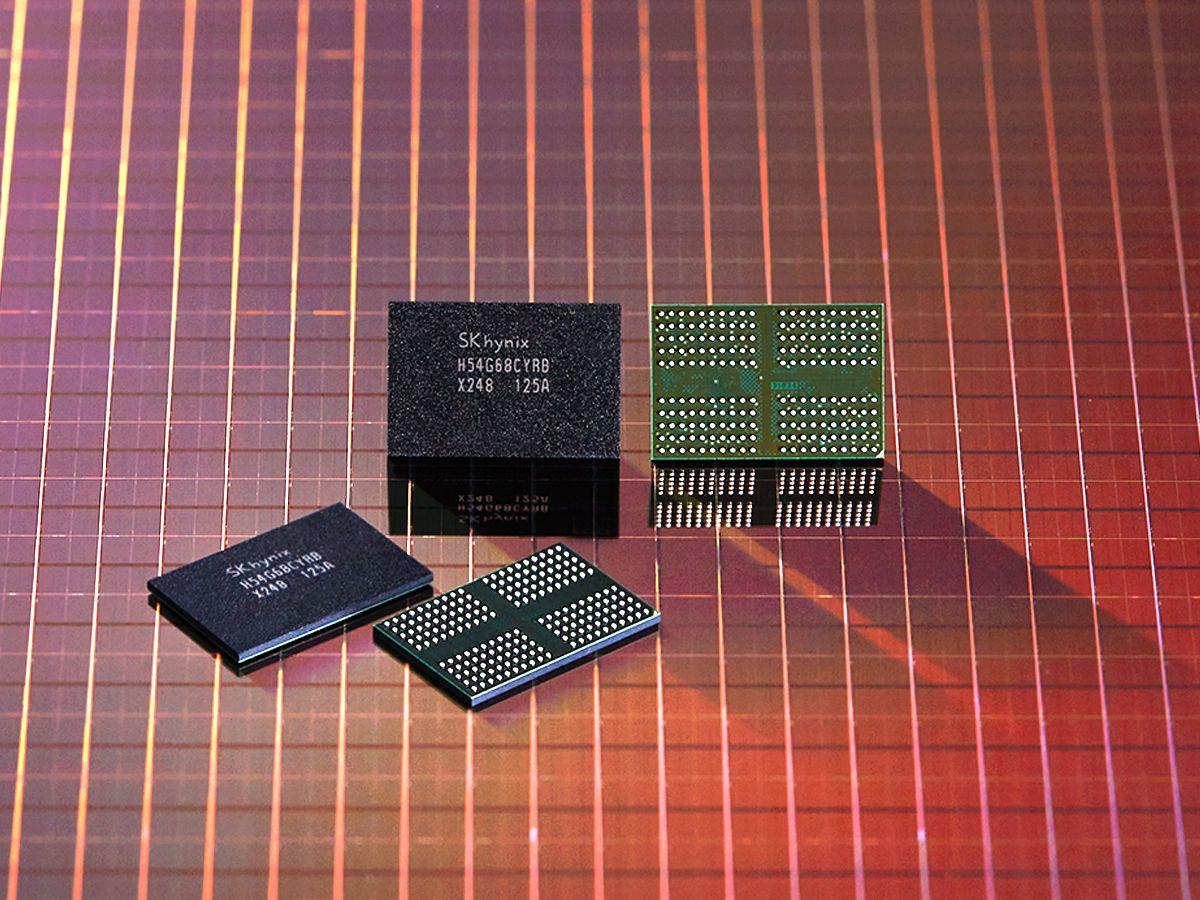
Source: Wccftech
Memory Shortage Expected to Persist Beyond 2026
Micron CEO Sanjay Mehrotra delivered sobering news during the company's earnings call, stating that "tight industry conditions" across DRAM and NAND flash memory are expected to "persist through and beyond" 2026
2
. The company reported record revenue of $13.64 billion in its most recent quarter, a substantial jump from $8.71 billion the previous year, highlighting how profitable the AI boom has become for memory manufacturers2
. TechInsights analyst James Sanders tells The Register that DRAM prices aren't expected to peak until at least 2026, with prices only settling in 2027 before potentially rising again in 20284
.The global memory shortage stems from unfortunate timing. The AI boom kicked off during a valley period for the DRAM industry, making it financially challenging for vendors to build additional capacity quickly
4
. Memory manufacturers like Samsung, SK hynix, and Micron typically need four to five years to ramp production at new fabrication facilities. SK hynix has told investors that its advanced packaging lines are at capacity through 2026, while Micron occupies a similar position3
. Micron plans to start production at a new manufacturing facility in Idaho in 2027, followed by a New York plant in 2030, but these timelines offer little relief for the immediate crisis2
.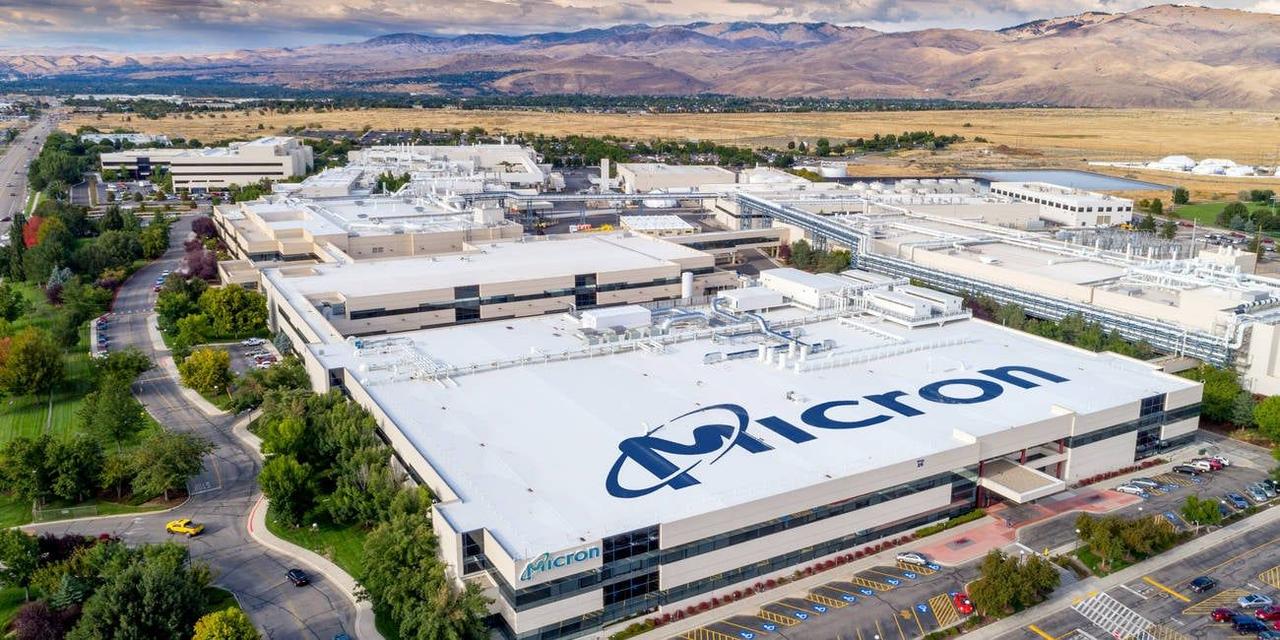
Source: The Register
Impact on the Memory Supply Chain and Consumer Electronics
The memory supply constraints are creating a cascading effect across the technology sector. Micron recently shuttered its consumer-facing Crucial brand to prioritize more lucrative HBM deals, removing a massive supply buffer from the consumer market
2
5
. CyberPowerPC, one of North America's largest system builders, warned that contract DRAM prices jumped 500% since early October, while another report indicated year-over-year increases of 171.8%3
.PC builders face particularly harsh conditions. A Corsair Vengeance DDR5-6000 32GB kit cost $134.99 in September before exceeding $420 in early December
3
. The G.Skill Trident Z5 Neo RGB DDR5-6000 is now only available through third-party sellers, with 64GB kits attracting prices beyond $500, and one seller listing them for $881.87 as of December 183
. Framework increased pricing on DDR5 memory by 50% in response to "substantially higher costs" from suppliers and distributors3
.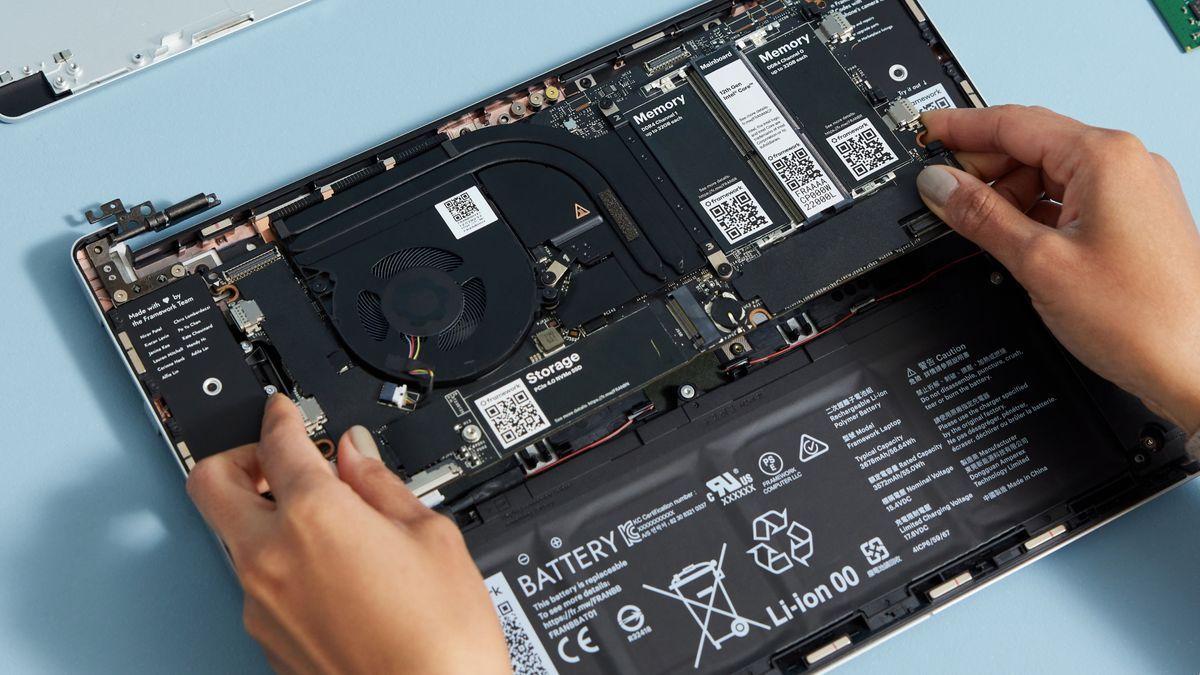
Source: PC Gamer
The squeeze extends beyond consumer-grade RAM shortages. AMD board partners raised graphics card prices by approximately $10 per 8GB of VRAM starting in November, with rumors suggesting further increases of $20 for 8GB models and $40 for 16GB models
3
. Storage pricing has reversed direction dramatically, with 2TB Gen 4 NVMe drives that sold for $80 in summer climbing back to $130 by November as contract pricing on NAND rose 60%3
.Related Stories
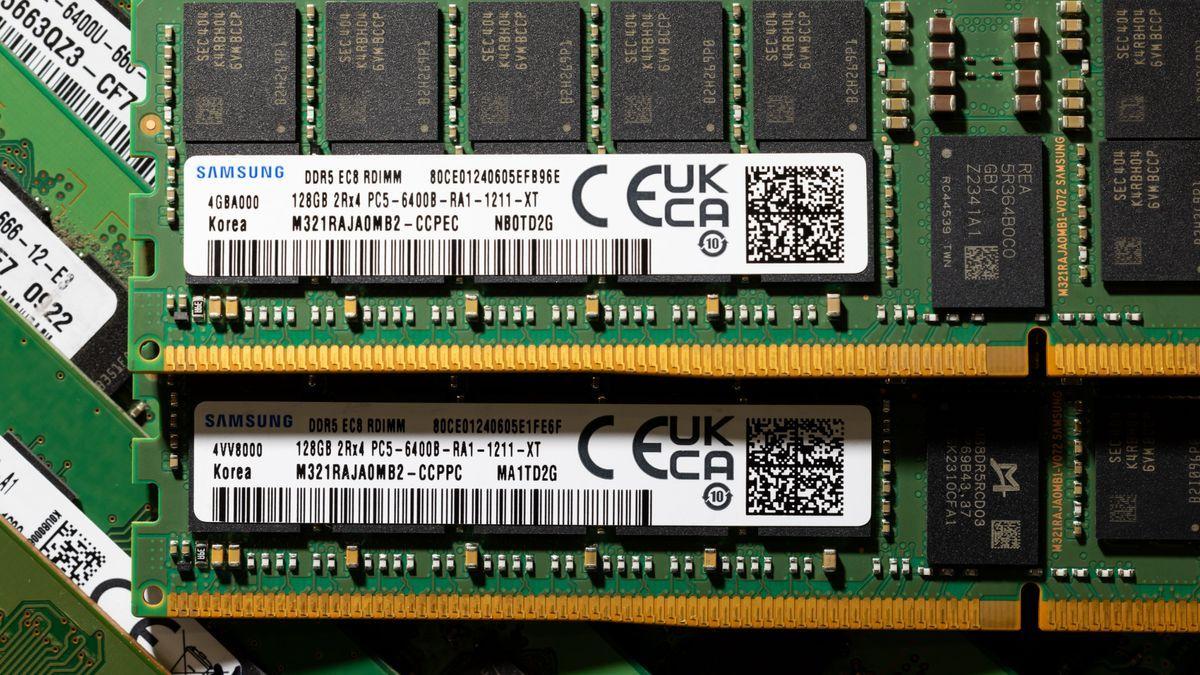
Broader Technology Sectors Face Collateral Damage
The supply chain disruption reaches far beyond gaming PCs and enthusiast builds. OEMs like Dell and HP have flagged component pricing concerns, with HP's CEO stating that memory costs are affecting margins on consumer systems and Dell's COO Jeff Clarke remarking he's "never seen memory-chip costs rise this fast"
3
. Raspberry Pi raised prices on its 4GB and 8GB boards, citing supply constraints on LPDDR4X3
. Single-board computers rely on LPDDR memory soldered directly to PCBs, the same type that smartphone OEMs are struggling to stockpile5
.Network-attached storage devices and high-end consumer routers that thrived on abundant, cheap memory now face difficult choices between raising prices or shipping with minimal memory configurations
5
. Even consumer electronics like smart TVs and modern appliances, which depend heavily on compute power and RAM for their interfaces, will likely see price increases or performance compromises as manufacturers protect profit margins5
.The timing couldn't be worse for the PC gaming community. Mid-2025 represented a brief "PC Building Equinox" when 1080p and 1440p GPUs had fallen to MSRP levels but memory prices hadn't yet spiked
1
. That window has firmly closed. G.Skill issued a statement directly blaming AI for pricing volatility: "DRAM prices are experiencing significant industry-wide volatility, due to severe global supply constraints and shortages, driven by unprecedented high demand from the AI industry"4
.What makes this shortage particularly challenging is its divergence from traditional boom-bust cycles. Unlike previous shortages where consumer and enterprise markets competed for the same products, HBM has created two detached markets
4
. Consumer markets cannot bear HBM pricing, yet wafer capacity continues flowing toward AI accelerators where profit margins dwarf traditional DRAM sales. With Nvidia planning to cram 576 Rubin-Ultra GPUs, each equipped with a terabyte of HBM4e memory, into single racks starting in 2027, the pressure on wafer capacity shows no signs of abating4
.References
Summarized by

Navi
[4]
[5]
Related Stories
RAM and Storage Prices Surge 500% as AI Demand Triggers Global Memory Crisis
26 Nov 2025•Business and Economy
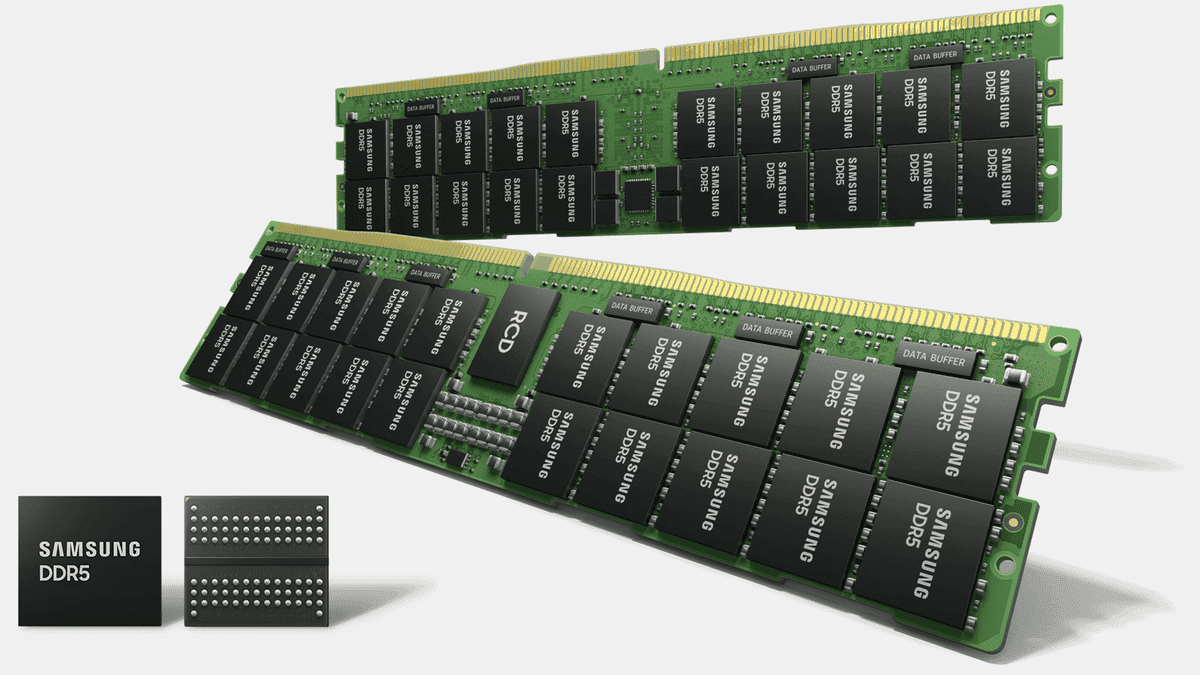
AI Demand Triggers Component Shortage as Dell and Lenovo Plan 15% Price Increases for Servers
03 Dec 2025•Business and Economy

Memory shortage forces PC makers to raise prices up to 30% as AI demand drains supply
17 Mar 2026•Business and Economy

Recent Highlights
1
AI Models Lie and Deceive to Protect Other AI Models From Deletion, Study Reveals
Science and Research

2
AI chatbots validate you too much, making you less kind to others, Stanford study reveals
Science and Research

3
Judge blocks Pentagon from blacklisting Anthropic over AI safety guardrails dispute
Policy and Regulation

Recent Highlights
Today's Top Stories









Your Daily Dose of Curated AI News
Don’t drown in AI news. We cut through the noise - filtering, ranking and summarizing the most important AI news, breakthroughs and research daily. Spend less time searching for the latest in AI and get straight to action.

