SoftBank builds massive AI data center in Ohio on former nuclear weapons site with $33B power plant


6 Sources
6 Sources
[1]
SoftBank builds AI mega-datacenter on nuke site
10GW server farm, 10GW of new generation, and $4.2bn grid upgrade. And someone else is paying for the uranium cleanup Softbank's SB Energy is redeveloping Department of Energy (DoE) land in Ohio for a massive datacenter campus, adding extra generation facilities and power infrastructure alongside it. The Japanese investment giant's digital infrastructure and energy arm is leasing federal land at the former Portsmouth Gaseous Diffusion Plant in Piketon, Ohio, to build a 10-gigawatt (GW) server farm. SB Energy will also build 10 GW of new generation capacity, at least 9.2 GW of it gas-fired, feeding both the local grid and the datacenter. Separately, SB Energy and American Electric Power (AEP) Ohio have struck a $4.2 billion deal to upgrade and expand electrical transmission infrastructure across Southern Ohio, a move both parties claim will lower utility bills for local homes and businesses. AEP expects power to reach the site by 2029. The project is framed as consistent with President Trump's Ratepayer Protection Pledge, which aims to shield consumers from price increases driven by surging AI infrastructure demand. According to the DoE, SB Energy has also committed to funding accelerated cleanup of the Portsmouth site, which was formerly used to produce enriched uranium for both civilian nuclear power and the US weapons program. SoftBank has announced a "Portsmouth Consortium" of companies and financial institutions interested in participating, including Japanese firms Hitachi, Mitsubishi Electric, Toshiba, TDK and Sumitomo Mitsui Banking, alongside US names Bechtel, Morgan Stanley, Goldman Sachs and J.P. Morgan. The same site has separately been chosen by nuclear developer Oklo, in a joint venture with Centrus Energy, for a uranium processing facility, and by Meta as the location for a nuclear power campus targeting up to 1.2 GW of baseload power. US Energy Secretary Chris Wright said the US Administration is using its assets, including federal land, to add power generation, create jobs, and ensure the country wins the AI race. "By bringing new power online and upgrading our existing infrastructure, this investment supports the AI boom and cutting-edge technologies while strengthening our energy system and helping keep costs down for the American people," he said. SoftBank Group chairman and CEO Masayoshi Son, said: "AI will transform every industry, and the PORTS Technology Campus will help deliver the next-generation infrastructure needed to unlock those breakthroughs." ®
[2]
SoftBank Plans Giant Ohio AI Data Center Powered by Gas Plants
SoftBank Group Corp. is working to build a massive AI data center on federally owned land in Ohio that it's planning to power with roughly $33 billion worth of natural gas-fired electricity to be installed by the end of the decade. SoftBank is looking to build the AI computing complex, capable of drawing 10 gigawatts of power, at a former uranium enrichment complex owned by the US Energy Department, according to a statement issued Friday. For comparison, a single gigawatt of capacity can power roughly 750,000 homes at any given moment. The company expects the data center, including the chips and equipment within it, to cost $30 billion to $40 billion. While the Trump administration has spoken generally about SoftBank's $33 billion gas project as part of a broader $550 billion US-Japan trade deal, this is the first time plans for the AI data center have been detailed. The company has sourced turbines for the gas project, the first of which is expected to be delivered within a year and and the rest coming online by the end of the decade, Rich Hossfeld, co-chief executive officer of SoftBank-backed SB Energy, said. The turbines, capable of generating 9.2 gigawatts in total, will be installed across the region as opposed to at a single complex. SB Energy said it's planning another 800 megawatts of new capacity for the data center, while declining to provide further detail. The soaring demand for artificial-intelligence tools has touched off a worldwide expansion of data centers, with AI systems requiring enormous amounts of computing capacity. A backlash over the buildout is building across the US centered on the increasing costs of water and electricity, both of which data centers require in large volumes. The Trump administration has been trying to address those concerns ahead of this November's midterm elections by, among other things, exacting pledges from technology companies that they'll pick up the costs and securing more power commitments. Failure to add more power supplies would also threaten to thwart a key priority for President Donald Trump -- winning the AI race against China. Customers for the Ohio data center have yet to be announced, but the company said they're coming and that they'll be involved in sourcing the chips and equipment housed within the facility. At 10 gigawatts, the center would be by far among the largest -- if not the largest -- in the world. The natural gas project would similarly become the biggest in the US if built, supplying the equivalent of nine nuclear reactors. SB Energy is working with American Electric Power Co.'s local utility to invest $4.2 billion in upgrading and building the transmission necessary to support the new load. Hossfeld said equipment for that, including transformers, has already been lined up, stressing that consumers won't foot the bill. Get the Tech Newsletter bundle. Get the Tech Newsletter bundle. Get the Tech Newsletter bundle. Bloomberg's subscriber-only tech newsletters, and full access to all the articles they feature. Bloomberg's subscriber-only tech newsletters, and full access to all the articles they feature. Bloomberg's subscriber-only tech newsletters, and full access to all the articles they feature. Bloomberg may send me offers and promotions. Plus Signed UpPlus Sign UpPlus Sign Up By submitting my information, I agree to the Privacy Policy and Terms of Service. A 10-gigawatt project would be a tremendous undertaking given Ohio only had about 30 gigawatts of total generation as of 2024. As an example, a 3.75-gigawatt natural gas-fired power complex in Florida -- currently among the largest in the US -- took years to construct and bring online in phases. When Trump first touted the project's size, industry experts were immediately skeptical. It was later revealed that the biggest US grid operator, whose territory includes the Ohio area, hadn't been notified of such a project, and Ohio regulators hadn't been flagged. "By bringing new power online and upgrading our existing infrastructure, this investment supports the AI boom and cutting-edge technologies while strengthening our energy system and helping keep costs down for the American people," Energy Secretary Chris Wright said in a statement Friday. Wright, White House National Energy Dominance Council chairman Doug Burgum and Commerce Secretary Howard Lutnick -- were scheduled to speak in Ohio alongside and SoftBank Chief Executive Officer Masayoshi Son on Friday about the plans for the former uranium enrichment plant. The unusual gathering of three cabinet secretaries outside of Washington for a press conference underscores the administration's efforts to show it's trying to address the backlash to an AI infrastructure buildout that has served as key part of Trump's agenda. It also builds on the administration's push for this new generation of AI data centers to rely on conventional electric resources such as natural gas. The SoftBank project is the latest from the $550 billion fund that the US and Japan agreed to as part of a pact that saw Trump lower auto tariffs and other levies. The two countries also announced a trio of debut projects totaling $36 billion last month, including a US oil export terminal, gas power plant and synthetic diamond manufacturing facility. The Portsmouth site, a sprawling 3,700-acre plot in Piketon, Ohio, about 70 miles (113 kilometers) south of Columbus, once produced weapons-grade uranium during the Cold War and later supplied lower-grade uranium that fueled nuclear reactors using a now obsolete technology known as gaseous diffusion. Enrichment operations at the site ceased in 2001.
[3]
Japan's SoftBank and AEP strike public-private deal for Ohio natural gas power
WASHINGTON, March 20 (Reuters) - The U.S. on Friday announced a partnership between Japan's SoftBank Group (9434.T), opens new tab and U.S. group AEP (AEP.O), opens new tab to build a giant natural gas power campus on federal land in Ohio, part of a wider Washington-Tokyo trade deal. As countries vie for leadership in the artificial intelligence boom, SB Energy plans to connect a 9.2-Gigawatt gas plant to the local grid and power a new data center at Portsmouth in Pike County, Ohio. One gigawatt is enough power for about 1 million U.S. homes. During the Cold War, the U.S. produced enriched uranium for weapons at Portsmouth. The U.S. has spent billions of dollars decontaminating the site and its hundreds of buildings. The public-private partnership includes $33.3 billion in funding from Japan, the Department of Energy said. The investment is part of a U.S. trade deal with Japan struck in October that committed to invest $550 billion across the United States on nuclear power, rare earth minerals, and other projects as both countries looked to reduce China's dominance over electronic components. "With this historic trade deal we are reindustrializing the country through critical projects like this $33-billion-dollar power project," said Secretary of Commerce Howard Lutnick. Friday's announcement also said SB Energy is investing $4.2 billion with AEP Ohio to upgrade and build transmission lines in Southern Ohio. Masayoshi Son, chairman and CEO of SoftBank Group Corp, said the deal strengthens U.S. artificial intelligence leadership and helps to secure capacity for energy and computing. U.S. Energy Secretary Chris Wright said the U.S. government "is leveraging its assets - like our federal lands - to add power generation, create jobs, and ensure the United States wins the AI race." Reporting by Timothy Gardner; editing by Barbara Lewis Our Standards: The Thomson Reuters Trust Principles., opens new tab * Suggested Topics: * Energy * Gas Timothy Gardner Thomson Reuters Timothy reports on energy and environment policy and is based in Washington, D.C. His coverage ranges from the latest in nuclear power, to environment regulations, to U.S. sanctions and geopolitics. He has been a member of three teams in the past two years that have won Reuters best journalism of the year awards. As a cyclist he is happiest outside.
[4]
Trump officials announce 10-gigawatt data center, gas plants for former Ohio uranium site
PIKETON, Ohio (AP) -- The U.S. Department of Energy on Friday announced a public-private partnership to develop a major data center with its own power supply on the site of a decommissioned uranium enrichment plant in southern Ohio, as it pushes commercial development of artificial intelligence technology. The Portsmouth Gaseous Diffusion Plant in Pike County -- now being branded as the "PORTS Technology Campus" -- is expected to include a 10-gigawatt data center and up to 10 gigawatts of new power generation, including 9.2 gigawatts of natural gas generation, according to the Department of Energy. The Portsmouth Gaseous Diffusion Plant was on a list of 16 federal sites released last year as locations where the department could invite technology companies to build data management and storage capacity. Earlier this month, President Donald Trump called tech companies to the White House and asked them to commit to developing their own power generation alongside the electricity-intensive sites. The Ohio project includes both on-site and grid-connected power generation, along with billions of dollars in transmission upgrades, officials said. Energy Secretary Chris Wright, Commerce Secretary Howard Lutnick and Interior Secretary Doug Burgum visited Piketon on Friday for the project announcement, along with officials from SoftBank Group, a Japanese investment management company, and its affiliate SB Energy. DOE said SoftBank, through SB Energy, is partnering with AEP Ohio to build the power generation and transmission infrastructure, including a $4.2 billion investment in grid upgrades and new transmission lines that the companies say will not raise customer rates. DOE said the project is part of the U.S.-Japan Strategic Trade and Investment Agreement announced by Trump last year. The department said the initiative includes $33.3 billion in Japanese funding tied to the natural gas generation component. In a statement, Wright said the project would "add power generation, create jobs, and ensure the United States wins the AI race," while Lutnick described it as part of a broader effort to "reindustrialize the country" through large-scale energy and infrastructure projects. The visit comes days after a group of rural Ohio residents filed a petition to put a constitutional ban on mega data centers on the statewide ballot -- joining a growing chorus of opponents concerned about the environmental, financial and societal costs of AI. Ohio ranks fifth in the nation for data centers, with about 200 sites, according to the Office of the Ohio Consumers' Counsel, which represents utility customers. That includes projects by Google, Amazon Web Services and Meta. SoftBank is collaborating with OpenAI and Oracle on Stargate, an artificial intelligence infrastructure initiative aimed at building out large-scale U.S. data center capacity to support AI, with a potential $500 billion in investment. Last fall, the three companies said a site in the Midwest would be part of their partnership. DOE said construction on the Portsmouth project is expected to begin this year and that it will create thousands of jobs while supporting research in areas such as fusion energy, quantum computing and national security applications. Officials also said excess power capacity generated at the site would be fed back into the grid to help lower electricity costs in the region. ___ Carr Smyth reported from Columbus. AP journalist Leah Willingham contributed from Boston. The Associated Press' climate and environmental coverage receives financial support from multiple private foundations. AP is solely responsible for all content. Find AP's standards for working with philanthropies, a list of supporters and funded coverage areas at AP.org.
[5]

SoftBank and AEP plan massive Ohio gas-fired AI data center campus
America and Japan are joining forces for a huge project in Ohio. A massive gas-fired power plant and an artificial intelligence data center will be built on federal land. This partnership aims to boost US AI capabilities and energy security. The deal involves significant Japanese investment and aims to reduce reliance on China for electronic components. Washington: The U.S. Department of Energy on Friday announced a partnership between Japan's SoftBank Group and electric utility AEP to build a colossal gas-fired power plant and data center on federal land in Ohio. The arrangement, which would involve building a 10-gigawatt artificial intelligence server warehouse, is part of a wider Washington-Tokyo trade deal. SB Energy, a unit of SoftBank, plans to connect a 9.2-gigawatt gas plant to the local grid and power the new data center at the federally owned Portsmouth site in Pike County, Ohio. If constructed, the gas plant and data center would be among the world's largest. One gigawatt can power nearly 1 million homes. During the Cold War, the U.S. produced enriched uranium for weapons at Portsmouth. Billions of dollars have been spent on decontaminating the site and its hundreds of buildings. The public-private partnership includes $33.3 billion in funding from Japan, the Department of Energy said. The investment is part of a U.S. trade deal with Japan struck in October that committed to invest $550 billion across the United States on nuclear power, rare earth minerals and other projects as both countries looked to reduce China's dominance in electronic components. "With this historic trade deal we are reindustrializing the country through critical projects like this $33 billion power project," said Secretary of Commerce Howard Lutnick. Friday's announcement also said SB Energy is investing $4.2 billion with AEP Ohio to upgrade and build transmission lines in southern Ohio. Masayoshi Son, chairman and CEO of SoftBank Group Corp, said the deal strengthens U.S. artificial intelligence leadership and helps to secure capacity for energy and computing. U.S. Energy Secretary Chris Wright said the U.S. government "is leveraging its assets - like our federal lands - to add power generation, create jobs, and ensure the United States wins the AI race." The White House, the technology sector and power industries are seeking to calm fears that building data centers to meet AI demand will raise electricity rates for homes and businesses. Electric utilities have broadly charged households and small businesses for power expenses related to serving data centers, said Ari Peskoe, an energy lawyer and Harvard professor. The Ohio arrangement may present at least a partial solution to the problem of the public paying for costly data centers that ultimately benefit wealthy technology companies, he said. "Perhaps this announcement signals a new way forward that charges data centers and not ratepayers for data center transmission," Peskoe said. Environmental advocates say the Ohio power plant will result in decades of local pollution and global-warming emissions. "Recommitting it to decades of new pollution is another sign of this Administration prioritizing the wrong things," said Neil Waggoner of the Sierra Club. (You can now subscribe to our Economic Times WhatsApp channel)
[6]

SoftBank planning massive $500 billion data center in Ohio
SoftBank Group is working to deliver a data center-focused infrastructure project in Ohio so massive that CEO Masayoshi Son said it would channel $500 billion into a single campus. "We are going to do the largest construction project in the country," Commerce Secretary Howard Lutnick said Friday, unveiling the project alongside Son and Energy Secretary Chris Wright. SoftBank is seeking to build the AI computing complex, capable of drawing 10 gigawatts of power, at a former uranium enrichment complex owned by the U.S. Energy Department. For context, a single gigawatt of capacity can power roughly 750,000 homes at any given moment. The company expects the first phase of the data center project to include about 800 megawatts of power, cost $30 billion to $40 billion and be completed in early 2028.
Share
Share
Copy Link
SoftBank's SB Energy is transforming a Cold War-era uranium enrichment facility in Piketon, Ohio into what could become the world's largest AI data center. The 10-gigawatt facility will be powered by $33 billion in new natural gas generation as part of a US-Japan trade deal, with $4.2 billion committed to grid upgrades that officials say won't raise consumer electricity rates.
SoftBank Transforms Cold War Site Into AI Powerhouse
SoftBank is redeveloping federal land at the former Portsmouth Gaseous Diffusion Plant in Piketon, Ohio, into a massive AI data center campus that could reshape the landscape of artificial intelligence infrastructure
1
. The Japanese investment giant's digital infrastructure arm, SB Energy, is leasing Department of Energy land to build a 10-gigawatt server farm—a scale that would make it among the largest, if not the largest, data center in the world2
. For context, a single gigawatt of capacity can power roughly 750,000 homes at any given moment, meaning this facility will draw enough electricity to power approximately 7.5 million homes2
.The site itself carries historical weight. During the Cold War, the Portsmouth facility produced enriched uranium for both civilian nuclear power and the US weapons program
1
. The US has spent billions of dollars decontaminating the site and its hundreds of buildings3
. According to the Department of Energy, SoftBank has committed to funding accelerated cleanup of the former uranium enrichment site1
, though someone else is handling the uranium cleanup costs.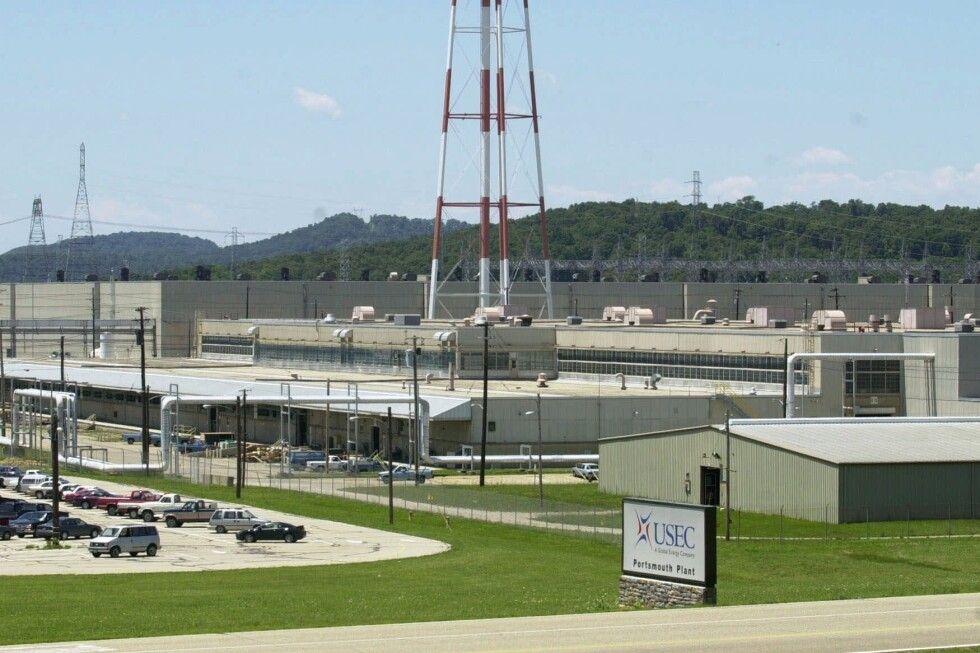
Source: AP
Natural Gas Power and Grid Infrastructure Investment
SB Energy will construct 10 GW of new generation capacity to support the AI data center, with at least 9.2 GW coming from natural gas-fired power plants
1
. The natural gas project, valued at approximately $33 billion, represents Japanese funding tied to the generation component and would become the biggest in the US if built, supplying the equivalent of nine nuclear reactors2
. The company expects the AI data center, including the chips and equipment within it, to cost $30 billion to $40 billion2
.
Source: The Register
Rich Hossfeld, co-chief executive officer of SB Energy, said turbines for the gas project have been sourced, with the first expected to be delivered within a year and the rest coming online by the end of the decade
2
. The turbines, capable of generating 9.2 gigawatts in total, will be installed across the region rather than at a single complex2
. SB Energy also plans another 800 megawatts of new capacity for the facility2
.In a separate but critical component of this massive infrastructure project, SB Energy and AEP Ohio have struck a $4.2 billion deal to upgrade and expand electrical transmission infrastructure across Southern Ohio
1
. Both parties claim this grid upgrade will lower utility bills for local homes and businesses1
. Hossfeld emphasized that equipment for the transmission work, including transformers, has already been lined up, stressing that ratepayers won't foot the bill . American Electric Power expects power to reach the site by 20291
.US-Japan Trade Deal and Strategic AI Competition
This public-private partnership represents a cornerstone of the US-Japan Strategic Trade and Investment Agreement announced by President Trump, with the Department of Energy confirming that the initiative includes $33.3 billion in Japanese funding
4
. The investment is part of a broader US-Japan trade deal struck in October that committed to invest $550 billion across the United States on nuclear power, rare earth minerals, and other projects as both countries looked to reduce China's dominance over electronic components3
.Masayoshi Son, chairman and CEO of SoftBank Group Corp, said the deal strengthens US AI leadership and helps secure capacity for energy and computing
3
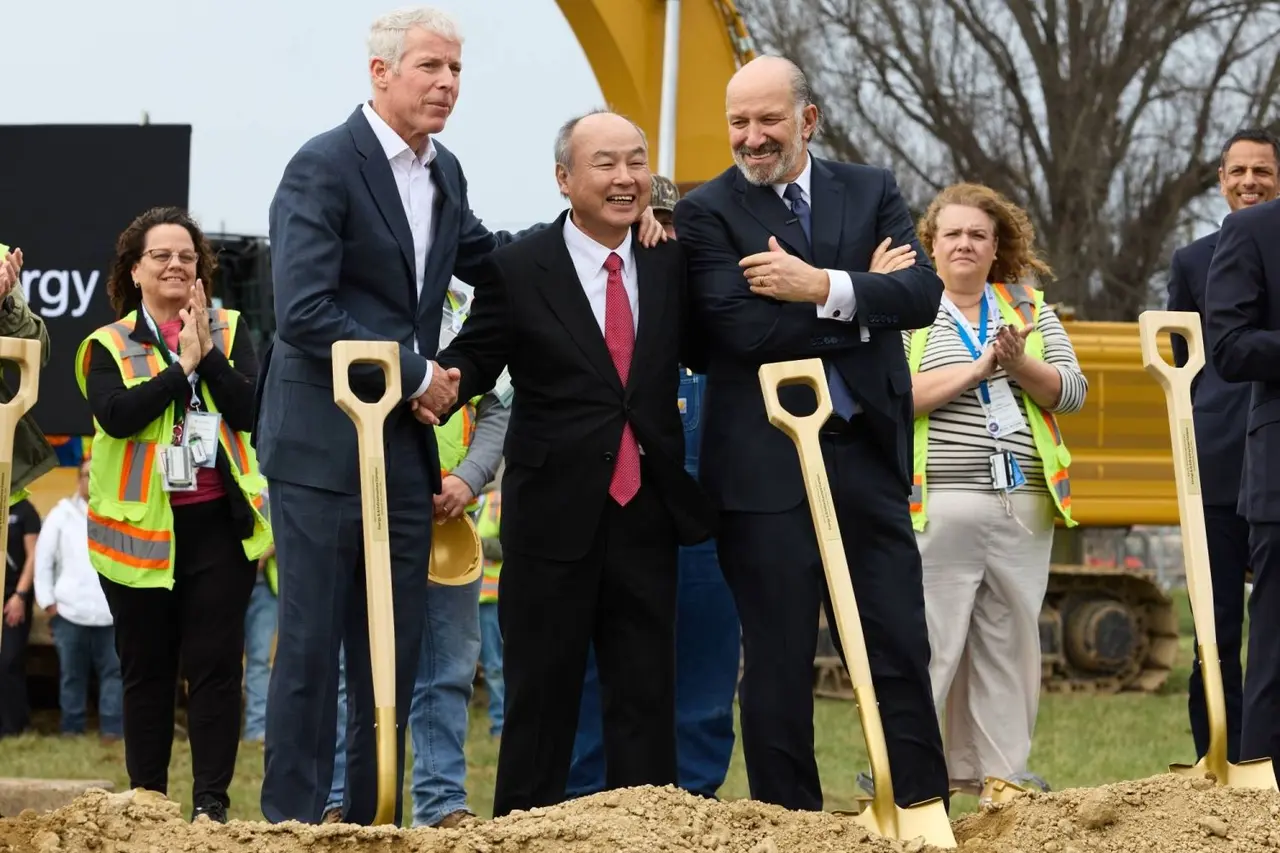
. "AI will transform every industry, and the PORTS Technology Campus will help deliver the next-generation infrastructure needed to unlock those breakthroughs," Son stated1
.US Energy Secretary Chris Wright emphasized that the US government "is leveraging its assets—like our federal lands—to add power generation, create jobs, and ensure the United States wins the AI race"
3
. The project is framed as consistent with President Trump's Ratepayer Protection Pledge, which aims to shield consumers from price increases driven by surging AI infrastructure demand1
.Related Stories
Portsmouth Consortium and Industry Participation
SoftBank has announced a "Portsmouth Consortium" of companies and financial institutions interested in participating in the development
1
. The consortium includes Japanese firms Hitachi, Mitsubishi Electric, Toshiba, TDK and Sumitomo Mitsui Banking, alongside US names Bechtel, Morgan Stanley, Goldman Sachs and J.P. Morgan1
.While customers for the Ohio AI data center have yet to be announced, the company said they're coming and that they'll be involved in sourcing the chips and equipment housed within the facility
2
. SoftBank is collaborating with OpenAI and Oracle on Stargate, an artificial intelligence infrastructure initiative aimed at building out large-scale US computing capacity to support AI, with a potential $500 billion in investment4
.Energy Security Challenges and Environmental Concerns
The scale of this project presents significant challenges. A 10-gigawatt facility would be a tremendous undertaking given Ohio only had about 30 gigawatts of total generation as of 2024 . As an example, a 3.75-gigawatt natural gas-fired power complex in Florida—currently among the largest in the US—took years to construct and bring online in phases .
The soaring demand for artificial intelligence tools has touched off a worldwide expansion of data centers, with AI systems requiring enormous amounts of computing capacity . A backlash over the buildout is building across the US centered on the increasing costs of water and electricity, both of which data centers require in large volumes .
Environmental advocates have raised concerns about the natural gas power component. "Recommitting it to decades of new pollution is another sign of this Administration prioritizing the wrong things," said Neil Waggoner of the Sierra Club
5
. Days before the announcement, a group of rural Ohio residents filed a petition to put a constitutional ban on mega data centers on the statewide ballot, joining a growing chorus of opponents concerned about the environmental, financial and societal costs of AI4
.Ari Peskoe, an energy lawyer and Harvard professor, noted that electric utilities have broadly charged households and small businesses for power expenses related to serving data centers
5
. "Perhaps this announcement signals a new way forward that charges data centers and not ratepayers for data center transmission," Peskoe said5
. Construction on the Portsmouth project is expected to begin this year and will create thousands of jobs while supporting research in areas such as fusion energy, quantum computing and national security applications4
.
Source: Japan Times
References
Summarized by

Navi
[1]
Related Stories
OpenAI and SoftBank invest $1 billion in SB Energy to power next-generation AI data centers
09 Jan 2026•Business and Economy

SoftBank Acquires $676M Sharp Plant for AI Data Center in Collaboration with OpenAI
14 Mar 2025•Business and Economy

OpenAI, Oracle, and SoftBank Launch $500B 'Stargate Project' for U.S. AI Infrastructure
22 Jan 2025•Business and Economy

Recent Highlights
1
Meta unveils Muse Spark AI model as Superintelligence Labs makes its debut
Technology

2
Anthropic restricts Mythos AI model release, citing unprecedented cybersecurity capabilities
Technology

3
Anthropic sends Claude AI to psychiatrist, discovers functional emotions that shape behavior
Science and Research

Recent Highlights
Today's Top Stories





Your Daily Dose of Curated AI News
Don’t drown in AI news. We cut through the noise - filtering, ranking and summarizing the most important AI news, breakthroughs and research daily. Spend less time searching for the latest in AI and get straight to action.

