Spotify expands AI Prompted Playlists to UK, Ireland, Australia and Sweden for Premium users


2 Sources
2 Sources
[1]
Spotify rolls out AI-powered Prompted Playlists to the U.K. and other markets
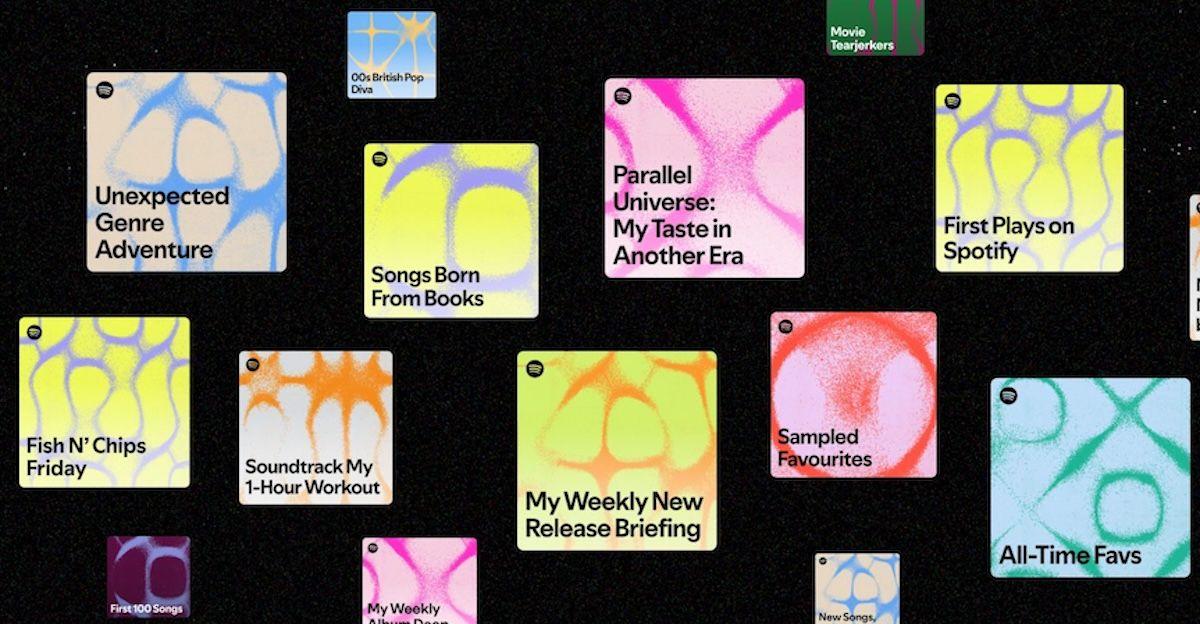
After initially testing its AI-powered "Prompted Playlists" feature in New Zealand and recently launching in the U.S. and Canada, Spotify announced on Monday that it's rolling out the tool to Premium subscribers in the U.K., Ireland, Australia, and Sweden. Prompted Playlists allows users to create custom playlists by simply describing what they want to listen to in their own words. Instead of searching for individual songs or artists, users can describe the vibe, scenario, or inspiration they want, and Spotify will take care of the rest. To access the feature, users tap "Create" and then select "Prompted Playlist," then enter any prompt in English. The feature is designed to interpret themes including moods, aesthetics, and even memories. Prompts can be as broad or specific as the user wants, referencing musical eras, genres, activities, lyrics, instruments, or even requesting a playlist inspired by a TV show, movie, or personal milestone. Users can also specify whether they want the playlist to include mostly new music or just music from their library in the prompt. Once a prompt is submitted, Spotify's AI generates a customized playlist tailored to the request. The system draws on the user's listening history and incorporates current music and cultural trends. Plus, each song comes with a short explanation that offers insight into why it was chosen for that particular playlist. Users can refine their playlists by adjusting their prompts or starting over. For those whose musical tastes constantly evolve, playlists can be scheduled to automatically refresh on a daily or weekly basis. Since this is still in beta, Spotify noted that there might be changes as the company gets feedback, and that there are currently usage limits in place. Some users have reported hitting limits after roughly 20 or 30 prompts. Spotify has recently expanded AI features throughout its platform, including Page Match, which lets users scan a physical book page to jump to the corresponding spot in the audiobook, and About This Song. The platform also updated its song lyrics feature to provide global translations and offline access. Last week, SeatGeek partnered with Spotify to help listeners easily find ticket links for concerts on an artist's page or upcoming tour dates within the app. Internally, the company has implemented AI throughout its workflows, with co-CEO Gustav Söderström saying earlier this month that Spotify's best developers haven't written a line of code since December, thanks to AI. Spotify is also expanding its audiobook business by venturing into physical book sales. Soon, users in the U.S. and U.K. will be able to buy physical copies directly from the app.
[2]
Spotify expands "Prompted Playlist" feature to UK, Ireland, and Australia
Spotify announced the expansion of its AI-powered "Prompted Playlist" feature to Premium subscribers in the U.K., Ireland, Australia, and Sweden on Monday. The tool, previously tested in New Zealand and launched in the U.S. and Canada, allows users to generate custom playlists by describing specific moods, aesthetics, or themes. Access requires tapping "Create," selecting "Prompted Playlist," and entering an English-language prompt. The feature interprets requests ranging from musical genres to inspirations drawn from TV shows or movies. Users can specify within the prompt whether the generated playlist should prioritize new music or restrict selections to tracks already present in their listening library. Spotify's AI system constructs these playlists by analyzing the user's personal listening history and integrating current music and cultural trends. Each song included in a generated playlist receives a short explanation offering insight into why the track was selected for that specific request. Users retain control over the output and can refine playlists by adjusting their prompts or starting over completely. Video: Spotify For users with evolving musical tastes, Spotify allows generated playlists to be scheduled for automatic refreshing on a daily or weekly basis. The feature remains in beta status, and the company notes that usage limits are currently in place. Some users have reported encountering these limits after approximately 20 to 30 prompts. Spotify has indicated that the tool may undergo changes based on user feedback as the beta continues. The company is rolling out this feature alongside other AI-driven tools across the platform. One such recent addition is Page Match, a feature designed to bridge physical and digital media consumption. Page Match allows users to scan a physical book page to jump directly to the corresponding spot in the audiobook version. Additionally, Spotify updated its song lyrics feature to include global translations and offline access capabilities. These updates reflect a broader strategy to integrate AI into various user workflows and content interactions within the application. Spotify has also formed new partnerships to expand utility within the app. Last week, the company announced a collaboration with SeatGeek. This partnership enables listeners to find ticket links for concerts directly on an artist's page and view upcoming tour dates within the Spotify app. Internally, Spotify has implemented AI across its engineering workflows. Co-CEO Gustav Söderström stated earlier this month that the company's best developers have not written a line of code since December due to the integration of AI tools. Beyond audio streaming, Spotify is expanding its audiobook business by venturing into physical book sales. The company confirmed that users in the U.S. and U.K. will soon be able to buy physical copies of books directly from the app. This move signals a diversification of commerce options available to the platform's user base. Spotify continues to leverage AI to enhance user experience and broaden its service offerings across markets.
Share
Share
Copy Link
Spotify announced the expansion of its AI-powered Prompted Playlists feature to Premium subscribers in the UK, Ireland, Australia, and Sweden. The tool allows users to generate custom music playlists by describing moods, themes, or scenarios in their own words, drawing on listening history and cultural trends to deliver personalized results.
Spotify AI Brings Prompted Playlists to New Markets
Spotify announced on Monday that it's rolling out its AI-powered Prompted Playlists feature to Premium subscribers in the UK, Ireland, Australia, and Sweden
1
2
. After initial testing in New Zealand and a recent launch in the US and Canada, this market expansion signals Spotify's commitment to deploying AI-driven initiatives across its global user base. The feature allows users to generate custom music playlists by simply describing what they want to hear, eliminating the need to search for individual songs or artists manually.How Prompted Playlists Work with Natural Language Prompts
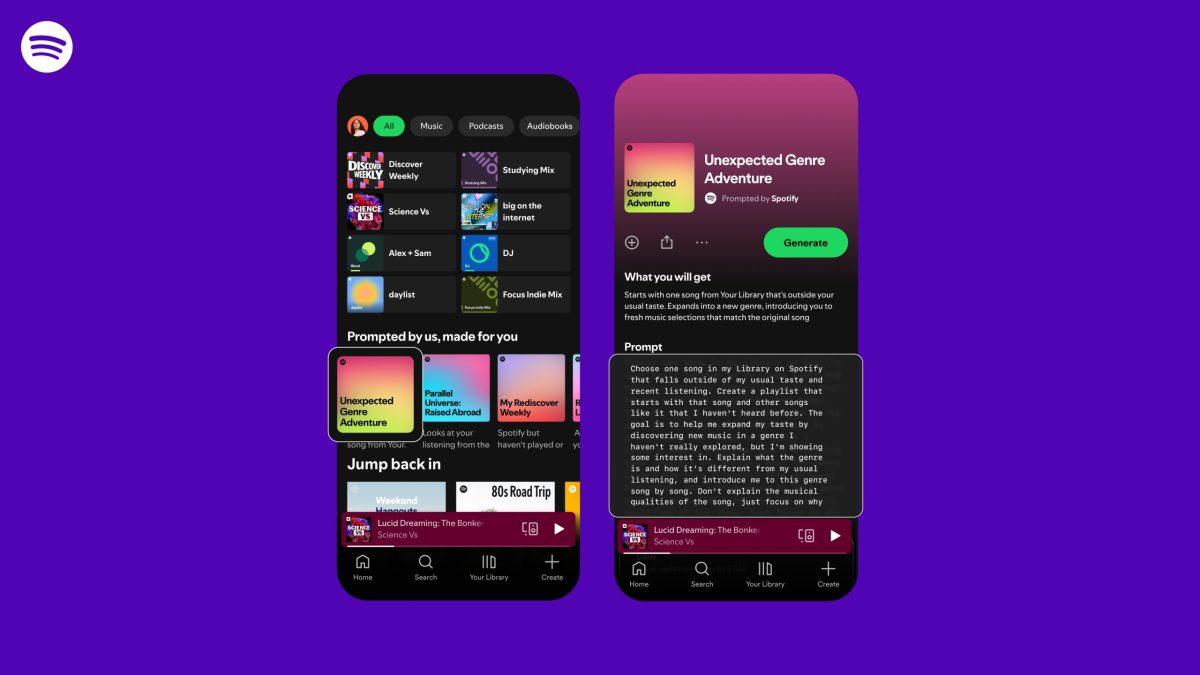
To access the feature, users tap "Create" and then select "Prompted Playlist," entering any prompt in English
1
. The Spotify AI system interprets natural language prompts that reference moods, aesthetics, genres, musical eras, activities, lyrics, instruments, or even inspirations from TV shows, movies, and personal milestones. Users can create custom playlists based on descriptive prompts that are as broad or specific as they prefer2
. The system even allows users to specify within the prompt whether they want the playlist to prioritize new music or restrict selections to tracks already in their library1
.
Source: TechCrunch
Once a prompt is submitted, Spotify's AI constructs these playlists by analyzing listening history and trends, incorporating both the user's personal listening patterns and current music and cultural trends
2
. Each song included comes with a short explanation offering insight into why it was chosen for that particular playlist1
. This transparency helps users understand the AI's decision-making process and discover new connections between their tastes and available music.Beta Status and Usage Limits for Premium Subscribers
The feature remains in beta status, and Spotify noted that changes may occur as the company gathers user feedback
2
. Currently, usage limits are in place, with some users reporting they've hit limits after approximately 20 to 30 prompts1
. Users can refine their playlists by adjusting their prompts or starting over completely. For those whose musical tastes constantly evolve, playlists can be scheduled to automatically refresh on a daily or weekly basis1
, ensuring the user experience remains dynamic and responsive to changing preferences.Related Stories

Broader AI Strategy Across Platform Features
Spotify has recently expanded AI features throughout its platform beyond Prompted Playlists. The company introduced Page Match, which lets users scan a physical book page to jump to the corresponding spot in the audiobook version
1
2
. The platform also updated its song lyrics feature to provide global translations and offline access capabilities2
. Last week, SeatGeek partnered with Spotify to help listeners easily find concert tickets directly on an artist's page or view upcoming tour dates within the app1
.Internally, Spotify has implemented AI throughout its engineering workflows. Co-CEO Gustav Söderström stated earlier this month that Spotify's best developers haven't written a line of code since December, thanks to AI integration
1
[2](https://dataconomy.com/2026/02/24/spotify-expan ds-prompted-playlist-feature-to-uk-ireland-and-australia/). This reveals how deeply the company is embedding AI not just in user-facing features but in its core development processes. Spotify is also expanding its audiobook business by venturing into physical book sales, with users in the US and UK soon able to buy physical copies directly from the app1
. This diversification suggests Spotify aims to become a comprehensive media platform rather than just a music streaming service, leveraging AI to bridge digital and physical content consumption.References
Summarized by

Navi
Related Stories
Spotify launches AI-powered Prompted Playlists in U.S. and Canada for Premium subscribers
22 Jan 2026•Technology
Spotify tests AI-powered Prompted Playlists that let users control their recommendation algorithm
11 Dec 2025•Technology
Spotify Introduces AI-Powered Playlist Creation in the US and Beyond
24 Sept 2024

Recent Highlights
1
OpenAI shuts down Sora video app after six months, ending Disney's $1 billion investment deal
Technology

2
AI-Generated Val Kilmer to Posthumously Appear in As Deep as the Grave After His Death
Entertainment and Society

3
Supermicro Co-Founder Indicted in $2.5 Billion Nvidia AI Chip Smuggling Scheme to China
Policy and Regulation

Recent Highlights
Today's Top Stories




Your Daily Dose of Curated AI News
Don’t drown in AI news. We cut through the noise - filtering, ranking and summarizing the most important AI news, breakthroughs and research daily. Spend less time searching for the latest in AI and get straight to action.

