OpenAI's $500B Stargate AI data centers stall as partners clash over ownership and control


3 Sources
3 Sources
[1]
Stargate AI data centers for OpenAI reportedly delayed by squabbles between partners -- sources say OpenAI, Oracle, and SoftBank disagreed on who would have ultimate control of the planned data centers
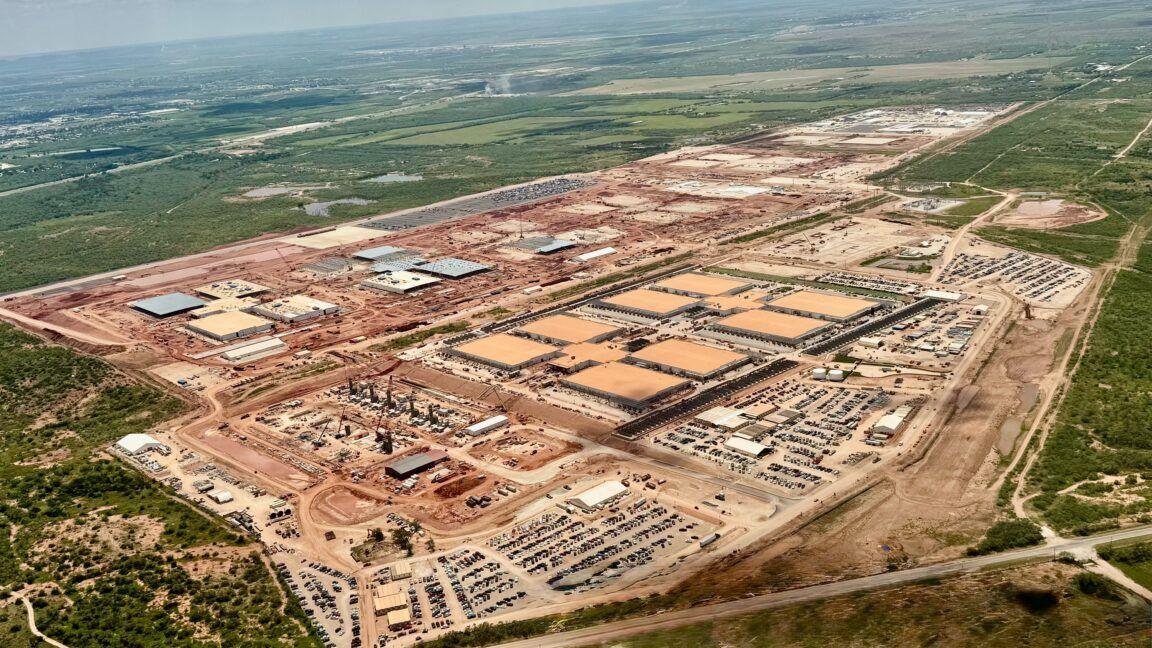
Sources say that Stargate has been stalled due to squabbles between stakeholders over site ownership and system control. U.S. President Donald Trump announced in January 2025 that OpenAI, Oracle, and SoftBank would invest $500 billion and build several data centers across the U.S as part of their "Stargate" AI initiative. But instead of immediately supercharging the AI buildout, it devolved into a three-way tug of war between the three partners, according to a report by The Information. OpenAI initially wanted to forge ahead on its own so that it owned the data centers. This would help it secure its own future without depending on third-party cloud providers, which can be more expensive in the long run. However, the company's investors reportedly balked at the massive upfront costs required to construct AI infrastructure, especially as analysts are projecting that the company could run out of cash by mid-2027. This meant that it had to go back to the negotiating table and continue the discussions with its Stargate partners. This allegedly delayed OpenAI's plan of acquiring 10GW of compute capacity over the next three years through its two partners. Oracle was the first to secure a deal with OpenAI by the start of the latter half of 2025, when it said that it would build a massive Stargate data center with a projected compute capacity of 2 million chips. The AI developer then promised a few months later that it would purchase $300 billion worth of compute from the cloud provider over the next five years, although it's still unclear how the two entities will be able to afford such commitments. Oracle did make two bond offerings in the third and fourth quarters of last year, but put itself in hot water with some investors after they complained about misleading statements during the initial offering. These agreements do not include SoftBank, though. Instead, the AI developer and Japanese financial conglomerate were still locked in talks around the same time last year. OpenAI was already planning a 1GW data center in Texas, but this was put on hold in favor of the negotiations with Oracle. When it looked at the Texas site once more, it brought on SoftBank as a partner instead of going at it alone. This wasn't a seamless transition, though, as the two parties vied for control. Sources say that the deal was only settled after a marathon session in Tokyo at the Japanese conglomerate's headquarters. The two parties eventually settled on a compromise -- SoftBank would get to own and develop the site, but OpenAI would control its design and would have a long-term lease on the facility. Despite that, SoftBank still had to pause its planned $50 billion acquisition of data center operator Switch due to regulatory hurdles. After months of delays, it seems that Stargate is now back on track, and the three companies are making progress on several projects. According to The Information, this isn't exactly ideal for OpenAI, as the best-case scenario for the company is that it owns and operates all of its own data centers. Unfortunately, that is out of the question in the near future because the costs are simply too much for an institution that has yet to reach profitability. Many investors still believe in its potential, though, with the AI firm hoping to secure $100 billion in its latest funding round and hit an $800 billion valuation. Follow Tom's Hardware on Google News, or add us as a preferred source, to get our latest news, analysis, & reviews in your feeds.
[2]
Stargate delays push OpenAI to seek cloud compute alternatives
OpenAI is scrambling to secure computing power after its Stargate data center venture stalled, turning to cloud partners and alternative hardware to fill the gap, according to The Information. Gridlocked from the start Stargate -- a US$500 billion joint project with Oracle and SoftBank, announced at the White House in early 2025 -- was designed to deliver 10GW of AI computing capacity. More than a year on, the venture remains largely dormant. No dedicated team exists, no facilities are under development, and disagreements over leadership, structure, and financial responsibility have left the partnership gridlocked. The debt dead end OpenAI initially looked to build and own its own data centers. Executives scouted US sites and explored raising billions in debt to fund large-scale campuses. Lenders balked, however, wary of backing a cash-burning company without a proven long-term business model. OpenAI shelved those plans. Pivoting to partnerships In July 2025, OpenAI struck a landmark deal with Oracle to jointly develop 4.5GW of data center capacity across multiple US sites. The two companies share construction risks and cost overruns, giving OpenAI a say in facility design without the full capital burden. OpenAI has since deepened its cloud reliance. Reuters reports the company signed additional compute deals with Amazon Web Services and Google Cloud to cover near-term shortages. Bloomberg, meanwhile, says OpenAI is also moving beyond Nvidia chips, partnering with AMD and AI accelerator startup Cerebras for alternative hardware supply. Falling short -- and spending more Despite these moves, OpenAI missed its target of locking in 10GW of capacity by the end of 2025, securing only about 7.5GW. The shortfall hit its finances hard. The company revised its projected compute spending through 2030 from US$450 billion to US$665 billion. At the World Economic Forum in Davos, OpenAI CFO Sarah Friar confirmed the shift, saying the company is prioritizing partnerships to keep its balance sheet lean. Building its own facilities remains a long-term goal -- not an immediate one. Competition closes in The reset comes as rivals move fast. According to The Wall Street Journal, Google DeepMind and Anthropic have rapidly expanded their computing footprints, raising fears that OpenAI's delays could erode its technological edge. To regain ground, OpenAI hired former Intel executive Sachin Katti to lead its infrastructure organization. The Information says the appointment is aimed at tightening control over its compute roadmap and data center design. For now, OpenAI's strategy is control without ownership: locking in priority access, custom designs, and long-term capacity -- while letting partners carry the financial weight.
[3]
'Hardware Is Hard,' Elon Musk Says As OpenAI's $500B Stargate Data Center Project Stalls - Oracle (NYSE:ORCL)
Elon Musk responded to reports the $500 billion Stargate data center venture has effectively stalled, saying, "Hardware is hard" and "Those who have tried to do so at scale will understand." Stargate Has No Staff And No Clear Role The Information reported that the Stargate joint venture, announced at the White House in January 2025 alongside SoftBank and Oracle (NYSE:ORCL), has not meaningfully staffed up and currently plays no direct role in building OpenAI's data centers. The original pitch was enormous: $500 billion for 10 gigawatts of AI computing capacity, with $100 billion deployed immediately. More than a year later, according to the report, no dedicated team exists and disagreements over leadership, structure and financial responsibility have left the partnership gridlocked. OpenAI and SoftBank clashed over control of key Texas data center sites. After months of negotiation, they compromised: OpenAI leases and designs the facility, SoftBank's energy arm develops and owns it. The Race For Compute The AI infrastructure arms race is moving fast, with or without Stargate. Anthropic, meanwhile, announced a $50 billion data center buildout with Fluidstack in Texas and New York last November, with sites coming online this year. What Polymarket Is Saying Polymarket traders are increasingly skeptical of OpenAI's position in the AI race. The "best AI model end of June" market on Polymarket gives OpenAI just a 11% chance of holding the top-ranked model, behind Google at 40% and Anthropic at 35%. On the IPO front, Polymarket's "OpenAI IPO by..." market puts a 49% chance on a public offering by the end of 2026. Polymarket traders currently think there's a 52% chance Elon wins the trial. Upcoming Earnings Oracle reports Q3 earnings on March 10. Nvidia (NASDAQ:NVDA), whose chips underpin virtually every one of these data center projects, reports next on May 28. Both stocks are likely to move on any changes to the AI infrastructure spending outlook. Image: Shutterstock Market News and Data brought to you by Benzinga APIs To add Benzinga News as your preferred source on Google, click here.
Share
Share
Copy Link
The ambitious Stargate project, a $500 billion joint venture between OpenAI, Oracle, and SoftBank announced in January 2025, has effectively stalled due to disagreements between partners over site ownership and system control. With no dedicated team and no facilities under development, OpenAI is now scrambling to secure cloud compute alternatives while rivals like Anthropic and Google rapidly expand their AI infrastructure.

Stargate Delays Expose Deep Rifts Between Partners
When President Donald Trump announced the Stargate initiative in January 2025, it promised to transform AI infrastructure with a $500 billion investment from OpenAI, Oracle, and SoftBank to build AI data centers across the United States. More than a year later, the joint venture with SoftBank and Oracle remains largely dormant, with no dedicated team, no facilities under development, and disagreements between partners leaving the partnership gridlocked
1
2
. According to The Information, the ambitious plan to deliver 10 gigawatts of AI computing capacity has devolved into a three-way tug of war over ownership and control, fundamentally stalling what was supposed to be America's largest AI infrastructure buildout1
.Financial Challenges Force OpenAI to Abandon Solo Plans
OpenAI initially wanted to forge ahead independently to own its AI data centers outright, which would help secure its future without depending on expensive third-party cloud providers. However, the company's investors balked at the massive upfront costs required to construct AI infrastructure, especially as analysts project OpenAI could run out of cash by mid-2027
1
. Executives scouted US sites and explored raising billions in debt to fund large-scale campuses, but lenders balked at backing a cash-burning company without a proven long-term business model2
. These financial challenges forced OpenAI back to the negotiating table with its Stargate partners, delaying the company's plan of acquiring 10GW of compute capacity over the next three years1
.Oracle and SoftBank Deals Emerge After Marathon Negotiations
Oracle was the first to secure a deal with OpenAI by the start of the latter half of 2025, when it announced it would build a massive Stargate data center with a projected compute capacity of 2 million chips
1
. In July 2025, the partnership expanded with OpenAI promising to purchase $300 billion worth of compute from Oracle over the next five years, though it remains unclear how the two entities will afford such commitments1
. The deal involves jointly developing 4.5GW of data center capacity across multiple US sites, with both companies sharing construction risks and cost overruns2
. Meanwhile, negotiations with SoftBank dragged on for months as OpenAI and the Japanese financial conglomerate clashed over control of key Texas data center sites. Sources say the deal was only settled after a marathon session in Tokyo at SoftBank's headquarters, resulting in a compromise where SoftBank would own and develop the site while OpenAI would control its design and hold a long-term lease1
.Related Stories

OpenAI Pivots to Cloud Compute Alternatives
With Stargate delays mounting, OpenAI is scrambling to secure computing power through cloud compute alternatives and diversified hardware supply chains. Reuters reports the company signed additional compute deals with Amazon Web Services and Google Cloud to cover near-term shortages
2
. Bloomberg indicates OpenAI is also moving beyond Nvidia chips, partnering with AMD and AI accelerator startup Cerebras for alternative hardware supply2
. Despite these moves, OpenAI missed its target of locking in 10GW of capacity by the end of 2025, securing only about 7.5GW2
. The shortfall hit the company's finances hard, forcing a revision of projected compute spending through 2030 from $450 billion to $665 billion2
. At the World Economic Forum in Davos, OpenAI CFO Sarah Friar confirmed the shift, saying the company is prioritizing partnerships to keep its balance sheet lean while building its own facilities remains a long-term goal2
.AI Infrastructure Arms Race Intensifies as Rivals Advance
The AI infrastructure arms race is moving fast, with or without Stargate, as competitors capitalize on OpenAI's delays in scaling AI infrastructure. According to The Wall Street Journal, Google DeepMind and Anthropic have rapidly expanded their computing footprints, raising fears that OpenAI's delays could erode its technological edge
2
. Anthropic announced a $50 billion data center buildout with Fluidstack in Texas and New York last November, with sites coming online this year3
. Elon Musk responded to reports of the Stargate data center project stalling by saying "Hardware is hard" and "Those who have tried to do so at scale will understand"3
. Polymarket traders are increasingly skeptical of OpenAI's position, giving the company just an 11% chance of holding the top-ranked AI model by the end of June, behind Google at 40% and Anthropic at 35%3
. To regain ground, OpenAI hired former Intel executive Sachin Katti to lead its infrastructure organization and tighten control over its compute roadmap and data center design2
. For now, OpenAI's strategy is control without ownership, locking in priority access, custom designs, and long-term capacity while letting partners carry the financial weight. The company is hoping to secure $100 billion in its latest funding round and hit an $800 billion valuation, though many investors remain cautious about backing an institution that has yet to reach profitability1
. With Oracle reporting Q3 earnings on March 10 and Nvidia reporting on May 28, both stocks are likely to move on any changes to the AI infrastructure spending outlook, given that Nvidia chips underpin virtually every one of these data center projects3
. The increasing cloud reliance signals a fundamental shift in how OpenAI approaches its infrastructure needs, prioritizing speed and flexibility over long-term ownership as competitors accelerate their buildouts.References
Summarized by

Navi
Related Stories
OpenAI and Oracle Expand Stargate Project with Massive 4.5 GW Data Center Deal
22 Jul 2025•Business and Economy
Yale Expert Warns Stargate AI Project May Violate Century-Old Antitrust Laws
23 Nov 2025•Policy and Regulation

Oracle Secures Massive $30 Billion Cloud Deal with OpenAI for Project Stargate
01 Jul 2025•Business and Economy

Recent Highlights
1
Meta unveils Muse Spark AI model as Superintelligence Labs makes its debut
Technology

2
Anthropic restricts Mythos AI model release, citing unprecedented cybersecurity capabilities
Technology

3
Anthropic sends Claude AI to psychiatrist, discovers functional emotions that shape behavior
Science and Research

Recent Highlights
Today's Top Stories





Your Daily Dose of Curated AI News
Don’t drown in AI news. We cut through the noise - filtering, ranking and summarizing the most important AI news, breakthroughs and research daily. Spend less time searching for the latest in AI and get straight to action.

