Super Micro shareholders sue over securities fraud as AI chip smuggling charges shake investor confidence


44 Sources
44 Sources
[1]
Super Micro shareholders sue company over securities fraud after AI chip smuggling bust -- furious investors say company concealed dependence on illicit sales to China
Investors are furious that Super Micro didn't tell them that a big chunk of its sales may have come from illegal sources. Super Micro Computer, Inc. is facing a lawsuit from some shareholders who claim the company failed to disclose its dependence on illegal Chinese sales, resulting in an inflated stock price. According to Reuters, Super Micro is accused of committing securities fraud because its alleged illegal activities made it look like the firm had a stronger business outlook than actual. Furthermore, they said that the company failed to mention that it had issues with export controls compliance. Three Super Micro employees, including its co-founder, Yih-Shyan "Wally" Liaw, were charged with conspiring to unlawfully divert cutting-edge U.S. artificial intelligence technology to China last week. It's alleged that these illegal exports of high-end Nvidia chips delivered around $2.5 billion in sales for the company in 2024, which would account for more than 16% of the company's total $14.94 billion in sales that year. This news led to a massive 33% drop in stock price for Super Micro, wiping out more than $6 billion in value for investors. According to reports, real Super Micro servers were shipped to warehouses in Southeast Asia, where their serial numbers were removed and switched to dummy servers to fool inspectors. From there, the real AI servers were sent to China through a fake company that had fabricated paperwork. This shows that this was a deliberate, well-thought-out operation, with thousands of the fake servers still sitting across the region, supposedly awaiting delivery to local customers. While the federal government didn't accuse Super Micro of any wrongdoing, the fact that a big chunk of its sales is tied to alleged illegal activity will hurt its stock price and shake investor confidence in the company. This isn't the only case that's being prosecuted in the U.S. right now that relates to AI chip smuggling into China. Three individuals -- one from China and two from the U.S. -- have just been indicted over the same issue. The Department of Justice even released images of damning text messages between the conspirators, with one message composing a letter to encourage others to find clients who will "act as pass through (sic) partner for customers in China." These cases, alongside the dozens of reports of AI chip smuggling from Singapore, Malaysia, and other countries near China, show that there is indeed a "healthy" black market for smuggled Nvidia chips. President Donald Trump made a complete U-turn in late 2025 after he lifted the ban on H200 exports to China, meaning some of the chips that previously needed to be smuggled out of the U.S. could now be legally sold in the country. In fact, Nvidia CEO Jensen Huang said that the company has already received H200 orders from Chinese customers and that it has received licenses from the U.S. government to deliver them. Still, the uncertainty from Beijing has led some companies to consider purchasing these AI GPUs from the black market, especially as AI hyperscalers across the world race to build the most advanced model possible. Follow Tom's Hardware on Google News, or add us as a preferred source, to get our latest news, analysis, & reviews in your feeds.
[2]
Feds Arrest Trio for Nvidia GPU Smuggling Scheme Involving Supermicro Servers
The US has disclosed a new Nvidia chip-smuggling case that also seems to involve San Jose-based server manufacturer Supermicro. It comes days after a Supermicro co-founder was arrested in a separate investigation, but in this instance, it looks like Nvidia and Supermicro played a role in foiling the attempted smuggling. The Justice Department today announced it had charged three suspects, one Chinese national from Hong Kong and two US citizens, for trying to smuggle the export-controlled chips to China using pass-through companies in Thailand. The 56-year-old Chinese national, Stanley Yi Zheng, allegedly began conspiring with Americans Matthew Kelly and Tommy Shad English about smuggling the chips to China in May 2023. The DOJ did not name Nvidia or Supermicro in the announcement or the criminal complaint. But the 41-page criminal complaint references the trio attempting to smuggle hundreds of Nvidia A100 and H100 chips. The official announcement of the charges also includes screenshots of messages the suspects sent that also mention the enterprise GPUs. In addition, the criminal complaint says the three suspects attempted to buy the Nvidia GPUs from a "computer hardware and services company" based in San Jose. A screenshot shows that Zheng allegedly sent a purchase order for 232 server units of a model dubbed "SYS-821GE-TNHR," a Supermicro product that supports Nvidia H100 and H200 GPUs. The total cost of the purchase order was nearly $62 million. The complaint adds that a tipster notified federal investigators about the scheme in January 2024. Last month, federal agents seized the phone and laptop of US suspect Matthew Kelly when he returned to the US from Italy, giving them a way to view WhatsApp messages between the three suspects. Nvidia and Supermicro didn't immediately respond to a request for comment. But the complaint indicates that federal officials contacted both companies during the investigation. It also suggests that employees from Nvidia and Supermicro noticed something was off with the order requests and canceled them early in 2024. A second attempt was made to buy the chips in April 2024, but that too "ultimately was unsuccessful," according to federal investigators. "China is an embargoed country restricted by the US government. US companies are restricted from selling to businesses or end users headquartered in China," Supermicro, identified as "Company-1" appears to have told the suspects at one point. All three suspects are now in US custody. The case emerges amid growing concerns that China continues to find ways to obtain cutting-edge AI chips despite US export controls. The investigation involving Supermicro co-founder Wally Liaw focused on the company selling $2.5 billion worth of servers to another pass-through company in Southeast Asia, which then sent the units to China. Liaw was arrested last week, but not before he was spotted posing for a picture with Nvidia CEO Jensen Huang. In response to that case, Nvidia told PCMag: "Strict compliance is a top priority for Nvidia. We continue to work closely with our customers and the government on compliance programs as export regulations have expanded. Unlawful diversion of controlled US computers to China is a losing proposition across the board -- Nvidia does not provide any service or support for such systems, and the enforcement mechanisms are rigorous and effective." Still, two US senators, Jim Banks (R-Ind.) and Elizabeth Warren (D-Mass.) have called on the Commerce Department to suspend Nvidia's export licenses to ship the advanced GPUs to Asian markets over fears the hardware will be rerouted to mainland China. "I want a freeze to Nvidia's export licenses until it takes our national security seriously," Sen. Warren tweeted.
[3]
Three more charged with trying to smuggle GPUs to China
Prosecutors say trio used Thai front companies to reroute high-end AI servers The US has collared three more people for allegedly attempting to smuggle Nvidia GPUs to China, days after a Supermicro co-founder faced similar accusations. The Department of Justice charged Chinese national Stanley Yi Zheng of Hong Kong alongside US citizens Matthew Kelly and Tommy Shad English with conspiracy to violate export controls and smuggling laws. They are accused of trying to buy GPUs worth millions from "a California-based computer hardware company" for illegal shipment to China via businesses in Thailand. While the DOJ does not explicitly name the computer hardware biz, a purchase order disclosed in the court documents lists a model number for a GPU server "SYS-821GE-TNHR." This corresponds to a Supermicro 8U system that supports Nvidia H100 or H200 GPUs. In this case, it appears Supermicro and Nvidia became suspicious about the intended destination of the hardware on order. According to the DOJ, the conspiracy began as early as May 2023. English allegedly ordered 750 servers for approximately $170 million from Company-1 (Supermicro) in October that year, claiming to act on behalf of a Thai client. Of those servers, 600 contained GPUs on the US Commerce Department's control list and required a license for export to China. In doing so, English signed a form certifying the servers were not destined for any country on the control list. When English asked Supermicro to add Zheng and Kelly to an email thread regarding the order, the tech giant noted Zheng's company was based in China, while no one from the purported Thai customer was included, the DoJ claims. "The California-based manufacturer of the computer chips" (Nvidia) reviewed the order, but it couldn't verify the ultimate buyer for its products in Thailand and the purchase was not completed. Another alleged attempt by English to obtain 500 GPU servers while claiming to act on behalf of a different Thailand-based company was also unsuccessful. The DOJ says text messages between the three, obtained as part of the investigation, discussed the market value of Nvidia's products in China, indicating they were aware it was the intended destination. The trio are in custody, and Zheng has already appeared before a judge in the Northern District of California. However, the DOJ stresses that charges are merely accusations at this point, and the defendants are presumed innocent unless a court case determines otherwise. ®
[4]
Three Charged by US With Plot to Illegally Send AI Tech to China
A co-founder of Super Micro Computer Inc. was charged in New York with an alleged conspiracy to illegally divert billions of dollars in artificial intelligence technology to China. US prosecutors charged Yih-Shyan "Wally" Liaw with scheming to send high-performance computer servers assembled in the US with sophisticated AI capabilities to China in violation of US export controls. Liaw and others at the company allegedly sold the AI tech through a Southeast Asia company knowing it would be sent on to China. Also charged in the case are Ruei-Tsang "Steven" Chang, who served as a manager in the company's Taiwan office, and Ting-Wei "Willy" Sun, an outside contractor described by US authorities as a "fixer" who allegedly aided in the diversion. Shares of Super Micro fell more than 9% in late trading. The stock had been up 5.2% this year through Thursday's close. Super Micro said in a statement that it has put Liaw and Chang on administrative leave and ended its relationship with Sun. The company said it has been cooperating with the government's investigation and will continue to do so. "The conduct by these individuals alleged in the indictment is a contravention of the company's policies and compliance controls, including efforts to circumvent applicable export control laws and regulations," Super Micro said in the statement. The company said it "maintains a robust compliance program and is committed to full adherence to all applicable US export and re-export control laws and regulations." Liaw co-founded Super Micro in 1993, according to a profile on the company's website, and was on its board of directors. Since 2022 he was senior vice president, business development.
[5]

Super Micro co-founder Liaw resigns from board after US charge for smuggling AI chips to China
March 20 (Reuters) - Super Micro Computer (SMCI.O), opens new tab said on Friday that Yih-Shyan Liaw has resigned from its board, effective immediately, after the co-founder was charged with helping smuggle billions of dollars of AI chips to China. Shares of the artificial intelligence server maker rose 2% in trading after the bell. The U.S. Justice Department on Thursday charged Liaw, sales manager Ruei-Tsang Chang, and contractor Ting-Wei Sun with running a scheme to route U.S.-made servers through Taiwan to Southeast Asia. Super Micro also announced the appointment of DeAnna Luna as acting chief compliance officer, effective immediately. She joined the company as vice president of global trade & sanctions compliance in 2024. Reporting by Juby Babu in Mexico City; Editing by Alan Barona Our Standards: The Thomson Reuters Trust Principles., opens new tab * Suggested Topics: * Boards, Policy & Regulation
[6]

Supermicro co-founder charged in conspiracy to export Nvidia chips to China
Supermicro's co-founder and two others working for the company have been indicted in New York for allegedly violating US export controls by smuggling $2.5bn of Nvidia's AI chip servers to Chinese customers. The US attorney's office for the Southern District of New York said Wally Liaw, a co-founder and member of Supermicro's board of directors, conspired with a Taiwan-based Supermicro employee and a contractor to co-ordinate illegal shipments of chips to China. The announcement by New York's top federal prosecutor Jay Clayton following an FBI investigation is by far the largest case yet by US law enforcement claiming that Nvidia's chips are being smuggled into China via employees at one of its biggest server partners. Supermicro shares fell 12 per cent in after-hours trading on Thursday. Liaw, who served as senior vice-president of business development, and the contractor Willy Sun have been arrested. Steven Chang, a Supermicro sales manager in Taiwan and a Taiwanese citizen, "remains a fugitive", the US Department of Justice said in a press release. Liaw, Sun and Chang could not be reached for comment. Supermicro is not named as a defendant in the indictment unveiled on Thursday. The $18.5bn company packages Nvidia's AI chips into servers for sale to customers, including US tech groups. It comes as Nvidia is poised to start shipping its older but powerful H200 chips to China after a breakthrough deal with the Trump administration in December. Successive US administrations have clamped down on Nvidia's ability to sell its AI chips to China -- something that chief executive Jensen Huang has lobbied heavily against. "Supermicro maintains a robust compliance programme and is committed to full adherence to all applicable US export and re-export control laws and regulations," Supermicro said, adding that it had placed its employees on administrative leave and severed its relationship with the contractor. Nvidia said in a statement that "strict compliance is a top priority for Nvidia" and that the "unlawful diversion of controlled US computers to China is a losing proposition across the board". "Nvidia does not provide any service or support for such systems, and the enforcement mechanisms are rigorous and effective," the company added. Huang has previously dismissed warnings that the company's chips enter China illegally, saying there is no evidence of large-scale chip diversion despite an FT report last year that large numbers of its restricted chips were making it into the country. The indictment says the defendants used a company based in south-east Asia as a "pass-through entity" to ship Nvidia's chips from Taiwan through to China using third-party brokers. The scheme included repackaging Supermicro's servers and placing them in unmarked boxes to conceal their contents, it says. It resulted in the pass-through entity becoming one of Supermicro's largest customers, accounting for $99.7mn in revenue in the final quarter of its 2024 financial year, the indictment says. More than $510mn of Nvidia servers assembled in the US were diverted to China between late April 2025 and mid-May 2025, it added. Supermicro has been recovering from an auditing scandal in 2024 that led to delayed financial releases. Its chief financial officer was later replaced. An independent probe found no evidence of fraud. The investigation revealed on Thursday marks the latest chip smuggling probe after two Chinese nationals in Los Angeles were arrested in August last year for shipping Nvidia's chips to China. In December, Texas law enforcement arrested two businessmen for allegedly smuggling Nvidia's AI chips into China, seizing $50mn in Nvidia technology as well as cash. Additional reporting by Kaye Wiggins
[7]
Three individuals charged with attempting to break US sanctions on AI chips -- damning text messages between conspirators reveal intention to find clients to 'act as pass through partner for customers in China'
Three people have been indicted with conspiring to commit smuggling and export control violations after it was revealed that they intended to order over $170 million worth of computer servers containing export-controlled chips made by a California-based company. According to the Department of Justice, Stanley Yi Zheng, Matthew Kelly, and Tommy Shad English worked together in an attempt to purchase more than 1,000 servers from an American manufacturer that contained said AI chips. Zheng is a 56-year-old from Hong Kong, China, while Kelly, 49, and English, 53, are both based in the U.S. Zheng was arrested on March 22, 2026, while the two other co-conspirators surrendered to federal authorities three days later. The revelation follows a report last week where Super Micro employees were charged with smuggling $2.5 billion worth of Nvidia hardware to China. English first tried to purchase 750 servers, worth about $170 million, in October 2023 from the said server manufacturer (dubbed Company-1 in the case), of which 600 contained controlled chips. He was supposedly making the purchase on behalf of a Thailand-based company and even signed an "Advanced Computing Certification" noting that the units were not heading for China or any other country sanctioned by the United States. After transferring $20 million to Company-1 as partial payment for the order, English asked to include Zheng and Kelly in the email thread. This rang alarm bells within Company-1 as they noted that Zheng's company is based in China and that no one from the Thailand-based company was included in the recipients. It also noted that "China is an embargoed country restricted by the U.S. government. U.S. companies are restricted from selling to businesses or end users headquartered in China." Since Company-1 was unable to verify the supposed Thai end-user for the October 2023 order, it did not complete English's purchase order. You may think that that would've been the end of it, but it seems that English wanted to give it another try. In April 2024, he signed up for another order -- this time attempting to purchase 500 servers, again from Company-1. He signed another End User Certification saying that the servers are headed for Thailand, but, for one reason or another, the deal fell through again. The biggest evidence against the three people are messages in the group chat entitled "GPU Partnership." These included messages with English telling Kelly, "I'm not breaking my back. I fake (sic) these weeks ago," as well as a discussion regarding the prices of Nvidia's A100, A800, H100, and H800 chips in China. Kelly even sent Zheng a draft solicitation message that told potential partners that "We also have a few customers in China but it's a banned country for distribution," and "One (sic) you can find customers that need GPUs for their supercomputer solutions or two they act as a pass through (sic) partner for customers in China." Zheng even responded to this with "DO NOT MENTION ANYTHING ABOUT CHINA," and "We will draw attentions (sic) from US government for embargo (sic) violation." It's unclear how the three were arrested by the authorities, but their activities were probably reported by Company-1, especially after English's multiple attempts to acquire the banned chips. Furthermore, this isn't the first case tied to AI chip smuggling that the U.S. is trying -- just this month, three Supermicro employees have been indicted for smuggling $2.5 billion worth of Nvidia hardware to China. Follow Tom's Hardware on Google News, or add us as a preferred source, to get our latest news, analysis, & reviews in your feeds.
[8]
Supermicro Co-Founder Indicted in $2.5 Billion Nvidia GPU Smuggling Scheme
A co-founder of Supermicro, a major US server maker, has been indicted for allegedly supplying export-controlled Nvidia GPUs, including Blackwell chips, to China in return for billions in sales. On Thursday, the Justice Department announced it had indicted 71-year-old co-founder Wally Liaw, along with a Supermicro sales manager in Taiwan, Ruei-Tsang "Steven" Chang, and a contractor Ting-Wei "Willy" Sun for conspiring to smuggle the GPUs starting in 2024. The US has been using export controls to prevent China from obtaining the most advanced AI chips. However, the Justice Department alleges that Liaw and Chang conspired with third-party brokers and customers in China to secretly funnel Supermicro shipments containing Nvidia B200 and H200 GPUs into the country using a "pass-through" company based in Southeast Asia. To conceal the scheme, Liaw and Chang, along with unnamed executives at the pass-through company, created falsified documents, and even used thousands of non-working dummy servers to pretend the Supermicro shipments had ended up in Southeast Asia. Between 2024 and 2025, the pass-through company purchased $2.5 billion-worth of servers from Supermicro. Meanwhile, the dummy servers were staged in Southeast Asia and used to try and pass audits from Supermicro's own inspectors and the US Commerce Department. However, the actual server shipments had already been sent to China without an export license. As evidence, federal investigators uncovered surveillance footage showing the dummy servers at a warehouse in Southeast Asia. To try and fool inspectors, the Justice Department says the suspects and their accomplices were found "using a hair dryer to remove and affix labels and serial number stickers to the server boxes and to the dummy servers themselves." The 21-page indictment also references messages sent between the suspects about the smuggling. We've seen Nvidia GPU smuggling cases before, but this is the first to involve a high-level executive when Liaw held the position of SVP for Business Development. Liaw actually resigned from SuperMicro back in 2018 amid accounting violation allegations, but the company later brought him back on, naming him as a board member in Dec. 2023. The case is raising questions about whether other executives at Supermicro had any role in the scheme since the San Jose company partners with Nvidia to sell AI data center tech. The indictment notes the suspects "pressured" Supermicro's compliance team to clear the shipments to the pass-through company in Southeast Asia. In addition, Supermicro, identified as "US Manufacturer" in the indictment, "profited significantly" from the smuggling, the court document adds. "As the scheme progressed, Company-1 (the pass-through company) became one of the US Manufacturer's largest customers," the indictment says. "For the fourth quarter of its 2024 fiscal year, Company-1 ranked as the US Manufacturer's eleventh most profitable customer worldwide-accounting for approximately $99.7 million in revenue for the quarter." For now, Supermicro emphasized it was not named a defendant in the indictment. "Supermicro has placed the two employees on administrative leave and terminated its relationship with the contractor, effective immediately," the company said in a statement. "The conduct by these individuals alleged in the indictment is a contravention of the Company's policies and compliance controls, including efforts to circumvent applicable export control laws and regulations," the statement adds. "Supermicro maintains a robust compliance program and is committed to full adherence to all applicable US export and re-export control laws and regulations." Supermicro has since deleted a webpage featuring Liaw as a co-founder. He and the two other suspects now face up to 30 years of prison time if convicted of all the charges. Both Liaw and Chang have been arrested while Sun remains a fugitive.
[9]

Super Micro co-founder indicted on Nvidia smuggling charges leaves board
Super Micro Computer said Friday that Yih-Shyan "Wally" Liaw, a co-founder, has resigned from the server maker's board after he was indicted in the U.S. on allegations of smuggling equipment containing Nvidia artificial intelligence chips into China. A federal court unsealed the indictment on Thursday. While the company wasn't specified, Liaw, Super Micro's senior vice president of business development, was named, alongside sales manager Ruei-Tsan "Steven" Chang and contractor Ting-Wei "Willy" Sun. Super Micro said it had placed Liaw and Chang on administrative leave and stopped working with Sun. Super Micro shares plummeted 33% on Friday. The company said in a statement late on Friday that it has named DeAnna Luna, an executive who joined from Intel in 2024, as its acting chief compliance officer. Luna has been vice president of global trade and sanctions compliance, according to her LinkedIn profile.
[10]

3 men are charged with conspiring to smuggle US artificial intelligence to China
NEW YORK (AP) -- A senior vice president of Super Micro Computer Inc. and two others affiliated with the company were charged Thursday with conspiring to smuggle billions of dollars of computer servers containing advanced Nvidia chips to China. The men violated U.S. export controls laws by scheming to divert massive quantities of the high-performance servers assembled in the United States to China between 2024 and 2025, according to the indictment in Manhattan federal court. In a release, FBI Assistant Director in Charge James C. Barnacle Jr. said the defendants used fabricated documents, staged bogus equipment to pass audit inventories and utilized a pass-through company to conceal their misconduct and true clientele list. U.S. Attorney Jay Clayton said schemes such as this "pose a direct threat to U.S. national security." Nvidia's processors have emerged as indispensable building blocks for the data centers that power artificial intelligence -- a potentially game-changing technology that could reshape society and change the balance of power in the world. For that reason, the U.S. and China are dueling to gain the upper hand in AI, evoking memories of the arms race between the U.S. and Germany to develop the first nuclear bomb during World War II. To help gain the upper hand, President Joe Biden's put restrictions on the sale of Nvidia's AI chips to China -- a prohibition that President Donald Trump has maintained on the company's most powerful processors. The Trump administration last year began loosening the ban on Nvidia's China sales for its lower-tier AI chips in exchange for a 15% commission paid to the U.S. government. But even with that concession, Nvidia still didn't factor in any China sales in the revenue forecast included in its most recent financial report released late last month. Yih-Shyan "Wally" Liaw, 71, a U.S. citizen and senior vice president and board member of Super Micro Computer, was arrested in California Thursday along with Ting-Wei "Willy" Sun, 44, a company contractor. Ruei-Tsang "Steven" Chang, a sales manager for the company in Taiwan, remains a fugitive, authorities said. Liaw, of Fremont, California, was released on bail while Sun, a citizen of Taiwan, was held for a bail hearing Friday. It was not immediately clear who represents them. The indictment said Liaw and Chang directed executives of a company in Southeast Asia to place orders for $2.5 billion worth of servers from the San Jose, California-based Super Micro Computer between 2024 and 2025. Authorities say the scheme became more brazen as time went on with at least $510 million worth of Super Micro Computer's servers being diverted to China after their assembly in the United States. The court papers did not identify the company, but Super Micro Computer Inc. issued a statement late Thursday in which it identified how the men who were arrested were affiliated with the company. "The conduct by these individuals alleged in the indictment is a contravention of the Company's policies and compliance controls, including efforts to circumvent applicable export control laws and regulations," the company said. "Supermicro maintains a robust compliance program and is committed to full adherence to all applicable U.S. export and re-export control laws and regulations." The company, noting it was not indicted, also said it "has been cooperating fully with the government's investigation and will continue to do so." In a release, Nvidia said "strict compliance is a top priority for Nvidia." "We continue to work closely with our customers and the government on compliance programs as export regulations have expanded. Unlawful diversion of controlled U.S. computers to China is a losing proposition across the board -- NVIDIA does not provide any service or support for such systems, and the enforcement mechanisms are rigorous and effective," the company said. Nvidia's processors have emerged as indispensable building blocks for the data centers that power artificial intelligence -- a potentially game-changing technology that could reshape society and change the balance of power in the world. For that reason, the U.S. and China are dueling to gain the upper hand in AI, evoking memories of the arms race between the U.S. and Germany to develop the first nuclear bomb during World War II. Even without sales to China, Nvidia's fortunes have soared during a three-year trajectory that has seen its market value rise from about $400 billion at the end of 2022 to $4.3 trillion today -- more than any other company in the world. Earlier this week, Nvidia CEO Jensen Huang signaled the AI boom will continue by predicting it will soon have a $1 trillion backlog in chip orders, doubling from his estimate a year ago. ___ Associated Press Writer Michael Liedtke reported from San Francisco.
[11]

U.S. Says 3 Tied to Silicon Valley Server Maker Broke Export Laws
Kalley Huang reported from San Francisco and Ana Swanson from Washington. Three men with ties to the Silicon Valley company Super Micro, including one of its co-founders, were charged with trying to transfer computer servers containing artificial intelligence chips made by Nvidia to China, a violation of export laws, according to a federal indictment unsealed on Thursday. Nvidia's computer chips are central to building and running artificial intelligence. Under both the Trump and Biden administrations, U.S. officials restricted the sales of the most advanced A.I. chips to China, fearing they would help Beijing develop new weaponry and surveillance systems, launch cyberattacks and make faster decisions on the battlefield. Prosecutors accused Yih-Shyan Liaw, a co-founder and board member of Super Micro; Ruei-Tsang Chang, a sales manager for the company in Taiwan; and Ting-Wei Sun, a contractor for the company, of "a systematic scheme to divert massive quantities of U.S. artificial intelligence technology to customers in China." Starting as early as 2024, Mr. Liaw and Mr. Chang directed an unnamed company in Southeast Asia to place purchase orders with Super Micro for servers with Nvidia's chips, according to the indictment from the U.S. attorney's office for the Southern District of New York. That company bought about $2.5 billion worth of servers from Super Micro. The defendants then staged thousands of replicas of the servers for Super Micro's compliance team and the Commerce Department to inspect, according to the indictment. In one instance, it said, Mr. Sun used a hair dryer to remove labels from the actual servers and attach them to the fake servers. Super Micro's actual servers had already been shipped to China, the indictment said. Prosecutors said that, between April and May last year, at least $510 million worth of the company's servers were sold to the unnamed company and then transferred to China.
[12]

Trio charged over alleged plot to smuggle Nvidia chips from US to China
A trio linked with a US technology supplier have been charged over a ploy to smuggle American artificial intelligence (AI) chips to China, the Department of Justice said on Thursday. The individuals allegedly "conspired to sell billions of dollars'" worth of technology to buyers in China by faking documents and using dummy equipment to slip past audits, according to the DOJ. The goods in question included Nvidia-made semiconductors, highly coveted AI chips which are subject to export controls. In August 2025, two Chinese nationals were also arrested and charged with illegally shipping millions of dollars' worth of Nvidia chips to China. The DOJ said in a statement on Thursday that it had arrested US-citizen Yih-Shyan "Wally" Liaw and Taiwanese citizen Ting-Wei "Willy" Sun, while Ruei-Tsang "Steven" Chang, a Taiwanese citizen, remains a fugitive. Liaw is the co-founder of California-based Super Micro Computer, a publicly traded firm that builds servers and supplies tech equipment for clients. In a statement on Thursday, Super Micro said it was cooperating fully with the investigation and noted that the firm was not named as a defendant in the case - though it confirmed that the three individuals were associated with the company. Super Micro said it had placed Liaw, the firm's Senior Vice President of Business Development, and Chang, a sales manager, on leave. It also said it had terminated ties with Sun, who was a contractor. "The conduct by these individuals alleged in the indictment is a contravention of the company's policies and compliance controls, including efforts to circumvent applicable export control laws and regulations," the firm said. Neither court documents nor the DOJ named Super Micro as the trio's employers. Court documents said only that they worked for the same US manufacturer, and that that manufacturer worked with high-end computer chips, including those designed by Nvidia. Nvidia's semiconductors are highly regarded in the AI industry, with most of its advanced chips subject to US export controls that block their sale to China without a license, due to national security and foreign policy concerns. A spokesperson for Nvidia told the BBC the firm works closely with its customers and the government on compliance programs. "Unlawful diversion of controlled US computers to China is a losing proposition across the board," said the spokesperson. "Nvidia does not provide any service or support for such systems, and the enforcement mechanisms are rigorous and effective." The US government, which initially sought to stop Beijing from obtaining Nvidia's advanced processors, said in December that they would allow the company to export some of its chips to China. The DOJ alleged that the trio devised a plan with an unnamed South East Asia-based firm to divert US-made chips to brokers in China who were in close contact with Liaw and Chang. The unnamed firm, referred to by the DOJ as Company-1, would allegedly place orders for servers, some of which contained Nvidia chips. Company-1 and the trio would then allegedly fabricate records to make it appear as though Company-1 was the intended user. But instead, Company-1 would repackage the servers with the help of a separate logistics firm and conceal them in unmarked boxes before shipping them to China, the DOJ said. The trio allegedly used thousands of "dummy" replica servers designed to resemble the US-purchased machines to slip past audits, while the real servers had already been illegally shipped, said the DOJ. The department said Sun, the contractor, would use hair dryers to remove and stick labels and serial number tags to the server boxes and dummy servers, which were captured on surveillance cameras. Company-1 is believed to have bought around $2.5bn (£1.86bn) worth of equipment and sent "massive quantities of servers with controlled US artificial intelligence technology" to China, said the DOJ. The department said that at no point did the defendants or the US manufacturer have a licence from the government to export American-made servers to China. In a separate case, two Chinese nationals were arrested and charged over illegally smuggling restricted AI chips to China. The two allegedly sent goods from the US to shipping firms in Malaysia and Singapore between 2022 and 2025, before diverting them to companies based in Hong Kong and mainland China. Their company, ALX Solutions, allegedly told their supplier, Super Micro, that the ordered chips were for a Singapore-based customer.
[13]

Super Micro Co-Founder Charged With Smuggling $2.5 Billion of AI Tech Into China
Co-Founder and Vice President Yih-Shyan Liaw could face up to 30 years in prison. An executive at Super Micro Computer was arrested Thursday for allegedly smuggling servers with advanced AI chips into China. The U.S. Department of Justice unsealed an indictment revealing that three people associated with Super Micro were charged in a conspiracy involving “false documents, staged dummy servers to mislead inspectors, and convoluted transshipment schemes†to bypass U.S. export rules on AI tech. Super Micro Co-Founder, Board Member, and Vice President of Business Development Yih-Shyan Liaw, was among those arrested. A Taiwanese-based contractor, Ting-Wei Sun, was also arrested. Ruei-Tsang Chang, a sales manager also based in Taiwan, was charged but remains a fugitive. "As alleged in the Indictment, the defendants participated in a systematic scheme to divert massive quantities of servers housing U.S. artificial intelligence technology to customers in China," said U.S. Attorney Jay Clayton for the Southern District of New York, in a press release. "They did so through a tangled web of lies, obfuscation, and concealmentâ€"all to drive sales and generate revenues in violation of U.S. law." The case comes as the U.S. and China remain locked in an AI arms race. The U.S. has imposed strict export controls on advanced AI chips over national security concerns, particularly their potential military use. Nvidia, the leading supplier of AI chips, has been barred from selling its most advanced hardware to China. In December, the U.S. began allowing Nvidia to sell less powerful chips to China, but those sales require government licenses and approval. The government also takes a 25% cut of the revenue from those sales. As recently as December, Nvidia called reports of these types of smuggling schemes “far-fetched.†According to the indictment, orders of U.S.-made servers containing the chips were initially sent to a company in Southeast Asia, where they were repackaged and then forwarded to companies in China in unmarked boxes. Prosecutors say dummy servers were also staged at the Southeast Asian company and at a warehouse to mislead Super Micro’s compliance team and U.S. inspectors. Surveillance cameras even recorded how a hair dryer was used “to remove and affix labels and serial number stickers to the server boxes and to the dummy servers.†At the direction of Liaw, Chang, and Sun, the Southeast Asian company allegedly purchased roughly $2.5 billion worth of servers between 2024 and 2025. Between late April and mid-May 2025, at least $510 million worth of those servers were sent to China. The three individuals are charged with conspiring to violate the Export Controls Reform Act, conspiring to smuggle goods from the U.S., and conspiring to defraud the United States. Collectively, the charges carry a maximum potential sentence of up to 30 years in prison. Super Micro told Gizmodo in an emailed statement that it has placed Liaw and Chang on administrative leave and has terminated its relationship with Sun. “The Company has been cooperating fully with the government’s investigation and will continue to do so,†the company said, adding that it has not been named as a defendant in the indictment. For its part, Nvidia told Gizmodo that strict compliance is a “top priority†for the company. “We continue to work closely with our customers and the government on compliance programs as export regulations have expanded,†a Nvidia spokesperson said in an emailed statement. “Unlawful diversion of controlled U.S. computers to China is a losing proposition across the boardâ€"NVIDIA does not provide any service or support for such systems, and the enforcement mechanisms are rigorous and effective.â€
[14]
Super Micro shares plunge as US charges co-founder, 2 more for smuggling AI chips to China
March 20 (Reuters) - Super Micro shares sank 27% on Friday after U.S. prosecutors charged three people linked with the company, including its co-founder, with helping smuggle billions of dollars worth of AI technology to China. The drop in premarket trading would erase nearly $5 billion from Super Micro's (SMCI.O), opens new tab $18.49 billion market value if the losses hold. U.S. prosecutors did not name Super Micro - a major AI server builder using Nvidia's chips - in the complaint. The company confirmed it was not named as a defendant in the case, and that it had cooperated with investigators. The Department of Justice has charged its co-founder Yih-Shyan Liaw, Taiwan-office sales manager Ruei-Tsang Chang and contractor Ting-Wei Sun on allegations of a complex scheme to send U.S.-made servers via Taiwan to other countries in Southeast Asia. From there, they were swapped into unmarked boxes and sent onward to China. The accused were charged with helping smuggle at least $2.5 billion of U.S. AI technology to China, with products worth more than half a billion dollars sent between April and mid-May 2025, the Justice Department said. Super Micro has placed the employees on leave and ended its relationship with the contractor. The U.S. imposed chip export controls in 2022 to make sure Beijing's military would not benefit from its technology, and to slow the development of China's AI efforts. San Jose, California-based Super Micro earlier said that the restrictions impacted certain products, including those that contain the Nvidia A100 and H100 integrated circuits, among others. Soaring demand for AI chips had sent Super Micro's valuation to a peak of $67 billion in 2024, but margin pressure from building the costly servers and allegations from the now-disbanded short-seller Hindenburg have since dragged the stock lower. Reporting by Harshita Mary Varghese in Bengaluru; Editing by Leroy Leo Our Standards: The Thomson Reuters Trust Principles., opens new tab
[15]
Super Micro shares plunge on shocking smuggling case. One stock stands to benefit
Super Micro Computer is tumbling amid a smuggling investigation into a member of its board of directors that could benefit one major AI server competitor, according to Wall Street Shares of Super Micro are heading for their worst one-day drop since 2024 on reports that its cofounder, a manager and a contractor were charged with smuggling Nvidia chips to China by the U.S. Attorney's Office for the Southern District of New York. The company itself was not named as a defendant. SMCI was last down more than 25%, while chipmaker Nvidia's shares retreated about 1%. However, analysts say Super Micro's setback is an opportunity for Dell Technologies , another system builder in the AI ecosystem, whose shares jumped 4.5% Friday. "What is bad for SMCI is good for DELL, just in terms of market share shifts," the Wells Fargo trading desk said in a note Friday morning. As a prime alternative for similar AI servers, Dell is the most likely to scoop up business from Super Micro, said Wedbush analyst Matt Bryson. DELL YTD mountain Dell, YTD "If SMCI operations are disrupted, we would suspect DELL might be the most immediate beneficiary as Dell has emerged as the other significant supplier of AI servers/equipment to large non hyperscale AI customers (neoclouds, sovereign entities, model builders)." The smuggling case is the latest in a series of mishaps for Super Micro, including management turnover and an accounting debacle from less than two years ago. And it could be Dell's "biggest windfall yet," according to Melius Research's Ben Reitzes. "Yet another dark cloud looms over Supermicro with this China headline and should help Dell disproportionately in selling these solutions," he said. "Of the U.S. resellers of AI servers, Dell had the best relationship with Nvidia before this headline - now it will just get better." Jefferies also highlighted Dell's strength Friday on the back of the smuggling story and Mizuho's Jordan Klein said Dell "would be a net winner if share shifted." Other equipment manufacturers seeking to grow their AI business could benefit from the smuggling case as well, Bryson said, highlighting Cisco and Hewlett Packard Enterprise . He also noted that design manufacturers like Pegatron , who may want to expand their customer base, could be beneficiaries. -- CNBC's Michael Bloom contributed reporting.
[16]
Super Micro employees accused of smuggling $2.5 billion worth of Nvidia hardware to China -- perps used a hairdryer to move serial numbers between real hardware and thousands of dummy servers
Trio of suspects could be in line for decades behind bars, fines, and asset forfeiture. Three Super Micro employees have been charged with conspiring to unlawfully divert cutting-edge U.S. artificial intelligence technology to China. An indictment unsealed on Thursday says Yih-Shyan "Wally" Liaw, Ruei-Tsang "Steven" Chang, and Ting-Wei "Willy" Sun were involved in a smuggling plot that leveraged a middleman Southeast Asian company to fake paperwork and repackage servers that were powered by cutting-edge Nvidia chips. The underhanded operation is thought to have netted roughly $2.5b in sales since 2024. Super Micro isn't named in the indictment, but Liaw is a co-founder of the server firm, with nearly half a billion dollars worth of shares under his belt (the shares just dropped 12% in value on this news). Moreover, Chang is a sales manager for Super Micro in Taiwan. Sun is referred to as a third-party broker and fixer who has worked with the other two at Super Micro previously. Liaw (71, a U.S. citizen), and Sun (44, Taiwan) have been arrested, but Chang (53, Taiwan) is currently a fugitive, notes the Justice Department PR. The transshipment scheme exposed Basically, billions of dollars of Nvidia-powered servers that shouldn't have been available to Chinese customers were funneled to the country using a fake front company, which fabricated paperwork and assembled thousands of dummy servers, to fool inspectors. It was far from a casual or opportunistic operation, with a high level of coordinated deception. Despite the sophistication of the covert documentation, logistics, and supporting operations, some analysts have highlighted the brazen absurdity of the operation. For example, the indicted trio have been accused of maintaining a substantial inventory of thousands of dummy (empty shell) servers in Southeast Asia, supposedly awaiting deployment to local (not China-based) customers. Analyst Max Weinbach highlights some CCTV image captures showing workers using hair dryers to transfer serial number stickers from genuine servers to the dummy server shells. They would subsequently ship the real GPU-packed servers to China. Today, due to the ever-shifting sands of U.S. export controls policy, some of the smuggled Super Micro servers might be approved as exportable after following a framework to get a license. Super Micro and Nvidia aren't in the FBI's crosshairs Super Micro has acknowledged that the accused trio are "associated" with it, but highlights that the company isn't named as a defendant in the indictment. The official statement says that it has "placed the two employees on administrative leave and terminated its relationship with the contractor, effective immediately." At the same time, the server maker distanced itself from the actions of the trio. The smuggling caper was described as "a contravention of the Company's policies," and Super Micro "maintains a robust compliance program and is committed to full adherence to all applicable U.S. export and re-export control laws and regulations." Nvidia sent a similar themed statement to Tom's Hardware. "Strict compliance is a top priority for Nvidia. We continue to work closely with our customers and the government on compliance programs as export regulations have expanded," wrote the AI and graphics chip maker. "Unlawful diversion of controlled U.S. computers to China is a losing proposition across the board -- Nvidia does not provide any service or support for such systems, and the enforcement mechanisms are rigorous and effective." Liaw, Chang, and Sun face some very serious federal felony charges. It is early days in the investigation, but it is possible that these people, in trying to enrich themselves, will end up serving decades (up to 30 years) behind bars, and/or fines, asset forfeiture, and also bans from employment in export-controlled industries. Follow Tom's Hardware on Google News, or add us as a preferred source, to get our latest news, analysis, & reviews in your feeds.
[17]

The biggest heist of the US-China Chip War: 3 Supermicro employees charged with conspiracy to smuggle restricted Nvidia H100, H200, and B200 chips to China - dummy boxes, fake labels, and a pass-through company enabled the $2.5 billion scheme
Three men are facing charges of conspiracy to smuggle restricted GPUs to China * Three men have been charged for exporting restricted AI chips to China * The men were employees of Super Micro Computer Inc. * The scheme amassed $2.5 billion in sales, circumventing restrictions on power AI GPUs A federal investigation has been launched after the US Department of Justice charged three individuals for allegedly smuggling restricted Nvidia AI chips to China. The three men were not named in court documents, however a statement released by Super Micro Computer Inc. identified those involved. The smuggling allegedly occurred between 2024 and 2025, with billions of dollars worth of computer servers containing advanced Nvidia making the journey to China. The masterminds behind the $2.5 billion scheme Of the three men charged, two have been arrested. Yih-Shyan "Wally" Liaw, a senior vice president and board member of Supermicro, was arrested in California, while Ting-Wei "Willy" Sun, a Supermicro contractor based in Taiwan, was also taken into custody. The third man, Ruei-Tsang "Steven" Chang, worked for Supermicro's Taiwan office and is currently a fugitive. Supermicro issued a statement on the arrest of the three men. "The conduct by these individuals alleged in the indictment is a contravention of the Company's policies and compliance controls, including efforts to circumvent applicable export control laws and regulations," the company said. "Supermicro maintains a robust compliance program and is committed to full adherence to all applicable U.S. export and re-export control laws and regulations." The smuggling scheme allegedly amassed $2.5 billion in sales, with the trio managing to divert over $510 million worth of Supermicro servers to China. The servers were allegedly ordered by a Southeast Asian "pass-through" company (noted in the indictment as Company-1) in order to appear as legitimate transactions, before being repackaged and shipped to China. Supplying China with cutting edge tech The Supermicro servers largely contained Nvidia H100 and H200 Tensor Core GPUs, which are specifically designed to train and handle large language models (LLMs). The indictment further states that in order to keep China supplied with the latest technologies, Liaw allegedly pushed for Company-1 to place larger orders, including servers containing Nvidia's B200 - one of the most advanced GPUs at the time. The height of the US-China Chip War The US has had restrictions on the types of GPUs companies are allowed to export to China since October 2022. The primary purpose of these restrictions was to maintain US superiority in AI development, while simultaneously preventing China from building powerful models that could be used for decryption, autonomous weapons systems, and cyberwarfare. In order to police the enforcement of these restrictions, physical inspections took place to ensure servers weren't being smuggled into China. However, the three individuals allegedly organized staged "dummy" servers packaged with Supermicro's labels and boxes, while the original contents of those same boxes were already being shipped to China. Circumventing the restrictions As this case would attest, export restrictions are only as good as their physical inspections. While the indictment doesn't explain the process of a physical inspection, it does state that an audit took place in August of 2025. However, the indictment further states that the individual tasked with conducting the audit was allegedly off-site enjoying entertainment paid for by Company-1. In order to complete the audit, Sun allegedly sent photos and videos of the dummy servers, complete with their fake labels, to the auditor. The US Bureau of Industry and Security (BIS) later informed Supermicro that Company-1 was diverting its orders to China, and a second audit was scheduled. The second audit again involved dummy servers, and resulted in BIS placing a hold on Company-1's shipments. Since January 2026, the restrictions on the export of H200 chips to China has been lifted, but there are requirements that customers ensure "sufficient security procedures," with approved exports being subjected to a 25% tax. However, B200 chips remain strictly banned. Follow TechRadar on Google News and add us as a preferred source to get our expert news, reviews, and opinion in your feeds. Make sure to click the Follow button! And of course you can also follow TechRadar on TikTok for news, reviews, unboxings in video form, and get regular updates from us on WhatsApp too.
[18]
US charges three people with conspiring to divert AI tech to China
WASHINGTON, March 19 (Reuters) - The U.S. Justice Department said on Thursday that three people have been charged with conspiring to unlawfully divert U.S. artificial intelligence technology to China. The FBI said Yih-Shyan Liaw, Ruei-Tsang Chang, and Ting-Wei Sun "allegedly conspired to sell billions of dollars worth of servers integrating sensitive, controlled graphic processing units to buyers in China, in violation of U.S. export control laws." Many high-performance AI computer servers are made with Nvidia (NVDA.O), opens new tab chips. Liaw co-founded AI-optimized server maker Super Micro Computer Inc (SMCI.O), opens new tab in 1993, and joined its board of directors in 2023, according to a 2023 Super Micro press release. The DOJ accused the three people of participating in a systematic scheme to divert large quantities of AI technology to customers in China. The DOJ statement did not mention Super Micro by name. It, however, said Liaw is a "co-founder, board member, and senior vice president of business development of a publicly traded U.S.-based manufacturer that designs and builds high-performance computer servers for artificial intelligence and cloud computing applications, including servers that integrate artificial intelligence graphics processing units (GPUs)." The DOJ statement described Chang as a general manager in the Taiwan office of the same U.S.-based manufacturer as Liaw, while it cast Sun as a third-party broker and "fixer" who worked with Liaw and Chang. Super Micro could not immediately be reached for comment. The DOJ indictment was unsealed on Thursday in a Manhattan federal court. The DOJ said Liaw, a U.S. citizen, and Sun, a citizen of Taiwan, were arrested on Thursday while Chang, a citizen of Taiwan, remains a fugitive. "Together, the defendants and others conspired to systematically divert the U.S. manufacturer's servers with certain GPUs to China without a license to do so from the U.S. Department of Commerce," the U.S. DOJ said. The defendants allegedly fabricated documents, staged bogus equipment to pass audit inventories, and used a pass-through company to conceal misconduct and true clientele list, the DOJ said. Reporting by Kanishka Singh in Washington, additional reporting by Karen Freifeld and Maria Tsvetkova; editing by Michelle Nichols Our Standards: The Thomson Reuters Trust Principles., opens new tab * Suggested Topics: * Artificial Intelligence * Criminal * Data Privacy Kanishka Singh Thomson Reuters Kanishka Singh is a breaking news reporter for Reuters in Washington DC, who primarily covers US politics and national affairs in his current role. His past breaking news coverage has spanned across a range of topics like the Black Lives Matter movement; the US elections; the 2021 Capitol riots and their follow up probes; the Brexit deal; US-China trade tensions; the NATO withdrawal from Afghanistan; the COVID-19 pandemic; and a 2019 Supreme Court verdict on a religious dispute site in his native India.
[19]

Supermicro -- accused of smuggling $2.5 billion in Nvidia chips to China -- has been here before, in Iran | Fortune
Supermicro has spent the past three years riding the AI wave in Silicon Valley but before the recent allegations involving a co-founder smuggling Nvidia chips, it previously ran afoul of export-control regulations. The hardware manufacturer's co-founder, Yih-Shyan "Wally" Liaw, was charged on Thursday with conspiring to smuggle about $2.5 billion worth of highly coveted Nvidia GPUs in servers to China. Prosecutors claim that Liaw, along with Supermicro's Taiwan general manager Ruei-Tsang "Steven" Chang, and a "fixer" named Ting-Wei "Willy" Sun, routed servers with banned Nvidia H200 and B200 GPUs through an unnamed Southeast Asian company to Chinese buyers who wanted the chips. Authorities arrested Liaw and Sun this past week. Chang remains a fugitive, according to the Department of Justice. The company has not been accused of wrongdoing, and neither have co-founders Charles Liang, who is the CEO and chairman, nor his wife, Sara Liu, a board member and co-founder. In a statement Supermicro said Liaw resigned his board seat on Friday, and he remains on administrative leave, along with Chang. Sun was fired. Supermicro's stock plummeted in trading on Friday, giving short sellers who have collectively bet $2.6 billion against the company a windfall. Shorts collected an estimated $860 million in single-day gains after the stock sank 33%, according to financial data firm S3 Partners. The day pushed their March gains to nearly $1 billion. Supermicro has said it is cooperating with law enforcement and it was not named in the indictment. However, this isn't Supermicro's first brush with this type of export-control violation. Court records and the company's own disclosures show the latest allegations of smuggling to a restricted market show striking similarities to a 20-year-old enforcement action also involving the company, which was founded in 1993 by Liaw, Liang, and Liu. None of the three were named in the 2006 enforcement or charged with wrongdoing. In 2006, Supermicro pleaded guilty in federal court to illegally exporting computer equipment to Iran, and paid a $150,000 fine to the Department of Justice. Separately, Supermicro settled a parallel action involving 12 charges related to sales of servers, motherboards, and computer chassis brought by the Commerce Department's Bureau of Industry and Security (BIS) by paying a $125,400 civil penalty. The company also paid an additional $179,327 to the Treasury Department's Office of Foreign Assets Control (OFAC) to settle allegations under the Iranian Transactions Regulation, a violation that OFAC said Supermicro did not voluntarily disclose to the regulator. The two cases -- separated by two decades and vast differences in scope -- allegedly share a similar pattern. Find a neighboring country where it is legal to sell to, hide the real buyer, and ship the restricted tech to the illegal market. A representative for Supermicro declined to comment on the Iran violations. The Iran tech sales took place between September 2001 and March 2003, court records show, about a decade after Liaw, Liang, and Liu, who serves as a senior vice president and member of the board, founded Supermicro. According to the BIS charging document from 2006, Supermicro exported servers, motherboards, and computer chassis from the U.S. through the United Arab Emirates and then onto Iran on six separate occasions without the required licenses from OFAC. A distributor in Dubai served as the pass-through for the equipment. Officials said Supermicro's "senior director of strategic sales knew of, or had reason to know" about the embargo on sales to Iran. BIS charged the company with three counts of selling goods knowing that export violations would occur and three counts of misrepresenting its shipper export declarations to the U.S. government by claiming it did not need a license to sell the hardware. Supermicro settled the cases in September 2006 and cooperated with the government's investigation, records show. It also implemented an in-house export control program before the BIS and DOJ formally brought charges. The sentencing memo stated that the fines were "sufficient to deter other companies from committing similar crimes." The indictment unsealed this week claims that the accused trio of Liaw, Sun, and Chang allegedly conspired to route servers that included the Nvidia chips in 2024. The defendants allegedly sent the servers through an unnamed Southeast Asian company before they made their way to China. Liaw, Sun, and Chang could not be reached for comment. The mechanics alleged in the indictment mirror the Iran violation from 20 years ago. In the alleged China scheme, the Southeast Asian company submitted repeat purchase orders to Supermicro purportedly for its own use. Instead, when the servers arrived after being assembled in the U.S., the Southeast Asian company allegedly sent them on to the real buyers in China. To keep it all hidden, the servers were allegedly repacked in unmarked boxes, the indictment states. According to the indictment, the Southeast Asian company grew to become one of Supermicro's biggest customers, ranking 11th globally in fiscal 2024 with $99.7 million in revenue. Ultimately, the total value of server sales grew to $2.5 billion, authorities claim. Throughout the swell, Liaw was allegedly directing the activities behind the scenes, the indictment says. In January 2025 when the Trump Administration announced new AI export restrictions slated to start on May 13, 2025, Liaw texted an executive at the Southeast Asian company, "We need to speed these up before May 13!" A few days later, the indictment notes, he texted again, "We can ship all your 512 x B200 by Feb. Let us run fast before May 13!" he wrote, referring to the Nvidia GPUs. According to the indictment, the executive Liaw texted with wrote him in March and sent a news article about smugglers being accused of routing Nvidia chips to China and wrote, "I'm very concerned Wally." Liaw wrote back trying to assuage his concerns and then continued making inquiries about the GPU orders, the indictment states. In August 2025, one of the brokers allegedly involved in the Supermicro scheme sent Liaw a link to a DOJ press release about more arrests for AI chip smuggling. Liaw replied with a string of sobbing-face emojis, the indictment states, and then kept working with Chang and Sun, authorities say. The indictment notes that as the orders continued, the accused allegedly worked harder to keep it all secret. Supermicro's compliance team started an audit in late 2024, the indictment states, which was around the time Supermicro was dealing with a cluster of issues in the U.S. Its auditor EY had resigned in October, the DOJ had opened an investigation into the company based on accounting allegations raised by a former employee, and it was at risk of being delisted by Nasdaq. It later hired BDO and its own internal investigation into its accounting found no evidence of wrongdoing. BDO has not been accused of wrongdoing in the smuggling case. BDO declined to comment. During the 2024 audit during that heightened period, Chang allegedly arranged for a "friendly" auditor employed by Supermicro to conduct the inspection, the indictment states. When a second, more rigorous audit was set for August 2025, Sun and Chang allegedly staged hundreds of what authorities called "dummy" servers, which it defined as non-working physical replicas in Supermicro boxes. The dummy servers were allegedly set up at the Southeast Asian company's warehouses so auditors could confirm their arrival. Sun said the staging operation would need about 100 people, forklift operators, arranged meals, and a "20-person shuttle bus for easy travel between the hotel and the warehouse, allowing for short breaks," the indictment states. During the actual audit, however, the indictment states that Supermicro's compliance worker was off site "enjoying entertainment" on the Southeast Asian company's dime, the indictment claims. Sun texted Liaw to say the audit had run smoothly and included 2,107 units in three warehouses. Liaw wrote back, "That's spectacular!" the indictment states, and continued placing new orders days later. In December 2025, BIS sent one of its own inspectors to do a post-shipment verification check. The indictment claims Sun allegedly set up the dummy servers again, using a hair dryer to peel off labels and serial-number stickers, which was captured on surveillance cameras. Authorities say Sun allegedly introduced himself as "Michael" and said he worked at the Southeast Asian company's law firm while fielding questions from the federal BIS officer. In the Iran case, Supermicro's then-CFO Howard Hideshima signed off on its settlements with law enforcement. He served as the CFO from 2006 through 2018, before Nasdaq suspended the company from trading and formally delisted it in March 2019. In 2020, Hideshima and Supermicro were charged by the Securities & Exchange Commission for accounting-related issues. Hideshima was fined $50,000 by the regulator and left the company. Liaw also left the company following the 2018 accounting scandal. The company brought him back as an adviser in "business development" in May 2021, and he returned to a full-time senior executive post in August 2022. In December 2023, he rejoined the board before his resignation this week. On Friday, Supermicro said it appointed DeAnna Luna as its acting chief compliance officer. Luna joined Supermicro in 2024 as vice president of global trade and sanctions compliance.
[20]

Super Micro founder diverted $2.5 billion of Nvidia chips to China: feds
Federal authorities have charged a co-founder of Super Micro Computer and two other people for allegedly sending $2.5 billion in hardware equipped with Nvidia $NVDA artificial intelligence technology to China. Jay Clayton, the U.S. Attorney for the Southern District of New York, announced the indictment Thursday, saying the group violated export control laws. The Department of Justice charged Yih-Shyan "Wally" Liaw, 71; Ruei-Tsang "Steven" Chang, 53; and Ting-Wei "Willy" Sun, 44. Liaw, who helped start Super Micro and held a seat on its board, was taken into custody in California before being granted bail. Sun, a broker, is in custody. Chang, a general manager in the Taiwan office of Super Micro, remains a fugitive, authorities said. According to CNN, the group utilized an intermediary firm located in Southeast Asia during 2024 and 2025 to procure servers produced in the U.S. The indictment says these servers contained graphics processing units that require a license for export to China. The hardware was transported in plain packaging via a shipping firm to obscure what was inside the shipments as they headed to Chinese destinations. "The defendants participated in a systematic scheme to divert massive quantities of U.S. artificial intelligence technology to customers in China," Clayton said. "They did so through a tangled web of lies, obfuscation, and concealment -- all to drive sales and generate revenues in violation of U.S. law. Diversion schemes like those disrupted today generate billions of dollars in ill-gotten gains and pose a direct threat to U.S. national security. Crimes involving sensitive technology must be met with swift action otherwise the law is meaningless. Prosecutors say the scheme resulted in the diversion of $510 million in hardware between April 2025 and May 2025. To bypass compliance measures, the defendants and executives at the pass-through firm prepared documents identifying the Southeast Asian company as the customer. To manipulate audit results, the defendants allegedly set up thousands of non-operational imitation servers. The government says that Sun and an associate applied heat with hair dryers to transfer identification tags and serial numbers from legitimate packaging to the decoy units. Surveillance footage captured the group preparing these items to pass inspections by Super Micro and the Department of Commerce. Super Micro, which does not face charges in the case, issued a statement noting it had suspended Liaw and Chang from their duties. The manufacturer cut ties with Sun and said the actions described in the charges represent a violation of its internal rules. The manufacturer is cooperating with the investigation. Super Micro Computer stock plummeted almost 25% in pre-market trading. The three men are charged with planning to circumvent the Export Controls Reform Act, along with counts for conspiring to defraud the government and transport goods illegally. Neither the men charged nor lawyers representing them have yet to comment publicly. The export control charge carries a maximum sentence of 20 years in prison.
[21]
U.S. tech execs smuggled Nvidia chips to China, prosecutors say
NVIDIA AI Computing Card captured in Hangzhou, Zhejiang Province, China on Dec. 9, 2025. The U.S. Attorney's Office for the Southern District of New York on Thursday charged people associated with a U.S. server maker with illegally diverting billions of dollars in artificial intelligence servers to China. The U.S. government has been trying to figure out how high-powered chips have reached China without authorization, as U.S. companies such as Anthropic and OpenAI face challenges from DeepSeek and other Chinese rivals. In an indictment filed with the U.S. District Court for the Southern District of New York, the U.S. government alleged that Yih-Shyan "Wally" Liaw, Ruei-Tsan "Steven" Chang and Ting-Wei "Willy" Sun worked together to violate the Export Control Reform Act. Nvidia's graphics processing units have been in demand across the world for training generative AI models. The server company's products containing Nvidia chips "are subject to strict U.S. export controls barring their sale to China without a license," the plaintiff said in the indictment. "Those controls are in place to protect U.S. national security and foreign policy interests, among other things." U.S. President Donald Trump initially sought to prevent China from obtaining the processors. But in December he said he told China's President Xi Pinging that the U.S. would permit Nvidia to ship H200 GPUs to China, "under conditions that allow for continued strong National Security." Earlier this week Nvidia CEO Jensen Huang said the chipmaker is restarting manufacturing to fulfill H200 purchase orders from China. Last summer, Nvidia had received licenses to export the H20 chip to China, with Huang agreeing to provide the U.S. with 15% of its sales in China.
[22]

The co-founder of a major datacenter company has been charged with smuggling $2.5 billion in AI chips to China
Supermicro has put them on administrative leave with another employee also charged, and a third has been fired. Three Chinese businessmen have been charged by the US government for allegedly diverting "high-performance computer servers assembled in the United States and integrating sophisticated US artificial intelligence technology to China." The three are Yih-Shyan "Wally" Liaw, co-founder of Supermicro; Ruei-Tsang "Steven" Chang, a Supermicro sales manager in Taiwan; and Ting-Wei "Willy" Sun, a contractor of Supermicro. Supermicro, a major datacenter company that builds server racks and more for businesses, says Liaw and Chang have been placed on administrative leave, while it has terminated its relationship with Sun. Supermicro notes it "is not named as a defendant in the indictment" and that "the conduct by these individuals alleged in the indictment is a contravention of the Company's policies and compliance controls, including efforts to circumvent applicable export control laws and regulations." The indictment states that three individuals reportedly evaded export laws with false documents. They even staged dummy servers to mislead inspectors. Those dummy servers were reportedly left in America, while the real servers were sent to China. The US Office of Affairs argues that "convoluted transhipment schemes" were used to hide that the servers were actually going to China. One scheme reported by the Office of Affairs is that workers would reportedly use a hair dryer to remove labels and serial number stickers, so they can fix them to server boxes and dummy servers. Even more notably, there's reportedly surveillance camera footage of this process happening. Jay Clayton, US attorney for the Southern District of New York, says the three attempted to export chips "through a tangled web of lies, obfuscation, and concealment -- all to drive sales and generate revenues in violation of US law. Diversion schemes like those disrupted today generate billions of dollars in ill-gotten gains and pose a direct threat to US national security." Potential Chinese buyers will want their hands on whatever AI chips they can get, in order to keep building and refining their own competing AI models. The Chinese government was also reportedly cautious of the possibility of backdoors in H20 chips, which Nvidia quickly denied. The US has been limiting exports to cement its place on the worldwide stage when it comes to AI. After months of back and forth, the Chinese government has reportedly approved the importing of Nvidia H200 GPUs, but the US government may cap the total number. The total sum put on the purchased servers sits at $2.5 billion, reportedly purchased between 2024 and 2025. The count of conspiring to violate the Export Controls Reform Act carries a maximum prison sentence of 20 years, while the count of conspiring to smuggle goods from the United States carries a maximum sentence of 5 years. Being charged is only an indication of allegations levied at the trio and isn't proof of wrongdoing. Generally, a level of evidence is needed for a charge, but, as pointed out by the Office of Public Affairs, "every fact described should be treated as an allegation." Still, it proves there's a lot of money to be made in AI, no matter which country you are sending it to. And as long as that value remains sky-high, the likelihood of your memory sticks going down in value is pretty low.
[23]

Three men charged with illegally smuggling advanced AI chips into China
Three people affiliated with server maker Supermicro were charged Thursday in connection with allegations they conspired to smuggle advanced Nvidia chips into China, in violation of U.S. export controls barring their sale to China without a license. The indictment from the U.S. Attorney for the Southern District of New York alleges that Wally Liaw, Steven Chang, and Willy Sun conspired to sell $2.5 billion worth of servers to a company based in Southeast Asia, which then repackaged the boxes to send $510 million worth of servers with banned chips to final destinations in China. The Department of Justice said Liaw, a U.S. citizen who co-founded Supermicro, and Sun, a citizen of Taiwan, were arrested today while Chang, also a citizen of Taiwan, remains a fugitive. The three men are each charged with a count of conspiring to violate the Export Controls Reform Act, carrying a maximum prison term of 20 years, if convicted. The three also each face one count of conspiring to smuggle goods and one count of conspiring to defraud the United States, each count carrying a maximum prison term of five years. In 2022, the U.S. tightened its export controls on selling advanced artificial intelligence chips to China, citing national security national security concerns. The bans covered Nvidia's B200 and H200 graphics processing units, among the company's most advanced AI chips, and only allowed sales to China through a license granted by the government. The three men are charged with selling servers, without a license, to China that included B200 and H200 GPUs. "They did so through a tangled web of lies, obfuscation, and concealment -- all to drive sales and generate revenues in violation of U.S. law," said U.S. Attorney Jay Clayton. "Diversion schemes like those disrupted today generate billions of dollars in ill-gotten gains and pose a direct threat to U.S. national security." Chang and Liaw did not immediately respond to a request for comment sent via email. Contact information couldn't be found for Sun. It was not immediately clear if the men had attorneys who could speak on their behalf. Liaw, 71, co-founded Supermicro in 1993, and serves as a senior vice president of business development and a member of the company's board of directors. Chang, 53, is a sales manager based out of the company's Taiwan office, and Sun, 44, is described in the indictment as a "third-party broker and 'fixer'" who worked with the other two. Supermicro was not named in the indictment, but the company confirmed the roles of the three individuals. In a statement, the company said the two employees are on administrative leave and the relationship with the contractor has been terminated, effective immediately. "The conduct by these individuals alleged in the indictment is a contravention of the Company's policies and compliance controls, including efforts to circumvent applicable export control laws and regulations. Supermicro maintains a robust compliance program and is committed to full adherence to all applicable U.S. export and re-export control laws and regulations," the company said in a statement to NBC News. Supermicro added it is "cooperating fully" with the government's investigation. In a statement, Nvidia said strict compliance is a "top priority," adding that it is working with customers and the government on compliance programs. "Unlawful diversion of controlled U.S. computers to China is a losing proposition across the board -- NVIDIA does not provide any service or support for such systems, and the enforcement mechanisms are rigorous and effective," an Nvidia spokesperson said. The alleged scheme comes amid concerns that banned chips are slipping into China, oftentimes "transshipping" to China through nearby countries like those in Southeast Asia. A Financial Times report from last July estimated that China was able to secure about $1 billion in advanced AI processors in the three months after President Donald Trump tightened export controls. Chris McGuire, a senior fellow for China and emerging technologies at the Council on Foreign Relations, said the indictment shows that the government should more closely look at the "glaring loopholes" of exporting through Southeast Asia. "This operation is further evidence that China is aggressively stealing U.S. technology to help power its AI industry -- which is unsurprising, given U.S. AI chips are far superior to any chips the Chinese can make," Mcguire said. More recently, the Trump administration has warmed up to allowing limited chip sales to China. In August, the White House agreed to let Nvidia sell its more limited H20 chips to China on the condition that it would share 15% of chip sales with the U.S. government. Earlier this year, Nvidia CEO Jensen Huang said sales of small amounts of H200 products for China-based customers were approved by the U.S. government.
[24]

Three charged with sneaking Nvidia AI chips from US into China
New York (AFP) - Employees of a US computer company raked in billions of dollars diverting Nvidia artificial intelligence chips to China in violation of export controls, according to an indictment unsealed Thursday. Yih-Shyan "Wally" Liaw, 71, of Silicon Valley conspired with 53-year-old Ruei-Tsang "Steven" Chang and 44-year-old Ting-Wei "Willy" Sun of Taiwan to smuggle computer servers containing high-performance Nvidia graphics processing units (GPUs) to China, prosecutors contend. "The defendants participated in a systematic scheme to divert massive quantities of US artificial intelligence technology to customers in China," US attorney Jay Clayton said in a statement. "They did so through a tangled web of lies, obfuscation, and concealment." The company that employed the three defendants, Super Micro Computer, said the employees violated its policies and controls with the scheme. Yih-Shyan Liaw was a senior vice president of business development and on the company's board of directors, Ruei-Tsang Chang was a sales manager in Taiwan, and Ting-Wei Sun was a contractor, according to Super Micro. "The company has been cooperating fully with the government's investigation and will continue to do so," it said. The trio conspired with others starting about two years ago for the sale of at least $2.5 billion worth of computer servers routed to China despite US export controls barring their sale in that country without proper licenses, according to the indictment. The scheme involved a "pass-through" company based in Southeast Asia used to obscure where the servers packed with Nvidia GPUs were actually going, prosecutors maintain. Falsified documents were used to hide the trail to China, and non-working "dummy" replica servers were kept in stock to fool auditors, according to the indictment. Ting-Wei Sun was described in the filing as a "fixer" who worked with others to conceal the scheme.
[25]

Super Micro Computer stock is collapsing today. Investors flee as DOJ charges cofounder in AI China scheme
Shares in Super Micro Computer (Nasdaq: SMCI) are falling off a cliff this morning after news that the U.S. Department of Justice (DOJ) has charged the company's cofounder and two other associates with conspiring to deliver restricted AI technology to China. On Thursday, the U.S. Attorney's Office for the Southern District of New York announced that it was charging three men with ties to Super Micro Computer (aka Supermicro) for export-control violations related to AI technology. The three individuals, the DOJ alleges, conspired "to divert high-performance computer servers assembled in the United States and [integrated] sophisticated U.S. artificial intelligence technology to China."
[26]
Supermicro's co-founder was just accused of smuggling $2.5 billion in GPUs to China | Fortune
Federal agents on Thursday arrested Yih-Shyan "Wally" Liaw, a prominent Silicon Valley executive deep in the AI ecosystem who co-founded Supermicro in 1993 and is a close confidante of CEO and chairman Charles Liang. According to a stunning release from the Department of Justice, an indictment was unsealed in Manhattan federal court on Thursday charging Liaw, 71, and two others with allegedly working in secret to divert billions in Supermicro AI servers to China in violation of U.S. export control laws. The two alleged co-conspirators charged alongside Liaw include Supermicro's Taiwan general manager Ruei-Tsang "Steven" Chang, who remains a fugitive, and a third-party fixer named Ting-Wei "Willy" Sun, who was also taken into custody on Thursday. The DOJ claims during 2024 and 2025, Liaw took a direct hand in the alleged conspiracy, working with Chang to allegedly find Chinese buyers who wanted the servers, which are packed with highly coveted GPU chips. The pipeline they allegedly constructed worked this way: Liaw and Chang would allegedly direct executives at an unnamed Southeast Asian company to place purchase orders with Supermicro as though they were destined for that company's operations. The servers would then get assembled in the U.S., shipped to Supermicro's facilities in Taiwan, and then delivered to the Southeast Asian company at a different location. From there, the Southeast Asian company, in tandem Liaw and Chang, would hand the servers off to a shipping and logistics company, which would allegedly get rid of the identifying packaging. They would allegedly put the servers in unmarked boxes before sending them to their true destination, which was China. To keep the clandestine scheme from raising red flags with Supermicro's compliance team, the defendants and the Southeast Asian company executives would fake documents and send false communications meant to show that the Southeast Asian company was the legitimate end buyer. During the two-year period, that company purchased about $2.5 billion worth of Supermicro servers under the alleged arrangement. The operation eventually grew even more "brazen," authorities claim. The DOJ alleges that during a three-week period from late April to mid-May 2025, about half a billion worth of servers assembled in the U.S. were shipped to China as part of the alleged conspiracy. To keep it under wraps, the defendants allegedly staged thousands of fake dummy servers -- actual, physical replicas of Supermicro's actual products, authorities claim -- at the warehouse where the Southeast Asian company was supposed to be storing its purchases. In reality, the real servers were long gone and had allegedly been shipped to China already. The DOJ claims surveillance cameras filmed Sun and an unnamed co-conspirator unboxing the fake servers, using a hair dryer to remove and reapply serial-number stickers and labels onto the dummy server boxes, then carefully repackaging them to pass inspection. The same phony servers were later used again to fool an audit conducted by the U.S. Department of Commerce, the DOJ alleges. Throughout the scheme, the defendants allegedly used encrypted messaging apps to discuss server quantities, delivery locations in China, and ways of keeping the operation hidden from Supermicro's compliance team and U.S. authorities. The DOJ does not name the company that manufactured the chips in the Supermicro servers, but Liang has often touted his close business ties to Nvidia and its CEO Jensen Huang. An Nvidia spokesperson did not comment on whether the GPUs were Nvidia's. The spokesperson said compliance is a "top priority" for the $4 trillion chipmaker. "We continue to work closely with our customers and the government on compliance programs as export regulations have expanded. Unlawful diversion of controlled U.S. computers to China is a losing proposition across the board -- Nvidia does not provide any service or support for such systems, and the enforcement mechanisms are rigorous and effective." In a statement, Supermicro said it is not a defendant in the indictment and that Liaw, who serves as a board member and as senior vice president of business development, has been placed on administrative leave. Chang has also been placed on leave, and Sun, who is at large, was fired from his contracting role. Supermicro said it is cooperating with the government investigation. "The conduct by these individuals alleged in the indictment is a contravention of the Company's policies and compliance controls, including efforts to circumvent applicable export control laws and regulations," the statement says. "Supermicro maintains a robust compliance program and is committed to full adherence to all applicable U.S. export and re-export control laws and regulations." Authorities claim the scheme was all engineered to make money from Chinese buyers and thwart the export controls. "The indictment unsealed today details alleged efforts to evade U.S. export laws through false documents, staged dummy servers to mislead inspectors, and convoluted transshipment schemes, in order to obfuscate the true destination of restricted AI technology -- China," said John A. Eisenberg, Assistant Attorney General for National Security. The stream of compliance and governance issues leading up to Liaw's stunning arrest all point to mounting problems with controls at the hardware manufacturer. The Backstory Trading in Supermicro's stock was suspended in 2018, after the company fell out of compliance with Nasdaq listing standards while the Securities & Exchange Commission conducted an investigation into its accounting practices. That same year, Liaw resigned all his positions with the company following a related internal audit committee investigation. In 2020, the company was ordered to pay a $17.5 million penalty and its chief financial officer resigned. Liaw returned to the fold in May 2021 as an adviser to Supermicro in "business development." He returned to a full-time senior executive post in August 2022 and in December 2023, he rejoined the board. Supermicro again faced the heat in August 2024 when short-seller Hindenburg took a position in the stock and published a scathing report on the company, alleging that the accounting issues had returned. Supermicro denied Hindenburg's allegations. However, around the same time, Supermicro's auditor Ernst & Young sent a letter to the board's audit committee flagging concerns about governance, transparency, and raising questions about whether the annual report could be filed on time. The board responded by appointing a special committee and bringing in Cooley LLP and forensic accounting firm Secretariat Advisors to investigate -- again. Then in October 2024, in the middle of an audit, EY abruptly resigned and its language pulled no punches. EY said it could "no longer rely on management's and the Audit Committee's representations" and was "unwilling to be associated with the financial statements prepared by management." The resignation set off a chain reaction. Without an auditor, Supermicro couldn't file its annual report for fiscal 2024 or its quarterly reports. Nasdaq gave the company a grace period until November, but it was at risk of a second trading suspension in six years. Days before the November deadline, Supermicro announced that it had hired BDO USA as its replacement auditor and submitted a compliance plan to Nasdaq that put it in better standing with the exchange. In December 2024, the special committee that investigated EY's allegations -- made up of a single board member -- concluded there was no evidence of fraud or misconduct and said EY's decision to resign was "not supported by facts." Liang declared the company was out of the woods and CFO David Weigand called the investigation a "distraction." However, the committee's report found lapses that it blamed on Weigand and recommended replacing him. Supermicro pledged to implement the committee's recommendations "immediately." That was 15 months ago. Weigand remains the CFO of Supermicro. "No one wants this job -- this is like touching lightning," Shawn Cole, president of executive search firm Cowen Partners, told Fortune last month, describing Supermicro's prolonged CFO search. Thursday's news is unlikely to aid in recruitment. Meanwhile, Supermicro is a key infrastructure company in the massive $700 billion AI buildout. Its servers are packed with Nvidia GPUs and it claims its proprietary liquid-cooling technology keeps the chips running efficiently as workloads increase. Liang helped Elon Musk build his Colossus AI cluster in just 122 days. Its most recent earnings call, the CEO flagged $13 billion in orders for an Nvidia Blackwell product line. Indeed, the export controls that Liaw, Chang, and Sun are accused of violating exist specifically because the Biden and Trump Administrations have been determined to keep advanced AI accelerators as a strategic national security asset that can't be sold to Beijing. The export controls, imposed by the Department of Commerce's Bureau of Industry and Security on advanced computing chips and on computers and devices that contain the chips, have been in place since October 2022. Each of the three face up to 20 years in prison on the most serious charge, conspiracy to violate the Export Controls Reform Act, and additional counts of conspiracy to smuggle goods and defraud the U.S. "As alleged in the indictment, the defendants participated in a systematic scheme to divert massive quantities of servers housing U.S. artificial intelligence technology to customers in China," said U.S. Attorney Jay Clayton for the Southern District of New York. "They did so through a tangled web of lies, obfuscation, and concealment -- all to drive sales and generate revenues in violation of U.S. law. Diversion schemes like those disrupted today generate billions of dollars in ill-gotten gains and pose a direct threat to U.S. national security." Liaw has been a close confidante of Liang and his wife, Sara Liu, who all co-founded the company together, for years. While other companies are not named in the indictment, Supermicro has extensive overseas operations built around close family ties to the founding couple. The web of business relationships has long drawn scrutiny from investors, short sellers, and regulators. According to the company's disclosures, two Taiwan-based companies, Ablecom Technology and Compuware Technology, collectively received about $983 million in payments from Supermicro over the past three fiscal years. Both share a home with Supermicro's own Taiwan manufacturing facility in what is called "Supermicro AI Technology Park" in the Taoyuan area. Ablecom was founded in 1997, just four years after Supermicro, and is run by Jianfa "Steve" Liang, who is Charles Liang's little brother. Steve Liang is Ablecom's CEO and largest shareholder. Charles Liang and Sara Liu, who is also a board member and senior vice president at Supermicro, together own about 10.5% of Ablecom's stock, according to Supermicro's most recent 10-K. Compuware, founded in 2004 and described by Supermicro as an affiliate of Ablecom, is run by Jianda "Bill" Liang, another of Charles Liang's younger brothers. Steve Liang is also a director and shareholder of Compuware. Ablecom holds a 15% stake in Compuware. Liaw, who holds a 2.6% stake in Supermicro, is one of the company's largest individual shareholders outside of the Liang-Liu family, which controls about 13.4% of Supermicro's stock. A sibling of Liaw's owns about 11.7% of Ablecom's stock and 8.7% of Compuware's stock.
[27]

3 men are charged with conspiring to smuggle US artificial intelligence to China
NEW YORK (AP) -- A senior vice president of Super Micro Computer Inc. and two others affiliated with the company were charged Thursday with conspiring to smuggle billions of dollars of computer servers containing advanced Nvidia chips to China. The men violated U.S. export controls laws by scheming to divert massive quantities of the high-performance servers assembled in the United States to China between 2024 and 2025, according to the indictment in Manhattan federal court. In a release, FBI Assistant Director in Charge James C. Barnacle Jr. said the defendants used fabricated documents, staged bogus equipment to pass audit inventories and utilized a pass-through company to conceal their misconduct and true clientele list. U.S. Attorney Jay Clayton said schemes such as this "pose a direct threat to U.S. national security." Nvidia's processors have emerged as indispensable building blocks for the data centers that power artificial intelligence -- a potentially game-changing technology that could reshape society and change the balance of power in the world. For that reason, the U.S. and China are dueling to gain the upper hand in AI, evoking memories of the arms race between the U.S. and Germany to develop the first nuclear bomb during World War II. To help gain the upper hand, President Joe Biden's put restrictions on the sale of Nvidia's AI chips to China -- a prohibition that President Donald Trump has maintained on the company's most powerful processors. The Trump administration last year began loosening the ban on Nvidia's China sales for its lower-tier AI chips in exchange for a 15% commission paid to the U.S. government. But even with that concession, Nvidia still didn't factor in any China sales in the revenue forecast included in its most recent financial report released late last month. Yih-Shyan "Wally" Liaw, 71, a U.S. citizen and senior vice president and board member of Super Micro Computer, was arrested in California Thursday along with Ting-Wei "Willy" Sun, 44, a company contractor. Ruei-Tsang "Steven" Chang, a sales manager for the company in Taiwan, remains a fugitive, authorities said. Liaw, of Fremont, California, was released on bail while Sun, a citizen of Taiwan, was held for a bail hearing Friday. It was not immediately clear who represents them. The indictment said Liaw and Chang directed executives of a company in Southeast Asia to place orders for $2.5 billion worth of servers from the San Jose, California-based Super Micro Computer between 2024 and 2025. Authorities say the scheme became more brazen as time went on with at least $510 million worth of Super Micro Computer's servers being diverted to China after their assembly in the United States. The court papers did not identify the company, but Super Micro Computer Inc. issued a statement late Thursday in which it identified how the men who were arrested were affiliated with the company. "The conduct by these individuals alleged in the indictment is a contravention of the Company's policies and compliance controls, including efforts to circumvent applicable export control laws and regulations," the company said. "Supermicro maintains a robust compliance program and is committed to full adherence to all applicable U.S. export and re-export control laws and regulations." The company, noting it was not indicted, also said it "has been cooperating fully with the government's investigation and will continue to do so." In a release, Nvidia said "strict compliance is a top priority for Nvidia." "We continue to work closely with our customers and the government on compliance programs as export regulations have expanded. Unlawful diversion of controlled U.S. computers to China is a losing proposition across the board -- NVIDIA does not provide any service or support for such systems, and the enforcement mechanisms are rigorous and effective," the company said. Nvidia's processors have emerged as indispensable building blocks for the data centers that power artificial intelligence -- a potentially game-changing technology that could reshape society and change the balance of power in the world. For that reason, the U.S. and China are dueling to gain the upper hand in AI, evoking memories of the arms race between the U.S. and Germany to develop the first nuclear bomb during World War II. Even without sales to China, Nvidia's fortunes have soared during a three-year trajectory that has seen its market value rise from about $400 billion at the end of 2022 to $4.3 trillion today -- more than any other company in the world. Earlier this week, Nvidia CEO Jensen Huang signaled the AI boom will continue by predicting it will soon have a $1 trillion backlog in chip orders, doubling from his estimate a year ago. ___ Associated Press Writer Michael Liedtke reported from San Francisco.
[28]

Super Micro Cofounder Charged for Allegedly Funnelling AI Servers to China
US authorities say they have charged and arrested Supermicro co-founder Yih-Shyan "Wally" Liaw for allegedly funnelling $2.5 billion in AI servers to China through shell companies. US authorities say the co-founder of Super Micro Computer, Inc. has been charged and arrested over an alleged multi-billion dollar scheme to smuggle advanced artificial intelligence chips from the US to China. The Justice Department said in a statement on Thursday that it had unsealed an indictment charging Yih-Shyan "Wally" Liaw, as well as Super Micro sales executives Ruei-Tsang "Steven" Chang, and Ting-Wei "Willy" Sun over the alleged conspiracy. Prosecutors said the trio violated US export control laws by conspiring "to sell billions of dollars' worth of servers integrating sensitive, controlled graphic processing units to buyers in China." Super Micro, which was not charged, is a $18.5 billion California-based tech company specializing in high-performance server and data center hardware for large-scale companies such as IBM. Its infrastructure partners include firms like Nvidia and Google. The Justice Department said the alleged scheme involved the trio using a range of concealment techniques to hide the sale of around $2.5 billion worth of servers to a company in China across 2024 and 2025, with $510 million worth of sales occurring between April and May 2025 alone. "These defendants allegedly fabricated documents, staged bogus equipment to pass audit inventories, and used a pass-through company to conceal their misconduct and true clientele list," said James Barnacle, Jr., FBI assistant director in charge of the New York Field Office. Liaw and Sun have been arrested and will stand before a judge in the Northern District of California. Meanwhile, the Justice Department said that Chang, a Taiwanese citizen based outside the US, "remains a fugitive." In a statement shared with Cointelegraph, Super Micro distanced itself from the trio and labeled the alleged actions as a "contravention of the Company's policies and compliance controls." Related: DOJ and Europol take down SocksEscort network tied to crypto fraud "The company has been cooperating fully with the government's investigation and will continue to do so. Supermicro has not been named as a defendant in the indictment," a company spokesperson said. Super Micro's stock had initially gained during regular trading hours on Thursday. Following the Justice Department's announcement, the stock has since dropped 13.25% to $26.71 in after-hours trading.
[29]

Three charged in alleged plot to export AI chips to China
A co-founder of Super Micro Computer and two others have been charged with attempting to smuggle advanced AI chips to China in violation of U.S. export restrictions, according to the Department of Justice (DOJ). Yih-Shyan "Wally" Liaw, who served as a board member and senior vice president of business development at Super Micro, was arrested Thursday for allegedly conspiring to systematically divert the company's servers to China. Officials also arrested Ting-Wei "Willy" Sun, a Taiwan citizen whom the DOJ describes as a third-party broker and fixer. Ruei-Tsang "Steven" Chang, general manager of Super Micro's Taiwan office, was also charged but "remains a fugitive," according to a press release. "As alleged in the Indictment, the defendants participated in a systematic scheme to divert massive quantities of servers housing U.S. artificial intelligence technology to customers in China," Jay Clayton, U.S. attorney for the Southern District of New York, said in a statement. "They did so through a tangled web of lies, obfuscation, and concealment -- all to drive sales and generate revenues in violation of U.S. law," he continued. "Diversion schemes like those disrupted today generate billions of dollars in ill-gotten gains and pose a direct threat to U.S. national security." Super Micro said Thursday that it has placed Liaw and Chang on administrative leave and terminated its relationship with Sun, which it described as a contractor. The company underscored that it has not been named as a defendant and is "cooperating fully with the government's investigation and will continue to do so." "The conduct by these individuals alleged in the indictment is a contravention of the Company's policies and compliance controls, including efforts to circumvent applicable export control laws and regulations," it said in a statement. "Supermicro maintains a robust compliance program and is committed to full adherence to all applicable U.S. export and re-export control laws and regulations," the company added. The DOJ accuses Liaw and Chang of directing executives at a company based in Southeast Asia to place orders with Super Micro for servers with certain chips, which were then repackaged into unmarked boxes and shipped to China. They allegedly prepared false documents, records and communications to secure internal company approval. To evade the firm's compliance team on one occasion, they staged thousands of fake servers at locations where the company was supposedly storing the technology, while the real servers had already been sent to China, according to the DOJ. The same dummy servers were also allegedly later staged for a Commerce Department inspection.
[30]

3 Men Are Charged With Conspiring to Smuggle US Artificial Intelligence to China
NEW YORK (AP) -- A senior vice president of Super Micro Computer Inc. and two others affiliated with the company were charged Thursday with conspiring to smuggle billions of dollars of computer servers containing advanced Nvidia chips to China. The men violated U.S. export controls laws by scheming to divert massive quantities of the high-performance servers assembled in the United States to China between 2024 and 2025, according to the indictment in Manhattan federal court. In a release, FBI Assistant Director in Charge James C. Barnacle Jr. said the defendants used fabricated documents, staged bogus equipment to pass audit inventories and utilized a pass-through company to conceal their misconduct and true clientele list. U.S. Attorney Jay Clayton said schemes such as this "pose a direct threat to U.S. national security." Nvidia's processors have emerged as indispensable building blocks for the data centers that power artificial intelligence -- a potentially game-changing technology that could reshape society and change the balance of power in the world. For that reason, the U.S. and China are dueling to gain the upper hand in AI, evoking memories of the arms race between the U.S. and Germany to develop the first nuclear bomb during World War II. To help gain the upper hand, President Joe Biden's put restrictions on the sale of Nvidia's AI chips to China -- a prohibition that President Donald Trump has maintained on the company's most powerful processors. The Trump administration last year began loosening the ban on Nvidia's China sales for its lower-tier AI chips in exchange for a 15% commission paid to the U.S. government. But even with that concession, Nvidia still didn't factor in any China sales in the revenue forecast included in its most recent financial report released late last month. Yih-Shyan "Wally" Liaw, 71, a U.S. citizen and senior vice president and board member of Super Micro Computer, was arrested in California Thursday along with Ting-Wei "Willy" Sun, 44, a company contractor. Ruei-Tsang "Steven" Chang, a sales manager for the company in Taiwan, remains a fugitive, authorities said. Liaw, of Fremont, California, was released on bail while Sun, a citizen of Taiwan, was held for a bail hearing Friday. It was not immediately clear who represents them. The indictment said Liaw and Chang directed executives of a company in Southeast Asia to place orders for $2.5 billion worth of servers from the San Jose, California-based Super Micro Computer between 2024 and 2025. Authorities say the scheme became more brazen as time went on with at least $510 million worth of Super Micro Computer's servers being diverted to China after their assembly in the United States. The court papers did not identify the company, but Super Micro Computer Inc. issued a statement late Thursday in which it identified how the men who were arrested were affiliated with the company. "The conduct by these individuals alleged in the indictment is a contravention of the Company's policies and compliance controls, including efforts to circumvent applicable export control laws and regulations," the company said. "Supermicro maintains a robust compliance program and is committed to full adherence to all applicable U.S. export and re-export control laws and regulations." The company, noting it was not indicted, also said it "has been cooperating fully with the government's investigation and will continue to do so." In a release, Nvidia said "strict compliance is a top priority for Nvidia." "We continue to work closely with our customers and the government on compliance programs as export regulations have expanded. Unlawful diversion of controlled U.S. computers to China is a losing proposition across the board -- NVIDIA does not provide any service or support for such systems, and the enforcement mechanisms are rigorous and effective," the company said. Nvidia's processors have emerged as indispensable building blocks for the data centers that power artificial intelligence -- a potentially game-changing technology that could reshape society and change the balance of power in the world. For that reason, the U.S. and China are dueling to gain the upper hand in AI, evoking memories of the arms race between the U.S. and Germany to develop the first nuclear bomb during World War II. Even without sales to China, Nvidia's fortunes have soared during a three-year trajectory that has seen its market value rise from about $400 billion at the end of 2022 to $4.3 trillion today -- more than any other company in the world. Earlier this week, Nvidia CEO Jensen Huang signaled the AI boom will continue by predicting it will soon have a $1 trillion backlog in chip orders, doubling from his estimate a year ago. ___ Associated Press Writer Michael Liedtke reported from San Francisco.
[31]

Co-Founder of Super Micro Arrested for Smuggling $2.5 Billion Worth of Nvidia Chips to China
Prosecutors say Wally Liaw and two associates used a "tangled web of lies" to smuggle banned AI chips through a Southeast Asian middleman. Did Wally Liaw break the law? The 71-year-old co-founder of server maker Super Micro was arrested Thursday for allegedly smuggling $2.5 billion of Nvidia AI chips to China. Prosecutors say Liaw and two associates hid them in servers, and then sold the servers to a Southeast Asian company, which repackaged them and sent them to China without the required U.S. export license. The alleged scheme involved fake paperwork and concealment tactics to fool Super Micro's compliance team, according to the indictment. U.S. export controls ban the sale of Nvidia's advanced B200 and H200 chips to China without a license, citing national security concerns.
[32]

US stocks: Super Micro shares plunge 27% as co-founder, 2 others charged with smuggling AI chips to China
Super Micro shares sank 27% on Friday after U.S. prosecutors charged three people linked with the company, including its co-founder, with helping smuggle billions of dollars worth of AI technology to China. Super Micro shares sank 27% on Friday after U.S. prosecutors charged three people linked with the company, including its co-founder, with helping smuggle billions of dollars worth of AI technology to China. The drop in early morning trading would erase nearly $5 billion from Super Micro's $18.49 billion market value if the losses hold. U.S. prosecutors did not name Super Micro - a major AI server builder using Nvidia's chips - in the complaint. The company confirmed it was not named as a defendant in the case, and said it had cooperated with investigators. The U.S. Justice Department charged co-founder Yih-Shyan Liaw, sales manager Ruei-Tsang Chang, and contractor Ting-Wei Sun with running a scheme to route U.S.-made servers through Taiwan to Southeast Asia. There, the products were repackaged into unmarked boxes and smuggled into China. They allegedly moved at least $2.5 billion in U.S. AI technology, including over half a billion dollars' worth shipped between April and mid-May 2025, the department said. Super Micro has placed the employees on leave and ended its relationship with the contractor. Bernstein analysts said the charges raise "serious credibility issues that could impact business". "We wonder if Nvidia might feel the need to further distance themselves from SMCI. If so, this could impact SMCI's important supply of GPUs, which in turn could have devastating impact on SMCI," the analysts said. The U.S. imposed chip export controls in 2022 to make sure Beijing's military would not benefit from its technology, and to slow the development of China's AI efforts. San Jose, California-based Super Micro earlier said the restrictions impacted certain products, including those that contain the Nvidia A100 and H100 integrated circuits. Soaring demand for AI chips had sent Super Micro's valuation to a peak of $67 billion in 2024, but margin pressure from building the servers and allegations from the now-disbanded short-seller Hindenburg have since dragged the stock lower.
[33]

US Indicts Three In Second Nvidia AI Chip Smuggling Case Linked To Supermicro Servers
Nvidia tells CRN that the indictments show that 'that our due diligence process works well. Despite several efforts, the would-be smugglers failed to clear our diligence process and did not receive GPUs from us.' The U.S. Department of Justice has for a second time in two weeks indicted multiple people for allegedly conspiring to export U.S. manufactured servers for eventual transfer to China in violation of U.S. export laws. In this new action, the DOJ alleged that two U.S. citizens who appear to be IT solution provider executives, along with a Hong Kong national, conspired to ship servers with Nvidia GPUs via a Thailand company with their eventual destination being China. The DOJ, in a press release, alleges that the three started conspiring in mid-2023 to "obtain computer servers with export-controlled computer chips from a California-based computer hardware company (Company-1) and ship them to Thailand with an ultimate destination of China, in violation of U.S. law." [Related: Accelerating AI Boom Drives Supermicro to Record Q2 Revenue Growth] That California-based computer hardware company was not named in the release or the indictment, a copy of which was obtained by CRN. However, that company is likely San Jose, Calif.-based Supermicro, a server and storage manufacturer and close partner of Nvidia. In the indictment, the DOJ includes a redacted copy of a purchase order dated December 29, 2023, that has the server vendor name blackened out but lists the servers to be purchased as model SYS-821GE-TNHR. That would correspond with a Supermicro server on its website, the GPU SuperServer SYS-821GE-TNHR. Supermicro has not been charged with any wrongdoing in the indictment. This case is the second case this month in which third-party persons or organizations are alleged to have tried shipping Supermicro servers with GPUs to China in violation of U.S. law. Last week, Yih-Shyan "Wally" Liaw -- a co-founder, board member, and senior vice president of business development at Supermicro -- along with a Taiwan-based Supermicro employee and a third-party contractor were indicted for allegedly shipping $2.5 billion worth of servers assembled in the U.S. with Nvidia GPUs via Taiwan to another company where they were repackaged prior to shipping to their final destinations in China. Liaw, who was arrested, resigned from Supermicro's board of directors. Supermicro's stock has fallen about 30 percent in response to the two cases from a close of $30.79 per share on March 19 to its current $22.56 per share. Supermicro on Wednesday also became the target of a class-action lawsuit that alleges the company "issued false and misleading statements and/or failed to disclose material adverse facts" about its business, operations, and prospects related to its "significant" server shipments to China as well as "material weaknesses" in the company's compliance controls. Supermicro did not respond to a CRN emailed request for more information by press time. In a statement posted on its website after the first set of charges were announced last week, the company said that "the conduct by these individuals alleged in the indictment is a contravention of the Company's policies and compliance controls, including efforts to circumvent applicable export control laws and regulations. Supermicro maintains a robust compliance program and is committed to full adherence to all applicable U.S. export and re-export control laws and regulations." CRN has reached out to the DOJ for comment. An Nvidia spokesperson, in response to a CRN request for more information, wrote, "The complaint shows that our due diligence process works well. Despite several efforts, the would-be smugglers failed to clear our diligence process and did not receive GPUs from us." The indictment for the second case was unsealed Tuesday. In the new indictment, the DOJ is charging Stanley Yi Zheng, Matthew Kelly, and Tommy Shad English with conspiring to commit smuggling and export control violations. They are alleged to have sought millions of dollars' worth of export-controlled computer chips from a California-based computer hardware company for illegal shipment to China through Thailand. The three have already been arrested and are in federal custody. In the indictment, Tommy Shad English is identified as the CEO and registered agent of an unnamed entity the DOJ called "English Company," which the DOJ said, based on its website, is a Georgia-based "leading Distributor, Aggregator, Fulfillment, VAR, and Service Provider of innovative solutions, services, IT equipment and Consumer Electronic devices." Matthew Kelly operates and is the registered agent of an unnamed entity the DOJ called "Kelly Company," a New York-based company which the DOJ said provides system integration support to companies globally and "strategic guidance to international startups navigating the US market with tailored consulting and Go-To-Market strategies for products and services, including Mobile, IoT, Consumer Electronics, SaaS, Gen AI, Web3, Crypto, GPU/HPC, Drones and Robotics." Both companies said they have international business relationships, the DOJ said. Zheng, meanwhile, operates Zheng Company, a Hong Kong, China-based company that "supposedly offers electronics that use sensors and wireless technology to help people achieve their fitness goals." The current allegations started when the U.S. Department of Commerce's Bureau of Industry and Security in early 2024 received an anonymous email tip that English Company was "participating or attempting to participate in the transshipment of export-controlled commodities, computer parts offered for sale by COMPANY-1, to China." "Company-1" likely refers to Supermicro, the manufacturer of the SYS-821GE-TNHR referred to in the later purchase order. The tipster provided screenshots of email communications between English and Zheng and others related to setting up a deal to acquire the servers. Kelly was added to the email string in early 2024. "Company-1" (i.e., Supermicro) on January 26, 2024 responded to the email from English with Zheng and Kelly as carbon copy recipients with concerns that the purchase order, which was first mentioned in October of 2023 would end up in China, citing the fact that the Thailand company, which the DOJ called "Company-6," supposedly making the order was not a part of the email string and that Zheng Company was based in China. The order was for 232 servers with a total value of $61,788,560. The chips required for the purchase order also needed vetting by the chip manufacturer which the DOJ called Company-2 but which is likely Nvidia given that the GPUs used by the Supermicro servers were manufactured by Nvidia. "Company-2" employees allegedly expressed suspicions regarding the sale, causing "Company-1" to place the English Company order on hold and refund the partial payment that company had already made. English in April of 2024 then requested "Company-1" export 500 Nvidia H100 GPUs to another Thailand-based company which the DOJ called "Company-5." English provided "Company-1" an End User Certification calling "Company-5" the end user for the purchase. Kelly on February 13, 2026, was stopped at Newark International Airport after flying from Rome, Italy, by U.S. Customs and Border Protection and Homeland Security Investigations, which detained his laptop and mobile phone as part of a border search. According to the DOJ, Kelly's mobile phone contained numerous WhatsApp messages under the group text name "GPU Partnership" showing that English, Zheng, and Kelly wanted to secure products from "Company-1" and "Company-2" to ship to China via Thailand. Screenshots of those messages were included in the indictment. English at one point in the message string noted that the GPUs are highly restricted and hard to get, and wrote, "Only thing I ask is nothing illegally is going on and ill want that in writing." (sic) English in that same message implies that his company is a channel partner working with "Company-1" (i.e. Supermicro) when he wrote, "Not saying it is [illegal] but this is like gold and they are very strict who gets these and I can not risk loosing my partnership with them jepordizing my company." (sic) At one point in the message string, Zheng wrote, ""DO NOT MENTION ANYTHING ABOUT CHINA. Please drop those lines: We also have a few customers in China but it's a banned country for distribution. two they act as a pass through partner for customers in China," the DOJ wrote. Zheng was arrested on March 22, while Kelly and English surrendered to federal authorities on March 25.
[34]

SuperMicro Allegedly Smuggled $2.5B in NVIDIA Chips to China With Fake Servers, and Somehow Thought Nobody Was Watching
SuperMicro, a leading AI infrastructure provider, has reportedly been charged by the Justice Department for smuggling NVIDIA's servers to China, but the way they did it is a lot more surprising. The issue of NVIDIA's AI chips being smuggled to China has been persistent since the Biden administration, and this has been a concern not just for the administration but also for NVIDIA, which has previously said there are "no signs of diversions". Well, it appears that SuperMicro was involved in a 'smuggling scandal', in which it is reported that chips worth billions of dollars reached China through deception techniques involving the company's co-founder, Yih-Shyan "Wally" Liaw. Here's how the smuggling actually happened. It is claimed that SuperMicro's operations focused on providing Chinese customers with chip equipment that had been barred from export from the US, and this operation has been in existence since the initial H20 restrictions came into effect. As to how the smuggling venture actually starts, it is reported that US-manufactured AI servers are initially exported to Southeast Asian nations, which is a completely legal activity, so there's no scrutiny there. Now, once the servers reach companies in the SEA, that is where the smuggling loop starts. CNBC reports that an SEA firm was responsible for compiling "fake" paperwork that implied the servers were ready for deployment to deceive compliance teams on the ground. At the same time, the company's employees were involved in placing "dummy" servers in storage facilities by taking serial numbers from real units with 'hair dryers' and then affixing them to the fake ones. The idea was to keep US export control officers in the dark, and by the looks of it, this worked until recently. The SuperMicro executive we mentioned above, Liaw, knew about violating export controls, and here's how: When a broker who had bought Nvidia-powered servers from the Southeast Asian company sent Liaw a a text message containing a link to an announcement about Chinese nationals getting arrested for smuggling AI chips into China, Liaw allegedly responded with sobbing emojis. - CNBC It is claimed that SuperMicro had been pushing to ship Blackwell servers as well, but we don't know whether they have reached China. The smuggling network is claimed to have shipped out $2.5 billion in racks, likely focusing more on Hopper products. NVIDIA has officially responded to the DOJ claims as well, and here is what they had to say: We continue to work closely with our customers and the government on compliance programs as export regulations have expanded. Unlawful diversion of controlled U.S. computers to China is a losing proposition across the board -- NVIDIA does not provide any service or support for such systems, and the enforcement mechanisms are rigorous and effective. - NVIDIA This event creates an entirely new regulatory hurdle for NVIDIA, given that the company has already been dealing with 'China hawks' within the administration for quite some time. The idea that China is deprived of Western computing capabilities is starting to weaken in light of recent reports, as we know domestic hyperscalers have begun leveraging cloud computing capabilities from SEA nations, giving them access to Blackwell as well. It would be interesting to see how this incident evolves going forward, but it does open the door to imposing stricter export controls. Some claim that this is the video that actually led to the DOJ investigation:
[35]

DOJ Charges Spark 12% After-Hours Plunge In Super Micro Stock (SMCI) Over Alleged Illegal AI Exports To China - NVIDIA (NASDAQ:NVDA), Super Micro Computer (NASDAQ:SMCI)
On Thursday, shares of Super Micro Computer Inc. (NASDAQ:SMCI) fell about 11.85% after hours to $27.14, according to Benzinga Pro. DOJ Charges Spark Sell-Off In AI Server Stock The decline followed an announcement from the U.S. Department of Justice that three individuals were charged in an alleged scheme to unlawfully export artificial intelligence technology to China. The individuals included the co-founder of the company, Yih-Shyan "Wally" Liaw, Ruei-Tsang "Steven" Chang, a sales manager in Taiwan and Ting-Wei "Willy" Sun, a contractor They "conspired to sell billions of dollars' worth of servers integrating sensitive, controlled graphic processing units to buyers in China, in violation of U.S. export control laws," stated assistant director Roman Rozhavsky of the FBI's Counterintelligence and Espionage Division. The DOJ said the defendants "conspired to systematically divert" restricted technology to China without proper licenses. Company Responds, Distances Itself In a statement, SMCI said it was informed of the indictment and highlighted that the company itself was not named as a defendant. "The conduct by these individuals alleged in the indictment is a contravention of the Company's policies and compliance controls" the company said. It added that it has placed the co-founder and another employee on leave and terminated ties with a contractor involved in the case. The company also said it is cooperating with the government's investigation. SMCI did not immediately respond to Benzinga's request for comment. Super Micro Stock Momentum Weakens This percentile-based metric suggests the stock is lagging most of the market when it comes to price performance and volatility trends. SMCI shares have dropped 23.22% over the past year and are down 32.79% in the last six months. Data from Benzinga Edge's Stock Rankings also shows the stock is currently in a negative trend across short, medium and long-term time frames. Disclaimer: This content was partially produced with the help of AI tools and was reviewed and published by Benzinga editors. Photo: JHVEPhoto / Shutterstock Market News and Data brought to you by Benzinga APIs To add Benzinga News as your preferred source on Google, click here.
[36]
US charges 3 tied to Super Micro Computer with helping smuggle billions of dollars of AI chips to China - The Economic Times
US prosecutors did not name Super Micro in the complaint, referring only to a "US manufacturer." San Jose, California-based Super Micro said it was informed by federal prosecutors of the indictment on Thursday. It noted that the company itself was not named as a defendant in the case and said it had cooperated with investigators.Three people associated with artificial intelligence server maker Super Micro Computer Inc, including its co-founder, were charged with helping smuggle at least $2.5 billion of US AI technology to China in violation of export laws, the U.S. Justice Department said on Thursday. US prosecutors did not name Super Micro in the complaint, referring only to a "US manufacturer." San Jose, California-based Super Micro said it was informed by federal prosecutors of the indictment on Thursday. It noted that the company itself was not named as a defendant in the case and said it had cooperated with investigators. The Justice Department said it had charged Yih-Shyan Liaw, Ruei-Tsang Chang, and Ting-Wei Sun in an indictment unsealed in federal court in Manhattan on Thursday, on allegations of a complex scheme to send US-made servers through Taiwan to other countries in Southeast Asia, where they were swapped into unmarked boxes and sent onward to China. The US has had export restrictions on China for advanced AI chips since 2022. Liaw co-founded Super Micro in 1993, and joined its board of directors in 2023. Chang was a sales manager in the Taiwan office of Super Micro, while Sun was a contractor. US officials allege the three took extensive measures to conceal their activity both from the U.S.-based makers of the servers and U.S. export control officials, even using hair dryers to remove labels and serial numbers from the real machines and placing them on dummy machines left behind after the real machines had been shipped to China. The company said it placed Liaw and Chang on leave and terminated its ties with Sun, who was a contractor, after being made aware of the charges on Thursday. Super Micro's shares fell 8% in after hours trading following the news. 'Brazen' scheme US officials also did not name which chips were involved in the alleged scheme, but Nvidia dominates the market for AI chips and its offerings command some of the highest prices. In a statement, Nvidia, which sells chips to Super Micro and other server makers, said that "strict compliance" with export laws is a top priority "We continue to work closely with our customers and the government on compliance programs as export regulations have expanded," an Nvidia spokesperson said. "Unlawful diversion of controlled US computers to China is a losing proposition across the board-NVIDIA does not provide any service or support for such systems, and the enforcement mechanisms are rigorous and effective." Nvidia did not immediately respond to a question about whether the company was aware of the alleged smuggling activity. Reuters in 2024 reported that China acquired banned Nvidia chips in Super Micro servers, among others. Prosecutors said the alleged co-conspirators took servers that were assembled in the United States and shipped them to facilities in Taiwan, both locations where Super Micro has facilities. From there, prosecutors allege, the servers were sent to other countries in Southeast Asia, where they were put in unmarked boxes before being sent to China. Prosecutors allege the co-conspirators worked to deceive the U.S. manufacturer's compliance teams by staging thousands of "dummy" servers - non-working replicas of the actual computers - for inspection, when the real servers had been shipped to China. The DOJ said surveillance video showed workers using hair dryers to remove labels from the real servers and put them on dummy servers. "The defendants' scheme became more brazen over time and resulted in massive quantities of servers with controlled US artificial intelligence technology being sent to China," the Justice Department said in a statement, saying that more than half a billion dollars worth of servers were diverted to China between April 2025 and mid-May 2025. The DOJ said Liaw, a US citizen, and Sun, a citizen of Taiwan, were arrested on Thursday while Chang, a citizen of Taiwan, remains a fugitive. Liaw well known in Silicon Valley Liaw, in particular, was well-known in Silicon Valley, where Super Micro builds computers using chips from some of the region's biggest firms such as Nvidia, Intel and Advanced Micro Devices. According to postings on his LinkedIn profile, he actively welcomed customers to the company's headquarters and attended a groundbreaking ceremony for one of Micron Technology's new factories and met with Micron CEO Sanjay Mehrotra, according to photographs posted on LinkedIn. On Monday, Nvidia CEO Jensen Huang walked the floor of Nvidia's massive developer conference meeting and meeting executives from key partners such as Samsung Electronics Co Ltd and SK Hynix. When Huang stopped at Super Micro's booth to shake hands with Super Micro co-founder and CEO Charles Liang, Liaw was standing nearby, according to a photograph posted by Super Micro on social media platform X. Liaw did not respond to an emailed request for comment at his Super Micro address or a call at a phone number listed for him. "The conduct by these individuals alleged in the indictment is a contravention of the company's policies and compliance controls, including efforts to circumvent applicable export control laws and regulations," Super Micro said.
[37]
Supermicro Co-Founder, Two Others Charged In Alleged Nvidia AI Chip Smuggling Operation
In a statement, Supermicro says it was informed of the indictment of the three individuals, and that the company itself was not named as a defendant in the indictment. A co-founder of server and storage giant Supermicro, along with an employee and a contractor of the company, this week were indicted for allegedly shipping $2.5 billion worth of servers assembled in the U.S. with Nvidia GPUs via Taiwan to another company where they were repackaged prior to shipping to their final destinations in China. The U.S. Department of Justice Thursday unsealed an indictment against the three, charging them for violating U.S. export control laws. San Jose, Calif.-based Supermicro itself was not charged in relation to the case. [Related: Accelerating AI Boom Drives Supermicro to Record Q2 Revenue Growth] The U.S. manufacturer was described by the DOJ as a publicly traded IT company headquartered in San Jose, Calif., with the ability to integrate Nvidia GPUs into its servers for customers looking to build or expand large-scale AI computing infrastructures. Given the ties of the executives to Supermicro, and the DOJ's description of the U.S.-based manufacturer, Supermicro's shares plummeted to about $21.60 per share on Friday from its Thursday close of $30.73 per share as a result of the indictment. The three named defendants are Yih-Shyan "Wally" Liaw, a co-founder, board member, and senior vice president of business development at Supermicro; Ruei-Tsang "Steven" Chang, a general manager for Supermicro's Taiwan office; and Ting-Wei "Willy" Sun, a third-party broker. Liaw is a U.S. citizen, while Chang and Sun are citizens of Taiwan. Liaw and Sun were arrested Thursday, while Chang remains a fugitive. Supermicro declined to comment on the criminal charges beyond a statement the firm issued Thursday. In that statement, Supermicro said it was informed of the indictment of the three individuals, and that the company itself was not named as a defendant in the indictment. Supermicro said it has placed Liaw and Chang on administrative leave and terminated its relationship with Sun, effective immediately. "The conduct by these individuals alleged in the indictment is a contravention of the Company's policies and compliance controls, including efforts to circumvent applicable export control laws and regulations. Supermicro maintains a robust compliance program and is committed to full adherence to all applicable U.S. export and re-export control laws and regulations," Supermicro said in the statement. CRN has reached out to Nvidia for comment. The DOJ, in a statement, said that an FBI investigation found that Liaw, Chang, and Sun allegedly conspired to sell billions of dollars' worth of servers integrating sensitive, controlled graphics processing units to buyers in China, in violation of U.S. export control laws. "The indictment unsealed today details alleged efforts to evade U.S. export laws through false documents, staged dummy servers to mislead inspectors, and convoluted transshipment schemes, in order to obfuscate the true destination of restricted AI technology -- China. These chips are the product of American ingenuity, and NSD (the National Security Division of the DOJ) will continue to enforce our export-control laws to protect that advantage," said John A. Eisenberg, assistant attorney general for national security, in a statement. In the actual indictment, which was filed Tuesday but officially unsealed Thursday, the DOJ alleges that Liaw, Chang, and Sun conspired to divert billions of dollars' worth of an unnamed U.S. manufacturer's servers to China that were integrated with Nvidia GPUs, including Nvidia B200 chips, which are subject to strict U.S. export controls barring their unlicensed sale to China. The three allegedly used an unnamed company based in Southeast Asia as a pass-through entity to give the U.S. manufacturer's transactions that they arranged the appearance of legitimate commercial activity and to obscure their China-based end customers. The three defendants worked with executives of that company, referred to as "Company-1" in the indictment, to "submit purchase orders to the U.S. Manufacturer to reserve and purchase large allocations of the servers from the U.S. Manufacturer containing Nvidia GPUs and coordinate their onward transshipment to China. To ensure that the allocations were approved internally at the U.S. Manufacturer, the defendants and executives at Company-I prepared false documents and records, and transmitted false communications, purporting to show that Company-I was the end user of the servers," the DOJ alleged. Once "Company-I" received the servers, it used a separate shipping and logistic company to repackage the servers in unmarked boxes to conceal their content before sending them on to their final destinations in China, all at the direction of and in coordination with the defendants and others, the DOJ alleged. The DOJ also alleged that the defendants and their co-conspirators took extensive measures to conceal their scheme. "For example, to deceive the U.S. Manufacturer's compliance team, which was responsible for conducting audits of Company-1's purchases of servers to ensure adherence to U.S. export control laws, the defendants staged 'dummy' servers -- non-working, physical replicas of the U.S. Manufacturer's servers -- for inspection at the locations where Company-1 was purportedly storing the servers it had purchased from the U.S. Manufacturer. However, the actual servers from the U.S. Manufacturer had already been unlawfully shipped to China. When questions were raised about Company-1's purchases of the U.S. Manufacturer's servers, the defendants used encrypted messaging applications to exchange draft responses containing false information about Company1's sales and operations. Notwithstanding those questions, the defendants pressured certain of the U.S. Manufacturer's compliance team members to authorize the shipment of servers to Company-I, knowing that the servers would then be secretly diverted to China," the DOJ alleged. According to the DOJ, "Company-1" by the fourth fiscal quarter 2024 was ranked as the U.S. manufacturer's eleventh most profitable customer worldwide, accounting for about $99.7 million in revenue for the quarter.
[38]

Super Micro shares plunge as US charges co-founder, two more for smuggling AI chips to China
Super Micro shares sank 33% on Friday after US prosecutors charged three people linked with the company, including its co-founder, with helping smuggle billions of dollars worth of AI technology to China. US prosecutors did not name Super Micro -- a major AI server builder using Nvidia's chips -- in the complaint. The company confirmed it was not named as a defendant in the case, and said it had cooperated with investigators. Super Micro's revenue could face "enormous" risk as customers reassess supplier exposure, analysts at Melius Research said, adding that it sees Dell as the primary beneficiary given its scale and closer ties with Nvidia. Dell's shares were up 6%. The US Justice Department charged Super Micro co-founder Yih-Shyan Liaw, sales manager Ruei-Tsang Chang, and contractor Ting-Wei Sun with running a scheme to route US-made servers through Taiwan to Southeast Asia. There, the products were repackaged into unmarked boxes and smuggled into China. They allegedly moved at least $2.5 billion in US AI technology, including over half a billion dollars' worth shipped between April and mid-May 2025, the department said. Super Micro has placed the employees on leave and ended its relationship with the contractor. The US imposed chip export controls in 2022 to make sure Beijing's military would not benefit from its technology, and to slow the development of China's AI efforts. "Investors would think about the possibility of risks that at least may result in further investigation, audits, costs, negative reputation, customers avoiding potential scrutiny, and Nvidia favoring more other server makers," said Hendi Susanto, a portfolio manager at Gabelli Funds, which holds a stake in Super Micro. Soaring demand for AI chips had sent Super Micro's valuation to a peak of $67 billion in 2024, but margin pressure from building the servers and allegations from the now-disbanded short-seller Hindenburg have since dragged the stock lower.
[39]

Super Micro Falls 27% After US Charges Co-Founder in China Chip Case
Super Micro Shares Plunge After US Charges Co-Founder in AI Server Smuggling Case Super Micro Computer shares fell about 27% on March 20 after US authorities charged three people tied to the company in an alleged scheme to send restricted AI servers to China. The indictment names co-founder Yih-Shyan "Wally" Liaw, sales manager Ruei-Tsang "Steven" Chang, and contractor Ting-Wei "Willy" Sun. Federal prosecutors said the three helped divert at least $2.5 billion worth of US artificial intelligence technology, while Super Micro said it was not named as a defendant and had cooperated with investigators. said it placed Liaw and Chang on administrative leave and ended its relationship with Sun. The company said the conduct described in the indictment violated its policies and compliance standards. It also said it supports strict compliance with US export control laws and will continue to cooperate with the government.
[40]
3 men charged with conspiring to smuggle AI to China
A senior vice president of Super Micro Computer Inc. and two others affiliated with the company were charged Thursday with conspiring to smuggle billions of dollars of computer servers containing advanced Nvidia chips to China. The men violated U.S. export controls laws by scheming to divert massive quantities of the high-performance servers assembled in the United States to China between 2024 and 2025, according to the indictment in Manhattan federal court. In a release, FBI Assistant Director in Charge James C. Barnacle Jr. said the defendants used fabricated documents, staged bogus equipment to pass audit inventories and utilized a pass-through company to conceal their misconduct and true clientele list. U.S. Attorney Jay Clayton said schemes such as this "pose a direct threat to U.S. national security." Nvidia's processors have emerged as indispensable building blocks for the data centers that power artificial intelligence -- a potentially game-changing technology that could reshape society and change the balance of power in the world. For that reason, the U.S. and China are dueling to gain the upper hand in AI, evoking memories of the arms race between the U.S. and Germany to develop the first nuclear bomb during World War II. To help gain the upper hand, President Joe Biden's put restrictions on the sale of Nvidia's AI chips to China -- a prohibition that President Donald Trump has maintained on the company's most powerful processors. The Trump administration last year began loosening the ban on Nvidia's China sales for its lower-tier AI chips in exchange for a 15% commission paid to the U.S. government. But even with that concession, Nvidia still didn't factor in any China sales in the revenue forecast included in its most recent financial report released late last month. Yih-Shyan "Wally" Liaw, 71, a U.S. citizen and senior vice president and board member of Super Micro Computer, was arrested in California Thursday along with Ting-Wei "Willy" Sun, 44, a company contractor. Ruei-Tsang "Steven" Chang, a sales manager for the company in Taiwan, remains a fugitive, authorities said. Liaw, of Fremont, California, was released on bail while Sun, a citizen of Taiwan, was held for a bail hearing Friday. It was not immediately clear who represents them. The indictment said Liaw and Chang directed executives of a company in Southeast Asia to place orders for $2.5 billion worth of servers from the San Jose, California-based Super Micro Computer between 2024 and 2025. Authorities say the scheme became more brazen as time went on with at least $510 million worth of Super Micro Computer's servers being diverted to China after their assembly in the United States. The court papers did not identify the company, but Super Micro Computer Inc. issued a statement late Thursday in which it identified how the men who were arrested were affiliated with the company. "The conduct by these individuals alleged in the indictment is a contravention of the Company's policies and compliance controls, including efforts to circumvent applicable export control laws and regulations," the company said. "Supermicro maintains a robust compliance program and is committed to full adherence to all applicable U.S. export and re-export control laws and regulations." The company, noting it was not indicted, also said it "has been cooperating fully with the government's investigation and will continue to do so." In a release, Nvidia said "strict compliance is a top priority for Nvidia." "We continue to work closely with our customers and the government on compliance programs as export regulations have expanded. Unlawful diversion of controlled U.S. computers to China is a losing proposition across the board -- NVIDIA does not provide any service or support for such systems, and the enforcement mechanisms are rigorous and effective," the company said. Nvidia's processors have emerged as indispensable building blocks for the data centers that power artificial intelligence -- a potentially game-changing technology that could reshape society and change the balance of power in the world. For that reason, the U.S. and China are dueling to gain the upper hand in AI, evoking memories of the arms race between the U.S. and Germany to develop the first nuclear bomb during World War II. Even without sales to China, Nvidia's fortunes have soared during a three-year trajectory that has seen its market value rise from about $400 billion at the end of 2022 to $4.3 trillion today -- more than any other company in the world. Earlier this week, Nvidia CEO Jensen Huang signaled the AI boom will continue by predicting it will soon have a $1 trillion backlog in chip orders, doubling from his estimate a year ago.
[41]

Super Micro's Liaw exits board following AI chip smuggling charges
March 20 (Reuters) - Super Micro Computer said on Friday that Yih-Shyan Liaw has resigned from its board, effective immediately, after the co-founder was arrested by the U.S. Justice Department for helping smuggle billions of dollars of AI chips to China. Shares of the artificial intelligence server maker rose 2% in trading after the bell, after closing the session down over 33%. Liaw's resignation was not the result of a disagreement with the company, Super Micro said in a filing with the U.S. Securities and Exchange Commission. The Department of Justice on Thursday charged Liaw, sales manager Ruei-Tsang Chang, and contractor Ting-Wei Sun with running a scheme to route U.S.-made servers through Taiwan to Southeast Asia. The DOJ said Liaw, a U.S. citizen, and Sun, a citizen of Taiwan, were arrested on Thursday, while Chang, a Taiwanese citizen, remains a fugitive. Liaw co-founded Super Micro in 1993, and joined its board of directors in 2023. Chang was a sales manager in the Taiwan office of Super Micro. Super Micro had said it placed Liaw and Chang on leave and terminated its ties with Sun, who was a contractor, after being made aware of the charges. U.S. prosecutors did not name Super Micro -- a major AI server builder using Nvidia's chips -- in the complaint. Super Micro confirmed it was not named as a defendant in the case, and said it had cooperated with investigators. Analysts at Melius Research warned that Super Micro's revenue faces "enormous" risk as customers reconsider their supplier relationships, adding that they see Dell as the primary beneficiary due to its scale and stronger ties with Nvidia. Super Micro on Friday also announced the appointment of DeAnna Luna as acting chief compliance officer, effective immediately. She joined the company as vice president of global trade & sanctions compliance in 2024. (Reporting by Juby Babu in Mexico City; Editing by Alan Barona)
[42]

Three charged with sneaking Nvidia AI chips from US into China - VnExpress International
Yih-Shyan "Wally" Liaw, 71, of Silicon Valley conspired with 53-year-old Ruei-Tsang "Steven" Chang and 44-year-old Ting-Wei "Willy" Sun of Taiwan to smuggle computer servers containing high-performance Nvidia graphics processing units (GPUs) to China, prosecutors contend. "The defendants participated in a systematic scheme to divert massive quantities of U.S. artificial intelligence technology to customers in China," U.S. attorney Jay Clayton said in a statement. "They did so through a tangled web of lies, obfuscation, and concealment." The company that employed the three defendants, Super Micro Computer, said the employees violated its policies and controls with the scheme. Yih-Shyan Liaw was a senior vice president of business development and on the company's board of directors, Ruei-Tsang Chang was a sales manager in Taiwan, and Ting-Wei Sun was a contractor, according to Super Micro. "The company has been cooperating fully with the government's investigation and will continue to do so," it said. The trio conspired with others starting about two years ago for the sale of at least $2.5 billion worth of computer servers routed to China despite U.S. export controls barring their sale in that country without proper licenses, according to the indictment. The scheme involved a "pass-through" company based in Southeast Asia used to obscure where the servers packed with Nvidia GPUs were actually going, prosecutors maintain. Falsified documents were used to hide the trail to China, and non-working "dummy" replica servers were kept in stock to fool auditors, according to the indictment. Ting-Wei Sun was described in the filing as a "fixer" who worked with others to conceal the scheme.
[43]
Super Micro shares plunge as US charges co-founder, 2 more for smuggling AI chips to China
March 20 (Reuters) - Super Micro shares sank 27% on Friday after U.S. prosecutors charged three people linked with the company, including its co-founder, with helping smuggle billions of dollars worth of AI technology to China. The drop in premarket trading would erase nearly $5 billion from Super Micro's $18.49 billion market value if the losses hold. U.S. prosecutors did not name Super Micro - a major AI server builder using Nvidia's chips - in the complaint. The company confirmed it was not named as a defendant in the case, and that it had cooperated with investigators. The Department of Justice has charged its co-founder Yih-Shyan Liaw, Taiwan-office sales manager Ruei-Tsang Chang and contractor Ting-Wei Sun on allegations of a complex scheme to send U.S.-made servers via Taiwan to other countries in Southeast Asia. From there, they were swapped into unmarked boxes and sent onward to China. The accused were charged with helping smuggle at least $2.5 billion of U.S. AI technology to China, with products worth more than half a billion dollars sent between April and mid-May 2025, the Justice Department said. Super Micro has placed the employees on leave and ended its relationship with the contractor. The U.S. imposed chip export controls in 2022 to make sure Beijing's military would not benefit from its technology, and to slow the development of China's AI efforts. San Jose, California-based Super Micro earlier said that the restrictions impacted certain products, including those that contain the Nvidia A100 and H100 integrated circuits, among others. Soaring demand for AI chips had sent Super Micro's valuation to a peak of $67 billion in 2024, but margin pressure from building the costly servers and allegations from the now-disbanded short-seller Hindenburg have since dragged the stock lower. (Reporting by Harshita Mary Varghese in Bengaluru; Editing by Leroy Leo)
[44]
US charges three people with conspiring to divert AI tech to China
WASHINGTON, March 19 (Reuters) - The U.S. Justice Department said on Thursday that three people have been charged with conspiring to unlawfully divert U.S. artificial intelligence technology to China. The FBI said Yih-Shyan Liaw, Ruei-Tsang Chang, and Ting-Wei Sun "allegedly conspired to sell billions of dollars worth of servers integrating sensitive, controlled graphic processing units to buyers in China, in violation of U.S. export control laws." (Reporting by Kanishka Singh in Washington, editing by Michelle Nichols)
Share
Share
Copy Link
Super Micro faces a securities fraud lawsuit from shareholders who claim the company concealed its dependence on illegal Chinese sales. The lawsuit follows federal charges against co-founder Yih-Shyan Wally Liaw and two employees for allegedly smuggling $2.5 billion worth of AI servers to China, representing over 16% of the company's 2024 revenue. The revelations triggered a 33% stock plunge, erasing more than $6 billion in market value.
Super Micro Shareholders Sue Over Alleged Securities Fraud
Super Micro Computer, Inc. is now facing a securities fraud lawsuit from shareholders who allege the company deliberately concealed its dependence on illegal sales of AI chips to China, resulting in an artificially inflated stock price
1
. The Super Micro shareholders sue claiming the company failed to disclose issues with US export controls compliance, making its business outlook appear stronger than it actually was. This legal action comes in the wake of federal charges against three Super Micro employees, including co-founder Yih-Shyan Wally Liaw, for allegedly conspiring to smuggle cutting-edge artificial intelligence technology to China4
.
Source: New York Post
AI Chip Smuggling Operation Generates $2.5 Billion in Sales
The Department of Justice alleges that these illegal exports of high-end Nvidia chips, including A100 and H100 models, delivered approximately $2.5 billion in sales for Super Micro in 2024, accounting for more than 16% of the company's total $14.94 billion in revenue that year
1
. The scheme involved shipping genuine high-performance computer servers to warehouses in Southeast Asia, where serial numbers were removed and switched to dummy servers to deceive inspectors. From there, the actual AI servers were sent to China through front companies with fabricated paperwork, demonstrating a deliberate and sophisticated operation .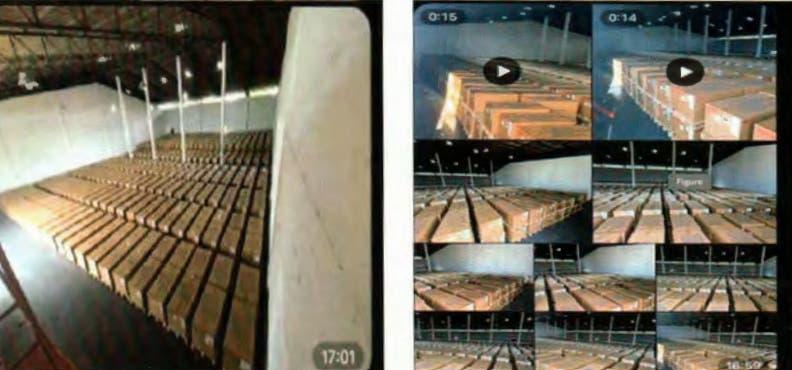
Source: CRN
Stock Plunges 33% as Investor Confidence Collapses
The revelations triggered a massive 33% drop in Super Micro stock value, wiping out more than $6 billion for investors
1
. While federal authorities have not directly accused Super Micro of corporate wrongdoing, the fact that a substantial portion of its sales is tied to alleged illegal activity has severely damaged investor confidence. Following the charges, Liaw resigned from the company's board effective immediately, and Super Micro placed both Liaw and sales manager Ruei-Tsang Chang on administrative leave while terminating its relationship with contractor Ting-Wei Sun5
. The company appointed DeAnna Luna as acting chief compliance officer to address the crisis5
.Multiple Cases Reveal Nvidia GPU Smuggling Scheme Network
The Super Micro case is not isolated. The Department of Justice announced charges against three additional suspects in a separate Nvidia GPU smuggling scheme involving Supermicro servers. Chinese national Stanley Yi Zheng from Hong Kong and US citizens Matthew Kelly and Tommy Shad English allegedly conspired to smuggle export-controlled chips to China using pass-through companies in Thailand starting in May 2023
2
. Court documents reveal that Zheng sent a purchase order for 232 server units of model SYS-821GE-TNHR, which supports Nvidia H100 and H200 AI GPUs, totaling nearly $62 million2
. In this instance, both Nvidia and Super Micro appear to have noticed irregularities and canceled the orders in early 20242
.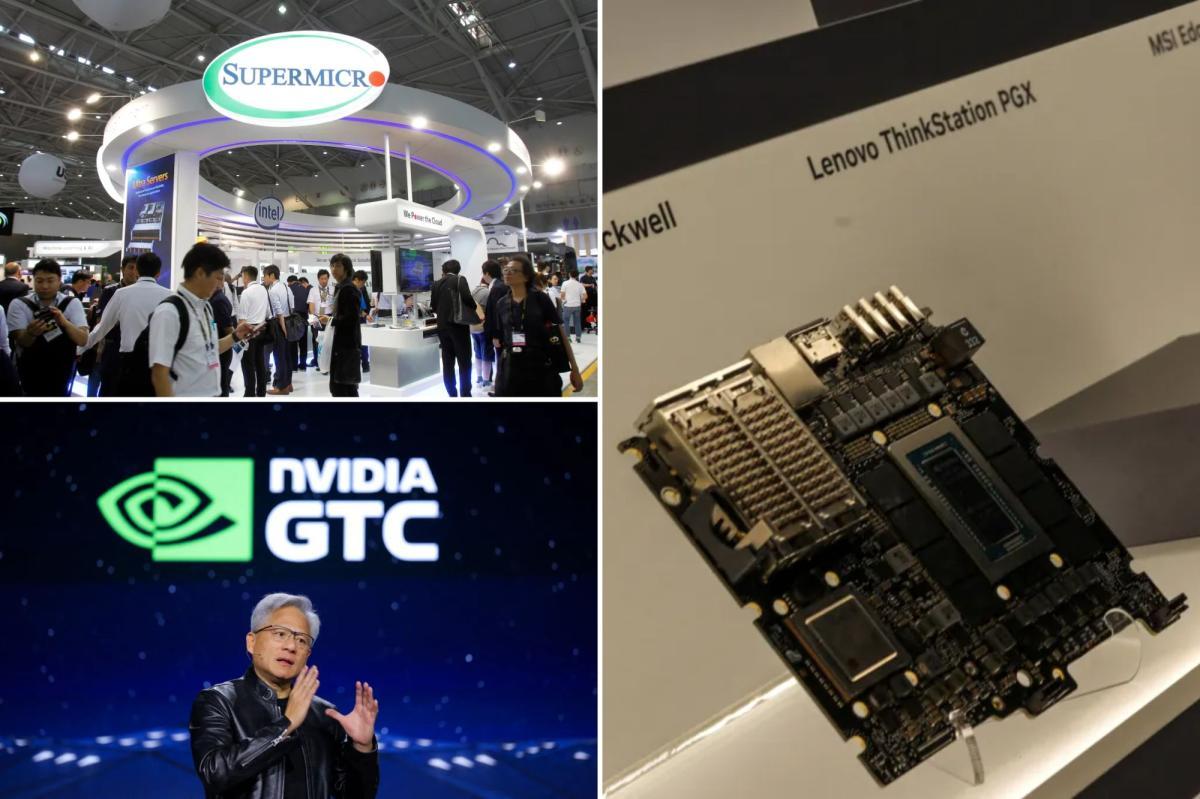
Source: New York Post
Circumventing US Export Controls Through Elaborate Schemes
The criminal complaint shows that when English attempted to order 750 servers worth approximately $170 million from Super Micro in October 2023, claiming to act on behalf of a Thai client, the company became suspicious when Zheng's China-based company was added to email threads while no one from the purported Thai customer was included
3
. Text messages between the conspirators obtained by federal investigators discuss the market value of Nvidia's products in China and include references to finding clients who would "act as pass through partner for customers in China," demonstrating clear intent to circumvent US export controls1
.Related Stories

Black Market for AI GPUs Thrives Despite Enforcement
These prosecutions, alongside dozens of reports of AI chip smuggling from Singapore, Malaysia, Thailand, and other countries near China, reveal a thriving black market for AI GPUs
1
. The uncertainty from Beijing has led some companies to consider purchasing these AI GPUs from illicit sources, especially as AI hyperscalers worldwide race to build the most advanced models possible. Two US senators, Jim Banks and Elizabeth Warren, have called on the Commerce Department to suspend Nvidia's export licenses to Asian markets over fears the hardware will be rerouted to mainland China2
. Nvidia stated that "strict compliance is a top priority" and emphasized that unlawful diversion of controlled US computers to China is "a losing proposition" as the company does not provide service or support for such systems2
.Super Micro Emphasizes Compliance Programs Amid Crisis
Super Micro has stated that the alleged conduct "is a contravention of the company's policies and compliance controls" and maintains it has "a robust compliance program" committed to full adherence to all applicable US export and re-export control laws and regulations
4
. The company has been cooperating with the government's investigation and pledged to continue doing so. However, the securities fraud lawsuit suggests that shareholders believe the company's compliance programs failed to prevent or disclose the conspiracy, raising questions about the effectiveness of internal controls at a time when sanctions compliance has become critical for tech companies operating in the AI sector.References
Summarized by

Navi
[3]
Related Stories
Supermicro co-founder pleads not guilty to $2.5 billion China chip smuggling charges
01 Apr 2026•Policy and Regulation
Chinese universities with military ties acquired Super Micro servers with sanctioned Nvidia AI chips
27 Mar 2026•Policy and Regulation
Federal Prosecutors Charge Four in $3.9 Million Nvidia AI Chip Smuggling Operation to China
20 Nov 2025•Policy and Regulation
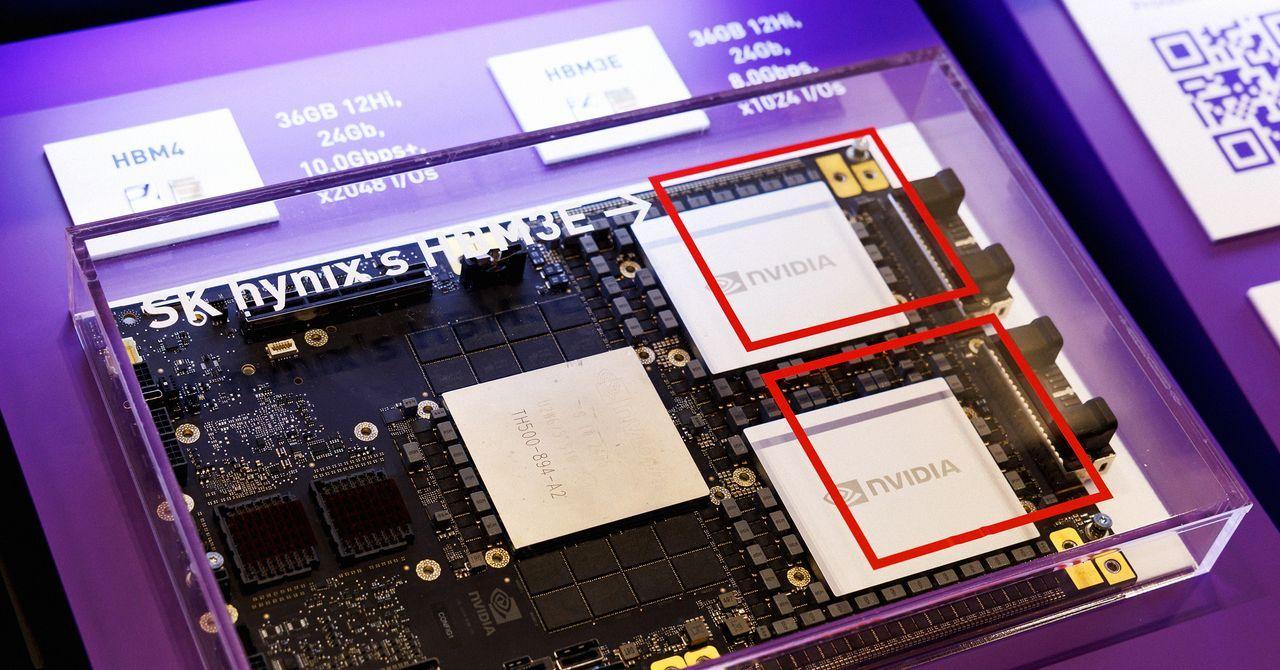
Recent Highlights


Recent Highlights
Today's Top Stories





Your Daily Dose of Curated AI News
Don’t drown in AI news. We cut through the noise - filtering, ranking and summarizing the most important AI news, breakthroughs and research daily. Spend less time searching for the latest in AI and get straight to action.

