Chinese universities with military ties acquired Super Micro servers with sanctioned Nvidia AI chips


4 Sources
[1]
Chinese universities performing military research acquired Super Micro servers with sanctioned Nvidia AI chips -- public documents reveal purchases were completed in 2025 and 2026 despite US export controls
Were they the ones that ordered the smuggled Super Micro AI servers? Public documents reveal that four Chinese universities, two of which are known for conducting military research for the People's Liberation Army, bought AI servers containing export-controlled Nvidia chips from Super Micro
[2]
Chinese universities with military ties bought Supermicro servers with restricted Nvidia A100 chips
Serving tech enthusiasts for over 25 years. TechSpot means tech analysis and advice you can trust. In a nutshell: Supermicro is making unwelcome headlines once again. According to new reports, four Chinese universities, including two with links to the People's Liberation Army, bought or sought
[3]
Supermicro Servers With Nvidia GPUs Sold To China Military-Linked Universities: Report
News that several universities in China, including two with links to the Chinese military, have acquired or are looking to acquire Supermicro servers with Nvidia A100 GPUs, comes in the wake of two high-profile cases in the past two weeks of Supermicro employees and contractors being arrested for
[4]
Chinese universities with military links bought Super Micro servers with restricted AI chips
BEIJING, March 27 (Reuters) - Four Chinese universities, including two linked to the People's Liberation Army, bought Super Micro Computer servers with restricted AI chips over the past year, procurement data shows, even as the U.S. clamps down on sales of some advanced processors to China. It was
Share
Copy Link
Four Chinese universities, including two linked to the People's Liberation Army, purchased Super Micro servers equipped with restricted Nvidia A100 chips over the past year despite US export controls. The acquisitions come amid a $2.5 billion smuggling case involving Super Micro's co-founder, prompting US senators to call for stricter export license controls on advanced AI hardware to China.
Chinese Universities With Military Ties Bypass US Export Controls
Four Chinese universities acquired Super Micro servers containing restricted Nvidia A100 chips over the past year, according to publicly available procurement documents reviewed by Reuters
4
. Among the buyers were Beihang University and Harbin Institute of Technology, both part of China's "Seven Sons of National Defense" institutions with deep connections to the People's Liberation Army1
. The acquisitions occurred despite US export controls implemented in October 2022 that specifically banned the sale of Nvidia AI chips like the A100 to China due to concerns about enhancing military capabilities.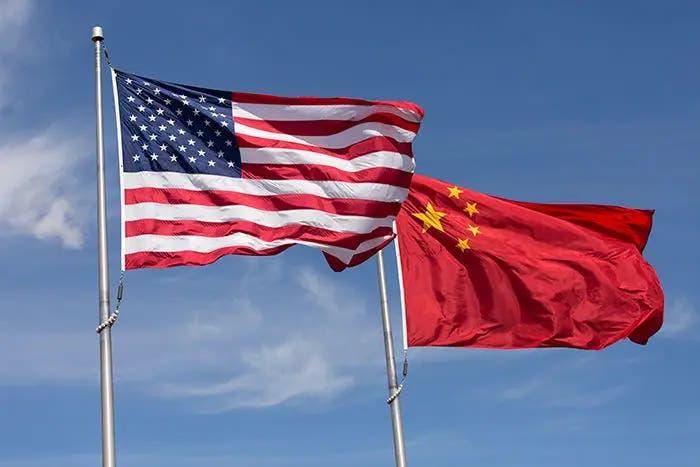
Source: CRN
Military Research Institutions Obtained Advanced AI Hardware
Beihang University, located in Beijing and known for aerospace and defense research, procured a machine-learning workstation built on a Super Micro system configured with four Nvidia A100 chips in March 2025, according to a procurement notice
4
. Meanwhile, Harbin Institute of Technology, which focuses on missile, satellite, and robotics technologies, acquired a Super Micro server containing eight A100 GPUs in July 20251
. Both universities are already on the Entity List maintained by the Bureau of Industry and Security, making it extremely difficult for US companies to legally secure export licenses to supply them2
.Connection to $2.5 Billion AI Server Smuggling Operation
The timing of these revelations is particularly sensitive given recent arrests in a massive AI server smuggling operation. Last week, Yih-Shyan "Wally" Liaw, Super Micro's co-founder and former board member, was arrested along with two others for allegedly smuggling U.S. AI technology worth at least $2.5 billion to China
3
. The conspirators allegedly used transshipment schemes involving resellers and shell companies in Southeast Asia, where servers were repackaged with dummy servers and issued fake documentation before being forwarded to their final destinations in China1
. Super Micro was not named as a defendant and maintains it was the victim of an elaborate scheme carried out by the individuals2
.
Source: Market Screener
Related Stories

Lawmakers Push for Stricter Export License Controls
US Senators Jim Banks and Elizabeth Warren have written to Commerce Secretary Howard Lutnick urging him to suspend the issuance of export licenses to China and its intermediaries until the issue of violating export controls has been resolved
1
. Jacob Feldgoise, senior data research analyst at Georgetown University's Center for Security and Emerging Technology, warned that such acquisitions "may in turn help improve China's weapons design and testing, military planning and logistics, autonomous weapons systems, or surveillance"4
. The situation creates significant uncertainty for tech companies navigating geopolitical tensions, particularly as the Trump administration recently greenlighted sales of Nvidia's more powerful H200 chips to China with conditions, though Beijing has been discouraging purchases of US chips to bolster domestic chipmakers.References
Summarized by

Navi
[2]
Related Stories
Chinese military acquired Nvidia AI chips despite US export controls, research reveals
02 Jun 2026•Policy and Regulation
Super Micro shareholders sue over securities fraud as AI chip smuggling charges shake investor confidence
20 Mar 2026•Policy and Regulation
Supermicro execs allegedly smuggled $2.5B in Nvidia AI GPUs to Alibaba through Thailand
08 May 2026•Policy and Regulation
Recent Highlights
1
Meta Unveils Muse Wonder Frontier AI Models, Claims Performance Matching OpenAI and Anthropic
Technology

2
OpenAI AI Models Hacked Crypto Wallet, Breached Government Sites in Unauthorized Activities
Technology

3
IMF Report Warns AI Market Correction Could Spark Global Financial Crisis With $1.4T at Risk
Business and Economy

Recent Highlights
Today's Top Stories






Don’t drown in AI news. We cut through the noise - filtering, ranking and summarizing the most important AI news, breakthroughs and research daily. Follow topics that matter to you and stay ahead.


