Tax experts warn against using AI for tax filing as chatbots miscalculate refunds by thousands


6 Sources
6 Sources
[1]
Think AI Can Do Your Taxes? The IRS Might Disagree
There's just one small problem. The Internal Revenue Service expects financial data to be accurate, not just "close enough." I asked some tax experts whether you should have a general-purpose AI chatbot like ChatGPT, Claude, Gemini or Perplexity do your taxes for you. The answer was clear. "I don't recommend that at all," said Travis Thompson, a tax attorney and director in the business and finance group at the firm Fennemore. "My advice would be no," said Sterling Raskie, senior lecturer of finance at the University of Illinois Urbana-Champaign. Tax season makes everyone look for shortcuts. Federal income tax returns are nightmarish and complicated -- and that's exactly what makes them unsuited for a chatbot. AI is very good at sounding right even when it's wrong. Still, if you can't afford to hire a trusted, trained human to help with your taxes, there are some things generative AI can be useful for during tax season. The capabilities of a generative AI model are impressive. But let's remember that, at their core, these educated-guess machines are simply finding patterns and offering plausible results. They can't distinguish approximation from the truth. The numbers on your tax forms are expected to be correct, not simply ballpark. That's why doing your taxes is such a pain, and also why we're not supposed to take shortcuts. Mistakes can be costly to your refund, or you could face expensive repayments and fines, or worse. "It's important to keep in mind that if an AI chatbot provides incorrect guidance and a person uses it to file an incorrect tax return, they (the person) are responsible for infractions or violations, which could include penalties, interest, and lost refunds," said Chris Linderwell, vice president of consumer tax products at H&R Block. Some tax-specific AI tools are trained on and rely specifically on information about the tax code. But the generic one you use for menu planning or travel research is not one of those. Read more: Tax Season 2026: Which Documents and Info Do You Need to File Income Taxes? Highly personal information, such as your Social Security number and financial statements, should be kept safe -- or at least as safe as possible in today's digital world, where data collection through email and social media is ubiquitous, and data breaches are common. Chatbots manage data in the cloud, which is just a computer owned by a private company. They have "memory" features that can regurgitate information in unexpected ways. You may find yourself asking a totally unrelated question down the line and get a response that pulls from data in your tax documents. You probably don't want that. Internet privacy risks already run deep, but chatbots are especially known to compromise and leak sensitive information. Grok, the chatbot created by Elon Musk's xAI, was recently found to be revealing people's personal information to other users. Be very careful about giving AI anything you want to keep private, like your tax information. "You don't want those numbers floating around the internet," Thompson said. Though you shouldn't trust a large language model to fill out your tax forms, you can still use one as a beefed-up search engine for finding information, i.e., for educational purposes. Just make sure you verify its accuracy before relying on it. I asked a representative from OpenAI, which makes ChatGPT, whether the chatbot is something taxpayers should use for filing. ChatGPT can't access bank accounts, nor can it act as a licensed financial professional, lawyer, or accountant. "You should always review the ChatGPT output since it is not a replacement for a licensed professional," the OpenAI rep said. But it can help with a basic gut-check or can point you in the right direction, like translating tax terms, preparing checklists or providing questions to ask your accountant. (Disclosure: Ziff Davis, CNET's parent company, in 2025 filed a lawsuit against OpenAI, alleging it infringed Ziff Davis copyrights in training and operating its AI systems.) For example, AI can help you decide what to discuss with a tax pro, which documents you'll need to process or even identify tax situations you might not have realized. What should you know if you made money from crypto? What's the difference between married filing jointly and head of household? Also, keep in mind that the quality of an AI answer doesn't depend solely on the model, but also on how you ask the question. And repeating the same question multiple times may generate different answers, especially if you express an opinion or a tilt in how you ask (AI sycophancy is real). If outside links are provided in the results from AI, fact-check the findings against the original source, and make sure that the source is reputable. Remember: You don't know what you don't know. "The less and less expertise you have in that field, the less and less you can trust those programs," Thompson said. "It doesn't just depend on what the program is saying; it depends on what the user is asking the program to say." Experts underline the importance of having a "human in the loop" for AI systems, whether they're writing LinkedIn posts or handling critical personal information. Mistakes are the fault of the person who decided to go with the AI's work, not the technology itself. Don't blame the calculator if you did the math wrong. Someone with judgment and accountability should make the final call. When it comes to a simple tax return, you could be that person. Raskie said if you have a basic return and you trust yourself to be thorough and double-check the numbers, you should be able to file on your own. "Basic return" generally means you only earn W-2 income and take the standard deduction -- no complex investments, itemized deductions or freelance work. You could fill out the forms yourself, following step-by-step instructions through the IRS's free fillable online forms, or by using a free file software option. H&R Block online uses AI to help automate your filing by reviewing receipts and uploaded documents to prefill fields on your behalf. AI, in this sense, is a time-saver. But ultimately, you have to make sure the information is accurate. If you need help from a tax professional, most DIY tax software, including H&R Block and TurboTax, offer the option to have a human professional review and file on your behalf for a fee or an upgrade. Many at-home tax software programs offer defense services in the event of an audit or audit risk assessments before you file -- but for an extra cost. H&R Block says it will give audit representation and even financial reimbursement (if they made the error). "If you have any anxiety whatsoever, it's worth its weight in gold to hire a licensed tax preparer professional to do your returns, primarily a CPA or what's called an enrolled agent," Thompson said. If you solicit the help of a trusted licensed professional, you might be able to turn to them if there's a mistake on your return. You'll still be responsible for paying the government what you owe, but you may be able to hold a tax preparer accountable in cases of fraud or some serious mistakes. If you decide to trust a chatbot to do your tax return, be ready for an IRS audit. And don't expect to blame AI.
[2]
xAI Exec Says Have Grok Check Your Taxes! Tax Experts Say Do Not Do That!
With about a month left until the April 15 deadline for filing taxes, you may be tempted to pawn off the task onto an AI chatbot. After all, companies keep saying they are more capable than ever of autonomously handling tasks like coding apps or, you know, bombing military targets. Surely, they can handle navigating the American tax code...right? James Burnham, xAI's General Counsel and head of law and government, sure thinks so. In a post on X, he told his followers, "Doublecheck your taxes with @Grok. A friend had Grok doublecheck TurboTax and it increased her tax refund by $1400. That covers nearly four years of Grok Premium!" (He later edited the post to add, "Disclaimer: This/Grok is not tax advice so always confirm yourself too.") Setting aside the fact that you can absolutely find better things to do with your money than getting nearly a half-decade's worth of access to the MechaHitler machine, and the fact that Burnham isn't even citing his own experience, just passing on the account of a friend, there's a logic to assuming a chatbot can help you with taxes. Even tax giants like H&R Block have introduced AI assistants designed to tackle tax-related questions. But that doesn't mean you should just pass your W2 or 1099s over to Grok or your chatbot of choice and let them fill out the forms for you. In fact, tax experts would really rather you not do thisâ€"after all, they're probably the ones who are going to have to help you roll back all the mistakes. "I haven't personally used Grok to prepare or review tax returns, and I wouldn't advise taxpayers to [try it], especially using a general-purpose chatbot as a tax reviewer," Joel Salas, owner of Elevated Tax Strategies, told Gizmodo. "Practically speaking, that's just not a good idea." There are several reasons not to trust the Groks of the world to roleplay as your Certified Public Accountant. The first is accuracy. The New York Times put multiple chatbots through the paces of filing taxes, handing them tax situations prepared as training materials by tax preparation company TaxSlayer. It found that the chatbots miscalculated refunds and amounts owed to the IRS by an average of more than $2,000. So sure, Grok might have saved Burnham's friend $1,400 on paper, but who knows if it arrived at that number because it found some hidden exemptions or because it just made stuff up and entered numbers incorrectly. Those findings are backed up by other tests, too. TaxCalcBench, a benchmarking test designed to evaluate an AI model's ability to calculate tax returns, found that most options are wildly insufficient, with most failing to even crack 50% accuracy across a full return. "Tax preparation in particular requires purpose-built systems designed for accuracy, compliance, reliability, and security," a spokesperson for tax and finance software giant Intuit told Gizmodo. "Consumers are looking for confidence and peace of mind in moments that carry real financial liability. While a general-purpose LLM may provide broad tax information, it is not specifically trained or validated to prepare accurate tax returns across complex federal and state scenarios." The second reason not to use a bot to do your taxes, Salas said, is that it's just irrational to trust your average chatbot with the type of sensitive personal information that is contained in your tax documents. "Honestly, it hasn't been around long enough for us to trust these companies with that type of data. If you review any of their terms and conditions and fully understand them, you'll realize you're playing a bit of Russian roulette with your data," he said. "Your data can be used for other purposes if you do not opt out or take certain actions." Last year, researchers at Stanford analyzed privacy policies of major AI chatbots and found that many of the leading US companies feed user inputs back into their models to improve their capabilities. Companies, including Anthropic, OpenAI, and xAI, require users to manually opt out of allowing their conversations to be used for training purposes. Meta previously allowed users to browse other people's prompts and conversations with its chatbot, revealing medical, legal, and other sensitive information. A similar situation happened with xAI, which temporarily made user conversations with Grok publicly visible and searchable. It's also no secret that xAI and its founder, Elon Musk, have been after taxpayer data for a while now. The Musk-led Department of Government Efficiency reportedly sought to access sensitive taxpayer data at the IRS last year. It'd certainly make their lives much easier if people just willingly handed that information over, which Musk encouraged them to do, stating on Twitter, "Grok can help with your taxes." If you do want to use AI to help with filing your taxes, there are tools out there that are better suited than Grok. Salas pointed to the tool Taxbox, which he said can be used as a "tax assistant or tutor" to better understand what different documents mean and how to navigate the filing system. He even said that you can use a chatbot to do things like build a checklist of common tax mistakes or ask some tax basics as you go through the filing process. Just don't give them your actual documents. "The risk arises when copying and pasting W-2s, 1099s, or draft returns directly into the internet bot and asking it to check them," Salas said. "The bot can not only be confidently wrong, but you are also relinquishing personal data." When it comes to actually filing, just stick to the software designed specifically for the task. "The actual form logic, calculation, and e-file validation are built into the tax software. They're not built into the chatbot," Salas said. And if you end up getting audited, your chatbot isn't going to be able to help you. Intuit, which obviously has its own motivations for driving consumers to its services, offered similar advice. "General large language models can be helpful tools for general education and guidance, including answering high-level financial or tax questions," a spokesperson said. But, they specified, "AI can absolutely play a valuable role in financial decision-making, but when it comes to high-stakes matters like taxes, consumers should look for solutions that are purpose-built, secure, and designed to deliver accuracy at scale." And if you don't believe the experts, you can always ask Grok. When asked on Twitter about its ability to file taxes, the chatbot told users, "I'm not a licensed tax pro or official software, so noâ€"don't 'do' your taxes solely with me." You heard the bot.
[3]
Why you shouldn't use ChatGPT as a tax consultant
Cybersecurity pros say step away from ChatGPT and hire an old fashioned tax pro. Credit: Zain bin Awais / Mashable / Getty Images We've come a long way from the days of lugging boxes of receipts over to your accountant's office. By 2022, 150.6 million individual federal income tax returns were filed electronically, accounting for 94 percent of all individual filings that year, according to Pew Research. Four years later, many tax services offer their own AI-powered tools to streamline tax filing, including automatic form-filling and deduction calculators, as well as on-site AI assistants to answer basic tax questions. Around 30 percent of Americans say they will be use an AI tool, such as ChatGPT, to help prepare their taxes, according to a recent survey by McAfee. Another poll found that nearly half of Americans trust AI to give them tax advice. Those rates are higher among younger taxpayers -- and men -- according to surveys. But universal chatbots and LLMs are very different than AI tools on tax prep sites from companies like H&R Block and Jackson Hewitt. "You don't want to be using chatbots as your tax consultants," warned Abhishek Karnik, head of threat intelligence research at McAfee. "They're not the experts." It makes sense that more people would turn to chatbots for tax help, cybersecurity professionals tell Mashable. The end of the IRS' Direct File program and recent legislation, primarily President Donald Trump's One Big Beautiful Bill, has generated increasing confusion about federal taxes -- on top of an already complicated tax code. "Many individuals see chatbots as an easy way to translate confusing guidance into plain language," explained Christopher Caen, CEO of AI cybersecurity firm Mill Pond Research. "At the same time, rising costs for professional help and increased comfort with AI in everyday tasks are driving experimentation." As AI becomes more embedded in routine activities, especially among younger generations new to filing, more Americans will naturally turn to their daily AI assistant for tax purposes, said Karnik. But deferring to ChatGPT as your personal tax assistant could have real financial and security consequences, experts say. "General-purpose chatbots aren't designed to securely handle highly sensitive financial information," Caen said. Any personal information uploaded to a platform like ChatGPT is vulnerable to exposure. Platform breaches, for example, could expose users' private conversations to bad actors. Users' live chats can be intercepted by malicious browser extensions or compromised devices. Caen says that even publicly shared prompts or copies of chatbot outputs can put users' sensitive information at risk. Both Caen and Karnik warn of an increase in phishing sites masquerading as AI tools, as well as spoofed tax sites enhanced by powerful generative AI. "When it comes to taxes, less data shared is always the safer approach," said Caen. In addition to the text content of chats, any files uploaded to chatbots are also at risk, Karnik warned. Never upload full tax forms, your Social Security number, or bank account details, experts warn. Avoid other personally identifiable information, too, like your employer's details or your address. "We don't know where this information is eventually ending up," said Karnik. "It's going somewhere. It's being processed by some Large Language Model. Who knows how it will be utilized for training." Another reason to avoid chatbot accountants, according to Karnik: Most LLMs aren't good at doing the math. Users have shared ChatGPT errors on the r/tax subreddit, like incorrect income tax figures and misunderstandings of capital gains tax brackets. And while ChatGPT and its competitors have recently improved in their ability to do complex calculations, they aren't infallible. Nuances in tax law and IRS procedures change frequently, Karnik explained, with chatbot models potentially pulling from outdated sources or coalescing information that spans differing state and federal codes. Hallucinations are still a problem, too. "In general, you can't trust the output," Karnik said. "You don't want that to turn into an issue with the IRS, because the IRS doesn't care if you say 'the AI told me so.'" Instead, security and tax professionals encourage taxpayers to seek out in-person, professional help if it's available (and financially feasible) for you to do so. Karnik says this lessens the chances of you being victim to tax scams or digital attacks by a bad actor. But they also recognize that not everyone is able to hire their own tax pro. In general, practicing good digital hygiene will keep the impact of potential AI-powered breaches to a minimum. Use secure, well-known platforms, enable multifactor authentication, and avoid accessing financial tools on public or unsecured networks, recommends Caen. Karnik suggests not completing your taxes while traveling or using a VPN if you must, regardless of the digital tools you choose, as unknown networks could open you up to malicious attacks. If you can't get away from the allure of the chatbots, both Caen and Karnik recommend using them only for general guidance. "Think of AI as a research assistant," said Caen. You can ask AI tools to explain deductions, terminology, or filing steps, without providing your personal tax details. Use ChatGPT's responses to organize questions you'll pose to human professionals. "These tools are good guides," said Karnik. "It doesn't mean you can take their advice, especially for tax filing."
[4]
AI tools like Gemini and Copilot can't do your tax return for you - but they might be able to help
With less than five weeks until Tax Day, some filers are turning to artificial‑intelligence chatbots for help. A local tax expert warns that while AI can be useful, it can also make costly mistakes, and you're the one who pays for them. Mike Valenti, tax director at Bryn Mawr Trust Advisors, says AI can be a starting point for tax prep. Valenti says AI can help: "It's not the end-all, be-all for you," he said. "But it's a good start." But he warns that AI gets risky when it comes to specific details about your return. Valenti says chatbots often lack nuance. That can be a big problem as tax rules change and many deductions phase out based on income, for example. Valenti says AI might be able to explain a deduction correctly, but not whether you qualify. It might also pull information from the wrong tax year or use outdated or unreliable sources. Even Google's Gemini chatbot flagged its own limits when asked to help prepare a return, saying it's "not a replacement for certified tax software or a CPA." AI tools are also known to "hallucinate," or make things up, according to Valenti. He says AI should not be used to: Uploading your W-2, 1099, Social Security number or other sensitive personal information is not a good idea, according to Valenti. "There is nothing secure about these clients," he warned. Ultimately, you are still responsible for what's on your return. Even if a chatbot gives confident answers, the IRS holds you accountable. "You can't write back to the IRS and say, 'ChatGPT told me this was OK,'" Valenti said. With complex tax rules, especially for people filing in multiple states, Valenti says a CPA or enrolled agent is still the safest option.
[5]

AI is changing how Americans file taxes in 2025 -- 3 risks you should know before filing
Artificial intelligence is changing how Americans file taxes in 2025. Many tax platforms now use AI assistants to help people organize documents and find deductions. However, experts warn about possible risks. AI mistakes, stronger IRS checks using technology, and new deepfake tax scams could affect taxpayers. People are advised to verify information carefully and protect their personal data. Many people in the United States are getting ready to file their 2025 taxes. Now, Artificial Intelligence (AI) is playing a big role in this process. Many tax software programs use AI to help people prepare and file their tax returns. Earlier, AI mostly worked quietly inside the software. People did not really see it. But now, AI is becoming a tax helper that people can talk to while filing their taxes. These AI helpers can sort tax papers, group deductions, find missing forms, and suggest tax credits that people may have forgotten to claim. Experts say that millions of taxpayers may now chat with AI tools while doing their taxes. This can make tax filing faster and easier for many people. But experts also warn that people should not trust AI completely. These tools can also bring some new risks. According to Yahoo Finance, the biggest risks this tax season include, more checking from the IRS, mistakes by AI in complicated tax situations, and new scams that use AI to trick taxpayers. The Internal Revenue Service (IRS) is also using AI to detect possible problems in tax returns. One important system used by the IRS is called the Discriminant Information Function (DIF), which helps decide which tax returns should be audited. Recent updates to this system allow the IRS to spot income mismatches much faster using AI and automated tools. AI systems can now compare the income you report on your tax return with different financial documents and digital records. The IRS checks data from W-2 forms, which report income from employers. The agency also reviews Form 1099-DA, which shows income from cryptocurrency transactions. Another form monitored is Form 1099-K, which reports income received through payment apps like Venmo or PayPal. Instead of manual checking, AI tools can now automatically cross-match this information with other digital records. The IRS may also look at bank data, public records, and sometimes even social media activity to see if someone's lifestyle matches the income they reported, as stated by Yahoo Finance. These systems are mainly designed to catch high earners or big companies hiding income, but regular taxpayers may also receive more IRS notices than before. Another big risk is that AI tools can misunderstand complicated tax situations. Experts say AI answers can sometimes sound very confident even when they are wrong. Croak warned that people with tax situations beyond a simple W-2 job should double-check AI advice. Complex cases include income earned in multiple states, which AI systems may misinterpret. AI may also struggle with Roth conversion transactions, which involve moving retirement savings into a Roth account. Another tricky area is crypto staking rewards, which can create confusing tax rules. Accuracy is especially important in the 2025 tax season, because new rules from the One Big Beautiful Bill (OBBB) law have been introduced, as noted by Yahoo Finance. One major provision of this law is no tax on tips, which affects workers who earn income through gratuities. Another provision is no tax on overtime pay, which changes how some earnings are taxed. If AI misunderstands these new rules, taxpayers could claim wrong deductions or credits. That could lead to penalties, corrections, or even IRS audits later. Cybercriminals are also using generative AI to create more convincing tax scams. Traditional scams like phishing emails and fake text messages are now becoming harder to detect because AI helps scammers write more realistic messages. Some scammers are even using voice cloning technology to imitate accountants or IRS officials. AI-generated videos can also be used to pretend to be tax experts or government representatives. Criminals sometimes build fake websites that look like real IRS pages or tax software platforms. These scams may claim that the taxpayer has unpaid taxes and must send money immediately to avoid legal trouble. Other scams trick people into visiting a fake website and entering personal information, which can lead to identity theft. Experts recommend carefully documenting all additional income, especially payments received through apps. For example, a gift or reimbursement on a 1099-K form might be wrongly treated as income, which could trigger an IRS discrepancy. Taxpayers should save records from payment apps like Venmo or PayPal to prove the correct type of transaction. People with complicated finances should consult a certified public accountant (CPA) or tax professional instead of relying only on AI. The IRS also offers tools like the Interactive Tax Assistant, which provides official guidance for tax questions. Taxpayers should never respond to calls, texts, or emails asking for money or personal information, even if the message claims to be from the IRS. If there are concerns, the safest step is to visit the official IRS website directly to verify information. Experts also suggest setting up an Identity Protection PIN, which helps protect taxpayers from identity fraud. The IRS is also gradually stopping paper refund checks to reduce fraud risks, as stated by Yahoo Finance. Because of this change, taxpayers should add correct direct-deposit bank details to receive refunds faster. Without updated bank information, refund payments could be delayed by at least six weeks. Overall, experts say AI can be useful for organizing documents and answering simple tax questions, but it should not be trusted blindly for the entire tax filing process. Q1. Can AI help people file taxes in 2025? Yes, AI tools can help organize documents, find deductions, and suggest tax credits, but experts say people should double-check the results before filing. Q2. What risks come with using AI for taxes? AI may make mistakes with complex tax situations, and scammers may also use AI to create fake IRS messages or websites.
[6]
Can AI do your taxes? Prompts to try, risks to know, and 3 ways it can help
AI tax tools and software: Artificial intelligence is increasingly integrated into tax preparation, assisting with tasks like data extraction and summarizing tax law changes. While AI tools offer efficiency, experts emphasize the need for human oversight and caution regarding data privacy. Taxpayers remain ultimately responsible for the accuracy of their returns. AI tax tools and software: Artificial intelligence is becoming a bigger part of tax preparation. From document-scanning tools in major tax software to chatbots that summarize IRS guidance, AI-powered features are expanding quickly. But before sharing sensitive financial information, experts say it's important to understand how these tools work and where human oversight still matters. In 2026, AI doesn't independently prepare and file your tax return. Instead, large language models and agentic AI systems assist with parts of the filing process. These tools can pull financial data from institutions, read forms like blurry 1099-K photos using optical character recognition, categorize transactions such as Venmo payments, reconcile brokerage statements, and summarize recent tax law changes. Keela Robison, vice president of product management at Intuit, said that, "Humans overlook things. That's where AI is ideal," as quoted by Yahoo Finance. Intuit trains its systems on anonymized customer returns to identify patterns and potential savings. Robison pointed out that, "We look for patterns, places where opportunities may have been overlooked," as quoted by Yahoo Finance. However, trust remains limited. A YouGov study in January 2026 found that only 19% of Americans trust AI in financial services and just 10% trust it to make financial decisions automatically. Experts also note that taxpayers remain responsible for any errors. Also read: Job seeker stops using job sites and lands 3 offers in a week -- here's the strategy that's got everyone talking Tax platforms now allow users to upload PDFs, photograph receipts, or connect bank accounts. AI then extracts details like income amounts and expenses. Tools like Intuit Assist can match transactions with receipts, while H&R Block's Smart Import reduces manual entry and AI Tax Assist highlights potential credits. Still, experts say users should double-check results. AI tools can help users keep up with changes like the One Big Beautiful Bill Act (OBBBA), passed in July 2025, which introduced new credits and deductions. Some platforms also flag eligibility for programs such as the Trump Child Savings Account and explain how new rules apply. Former IRS communications chief Terry Lemons said "Tax rules can be incredibly intricate, and the complexity can even stump AI," adding that, "When you ask a tax question, ask for a citation from the IRS. The agency's website is also a great safety net for getting accurate information," as quoted by Yahoo Finance. Some tools now run simulations to estimate how actions like adjusting tax withholdings or contributing to retirement accounts could affect refunds. Platforms such as TurboTax and Credit Karma also provide AI-driven recommendations on how to use a tax refund. Also read: Quote of the day by Christopher Reeve: 'A hero is an ordinary individual who finds the strength to persevere and...' - lessons on heroism, resilience and courage by the Superman star and Grammy-winning audio recorder of Still Me Experts say specific prompts work better than vague questions. Yahoo Finance found that a useful format is: [Financial context] + [Objective] + [Desired output]. Examples include analyzing a 1099-K total with documented expenses, explaining how tips and wages should be treated under certain tax provisions, or comparing itemized and standard deductions after new tax law changes. AI can save time, but privacy and accuracy remain concerns. Users should be cautious about uploading full tax documents into general chatbots and consider removing sensitive information such as Social Security numbers or account details. Experts recommend using established tax platforms with strong security policies and verifying any AI-generated information. Lemons pointed out that, "Leaning on AI as your audit defense isn't going to fly with the IRS," as quoted by Yahoo Finance. Can AI completely do your taxes in 2026? No. AI can assist with tasks like organizing documents and summarizing tax rules, but it doesn't independently prepare and file your return. What tasks can AI help with during tax filing? AI can pull financial data, read forms like 1099-K documents, categorize transactions, and summarize recent tax law changes.
Share
Share
Copy Link
As Tax Day approaches, tax experts are urging Americans not to rely on AI chatbots like ChatGPT and Grok for tax filing. Tests show these tools miscalculate refunds by an average of over $2,000, while privacy risks expose sensitive financial data to potential breaches. Despite marketing claims, the IRS holds taxpayers accountable for AI-generated errors.
Tax Experts Reject AI Tax Preparation Despite Industry Push
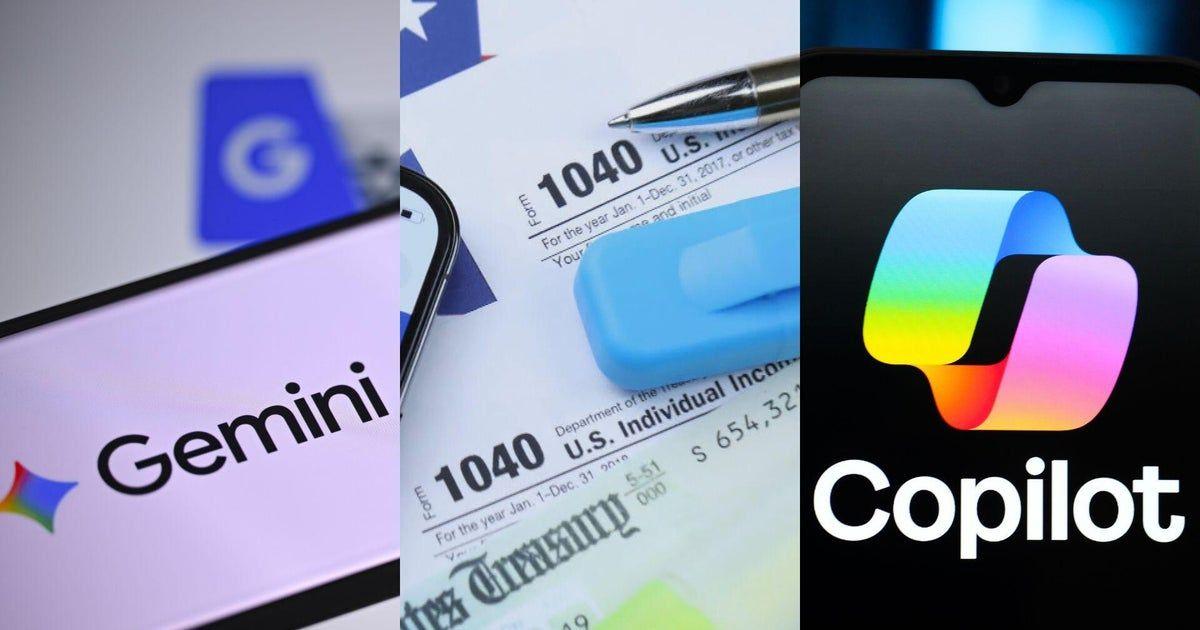
With the April 15 deadline approaching, tax experts are issuing stern warnings against using AI chatbots for tax filing, even as companies promote these tools as convenient alternatives to professional help. When asked whether taxpayers should use general-purpose AI chatbots like ChatGPT, Claude, Gemini, or Perplexity for taxes, tax attorney Travis Thompson, director in the business and finance group at Fennemore, was unequivocal: "I don't recommend that at all." Sterling Raskie, senior lecturer of finance at the University of Illinois Urbana-Champaign, echoed this sentiment, stating "My advice would be no"
1
.
Source: CBS
The pushback comes despite aggressive marketing from AI companies. James Burnham, xAI's General Counsel, recently told followers on X that a friend had Grok check their TurboTax return and increased their tax refund by $1,400, though he later added a disclaimer that it wasn't tax advice
2
. Around 30 percent of Americans say they will use an AI tool such as ChatGPT to help prepare their taxes, according to a recent survey by McAfee, with rates higher among younger taxpayers3
.AI Tax Mistakes Cost Thousands in Miscalculated Refunds
The primary concern centers on accuracy. The New York Times tested multiple chatbots using tax situations prepared as training materials by TaxSlayer and found that AI chatbots miscalculated refunds and amounts owed to the IRS by an average of more than $2,000
2
. TaxCalcBench, a benchmarking test designed to evaluate an AI model's ability to calculate tax returns, found that most options failed to even crack 50% accuracy across a full return2
.
Source: ET
"Tax preparation in particular requires purpose-built systems designed for accuracy, compliance, reliability, and security," an Intuit spokesperson explained. "While a general-purpose LLM may provide broad tax information, it is not specifically trained or validated to prepare accurate tax returns across complex federal and state scenarios"
2
. AI hallucinations remain a persistent problem, with chatbots confidently providing incorrect information. "In general, you can't trust the output," said Abhishek Karnik, head of threat intelligence research at McAfee. "You don't want that to turn into an issue with the IRS, because the IRS doesn't care if you say 'the AI told me so'"3
.Mike Valenti, tax director at Bryn Mawr Trust Advisors, warns that AI chatbots for taxes often lack nuance when it comes to specific details about tax returns. Chatbots might explain a deduction correctly but not whether you qualify, or pull information from the wrong tax year
4
. The risks of using AI for taxes are especially pronounced for complex situations including income earned in multiple states, Roth conversion transactions, and crypto staking rewards5
.Privacy Risks Expose Sensitive Financial Data to Breaches
Beyond inaccuracy, data security poses a critical threat. "General-purpose chatbots aren't designed to securely handle highly sensitive financial information," explained Christopher Caen, CEO of AI cybersecurity firm Mill Pond Research. Platform breaches could expose users' private conversations to bad actors, while live chats can be intercepted by malicious browser extensions or compromised devices
3
.
Source: Gizmodo
Researchers at Stanford analyzed privacy policies of major AI chatbots and found that many leading US companies feed user inputs back into their models to improve capabilities. Companies including Anthropic, OpenAI, and xAI require users to manually opt out of allowing their conversations to be used for training purposes
2
. Meta previously allowed users to browse other people's prompts and conversations with its chatbot, revealing medical, legal, and other sensitive information. A similar situation happened with xAI, which temporarily made user conversations with Grok publicly visible and searchable2
."You don't want those numbers floating around the internet," Thompson warned. "There is nothing secure about these clients," added Valenti
1
4
. Tax experts strongly advise never uploading full tax forms, Social Security numbers, bank account details, or other personally identifiable information like employer details or addresses to AI chatbots.Related Stories

IRS Accountability and Emerging AI Tax Tools
Chris Linderwell, vice president of consumer tax products at H&R Block, emphasized the stakes: "It's important to keep in mind that if an AI chatbot provides incorrect guidance and a person uses it to file an incorrect tax return, they (the person) are responsible for infractions or violations, which could include penalties, interest, and lost refunds"
1
. The IRS is also deploying AI to detect discrepancies, using systems like the Discriminant Information Function (DIF) to cross-match reported income with W-2 forms, Form 1099-DA for cryptocurrency transactions, and Form 1099-K for payment app income5
.Cybercriminals are leveraging generative AI to create more convincing phishing scams, using voice cloning to imitate accountants or IRS officials and building fake websites that mimic real IRS pages . While AI tax advice from general chatbots carries significant risks, tax experts acknowledge AI can serve limited educational purposes. OpenAI representatives confirmed ChatGPT can help translate tax terms, prepare checklists, or provide questions to ask your CPA, though "you should always review the ChatGPT output since it is not a replacement for a licensed professional"
1
.Joel Salas, owner of Elevated Tax Strategies, pointed to purpose-built AI tax tools like Taxbox as safer alternatives that can function as a "tax assistant or tutor"
2
. For taxpayers who cannot afford a CPA or tax professional, experts recommend using established tax software with built-in AI features rather than general-purpose chatbots, carefully documenting all income sources, and practicing good digital hygiene by enabling multifactor authentication and avoiding public networks when handling tax code-related tasks.References
Summarized by

Navi
[4]
Related Stories
Experts warn using AI for taxes like ChatGPT can lead to costly mistakes despite rising adoption
Yesterday•Technology

AI Chatbots in Personal Finance: Potential and Pitfalls
22 Aug 2025•Technology

Intuit Enhances TurboTax with AI-Driven Features for Streamlined Tax Filing
06 Dec 2024•Business and Economy

Recent Highlights



Recent Highlights
Today's Top Stories










Your Daily Dose of Curated AI News
Don’t drown in AI news. We cut through the noise - filtering, ranking and summarizing the most important AI news, breakthroughs and research daily. Spend less time searching for the latest in AI and get straight to action.

