Tesla launches AI training center in China, a critical breakthrough for Full Self-Driving


2 Sources
2 Sources
[1]
Tesla now has AI training capability in China, a critical step for Full Self-Driving
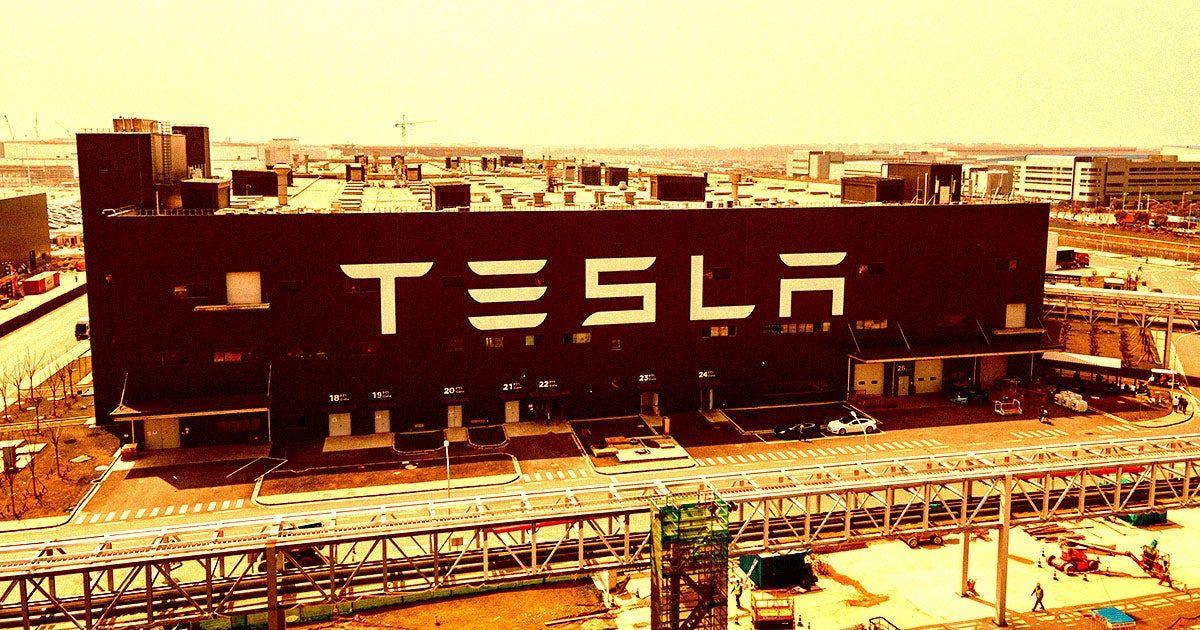
Tesla has launched an artificial intelligence training center in China, a critical development for the automaker's Full Self-Driving (FSD) ambitions in the world's largest electric vehicle market. Tesla Vice President Grace Tao confirmed on Friday that the company has put an AI training center into operation in China, focusing on developing local assisted driving and AI capabilities. Speaking to Shanghai-based financial news outlet Cailian, Tao said the center has "sufficient computing power to support development of assisted-driving features," though she did not disclose details such as the center's location, investment size, or specific computational capacity. The announcement marks a significant milestone for Tesla's FSD rollout in China. Due to the country's strict data localization laws, Tesla has been prohibited from transferring driving data collected on Chinese roads to its US-based training infrastructure. This has been a major handicap for the company's neural network-based self-driving system, which learns from real-world driving scenarios. Tesla's FSD relies on a neural network trained using video clips from real driving situations, enabling vehicles to make human-like decisions. The system has been trained on billions of miles of data from Tesla vehicles in the US and other markets. However, in China, Tesla hasn't been able to leverage this approach. When Tesla initially launched FSD in China in February 2025, CEO Elon Musk acknowledged the company "just used publicly available video on the Internet of roads and signs in China and used that to train in simulation." This workaround was far from ideal. Chinese roads present unique challenges, from different traffic patterns and signage to specific driving behaviors, that require localized training data to handle effectively. With a local AI training center, Tesla can now: The timing is significant. Chinese EV makers are racing ahead with Level 3 (L3) autonomous driving capabilities, with thousands of L3-capable vehicles expected to hit Chinese roads in 2026 following recent regulatory approvals. Companies like Huawei, Xpeng, and Li Auto have been aggressively developing their own autonomous driving systems, trained entirely on local Chinese data. Tesla's lack of local training infrastructure had put it at a disadvantage. "Chinese fans of autonomous driving will benefit from intensified competition between Tesla and its local rivals," said Yin Ran, an angel investor in Shanghai, to the South China Morning Post. "As thousands of L3 cars are likely to hit China's roads in 2026, a new battle will take shape as all electric-car builders try to deliver efficient and affordable self-driving systems." Despite the progress, there's no clear timeline for full FSD approval in China. Last month, Musk told the World Economic Forum in Davos he expected FSD to gain approval in China by February, a claim that was quickly disputed by Chinese government sources. Tao said Tesla would "actively engage in assisted driving initiatives in China" but could not provide a specific deployment timeline. Currently, Tesla offers "Intelligent Assisted Driving" in China, a renamed version of its FSD system that has gone through several branding changes since its February 2025 introduction. The feature has been available for purchase at RMB 64,000 ($9,220), though notably, starting February 14, Tesla will discontinue the one-time payment option globally, transitioning entirely to a monthly subscription model. This is a bigger deal than it might seem on the surface. Tesla's data advantage has always been one of its key moats in autonomous driving, it has more real-world driving data than arguably any other company. But in China, that advantage was effectively nullified by data localization laws. It was still leading over other companies thanks to being years ahead in tech through deployment in North America, but Chinese companies have been closing the gap quickly. Now, Tesla can actually start building the same kind of training flywheel in China that it has in the US: more cars → more data → better FSD → more cars. It's taken nearly a year since the initial FSD launch in China to get this infrastructure in place. The question is whether Tesla has lost too much ground to local competitors who have been training on Chinese data all along. Companies like Huawei and Xpeng have systems that are performing very well on Chinese roads, and they've had a head start on local training.
[2]
Tesla opens AI training center in China for local driving applications By Investing.com
Investing.com -- Tesla has launched an artificial intelligence training center in China that will focus on local applications and assisted driving capabilities, according to Chinese media outlet Cailianshe. The report, published Friday, cited Tesla Vice President Tao Lin confirming that the AI training center is now operational. The new facility will specifically develop AI applications tailored for the Chinese market and enhance the company's assisted driving technologies in the region. This article was generated with the support of AI and reviewed by an editor. For more information see our T&C.
Share
Share
Copy Link
Tesla has established an AI training center in China to develop Full Self-Driving capabilities using local data. The facility addresses China's strict data localization laws that previously prevented Tesla from transferring Chinese driving data to its US infrastructure, putting it at a disadvantage against local competitors like Huawei and Xpeng.
Tesla China Establishes Local AI Training Infrastructure
Tesla has launched an AI training center in China, marking a pivotal development for the automaker's Full Self-Driving (FSD) ambitions in the world's largest electric vehicle market
1
. Tesla Vice President Grace Tao confirmed on Friday that the facility is now operational, focusing on developing local driving applications and assisted driving technologies tailored for the Chinese market2
. Speaking to Shanghai-based financial news outlet Cailian, Tao stated the center has "sufficient computing power to support development of assisted-driving features," though she did not disclose the center's location, investment size, or specific computational capacity1
.
Source: Electrek
Overcoming China Data Localization Laws
The announcement addresses a critical handicap that has hindered Tesla's FSD development cycle in China. Due to the country's strict China data localization laws, Tesla has been prohibited from transferring driving data collected on Chinese roads to its US-based training infrastructure
1
. This restriction severely limited the company's ability to train neural networks with local data, which is essential for its neural network-based self-driving system that learns from real-world driving scenarios. When Tesla initially launched FSD in China in February 2025, CEO Elon Musk acknowledged the company "just used publicly available video on the Internet of roads and signs in China and used that to train in simulation"1
. This workaround was far from ideal, as Chinese roads present unique challenges including different traffic patterns, signage, and specific driving behaviors that require localized driving data to handle effectively.Building the Data Advantage Against Local Competitors
With the new AI training capability in China, Tesla can now train neural networks directly on Chinese driving data, creating the same training flywheel it has established in the US: more cars generate more data, which produces better FSD, which attracts more cars
1
. This is particularly urgent given the intensifying Chinese market competition. Local EV makers including Huawei, Xpeng, and Li Auto have been aggressively developing their own autonomous driving capabilities, trained entirely on local Chinese data1
. Tesla's lack of local training infrastructure had put it at a disadvantage, effectively nullifying its data advantage that has been one of its key competitive moats in autonomous driving globally.Related Stories


Race Against Level 3 Autonomous Driving Rollout
The timing carries significant implications as thousands of Level 3 autonomous driving vehicles are expected to hit Chinese roads in 2026 following recent regulatory approvals
1
. "Chinese fans of autonomous driving will benefit from intensified competition between Tesla and its local rivals," said Yin Ran, an angel investor in Shanghai, to the South China Morning Post. "As thousands of L3 cars are likely to hit China's roads in 2026, a new battle will take shape as all electric-car builders try to deliver efficient and affordable self-driving systems"1
. Despite the progress, there's no clear timeline for full FSD approval in China. Last month, Musk told the World Economic Forum in Davos he expected FSD to gain approval in China by February, a claim quickly disputed by Chinese government sources1
.Current FSD Offering and Subscription Model Shift
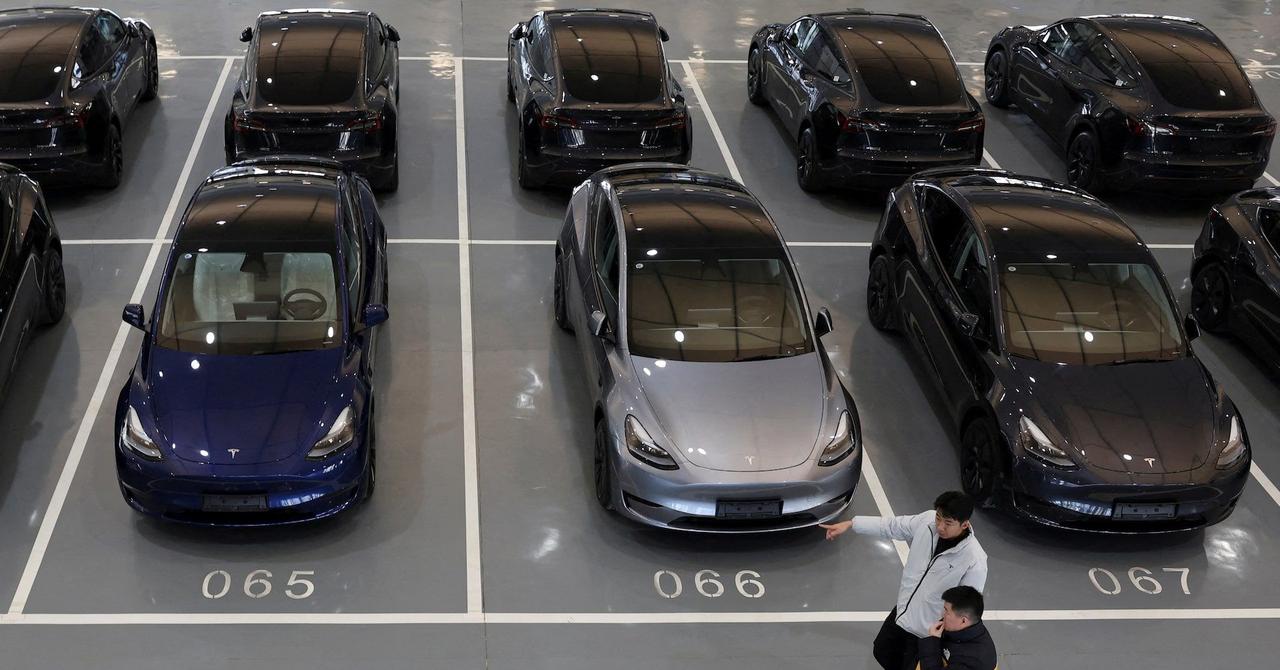
Currently, Tesla offers "Intelligent Assisted Driving" in China, a renamed version of its FSD system that has undergone several branding changes since its February 2025 introduction
1
. The feature has been available for purchase at RMB 64,000 ($9,220), though notably, starting February 14, Tesla will discontinue the one-time payment option globally, transitioning entirely to a monthly subscription model1
. Tao said Tesla would "actively engage in assisted driving initiatives in China" but could not provide a specific deployment timeline1
. The critical question remains whether Tesla has lost too much ground to local competitors who have been training on Chinese data all along, with companies like Huawei and Xpeng already demonstrating systems that perform very well on Chinese roads.References
Summarized by

Navi
Related Stories
Recent Highlights



Recent Highlights
Today's Top Stories







Your Daily Dose of Curated AI News
Don’t drown in AI news. We cut through the noise - filtering, ranking and summarizing the most important AI news, breakthroughs and research daily. Spend less time searching for the latest in AI and get straight to action.

