Top AI investors say the AI bubble is good for innovation despite inflated valuations


2 Sources
2 Sources
[1]
Top AI investors say maybe it's a bubble, but 'bubbles are good for innovation' | Fortune
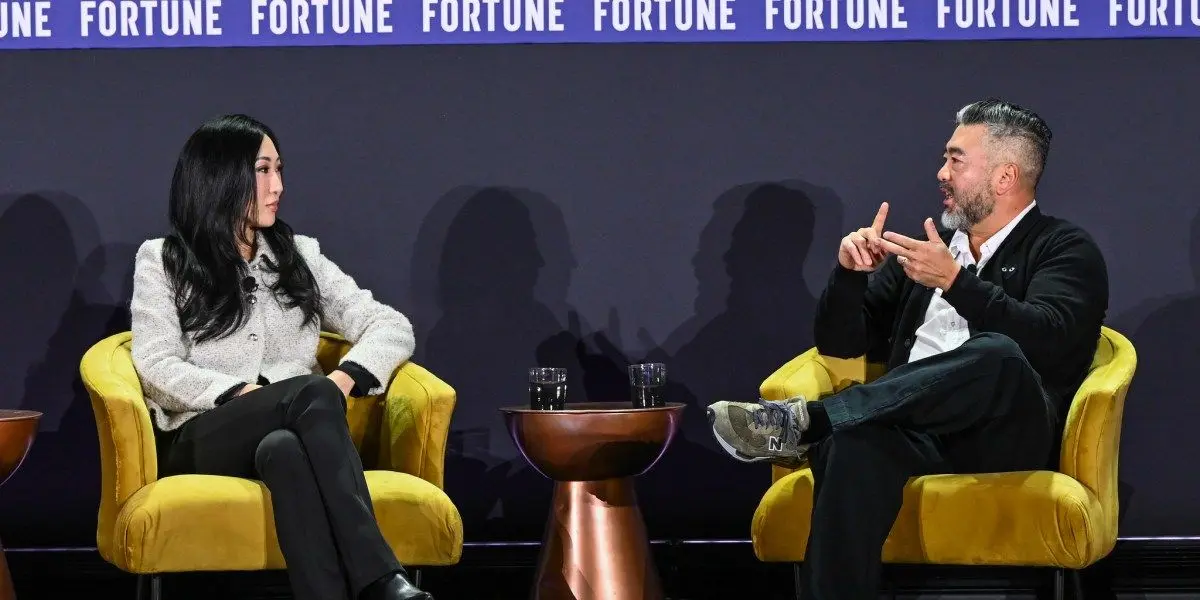
In the venture capital world, the word "bubble" usually serves as a warning shot -- a signal to pull back before a market correction wipes out portfolios. But at the recent Fortune Brainstorm AI conference, two top investors argued that when it comes to artificial intelligence, a bubble might be exactly what the industry needs. During a panel moderated by Fortune's Allie Garfinkle, Kindred Ventures founder Steve Jang and Sapphire Ventures partner Cathy Gao tackled the question dominating Silicon Valley: Are we in an AI bubble? The answer was, in short, maybe, but that's the wrong question to ask. "I think it is a bubble, but bubbles are good for innovation," said Jang. He argued that the term "bubble" is often just finance shorthand for a "new technology wave" that occurs every five, six, seven years. According to Jang, this market heat is functionally necessary: "You need a bubble in technology and startups ... to not only attract the world's best talent to work on a certain set of problems but you also need the capital to fund them." Jang pointed to the exodus of top engineers from stable roles at tech giants like Google, Meta, and Uber to launch startups as a "good signal" rather than a warning sign. While admitting that "bubbles popping are bad," Jang suggested that as long as the media continues to question the market, it helps "release pressure" and keeps the ecosystem healthy. Gao agreed that in certain pockets, "valuations have far outstripped any sort of fundamental" metrics. However, she cautioned against dismissing the trend entirely, noting that the current growth curves "far outstrip the growth curves of companies we've ever seen before," making the total addressable market difficult to calculate. "I don't think we have a good sense of how big some of these companies can ultimately become." Beyond the macroeconomic debate, the panelists outlined divergent strategies for surviving the pop, whenever it comes. Jang emphasized that in a true technology wave, "the whole stack changes," creating opportunities from the bottom up. He noted that Kindred Ventures is focusing heavily on "accelerating and modernizing the AI infrastructure," including chips, GPU marketplaces, and specialized frontier models. He observed that despite new entrants, margins remain high for cloud and chip providers, giving them "pricing power on all of the application layer companies." Gao, who focuses primarily on the application layer, offered a stricter framework for survival. "Let's get real: AI is no longer a differentiator," Gao said. She warned that "AI for X" companies are vulnerable. Instead, she said she looks for companies transitioning from simple features to complex workflows that embed deeply into an enterprise. "In the future, it's just going to be a customer support workflow tool, and every company will be powered by AI," Gao said. She argued that despite the volatility, "first-mover advantage is actually real" in the enterprise sector, citing the enduring dominance of Salesforce and Workday that dates back to the cloud era. The conversation turned darker regarding the future of robotics. Jang offered a "spicy" prediction for the sector, warning that many current startups are building on "primitive models" roughly equivalent to the "GPT 3.5 phase" of robotics. "A whole bunch of robotics startups ... are going to have a lot of heartbreak when the models improve and they've built for something sort of in the past," Jang predicted. He added that many consumer robotics companies will likely "fall by the wayside" or shut down because the societal and governmental adoption cycles will be too long for startups to survive. "We're all going to be using robots on a daily basis," Jang said. "Our kids are going to be riding in robots in a daily basis. That area is super exciting. But think about all of the startups building humanoids." They will have to prove that their humanoids won't, say, fall down or screw up or be buggy. "It's going to move around in your office or household or on the street even," he stressed, noting that every part of the physical world is going to have to prepare for humanoid robots potentially malfunctioning. "Think about that. And that is a deep tech problem." Looking toward 2026, Gao offered her own counter-intuitive forecast: despite better models, selling into the enterprise is "going to be even more difficult." She cited unresolved issues regarding trust and visibility as hurdles that the industry has yet to clear. "People are going to be more focused on trust and visibility, and we haven't really solved that problem yet."
[2]
AI Bubble Fears Grow, But Investors Say Valuations Are Powering Next Wave Of Innovation - Alphabet (NASDAQ:GOOG), Alphabet (NASDAQ:GOOGL)
Despite warnings of inflated valuations, leading AI investors argue that the current surge in artificial intelligence is sparking unprecedented innovation and attracting top talent from tech giants. AI Bubble Seen As Catalyst For Innovation, Talent Migration At the Fortune Brainstorm AI conference, Steve Jang of Kindred Ventures and Cathy Gao of Sapphire Ventures discussed whether the AI market is in a bubble, reported Fortune. "I think it is a bubble, but bubbles are good for innovation," Jang said, noting that market excitement is essential to draw top engineers and secure funding for ambitious projects. He pointed to engineers leaving companies like Alphabet Inc.'s (NASDAQ:GOOGL) (NASDAQ:GOOG), Google, Meta Platforms Inc. (NASDAQ:META), and Uber Technologies, Inc. (NASDAQ:UBER) to launch startups as a "good signal" for the industry. Enterprise AI, Infrastructure Highlighted As Keys To Growth Gao agreed that some valuations exceed fundamentals but emphasized that AI growth curves "far outstrip the growth curves of companies we've ever seen before." She said the true potential of AI companies is still unclear, making broad predictions difficult. Jang said Kindred Ventures focuses on AI infrastructure -- chips, GPUs, and cloud systems where margins remain strong. Gao stressed enterprise applications, warning that "AI for X" solutions are vulnerable and that embedding AI into complex workflows offers a sustainable competitive advantage. The conversation also addressed robotics. Jang cautioned that many startups are building on early-stage models and could face significant setbacks. "A whole bunch of robotics startups ... are going to have a lot of heartbreak when the models improve," he said. Gao added that enterprise adoption will face challenges around trust and visibility even as AI models advance. See Also: Trump's AI Order Under Fire -- Amy Klobuchar Says It's 'Likely Illegal' While Bernie Sanders Calls It 'Extremely Dangerous' AI Bubble Fears Grow As Experts Flag Overvalued Startups Last week, Investor Michael Burry and Google DeepMind CEO Demis Hassabis warned about overvaluation risks in the AI sector. Burry said the AI bubble's timing was unpredictable, criticized Nvidia Corp. (NASDAQ:NVDA) for fueling hype, and highlighted overspending on data centers without real demand. Hassabis noted that some AI startups raised tens of billions before launching products, questioning the sustainability of such valuations. He contrasted these companies with established tech giants like Google and said AI was "overhyped in the short term" but underappreciated in the medium to long term, reflecting on how hype often inflates valuations rapidly. Read Next: Elon Musk Says His 'Running Robot' Will 'Actually Eliminate Poverty' As He Shares Video Of Tesla Optimus Jogging Disclaimer: This content was partially produced with the help of AI tools and was reviewed and published by Benzinga editors. Photo courtesy: Shutterstock GOOGAlphabet Inc$309.20-%OverviewGOOGLAlphabet Inc$307.77-%METAMeta Platforms Inc$661.35-%NVDANVIDIA Corp$181.38-%UBERUber Technologies Inc$79.54-%Market News and Data brought to you by Benzinga APIs
Share
Share
Copy Link
Leading venture capitalists Steve Jang of Kindred Ventures and Cathy Gao of Sapphire Ventures argue that the AI bubble, while real, is essential for driving innovation. Speaking at Fortune Brainstorm AI conference, they explained how market excitement attracts top talent from tech giants and secures capital for ambitious AI projects, even as concerns about inflated valuations grow.
AI Investors Defend the Bubble as Innovation Catalyst
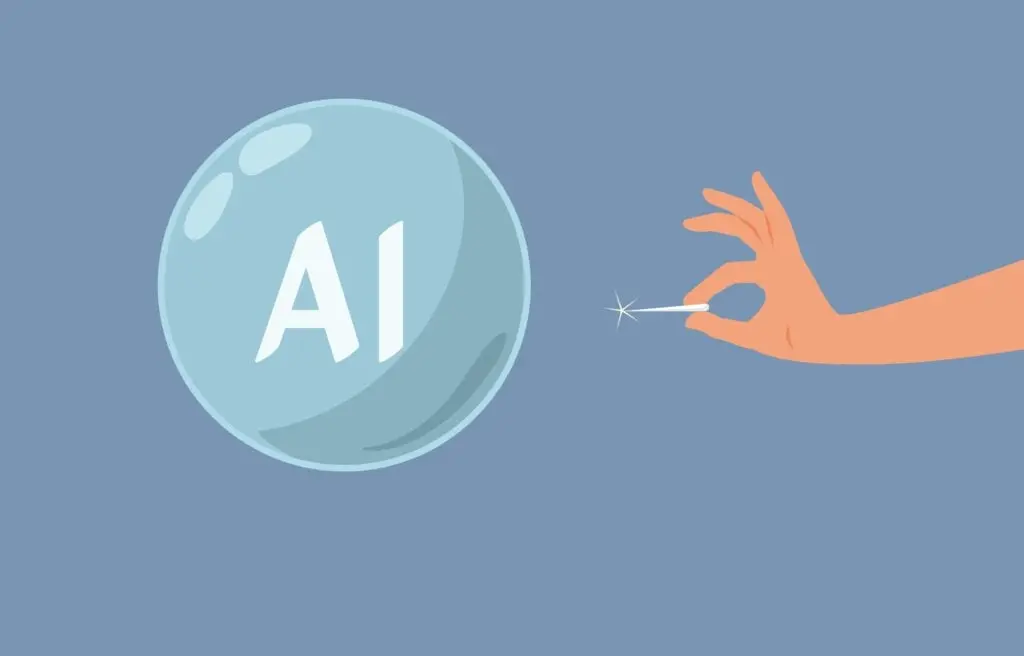
The current state of the AI market has sparked intense debate about whether we're witnessing a dangerous bubble, but two prominent AI investors are making a counterintuitive case: the AI bubble might be exactly what the industry needs. At the Fortune Brainstorm AI conference, Steve Jang of Kindred Ventures and Cathy Gao of Sapphire Ventures confronted the question head-on, arguing that while inflated valuations exist, the market heat is functionally necessary for breakthrough innovation
1
.
Source: Fortune
"I think it is a bubble, but bubbles are good for innovation," Jang stated, framing the term as finance shorthand for a "new technology wave" that occurs every five to seven years
1
. According to Jang, this market excitement serves a dual purpose: attracting the world's best talent to work on critical problems while generating the capital needed to fund ambitious projects. The talent migration to startups from stable roles at tech giants like Google, Meta, and Uber represents a "good signal" rather than a warning sign, he argued2
.Valuations Exceed Fundamentals But Growth Curves Are Unprecedented
Gao acknowledged that in certain pockets, valuations have far outstripped fundamental metrics, but she cautioned against dismissing the trend entirely
1
. The growth curves of current AI companies "far outstrip the growth curves of companies we've ever seen before," making the total addressable market difficult to calculate, she explained. "I don't think we have a good sense of how big some of these companies can ultimately become," Gao added, suggesting that traditional valuation frameworks may not adequately capture the potential scale of AI-driven businesses1
.This perspective contrasts sharply with recent warnings from other industry figures. Investor Michael Burry and Google DeepMind CEO Demis Hassabis have flagged overvaluation risks, with Burry criticizing overspending on data centers without real demand and Hassabis questioning how some AI startups raised tens of billions before launching products
2
. Hassabis noted that AI was "overhyped in the short term" but underappreciated in the medium to long term, reflecting how hype often inflates valuations rapidly2
.AI Infrastructure and Enterprise Applications Emerge as Strategic Focus Areas
The two investors outlined divergent strategies for navigating a potential market correction. Jang emphasized that in a true technology wave, "the whole stack changes," creating opportunities from the bottom up
1
. Kindred Ventures is focusing heavily on AI infrastructure, including chips, GPU marketplaces, cloud systems, and specialized frontier models. Despite new entrants, margins remain high for cloud and chip providers, giving them "pricing power on all of the application-layer companies," Jang observed1
2
.Gao, who concentrates primarily on enterprise applications, offered a stricter framework for survival. "Let's get real: AI is no longer a differentiator," she warned, noting that "AI for X" companies are vulnerable
1
. Instead, she looks for companies transitioning from simple features to complex workflows that embed deeply into enterprise operations. "In the future, it's just going to be a customer support workflow tool, and every company will be powered by AI," Gao said, arguing that despite volatility, "first-mover advantage is actually real" in the enterprise sector, citing the enduring dominance of Salesforce and Workday from the cloud era1
.Related Stories


Robotics Startups Face Heartbreak as Models Evolve
The conversation took a cautionary turn regarding robotics startups, with Jang offering a "spicy" prediction that many current ventures are building on "primitive models" roughly equivalent to the "GPT 3.5 phase" of robotics
1
. "A whole bunch of robotics startups ... are going to have a lot of heartbreak when the models improve and they've built for something sort of in the past," Jang predicted1
2
.
Source: Benzinga
He added that many consumer robotics companies will likely "fall by the wayside" because societal and governmental adoption cycles will be too long for startups to survive.
Jang emphasized the deep technical challenges ahead, noting that humanoid robots will need to prove they won't malfunction while moving around offices, households, or streets. "Every part of the physical world is going to have to prepare for humanoid robots potentially malfunctioning. Think about that. And that is a deep tech problem," he stressed
1
.Trust and Visibility Remain Unresolved for Enterprise Sales
Looking toward 2026, Gao offered her own forecast: despite better models, enterprise sales are "going to be even more difficult"
1
. She cited unresolved issues regarding trust and visibility as hurdles the industry has yet to clear. "People are going to be more focused on trust and visibility, and we haven't really solved that problem yet," Gao warned1
. This challenge could determine which companies successfully embed AI into enterprise workflows and which struggle to gain traction despite technical capabilities.Jang suggested that as long as the media continues to question whether we're in a bubble, it helps "release pressure" and keeps the ecosystem healthy, potentially preventing a catastrophic market correction
1
. While both investors acknowledged that "bubbles popping are bad," they maintained that the current market dynamics are essential for attracting capital and talent to solve the most pressing technical challenges in artificial intelligence.References
Summarized by

Navi
[1]
Related Stories
Recent Highlights
1
Tennessee Teens Sue Elon Musk's xAI Over Grok AI-Generated Child Abuse Images
Policy and Regulation

2
Pentagon designates Palantir Maven AI as core US military system in major defense shift
Technology
3
Supermicro Co-Founder Indicted in $2.5 Billion Nvidia AI Chip Smuggling Scheme to China
Policy and Regulation
Recent Highlights
Today's Top Stories










Your Daily Dose of Curated AI News
Don’t drown in AI news. We cut through the noise - filtering, ranking and summarizing the most important AI news, breakthroughs and research daily. Spend less time searching for the latest in AI and get straight to action.

