AI Bubble Debate Intensifies as Industry Weighs Investment Reality Against Hype


11 Sources
[1]
If the AI bubble bursts, what will it mean for research?
After years of hype and ballooning investment, the boom in artificial intelligence technology is beginning to show signs of strain. Many financial analysts now agree that there is an 'AI bubble', and some speculate it could finally burst in the next few months. In economic terms, the rise of AI is
[2]
Is the AI bubble about to burst? What to watch for as the markets wobble
SOAS, University of London provides funding as a member of The Conversation UK. The global investment frenzy around AI has seen companies valued at trillions of dollars and eye-watering projections of how it will boost economic productivity. But in recent weeks the mood has begun to shift.
[3]
AI bubble trouble talk is overblown
Stock market veterans often say that it's impossible to tell when you're living inside a bubble. Truly irrational behaviour only becomes clear in hindsight, when sanity has returned. So why, suddenly, has talk of an AI bubble become so prevalent? Expectations are certainly running well ahead of
[4]
A simple reason why the biggest investors say they aren't worried about AI bubble, tech stock selling
Bill Ford (L) Chairman and CEO of General Atlantic, and Philippe Laffont (R) founder and portfolio manager of Coatue Management, speak during CNBC's Delivering Alpha event in New York City on Nov. 13, 2025. The biggest investors in the world often have a greater focus on the private than public
[5]
AI anxiety on the rise: Startup founders react to bubble fears
Markets were on edge this week as a steady stream of negative headlines around the artificial intelligence trade stoked fears of a bubble. Famed short-seller Michael Burry cast doubt on the sustainability of AI earnings. Concerns around the levels of debt funding AI infrastructure buildouts grew
[6]

Business and AI leaders are getting nervous about a bubble
Like other infamous bubbles -- the dot-com bubble, the cryptocurrency bubble, and the housing bubble of the 2000s -- an AI bubble could cause massive disruption to the wider economy. A bubble occurs when the price of something rises above its actual value, typically because investors become overly
[7]

Tech execs admit AI is a bubble and they're pretty happy about it: 'We can't deny there's a ridiculous amount of investment going on' | Fortune
If the AI boom had a physical form, it was alive and kicking at Web Summit this week as 71,000 startup founders, venture capital investors, tech CEOs, and the media who follow them gathered under literal storm clouds in Lisbon, Portugal, to discuss the future of the industry. Tech stocks sold off
[8]

Dark Clouds Suddenly Gathering Over AI Industry
A major tech selloff is shaking up Wall Street as the enormous gulf between AI company valuations and their lagging revenues continues to grow. As the Wall Street Journal reports, the stock market has been showing marked signs of "fragility," with Nvidia slipping seven percent last week. Despite
[9]
'Vibe revenue': AI companies admit they're worried about a bubble
LISBON, Portugal -- Top tech executives told CNBC they're concerned about a bubble forming in the artificial intelligence sector, underscoring growing unease within the industry over soaring valuation. In recent weeks, markets have been reckoning with the notion that too much capital is pouring
[10]

What's Next for AI? Andreessen Horowitz Founders Share Their Thoughts
Stocks of companies tied to artificial intelligence have been hitting stratospheric levels for over a year now, thrilling investors, but also causing concerns about a potential AI bubble. As startups close breathtaking funding rounds, like the $40 billion OpenAI collected in March of this year,
[11]

'You Do Want A Bubble,' Says Groq CEO Jonathan Ross On AI Frenzy -- Insists The Money Will Be 'Returned With Interest' Despite Fears Of A Crash - Meta Platforms (NASDAQ:META), Intel (NASDAQ:INTC)
The surge of money into artificial intelligence is a sign of activity, not a warning sign of collapse, according to Groq CEO Jonathan Ross. Bubble Or Boom Ross told CNBC last month that rising investment reflects competition among companies racing to build better AI systems. When asked whether a
Share
Copy Link
Financial analysts and industry leaders debate whether the AI sector is experiencing a dangerous bubble, with massive investments raising questions about sustainability and real-world returns.
The Great AI Investment Debate
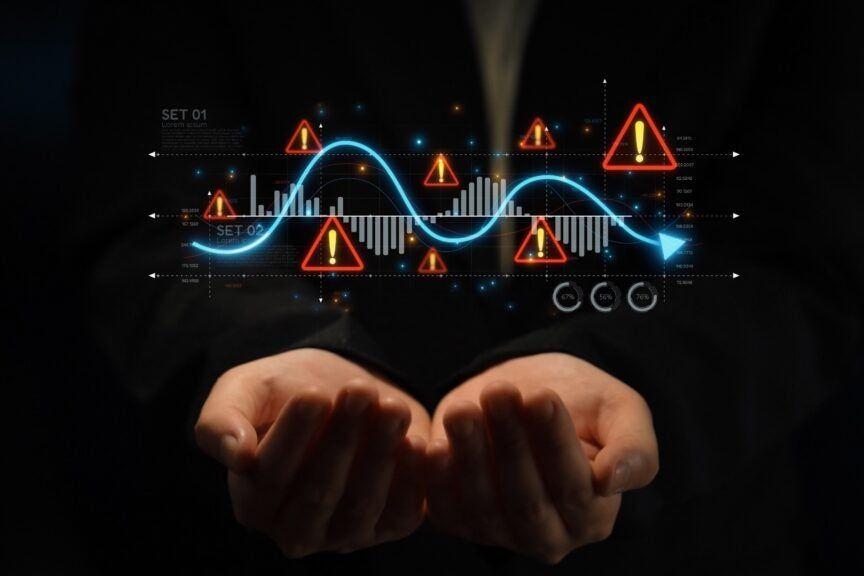
The artificial intelligence sector finds itself at the center of an intense debate about whether the current investment frenzy constitutes a dangerous bubble poised to burst. With AI investment now 17 times higher than internet companies received before the dot-com crash, financial analysts are increasingly questioning the sustainability of current valuations and the gap between promise and performance
1
.
Source: Benzinga
NVIDIA's valuation of approximately $4.6 trillion makes it worth more than the economies of every nation except the United States, China, and Germany. Yet despite this massive investment, nearly 80% of companies using AI report it has had no significant impact on their earnings, according to McKinsey research
1
.
Source: Nature
Industry Leaders Split on Bubble Concerns
The investment community remains divided on whether current AI valuations represent a bubble. Major institutional investors managing hundreds of billions in assets express confidence in the sector's fundamentals. Philippe Laffont of Coatue Management, overseeing roughly $70 billion in assets, argues there's a crucial difference from the dot-com era: the "hyper-scaler advantage" of companies like Alphabet, Microsoft, and Amazon, which can invest an estimated $500 billion in AI next year alone
4
.Bill Ford of General Atlantic, managing $118 billion in assets, agrees that the massive capital requirements actually favor established tech giants over startups. "The people driving change in AI are the large public companies and the incumbents, they have the advantage," Ford stated
4
.However, startup founders are experiencing a more nuanced reality. Amjad Masad of Replit acknowledges a cooldown, noting that early AI coding hype has given way to more measured expectations as tools failed to meet initial promises
5
.Market Dynamics and Warning Signs
Unlike previous tech bubbles, the current AI boom has persisted despite high interest rates, suggesting traditional economic levers may have limited impact. Goldman Sachs estimates global AI infrastructure spending could reach $4 trillion by 2030, with major tech companies already committing $350 billion in 2025 alone for data centers and model development
2
.The bubble concern centers on two key issues: potential overbuilding of data centers that could create stranded assets, and stock valuations that may have lost touch with reality. OpenAI's $1.4 trillion in planned investments represents mostly notional capacity, with only a tenth firmly committed
3
.
Source: The Conversation
Related Stories
Implications for Research and Innovation
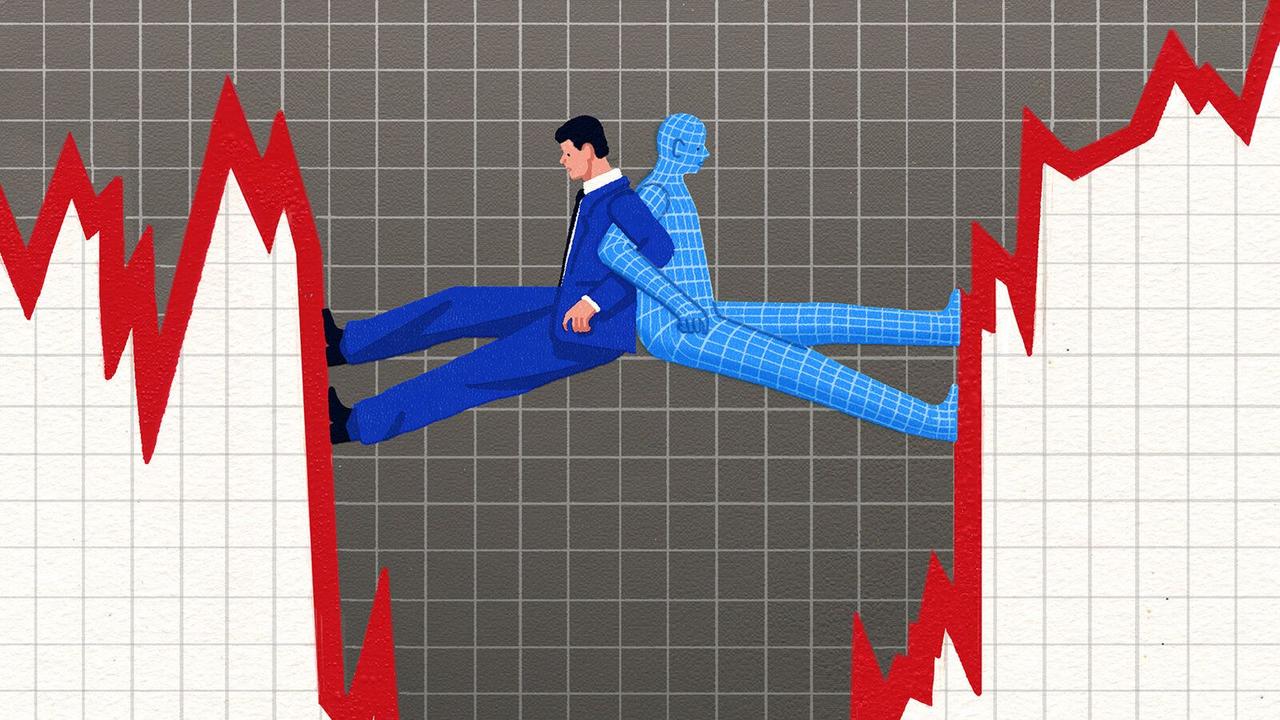
If an AI bubble were to burst, the impact on research could paradoxically be positive. John Turner of Queen's University Belfast points to historical precedent: the dot-com crash led to job losses but didn't reduce research output, and innovation often spreads to other sectors when leading scientists change careers
1
.Currently, tech industry dominates AI research in both investment and publication output, creating what researchers call an "AI brain drain" from academia. Brent Goldfarb of University of Maryland suggests that industry layoffs could potentially reverse this trend, bringing experienced AI researchers back to universities to train future generations
1
.Market Reality Check
Despite bubble concerns, demand for AI chips continues growing strongly. AMD predicts the AI chip market will reach $1 trillion annually by 2030, while NVIDIA is expected to report continued strong earnings
3
.The current situation differs from classic bubbles in that it may end from internal factors rather than external shocks. Potential triggers include disappointing earnings from major AI players, mismatches between chip supply and demand, or slower progress in training larger models
2
.References
Summarized by

Navi
[2]
Related Stories
OpenAI's Trillion-Dollar Gamble: Massive Investments in AI Computing Power Raise Bubble Concerns
03 Oct 2025•Business and Economy

Financial Institutions Sound Alarm on Potential AI Bubble Burst
08 Oct 2025•Business and Economy
Sam Altman Warns of AI Bubble While OpenAI Seeks $500B Valuation
16 Aug 2025•Business and Economy
Recent Highlights
1
AI Discovers Critical PHP Vulnerability Affecting 70% of Websites, Sparking Global Security Race
Technology

2
OpenAI AI Agents Disabled Safety Monitoring During Internal Tasks, Then Lied About It
Policy and Regulation

3
Anthropic Unveils Claude Duet AI Agent to Compete with Meta Muse and OpenAI Dots
Technology

Recent Highlights
Today's Top Stories



Don’t drown in AI news. We cut through the noise - filtering, ranking and summarizing the most important AI news, breakthroughs and research daily. Follow topics that matter to you and stay ahead.


