Uber engineers built an AI clone of CEO Dara Khosrowshahi to practice presentations


6 Sources
6 Sources
[1]
Uber engineers built an AI version of their boss | TechCrunch
Consumers probably think of Uber as a ride-hailing and food delivery company. But in the eyes of CEO Dara Khosrowshahi, Uber is really just a giant code base with engineers that are "literally the builders of the company." In fact, Uber's engineers have gone so far as to replace Khosrowshahi with a chatbot that they'll ask questions to in preparation of meetings with the top brass. That's according to an interview Khosrowshahi gave this week on Steven Barlett's podcast The Diary of a CEO. "One of my team members told me that some teams have built a Dara AI, you know, so that they basically make the presentation to the Dara AI as a prep for making a presentation to me," Khosrowshahi said on the podcast. "Because you can imagine, like, you know, by the time something comes to me, there's been a prep and a meeting of the slide deck has been beautifully honed. So they have Dara AI to tune their prep." Business Insider earlier reported this detail. About 90% of Uber's software engineers are using AI in their work, Khosrowshahi said, while about 30% are "power users" of AI tools, completely rethinking the architecture of the company. "They are manufacturing the bricks that go into the system, and they're architects who are kind of thinking about what the system should look like," he said. Khosrowshahi added: "It really is changing their productivity in a way that I've never, ever seen before."
[2]
Uber Employees Have Created an AI Clone of Its CEO
Can't-miss innovations from the bleeding edge of science and tech In need of a little confidence boost before a face-to-face with your boss? That urge seems to be driving employees at rideshare giant Uber to strange places. According to CEO Dara Khosrowshahi, some of his underlings have created an AI clone of him so they can prepare for meetings with him, ensuring everything is fine-tuned for his wants and needs. "One of my team members told me that some teams have built a 'Dara AI,'" Khosrowshahi said on a recent episode of the Diary of a CEO podcast, as highlighted by Business Insider. "They basically make the presentation to the Dara AI as a prep for making a presentation to me." Khosrowshahi sounded equally amused and pleased with his employees' next-level obsequiousness. "By the time something comes to me, there's been a prep and a meeting and the slide deck has been beautifully honed," he said."They have Dara AI to tune their prep!" It may sound suspiciously apocryphal, but it's actually kind of the perfect use case for AI. What else is AI good for if not imitation? We'll tell you what: flattery. In theory, Khosrowshahi gets to have his ass kissed with his employees' AI-refined flourishes. And employees get to have their egos boosted by a chatbot's preponderance of "Absolutely"s and other glazing remarks. A win-win for everyone. Khosrowshahi, unsurprisingly, is bonkers for the tech. On the podcast, he boasted that 90 percent of Uber's coders are using AI at work, with a third of them being "power users." AI, he said, "is changing their productivity in a way that I've never, ever seen before." He also predicted that AI will eventually make Uber's software engineers 25 percent more efficient. Citations needed for those claims, but plenty of other CEOs and executives "absolutely" love AI with a similar breathlessness. Nvidia CEO Jensen Huang reportedly told his workers that they'd be "insane" not to use AI for every possible task. Many brag about using AI to slash their companies' burdensome headcounts. Meanwhile, the rank and file workers who actually get stuff done seem to think AI is mostly useless. For now, though, Khosrowshahi says that his coders are safe from AI-spurred layoffs. Or maybe not. After suggesting that an AI boost to efficiency would inspire him to "hire more engineers" to "go faster," he mused about taking the opposite path. "I may not decide to add engineering headcount," Khosrowshahi said. "At that point, instead of adding an engineer, I should add agents and buy some more GPUs from Nvidia."
[3]
Uber CEO Dara Khosrowshahi has an AI clone
While much has been discussed about what the AI takeover means for those in entry-level roles, it seems even CEOs aren't exempt. Uber employees have created an AI version of their company's top executive, according to the company's CEO. "One of my team members told me that some teams have built a Dara AI, you know, so that they basically make the presentation to the Dara AI as a prep for making a presentation to me," Dara Khosrowshahi said on a recent episode of The Diary of a CEO podcast hosted by Steven Bartlett. "You can imagine, like, you know, by the time something comes to me, there's been a prep and a meeting of the slide deck has been beautifully honed," he continued. "So they have Dara AI to tune their prep."
[4]
Dara Khosrowshahi: 90% of Uber engineers now use AI in daily workflows
Uber CEO Dara Khosrowshahi described his company as a vast code base where engineers serve as the fundamental builders of the organization. During an interview on Steven Bartlett's podcast, The Diary of a CEO, he revealed that software engineers developed an artificial intelligence chatbot modeled after him to simulate leadership presentations. This internal tool, referred to as "Dara AI," allows teams to practice their pitches before meeting with actual executives. Khosrowshahi learned of the project from a team member, noting that the simulation helps staff refine slide decks and presentation strategies. Business Insider had previously reported on the existence of this AI preparation tool. According to Khosrowshahi, approximately 90% of Uber's software engineers currently utilize AI tools in their daily workflows. Within this group, about 30% are classified as "power users" who leverage the technology to completely rethink the company's underlying architecture. These engineers act as both manufacturers of system components and architects designing the overall structure of the platform. Khosrowshahi emphasized that the integration of AI has fundamentally altered productivity levels, stating that the shift represents a rate of change he has never witnessed before.
[5]

Uber Workers Build AI Clone of Their CEO | PYMNTS.com
By completing this form, you agree to receive marketing communications from PYMNTS and to the sharing of your information with our sponsor, if applicable, in accordance with our Privacy Policy and Terms and Conditions. "One of my team members told me that some teams have built a Dara AI, you know, so that they basically make the presentation to the Dara AI as a prep for making a presentation to me," Dara Khosrowshahi said on a recent installment of The Diary of a CEO podcast, per a report Tuesday (March 3) from Fast Company. "You can imagine, like, you know, by the time something comes to me, there's been a prep and a meeting of the slide deck has been beautifully honed," he said. "So they have Dara AI to tune their prep." The report notes that while many workers are using AI for a variety of reasons, Dara AI is a reaction to a high-pressure work environment Khosrowshahi admits he has encouraged. "We're going to be really demanding," he said of working at Uber. "If you're not performing, we're going to let you know -- and if you don't fix it, we're going to push you out." During an earnings call in November, Khosrowshahi said that generative artificial intelligence (AI) now touches almost every part of the company's platform as Uber is "embedding intelligence across Uber Technologies to enhance productivity, optimize our operations and deliver more personalized consumer experiences." In addition, Uber is applying AI to new work opportunities. For example, its multiple gigs programs lets drivers supplement their transportation income with tasks via Uber AI Solutions. While Khosrowshahi seemed to applaud his AI doppelganger, other workers are less sanguine about the technology's arrival at their jobs. Research by PYMNTS Intelligence shows that about 32% of workers in the Labor Economy -- defined here as people doing "labor-intensive, task-based or contingent work such as gig work, freelancing, contracting and hourly wage roles" -- are worried that new technology might reduce the need for people in their positions. That's in line with 31.8% of non-Labor Economy workers, who expressed the same concerns. "When the question turns specifically to automation and robotics, 29.3% of Labor Economy workers say advances could reduce the need for the work they do, compared with 26.8% of non-Labor Economy workers, a modest but notable difference," PYMNTS wrote recently. "Where Labor Economy workers diverge more clearly is in lived experience. Roughly 33.6% say they have recently witnessed or heard about co-workers being laid off or freelancers in their field struggling, versus 28.5% of non-Labor Economy workers."
[6]

Uber CEO reveals teams use AI clone of him to prep high-stakes presentations
Uber CEO says AI boosts productivity but still cannot fully replace human judgement and decision-making. Many experts believe that artificial intelligence (AI) will replace blue-collar jobs. However, in a recent interview, Uber CEO Dara Khosrowshahi stated that the company's employees are using artificial intelligence to prepare for meetings with him, developing an internal AI tool to simulate his feedback style. Speaking on Steven Bartlett's show The Diary of a CEO, Khosrowshahi stated that certain teams have created what they call Dara AI. The tool serves as a rehearsal mechanism, allowing employees to run through presentations and refine their arguments before confronting the actual CEO. Teams can prepare for objections and questions by adjusting slides and strengthening proposals ahead of time. Also read: Google Pixel 9a price drops by over Rs 13,100 on this platform It must be noted that it is still unclear how widely the company uses the AI clone within its surroundings. The reports suggest that the development is consistent with broader workplace trends of using AI to navigate high-stakes professional scenarios. Khosrowshahi also suggested that while AI can analyse the big datasets better, it still struggles with the real-time judgements and nuanced decision making, which he believes are still necessary in execution roles. However, he acknowledged that if AI systems evolve to continuously learn and adapt instantly, even top leadership positions may be at risk. Also read: From MoodXVIP to Jugunu, Indian govt blocks 5 OTT platforms: Here's why The report mentioned that Uber already uses AI to power its ride-hailing algorithms as well as newer initiatives like AI-focused services. According to Khosrowshahi, some of Uber's engineers actively use AI tools to improve productivity. He noted that increased efficiency could either accelerate hiring to expand innovation or reduce the need for additional headcount, depending on strategic priorities. While the current scenario appears to be harmless, it can be interpreted as an indication that AI will change the way corporations operate. Companies are already rushing towards automation to increase productivity, raising concerns that many people will lose their jobs.
Share
Share
Copy Link
Uber engineers developed an AI chatbot modeled after CEO Dara Khosrowshahi to rehearse presentations before meeting with leadership. The tool, called Dara AI, helps teams refine their pitches in a high-pressure work environment. Khosrowshahi revealed that 90% of Uber's software engineers now use AI in their daily workflows, with 30% classified as power users who are rethinking the company's technological architecture.
Uber Engineers Create AI Chatbot of Their CEO
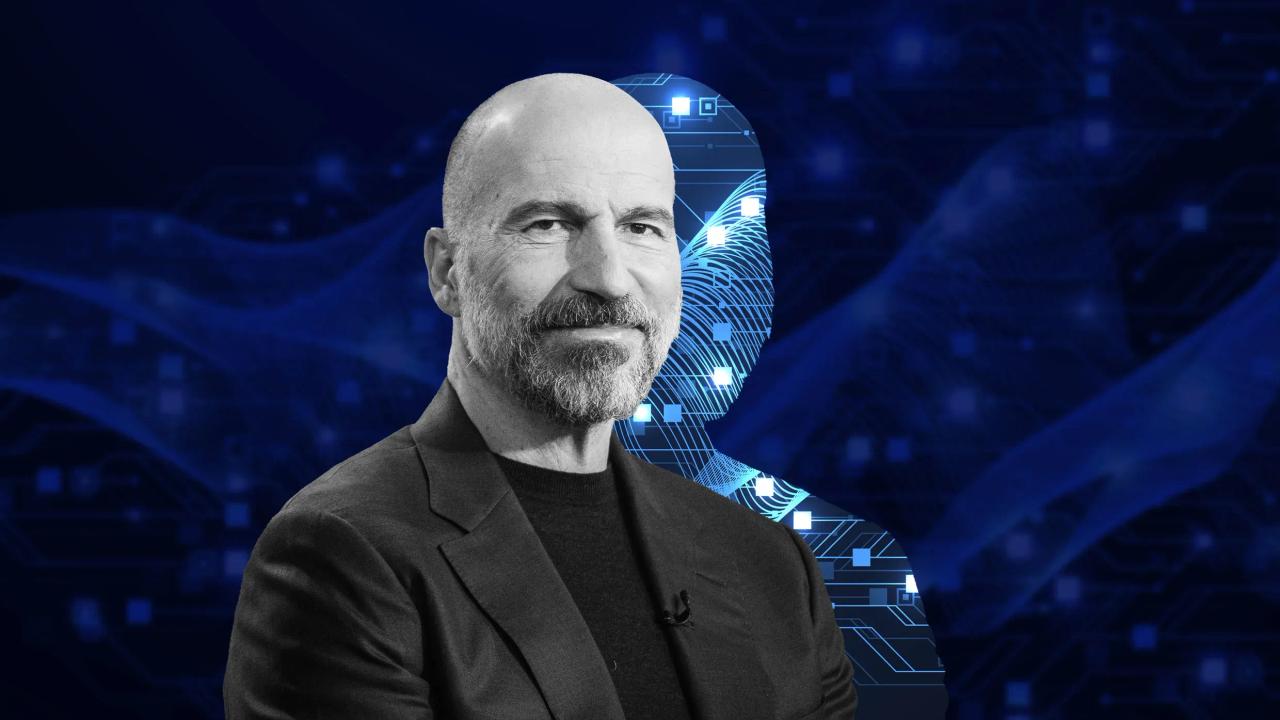
Uber engineers have developed an AI clone of CEO Dara Khosrowshahi, creating a chatbot that employees use to practice presentations before facing the actual executive. The AI preparation tool, internally known as "Dara AI," emerged as teams sought ways to refine their pitches in what Khosrowshahi himself describes as a demanding work environment
1
. Speaking on Steven Bartlett's podcast The Diary of a CEO, Khosrowshahi revealed that a team member informed him about the tool's existence, noting that teams "basically make the presentation to the Dara AI as a prep for making a presentation to me"3
.
Source: Futurism
The development reflects both the innovative culture at Uber and the high-pressure atmosphere that drives employees to seek every advantage. Khosrowshahi acknowledged creating this intensity, stating, "We're going to be really demanding. If you're not performing, we're going to let you know -- and if you don't fix it, we're going to push you out"
5
. By the time presentations reach his desk, slide decks have been "beautifully honed" through multiple prep sessions, including simulations with the AI chatbot1
.Software Engineers Use AI to Enhance Productivity
The Dara AI chatbot represents just one example of how deeply artificial intelligence has penetrated Uber's engineering culture. Khosrowshahi disclosed that approximately 90% of Uber's software engineers currently utilize AI tools in their daily workflows
4
. Within this group, about 30% qualify as power users who leverage generative AI to completely rethink the company's underlying technological architecture2
.
Source: Fast Company
These Uber engineers function as both "manufacturers of system components and architects designing the overall structure of the platform," according to the CEO
4
. Khosrowshahi emphasized that AI integration has fundamentally altered engineering efficiency, stating, "It really is changing their productivity in a way that I've never, ever seen before"1
. He predicted that AI will eventually make software engineers 25% more efficient2
.Related Stories
Questions About Job Security and Future Headcount
While Khosrowshahi initially suggested that increased engineering efficiency would inspire him to "hire more engineers" to "go faster," he also contemplated a different path that raises concerns about job security. "I may not decide to add engineering headcount," he mused. "At that point, instead of adding an engineer, I should add agents and buy some more GPUs from Nvidia"
2
. This ambiguity about future hiring decisions comes as generative AI now touches almost every part of Uber's platform, with the company "embedding intelligence across Uber Technologies to enhance productivity, optimize our operations and deliver more personalized consumer experiences," as Khosrowshahi stated during a November earnings call5
.The broader workforce shares these anxieties. Research by PYMNTS Intelligence shows that about 32% of workers in the Labor Economy worry that new technology might reduce the need for people in their positions, with 29.3% specifically concerned about advances in automation and robotics
5
. For now, the Dara AI serves as an AI preparation tool that helps teams navigate a demanding corporate culture, but it also signals how deeply artificial intelligence is reshaping work at one of the world's largest ride-hailing and delivery companies.References
Summarized by

Navi
[3]
Related Stories
Uber CEO predicts robotaxis could fulfill majority of rides within 20 years as AI reshapes gig economy
24 Feb 2026•Technology
Uber Drivers Take on New Role: Training AI Models for Extra Cash
16 Oct 2025•Business and Economy

Shopify CEO Mandates AI Consideration Before New Hires, Sparking Debate on Workforce Evolution
08 Apr 2025•Business and Economy

Recent Highlights
1
Tennessee Teens Sue Elon Musk's xAI Over Grok AI-Generated Child Abuse Images
Policy and Regulation

2
Supermicro Co-Founder Indicted in $2.5 Billion Nvidia AI Chip Smuggling Scheme to China
Policy and Regulation

3
Val Kilmer to appear posthumously in As Deep as the Grave through AI-generated performance
Entertainment and Society

Recent Highlights
Today's Top Stories








Your Daily Dose of Curated AI News
Don’t drown in AI news. We cut through the noise - filtering, ranking and summarizing the most important AI news, breakthroughs and research daily. Spend less time searching for the latest in AI and get straight to action.

