UK government invests £45 million in AI supercomputer to accelerate fusion research


2 Sources
2 Sources
[1]
UK splurges £45M on AI supercomputer to crack fusion power
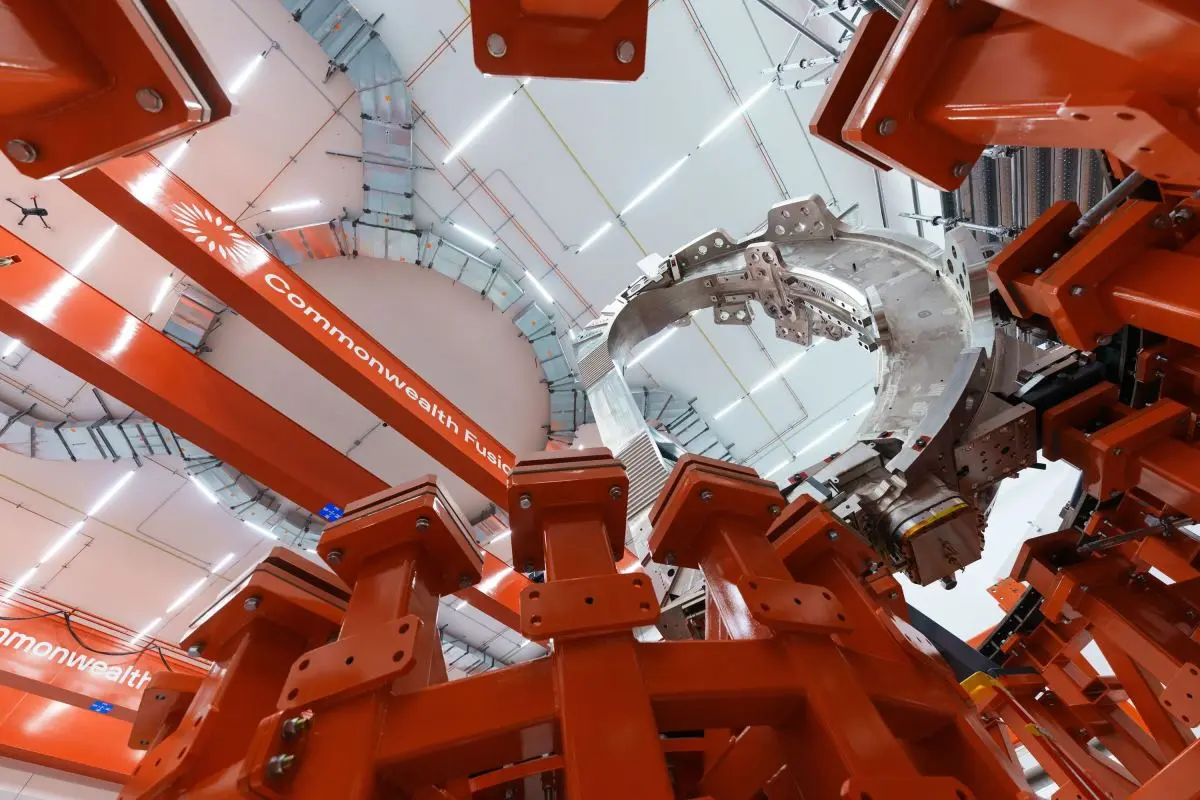
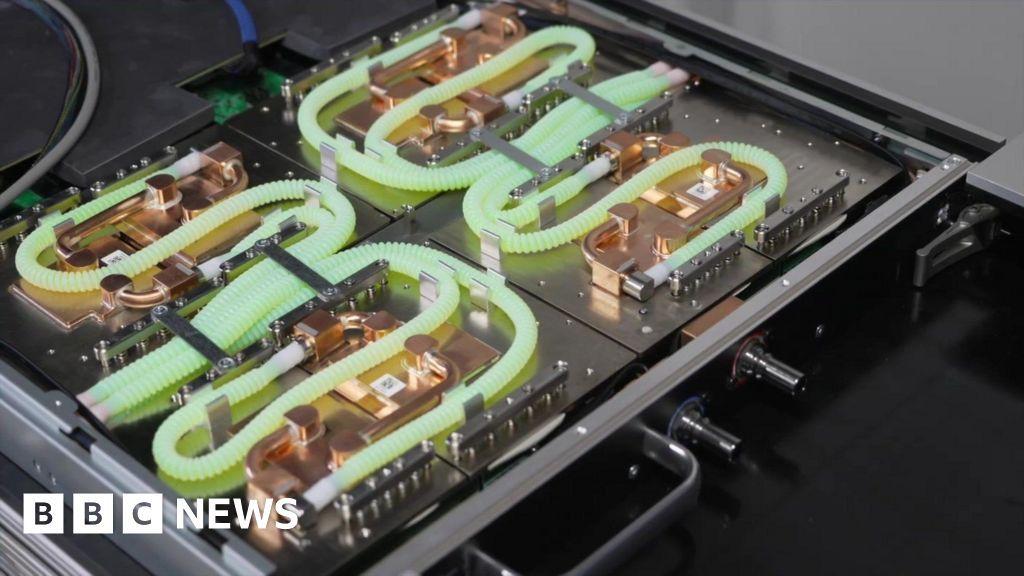
'Sunrise' beast will run AI-heavy simulations of plasma behavior and reactor physics The UK government is splashing out £45 million (c $60 million) on a new AI-driven supercomputer designed to help scientists model the chaotic physics of nuclear fusion, with the system expected to come online this summer at the UK Atomic Energy Authority's (UKAEA) Culham campus. The machine, called Sunrise, is being pitched as the world's most powerful AI supercomputer that is dedicated specifically to fusion energy research. Funded by the Department for Energy Security and Net Zero (DESNZ), the 1.4MW system is slated to begin operating in June and will form the first major piece of infrastructure in what ministers describe as the UK's planned "AI Growth Zone" at Culham in Oxfordshire. Fusion research has long relied on large-scale simulations to understand the behavior of superheated plasma and the extreme materials in experimental reactors. The idea behind Sunrise is to combine high-performance computing with physics-informed AI models, allowing researchers to run more detailed simulations and develop digital twins of complex fusion systems before attempting costly physical experiments. According to the government, the system will deliver up to 6.76 exaFLOPS of AI-accelerated modeling performance. That figure refers to AI workloads rather than the traditional supercomputing benchmarks used in global rankings, but it still represents a significant increase in modeling capability for the UK's fusion research programs. The machine will incoporate AMD EPYC processors and AMD Instinct GPU accelerators running on Dell PowerEdge infrastructure, with WEKA providing the storage platform. Intel is also supporting the project, alongside the University of Cambridge and the UK Atomic Energy Authority (UKAEA). Officials say the system will help tackle several key challenges in fusion research, including modeling plasma turbulence, developing reactor materials, and advancing tritium fuel breeding technologies needed for future fusion systems. Dr Rob Akers, director of computing programs at the UKAEA, said the system is intended to bring an "Apollo program" style approach to fusion development by allowing researchers to test and refine designs in a virtual environment before building them in the real world. "Sunrise will bring that capability to fusion by combining high-fidelity simulation with physics-informed AI to develop predictive digital twins that reduce the cost, risk, and time of learning that would otherwise require expensive and time-consuming physical testing," he said. The supercomputer will support several UK fusion initiatives, including the LIBRTI program, which focuses on tritium fuel-cycle technologies, and the government's flagship STEP project, a prototype spherical tokamak power plant that Britain hopes to build in Nottinghamshire in the 2040s. Sunrise also fits into a broader push by the UK government to expand its domestic AI and supercomputing capacity. Earlier this year, ministers confirmed a separate £36 million (c $48 million) investment in the Cambridge supercomputing center, while Culham is expected to become a hub for AI-driven scientific computing tied to energy research. Whether AI can meaningfully speed up the notoriously slow march toward commercial fusion power remains an open question. For now, the UK is betting that more computing power might help crack one of physics' most stubborn problems a little faster. ®
[2]
UK: New 1.4MW mission-focused supercomputer to power fusion research
The Sunrise system will use advanced AI simulations to model plasma behavior and test fusion reactor designs before real-world experiments. The UK government announced on Monday that it will invest £45 million, about $60 million, to build a powerful new artificial intelligence supercomputer to accelerate nuclear fusion research. The system, named Sunrise, will be installed at the UK Atomic Energy Authority's Culham campus in Oxfordshire and is expected to begin operating in June. Officials say the machine will help scientists better understand the complex physics at work in fusion reactors. By combining advanced computing with artificial intelligence models, the supercomputer could allow researchers to test ideas virtually before building costly experimental systems.
Share
Share
Copy Link
The UK is investing £45 million in Sunrise, an AI supercomputer dedicated to fusion research at the UK Atomic Energy Authority's Culham campus. Set to launch in June, the 1.4MW system will model plasma behavior and test nuclear fusion reactor designs virtually before costly physical experiments.
UK Government Commits £45 Million Investment to Fusion-Focused AI Supercomputer
The UK government has announced a £45 million investment in Sunrise, an AI supercomputer specifically designed to accelerate fusion research at the UK Atomic Energy Authority's Culham campus in Oxfordshire
1
2
. Funded by the Department for Energy Security and Net Zero, the 1.4MW system represents what officials describe as the world's most powerful AI supercomputer dedicated exclusively to nuclear fusion energy research. Expected to begin operating in June, Sunrise will form the first major infrastructure piece in the UK's planned AI Growth Zone at Culham campus, marking a strategic bet that computing power can help solve one of physics' most challenging problems1
.How AI-Driven Simulations Will Model Plasma Behavior and Reactor Physics
Fusion research has historically depended on large-scale simulations to understand the behavior of superheated plasma and the extreme materials inside experimental reactors. Sunrise aims to combine high-performance computing with physics-informed AI models, enabling researchers to run more detailed simulations and develop digital twins of complex fusion systems before attempting costly physical experiments
1
. The system will deliver up to 6.76 exaFLOPS of AI-accelerated modeling performance, a figure that refers specifically to AI workloads rather than traditional supercomputing benchmarks1
. This substantial increase in modeling capability will help tackle several key challenges including plasma turbulence, reactor materials development, and tritium fuel-cycle technologies needed for future fusion systems1
.
Source: Interesting Engineering
Virtual Experimentation to Test Nuclear Fusion Reactor Designs
Dr. Rob Akers, director of computing programs at the UK Atomic Energy Authority, emphasized that Sunrise will bring an "Apollo program" style approach to fusion development by allowing researchers to test and refine designs in a virtual environment. "Sunrise will bring that capability to fusion by combining high-fidelity simulation with physics-informed AI to develop predictive digital twins that reduce the cost, risk, and time of learning that would otherwise require expensive and time-consuming physical testing," he stated
1
. The machine will incorporate AMD EPYC processors and AMD Instinct GPU accelerators running on Dell PowerEdge infrastructure, with WEKA providing the storage platform, while Intel, the University of Cambridge, and the UK Atomic Energy Authority are also supporting the project1
.Related Stories
Supporting UK's STEP Project and Broader Fusion Ambitions
The AI supercomputer will support several UK fusion initiatives, including the LIBRTI program focused on tritium fuel-cycle technologies, and the government's flagship STEP project—a prototype spherical tokamak power plant that Britain hopes to build in Nottinghamshire in the 2040s
1
. Sunrise also fits into a broader push by the UK government to expand domestic AI and supercomputing capacity, following an earlier £36 million investment in the Cambridge supercomputing center announced this year1
. Whether AI can meaningfully speed up the notoriously slow march toward commercial fusion power remains uncertain, but the UK is betting that enhanced computing power might help crack reactor physics challenges faster and reduce the timeline for viable fusion energy1
.References
Summarized by

Navi
[1]
[2]
Related Stories
UK Revives £750 Million Edinburgh Supercomputer Project to Boost AI Research
12 Jun 2025•Technology

US launches STELLAR-AI to slash nuclear fusion simulation time from months to real-time
23 Jan 2026•Technology

UK Launches Isambard-AI: A Powerful Supercomputer Advancing AI Research and Applications
18 Jul 2025•Technology
Recent Highlights



Recent Highlights
Today's Top Stories









Your Daily Dose of Curated AI News
Don’t drown in AI news. We cut through the noise - filtering, ranking and summarizing the most important AI news, breakthroughs and research daily. Spend less time searching for the latest in AI and get straight to action.

