Unitree Robotics seeks $610M in Shanghai IPO as humanoid robots capture 32% global market share


2 Sources
2 Sources
[1]
Unitree plans Shanghai IPO, testing interest in humanoid robots
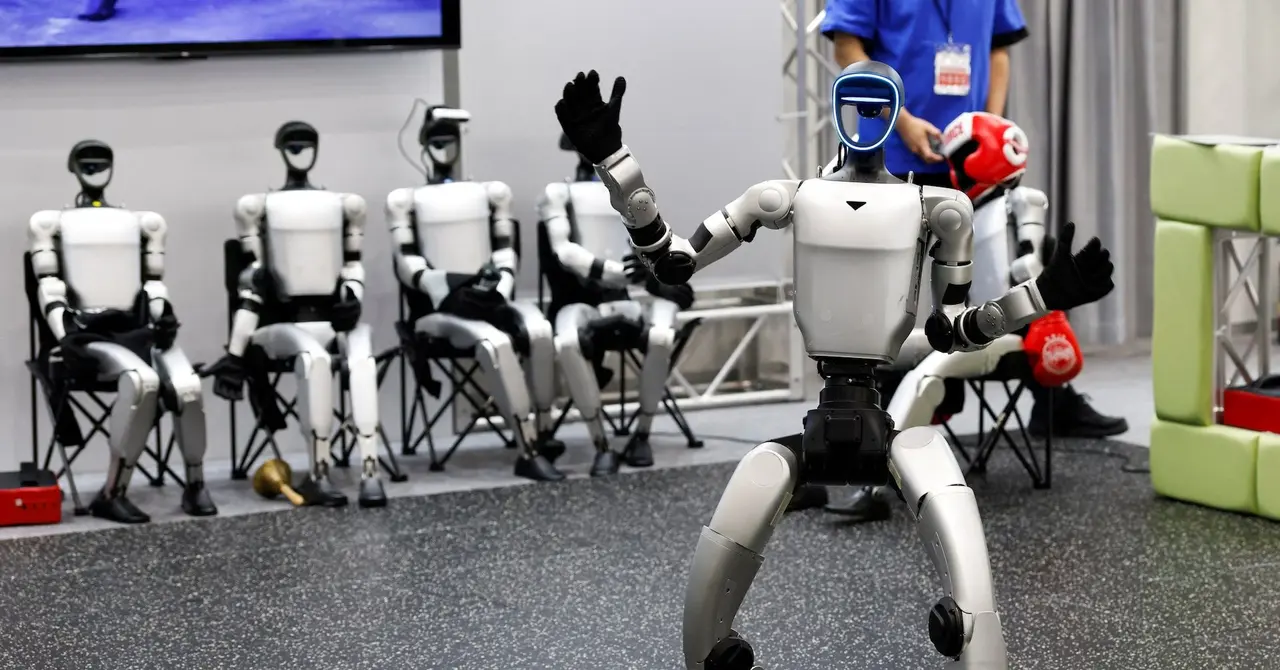
BEIJING, March 20 (Reuters) - Chinese startup Unitree Robotics on Friday filed an initial public offering application to the Shanghai Stock Exchange, seeking to raise 4.2 billion yuan ($610 million), according to the prospectus, in a test of investor interest in humanoid robots. Unitree's robots were the star of Chinese state media's Spring Festival gala last month, which featured a technically ambitious martial arts sequence performed by over a dozen humanoid robots twirling swords and nunchucks alongside human dancers. The robots' complex choreography, complete with mid-air somersaults, displayed clear mechanical advances compared to their dance performance on the same TV programme last year. FRONTIER INDUSTRY Unitree's IPO would be one of China's biggest onshore tech listings in years, and comes as Beijing steps up efforts to support its tech champions in tapping capital markets for their funding needs. Unitree's operating income grew 335% year-on-year in 2025, reaching 1.708 billion yuan, its prospectus said, while its net profit soared by 674%. Humanoids have become the firm's key growth engine as their share of main business revenue rose to 51.5% in January-September 2025 from 27.6% in 2024, even though the shift into the lower-priced G1 model trimmed gross margin, according to the document. Humanoid robots represent a frontier industry that China is well-positioned to lead, thanks in part to its diverse and largely self-sufficient manufacturing supply chains. China views embodied artificial intelligence as a key future strategic industry alongside quantum, 6G, nuclear fusion and brain-computer interfaces. China plans to widen the deployment of humanoid robots and AI automation in production lines nationwide - part of an initiative to apply AI throughout society and raise economic productivity. However, real-world factory deployment remains limited for now. Unitree's prospectus said its humanoid industry-application revenue mainly came from enterprise reception and tour-guide use, intelligent manufacturing and intelligent inspection, with enterprise tour-guide use accounting for roughly 50%-70%. Unitree shipped over 5,500 units last year, occupying 32.4% of the global humanoid market, the document said. Founded in 2016, Unitree leads the industry in both production and sales, becoming a go-to choice for Chinese universities researching robotics, as well as a common sight in entertainment and sporting events all over China. ($1 = 6.8856 Chinese yuan renminbi) Reporting by Laurie Chen, Yukun Zhang and Shi Bu; Editing by Joe Bavier and Andrei Khalip Our Standards: The Thomson Reuters Trust Principles., opens new tab * Suggested Topics: * Emerging Markets Laurie Chen Thomson Reuters Laurie Chen is a China Correspondent at Reuters' Beijing bureau, covering politics and general news. Before joining Reuters, she reported on China for six years at Agence France-Presse and the South China Morning Post in Hong Kong. She speaks fluent Mandarin.
[2]
Unitree plans Shanghai IPO, testing interest in humanoid robots
BEIJING, March 20 (Reuters) - Chinese startup Unitree Robotics on Friday filed an initial public offering application to the Shanghai Stock Exchange, seeking to raise 4.2 billion yuan ($610 million), according to the prospectus, in a test of investor interest in humanoid robots. Unitree's robots were the star of Chinese state media's Spring Festival gala last month, which featured a technically ambitious martial arts sequence performed by over a dozen humanoid robots twirling swords and nunchucks alongside human dancers. The robots' complex choreography, complete with mid-air somersaults, displayed clear mechanical advances compared to their dance performance on the same TV programme last year. FRONTIER INDUSTRY Unitree's IPO would be one of China's biggest onshore tech listings in years, and comes as Beijing steps up efforts to support its tech champions in tapping capital markets for their funding needs. Unitree's operating income grew 335% year-on-year in 2025, reaching 1.708 billion yuan, its prospectus said, while its net profit soared by 674%. Humanoids have become the firm's key growth engine as their share of main business revenue rose to 51.5% in January-September 2025 from 27.6% in 2024, even though the shift into the lower-priced G1 model trimmed gross margin, according to the document. Humanoid robots represent a frontier industry that China is well-positioned to lead, thanks in part to its diverse and largely self-sufficient manufacturing supply chains. China views embodied artificial intelligence as a key future strategic industry alongside quantum, 6G, nuclear fusion and brain-computer interfaces. China plans to widen the deployment of humanoid robots and AI automation in production lines nationwide - part of an initiative to apply AI throughout society and raise economic productivity. However, real-world factory deployment remains limited for now. Unitree's prospectus said its humanoid industry-application revenue mainly came from enterprise reception and tour-guide use, intelligent manufacturing and intelligent inspection, with enterprise tour-guide use accounting for roughly 50%-70%. Unitree shipped over 5,500 units last year, occupying 32.4% of the global humanoid market, the document said. Founded in 2016, Unitree leads the industry in both production and sales, becoming a go-to choice for Chinese universities researching robotics, as well as a common sight in entertainment and sporting events all over China. ($1 = 6.8856 Chinese yuan renminbi) (Reporting by Laurie Chen, Yukun Zhang and Shi Bu; Editing by Joe Bavier and Andrei Khalip)
Share
Share
Copy Link
Chinese startup Unitree Robotics filed for a $610 million IPO on the Shanghai Stock Exchange, marking one of China's biggest onshore tech listings in years. The company shipped over 5,500 humanoid robots last year, capturing 32.4% of the global humanoid market, while its operating income surged 335% year-on-year to reach 1.708 billion yuan in 2025.
Unitree Plans Shanghai IPO to Fuel Humanoid Robots Expansion
Chinese startup Unitree Robotics filed an Initial Public Offering (IPO) application to the Shanghai Stock Exchange on Friday, seeking to raise 4.2 billion yuan ($610 million), according to its prospectus . The listing represents a critical test of investor interest in humanoid robots and marks one of China's biggest onshore tech listings in years, arriving as Beijing intensifies support for tech champions accessing capital markets for funding needs
2
.Explosive Growth Engine Driven by Humanoid Robots
The company's financial performance demonstrates remarkable momentum. Unitree Robotics reported operating income growth of 335% year-on-year in 2025, reaching 1.708 billion yuan, while net profit soared by 674% . Humanoid robots have emerged as the firm's primary growth engine, with their share of main business revenue climbing to 51.5% in January-September 2025 from just 27.6% in 2024. However, the shift toward the lower-priced G1 model has trimmed gross margin, according to the prospectus
2
.Dominant Position in Global Humanoid Market
Unitree shipped over 5,500 units last year, capturing 32.4% of the global humanoid market . Founded in 2016, the company leads the industry in both production and sales, becoming a preferred choice for Chinese universities researching robotics and a common presence at entertainment and sporting events across China. The company's robots gained widespread attention as stars of Chinese state media's Spring Festival gala last month, performing a technically ambitious martial arts sequence with over a dozen humanoid robots executing complex choreography, including mid-air somersaults, alongside human dancers
2
.
Source: Reuters
Related Stories

China's Strategic Push in Embodied Artificial Intelligence
Humanoid robots represent a frontier industry where China aims to establish leadership, leveraging its diverse and largely self-sufficient manufacturing supply chains . China views embodied artificial intelligence as a key future strategic industry alongside quantum computing, 6G, nuclear fusion, and brain-computer interfaces. The nation plans to expand deployment of humanoid robots and AI automation in production lines nationwide as part of an initiative to apply artificial intelligence throughout society and boost economic productivity
2
.Limited Factory Deployment Reveals Market Reality
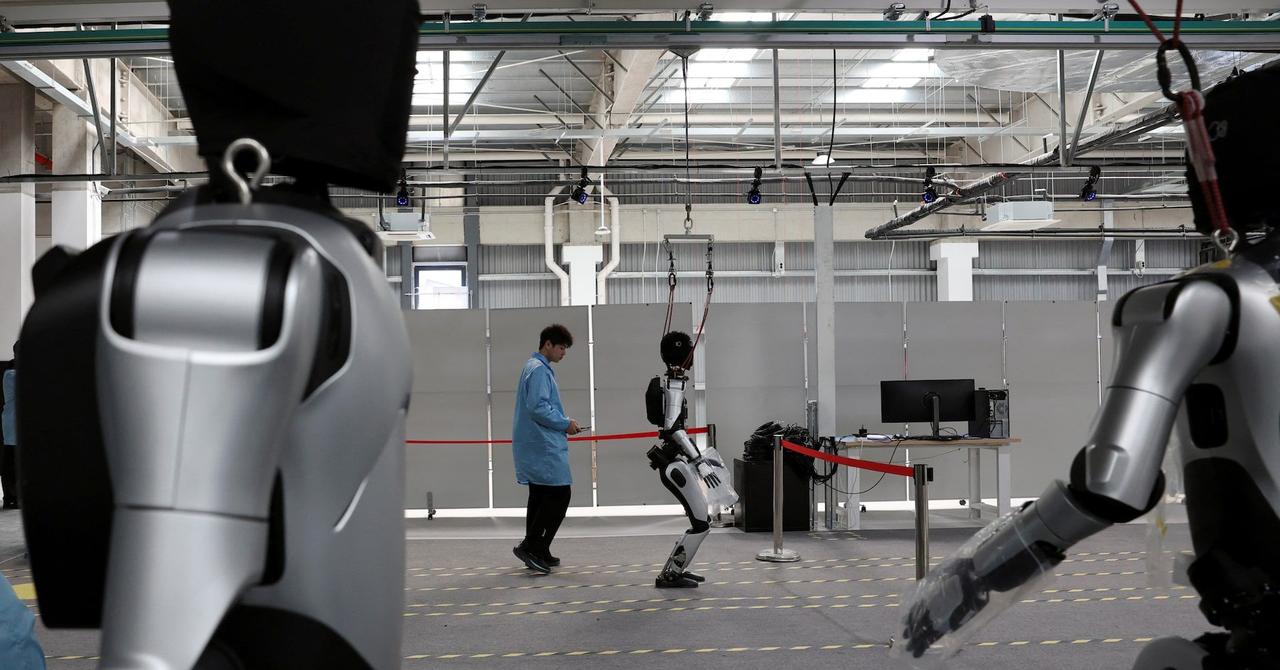
Despite ambitious national plans, real-world factory deployment remains constrained for now. Unitree's prospectus reveals that its humanoid industry-application revenue primarily comes from enterprise reception and tour-guide use, intelligent manufacturing, and intelligent inspection, with enterprise tour-guide use accounting for roughly 50%-70% of applications . This gap between vision and current deployment suggests the sector still faces hurdles in proving widespread industrial utility, even as automation advances. Investors will be watching whether Unitree can translate its entertainment and educational market success into broader manufacturing applications that justify its valuation and support China's productivity goals.
References
Summarized by

Navi
[2]
Related Stories
Humanoid robots take center stage at China's Lunar New Year gala as Beijing pushes AI dominance
09 Feb 2026•Entertainment and Society

China's humanoid robots pivot to entertainment rentals at $145 before tackling factory floors
11 Feb 2026•Technology

China's AI-Powered Humanoid Robots: Transforming Manufacturing and Driving Economic Growth
13 May 2025•Technology
Recent Highlights



Recent Highlights
Today's Top Stories







Your Daily Dose of Curated AI News
Don’t drown in AI news. We cut through the noise - filtering, ranking and summarizing the most important AI news, breakthroughs and research daily. Spend less time searching for the latest in AI and get straight to action.

