AI-coded Vib-OS can't run Doom, connect to internet, or handle basic file operations


5 Sources
5 Sources
[1]
AI vibe-coded operating system is so bad it can't even run Doom -- Vib-OS can't connect to the internet, browser app is an image viewer
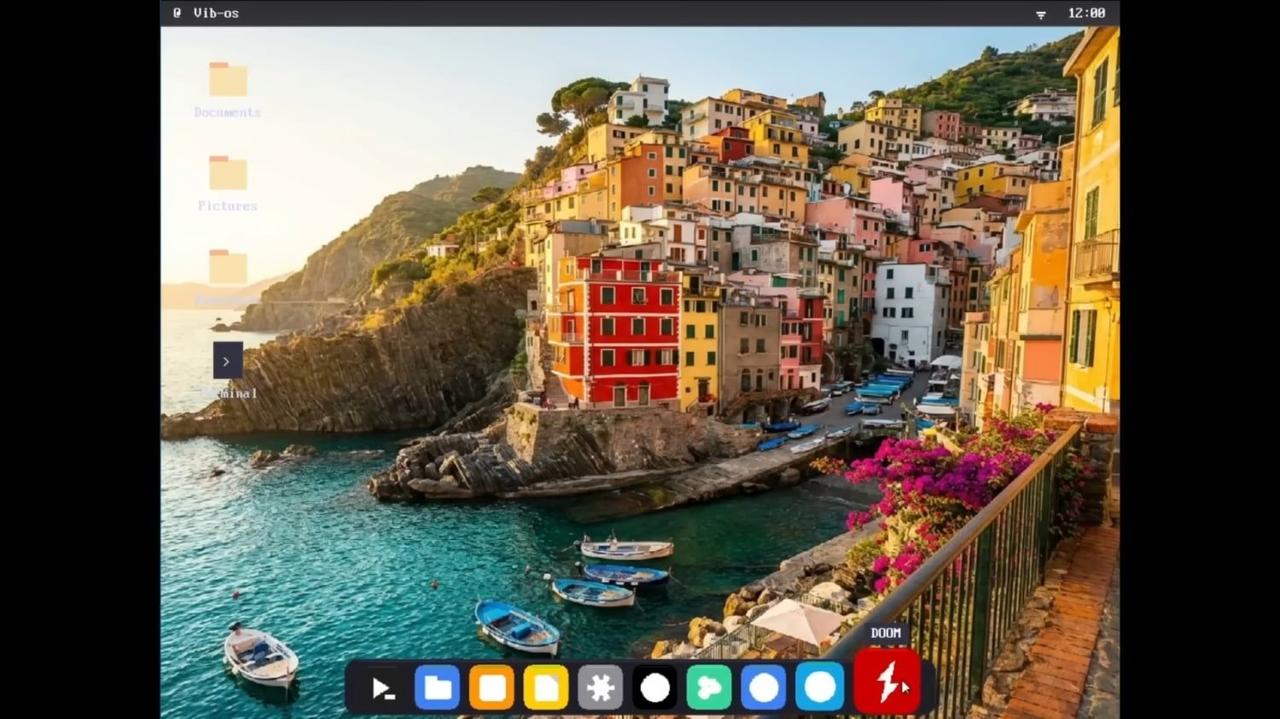
OS scrapes through the test, scoring deceptively respectable five out of nine. A new vibe-coded operating system was found to be a woeful attempt at building a PC operating system. This revelation comes via TechTuber Tirimid, who put an AI-coded OS through his regular set of nine quality checks. Unfortunately, Vib-OS v2.2.1 - Multi-Architecture OS with Full GUI, was found to be difficult to set up, and was stuffed with a mix of serious and/or weird bugs. Even some of its headlining features, like running Doom, simply didn't work, as evidenced by the video embedded below. Checking out the Vib-OS GitHub resources, the operating system seems to cover all the bases for a useful modern OS. The blurb insists this custom Unix-like OS "features a custom kernel, a modern macOS-inspired graphical user interface, a full TCP/IP networking stack, and a Virtual File System (VFS)." Moreover, it works natively on real hardware like Raspberry Pi 4/5, x86_64 PCs, and Apple Silicon - as well as in emulators like QEMU, according to the author (or possibly AI also wrote the readme). At version 2.2.X, one might expect a project to have gotten past teething issues such as major advertised features having obvious bugs, or not even working. Tirimid's testing of the system using QEMU on Linux x86 (as specifically stated to be compatible) shows that Vib-OS still needs a few fixes to bring it up to the level of being competent. For example, installation issues foreshadowed the bugginess that was to follow. After several hours of 'suffering,' Tirimid finally managed to get the OS to boot, though. The OS starts with a familiar-looking desktop, displaying a File Manager, Terminal, a central apps bar at the bottom of the screen, and some status icons appearing to show things like network connection status and time. It was promising to see the OS boot up with these familiar windows open and ready to do as instructed. However, the OS failed at several basic tasks: * Trying to connect to the internet - failed * The New Folder button and context menu in File Manager don't do anything * The Notepad app doesn't seem to load or save, and doesn't recognize arrow key input * There's no Python support apparent, despite GitHub assertions to the contrary * Games don't appear to be installed and/or don't work properly * The calculator doesn't work using the on-screen keypad, but is OK (except for decimals) when inputting using the keyboard * The Clock app doesn't update unless you activate (click) its window, and the time isn't the same as the system time in the status bar * The 'Browser' app is an image viewer The operating system allegedly supports Doom. The readme includes screens marked "Classic Doom running natively with full graphics, input, and sound support." And it is claimed, independently, that there is a "Full Doom port with graphics, input, and sound" in the OS. Nevertheless, Tirimid's clicking of the Doom icon in the launcher did nothing. Giving up on Doom, a pre-installed version of Snake ran, but had serious issues with screen updates and pacing. This poorly executed game managed to get Vib-OS a tick on Tirimid's 9-point checklist as it technically ran. Finally, the TechTuber couldn't even 'destroy' this OS from within. It was very limited in understanding Terminal commands, meaning that "even something like a file deletion won't be possible." Tirimid has previously tested other interesting operating systems like RetrOS, Hannah Montana Linux, and Windows XP. Follow Tom's Hardware on Google News, or add us as a preferred source, to get our latest news, analysis, & reviews in your feeds.
[2]
Someone tried an entirely vibe-coded operating system, and it wasn't great
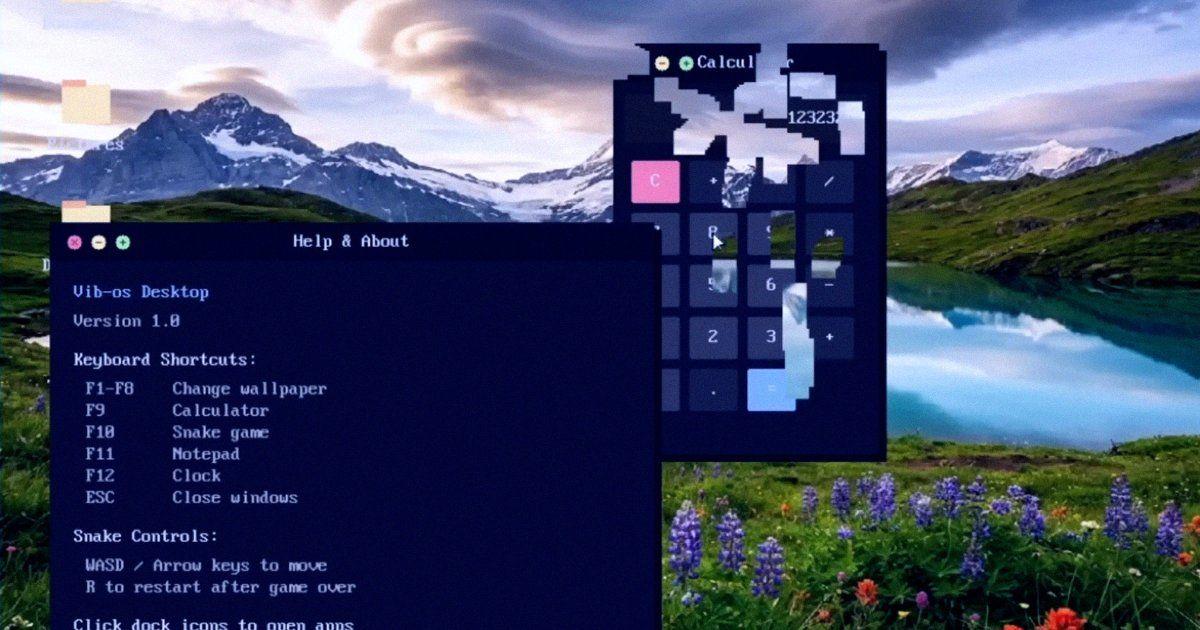
* Vib-OS, a vibe-coded OS, boots to a macOS-like desktop, an impressive feat for AI-generated code. * It can handle a note app, a GUI, and a clumsy Snake game, but networking, Doom, and file ops fail. * Its bugs are surreal -- the mouse can 'eat' apps, and the note app rebuilds its own UI under the cursor. How in-depth do you think a vibe-coded app can go in terms of features and complexity? Depending on who you'd ask, you'd likely get different replies. Fans of AI programming will likely predict that programmers will end up more as AI wranglers than coders, while critics will point to vibe coding's high bugginess rate and lack of security measures. Well, regardless of what your stance on vibe coding is, you have to agree that getting an entire operating system running off the coding practice is pretty impressive. Such is the case of Vib-OS, an entire operating system created using AI. Is the operating system any good? Well, no. But the key thing is that it does boot, and that's good enough for me. Well, okay, maybe the ability to connect to the internet would have also been nice. I turned my phone into a Linux desktop with this free app It's basically Linux running inside an app, with a desktop environment, too. Posts 8 By Adam Conway Vib-OS is a vibe-coded operating system that may have vibed a little too hard But it can boot, so there's that As spotted by Hackaday, YouTuber Tirimid decided to give the AI-generated Vib-OS a try. As per its GitHub, Vib-OS sounds like a promising project: Vib-OS is a from-scratch, Unix-like operating system with full multi-architecture support for ARM64 and x86_64. It features a custom kernel, a modern macOS-inspired graphical user interface, a full TCP/IP networking stack, and a Virtual File System (VFS). Built with 25,000+ lines of C and Assembly, it runs natively on QEMU, real hardware (Raspberry Pi 4/5, x86_64 PCs), and Apple Silicon. It sounds a little too good to be true, so Tirimid decided to check it out for themselves. To better decide if Vib-OS is worthy of your time, Tirimid put the operating system through a few tests as a checklist of things they expect from an OS. The first one was that the OS has to actually boot up, and to my surprise, an entirely vibe-coded OS can boot to the desktop. Pretty impressive stuff. Unfortunately, that's seemingly where the wonders end. The only other tests Vib-OS managed to pass were hosting a functional note-taking app, handling a GUI, and running Snake (albeit poorly). Everything else, from connecting to the internet to playing the pre-included copy of Doom in the OS's files to deleting files, all failed. Subscribe to the newsletter for deep vibe-coding insights Want hands-on analysis? Subscribe to the newsletter for clear, practical breakdowns of vibe-coded projects -- what works, what breaks, and how to debug -- plus related tech deep dives that put experiments in context. Get Updates By subscribing, you agree to receive newsletter and marketing emails, and accept our Terms of Use and Privacy Policy. You can unsubscribe anytime. As you might imagine, the vibe-coded OS came with some pretty amazing bugs. For instance, if you open an app using its dedicated Function key shortcut, your mouse will begin 'eating' the app when you move your cursor over it, unless you open the note-taking app, which actually begins to rebuild the parts you hover over.
[3]
Entirely Vibe-Coded Operating System Is a Bug-Filled Disaster
Can't-miss innovations from the bleeding edge of science and tech Last year, OpenAI cofounder and former exec Andrej Karpathy coined the term "vibe coding," a new approach involving the rapid development of software by feeding an AI model a series of natural language prompts. But the popular approach comes with some glaring shortcomings, as evidenced in an entirely vibe-coded operating system, dubbed Vib-OS. The project, which is being hosted on GitHub, can be run on ARM64 and x86-based computers, features a "custom kernel," a "modern macOS-inspired graphical user interface," and a "virtual file system." And yes, in case you were wondering, the project claims in its possibly AI-generated documentation that you can play Doom on it. But as a YouTuber who goes by Tirimid discovered in a recent video, the operating system, at least in its current state, is a buggy and largely unusable mess, once again highlighting the limitations of relying on vibe-coding to quickly construct complex pieces of software. The iconic demon-slaying shooter Doom also appears to be conspicuously absent. A launcher icon for the iconic game didn't react at all to Tirimid's enthusiastic mouse clicks, suggesting the AI may have hallucinated the feature altogether. The YouTuber spent several hours agonizingly going through the operating system's purported features, and found that it failed to connect to the internet, buttons in the File Manager didn't respond to clicks, the Notepad app refused to save any documents, and games, such as the dumb phone era classic Snake, didn't work very well at all. An app labeled "Browser," incredibly, turned out to be an image viewer, not a web browser that can render websites. Despite the documentation noting that the OS was capable of running Python scripts, Tirimid was also disappointed to find there was no support for the programming language. "I really found this operating system interesting," he concluded in his video. "It was quite an absolute pain to set up to really get everything going, but once I did, it was just kind of shocking in a way. I really expected this to actually be at least reasonably usable." "This is actually a pretty featureless operating system," he added. "Although I guess it is still interesting that AI can get an operating system running at all." Netizens were amused by the YouTuber's experience. "You found an early build of Windows 12," one commenter wrote, referring to Microsoft's ongoing efforts to control the narrative following the massive blowback to its insistence on AI. In a follow-up note he posted in the comments of his video, Tirimid begged others not to harass the creators of Vib-OS. "I was somewhat negative about many parts of this OS, but please don't go to the repo and be negative in the issues or whatever," he wrote. Whether advancements in AI will one day allow models to build actually usable operating systems and other sophisticated software remains to be seen. But it's certainly a future tech leaders want us to believe in, as they continue to make massive investments in AI and lay off thousands of workers.
[4]
This vibe-coded operating system looks like a nightmarish version of our AI OS future, although some of the function keys change the wallpaper so that's fun
Every now and then, someone brings up the haunting spectre of an AI-focused Windows 12. While recent rumours about the fabled, unicorn-like OS have since been debunked, it's not difficult to imagine an operating system that may one day be developed by AI, and all the horrors that might entail. Or indeed, you could just develop one now and see how it turns out (via Hackaday). Enter Vib-OS, a vibe-coded operating system described as a "from-scratch, Unix-like operating system with full multi-architecture support for Arm64 and x86_64" coded with Claude. You say Unix, I say the future of a Windows that never was -- and hopefully, shall never be. Thankfully, I don't have to test out whatever spaghetti code the AI deemed was suitable to run an OS, as YouTuber tirimid has done all the hard work for me. And the video, you'll be pleased to hear, is an absolute riot. Tirimid likes testing weird operating systems, and has a nine-point checklist to run through of tasks to complete in each of them. First up: booting! Setting up a virtual machine, tirimid installed the iso with 4 GB of memory allocation and a four-core processor. Unfortunately, the installer began looking for a macOS-specific utility, despite compatibility listings for various virtual machines. However, hunting around in the commands revealed more installation options, each of which appear to be broken in different ways. After much fiddling, tirimid managed to finally get the OS to boot... after over an hour's worth of hunting through forum threads and much head scratching. Discovering a Mac-like OS, tirimid attempted to connect to the internet. Finding a lack of options, he instead discovered a downloads folder -- that proceeded to add extra forward slashes to the address bar every time it was clicked, and nothing else. As did the rest of the folders, it seems. Giving up on the internet connection, tirimid began working his way through the rest of his task list. While the GUI worked to a fashion, and a basic text editor app appeared to be functional, creating a new folder for text files proved problematic. Both a New Folder button and a New Folder prompt in the right-click menu did precisely nothing. That text editor, by the way? No arrow key navigation. The horror. Python and Nano support seemed non-existent, despite being listed in the supported languages, which also meant no coding for our intrepid host. Good news for gamers! The OS is said to support Doom, and... nope, that doesn't function either. Snake does, though. Very, very badly, with an incredibly fast snake that would put a black mamba to shame. Give the video a watch for the full scoop (there's a hilarious moment with the calculator app near the end), but I have to summarise some highlights. Like the fact that the file manager and settings icons open the same window. Or that apps only update when clicked, so the clock appears to travel through time, My favourite part, however, is that the "browser" icon activates an image browser, not a web-browsing program. That's such a wonderful, very AI mistake to make, and it almost makes the entire project worth it to my eyes. Oh, and the F1 to F8 keys change the wallpaper. Now that's the sort of utility I'd love to see added to the next version of Windows. Sufficed to say, I don't think anyone will be using Vib-OS as their main operating system of choice anytime soon. While I'm sure it's possible to vibe code a good iteration with plenty of user testing and hands-on development thrown into the mix, this one... this one really isn't that. It starts to make you feel all fuzzy about Windows 11, though, doesn't it? It really could be worse, after all.
[5]

Doom runs on everything except this AI vibe-coded Operating System
TL;DR: Vib-OS is the first AI-generated vibe-coded operating system supporting ARM64 and x86, featuring a modern UI but plagued by numerous issues. It lacks internet connectivity, functional file management, and proper app performance, failing to run Doom despite claims that it does, and exhibits bizarre glitches throughout its Unix and macOS-like design. Generative AI tools are slowly making their way into all industries and markets, especially in software development and engineering. AI has reached a point where 'vibe-coding' lets people without programming experience create custom apps, websites, and more through natural-language input, with generative AI handling all the coding. Vib-OS is an AI-generated operating system, image credit: Tirimid/YouTube. And when it comes to coding and programming, it probably doesn't get more complicated than an operating system, or OS. This brings us to Vib-OS, the world's first AI-generated vibe-coded operating system that supports both ARM64 and x86 architectures, with a modern UI. The goal was to deliver a Unix-like system, but the result is more than a little off the mark. As detailed in a new video from YouTube creator tirimid, Vib-OS not only took a lot of effort just to boot when installed on a virtual machine, but that was just the beginning of an operating system that looks like it was ripped from a nightmarish fever dream. Tirimid is a creator who focuses on lesser-known operating systems, and when testing a new one out, he has a checklist of things to work through each time, including connecting to the internet, running a text editor, and playing games. As per the headline, yes, this is an OS that can't actually run Doom, the game that seemingly runs on everything - even though it's listed as supported in Vib-OS's documentation (which was probably written by AI). Although seeing the macOS-like interface with weird AI interpretations of icons is kind of fun, we quickly learn there's no real way to connect to the internet or manage network connections, with the Browser icon opening an image 'browser.' It doesn't stop there: when viewing the File Manager, clicking the Downloads folder simply appends the "/.." string to the filepath indefinitely without actually doing anything. Creating a New Folder or New File? Also nothing. Clicking on a file labeled 'report.txt' makes it disappear. In addition, the Notepad text editor doesn't support arrow-key navigation or the ability to save text to a file. Which is unusual for an OS that claims to support running Python code. And when it comes to games, even though it doesn't run Doom, which is apparently pre-installed into the OS, it does have a version of Snake. And, sure, it's Snake, but with a snake that seemingly moves at the speed of light. And to cap it all off, the Calculator app's GUI doesn't work, and it doesn't support numbers with decimal points. There's more strange behavior and weirdness in the full video, including a very funny visual glitch toward the end, and it's worth watching in full just to see how badly an AI vibe-coded operating system can be. Put it this way, it makes Windows 11 look absolutely incredible.
Share
Share
Copy Link
An entirely AI-generated operating system called Vib-OS promises modern features but delivers a buggy, barely functional experience. YouTuber Tirimid spent hours testing the vibe-coded OS, discovering it can't connect to the internet, won't run Doom despite documentation claims, and features a 'browser' that's actually an image viewer. The project highlights current limitations of AI in software development.
Vib-OS Promises Full-Featured AI Operating System
Vib-OS positions itself as a from-scratch, Unix-like AI operating system with full multi-architecture support for ARM64 and x86_64
1
. According to its GitHub documentation, this AI-coded operating system features a custom kernel, a modern macOS-inspired Graphical User Interface (GUI), a full TCP/IP networking stack, and a Virtual File System (VFS)2
. Built with over 25,000 lines of C and Assembly code generated through vibe-coding with Claude AI, the project claims compatibility with QEMU, Raspberry Pi 4/5, x86_64 PCs, and Apple Silicon5
.
Source: TweakTown
The term vibe-coding, coined by former OpenAI executive Andrej Karpathy, describes rapid software development through natural language prompts fed to AI models
3
. This approach enables people without programming experience to create custom applications, but the AI-generated OS demonstrates why this method faces scrutiny in complex software development.Installation Nightmare Foreshadows Deeper Problems
YouTuber Tirimid, who specializes in testing obscure operating systems through a nine-point checklist, spent several hours struggling to get Vib-OS running on a virtual machine
4
. Despite documentation listing QEMU compatibility, the installer searched for macOS-specific utilities when attempting installation on Linux x861
. After hunting through forum threads and testing multiple installation options—each broken in different ways—Tirimid finally managed to boot the system.Once operational, the AI operating system displayed a familiar-looking desktop with a File Manager, Terminal, central apps bar, and status icons showing network connection and time
1
. This initial presentation seemed promising, but the buggy and unusable reality quickly emerged.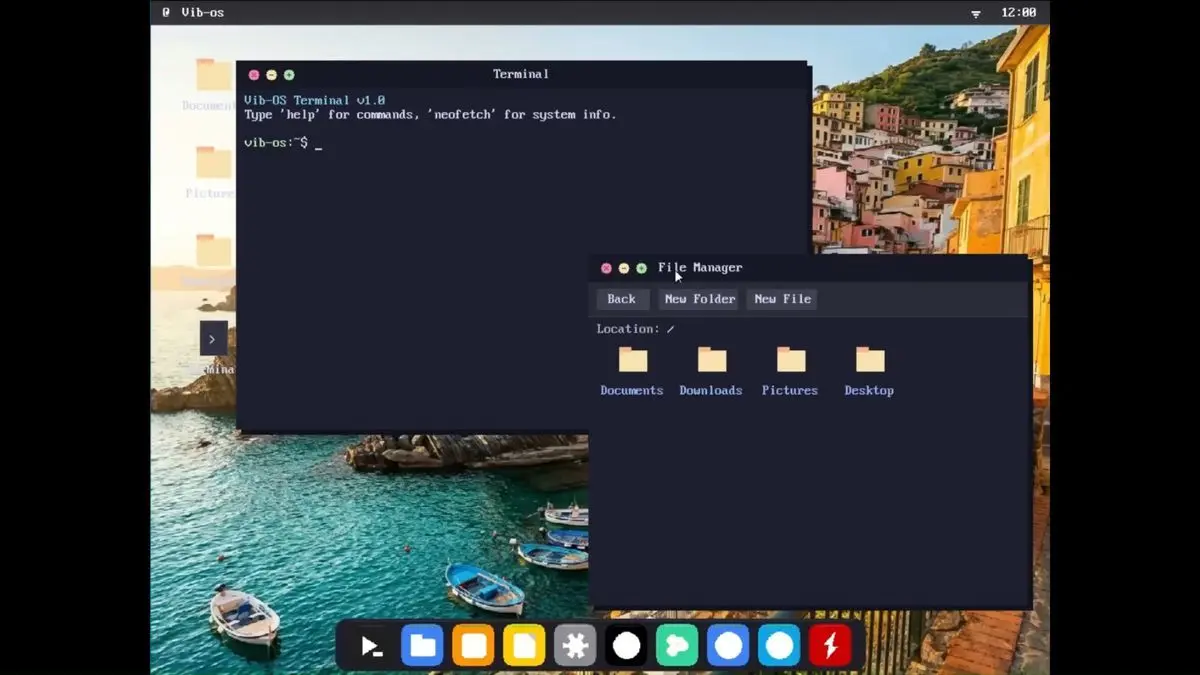
Source: Tom's Hardware
Critical Features Fail Across the Board
The limitations of AI became immediately apparent when testing basic functionality. Vib-OS showed no internet connectivity options, with attempts to access network settings leading nowhere
5
. The File Manager proved equally dysfunctional—clicking the Downloads folder simply appended "./.." to the filepath indefinitely without opening anything4
. New Folder buttons and context menu options did nothing when clicked1
.The Notepad application demonstrated particularly bizarre behavior in this vibe-coded system. It wouldn't recognize arrow key input, couldn't save documents, and in one surreal bug, actually began rebuilding its own UI under the cursor when opened using Function key shortcuts
2
. Despite GitHub assertions of Python support, no evidence of the programming language existed in the system1
.Related Stories



Inability to Run Doom Highlights AI Hallucination
The AI-generated OS's documentation prominently featured screenshots showing "Classic Doom running natively with full graphics, input, and sound support"
1
. However, clicking the Doom launcher icon produced no response whatsoever, suggesting the AI may have hallucinated this feature entirely3
. This failure stands out particularly since Doom famously runs on nearly every platform imaginable5
.The only game that technically functioned was Snake, though it ran with serious screen update issues and moved at impossibly high speeds
5
. This barely playable implementation earned Vib-OS one point on Tirimid's checklist1
.Surreal Bugs Expose AI in Software Development Challenges
Perhaps the most telling error came from the Browser icon, which opened an image viewer rather than a web browser
1
. This represents a quintessentially AI mistake—confusing the concept of "browsing" images with web browsing4
.
Source: Futurism
Other strange behaviors included the Clock app only updating when clicked, displaying different time than the system status bar
1
. The Calculator worked with keyboard input but not the on-screen keypad, and couldn't handle decimal points1
. When apps were opened via Function keys, the mouse cursor would "eat" the application as it moved across the screen2
.Tirimid couldn't even destroy the system from within due to its limited Terminal command understanding, making basic file deletion impossible
1
. "I really expected this to actually be at least reasonably usable," Tirimid concluded, noting that while interesting that generative AI can get an operating system running at all, "this is actually a pretty featureless operating system"3
.The project raises questions about whether advancements in AI will enable models to build actually usable operating systems as tech leaders continue massive investments while laying off thousands of workers
3
. For now, Vib-OS serves as a cautionary example of vibe-coding's current limitations when tackling complex software architecture.References
Summarized by

Navi
[1]
Related Stories
Recent Highlights
1
OpenAI shuts down Sora video app after six months, ending Disney's $1 billion investment deal
Technology

2
AI-Generated Val Kilmer to Posthumously Appear in As Deep as the Grave After His Death
Entertainment and Society

3
Supermicro Co-Founder Indicted in $2.5 Billion Nvidia AI Chip Smuggling Scheme to China
Policy and Regulation

Recent Highlights
Today's Top Stories




Your Daily Dose of Curated AI News
Don’t drown in AI news. We cut through the noise - filtering, ranking and summarizing the most important AI news, breakthroughs and research daily. Spend less time searching for the latest in AI and get straight to action.

