AI Demand Sells Out Western Digital Hard Drives Through 2026, Long-Term Agreements Lock Supply


14 Sources
14 Sources
[1]
Western Digital says it's "pretty much soldout" for 2026.
Enterprise customers, especially AI data centers, have already gobbled up the company's capacity for 2026. At this point, consumer sales account for just 5 percent of the company's revenue, so it's no surprise WD is prioritizing high-capacity drives for data centers. What's more, theyre also driving up prices. Tan told investors: We've pretty much sold out for calendar year 26. We have firm POs with our top seven customers. And we've also established LTAs with two of them for calendar year 27 and one of them for calendar year 28.
[2]
AI Demand Clears Out Western Digital's Hard Drive Supply for 2026
(Credit: Sheldon Cooper/SOPA Images/LightRocket via Getty Images) AI demand has pushed RAM prices higher since last year, leading to supply shortages. The same trend appears to be hitting hard disk drives now, with leading HDD manufacturer Western Digital confirming that its supply for this year is already sold out. "We're pretty much sold out for calendar 2026. We have firm POs [purchase orders] with our top seven customers," Irving Tan, WD CEO, said during the company's latest earnings call. A significant chunk of WD's revenue comes from enterprise clients. About 89% came from cloud businesses, and just 5% came from regular consumers, said Ambrish Srivastava, the company's vice president for investor relations. Things don't look promising for consumers looking for WD hard drives in the near future. Seven of WD's top clients have placed orders for this year, two for next year, and one for 2028. With more AI companies buying PC components in bulk, manufacturers are also likely to prioritize their needs over others going forward. We have seen a similar trend with memory products. Micron recently exited the consumer market to focus on supplying AI data centers. The reason for HDD demand, on the other hand, may partly be driven by rising SSD costs over the last few months. As Tom's Hardware points out, SSDs now cost 16 times more than HDDs for the same storage capacity, and data centers may be tempted to use a mix of both. For consumers, the situation could push PC prices up by at least 15% and smartphone prices up by around 10% this year, according to TrendForce. HP, Dell, and Lenovo have already announced price hikes, while Samsung has hinted at similar.
[3]
Western Digital is already sold out of hard drives for all of 2026 -- chief says some long-term agreements for 2027 and 2028 already in place
Will HDDs follow RAM and SSDs when it comes to price increases? Western Digital Chief Executive Officer Irving Tan said that the company has already sold out of hard drives for 2026. Tan confirmed this during the company's Q2 2026 earnings call, where, according to the transcript shared by Investing.com, he also confirmed that there are already some long-term agreements (LTAs) in place for the next couple of years. "As we highlighted, we're pretty much sold out for calendar 2026. We have firm POs with our top seven customers," the executive said. "And we've also established LTAs with two of them for calendar 2027 and one of them for calendar 2028. Obviously, these LTAs have a combination of volume of exabytes and price." This announcement is on track with the report from late last year that hard drives are on backorder for two years due to massive data center demand. The company's VP for Investor Relations, Ambrish Srivastava, said that 89% of its revenue came from its Cloud business, while its consumer business only delivered 5%. Because of this, it would make sense for the company to focus more on enterprise clients -- similar to how memory chip makers decided to focus production on the more lucrative HBMs that are in demand from hyperscalers. The cost efficiency of hard drives has especially become more apparent now that SSDs are skyrocketing to more than 16x the price of an equivalent HDD. However, this is going to be bad news for enthusiasts and consumers. Although many people prefer SSDs for most electronics, there is still a market for consumer hard drives, especially for use in NAS systems and long-term data storage. But the massive demand brought by the AI infrastructure buildout is causing shortages even for this component. Many HDD models have surged in pricing already, with costs jumping by an average of 46% since September 2025. PC hardware shortages are only getting worse as the AI race continues. What started as a memory and storage chip shortage has soon spread into GPUs and is now hitting hard drives. Most consumers won't feel the HDD pinch as it's mostly a niche product in recent years, but we're afraid that other parts, components, and product categories are going to follow suit with the price increases and supply shortages in the coming months.
[4]
AI blamed again as hard drives are sold out for this year
Hard drive manufacturers have already sold all the units they will make this year, and it looks like the AI infrastructure boom is to blame, with hyperscalers soaking up all the high-capacity storage. Seagate and Western Digital, two of the Big Three makers of rotating disk drives, confirmed during recent earnings conference calls that they have already flogged all of their manufacturing output. Western Digital chief Tiang Yew Tan told analysts "We're pretty much sold out for calendar '26. We have firm purchase orders with our top seven customers. And we've also established long term agreements with two of them for calendar year '27 and one of them for calendar year '28." Seagate CEO Dave Mosley said on his own company's call: "Our nearline capacity is fully allocated through calendar year 2026, and we expect to begin accepting orders for the first half of calendar year 2027 in the coming months... additionally, multiple cloud customers are discussing their demand growth projections for calendar 2028, underscoring that supply assurance remains their highest priority." Great for WD and Seagate. Not so much for eveveryone else. It is understood that the third major disk producer, Toshiba, is likely to be in a similar situation. We asked the drive maker and will update if we get an answer. Hard drives have pretty much been displaced from everyday PCs and laptops, but the makers continue to bump up their capacities, making them attractive for applications requiring large volumes of data storage at low cost - such as cloud storage and AI training. Western Digital recently announced it will ship 44 TB drives this year, for example, with a roadmap to 100 TB by 2029. What are the implications for this impending shortage? "In my view this means no meaningful open production remains for discretionary buyers except the hyperscalers," said Sid Nag, President and Chief Research Officer at Tekonyx. "I am guessing these include locked-in purchase agreements extending into 2027 and 2028 for certain customers including those building AI datacenters. So there should be no impact to that business. This also implies HDD manufacturing capacity is now almost exclusively prioritized for large AI/cloud players because of predictable, high-volume demand," Nag told us. "This will, however, impact the mid-size market who depend on server technology." Omdia Senior Research Director for Enterprise Infrastructure Vlad Galabov agreed. "I think it will be a very tough year for the standard enterprise general purpose server and for enterprise storage. We have downgraded our forecast for those markets," Galabov told The Register. Despite this, Omdia raised its overall 2026 server spend forecast to $590 billion and its datacenter capex forecast to more than $1 trillion because the top ten cloud providers keep upping their investment plans. Corporate IT projects will likely take a hit if they were counting on using hard drives as a capacity tier in their storage plans, but there are already shortages of DRAM and NAND flash silicon, the latter used in solid state drives (SSDs) - all due to AI-driven demand putting a strain on supply chains. "We are seeing shortages of memory, storage and even CPU silicon and all of these will be dynamically affecting each other for some significant time based on announced capex spend and (datacenter) land leases," said IDC's senior research director for European Enterprise Infrastructure, Andrew Buss. "The growth of AI demands storage, and lots of it, and also networking to move the stored data around, so expect there to also be high-performance networking shortages as well going forwards. And with next-generation Rubin GPUs apparently needing 20TB+ of fast SSD storage capacity per GPU, this will become even more acute," Buss told us. "This has been consuming large amounts of fast flash-based NVMe SSDs, and the increase in price and shortage of media is now encouraging many who need storage to reconsider HDDs. We would expect hybrid flash arrays to have a resurgence, but also HDD only arrays where the traffic patterns are suitable," he added. So it looks like it might be a bad year for a server refresh, unless you happen to be one of the hyperscalers, with shortages and price hikes affecting many components. Omdia forecasts the top ten cloud service providers (Google, Amazon, Microsoft, Meta, Oracle, CoreWeave, ByteDance, xAI, Alibaba, and Tencent) to account for more than 70 percent of the server capex this year and AI-optimized servers for 80 percent of the total server spend. ®
[5]

Because of AI, Western Digital Hard Drives Are Sold Out
We’ve been taking the humble external hard disk drive for granted. Try to buy one when current retail inventory runs out, and you might not have a very good time thanks to a sudden spike in demand from Western Digital's "top seven customers." Though the orthodoxy around Kryder’s Law was to call out the hard drive's wavering relevancy only a decade ago and bet it all on SSDs, hard drives have enjoyed a bit of a renaissance in the years since. The hard drive’s surprise comeback story is the result not only of scientific breakthroughs in the field of magnet physics, but also of an increase in their demand for AI purposes. Though, as anyone who’s recently tried to purchase a GPU or RAM has probably already guessed, this story doesn’t have a happy ending, at least for the average consumer. A bear hug of demand from the insatiable AI market more often than not leaves everyone else empty-handed. And as went NVIDIA last year, so goes Western Digital today. During a recent Q2 earnings call, WD’s CEO Irving Tan told shareholders, “we're pretty much sold out [of hard drives] for calendar 2026. We have firm POs [purchase orders] with our top seven customers.†You read that correctly. Western Digital, the company you know as the producer of hard drives (if you know them at all) will not be able to sell you a new hard drive until at least 2027. And that’s a load-bearing “at least.†According to Tan on that same call, two of their agreements with these big buyers go to 2027 and another all the way into 2028. Yes, our old friend the data center is back to make your life miserable in various ways. Hard drives offer more bang for your buck and storage efficiency than their SSD counterparts, so Western Digital’s cloud storage service is an entirely HDD affair. Furthermore, selling that service to its enterprise clients now accounts for 89% of Western Digital’s total revenue. The 5% of revenue chipped in by retail customers like us is clearly no longer even worth the headache. So, as frustrating as it may be that one of the few bulwarks left between you and yet another subscription service has been yanked from your shopping cart, WD and their competitors telling you to kick rocks actually makes a perverse sort of financial senseâ€"at least in the current economic system we’re all prisoners of. The hard truth is your grainy concert videos and torrents of Da Ali G Show (It aired on HBO, so why the hell isn’t it on Max?) will forever take a backseat to the handful of companies handing sacks of money around in circles to keep the bubble from bursting for as long as possible. Better start clearing up space. Or start convincing these companies their vision of an all-AI future won’t and can’t ever come to pass. Up to you.
[6]

Western Digital is out of hard drives, because AI (of course)
This AI-driven shortage could make hard drives increasingly inaccessible for regular users, similar to Micron's recent consumer market exit. It kind of feels like the last six months of my job has just been telling you about all the different ways the "AI" industry is making life suck. And I'm just a guy who writes about computers! I barely even touch on its environmental impact or mental health issues. But I digress. Here's the latest way in which the "AI" industry is making life suck for all of us: "AI" data centers are gobbling up all the hard drives. Yes, hard drives. Spinning disks that hold ones and zeroes. I can't even remember the last time I saw a PC on a shelf that defaulted to hard drive storage -- they're really only relevant for consumers who have to store multiple terabytes of data. But "AI" models need to hold lots of data, too, which is why Western Digital is now out of hard drives for the rest of the year. "We're pretty much sold out for calendar year 2026," said CEO Irving Tan in the company's latest earnings report. In context, that means sold out of production capacity for 2026, as the company earmarks its output for various customers. You can still find WD drives on digital storefronts and store shelves, at least for now. But it seems the company is following in the footsteps of memory and flash storage producers by prioritizing industrial supply over regular consumers. Here's a long quote from Tan: "As AI capabilities expand, cloud continues to grow as well, and both are driving the search and demand for higher density storage solutions. In this new era where AI and cloud dominate, Western Digital has taken a customer-focused approach to managing this strong demand by working closely with our hyperscale customers, ensuring that we deliver reliable, high-capacity drives at scale to give them the best performance and total cost of ownership." If you can't parse the corporate speak, that means "we're selling a lot of really big hard drives to data centers." According to the data elsewhere in the report, just under 90 percent of Western Digital's business is now supplying drives to cloud storage, with only 5 percent of revenue coming from consumers. It seems all too easy -- almost inevitable -- that WD could just exit the consumer market entirely. Memory producer Micron did just that, axing its Crucial brand of consumer RAM and storage, though the company insists it's still selling RAM to PC manufacturers. Tom's Hardware reports that hard drive prices are already jumping, up by almost 50 percent in the last five months. That's not the nightmare spiral that RAM has seen, but it's not a good thing, either. As I said, hard drives aren't really a concern if you're only buying a standard laptop or desktop. But for consumers who have a deep appetite for data, like those who roll their own network-attached storage (NAS) for home servers or streaming setups, or those who just prefer to keep their massive Steam libraries downloaded locally, hard drives are still very relevant. And they're going to get a lot faster soon, if still nowhere near as speedy or efficient as flash storage. I wonder if we'll ever be able to buy those fancy future devices on Amazon.
[7]

Hyperscalers snap up all Western Digital HDD capacity for 2026
AI-driven data growth intensifies pressure on HDD supply chains globally Western Digital has revealed its entire HDD capacity for 2026 is apparently already fully booked, primarily due to enterprise-level agreements with hyperscalers and large cloud providers. The surge in demand is tied to the ongoing expansion of data centers, particularly in the United States, where vast amounts of content must be stored efficiently. HDDs remain the most cost -- effective solution for storing exabytes of data, including scraped web content, processed backups, and inference logs necessary for artificial intelligence workloads. "As we highlighted, we're pretty much sold out for calendar 2026. We have firm POs with our top seven customers," Western Digital CEO Irving Tan declared during the company's recent financial results. "And we've also established LTAs with two of them for calendar 2027 and one of them for calendar 2028. Obviously, these LTAs have a combination of volume of exabytes and price." As AI adoption grows, the strain on suppliers intensifies, echoing similar pressures previously seen with DRAM, NAND, and other critical PC components. The bulk of Western Digital's orders comes from cloud storage providers who rely on HDDs for long -- term storage of massive datasets. Consumer products now account for only 5% of its revenue, while cloud-oriented business contributes nearly 89%. The scarcity of available HDDs has implications for pricing, as demand exceeds supply and production schedules are unable to quickly match hyperscaler requirements. Historically, shortages of core components such as RAM and SSDs have translated into temporary price surges, and the current situation with hard drives appears likely to follow a similar pattern. Manufacturing constraints and the pace of AI-driven data center expansion create a scenario where enterprises may face higher costs for the storage capacity they need. Analysts note that while HDDs remain cheaper per terabyte than RAM or other memory solutions, tight availability can still put upward pressure on procurement budgets. Western Digital's focus on enterprise contracts reflects the broader trend in the PC and storage industries of pivoting toward AI workloads. Hyperscalers, cloud storage providers, and large-scale computing operations are increasingly the main consumers of high-capacity drives, while traditional desktop and consumer segments are deprioritized. The company has aligned production to meet these demands, leaving the consumer market with limited options. While HDD technology itself is mature, the combination of AI -- driven demand, supply chain constraints, and ongoing cloud expansion means capacity will remain constrained. It is now certain that enterprises drive HDD market dynamics, and price fluctuations seem likely to continue. Via Wccftech
[8]

Thanks a lot, AI: Hard drives are already sold out for the entire year, says Western Digital
Western Digital says its all sold out of hard drives for 2026, less than two months into the year. Credit: Alex Kraus/Bloomberg via Getty Images Looking to buy a new hard drive? Get ready to pay even more this year. According to Western Digital, one of the world's biggest hard drive manufacturers, the company has already sold out of its storage capacity for 2026 with more than 10 months still left in the year. "We're pretty much sold out for calendar 2026," said Western Digital CEO Irving Tan on the company's recent quarterly earnings call. Tan shared that most of the storage space has been allocated to its "top seven customers." Three of these companies already have agreements with Western Digital for 2027 and even 2028. Furthermore, the incentive for these hardware companies to prioritize the average consumer is also dwindling. According to Western Digital, thanks to a surge in demand from its enterprise customers, the consumer market now accounts for just 5 percent of the company's revenue. AI companies have been eating up computer hardware as industry growth accelerates. Prices for products ranging from computer processors to video game consoles have skyrocketed due to these AI companies cannibalizing supply chains. The tech industry has already been experiencing a shortage of memory due to demand from AI companies. PC makers have been forced to raise RAM prices on a near-regular basis as shortages persist. Video game console makers, like Sony, have even reportedly considered pushing the next PlayStation launch beyond the planned 2027 release in hopes that AI-related hardware shortages would be resolved by then. With this latest news from Western Digital, it appears the ever-increasing demands from AI companies for memory and storage will continue to grow, with no end in sight. Unless, of course, investors decide to pull back from AI over fears that AI's promises may not come to fruition. But, for now at least, the shortages - and price hikes for consumers - will continue.
[9]

AI Data Centers Are Now Spiking Hard Drive Prices
Over the last couple of months, the AI industry's obsession with building out costly data centers has sent the price of RAM skyrocketing, turning a simple computer upgrade into a costly investment. And while there are some early glimmers of hope, with RAM prices now falling across the pond, the next AI price hike could affect a different component instead: hard drives. During a recent company earnings call, Irving Tan, the CEO of hard drive manufacturer Western Digital, admitted that "we're pretty much sold out for calendar 2026." As PCWorld explains, Tan was referring to the company's production capacity as part of an effort to allocate its available inventory to its customers. While Western Digital hard drives will remain on the shelves for now, prices could soon follow the footsteps of RAM and graphical processing units as the hype surrounding generative AI continues to dominate markets -- and terrify investors. "As AI capabilities expand, cloud continues to grow as well, and both are driving the search and demand for higher density storage solutions," Tan told investors. "In this new era where AI and cloud dominate, Western Digital has taken a customer-focused approach to managing this strong demand by working closely with our hyperscale customers, ensuring that we deliver reliable, high-capacity drives at scale to give them the best performance and total cost of ownership." The sales figures tell a clear story: just under 90 percent of the company's revenue comes from cloud storage. The hyperscalers Tan was referring to are the cloud computing and data management services that need access to enormous data centers for both data processing and storage. The enormous demand from AI industry players has already hit the hard drive market hard. In November, Tom's Hardware reported that hard drives were on backorder for two years following major investments in AI data centers. Tan's comments will likely do little to reassure consumers. Between September and January, average hard drive prices had already surged by a whopping 46 percent.
[10]

AppleInsider.com
If you buy through our links, we may get a commission. Read our ethics policy. Hard drive prices will continue to be high for quite some time, as the needs of AI data centers continue to consume storage and raise prices for everyone. One of the major talking points about artificial intelligence has been its impact on memory prices. The demand has caused components to become more expensive to manufacturers like Apple, as well as to consumers, thanks to the build-out of infrastructure needed for AI. Memory may have made headlines, but it's far from the only component feeling the squeeze. It's also happening to the hard drive market, too. During the second-quarter earnings call for drive maker Western Digital, CEO Irving Tan confirmed that high demand from its enterprise customers has rocked the boat. TweakTown reports the company has practically ran out of manufacturing capacity for drives in 2026, even at this early stage of the year. WD has orders with its top seven enterprise customers, including long-term agreements for two in 2027. One client even has an agreement for capacity in 2028. As it stands, Western Digital's capacity is largely made up of enterprise customers, with approximately 89% of its total revenue stemming from cloud-based companies. By contrast, consumer hard drives only make up 5% of its revenue. Price warning AI infrastructure's appetite for data storage has expanded its needs to hard disks, which are a relatively low-cost way to store data, albeit without the speed benefits of flash memory used in SSDs. It has resulted in pretty much the same situation for mechanical drives as for memory. Hard drive prices are already at their highest in the last two years. With WD's CEO warning that its own capacity isn't enough to meet the sheer scale of AI demand, that means the supply for consumer drives will be tighter than usual. Based on the usual economics of supply and demand, you can expect prices for hard drives to go up, or at least stay elevated for a while longer. If the fast ramping up of prices for memory are an indicator, hard drives could see similar increases in a short space of time. Get them while they're hot For Apple, hard drive prices are not a real problem for its products, since it uses flash memory and SSDs instead of mechanical drives. It also has agreements with suppliers in place that insulate the supply chain from the price increases, at least for a few quarters. Consumers, meanwhile, do not have that luxury at all. Instead, they are beholden to the whims of retailers and whatever they charge. With that problem in mind, anyone seeking to add more storage to their computing setup should strongly consider getting a drive sooner rather than later. AppleInsider has repeatedly advised to use external drive options to augment your Mac's storage capacity, because of Apple's relatively high fees for increasing internal storage at the time of purchase. Indeed, with the number of external drive enclosures and NAS units on the market, adding expansion is now a reasonably easy process. Some suggested drive options to take advantage now include:
[11]

AI Data Centers Are Absorbing HDD Supply: WD 2026 Capacity Sold Out
Western Digital basically told the market what a lot of NAS builders and home-lab folks were worried about: 2026 HDD supply is already spoken for. CEO Irving Tan said the company is "pretty much sold out" for calendar year 2026, with firm purchase orders covering that capacity from WD's top seven customers. On top of that, some customers are already lining up longer-term supply deals that extend into 2027 and even 2028. In other words, this isn't a short blip where stock levels recover next month -- it looks more like capacity being reserved in advance. The bigger story is who gets the drives. Tan described a business mix where AI and cloud demand dominates, and consumer-grade HDDs represent only about 5% of the picture. That number matters because it sets expectations for what ends up in retail. If the bulk of output is planned around enterprise and hyperscale needs, the consumer channel doesn't get "first pick," it gets whatever allocation remains after the big contracts are satisfied. Why is this happening now? Data centers are scaling storage aggressively, and AI workloads amplify that need. Training, inference, logging, and dataset retention are all storage-hungry, and HDDs still offer the lowest cost per terabyte at scale. That makes them hard to replace in massive deployments, even with SSDs taking more performance-sensitive roles. When hyperscalers buy in exabytes, they don't shop like consumers do -- they lock in supply, negotiate long-term terms, and take a big chunk of available manufacturing capacity off the open market. For consumers, the impact is likely to show up in three places: availability, choice, and price. Availability is the obvious one -- popular capacities and NAS-friendly models can go in and out of stock, and if you're trying to match drives for an array, that gets annoying fast. Choice can narrow as well, because vendors and retailers prioritize what they can reliably source, which may not align with what enthusiasts prefer. And then there's price: when supply is tight and most output is contract committed, retail discounts tend to dry up. Even if you can still buy drives, the "good deals" become less common. This doesn't mean you won't be able to buy any HDD in 2026. It does mean the consumer market could feel constrained, especially if you're shopping higher capacities that overlap with what data centers want. If you're planning a NAS expansion or a new build, the practical move is to expect less predictable pricing and stock, and avoid assuming that waiting will automatically bring prices down. When the supply pipeline is booked out, time alone doesn't fix the problem.Source:
[12]

AI boom triggers hard drive shortage -- Western Digital says supply is gone for 2026
AI hard drive shortage 2026: Hard drive prices are set to climb. Western Digital, a major manufacturer, has sold all its storage capacity for 2026. This surge is driven by AI companies needing vast amounts of hardware. Top clients have secured multi-year deals, leaving little for regular buyers. Consumers can expect ongoing shortages and higher costs. AI hard drive shortage 2026: If you were planning to buy a new hard drive this year, you may want to brace yourself. Prices could climb even higher. Western Digital, one of the world's largest hard drive manufacturers, says it has already sold out of its storage capacity for calendar year 2026 and there are still more than 10 months left in the year. CEO Irving Tan said during the company's recent quarterly earnings call that, "We're pretty much sold out for calendar 2026," as quoted by Mashable. According to Tan, most of that storage capacity has been allocated to the company's "top seven customers." Three of those customers have already secured agreements that extend into 2027 and even 2028. That leaves little room for everyone else, especially the common buyers. Western Digital said that, fueled by surging demand from enterprise customers, the consumer market now makes up just 5 percent of the company's revenue, as per the Mashable report. In other words, regular shoppers are no longer the priority. Also read: What it's really like to become a NASA astronaut: 10 surprising facts few people know The rush is being driven by AI companies, which are rapidly expanding and consuming massive amounts of computer hardware. As AI growth accelerates, it has pushed up demand for everything from processors to gaming consoles, straining supply chains along the way. The tech industry has already been grappling with memory shortages tied to AI demand. PC makers have had to raise RAM prices repeatedly as supply remains tight. Even Sony has reportedly considered delaying the next PlayStation, originally planned for 2027, hoping AI-related hardware shortages ease by then. Also read: Trump's 2025 tariffs didn't hit China or other nations -- they cost American consumers more, report finds Now, with Western Digital's storage capacity fully booked for 2026, it signals that demand for memory and storage from AI companies continues to intensify. For consumers, that likely means ongoing shortages and higher prices with no clear relief in sight. Why are hard drives getting more expensive? Western Digital says its 2026 storage capacity is already sold out, which could push prices higher. Is Western Digital really sold out for 2026? Yes. CEO Irving Tan said the company is "pretty much sold out" for calendar year 2026.
[13]

Western Digital Has No More HDD Capacity Left, as CEO Reveals Massive AI Deals; Brace Yourself For Price Surges Ahead!
HDD capacity from one of the world's largest manufacturers has started to run dry, according to Western Digital's CEO, as major LTAs have been signed out. Well, the ongoing AI supercycle has disrupted supply chains, and we have talked about DRAM and NAND before, but it appears HDDs are also in significant demand: according to WD's CEO, Irving Tan, the manufacturer's entire capacity for this year is booked out. Speaking at the Q2 earnings call, Tan revealed that the focus has been on developing products that cater to the needs of enterprise customers. Given the pace of hyperscaler buildout, it's fair to say demand for HDDs will only increase going forward. Yeah, thanks, Erik. As we highlighted, we're pretty much sold out for calendar 2026. We have firm POs with our top seven customers. And we've also established LTAs with two of them for calendar 2027 and one of them for calendar 2028. Obviously, these LTAs have a combination of volume of exabytes and price. - WD's CEO When we talk about major PC-first manufacturers pivoting towards AI, it is clear that demand is coming from the segment, as WD's VP of Investor Relations noted that the company's cloud revenue accounted for 89% of total revenue. In comparison, consumer revenue accounted for just 5%. When the numbers are too distant, as in WD's case, it makes sense on a business level to pivot towards enterprise demand while sidelining the client segment, as every other manufacturer is currently doing. And, in the case of Western Digital, well, this strategy is working for them. The demand is primarily driven by the large-scale data center buildout occurring worldwide, with HDD requirements being more prevalent in US-based facilities. For those unaware, AI is nothing without data, and to store large quantities of data, CSPs use HDDs, which are the most cost-effective and efficient storage medium. The data scales to exabytes in data centers, encompassing content such as scraped web data, processed data backups, inference logs, and related data. Like AI memory, HDDs have seen massive adoption in recent years, putting suppliers under pressure. With the AI frenzy, we have seen major PC components go into short supply, and unfortunately, this trend will persist for quite some time before we witness a meaningful recovery.
[14]

It Seems Like The AI Apocalypse Has Come For Hard Drives - IGN
PC gaming has been off to a rough start in 2026, with both RAM and graphics cards facing massive stock issues, due to demand from AI datacenters. And, it looks like hard drives are next. Both Seagate and Western Digital, two of the biggest hard drive manufacturers, have told investors that stock is completely sold out through 2027, according to a report from German outlet Heise. As a result, hard drives are starting to see increased prices. For instance, a 4TB WD Blue drive costs $99 on Amazon right now, where it cost just $67 -- $85 just a few months ago, according to Camelcamelcamel. That's bad enough, but it looks like SSDs are also being impacted by the sudden increase of demand for hard drives, which is also costing the price of flash storage to go up - and it was already starting to rise in January. Because both HDD manufacturers are claiming that their 2026 stock has already been sold through, it's unlikely that the hard drive pricing situation is going to improve any time soon. And with another critical component being impacted by datacenter-driven demand, it's even more likely that prebuilt gaming PCs and other gaming hardware is going to go up in price over the next year. For a while now, hard drives have been a budget-friendly way of adding extra storage to your PC, even though they've been falling out of fashion as a main storage device. That mostly comes down to speed: because hard drives have to physically locate data on a moving disk, they're much slower than SSDs. The appeal, then, was that you could get a ton of space for not much money. But that's also what makes them super appealing for AI training. Training LLMs like ChatGPT or Gemini requires a ton of data, so it's not surprising that AI companies are prioritizing storage capacity over the speed of the storage. And as the hard drive manufacturers reach manufacturing limits, SSDs are going to start filling in the gaps - even if they're much more expensive to produce at the same capacities. Unfortunately, SSDs were already starting to feel the pressure from the RAM pricing, as it uses some of the same components. We're now at a point where I'm not sure if there are any PC components that aren't going to be impacted by AI in the next year or so.
Share
Share
Copy Link
Western Digital CEO Irving Tan confirmed the company is completely sold out of hard drives for 2026, with firm purchase orders from top enterprise customers. AI data centers have locked in supply through long-term agreements extending to 2028, leaving consumers facing shortages and price hikes. With 89% of revenue from cloud businesses and SSDs now costing 16 times more than HDDs, the AI infrastructure boom is reshaping the storage market.
Western Digital Announces Complete Sellout Through 2026
Western Digital has confirmed it is "pretty much sold out" of hard drives for the entire calendar year 2026, marking an unprecedented supply crunch driven by AI demand. CEO Irving Tan revealed during the company's Q2 2026 earnings call that firm purchase orders from the company's top seven enterprise customers have consumed all available production capacity
1
3
. The situation extends beyond this year, with long-term agreements already established with two customers for calendar year 2027 and one extending into 20284
.
Source: ET
This development mirrors the supply shortages that have plagued DRAM and NAND flash markets, as AI infrastructure buildout consumes components across the board. Seagate, another major manufacturer, confirmed a similar situation, with CEO Dave Mosley stating that "nearline capacity is fully allocated through calendar year 2026" and the company expects to begin accepting orders for the first half of 2027 in coming months
4
. Industry observers believe Toshiba, the third major producer, faces comparable constraints.Enterprise Customers and Cloud Businesses Dominate Revenue
The shift in Western Digital's business model reveals why the company prioritizes hyperscalers and AI data centers over individual buyers. According to Ambrish Srivastava, the company's vice president for investor relations, cloud businesses now account for 89% of Western Digital's revenue, while the consumer market contributes merely 5%
2
3
. This dramatic revenue split explains why manufacturers focus production capacity on high-capacity drives that meet data center demand rather than consumer products.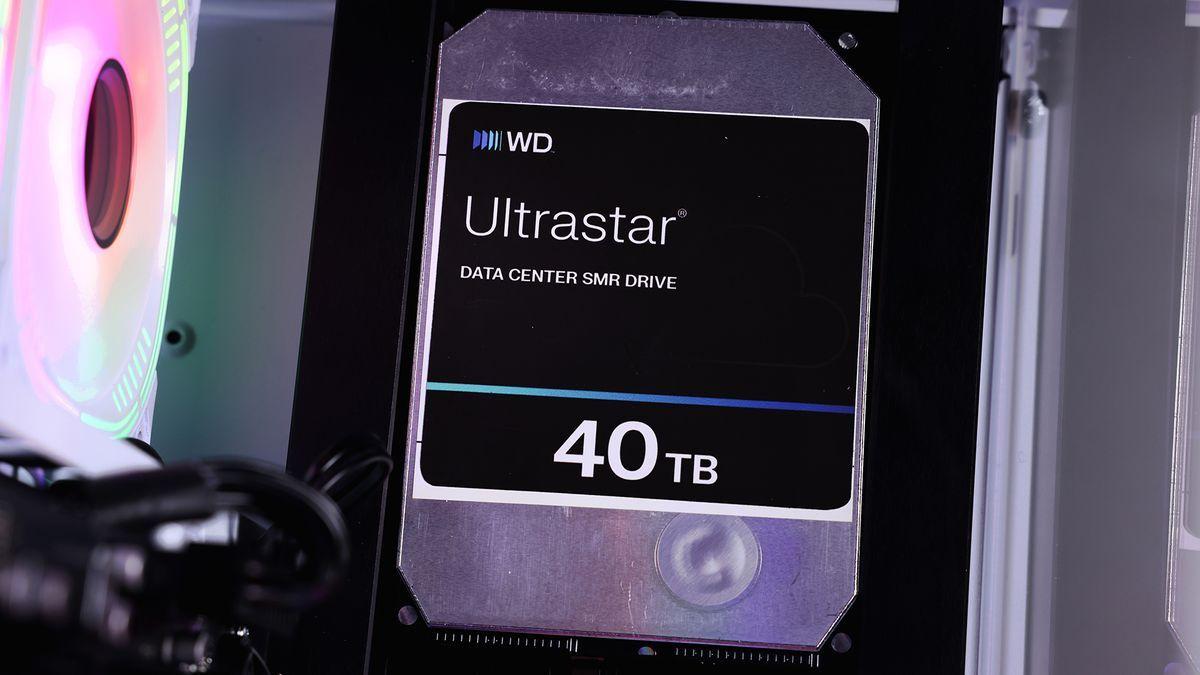
Source: Tom's Hardware
Sid Nag, President and Chief Research Officer at Tekonyx, explained the implications: "No meaningful open production remains for discretionary buyers except the hyperscalers. HDD manufacturing capacity is now almost exclusively prioritized for large AI/cloud players because of predictable, high-volume demand"
4
. This trend parallels how memory chip makers shifted focus to more lucrative HBM production for AI applications, leaving traditional markets underserved.Price Increases and Cost Efficiency Drive Market Dynamics
The economics behind this shift are compelling. SSDs now cost 16 times more than HDDs for equivalent data storage capacity, making hard drives increasingly attractive for cloud storage and AI training applications that require massive volumes of cost-effective storage
2
3
. Western Digital recently announced plans to ship 44 TB drives this year, with a roadmap reaching 100 TB by 2029, demonstrating the continued advancement in high-capacity drive technology4
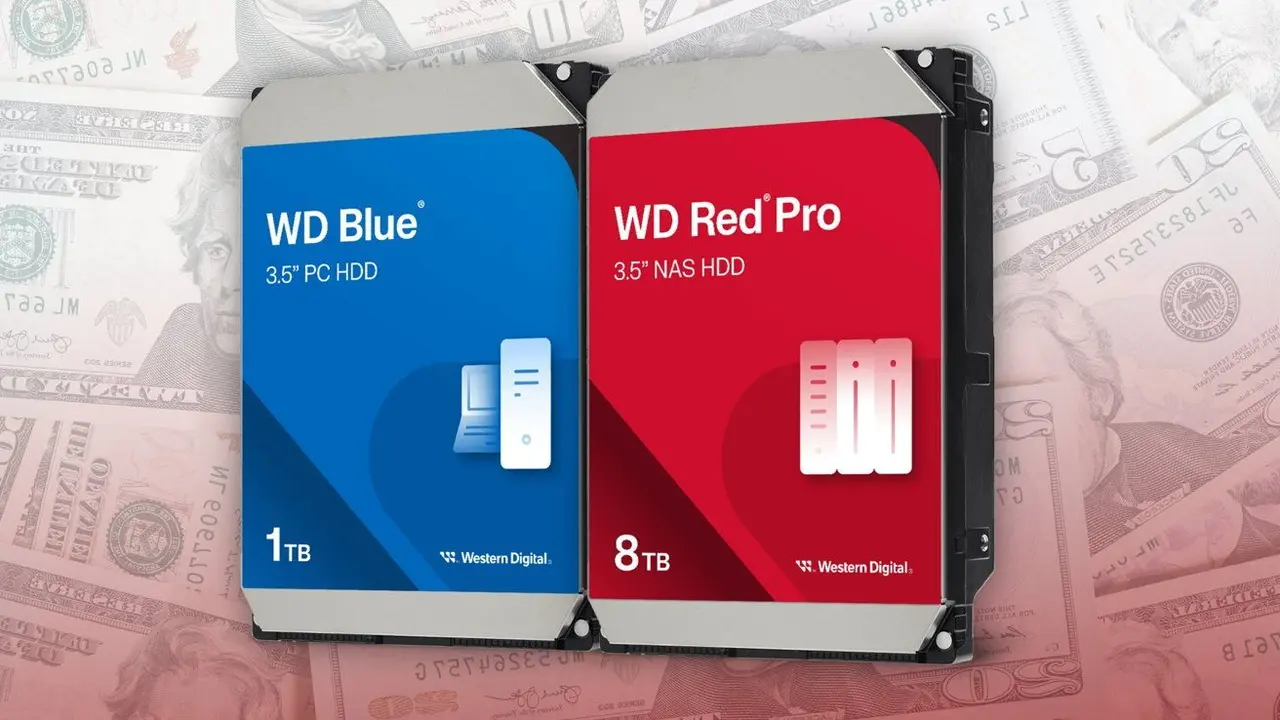
.
Source: AppleInsider
Consumers face mounting pressure from multiple directions. Many HDD models have already surged in pricing, with costs jumping by an average of 46% since September 2025
3
. TrendForce forecasts that PC prices could rise by at least 15% and smartphone prices by around 10% this year, with major manufacturers like HP, Dell, and Lenovo already announcing price hikes2
.Related Stories
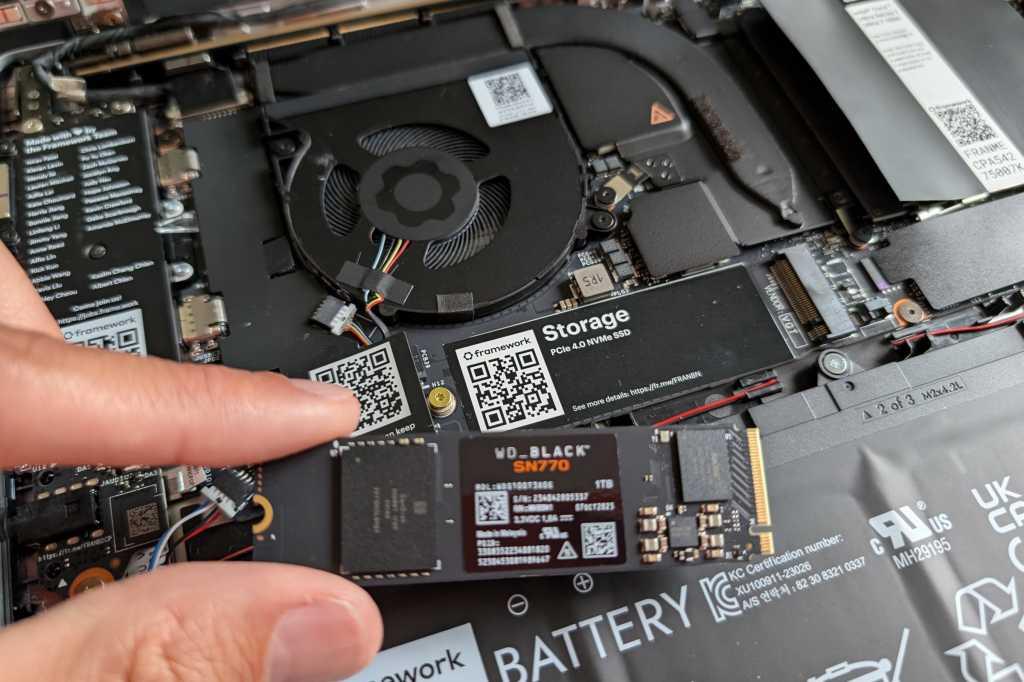
Broader Impact on PC Hardware Shortages and Enterprise Markets
The hard drive situation compounds existing PC hardware shortages affecting GPUs, memory, and storage chips. IDC's senior research director Andrew Buss warned of cascading effects: "We are seeing shortages of memory, storage and even CPU silicon and all of these will be dynamically affecting each other for some significant time based on announced capex spend and datacenter land leases"
4
. Next-generation Rubin GPUs reportedly require 20TB or more of fast SSD storage capacity per GPU, intensifying competition for storage resources.Omdia raised its overall 2026 server spend forecast to $590 billion and datacenter capex forecast to more than $1 trillion, driven by the top ten cloud providers including Google, Amazon, Microsoft, Meta, Oracle, CoreWeave, ByteDance, xAI, Alibaba, and Tencent
4
. These cloud providers are expected to account for more than 70% of server capex this year, with AI-optimized servers representing 80% of total server spend. Omdia's Vlad Galabov noted the firm has "downgraded our forecast for standard enterprise general purpose server and for enterprise storage" markets, signaling tough times ahead for mid-size businesses dependent on server technology4
.While most consumers have shifted to SSDs for everyday computing, enthusiasts and businesses relying on NAS systems and long-term data storage face limited options. The situation suggests hybrid flash arrays combining both technologies may see resurgence as organizations adapt to constrained supply
4
. As one analysis noted, the handful of companies exchanging purchase orders to sustain AI infrastructure growth have effectively displaced retail customers from the supply chain5
.References
Summarized by

Navi
[3]
[4]
Related Stories
AI Boom Triggers Storage Crisis: HDD and SSD Prices Surge Amid Supply Shortages
16 Sept 2025•Technology
HDD prices surge 4% as AI infrastructure and China's PC push strain global supply
15 Dec 2025•Business and Economy
AI Boom Triggers Unprecedented Shortage in Memory and Storage Components
15 Oct 2025•Technology
Recent Highlights
1
Apple Plans Major Siri AI Overhaul in iOS 27 With Third-Party Chatbot Integration
Technology

2
OpenAI shuts down Sora after six months, ending Disney's $1 billion licensing partnership
Technology

3
AI chatbots validate you too much, making you less kind to others, Stanford study reveals
Science and Research

Recent Highlights
Today's Top Stories



Your Daily Dose of Curated AI News
Don’t drown in AI news. We cut through the noise - filtering, ranking and summarizing the most important AI news, breakthroughs and research daily. Spend less time searching for the latest in AI and get straight to action.

