AI Demand Triggers Memory Shortage That Could Push Phone Prices Up 8% and Delay Consoles


21 Sources
21 Sources
[1]
The RAM shortage is coming for everything you care about
Maybe you've heard: Memory is expensive now. The price of RAM has tripled, quadrupled, even sextupled depending on the type of chip, all because AI companies are gobbling it up. But maybe you've thought: I don't buy memory sticks! I don't build my own PCs! It won't affect me, right? I'm here to tell you RAM is coming for your wallet anyhow. Do you have a phone in your pocket you'd like to upgrade in the next few years? Fancy a game console or handheld? A laptop, perhaps? Will you need a new router, whether you're purchasing outright or renting from your ISP? Each of these devices is expected to have shortages, price hikes, or both in 2026. And even if you don't plan to buy, you depend on goods and services from others who'll be paying more to upgrade their devices. "RAMageddon" is only getting worse, and there's no immediate end in sight. Everything that has a computer inside depends on RAM, and almost everything has a computer in it now: farm tractors, hospital equipment, your TV set-top box. RAM is the short-term memory of a device, and AI especially needs lots to juggle all the data it's processing. And most of that RAM comes from just three companies that are happily prioritizing the AI gold rush over everything else. We may never know how many products were truly delayed or canceled due to RAM -- like how Nvidia may skip releasing a gaming GPU for the first time in 30 years, or how Meta may not release a single VR headset this year and plans to charge a premium when they return in 2027, or how Sony's next PlayStation may get pushed to 2029 because of RAM. But we do know that RAMageddon is coming for your phone next. Analysts from IDC, Omdia, and Counterpoint agree: 2026 was one of the best years ever for smartphone sales, growing shipments roughly 2 percent to roughly 1.25 billion phones in a single year. Apple reported record iPhone sales in January. They also all agree that the RAM shortage is about to flip that on its head. Prices will go up. Fewer products will be available. Or as Omdia research manager Le Xuan Chiew put it, "vendors will shift toward prioritizing profitability while expanding alternative revenue streams." Flagship smartphone chipmaker Qualcomm is warning that companies will build fewer phones, period -- and that remaining phones will be more expensive. CEO Cristiano Amon says a big dip in its smartphone business will be "100 percent" because of the memory shortage. Here are some choice quotes from Amon on the company's February 4th earnings call: How much more might you pay? Hard to say, but IDC points out that memory represents 15-20 percent of the materials cost of a midrange phone, and about 10-15 percent of a high-end flagship phone. When we first started reporting on RAM ruining everything, IDC thought average phone prices might go up by just $9. Now, it's predicting the average price might increase as much as 8 percent, with "significantly higher" price hikes on cheaper phones where "OEMs will have to pass the cost to end users." That means if you're used to buying $500 phones, they might easily cost $600 or more. Even if you're used to $1,000 phones, you may get less bang for the buck: "new flagship models in 2026 will likely have no RAM upgrades, sticking to 12GB for Pro models rather than increasing to 16GB," IDC writes. We're already seeing similar: Google just announced a Pixel 10A with no new chips and the same mediocre 8GB of RAM inside. Even Apple, which can typically bully suppliers on pricing, is feeling pressure on its supply chain now that AI companies are writing huge checks for memory supplies, reports The Wall Street Journal. That could force it to increase the price of its iPhones to maintain the company's profits. Apple CEO Tim Cook told analysts this quarter that he "will look at a range of options to deal with" the way that the shortage is impacting the company's gross margins. "Industry sources" told ZDNet Korea that Apple may pay 80 percent or even 100 percent more for memory this quarter after renegotiating with Samsung and SK Hynix -- and may pay even more in the second half of the year. The era of "razor and blade" game console subsidies -- where companies sell consoles at a loss and make their money back on exclusive software -- was over before the RAM crunch even began. Trump's tariffs broke the dam, and now we're half-expecting the next Xbox to be a $1,000 PC rather than a traditional console. Bloomberg reports that RAMaggedon is also coming for the Nintendo Switch 2 in the form of a price hike, and Sony's PS6 in the form of a delay "to 2028 or even 2029." Our last, best hope for the subsidy model was Valve, a company that famously rakes in money hand over fist and launched the original Steam Deck at the unbeatable price of $399 through a "painful" amount of subsidy. If Valve did the same for the upcoming Steam Machine, it could have legitimately competed with the PlayStation and Xbox for your living room TV. But Valve has all but dashed those hopes through a series of moves. In late December, it discontinued the $399 Steam Deck, raising the starting price to $549. In early February, it announced that the Steam Machine had been delayed due to the memory shortage and that the company would have to reset expectations on pricing. And now, even the $549 Steam Deck OLED is out of stock specifically because of the memory crisis. Other handhelds are getting pricier too: although the Lenovo Legion Go 2 will get SteamOS this year, memory shrinkflation means it will cost more or contain less than the Windows version did when it first arrived, with less horsepower, storage, and RAM at the $1,199 mark. The MSI Claw 8 AI Plus, which I thought was pricey at $999, now costs $1,099, $1,149, or even $1,199 depending on where you look. PCs generally need even more RAM than phones and consoles, and they've been hit quicker because PC makers haven't felt the need to stockpile RAM in advance. They also generally need larger SSDs whose prices have surged 90 percent in a single quarter. That's why almost every major laptop manufacturer -- Lenovo, Dell, HP, Asus, Acer -- is reportedly planning price hikes of 10, 20, or even 30 percent, and why Chosun Biz is reporting that Lenovo, HP, Dell, Samsung, and LG are rethinking their PC product roadmaps for 2026. IDC suggests the whole PC market could decline by 4.9 to 8.9 percent in 2026, while TrendForce is forecasting a 2.4 percent decline in laptops where it previously expected growth. Dell reportedly already began hiking prices of its laptops by $55 to $765, depending on which components you choose. And modular laptop company Framework writes that its own cost has risen from roughly $10 per gigabyte to as much as $16 per gigabyte, and so it's selling its new laptops and mainboards for 6 percent to 16 percent more than previously. "We are again only increasing pricing enough to cover the increases in cost from our suppliers," Framework CEO Nirav Patel writes. Even though Lenovo has admitted to hoarding RAM so it won't run out, the world's largest PC manufacturer is still paying more to secure its supply for 2026; CEO Yang Yuanqing told Bloomberg his memory costs increased by 40 to 50 percent last quarter and suggested prices might double soon. While Apple hasn't telegraphed plans to raise MacBook prices due to RAM price hikes, it's quite possible we'll see for ourselves in just two weeks at its March 4th event. "There's no relief until 2028," said Intel CEO Lip-Bu Tan in early February, after speaking to two of the big three memory companies. One of them, Micron, has publicly said the same, telling Wccftech that its Idaho memory fab won't open until mid-2027 -- and that "you're not really gonna see real output" until 2028. SK Hynix also previously predicted the shortage would last through late 2027. While Micron, SK Hynix, and Samsung, which control about 95 percent of the global DRAM supply, are making enough money to increase memory production, it will take time to build their promised new fabs. And they also see it as more profitable and less risky to build out slowly instead of rushing to meet demand. As SemiAnalysis founder Dylan Patel told us in December, it wasn't that long ago that some of these memory companies were losing money due to overproduction: "The scary thing about this industry is if you overbuild the most, you end up going bankrupt." Samsung is expected to increase memory wafer supply by just 5 percent this year. In the meantime, the RAM makers are going to profit as much as they can, with the added costs ultimately being passed on to you.
[2]
Brace for a barren landscape of new hardware launches, as AI demand reshapes the world of consumer electronics -- trillions in AI investment threaten to derail entire industries
As DRAM demand outstrips supply, the future of consumer electronics looks uncertain. CES 2026 is a show that usually paints us a picture of what's to come. But this year was different. Dominated by AI and a handful of product launches in Panther Lake and AMD's new AI 400 chips, there wasn't exactly a whole lot to see. When the Consumer Electronics Show starts looking like the Corporate Electronics Show, alarm bells should start going off in your head. Sure, Nvidia's upcoming Rubin platform looks incredibly impressive, but there were no new consumer GPUs to speak of. There is little to show what actual consumers and enthusiasts might look forward to for the rest of the year, and that's not only illustrated by what our staff on the show floor had to say, but also by the companies and supporting industries around it. Now, we don't have to get into all the reasons why there's an ongoing NAND and DRAM shortage; we've explained it multiple times before. But, how far-reaching are the impacts of the current demand for AI chips, and why is it going this far? The picture that current market conditions paint is grim, and it's already too late to prepare for the great consumer chip winter upon us. As tech enthusiasts, everyone wants something new to look forward to. A new chip on the latest leading-edge nodes, packed to the gills with power to run the most demanding games without breaking a sweat. Breakthroughs in efficiency to bring down power envelopes and chips to break records with. But, none of that seems to be happening in 2026 (Unless you were one of the lucky few who purchased the $5000 MSI Lightning Z RTX 5090). Now, according to a Bloomberg report, the current tightened chip supply might push Sony's next PlayStation consoles to 2028 or 2029, with Nintendo contemplating raising the price of its Switch 2 consoles. Valve's Steam Frame VR Headset and Steam Console still don't have any pricing details announced, as the company struggles to keep its four-year-old Steam Deck in stock. We've seen some impact on DIY hardware, too, with AMD explaining that they've seen an uptick in AM4-based builds, over the newer DDR5-only AM5, likely due to how expensive memory has become for builders. But it's not just gaming companies that are feeling the pinch. DRAM and NAND chips soaring to eye-watering levels are having a considerable impact on other areas. Think about every device that might use a RAM IC or house a small bit of flash. Entry-level electronics like smartphones, and much more, all rely on memory and flash in some capacity, and are also affected by pricing pressure. Even electronics such as routers are vulnerable to these pricing shifts. So, once current stocks run out, manufacturers and companies will have to buy at market rates, which are being pushed significantly higher due to AI data center demands. The auto industry has also been subject to the onslaught of AI demand. EVs and other vehicles use specially qualified ICs (AEC-Q100) for use in extreme temperatures, and once stocks are gone, companies may find themselves scrambling for supply. "It's not that we can no longer make semiconductors, or we can't make enough semiconductors. We're in a situation where the industry is constrained by qualification and requalification," said Akshay Baliga, director at AlixPartners, in a recent interview with Tom's Hardware Premium. Qualifying these specialty chips, which are comparatively low-margin compared to AI, means that memory makers have their eyes on a much bigger prize: the lucrative AI market. New reports suggest that memory makers are set to earn a staggering $551 billion thanks to the AI boom, but it comes at a dear price. Additionally, memory and flash supply contracts are reportedly getting shorter: even if a company had a contract in place to lock pricing in, shorter contracts mean that companies become more exposed to market volatility, so end-product pricing and BOM costs could fluctuate. The obvious adjustment that product manufacturers might make is to adjust MSRP pricing on existing and upcoming retail products. This is likely one of the key reasons we're not seeing companies like Valve announce pricing on upcoming consumer hardware quite yet. No one can predict how high market pricing might get. This market pricing will inevitably affect consumer and enterprise products. "The combined effect of these factors [related to increased memory prices] has resulted in a decline in mid to low-end [smartphone processor] orders received by foundries," said Zhao Haijun, co-CEO of SMIC, during an earnings call with financial analysts and investors. Haijun continued to say that the ongoing cost increases may end up in a decline in demand for products, which may lead to disastrous consequences for some companies that rely on such chips. To put the economics of how this all works into context, if you are a larger customer of DRAM, the likelihood is that you can secure better terms or contracts for pricing; the smaller you are, the less leverage you'll ultimately have. When combined with the fact that the AI industry is not only sucking up demand, but paying top-dollar for chips, means that smaller customers of DRAM and NAND are pulling the short straw, and might be more heavily affected. Framework's latest update on the ongoing crisis states that DDR5 memory pricing is now between $12-16 per gigabyte, and their end product pricing has to be increased as a result of that. "The new system and Mainboard prices are 6-16% higher than before. We anticipate that here as well, costs from our suppliers are going to continue to increase over the next few months," says Nirav Patel, CEO and Founder of Framework. So, if costs get higher, and consumer appetite for these products is lower, the future for smaller manufacturers gets called into question: How will they survive if product run-rates get lower, margins get slimmer, and there's seemingly no end in sight? The reality is, it's already too late to prepare for what's to come over the next few years, and the damage to these smaller companies has yet to be fully quantified. IDC's latest analysis suggests that the PC market alone could shrink by up to 9%, which may not sound like much on paper, but a figure like this might be life-or-death for some businesses. If the chip supply crisis is hitting the PC market this hard alone, what about other industries, where the risk has yet to be factored in? Now that we've laid out the effects of AI demand on the memory and storage industries, it's important to note exactly how AI is using these chips in large-scale deployments across the globe. The average Nvidia Rubin NVL72 superchip is equipped with 288 GB of HBM 4 memory, which uses vertically stacked memory ICs, bonded together to offer more density in the same physical footprint. Therefore, High Bandwidth Memory requires around three times the number of ICs on a single chip compared to a DDR5 module. That's in addition to 128 GB of GDDR7 VRAM on the Nvidia CPX GPU on any single unit. Bolstered by high-speed data interconnects like Spectrum-X Photonics Ethernet, and Quantum-CX-9 Photonics for scale out (Photonics is another AI bottleneck, which is next-in-line after memory and packaging). A single Nvidia Rubin NVL144 rack integrates 144 GPUs, equating to a staggering 20,736 TB of HBM 4 memory. So, if you're wondering where all the memory is going, look no further. The reasons behind these massive AI demands are the scale of AI model sizes. As models become larger, the number of parameters and weights associated with them also increases. This creates a demand for fast compute performance in loading model weights, which is why the interface width of HBM is so crucially important, with a rapid interface to keep up with demand when saturated. For example, Moonshot AI's Kimi 2.5 offers 1 trillion parameters in its latest Mixture of Experts (MoE) model, and can only be run in full-fat form on data-center-grade hardware. Per-bit quantization is also a huge factor in AI deployment. Effectively, an AI model's weights (or 'experts' in an MoE model) are high-precision values, mapped to lower-precision data types. This results in a lower bit-density per-weight, which also affects the amount of VRAM used by the model. Nvidia's NVFP4 format can offer a substantial reduction in memory usage. But, despite efficiency gains thanks to breakthroughs like NVFP4, KVCache, or Deepseek's Engram, the race toward AGI means that frontier model developers want to get their hands on all of the compute power they can get if they want to train, develop, and run the latest and greatest models at scale. Spending on AI infrastructure (which includes memory and storage chips at an eye-watering scale) could surpass $3 trillion over the next five years. Tech giants like Meta, Amazon, and Microsoft have also dedicated around $650 billion in CapEx in 2026 alone to facilitate these AI capabilities. The long-term outlook as a result of this level of spending remains to be seen, but one thing is clear: not every company that we know today will survive the deep product winter that we're already in. "Consumer electronics will see a large number of failures. From the end of this year to 2026, many system vendors will go bankrupt or exit product lines due to a lack of memory." Phison CEO Pua Khein-Seng reportedly said in a recent interview. He reportedly added that the soonest we might see reprieve from the ongoing AI onslaught is by 2030 at the earliest, or another decade. The last helicopters have already left, and the consumer electronics industry, while remaining clearly profitable for a select few, might be unrecognizable once this is all over. Wrap yourself up warm, and arm yourself with as much compute as you reasonably require; it might be a long wait until a new norm is established.
[3]
Rising memory costs see vendors change terms and conditions
If you like the price of that server, PC, or storage array, you'd better act fast. The spiraling cost of computer memory is forcing hardware vendors to shrink the time a quoted price is honored, as AI buildouts fueled by huge capital expenditures are causing massive shortages, analysts with IDC told The Register. "For memory customers, price negotiations have been challenging given limited availability," said Jeff Janukowicz, research vice president at IDC. "Suppliers are allocating constrained supply and prioritizing segments that are willing -- or able -- to absorb higher pricing. This dynamic has led to ongoing price discovery across the market and the renegotiation of pricing contracts." Compared to just a few months ago, pricing for many memory products has nearly doubled, he said, which will affect both consumer and commercial electronics markets. Both Cisco and HPE have adjusted the time they are allowed to change prices or cancel orders in response to the shortage. Cisco told channel partners this week it can now cancel compute orders up to 45 days before shipment. Cisco may also adjust compute order pricing between the order date and the shipment, and it may reduce price protection on deals, according to CRN. Cisco did not reply to an email from The Register seeking comment. HPE has also cut the expiration date of its quotes in half, leaving customers with 14 days to decide, down from 30 days. This reportedly excludes public sector, B2B, and OEM customers, and the company has updated the contract terms and conditions for server and GreenLake orders to allow price adjustments until the date of shipment. HPE spokesman Adam Bauer told us that any action like this would be "rare and only in response to material increases in forecasted commodity costs." In an email provided to The Register and other media outlets, HPE's Simon Ewington said this is being done in response to "significant constraints" on components worldwide. "This is a fluid environment, and we are working hard to respond to it while helping our valued customers and partners understand what to expect," Ewington wrote. Janukowicz told The Register IDC sees no sign of slowing demand, particularly as cloud providers have upped their expected spend on data center projects in 2026, with AWS, Google, Meta, and Microsoft telling investors recently they expect to spend a collective total of more than $600 billion to construct AI projects. "Compared to just a few months ago, pricing for many memory products has nearly doubled. We're operating in an environment where memory supply is extremely tight, driven by continued growth in AI infrastructure demand," he said. "While AI headlines often focus on compute, realizing the benefits of AI also requires substantial memory and storage to feed and support that compute. Because memory is pervasive -- spanning PCs and smartphones to the data center -- the impact is broad-based." While Intel CEO Lip-Bu Tan said earlier this month that he expects memory shortages to last until 2028, Janukowicz said IDC expects prices to moderate later this year. "However, as long as AI demand remains robust, demand for memory should continue to be strong," he said. ®
[4]
YouTube Outage Affects 340,000 Users While Other Sites Disrupted
YouTube was down for nearly 340,000 users, internet monitor Downdetector Bloomberg Terminalsaid, while the streaming site reported an issue with its recommendations system. The outages led YouTube's site to appear blank for some users, with no videos loading on the YouTube app, YouTube Music and YouTube Kids. The homepage was back online Wednesday morning in Asia, and YouTube said it was "still working on a full fix." Other sites including Google, Amazon Web Services and Cloudflare also experienced issues, according to Downdetector. A growing procession of tech industry leaders including Elon Musk and Tim Cook are warning about a global crisis in the making: A shortage of memory chips is beginning to hammer profits, derail corporate plans and inflate price tags on everything from laptops and smartphones to automobiles and data centers -- and the crunch is only going to get worse. Since the start of 2026, Tesla Inc., Apple Inc. and a dozen other major corporations have signaled that the shortage of DRAM, or dynamic random access memory -- the fundamental building block of almost all technology -- will constrain production. Cook warned it will compress iPhone margins. Micron Technology Inc. called the bottleneck "unprecedented." Musk got to the intractable nature of the problem when he declared Tesla is going to have to build its own memory fabrication plant. "We've got two choices: hit the chip wall or make a fab," he said in late January. The fundamental reason for the squeeze is the buildout of AI data centers. Companies like Alphabet Inc. and OpenAI are gobbling up an increasing share of memory chip production -- by buying millions of Nvidia Corp. AI accelerators that come with huge allotments of memory -- to run their chatbots and other applications. That's left consumer electronics producers fighting over a dwindling supply of chips from the likes of Samsung Electronics Co. and Micron. The resulting price spikes are starting to look a bit like the Weimar Republic's hyperinflation. The cost of one type of DRAM soared 75% from December to January, accelerating price hikes throughout the holiday quarter. A growing number of retailers and middlemen are changing their prices every day. "RAMmageddon" is the term some use to describe what's coming. "We stand at the cusp of something that is bigger than anything we've faced before," Tim Archer, chief executive officer of chip equipment supplier Lam Research Corp., said at a conference in South Korea this month. "What is ahead of us between now and the end of this decade, in terms of demand, is bigger than anything we've seen in the past, and, in fact, will overwhelm all other sources of demand." What's worrying about the trend is that prices are soaring and supplies are running dry even before the AI giants really get going with their data center construction plans. Alphabet and Amazon.com Inc. just announced plans for a construction blitz this year that could reach $185 billion and $200 billion, respectively, more money than any company in history has poured into capital expenditures in a single year. Mark Li, a Bernstein analyst who tracks the semiconductor industry, warns that memory chip prices are going "parabolic." While that will bring lavish profits to Samsung, Micron and SK Hynix Inc., the rest of the electronics sector will pay a painful price in the months ahead. "This structural imbalance between supply and demand is not simply a short-term fluctuation," said Yang Yuanqing, the CEO of Lenovo Group Ltd., in an interview after earnings Thursday as he explained the crunch will last at least through the rest of the year. The disruption is threatening the profitability of entire product lines and upending long-term plans. Sony Group Corp. is now considering pushing back the debut of its next PlayStation console to 2028 or even 2029, according to people familiar with the company's thinking. That would be a major upset to a carefully orchestrated strategy to sustain user engagement between hardware generations. Close rival Nintendo Co., which contributed to the surplus demand in 2025 after its new Switch 2 console drove storage card purchases, is also contemplating raising the price of that device in 2026, people familiar with its plans said. Sony and Nintendo representatives didn't respond to requests for comment. A manager at a laptop maker said Samsung Electronics has recently begun reviewing its memory supply contracts every quarter or so, versus generally on an annual basis. Chinese smartphone makers including Xiaomi Corp., Oppo and Shenzhen Transsion Holdings Co. are trimming shipment targets for 2026, with Oppo cutting its forecast by as much as 20%, Chinese media outlet Jiemian reported. The companies did not respond to requests for comment. "Right now, we're kind of in the middle of a storm that we are dealing with hour by hour and day by day," Steinar Sonsteby, CEO of the Norwegian IT firm Atea ASA, told analysts in February. Cisco Systems Inc. cited the memory squeeze when it gave a weak profit outlook last week that led to its worst share loss in nearly four years. Qualcomm Inc. and Arm Holdings Plc both warned of more fallout ahead. At Sunin Plaza, the do-it-yourself PC mecca in Seoul, the usual weekday buzz has evaporated. The labyrinth of stalls, once a high-energy hub for gaming graphic cards and motherboards, is now engulfed in an eerie quiet. "It's actually wiser to hold off doing business today, as prices are almost certain to be higher tomorrow," said Suh Young-hwan, who runs three DIY PC shops in Seoul and frequently does business with stalls at Sunin Plaza. "Unless Steve Jobs rises from the dead to declare that AI is nothing but a bubble, this trend is likely to persist for some time." Read more about the memory chip crisis Memory Chip Crunch Ripples Through Markets, With Worse to Come Alphabet Embarks on Global Bond Spree to Fund Record Spending Samsung Rises to New Highs With No End in Sight for Memory Crunch AI Data Center Boom Risks Roiling Global Carmaker Supply Chains The premium and DIY PC segment was hit hard when US chipmaker Micron decided last year to end its popular Crucial brand of consumer memory sticks, after three decades in operation. Kelt Reeves, CEO and founder of custom PC maker Falcon Northwest, said Crucial's demise started a "stampede" to secure as much inventory as they could, driving memory prices to new highs in January. Across 2025, Falcon Northwest's average selling price rose by $1,500 to roughly $8,000 for each custom-made computer. All of this has echoes of one of the biggest supply chain disruptions in recent memory: the Covid-era shortages of cheap, basic auto and power chips that paralyzed automakers from Ford Motor Co. to Volkswagen AG, forced smartphone makers to stockpile at exorbitant prices and galvanized a global movement, including in the US, to attract and build local chip manufacturing. Back then it was because of an unexpected surge in demand for products from people working from home and trying to minimize contact. This time round, the shortages stem from the memory industry's pivot toward AI. Meta Platforms Inc., Microsoft Corp., Amazon and Alphabet are throwing astronomical sums at data centers that can train and host artificial intelligence algorithms, hiking spending from $217 billion in 2024 to about $360 billion last year -- to an estimated $650 billion in 2026. That splurge -- rivaling the costliest human endeavors in history -- is borne out of ambitions to outdo their giant rivals in a field that could determine their futures. The big four tech firms are paying top dollar for the components, resources and human talent that will make all that AI infrastructure possible. Few sectors have been transformed by that headlong rush more than global memory. In the three years since ChatGPT, Samsung, SK Hynix and Micron have diverted the bulk of their manufacturing, research and investments toward the HBM used in AI accelerators from Nvidia and Advanced Micro Devices Inc. That means less plant capacity to make plain-vanilla DRAM for basic electronics like phones. The three companies are prioritizing HBM over DRAM because of simple math. For every Nvidia AI accelerator that the hyperscalers buy, these companies also need high-bandwidth memory, or HBM, to power their efforts. Such chips are made up of intricately packed DRAM, often stacked in layers of eight or 12. Nvidia's latest Blackwell comes with 192 gigabytes of RAM, or six times the amount that a powerful modern PC would need. An integrated AI server system dubbed the NVL72 boasts 72 Blackwell chips and 13.4 terabytes of RAM. Each NVL72 rack-scale system sold uses enough memory for a thousand high-end smartphones or a few hundred beefy PCs. The demand for HBMs will increase 70% year-over-year in 2026 alone, Taipei-based consultancy TrendForce estimates. Meanwhile, HBM will take up 23% of total DRAM wafer output in 2026, up from 19% last year, according to the consultancy. They also -- during normal times -- yield better margins simply because Samsung and all can charge more given the imbalance in supply and demand. Micron's revenue is expected to more than double in the fiscal year ending in August. SK Hynix's sales more than doubled in 2024 and are likely to double again this year. But that wave of HBM business spells trouble for memory consumers. It's leaving the rest of the world bereft of the memory that people need to store cellphone photos, steer cars, download movies and run computer programs. GF Securities estimates that there is a 4% gap between the supplies and demands for DRAM and 3% for NAND, but those figures do not yet factor in low inventories in some industries so the actual imbalance is likely bigger. "DRAM shortages are set to persist across the electronics, telecom, and automotive industries throughout the year," Counterpoint analyst MS Hwang said. "We are already seeing signs of panic buying within the auto sector, while smartphone manufacturers are pivoting toward more cost-effective chip alternatives to mitigate the impact." And it's unlikely that the supply of basic memory will rebound anytime soon. Samsung, SK Hynix and Micron have together endured multiple boom-bust cycles in memory chip demand. While they are racing to increase supply, it will take years to build and outfit the new chip facilities needed to make more memory chips. "This is the most significant disconnect between demand and supply in terms of magnitude as well as time horizon that we've experienced in my 25 years in the industry," Micron Executive Vice President of Operations Manish Bhatia told Bloomberg News in December. Bhatia may be referring to a growing view that the industry is experiencing a so-called "super-cycle" of AI demand. That refers to a wave of technology adoption so vast and broad that it's skewing or even eradicating the memory sector's decades-long cycle of boom and bust, where chipmakers build capacity to chase rising prices, only to overdo things and precipitate a downturn. This time, the upswing is clear and few -- least of all the hyperscalers -- are gambling on an end. Electronics companies from Xiaomi to Samsung and Dell Technologies Inc. have all warned consumers to brace for higher price tags this year, ahead of key midterm elections in the US, when inflation could become a focal point. Skyrocketing memory costs mean DRAM could soon account for as much as 30% of low-end smartphones' bill of materials -- tripling from 10% in early 2025. The biggest impact would be on cheaper handsets that lack pricing power, Counterpoint Research said. "Memory is now the new gold for the AI and automotive sector, but clearly it's not going to be easy," AMD partner Arista Networks Inc. Chief Executive Officer Jayshree V. Ullal told analysts in February. "It's going to favor those who planned and those who can spend the money for it."
[5]
The RAM crunch could kill products and even entire companies, memory exec admits
Phison is one of the leading makers of controller chips for SSDs and other flash memory devices -- and CEO Pua Khein-Seng has now become a leading voice for just how bad the RAM shortage might get. Companies may need to cut back their product lines in the second half of 2026, and some companies will even die if they can't get the components they need, he agreed, in a televised interview with Ningguan Chen of Taiwanese broadcaster Next TV. While the interview's entirely in Chinese, friends of The Verge stepped forward to confirm parts of a machine-translated summary that's been making headlines. They also note, importantly, that it's the interviewer asking whether companies might shut down or product lines might discontinue. Khein-Seng largely just agreed and clarified that it'll happen if these companies cannot secure enough RAM. He also adds that he expects people will start fixing products more often when they break, instead of throwing them in the trash, over the next couple years. It's genuinely possible that some companies won't be able to secure enough RAM. AI data centers are gobbling up the vast majority of the world's memory supply as part of a global buildout, creating an unprecedented imbalance in supply and demand that's seen RAM prices triple, quadruple, or even sextuple over the past handful of months. Even Nvidia might skip shipping a gaming GPU for the first time in 30 years. Even Apple may have trouble securing enough RAM now, not to mention memory chips for SSDs, and other vital components. The RAM shortage may affect everything that computing touches over the next several years, as only three companies control 93 percent of the entire DRAM market, and while those three companies are building more facilities, they don't want to build too fast. All three have decided to prioritize profits instead of risking overproduction that could lose them money later. Tomorrow, February 19th, I'll have a report on The Verge about how "RAMageddon" will affect you, even if you'd never think to buy a stick of memory yourself.
[6]
Activist Palliser Takes Stake in Toilet Maker Toto in AI Play
Activist fund Palliser Capital has taken a stake in Japanese washlet maker Toto Ltd. and is pushing the firm to ramp up promotion of its little-known chip parts business in a bid to unlock value from the AI boom. The UK-based fund sent a letter to Toto's board last week calling for more disclosure about its advanced ceramics segment, according to documents obtained by Bloomberg. The segment produces electrostatic chucks used in NAND manufacturing, and Palliser views the toilet maker as "the most undervalued and overlooked AI memory beneficiary," the documents show. A representative for Toto declined to comment. Insatiable demand for AI infrastructure has sent memory prices skyrocketing in recent months, boosting shares of chipmakers like Kioxia Holdings Corp. to record highs. Toto has missed out on much of that upside due to the company's "lack of transparency" on its chuck business, according to the documents. Rampant AI Demand for Memory Is Fueling a Growing Chip Crisis Palliser's campaign comes after Toto's shares gained 10% in a single day last month following a rating upgrade from Goldman Sachs analysts, who highlighted profit growth potential from the company's chuck-making business. Palliser, which is currently among Toto's top-20 shareholders, believes the company can unlock a further 55% upside on its share price by increasing awareness of its chip materials segment and boosting capital efficiency, according to the documents. Toto, which is known for its heated toilet seats, has seen its shares fall around 17% over the past five years, in contrast to the 93% gain in Japan's Topix index. Multi-strategy fund Palliser has been a key player in Japan's ongoing investor activism boom, taking stakes in firms like Keisei Electric Railway Co. and Japan Post Holdings Co. in recent years. The fund was founded by James Smith, a former executive at Elliott Investment Management, in 2021. A growing procession of tech industry leaders including Elon Musk and Tim Cook are warning about a global crisis in the making: A shortage of memory chips is beginning to hammer profits, derail corporate plans and inflate price tags on everything from laptops and smartphones to automobiles and data centers -- and the crunch is only going to get worse. Since the start of 2026, Tesla Inc., Apple Inc. and a dozen other major corporations have signaled that the shortage of DRAM, or dynamic random access memory -- the fundamental building block of almost all technology -- will constrain production. Cook warned it will compress iPhone margins. Micron Technology Inc. called the bottleneck "unprecedented." Musk got to the intractable nature of the problem when he declared Tesla is going to have to build its own memory fabrication plant. "We've got two choices: hit the chip wall or make a fab," he said in late January. The fundamental reason for the squeeze is the buildout of AI data centers. Companies like Alphabet Inc. and OpenAI are gobbling up an increasing share of memory chip production -- by buying millions of Nvidia Corp. AI accelerators that come with huge allotments of memory -- to run their chatbots and other applications. That's left consumer electronics producers fighting over a dwindling supply of chips from the likes of Samsung Electronics Co. and Micron. The resulting price spikes are starting to look a bit like the Weimar Republic's hyperinflation. The cost of one type of DRAM soared 75% from December to January, accelerating price hikes throughout the holiday quarter. A growing number of retailers and middlemen are changing their prices every day. "RAMmageddon" is the term some use to describe what's coming. "We stand at the cusp of something that is bigger than anything we've faced before," Tim Archer, chief executive officer of chip equipment supplier Lam Research Corp., said at a conference in South Korea this month. "What is ahead of us between now and the end of this decade, in terms of demand, is bigger than anything we've seen in the past, and, in fact, will overwhelm all other sources of demand." What's worrying about the trend is that prices are soaring and supplies are running dry even before the AI giants really get going with their data center construction plans. Alphabet and Amazon.com Inc. just announced plans for a construction blitz this year that could reach $185 billion and $200 billion, respectively, more money than any company in history has poured into capital expenditures in a single year. Mark Li, a Bernstein analyst who tracks the semiconductor industry, warns that memory chip prices are going "parabolic." While that will bring lavish profits to Samsung, Micron and SK Hynix Inc., the rest of the electronics sector will pay a painful price in the months ahead. "This structural imbalance between supply and demand is not simply a short-term fluctuation," said Yang Yuanqing, the CEO of Lenovo Group Ltd., in an interview after earnings Thursday as he explained the crunch will last at least through the rest of the year. The disruption is threatening the profitability of entire product lines and upending long-term plans. Sony Group Corp. is now considering pushing back the debut of its next PlayStation console to 2028 or even 2029, according to people familiar with the company's thinking. That would be a major upset to a carefully orchestrated strategy to sustain user engagement between hardware generations. Close rival Nintendo Co., which contributed to the surplus demand in 2025 after its new Switch 2 console drove storage card purchases, is also contemplating raising the price of that device in 2026, people familiar with its plans said. Sony and Nintendo representatives didn't respond to requests for comment. A manager at a laptop maker said Samsung Electronics has recently begun reviewing its memory supply contracts every quarter or so, versus generally on an annual basis. Chinese smartphone makers including Xiaomi Corp., Oppo and Shenzhen Transsion Holdings Co. are trimming shipment targets for 2026, with Oppo cutting its forecast by as much as 20%, Chinese media outlet Jiemian reported. The companies did not respond to requests for comment. "Right now, we're kind of in the middle of a storm that we are dealing with hour by hour and day by day," Steinar Sonsteby, CEO of the Norwegian IT firm Atea ASA, told analysts in February. Cisco Systems Inc. cited the memory squeeze when it gave a weak profit outlook last week that led to its worst share loss in nearly four years. Qualcomm Inc. and Arm Holdings Plc both warned of more fallout ahead. At Sunin Plaza, the do-it-yourself PC mecca in Seoul, the usual weekday buzz has evaporated. The labyrinth of stalls, once a high-energy hub for gaming graphic cards and motherboards, is now engulfed in an eerie quiet. "It's actually wiser to hold off doing business today, as prices are almost certain to be higher tomorrow," said Suh Young-hwan, who runs three DIY PC shops in Seoul and frequently does business with stalls at Sunin Plaza. "Unless Steve Jobs rises from the dead to declare that AI is nothing but a bubble, this trend is likely to persist for some time." Read more about the memory chip crisis Memory Chip Crunch Ripples Through Markets, With Worse to Come Alphabet Embarks on Global Bond Spree to Fund Record Spending Samsung Rises to New Highs With No End in Sight for Memory Crunch AI Data Center Boom Risks Roiling Global Carmaker Supply Chains The premium and DIY PC segment was hit hard when US chipmaker Micron decided last year to end its popular Crucial brand of consumer memory sticks, after three decades in operation. Kelt Reeves, CEO and founder of custom PC maker Falcon Northwest, said Crucial's demise started a "stampede" to secure as much inventory as they could, driving memory prices to new highs in January. Across 2025, Falcon Northwest's average selling price rose by $1,500 to roughly $8,000 for each custom-made computer. All of this has echoes of one of the biggest supply chain disruptions in recent memory: the Covid-era shortages of cheap, basic auto and power chips that paralyzed automakers from Ford Motor Co. to Volkswagen AG, forced smartphone makers to stockpile at exorbitant prices and galvanized a global movement, including in the US, to attract and build local chip manufacturing. Back then it was because of an unexpected surge in demand for products from people working from home and trying to minimize contact. This time round, the shortages stem from the memory industry's pivot toward AI. Meta Platforms Inc., Microsoft Corp., Amazon and Alphabet are throwing astronomical sums at data centers that can train and host artificial intelligence algorithms, hiking spending from $217 billion in 2024 to about $360 billion last year -- to an estimated $650 billion in 2026. That splurge -- rivaling the costliest human endeavors in history -- is borne out of ambitions to outdo their giant rivals in a field that could determine their futures. The big four tech firms are paying top dollar for the components, resources and human talent that will make all that AI infrastructure possible. Few sectors have been transformed by that headlong rush more than global memory. In the three years since ChatGPT, Samsung, SK Hynix and Micron have diverted the bulk of their manufacturing, research and investments toward the HBM used in AI accelerators from Nvidia and Advanced Micro Devices Inc. That means less plant capacity to make plain-vanilla DRAM for basic electronics like phones. The three companies are prioritizing HBM over DRAM because of simple math. For every Nvidia AI accelerator that the hyperscalers buy, these companies also need high-bandwidth memory, or HBM, to power their efforts. Such chips are made up of intricately packed DRAM, often stacked in layers of eight or 12. Nvidia's latest Blackwell comes with 192 gigabytes of RAM, or six times the amount that a powerful modern PC would need. An integrated AI server system dubbed the NVL72 boasts 72 Blackwell chips and 13.4 terabytes of RAM. Each NVL72 rack-scale system sold uses enough memory for a thousand high-end smartphones or a few hundred beefy PCs. The demand for HBMs will increase 70% year-over-year in 2026 alone, Taipei-based consultancy TrendForce estimates. Meanwhile, HBM will take up 23% of total DRAM wafer output in 2026, up from 19% last year, according to the consultancy. They also -- during normal times -- yield better margins simply because Samsung and all can charge more given the imbalance in supply and demand. Micron's revenue is expected to more than double in the fiscal year ending in August. SK Hynix's sales more than doubled in 2024 and are likely to double again this year. But that wave of HBM business spells trouble for memory consumers. It's leaving the rest of the world bereft of the memory that people need to store cellphone photos, steer cars, download movies and run computer programs. GF Securities estimates that there is a 4% gap between the supplies and demands for DRAM and 3% for NAND, but those figures do not yet factor in low inventories in some industries so the actual imbalance is likely bigger. "DRAM shortages are set to persist across the electronics, telecom, and automotive industries throughout the year," Counterpoint analyst MS Hwang said. "We are already seeing signs of panic buying within the auto sector, while smartphone manufacturers are pivoting toward more cost-effective chip alternatives to mitigate the impact." And it's unlikely that the supply of basic memory will rebound anytime soon. Samsung, SK Hynix and Micron have together endured multiple boom-bust cycles in memory chip demand. While they are racing to increase supply, it will take years to build and outfit the new chip facilities needed to make more memory chips. "This is the most significant disconnect between demand and supply in terms of magnitude as well as time horizon that we've experienced in my 25 years in the industry," Micron Executive Vice President of Operations Manish Bhatia told Bloomberg News in December. Bhatia may be referring to a growing view that the industry is experiencing a so-called "super-cycle" of AI demand. That refers to a wave of technology adoption so vast and broad that it's skewing or even eradicating the memory sector's decades-long cycle of boom and bust, where chipmakers build capacity to chase rising prices, only to overdo things and precipitate a downturn. This time, the upswing is clear and few -- least of all the hyperscalers -- are gambling on an end. Electronics companies from Xiaomi to Samsung and Dell Technologies Inc. have all warned consumers to brace for higher price tags this year, ahead of key midterm elections in the US, when inflation could become a focal point. Skyrocketing memory costs mean DRAM could soon account for as much as 30% of low-end smartphones' bill of materials -- tripling from 10% in early 2025. The biggest impact would be on cheaper handsets that lack pricing power, Counterpoint Research said. "Memory is now the new gold for the AI and automotive sector, but clearly it's not going to be easy," AMD partner Arista Networks Inc. Chief Executive Officer Jayshree V. Ullal told analysts in February. "It's going to favor those who planned and those who can spend the money for it."
[7]

The RAM crisis is so much bigger than PCs: These popular gaming products are also caught in the crossfire
RAMageddon is in full effect. With memory chip manufacturers prioritizing AI data centers, what we're left with is price hikes, shortages and delays on all the tech that we value the most. Just how bad has it got? Well, before the memory shortage officially kicked into gear a few months ago, this 32GB DDR5 RAM stick could be picked up for $87. Now, it costs $484. That's just over a 450% increase, and that's still not the worst of it -- DRAM and NAND storage memory prices have skyrocketed by over 600%. For PC makers and enthusiasts, that's a tough blow. But if you're thinking you're in the clear, just because you don't buy RAM sticks yourself, I've got bad news: nothing is safe. Phones, laptops, tablets, gaming consoles and yes, even Wi-Fi routers, will all be impacted by the RAM crisis. In fact, it's already taken effect. Companies are already scrambling to scoop a dwindling supply of memory chips, with prices set to surge even higher going forward. The problem is, there's no end in sight anytime soon, as analysts and even Micron itself are claiming we won't see any improvements until 2028. Yikes. We're in for the long haul, and we're already seeing the consequences of the biggest memory companies (SK Hynix, Micron and Samsung) pivoting supplies for an AI future. From shortages on our favorite products today to delays on the most anticipated devices, here are the biggest victims the RAM crisis has claimed (so far). Valve's Steam Deck (and more) Who would have thought that a still-popular gaming handheld that released in 2022 would be so hard to get a hold of today? Valve's Steam Deck is out of stock, and it's officially due to (you guessed it) "memory and storage shortages." Head over to Steam in the U.S., and you'll find that the Steam Deck OLED, along with the OG Steam Deck, can't be purchased. As Valve's support page notes, stock will be out "intermittently in some regions," although we've been tracking restocks, and Valve's gaming handheld hasn't shown up yet. At the very least, every model is still available in the U.K., but who knows when stock will dry up in other regions, or how long the drought will last in those areas already affected. While the Steam Deck has had its moment to shine before shortages kicked in, this spells doom for everything else Valve has coming -- the Steam Machine, Steam Frame and Steam Controller. In a blog post, the gaming giant revealed that its console-like PC, VR headset and gaming controller have been delayed to the "first half of the year," as opposed to Q1 of 2026. And yes, it's due to "memory and storage shortages." The RAM crisis is already delaying the biggest releases from Valve in years (and maybe even the mythical Half-Life 3?), but what's even more concerning is the price. The cost of the Steam Machine and the Steam Frame is still up in the air, and while Valve may have already had a fixed price for its upcoming tech, the company will "revisit" the price because of the memory shortage. This can only signal one thing: a price hike. Many were already guessing the Steam Machine and Frame would be expensive, more so than the gaming consoles and VR headsets we see today. But now? We may have to add an extra $100 (or more) to what we imagined. As in, $999 for the Steam Machine and $799 for the Steam Frame. These are all just predictions, but considering the Steam Deck has already been affected by the RAM crisis, this only raises concerns about Valve's anticipated hardware. Nvidia skips gaming GPUs Even Nvidia, the juggernaut that is all-in on AI, is struggling with the memory shortage. For the first time in three decades, Team Green won't release a new gaming GPU this year. There had been a lot of talk about when we'd see RTX 50 Super GPUs, with rumors even pointing to a release of the RTX 5070 Super, RTX 5070 Ti Super, and RTX 5080 Super in late 2025. That didn't happen, but even at CES 2026, when Nvidia usually makes its big announcements, there were no new GPUs to be seen. Instead, we got a first look at Vera Rubin chips, which are gearing up to power AI data centers and the like. It's expected to use HBM4 (High Bandwidth Memory 4), which is exactly what manufacturers are prioritizing over DRAM. So, instead of giving more previous VRAM to its anticipated set of RTX 50 Super graphics cards (which we'd love to see in the RTX 5070 and RTX 5070 Ti), Nvidia shift gears to fuel the AI train. As it turns out, Nvidia has indefinitely delayed "Kicker" -- the code name for the incremental RTX 50-series refresh, likely the Super cards that we expected to see this year. Even though the designs were reportedly finished, the company decided that it couldn't justify the memory costs. So, what does this mean for the inevitable RTX 60-series GPUs? Well, a leak indicated we could see these debut in early 2027, but with the ongoing memory crisis already taking its next Super-series off the list this year, there's good reason to believe we won't see these anytime soon. PS6 pushed back? We've already seen the price of every PS5 model increase by $50 last year, due to a "backdrop of a challenging economic environment" at the time, but so far, we haven't seen Sony's console be largely affected by the memory and storage shortage. As for its next-gen model? It could be further away than we first thought. According to a report from Bloomberg, Sony is considering pushing the launch of its PS6 back to 2028 at the earliest, all the way to 2029. And all signs are pointing to the RAM crisis. While rumors have claimed we may see the PS6 in 2028 anyway, some indicate a late 2027 release, which would line up with AMD's hint that a next-gen Xbox is landing next year. To put this into perspective, the PS4 launched in November 2013, while the latest PS5 arrived in November 2020. The console cycle is generally seven years, and RAMageddon appears to be disrupting the flow already -- possibly by two years. With rumors suggesting the PS6 is expected to come equipped with 32GB of DDR7 RAM to power the next generation of gaming, which is double what the PS5 has (16GB GDDR6), we can start to piece together why Sony would delay the launch of its new console. During the Activision Blizzard trial back in 2023, documents revealed that the next Xbox and PS6 were set for 2028. But times have changed, and the scarcity of RAM to power these consoles is making it harder for companies to know when the right time is to release their fresh products. Remember how hard it was to get a PS5 when it launched? Now imagine Sony releasing its PS6 with a limited supply of RAM; the wait for restocks would be never-ending. Nintendo Switch 2 price hikes? The Nintendo Switch 2 already had to deal with U.S. tariffs, and many weren't happy with its price tag. Unfortunately, the RAM crisis may make matters worse. Despite a successful launch, becoming the fastest-selling console of all time, Nintendo is considering raising prices this year. Many had already expected this to happen, following in the footsteps of PlayStation and Xbox raising the cost of their consoles last year, but the memory shortage (and tariffs) appears to be accelerating this. Analysts believe the Switch 2 will receive a $50 price bump, taking it from $449 to $499 (the price for the Mario Kart World bundle). And this year, during an earnings call, Nintendo President Shuntaro Furukawa raised concerns about the "pressure" caused by surging memory prices. "The market environment is indeed challenging. But we are engaging in long-term discussions with our suppliers to ensure we maintain a stable intake of chips," Furukawa noted. That's a promising outlook, but many companies are vying for memory these days, so it only seems inevitable that Nintendo will eventually bump up the price of its Switch 2. My advice? If there's a particular product you're interested in (in this case, the Switch 2), buy it now. With the RAM crisis already affecting the biggest products on the market, prices are only going to soar, and it will be a while before we see next-gen products come to shelves. Even if they do arrive, don't expect a huge supply. Follow Tom's Guide on Google News and add us as a preferred source to get our up-to-date news, analysis, and reviews in your feeds.
[8]
AMD Takes on Nvidia in India With Expanded Tata AI Partnership
Advanced Micro Devices Inc. is partnering with Tata Consultancy Services Ltd. to deploy the US chipmaker's latest AI data center technology in India, challenging Nvidia Corp. in one of the world's fastest-growing markets. AMD will offer its Helios data center blueprint and will work with TCS to support up to 200 megawatts of AI infrastructure capacity in India, the companies said in a statement on Monday. The announcement coincided with a technology summit in the South Asian country, where AMD's Chief Executive Officer Lisa Su is scheduled to appear. India has a proven track record of scaling technology quickly despite late starts -- missing the personal computer boom but becoming a software services powerhouse and leaping from limited landlines to nearly a billion smartphones in under two decades. In AI competitiveness, India ranks third globally, trailing the US and China, according to Stanford University's Institute for Human-Centered AI. AMD's push in India underscores a wider strategy to supply end-to-end AI infrastructure to governments and companies racing to build local computing capacity. TCS late last year announced a plan to enter the data center space, targeting as much as 1.2 gigawatts of capacity. AMD is capturing AI market share from Nvidia, according to Arista Networks Inc. The AMD partner said last week that it is seeing about 20% to 25% of chip deployments going to AMD, compared with 99% of AI chip deployments going to Nvidia in 2025. "AI adoption is accelerating from pilots to large-scale deployments, and that shift requires a new blueprint for compute infrastructure," Su said in Monday's statement. "Together with TCS, we are enabling enterprises across India to deploy AI at scale today while building the compute foundation of tomorrow." A growing procession of tech industry leaders including Elon Musk and Tim Cook are warning about a global crisis in the making: A shortage of memory chips is beginning to hammer profits, derail corporate plans and inflate price tags on everything from laptops and smartphones to automobiles and data centers -- and the crunch is only going to get worse. Since the start of 2026, Tesla Inc., Apple Inc. and a dozen other major corporations have signaled that the shortage of DRAM, or dynamic random access memory -- the fundamental building block of almost all technology -- will constrain production. Cook warned it will compress iPhone margins. Micron Technology Inc. called the bottleneck "unprecedented." Musk got to the intractable nature of the problem when he declared Tesla is going to have to build its own memory fabrication plant. "We've got two choices: hit the chip wall or make a fab," he said in late January. The fundamental reason for the squeeze is the buildout of AI data centers. Companies like Alphabet Inc. and OpenAI are gobbling up an increasing share of memory chip production -- by buying millions of Nvidia Corp. AI accelerators that come with huge allotments of memory -- to run their chatbots and other applications. That's left consumer electronics producers fighting over a dwindling supply of chips from the likes of Samsung Electronics Co. and Micron. The resulting price spikes are starting to look a bit like the Weimar Republic's hyperinflation. The cost of one type of DRAM soared 75% from December to January, accelerating price hikes throughout the holiday quarter. A growing number of retailers and middlemen are changing their prices every day. "RAMmageddon" is the term some use to describe what's coming. "We stand at the cusp of something that is bigger than anything we've faced before," Tim Archer, chief executive officer of chip equipment supplier Lam Research Corp., said at a conference in South Korea this month. "What is ahead of us between now and the end of this decade, in terms of demand, is bigger than anything we've seen in the past, and, in fact, will overwhelm all other sources of demand." What's worrying about the trend is that prices are soaring and supplies are running dry even before the AI giants really get going with their data center construction plans. Alphabet and Amazon.com Inc. just announced plans for a construction blitz this year that could reach $185 billion and $200 billion, respectively, more money than any company in history has poured into capital expenditures in a single year. Mark Li, a Bernstein analyst who tracks the semiconductor industry, warns that memory chip prices are going "parabolic." While that will bring lavish profits to Samsung, Micron and SK Hynix Inc., the rest of the electronics sector will pay a painful price in the months ahead. "This structural imbalance between supply and demand is not simply a short-term fluctuation," said Yang Yuanqing, the CEO of Lenovo Group Ltd., in an interview after earnings Thursday as he explained the crunch will last at least through the rest of the year. The disruption is threatening the profitability of entire product lines and upending long-term plans. Sony Group Corp. is now considering pushing back the debut of its next PlayStation console to 2028 or even 2029, according to people familiar with the company's thinking. That would be a major upset to a carefully orchestrated strategy to sustain user engagement between hardware generations. Close rival Nintendo Co., which contributed to the surplus demand in 2025 after its new Switch 2 console drove storage card purchases, is also contemplating raising the price of that device in 2026, people familiar with its plans said. Sony and Nintendo representatives didn't respond to requests for comment. A manager at a laptop maker said Samsung Electronics has recently begun reviewing its memory supply contracts every quarter or so, versus generally on an annual basis. Chinese smartphone makers including Xiaomi Corp., Oppo and Shenzhen Transsion Holdings Co. are trimming shipment targets for 2026, with Oppo cutting its forecast by as much as 20%, Chinese media outlet Jiemian reported. The companies did not respond to requests for comment. "Right now, we're kind of in the middle of a storm that we are dealing with hour by hour and day by day," Steinar Sonsteby, CEO of the Norwegian IT firm Atea ASA, told analysts in February. Cisco Systems Inc. cited the memory squeeze when it gave a weak profit outlook last week that led to its worst share loss in nearly four years. Qualcomm Inc. and Arm Holdings Plc both warned of more fallout ahead. At Sunin Plaza, the do-it-yourself PC mecca in Seoul, the usual weekday buzz has evaporated. The labyrinth of stalls, once a high-energy hub for gaming graphic cards and motherboards, is now engulfed in an eerie quiet. "It's actually wiser to hold off doing business today, as prices are almost certain to be higher tomorrow," said Suh Young-hwan, who runs three DIY PC shops in Seoul and frequently does business with stalls at Sunin Plaza. "Unless Steve Jobs rises from the dead to declare that AI is nothing but a bubble, this trend is likely to persist for some time." Read more about the memory chip crisis Memory Chip Crunch Ripples Through Markets, With Worse to Come Alphabet Embarks on Global Bond Spree to Fund Record Spending Samsung Rises to New Highs With No End in Sight for Memory Crunch AI Data Center Boom Risks Roiling Global Carmaker Supply Chains The premium and DIY PC segment was hit hard when US chipmaker Micron decided last year to end its popular Crucial brand of consumer memory sticks, after three decades in operation. Kelt Reeves, CEO and founder of custom PC maker Falcon Northwest, said Crucial's demise started a "stampede" to secure as much inventory as they could, driving memory prices to new highs in January. Across 2025, Falcon Northwest's average selling price rose by $1,500 to roughly $8,000 for each custom-made computer. All of this has echoes of one of the biggest supply chain disruptions in recent memory: the Covid-era shortages of cheap, basic auto and power chips that paralyzed automakers from Ford Motor Co. to Volkswagen AG, forced smartphone makers to stockpile at exorbitant prices and galvanized a global movement, including in the US, to attract and build local chip manufacturing. Back then it was because of an unexpected surge in demand for products from people working from home and trying to minimize contact. This time round, the shortages stem from the memory industry's pivot toward AI. Meta Platforms Inc., Microsoft Corp., Amazon and Alphabet are throwing astronomical sums at data centers that can train and host artificial intelligence algorithms, hiking spending from $217 billion in 2024 to about $360 billion last year -- to an estimated $650 billion in 2026. That splurge -- rivaling the costliest human endeavors in history -- is borne out of ambitions to outdo their giant rivals in a field that could determine their futures. The big four tech firms are paying top dollar for the components, resources and human talent that will make all that AI infrastructure possible. Few sectors have been transformed by that headlong rush more than global memory. In the three years since ChatGPT, Samsung, SK Hynix and Micron have diverted the bulk of their manufacturing, research and investments toward the HBM used in AI accelerators from Nvidia and Advanced Micro Devices Inc. That means less plant capacity to make plain-vanilla DRAM for basic electronics like phones. The three companies are prioritizing HBM over DRAM because of simple math. For every Nvidia AI accelerator that the hyperscalers buy, these companies also need high-bandwidth memory, or HBM, to power their efforts. Such chips are made up of intricately packed DRAM, often stacked in layers of eight or 12. Nvidia's latest Blackwell comes with 192 gigabytes of RAM, or six times the amount that a powerful modern PC would need. An integrated AI server system dubbed the NVL72 boasts 72 Blackwell chips and 13.4 terabytes of RAM. Each NVL72 rack-scale system sold uses enough memory for a thousand high-end smartphones or a few hundred beefy PCs. The demand for HBMs will increase 70% year-over-year in 2026 alone, Taipei-based consultancy TrendForce estimates. Meanwhile, HBM will take up 23% of total DRAM wafer output in 2026, up from 19% last year, according to the consultancy. They also -- during normal times -- yield better margins simply because Samsung and all can charge more given the imbalance in supply and demand. Micron's revenue is expected to more than double in the fiscal year ending in August. SK Hynix's sales more than doubled in 2024 and are likely to double again this year. But that wave of HBM business spells trouble for memory consumers. It's leaving the rest of the world bereft of the memory that people need to store cellphone photos, steer cars, download movies and run computer programs. GF Securities estimates that there is a 4% gap between the supplies and demands for DRAM and 3% for NAND, but those figures do not yet factor in low inventories in some industries so the actual imbalance is likely bigger. "DRAM shortages are set to persist across the electronics, telecom, and automotive industries throughout the year," Counterpoint analyst MS Hwang said. "We are already seeing signs of panic buying within the auto sector, while smartphone manufacturers are pivoting toward more cost-effective chip alternatives to mitigate the impact." And it's unlikely that the supply of basic memory will rebound anytime soon. Samsung, SK Hynix and Micron have together endured multiple boom-bust cycles in memory chip demand. While they are racing to increase supply, it will take years to build and outfit the new chip facilities needed to make more memory chips. "This is the most significant disconnect between demand and supply in terms of magnitude as well as time horizon that we've experienced in my 25 years in the industry," Micron Executive Vice President of Operations Manish Bhatia told Bloomberg News in December. Bloomberg India is on WhatsApp Bloomberg India is on WhatsApp Bloomberg India is on WhatsApp Follow us on WhatsApp for the best of our journalism from India and beyond. Follow us on WhatsApp for the best of our journalism from India and beyond. Follow us on WhatsApp for the best of our journalism from India and beyond. Follow Follow Follow Follow Bhatia may be referring to a growing view that the industry is experiencing a so-called "super-cycle" of AI demand. That refers to a wave of technology adoption so vast and broad that it's skewing or even eradicating the memory sector's decades-long cycle of boom and bust, where chipmakers build capacity to chase rising prices, only to overdo things and precipitate a downturn. This time, the upswing is clear and few -- least of all the hyperscalers -- are gambling on an end. Electronics companies from Xiaomi to Samsung and Dell Technologies Inc. have all warned consumers to brace for higher price tags this year, ahead of key midterm elections in the US, when inflation could become a focal point. Skyrocketing memory costs mean DRAM could soon account for as much as 30% of low-end smartphones' bill of materials -- tripling from 10% in early 2025. The biggest impact would be on cheaper handsets that lack pricing power, Counterpoint Research said. "Memory is now the new gold for the AI and automotive sector, but clearly it's not going to be easy," AMD partner Arista Networks Inc. Chief Executive Officer Jayshree V. Ullal told analysts in February. "It's going to favor those who planned and those who can spend the money for it."
[9]

Personal Electronics Spiking in Price as AI Industry Buys Up All the Components
The AI industry's obsession with building out enormous data centers to house power-hungry chips has put a major strain on the electronics market. First, the price of graphical processing units (GPUs) started shooting through the roof. Then the price of RAM skyrocketed, followed by both solid-state and mechanical hard drives. While that's a nightmare scenario for anyone looking to build a desktop computer, the economic pressure is already affecting the rest of the consumer electronics world as well, as The Verge reports. Practically everything has a computer built into it, which could result in everything from hospital equipment to farm tractors becoming more expensive. Tech companies have resorted to pushing back releases of enthusiast GPUs, VR headsets, and gaming consoles as a result of skyrocketing prices. Following record sales in 2025, the smartphone market could also be clobbered this year as RAM supplies run extremely low. Even iPhone maker Apple is "getting squeezed," as SemiAnalysis' Sravan Kundojjala told the Wall Street Journal earlier this year, with the AI hype eating far into the company's margins as component prices rise. The chip crisis has hit the gaming industry particularly hard, with Bloomberg reporting that Nintendo's already expensive Switch 2 gaming console may soon get a price hike. Sony's long-awaited PlayStation 6 console may also be delayed entirely, according to the publication's sources. It's a brutal new reality as AI companies continue to pour hundreds of billions of dollars into enormous data centers, which is also causing electricity prices to spike. It's hard not to see consumers bearing the brunt of the tech industry's current obsession, as AI companies continue to try to justify their enormous, unprecedented spending to rattled investors. How long what some are starting to refer to as "RAMageddon" will drag on remains to be seen. As Intel CEO Lip-Bu Tan admitted earlier this month, there may not be any "relief until 2028" -- which is not exactly what anybody who was planning to buy a new smartphone, laptop, or gaming console wanted to hear.
[10]

Rampant AI demand for memory is fueling a growing chip crisis | Fortune
A growing procession of tech industry leaders including Elon Musk and Tim Cook are warning about a global crisis in the making: A shortage of memory chips is beginning to hammer profits, derail corporate plans and inflate price tags on everything from laptops and smartphones to automobiles and data centers -- and the crunch is only going to get worse. Since the start of 2026, Tesla Inc., Apple Inc. and a dozen other major corporations have signaled that the shortage of DRAM, or dynamic random access memory -- the fundamental building block of almost all technology -- will constrain production. Cook warned it will compress iPhone margins. Micron Technology Inc. called the bottleneck "unprecedented." Musk got to the intractable natureo f the problem when he declared Tesla is going to have to build its own memory fabrication plant. "We've got two choices: hit the chip wall or make a fab," he said in late January. The fundamental reason for the squeeze is the buildout of AI data centers. Companies like Alphabet Inc. and OpenAI are gobbling up an increasing share of memory chip production -- by buying millions of Nvidia Corp. AI accelerators that come with huge allotments of memory -- to run their chatbots and other applications. That's left consumer electronics producers fighting over a dwindling supply of chips from the likes of Samsung Electronics Co. and Micron. The resulting price spikes are starting to look a bit like the Weimar Republic's hyperinflation. The cost of one type of DRAM soared 75% from December to January, accelerating price hikes throughout the holiday quarter. A growing number of retailers and middlemen are changing their prices every day. "RAMmageddon" is the term some use to describe what's coming. "We stand at the cusp of something that is bigger than anything we've faced before," Tim Archer, chief executive officer of chip equipment supplier Lam Research Corp., said at a conference in South Korea this month. "What is ahead of us between now and the end of this decade, in terms of demand, is bigger than anything we've seen in the past, and, in fact, will overwhelm all other sources of demand." What's worrying about the trend is that prices are soaring and supplies are running dry even before the AI giants really get going with their data center construction plans. Alphabet and Amazon.com Inc. just announced plans for a construction blitz this year that could reach $185 billion and $200 billion, respectively, more money than any company in history has poured into capital expenditures in a single year. Mark Li, a Bernstein analyst who tracks the semiconductor industry, warns that memory chip prices are going "parabolic." While that will bring lavish profits to Samsung, Micron and SK Hynix Inc., the rest of the electronics sector will pay a painful price in the months ahead. "This structural imbalance between supply and demand is not simply a short-term fluctuation," said Yang Yuanqing, the CEO of Lenovo Group Ltd., in an interview after earnings Thursday as he explained the crunch will last at least through the rest of the year. The disruption is threatening the profitability of entire product lines and upending long-term plans. Sony Group Corp. is now considering pushing back the debut of its next PlayStation console to 2028 or even 2029, according to people familiar with the company's thinking. That would be a major upset to a carefully orchestrated strategy to sustain user engagement between hardware generations. Close rival Nintendo Co., which contributed to the surplus demand in 2025 after its new Switch 2 console drove storage card purchases, is also contemplating raising the price of that device in 2026, people familiar with its plans said. Sony and Nintendo representatives didn't respond to requests for comment. A manager at a laptop maker said Samsung Electronics has recently begun reviewing its memory supply contracts every quarter or so, versus generally on an annual basis. Chinese smartphone makers including Xiaomi Corp., Oppo and Shenzhen Transsion Holdings Co. are trimming shipment targets for 2026, with Oppo cutting its forecast by as much as 20%, Chinese media outlet Jiemian reported. The companies did not respond to requests for comment. "Right now, we're kind of in the middle of a storm that we are dealing with hour by hour and day by day," Steinar Sonsteby, CEO of the Norwegian IT firm Atea ASA, told analysts in February. Cisco Systems Inc. cited the memory squeeze when it gave a weak profit outlook last week that led to its worst share loss in nearly four years. Qualcomm Inc. and Arm Holdings Plc both warned of more fallout ahead. At Sunin Plaza, the do-it-yourself PC mecca in Seoul, the usual weekday buzz has evaporated. The labyrinth of stalls, once a high-energy hub for gaming graphic cards and motherboards, is now engulfed in an eerie quiet. "It's actually wiser to hold off doing business today, as prices are almost certain to be higher tomorrow," said Suh Young-hwan, who runs three DIY PC shops in Seoul and frequently does business with stalls at Sunin Plaza. "Unless Steve Jobs rises from the dead to declare that AI is nothing but a bubble, this trend is likely to persist for some time." The premium and DIY PC segment was hit hard when US chipmaker Micron decided last year to end its popular Crucial brand of consumer memory sticks, after three decades in operation. Kelt Reeves, CEO and founder of custom PC maker Falcon Northwest, said Crucial's demise started a "stampede" to secure as much inventory as they could, driving memory prices to new highs in January. Across 2025, Falcon Northwest's average selling price rose by $1,500 to roughly $8,000 for each custom-made computer. All of this has echoes of one of the biggest supply chain disruptions in recent memory: the Covid-era shortages of cheap, basic auto and power chips that paralyzed automakers from Ford Motor Co. to Volkswagen AG, forced smartphone makers to stockpile at exorbitant prices and galvanized a global movement, including in the US, to attract and build local chip manufacturing. Back then it was because of an unexpected surge in demand for products from people working from home and trying to minimize contact. This time round, the shortages stem from the memory industry's pivot toward AI. Meta Platforms Inc., Microsoft Corp., Amazon and Alphabet are throwing astronomical sums at data centers that can train and host artificial intelligence algorithms, hiking spending from $217 billion in 2024 to about $360 billion last year -- to an estimated $650 billion in 2026. That splurge -- rivaling the costliest human endeavors in history -- is borne out of ambitions to outdo their giant rivals in a field that could determine their futures. The big four tech firms are paying top dollar for the components, resources and human talent that will make all that AI infrastructure possible. Few sectors have been transformed by that headlong rush more than global memory. In the three years since ChatGPT, Samsung, SK Hynix and Micron have diverted the bulk of their manufacturing, research and investments toward the HBM used in AI accelerators from Nvidia and Advanced Micro Devices Inc. That means less plant capacity to make plain-vanilla DRAM for basic electronics like phones. The three companies are prioritizing HBM over DRAM because of simple math. For every Nvidia AI accelerator that the hyperscalers buy, these companies also need high-bandwidth memory, or HBM, to power their efforts. Such chips are made up of intricately packed DRAM, often stacked in layers of eight or 12. Nvidia's latest Blackwell comes with 192 gigabytes of RAM, or six times the amount that a powerful modern PC would need. An integrated AI server system dubbed the NVL72 boasts 72 Blackwell chips and 13.4 terabytes of RAM. Each NVL72 rack-scale system sold uses enough memory for a thousand high-end smartphones or a few hundred beefy PCs. The demand for HBMs will increase 70% year-over-year in 2026 alone, Taipei-based consultancy TrendForce estimates. Meanwhile, HBM will take up 23% of total DRAM wafer output in 2026, up from 19% last year, according to the consultancy. They also -- during normal times -- yield better margins simply because Samsung and all can charge more given the imbalance in supply and demand. Micron's revenue is expected to more than double in the fiscal year ending in August. SK Hynix's sales more than doubled in 2024 and are likely to double again this year. But that wave of HBM business spells trouble for memory consumers. It's leaving the rest of the world bereft of the memory that people need to store cellphone photos, steer cars, download movies and run computer programs. GF Securities estimates that there is a 4% gap between the supplies and demands for DRAM and 3% for NAND, but those figures do not yet factor in low inventories in some industries so the actual imbalance is likely bigger. "DRAM shortages are set to persist across the electronics, telecom, and automotive industries throughout the year," Counterpoint analyst MS Hwang said. "We are already seeing signs of panic buying within the auto sector, while smartphone manufacturers are pivoting toward more cost-effective chip alternatives to mitigate the impact." And it's unlikely that the supply of basic memory will rebound anytime soon. Samsung, SK Hynix and Micron have together endured multiple boom-bust cycles in memory chip demand. While they are racing to increase supply, it will take years to build and outfit the new chip facilities needed to make more memory chips. "This is the most significant disconnect between demand and supply in terms of magnitude as well as time horizon that we've experienced in my 25 years in the industry," Micron Executive Vice President of Operations Manish Bhatia told Bloomberg News in December. Bhatia may be referring to a growing view that the industry is experiencing a so-called "super-cycle" of AI demand. That refers to a wave of technology adoption so vast and broad that it's skewing or even eradicating the memory sector's decades-long cycle of boom and bust, where chipmakers build capacity to chase rising prices, only to overdo things and precipitate a downturn. This time, the upswing is clear and few -- least of all the hyperscalers -- are gambling on an end. Electronics companies from Xiaomi to Samsung and Dell Technologies Inc. have all warned consumers to brace for higher price tags this year, ahead of key midterm elections in the US, when inflation could become a focal point. Skyrocketing memory costs mean DRAM could soon account for as much as 30% of low-end smartphones' bill of materials -- tripling from 10% in early 2025. The biggest impact would be on cheaper handsets that lack pricing power, Counterpoint Research said. "Memory is now the new gold for the AI and automotive sector, but clearly it's not going to be easy," AMD partner Arista Networks Inc. Chief Executive Officer Jayshree V. Ullal told analysts in February. "It's going to favor those who planned and those who can spend the money for it."
[11]

AI Could Make Your Next TV More Expensive
Current clearance deals on TVs are likely to be the last "normal" prices we'll see for years. The scarcity of RAM brought on by the artificial intelligence boom, dubbed RAMageddon, is affecting more than just the price of PCs. AI could make new televisions more expensive too -- as well as -- game consoles, cell phones, high-tech coffee makers, and anything else with memory and a processor. But if you're in the market for a new TV, you might be better off buying sooner rather than later. As Axios reports, televisions generally require 1GB to 8GB of RAM to run "smart TV" features and to process video and data, and the memory units widely found in 4K TVs have more than quadrupled in price over the last year. That extra cost could be passed on to consumers: Analyst TrendForce said last month that a price hike on TVs was "unavoidable," while Samsung acknowledged it may need to reprice its products. That said, a typical television uses less memory, and less advanced memory, than some other key devices, so a potential price-spike is likely to be less dramatic than it is for things like PCs and smartphones. We'll see for sure when manufacturers announce the prices of their 2026 models. Companies like Microsoft, Google, and Nvidia are scooping up memory supply to run AI data centers, and most TV makers don't have the market power of these gigantic corporations. "When memory tightens, prices rise, product launches shift...margins compress and smaller companies struggle more than large tech giants," Marco Mezger, executive vice president of memory tech company Neumonda, told Axios. There is good news for consumers, however. Higher RAM prices have yet to hit the retail TV market, making now an unusually good time to buy a television. Overall, the price of smart TVs decreased by 15% between 2024 and the start of 2026, so you're starting from a good place. In addition, manufacturers generally offer lower prices at this time of year to clear shelf space ahead of new model releases. While more expensive RAM could be baked into the price of 2026 televisions, sets on the shelves now were priced before the effects of the shortage hit the retail market. Plus, some companies price their TVs lower because they make a lot of money collecting your data -- unless you do you what you can to stop them, of course. All of which leads to ridiculously good deals, like $900 for a 65-inch OLED TV from Samsung. Bottom line: if you're in the market for a new TV, don't wait. (Though, chances are, you might not need a new TV.) No one can say for sure how long the memory shortage will last, but the consensus of industry analysts is that we likely won't see a return to anything we'd consider normal before 2028. AI demand is projected to consume 70% of all high-end DRAM in 2026, so manufacturers are prioritizing it over the less advanced, less in-demand memory chips used for TVs and appliances. While investors are sinking billions into ramping up memory manufacturing, it takes around 19 months to get a factory up and running in Taiwan, and even longer in the U.S., so TV prices will likely remain high into 2028.
[12]

And I thought DDR5 prices were bad: Samsung is apparently charging $700 for its latest AI-empowering HBM product
The AI-fuelled memory supply crisis has been difficult to escape -- after all, even those literally living under a rock still need RAM for the glowing RGB rig they're keeping under there. But it's important to note AI datacentres aren't gobbling up consumer-grade kit specifically. Some sources suggest major players have bought up close to 40% of wafer production (i.e., not fully-finished chips). Others are specifically buying up High Bandwidth Memory (HBM), which is specifically built for the demands of an AI datacentre -- and Samsung may soon be raking it in thanks to its "industry-first commercial HBM4." Samsung's asking price for this oh-so-fresh hardware? About $700. As Yonhap News points out, that's a 20-30% price increase over the last generation HBM3E (via Jukan). Samsung can get away with charging this eye-watering price tag for a number of reasons. An industry insider told Yonhap News, "With commodity DRAM profitability now exceeding that of HBM, Samsung no longer has a reason to maximize HBM4 volumes at the expense of its commodity DRAM lines. "Having proven its HBM competitiveness recovery through best-in-class performance and industry-first mass production shipments, Samsung is now reportedly adjusting capacity carefully from a profitability standpoint." So, in other words, Samsung knows both DRAM in general and HBM4 are in high demand -- but it's not going to make oodles more to meet that demand. This makes sense beyond just profitability; should the market turn, Samsung won't be left holding a whole load of expensive HBM it can no longer sell or production facilities it no longer needs. Currently, industry sources suggest that only Nvidia has requested HBM4 so far this year. Other heavy hitters, like Google, are apparently still focused on securing HBM3E for its AI acceleration plans. With a price tag like that, who could blame them? There's a strong possibility that Nvidia is currently preparing to unveil AI accelerators kitted out with Samsung's shiniest HBM during the GTC 2026 conference in March. Whether that includes Nvidia's Vera Rubin, the six-trillion transistor 'superchip' for AI, remains to be seen. But while we're on the subject, rumours claim Rubin will be first in line to receive TSMC's ultra-advanced A16 chip node. As this year's GTC is slated to begin in San Jose on March 16, we won't have to wait too much longer to find out. And as for us gamers, HBM isn't really our bag. AMD did try it with the RX Vega cards once upon a time, but that generation didn't go down well with the gaming masses. We'll stick to our very limited supply of GDDR, thanks.
[13]
Ray Wang on How AI Is Causing DRAM Prices to Surge
Odd Lots: Ray Wang on How AI Is Causing DRAM Prices to Surge Arrow Right 45:25 Listen to Odd Lots on Apple Podcasts Listen to Odd Lots on Spotify Watch Odd Lots on YouTube Subscribe to the newsletter For years, DRAM -- or Dynamic Random Access Memory -- was kind of a sleepy, commoditized aspect of chip industry. Growth was steady, but modest, and prices just generally drifted lower. Suddenly all that's changed. AI has created voracious demand for DRAM and consumer facing companies are being forced to either curtail supply or raise prices due to exploding costs. But what is it about AI that consumes so much memory, and when will the market rebalance itself? On this episode, we speak with Ray Wang, an analyst at SemiAnalysis, who recently co-authored a report titled, Memory Mania: How a Once-in-Four-Decades Shortage Is Fueling a Memory Boom. We discuss the implications of this memory boom, how producers are responding to surging prices, and whether or not the Chinese companies in the space can catch up to the Korean giants, such as Samsung and Hynix. The stock market turmoil unleashed by the artificial-intelligence industry reflects two fears that are increasingly at odds. One is that AI is poised to disrupt entire segments of the economy so dramatically that investors are dumping the stocks of any company seen at the slightest risk of being displaced by the technology. The other is a deep skepticism that the hundreds of billions of dollars that tech giants like Amazon.com Inc., Meta Platforms Inc., Microsoft Corp. and Alphabet Inc. are pouring into AI every year will deliver big payoffs anytime soon. The dueling anxieties have been brewing for months. But they've shifted to the center of the stock market over the past two weeks. The result has been a series of punishing selloffs that have hammered dozens of companies across a number of industries -- from real estate services and wealth management, to insurance brokers and logistics firms -- and wiped more than $1 trillion from the market values of the big tech companies investing the most in AI. "There is a contradiction when it comes to what investors are worried about when it comes to AI," Julia Wang, the north Asia chief investment officer at Nomura International Wealth Management, told Bloomberg Television. "Those two things can't be true at the same time." The shift marks a major break from the sentiment of the last few years, when speculation that AI would set off a transformative productivity boom kept pushing stock prices higher. While big tech stocks kept rising -- sending Meta surging nearly 450% from the end of 2022 until the start of this year, and Alphabet up more than 250% -- the hand-wringing over whether it was a bubble about to burst did little to derail the rally. That began to change late last month as earnings reports from some of the biggest tech companies started to spook investors, who are growing impatient that the spending has yet to produce a commensurate windfall in revenues. Microsoft, Amazon, Meta, and Alphabet alone are expected to spend more than $600 billion on capital expenditures in 2026. That's hoovering up free cash flows and loading the companies with depreciating assets, radically altering many of the characteristics that have helped fuel the firms' rise over the past decade. "This is a real no-win situation," said Anthony Saglimbene, chief market strategist at Amerprise Advisor Services. "Investors were comfortable saying, 'so long as it happens in the future, I'm comfortable with Microsoft or Amazon or Alphabet spending the money.' Now they want to know more immediately when the payback will come -- and we don't have a clear picture." Nvidia Shares Go Cold Even as Big Tech Spending on AI Balloons AI Fear Grips Wall Street as a New Stock Market Reality Sets In Wall Street's New Trade Is Dumping Stocks in AI's Crosshairs Microsoft's $381 Billion Rout Exposes Dark Side of the AI Binge Since Microsoft and Meta kicked off the fourth-quarter earnings season on Jan. 28, Microsoft and Amazon shares have each dropped more than 16%, with Amazon mired in its longest losing streak in about 20 years. Even Alphabet, which is widely regarded as the biggest AI winner in the group, is down 11% off a recent peak. Meta, whose strong revenue growth overshadowed higher-than-expected capital spending, has fallen 13% since an earnings-fueled rally. In total, nearly $1.5 trillion in combined market value has been wiped out from the group, pushing the tech-heavy Nasdaq 100 Index into negative territory for the year. At the same time, investors are growing increasingly worried about the businesses that will potentially be swept aside -- or at least significantly upended -- by the new applications that are being steadily rolled out. That has caused a series of stock market selloffs that have flared repeatedly and hit private-credit firms, video-game makers and software companies, among others. The latest bout began after Anthropic PBC released productivity tools for lawyers and financial researchers, hammering the stock price of companies across those industries. Insurance brokers tumbled on another program tied to OpenAI. One from a little-known startup, Altruist Corp., battered wealth-managers like Charles Schwab Corp. and Raymond James Financial Inc. Even a press release from a former karaoke company with less than $2 million in quarterly revenueBloomberg Terminal sent the stocks of logistics companies tumbling. The market has seen previous AI-related routs that were later reversed, such as the one set off by the Chinese company DeepSeek early last year. And to many, the frantic selling looks like another overreaction -- especially since AI, rather than displacing entire companies may very well wind up making them more profitable instead. "Just because the exuberance of the past few years has been taken down, people are now acting irrationally, thinking AI has become a headwind to the economy," said Bobby Ocampo, the co-founder and managing partner of Blueprint Equity. However, he added, the underlying concerns are legitimate. "There are a lot of AI-first companies trading very aggressively, but it is still very much a landgrab. People are starting to realize they're not meant to be super efficient or profitable in the near term." The spending spree has, of course, already been a boon to the companies that are on the receiving end of it, like Nvidia Corp. and memory chipmaker Micron Technology Inc. The shares of both soared over the past three years as sales surged. But the pile of money the tech giants are throwing at AI is getting so big that there's increasing skepticism about whether it can continue. On Tuesday, UBS Group AG cut its recommendation on technology stocks from attractive to neutral, citing still lofty valuations and expectations that the recent pace of capital spending by big tech companies -- often referred to as hyperscalers -- is unsustainable. "This level of capex will consume almost 100% of hyperscalers' cash flow from operations compared with a 10-year average of 40%," Ulrike Hoffmann-Burchardi, chief investment officer Americas at UBS Wealth Management, wrote in a note to clients. "That spending is now increasingly being funded by external debt or equity financing." At the same time, some are dubious of the fears that have rocked the market over the past few weeks. After all, given the relatively slow commercial adoption of AI, the way it will reshape business more broadly remains a subject of debate. "It might take a lot for the market to snap out of the doom loop and realize fundamentals are strong, the companies building AI will benefit, and that more companies can benefit by growing revenue and so forth with AI," said Ameriprise's Saglimbene. "When the market finally feels these companies aren't going out of business, it will realize AI is a tool that can lead to greater profitability, and that the companies that deploy it will gain. But we're going to be in a period of volatility for the foreseeable future."
[14]
Many consumer electronics manufacturers 'will go bankrupt or exit product lines' by the end of 2026 due to the AI memory crisis, Phison CEO reportedly says
Is it just me, or does it feel like everything is just about to spiral out of control with this AI-memory-boom-chatbot-slop-crisis thing? We already know that memory prices have gone bananas and that the crisis is complicating the production of all kinds of computing-adjacent devices. Now the CEO of memory specialist Phison is reported to be claiming that the situation is going to drive some makers of consumer electronics to the wall. Many will go bust by the end of 2026. In an X post, user 駿HaYaO has précised an interview with Phison CEO Pua Khein-Seng. You can catch the entire interview on YouTube. However, the discussion is in Chinese and there are no English subtitles available. To that extent, we cannot confirm Khein-Seng words verbatim. However the salient translated summary of what he said according to 駿HaYaO goes like this: "Consumer electronics will see a large number of failures. From the end of this year to 2026, many system vendors will go bankrupt or exit product lines due to a lack of memory. Mobile phone production will be reduced by 200-250 million units, and PC and TV production will be significantly reduced." Yikes. Pua Khein-Seng is also said to have pointed out the implications of Nvidia's next-gen Rubin AI GPUs coming online. "If NVIDIA's Vera Rubin ships tens of millions of units, each requiring over 20TB of SSD, it will consume approximately 20% of last year's global NAND production capacity (excluding subsequent data storage)," is how 駿HaYaO summarises Pua Khein-Seng's comments. Pua Khein-Seng is further said to have highlighted that memory manufacturers are now "demanding three years' worth of prepayment (unprecedented in the electronics industry)" and that those same manufacturers "internally estimate the shortage will last until 2030, or even for another 10 years." 駿HaYaO concludes with some analysis of Pua Khein-Seng's comments, observing, as we also have, that the outlook for memory production capacity is grim. "Samsung, Micron, SK Hynix, Kioxia, Yangtze Memory and other companies have invested, but it takes at least 2 years from announcement to production, and the equipment is in high demand. China's contribution is limited: the new capacity will only account for 3-5% of the global total in the initial stage, which is not enough to fill the 10-20% gap; China's domestic demand is huge, so there will be no outflow of cheap goods." 駿HaYaO also implies that one of the possible upsides to all this is sustainability. "Product lifespan is extended, and products are repaired instead of being discarded when they break," the X user says. The slight problem with that idea is that, if anything, production of electronics is increasing. It's just that the ratio of output is shifting away from consumer devices like phones or PCs towards commercial devices like servers and AI GPUs. It would take some serious sophistry to explain how reducing the number of phones or laptops being made and replacing them with 1,400 W Nvidia B300 GPUs was an obvious environmental play, that's for sure.
[15]
Alibaba Unveils Major AI Model Upgrade Ahead of DeepSeek Release
Alibaba Group Holding Ltd. unveiled a major upgrade of its flagship AI model, accelerating a race with a panoply of startups and sectoral leaders aiming to get in ahead of Chinese sensation DeepSeek's next big platform. The latest iteration of Alibaba's Qwen is designed to support AI agent tasks and can understand text, photo and video inputs, the company said in a statement on Monday. It is able to analyze videos as long as two hours, it added. Alibaba's Qwen3.5 joins a flurry of upgrades released by rivals from ByteDance Ltd. to Zhipu and Minimax Group Inc. in the weeks leading up to the Lunar New Year. They aim to steal a march on a much-anticipated release from DeepSeek around the first anniversary of the seminal R1, which upended global AI conventions in 2025. Alibaba and its peers are also targeting a weeklong holiday that's historically proven critical for the adoption of Chinese consumer internet apps. Alibaba has been among the most aggressive investors in and advocates for AI since DeepSeek reinvigorated the local tech industry. Chief Executive Officer Eddie Wu has pledged more than $53 billion toward infrastructure and AI development -- an outlay he said the company could surpass over time. Alibaba last upgraded its flagship model to the Qwen3 series in April. It rolled out last month its latest reasoning model, Qwen3-Max-Thinking, aiming for performance gains in areas like complex reasoning and autonomous agent capabilities. Beyond fundamental technological advancement, Alibaba is also locked in a costly subsidy war in AI with rivals including Tencent Holdings Ltd. and Baidu Inc. The trio plans to deploy a combined 4.5 billion yuan ($649 million) of cash incentives to try and attract and retain users for their chatbots during the holidays. More broadly, the consumer-facing Qwen app is morphing into an all-in-one platform that connects with other parts of Alibaba's sprawling e-commerce ecosystem. Its 100 million users can now order bubble tea and book travel via agents within the app. A growing procession of tech industry leaders including Elon Musk and Tim Cook are warning about a global crisis in the making: A shortage of memory chips is beginning to hammer profits, derail corporate plans and inflate price tags on everything from laptops and smartphones to automobiles and data centers -- and the crunch is only going to get worse. Since the start of 2026, Tesla Inc., Apple Inc. and a dozen other major corporations have signaled that the shortage of DRAM, or dynamic random access memory -- the fundamental building block of almost all technology -- will constrain production. Cook warned it will compress iPhone margins. Micron Technology Inc. called the bottleneck "unprecedented." Musk got to the intractable nature of the problem when he declared Tesla is going to have to build its own memory fabrication plant. "We've got two choices: hit the chip wall or make a fab," he said in late January. The fundamental reason for the squeeze is the buildout of AI data centers. Companies like Alphabet Inc. and OpenAI are gobbling up an increasing share of memory chip production -- by buying millions of Nvidia Corp. AI accelerators that come with huge allotments of memory -- to run their chatbots and other applications. That's left consumer electronics producers fighting over a dwindling supply of chips from the likes of Samsung Electronics Co. and Micron. The resulting price spikes are starting to look a bit like the Weimar Republic's hyperinflation. The cost of one type of DRAM soared 75% from December to January, accelerating price hikes throughout the holiday quarter. A growing number of retailers and middlemen are changing their prices every day. "RAMmageddon" is the term some use to describe what's coming. "We stand at the cusp of something that is bigger than anything we've faced before," Tim Archer, chief executive officer of chip equipment supplier Lam Research Corp., said at a conference in South Korea this month. "What is ahead of us between now and the end of this decade, in terms of demand, is bigger than anything we've seen in the past, and, in fact, will overwhelm all other sources of demand." What's worrying about the trend is that prices are soaring and supplies are running dry even before the AI giants really get going with their data center construction plans. Alphabet and Amazon.com Inc. just announced plans for a construction blitz this year that could reach $185 billion and $200 billion, respectively, more money than any company in history has poured into capital expenditures in a single year. Mark Li, a Bernstein analyst who tracks the semiconductor industry, warns that memory chip prices are going "parabolic." While that will bring lavish profits to Samsung, Micron and SK Hynix Inc., the rest of the electronics sector will pay a painful price in the months ahead. "This structural imbalance between supply and demand is not simply a short-term fluctuation," said Yang Yuanqing, the CEO of Lenovo Group Ltd., in an interview after earnings Thursday as he explained the crunch will last at least through the rest of the year. The disruption is threatening the profitability of entire product lines and upending long-term plans. Sony Group Corp. is now considering pushing back the debut of its next PlayStation console to 2028 or even 2029, according to people familiar with the company's thinking. That would be a major upset to a carefully orchestrated strategy to sustain user engagement between hardware generations. Close rival Nintendo Co., which contributed to the surplus demand in 2025 after its new Switch 2 console drove storage card purchases, is also contemplating raising the price of that device in 2026, people familiar with its plans said. Sony and Nintendo representatives didn't respond to requests for comment. A manager at a laptop maker said Samsung Electronics has recently begun reviewing its memory supply contracts every quarter or so, versus generally on an annual basis. Chinese smartphone makers including Xiaomi Corp., Oppo and Shenzhen Transsion Holdings Co. are trimming shipment targets for 2026, with Oppo cutting its forecast by as much as 20%, Chinese media outlet Jiemian reported. The companies did not respond to requests for comment. "Right now, we're kind of in the middle of a storm that we are dealing with hour by hour and day by day," Steinar Sonsteby, CEO of the Norwegian IT firm Atea ASA, told analysts in February. Cisco Systems Inc. cited the memory squeeze when it gave a weak profit outlook last week that led to its worst share loss in nearly four years. Qualcomm Inc. and Arm Holdings Plc both warned of more fallout ahead. At Sunin Plaza, the do-it-yourself PC mecca in Seoul, the usual weekday buzz has evaporated. The labyrinth of stalls, once a high-energy hub for gaming graphic cards and motherboards, is now engulfed in an eerie quiet. "It's actually wiser to hold off doing business today, as prices are almost certain to be higher tomorrow," said Suh Young-hwan, who runs three DIY PC shops in Seoul and frequently does business with stalls at Sunin Plaza. "Unless Steve Jobs rises from the dead to declare that AI is nothing but a bubble, this trend is likely to persist for some time." Read more about the memory chip crisis Memory Chip Crunch Ripples Through Markets, With Worse to Come Alphabet Embarks on Global Bond Spree to Fund Record Spending Samsung Rises to New Highs With No End in Sight for Memory Crunch AI Data Center Boom Risks Roiling Global Carmaker Supply Chains The premium and DIY PC segment was hit hard when US chipmaker Micron decided last year to end its popular Crucial brand of consumer memory sticks, after three decades in operation. Kelt Reeves, CEO and founder of custom PC maker Falcon Northwest, said Crucial's demise started a "stampede" to secure as much inventory as they could, driving memory prices to new highs in January. Across 2025, Falcon Northwest's average selling price rose by $1,500 to roughly $8,000 for each custom-made computer. All of this has echoes of one of the biggest supply chain disruptions in recent memory: the Covid-era shortages of cheap, basic auto and power chips that paralyzed automakers from Ford Motor Co. to Volkswagen AG, forced smartphone makers to stockpile at exorbitant prices and galvanized a global movement, including in the US, to attract and build local chip manufacturing. Back then it was because of an unexpected surge in demand for products from people working from home and trying to minimize contact. This time round, the shortages stem from the memory industry's pivot toward AI. Meta Platforms Inc., Microsoft Corp., Amazon and Alphabet are throwing astronomical sums at data centers that can train and host artificial intelligence algorithms, hiking spending from $217 billion in 2024 to about $360 billion last year -- to an estimated $650 billion in 2026. That splurge -- rivaling the costliest human endeavors in history -- is borne out of ambitions to outdo their giant rivals in a field that could determine their futures. The big four tech firms are paying top dollar for the components, resources and human talent that will make all that AI infrastructure possible. Few sectors have been transformed by that headlong rush more than global memory. In the three years since ChatGPT, Samsung, SK Hynix and Micron have diverted the bulk of their manufacturing, research and investments toward the HBM used in AI accelerators from Nvidia and Advanced Micro Devices Inc. That means less plant capacity to make plain-vanilla DRAM for basic electronics like phones. The three companies are prioritizing HBM over DRAM because of simple math. For every Nvidia AI accelerator that the hyperscalers buy, these companies also need high-bandwidth memory, or HBM, to power their efforts. Such chips are made up of intricately packed DRAM, often stacked in layers of eight or 12. Nvidia's latest Blackwell comes with 192 gigabytes of RAM, or six times the amount that a powerful modern PC would need. An integrated AI server system dubbed the NVL72 boasts 72 Blackwell chips and 13.4 terabytes of RAM. Each NVL72 rack-scale system sold uses enough memory for a thousand high-end smartphones or a few hundred beefy PCs. The demand for HBMs will increase 70% year-over-year in 2026 alone, Taipei-based consultancy TrendForce estimates. Meanwhile, HBM will take up 23% of total DRAM wafer output in 2026, up from 19% last year, according to the consultancy. They also -- during normal times -- yield better margins simply because Samsung and all can charge more given the imbalance in supply and demand. Micron's revenue is expected to more than double in the fiscal year ending in August. SK Hynix's sales more than doubled in 2024 and are likely to double again this year. But that wave of HBM business spells trouble for memory consumers. It's leaving the rest of the world bereft of the memory that people need to store cellphone photos, steer cars, download movies and run computer programs. GF Securities estimates that there is a 4% gap between the supplies and demands for DRAM and 3% for NAND, but those figures do not yet factor in low inventories in some industries so the actual imbalance is likely bigger. "DRAM shortages are set to persist across the electronics, telecom, and automotive industries throughout the year," Counterpoint analyst MS Hwang said. "We are already seeing signs of panic buying within the auto sector, while smartphone manufacturers are pivoting toward more cost-effective chip alternatives to mitigate the impact." And it's unlikely that the supply of basic memory will rebound anytime soon. Samsung, SK Hynix and Micron have together endured multiple boom-bust cycles in memory chip demand. While they are racing to increase supply, it will take years to build and outfit the new chip facilities needed to make more memory chips. "This is the most significant disconnect between demand and supply in terms of magnitude as well as time horizon that we've experienced in my 25 years in the industry," Micron Executive Vice President of Operations Manish Bhatia told Bloomberg News in December. Bhatia may be referring to a growing view that the industry is experiencing a so-called "super-cycle" of AI demand. That refers to a wave of technology adoption so vast and broad that it's skewing or even eradicating the memory sector's decades-long cycle of boom and bust, where chipmakers build capacity to chase rising prices, only to overdo things and precipitate a downturn. This time, the upswing is clear and few -- least of all the hyperscalers -- are gambling on an end. Electronics companies from Xiaomi to Samsung and Dell Technologies Inc. have all warned consumers to brace for higher price tags this year, ahead of key midterm elections in the US, when inflation could become a focal point. Skyrocketing memory costs mean DRAM could soon account for as much as 30% of low-end smartphones' bill of materials -- tripling from 10% in early 2025. The biggest impact would be on cheaper handsets that lack pricing power, Counterpoint Research said. "Memory is now the new gold for the AI and automotive sector, but clearly it's not going to be easy," AMD partner Arista Networks Inc. Chief Executive Officer Jayshree V. Ullal told analysts in February. "It's going to favor those who planned and those who can spend the money for it."
[16]

RAM shortages explained: Why the world's supply of computing memory is so expensive right now
The RAMpocalypse, RAMageddon, and RAMflation are upon us, but why? If you've been shopping for any sort of new technology lately, chances are you'll have come across ludicrous memory prices, fewer choices, or, like in the case of the Steam Deck, limited availability. Shortages of the best RAM for gaming are having knock-on effects everywhere nowadays, but why? And hold on, what's causing this to begin with? Long story short, the development of AI data centers, combined with an increase in memory-hungry devices (again, thanks to AI-readiness), is eating up the world's supply of RAM wafers so there's a tiny pool of stock for consumers. Seeing as supplying these data centres is more lucrative, memory manufacturers are prioritising AI, and in such vast quantities that there isn't enough memory being produced globally to service the consumer market. That's causing massive price hikes, stock shortages, an increase in demand, and even changes to the next-gen strategies for Sony, Microsoft, and Valve's next-gen gaming hardware. That's the long and short of it, but there's a lot more that could be useful to know. Whether you're shopping for a new gaming PC, trying to keep tabs on next-gen hardware, or just want to find more reasons to hate on AI. I've tried to lay things out as simply and as helpfully as I can, so let's get to it. Unless you've been living in a remote location off the grid for the last few years, you'll know that AI has been getting smarter, quicker, and more integrated into everyday technology. Like the idea of "the cloud", it's easy to think that this invisible, online entity comes free of cost and isn't tethered to physical locations or resources. Unfortunately, that's not the case. For it to compute all that data so quickly, and for it to be constantly trained on more and more datasets, AI needs data centers. Data centers run on processors, water, and a lot of memory and storage. These centers are currently being built at speed all over the world to help AI developers to continue building, improving, and offering "more" to their customers. The more memory available, the more data can be immediately crawled and processed by the AI. The more storage available, the more of this data can be stored, and unique data can be saved for users. As AI continues to grow and investments keep coming, it's using a larger supply of resources. That's true of water to keep all of these data centres cooled adequately, but it's also true of the infrastructure companies like OpenAI, Google, Nvidia, Meta, and more are building. To give you an example, late last year, Samsung signed a deal with OpenAI to supply the company with 900,000 DRAM wafers per month. For reference, that's equates to about the equivalent of 40% of the global manufacturing output of RAM wafers every month. That gargantuan supply contract is going to cost OpenAI (and line the pockets of Samsung) to the estimated tune of $71 billion, and will continue to run through the next four years. Zooming out to put that into context, that means that just one AI company's use of RAM wafers over the next four years will continue to drain the world's entire supply of RAM wafers by about 40% every single month. That's supplying one AI company in the global arms race, but companies like Meta, Google, Nvidia, xAI, Anthropic, and Nebius are all building at pace too, and need their own supply of memory. So, no wonder we're all seeing shortages. I'd love to tell you that memory manufacturers are also staying loyal to consumers, but that's a whole other chapter of this epic poem. There are three big manufacturers when it comes to memory chips on planet Earth. They may not be the brands that immediately come to mind, because even if TeamGroup's T-Force brand and Corsair are popular sources of RAM for gamers, neither actually manufactures computing memory. Samsung, SK Hynix, and Micron are the biggest suppliers of DRAM wafers and NAND, so you'll often find their tech powering other consumer products in the market. There are other manufacturers, but they all have a smaller market share compared to these three. Samsung, as you know, makes all sorts of tech, servicing consumers with its own products, but also services other, smaller consumer brands in the market to make their RAM. SK Hynix has a smaller claim to the consumer market and mainly focuses on supplying bigger consumer brand names with their manufacturing needs. Micron, until recently, serviced consumers with its Crucial brand. I say until recently, because when the AI slop started hitting the fan in late 2025, Micron announced it'd be closing the Crucial brand, laying off lots of jobs, and otherwise cutting off one of the most reliable consumer sources of memory and storage tech there's been for the last 30 years. You may be thinking, don't these companies have any loyalty to the consumers that put them where they are today? Well, that's a great question. Before I give you a snarky answer, I'll tell you that SK Hynix is set to spend $13 billion on what will be the world's largest HBM memory assembly plant - so there are definitely moves being made to up the world's total output of RAM. But as for loyalty? It definitely seems like it's for sale, because RAM makers are apparently going to pull in as much as $551 billion from the AI boom, and that's totally due to data center demand, not consumers buying their products. So, at least for now, the memory shortage and inflation issues are pretty set in stone, but surely there's light at the end of the tunnel, right? You may be asking, when will things return to normal? Well, if we go by Samsung's deal with OpenAI, the current RAM shortages will be projected to last for about four years at the very least - unless there are big changes, or we as a species start to find ways of producing more DRAM wafers, somehow. That doesn't mean prices will continue to increase for four years - they'll likely begin to level out as the market adjusts to the new supply it has access to. But that is a rough estimate of how long memory will be a hot ticket item that's harder to get your hands on. If you want my two cents, the good news is that before the next four years is through, companies like OpenAI run the risk of running out of money. The AI bubble could very well have burst by then, even if it is a slim possibility right now. It's obviously very difficult to know for sure, but AI has yet to turn a profit, so far, being subsidised by governments and taxpayers. If AI companies don't find ways of monetizing it more effectively, it's very possible that the global AI boom will slow down, or the bubble will pop, before these vast manufacturing plans are completed. If you want the really good news, one harrowing paper from some of the leading minds on AI predicts that it'll have outgrown and destroyed humanity by 2028 anyway - that is, if the world can supply data centers with enough memory for that prediction to come true. As it happens, we're already seeing knock-on effects of RAMageddon in the gaming hardware world. Valve's Steam Frame VR headset and Steam Machine were initially billed for an "early 2026" launch, but Valve has issued updates on both bits of hardware that give a very open-ended answer to when those might arrive, and how much they'll cost. Spoilers, it'll probably be later than "early" 2026, and more expensive than people will be comfortable with. Not only has Valve cited memory shortages as an issue, but it's becoming more and more likely that the PS6 and next Xbox are being delayed as a result too. One report from Japan hinted at this weeks ago, and a more recent report shows that it's very likely Sony is pushing back its plans for a PS5 successor. In more immediate ways, it's becoming very difficult to buy RAM for gaming PCs. While DDR5 kits were finally getting cheaper, you can now pay around $300 for 32GB, where it might have cost around $100 up until mid-2025. You might think, hey, I'll just stick with a DDR4 machine, but that's actually more expensive than going for DDR5.
[17]

Rampant AI Demand for Memory Is Fueling a Growing Chip Crisis
Tech giants face a severe memory chip shortage. Companies are considering building their own chip factories. This crunch is expected to worsen, affecting everything from smartphones to cars. A growing procession of tech industry leaders including Elon Musk and Tim Cook are warning about a global crisis in the making: A shortage of memory chips is beginning to hammer profits, derail corporate plans and inflate price tags on everything from laptops and smartphones to automobiles and data centers -- and the crunch is only going to get worse. Since the start of 2026, Tesla Inc., Apple Inc. and a dozen other major corporations have signaled that the shortage of DRAM, or dynamic random access memory -- the fundamental building block of almost all technology -- will constrain production. Cook warned it will compress iPhone margins. Micron Technology Inc. called the bottleneck "unprecedented." Musk got to the intractable nature of the problem when he declared Tesla is going to have to build its own memory fabrication plant. "We've got two choices: hit the chip wall or make a fab," he said in late January. The fundamental reason for the squeeze is the buildout of AI data centers. Companies like Alphabet Inc. and OpenAI are gobbling up an increasing share of memory chip production -- by buying millions of Nvidia Corp. AI accelerators that come with huge allotments of memory -- to run their chatbots and other applications. That's left consumer electronics producers fighting over a dwindling supply of chips from the likes of Samsung Electronics Co. and Micron. The resulting price spikes are starting to look a bit like the Weimar Republic's hyperinflation. The cost of one type of DRAM soared 75% from December to January, accelerating price hikes throughout the holiday quarter. A growing number of retailers and middlemen are changing their prices every day. "RAMmageddon" is the term some use to describe what's coming. "We stand at the cusp of something that is bigger than anything we've faced before," Tim Archer, chief executive officer of chip equipment supplier Lam Research Corp., said at a conference in South Korea this month. "What is ahead of us between now and the end of this decade, in terms of demand, is bigger than anything we've seen in the past, and, in fact, will overwhelm all other sources of demand." What's worrying about the trend is that prices are soaring and supplies are running dry even before the AI giants really get going with their data center construction plans. Alphabet and Amazon.com Inc. just announced plans for a construction blitz this year that could reach $185 billion and $200 billion, respectively, more money than any company in history has poured into capital expenditures in a single year. Mark Li, a Bernstein analyst who tracks the semiconductor industry, warns that memory chip prices are going "parabolic." While that will bring lavish profits to Samsung, Micron and SK Hynix Inc., the rest of the electronics sector will pay a painful price in the months ahead. "This structural imbalance between supply and demand is not simply a short-term fluctuation," said Yang Yuanqing, the CEO of Lenovo Group Ltd., in an interview after earnings Thursday as he explained the crunch will last at least through the rest of the year. The disruption is threatening the profitability of entire product lines and upending long-term plans. Sony Group Corp. is now considering pushing back the debut of its next PlayStation console to 2028 or even 2029, according to people familiar with the company's thinking. That would be a major upset to a carefully orchestrated strategy to sustain user engagement between hardware generations. Close rival Nintendo Co., which contributed to the surplus demand in 2025 after its new Switch 2 console drove storage card purchases, is also contemplating raising the price of that device in 2026, people familiar with its plans said. Sony and Nintendo representatives didn't respond to requests for comment. A manager at a laptop maker said Samsung Electronics has recently begun reviewing its memory supply contracts every quarter or so, versus generally on an annual basis. Chinese smartphone makers including Xiaomi Corp., Oppo and Shenzhen Transsion Holdings Co. are trimming shipment targets for 2026, with Oppo cutting its forecast by as much as 20%, Chinese media outlet Jiemian reported. The companies did not respond to requests for comment. "Right now, we're kind of in the middle of a storm that we are dealing with hour by hour and day by day," Steinar Sonsteby, CEO of the Norwegian IT firm Atea ASA, told analysts in February. Cisco Systems Inc. cited the memory squeeze when it gave a weak profit outlook last week that led to its worst share loss in nearly four years. Qualcomm Inc. and Arm Holdings Plc both warned of more fallout ahead. At Sunin Plaza, the do-it-yourself PC mecca in Seoul, the usual weekday buzz has evaporated. The labyrinth of stalls, once a high-energy hub for gaming graphic cards and motherboards, is now engulfed in an eerie quiet. "It's actually wiser to hold off doing business today, as prices are almost certain to be higher tomorrow," said Suh Young-hwan, who runs three DIY PC shops in Seoul and frequently does business with stalls at Sunin Plaza. "Unless Steve Jobs rises from the dead to declare that AI is nothing but a bubble, this trend is likely to persist for some time." The premium and DIY PC segment was hit hard when US chipmaker Micron decided last year to end its popular Crucial brand of consumer memory sticks, after three decades in operation. Kelt Reeves, CEO and founder of custom PC maker Falcon Northwest, said Crucial's demise started a "stampede" to secure as much inventory as they could, driving memory prices to new highs in January. Across 2025, Falcon Northwest's average selling price rose by $1,500 to roughly $8,000 for each custom-made computer. All of this has echoes of one of the biggest supply chain disruptions in recent memory: the Covid-era shortages of cheap, basic auto and power chips that paralyzed automakers from Ford Motor Co. to Volkswagen AG, forced smartphone makers to stockpile at exorbitant prices and galvanized a global movement, including in the US, to attract and build local chip manufacturing. Back then it was because of an unexpected surge in demand for products from people working from home and trying to minimize contact. This time round, the shortages stem from the memory industry's pivot toward AI. Meta Platforms Inc., Microsoft Corp., Amazon and Alphabet are throwing astronomical sums at data centers that can train and host artificial intelligence algorithms, hiking spending from $217 billion in 2024 to about $360 billion last year -- to an estimated $650 billion in 2026. That splurge -- rivaling the costliest human endeavors in history -- is borne out of ambitions to outdo their giant rivals in a field that could determine their futures. The big four tech firms are paying top dollar for the components, resources and human talent that will make all that AI infrastructure possible. Few sectors have been transformed by that headlong rush more than global memory. In the three years since ChatGPT, Samsung, SK Hynix and Micron have diverted the bulk of their manufacturing, research and investments toward the HBM used in AI accelerators from Nvidia and Advanced Micro Devices Inc. That means less plant capacity to make plain-vanilla DRAM for basic electronics like phones. The three companies are prioritizing HBM over DRAM because of simple math. For every Nvidia AI accelerator that the hyperscalers buy, these companies also need high-bandwidth memory, or HBM, to power their efforts. Such chips are made up of intricately packed DRAM, often stacked in layers of eight or 12. Nvidia's latest Blackwell comes with 192 gigabytes of RAM, or six times the amount that a powerful modern PC would need. An integrated AI server system dubbed the NVL72 boasts 72 Blackwell chips and 13.4 terabytes of RAM. Each NVL72 rack-scale system sold uses enough memory for a thousand high-end smartphones or a few hundred beefy PCs. The demand for HBMs will increase 70% year-over-year in 2026 alone, Taipei-based consultancy TrendForce estimates. Meanwhile, HBM will take up 23% of total DRAM wafer output in 2026, up from 19% last year, according to the consultancy. They also -- during normal times -- yield better margins simply because Samsung and all can charge more given the imbalance in supply and demand. Micron's revenue is expected to more than double in the fiscal year ending in August. SK Hynix's sales more than doubled in 2024 and are likely to double again this year. But that wave of HBM business spells trouble for memory consumers. It's leaving the rest of the world bereft of the memory that people need to store cellphone photos, steer cars, download movies and run computer programs. GF Securities estimates that there is a 4% gap between the supplies and demands for DRAM and 3% for NAND, but those figures do not yet factor in low inventories in some industries so the actual imbalance is likely bigger. "DRAM shortages are set to persist across the electronics, telecom, and automotive industries throughout the year," Counterpoint analyst MS Hwang said. "We are already seeing signs of panic buying within the auto sector, while smartphone manufacturers are pivoting toward more cost-effective chip alternatives to mitigate the impact." And it's unlikely that the supply of basic memory will rebound anytime soon. Samsung, SK Hynix and Micron have together endured multiple boom-bust cycles in memory chip demand. While they are racing to increase supply, it will take years to build and outfit the new chip facilities needed to make more memory chips. "This is the most significant disconnect between demand and supply in terms of magnitude as well as time horizon that we've experienced in my 25 years in the industry," Micron Executive Vice President of Operations Manish Bhatia told Bloomberg News in December. Bhatia may be referring to a growing view that the industry is experiencing a so-called "super-cycle" of AI demand. That refers to a wave of technology adoption so vast and broad that it's skewing or even eradicating the memory sector's decades-long cycle of boom and bust, where chipmakers build capacity to chase rising prices, only to overdo things and precipitate a downturn. This time, the upswing is clear and few -- least of all the hyperscalers -- are gambling on an end. Electronics companies from Xiaomi to Samsung and Dell Technologies Inc. have all warned consumers to brace for higher price tags this year, ahead of key midterm elections in the US, when inflation could become a focal point. Skyrocketing memory costs mean DRAM could soon account for as much as 30% of low-end smartphones' bill of materials -- tripling from 10% in early 2025. The biggest impact would be on cheaper handsets that lack pricing power, Counterpoint Research said. "Memory is now the new gold for the AI and automotive sector, but clearly it's not going to be easy," AMD partner Arista Networks Inc. Chief Executive Officer Jayshree V. Ullal told analysts in February. "It's going to favor those who planned and those who can spend the money for it."
[18]

Memory Makers Rush to Build New Facilities, But Don't Expect the Extra Capacity to Help Anyone Outside the AI Elite
Samsung, SK hynix, and Micron are now entering into the 'production expansion' timeline, but estimates suggest that any capacity increase won't help with the memory shortages for consumers. Memory shortages have now entered a phase in which sellers dominate, as demand has outpaced supply by a wide margin. Given the AI buildout, companies are rushing to secure LTAs with the likes of Micron, and at the same time, demand from the consumer sector isn't slowing down, which means the only possible solution for suppliers is to expand production. Now, according to WSJ and Korean media reports, memory manufacturers have pursued capacity expansion much more aggressively, with plans to invest 'hundreds of billions' into newer projects. We'll talk about Micron first, given that, at least on paper, the firm has the largest capital investment plans. The WSJ reports that the American DRAM manufacturer plans to spend $200 billion on new projects, including a 450-acre campus in Boise. With the Boise fab alone, Micron plans to build the US's largest cleanroom facility, and while we are unaware of the total output capacity, it is reported that there will be two fabs. Our best estimate is that the Boise plants alone could produce up to 150K-200K WPM, based on the 600,000-square-foot cleanroom. This is a 40% increase over Micron's current global total output. Apart from Boise, Micron's New York facilty is the state's biggest-ever private investment, scaling up to a whopping $100 billion, with plans to add four 600,000-square-foot cleanrooms, and you can only imagine the increase in DRAM WPM they will bring. However, the important aspect about these commitments is when they could materialize into actual, useful production. And this is where things become interesting. The Boise fab (both plants) will ramp up to full output by H2 2027, while the NY project will be in full force by 2045 (this includes four plants). A recent report by Chosun Biz said Korean memory suppliers are advancing their production timelines to "proactively capitalize on the supercycle." SK hynix plans to initiate test runs with its Yongin fab this month or next, and for those unaware, the Yongin project is much more ambitious than what Micron is doing. The Korean chip giant plans to invest a total of $85 billion in the site, and the first fab in Yongin will be operational by February-March, ahead of its original May timeline. At the same time, Samsung is also expanding its Pyeongtaek P4 plans, with the completion timeline brought forward to Q4 2026 rather than the first quarter of next year. The P4 fab will deliver meaningful output of 100K-120K WPM, suggesting the supply situation will improve significantly moving into 2027, at least based on expansion plans. Now, the reason why most of this capacity won't benefit consumers on a larger-scale is something that we will talk about next. The role of DRAM in AI-focused products is evolving dramatically in today's world, especially with inference. One prime example for this is how LPDDR, a standard that was traditionally targeted towards consumer products, is now seeing immense adoption in NVIDIA's rack-scale offerings. Similarly, given that with agentic AI, memory bandwidth is a critical bottleneck, manufacturers are rushing to integrate superior HBM technologies, SOCAMM modules and much more, which shows that the above-mentioned DRAM capacity increase would directly address the rise in demand from the AI sector. We do hope that the memory situation on the consumer front eases of moving ahead, but considering how benefiting the AI sector is right now for DRAM manufacturers, it appears that large portion of current/future capacity would be allocated towards the buildout. This means that for consumers, memory shortages aren't slowing down anytime soon.
[19]
Rampant AI Demand for Memory Is Fueling a Growing Chip Crisis
A growing procession of tech industry leaders including Elon Musk and Tim Cook are warning about a global crisis in the making: A shortage of memory chips is beginning to hammer profits, derail corporate plans and inflate price tags on everything from laptops and smartphones to automobiles and data centers -- and the crunch is only going to get worse. Since the start of 2026, Tesla Inc., Apple Inc. and a dozen other major corporations have signaled that the shortage of DRAM, or dynamic random access memory -- the fundamental building block of almost all technology -- will constrain production. Cook warned it will compress iPhone margins. Micron Technology Inc. called the bottleneck "unprecedented." Musk got to the intractable nature of the problem when he declared Tesla is going to have to build its own memory fabrication plant. "We've got two choices: hit the chip wall or make a fab," he said in late January. The fundamental reason for the squeeze is the buildout of AI data centers. Companies like Alphabet Inc. and OpenAI are gobbling up an increasing share of memory chip production -- by buying millions of Nvidia Corp. AI accelerators that come with huge allotments of memory -- to run their chatbots and other applications. That's left consumer electronics producers fighting over a dwindling supply of chips from the likes of Samsung Electronics Co. and Micron. The resulting price spikes are starting to look a bit like the Weimar Republic's hyperinflation. The cost of one type of DRAM soared 75% from December to January, accelerating price hikes throughout the holiday quarter. A growing number of retailers and middlemen are changing their prices every day. "RAMmageddon" is the term some use to describe what's coming. "We stand at the cusp of something that is bigger than anything we've faced before," Tim Archer, chief executive officer of chip equipment supplier Lam Research Corp., said at a conference in South Korea this month. "What is ahead of us between now and the end of this decade, in terms of demand, is bigger than anything we've seen in the past, and, in fact, will overwhelm all other sources of demand." What's worrying about the trend is that prices are soaring and supplies are running dry even before the AI giants really get going with their data center construction plans. Alphabet and Amazon.com Inc. just announced plans for a construction blitz this year that could reach $185 billion and $200 billion, respectively, more money than any company in history has poured into capital expenditures in a single year. Mark Li, a Bernstein analyst who tracks the semiconductor industry, warns that memory chip prices are going "parabolic." While that will bring lavish profits to Samsung, Micron and SK Hynix Inc., the rest of the electronics sector will pay a painful price in the months ahead. "This structural imbalance between supply and demand is not simply a short-term fluctuation," said Yang Yuanqing, the CEO of Lenovo Group Ltd., in an interview after earnings Thursday as he explained the crunch will last at least through the rest of the year. The disruption is threatening the profitability of entire product lines and upending long-term plans. Sony Group Corp. is now considering pushing back the debut of its next PlayStation console to 2028 or even 2029, according to people familiar with the company's thinking. That would be a major upset to a carefully orchestrated strategy to sustain user engagement between hardware generations. Close rival Nintendo Co., which contributed to the surplus demand in 2025 after its new Switch 2 console drove storage card purchases, is also contemplating raising the price of that device in 2026, people familiar with its plans said. Sony and Nintendo representatives didn't respond to requests for comment. A manager at a laptop maker said Samsung Electronics has recently begun reviewing its memory supply contracts every quarter or so, versus generally on an annual basis. Chinese smartphone makers including Xiaomi Corp., Oppo and Shenzhen Transsion Holdings Co. are trimming shipment targets for 2026, with Oppo cutting its forecast by as much as 20%, Chinese media outlet Jiemian reported. The companies did not respond to requests for comment. "Right now, we're kind of in the middle of a storm that we are dealing with hour by hour and day by day," Steinar Sonsteby, CEO of the Norwegian IT firm Atea ASA, told analysts in February. Cisco Systems Inc. cited the memory squeeze when it gave a weak profit outlook last week that led to its worst share loss in nearly four years. Qualcomm Inc. and Arm Holdings Plc both warned of more fallout ahead. At Sunin Plaza, the do-it-yourself PC mecca in Seoul, the usual weekday buzz has evaporated. The labyrinth of stalls, once a high-energy hub for gaming graphic cards and motherboards, is now engulfed in an eerie quiet. "It's actually wiser to hold off doing business today, as prices are almost certain to be higher tomorrow," said Suh Young-hwan, who runs three DIY PC shops in Seoul and frequently does business with stalls at Sunin Plaza. "Unless Steve Jobs rises from the dead to declare that AI is nothing but a bubble, this trend is likely to persist for some time." Read more about the memory chip crisis Memory Chip Crunch Ripples Through Markets, With Worse to Come Alphabet Embarks on Global Bond Spree to Fund Record Spending Samsung Rises to New Highs With No End in Sight for Memory Crunch AI Data Center Boom Risks Roiling Global Carmaker Supply Chains The premium and DIY PC segment was hit hard when US chipmaker Micron decided last year to end its popular Crucial brand of consumer memory sticks, after three decades in operation. Kelt Reeves, CEO and founder of custom PC maker Falcon Northwest, said Crucial's demise started a "stampede" to secure as much inventory as they could, driving memory prices to new highs in January. Across 2025, Falcon Northwest's average selling price rose by $1,500 to roughly $8,000 for each custom-made computer. All of this has echoes of one of the biggest supply chain disruptions in recent memory: the Covid-era shortages of cheap, basic auto and power chips that paralyzed automakers from Ford Motor Co. to Volkswagen AG, forced smartphone makers to stockpile at exorbitant prices and galvanized a global movement, including in the US, to attract and build local chip manufacturing. Back then it was because of an unexpected surge in demand for products from people working from home and trying to minimize contact. This time round, the shortages stem from the memory industry's pivot toward AI. Meta Platforms Inc., Microsoft Corp., Amazon and Alphabet are throwing astronomical sums at data centers that can train and host artificial intelligence algorithms, hiking spending from $217 billion in 2024 to about $360 billion last year -- to an estimated $650 billion in 2026. That splurge -- rivaling the costliest human endeavors in history -- is borne out of ambitions to outdo their giant rivals in a field that could determine their futures. The big four tech firms are paying top dollar for the components, resources and human talent that will make all that AI infrastructure possible. Few sectors have been transformed by that headlong rush more than global memory. In the three years since ChatGPT, Samsung, SK Hynix and Micron have diverted the bulk of their manufacturing, research and investments toward the HBM used in AI accelerators from Nvidia and Advanced Micro Devices Inc. That means less plant capacity to make plain-vanilla DRAM for basic electronics like phones. The three companies are prioritizing HBM over DRAM because of simple math. For every Nvidia AI accelerator that the hyperscalers buy, these companies also need high-bandwidth memory, or HBM, to power their efforts. Such chips are made up of intricately packed DRAM, often stacked in layers of eight or 12. Nvidia's latest Blackwell comes with 192 gigabytes of RAM, or six times the amount that a powerful modern PC would need. An integrated AI server system dubbed the NVL72 boasts 72 Blackwell chips and 13.4 terabytes of RAM. Each NVL72 rack-scale system sold uses enough memory for a thousand high-end smartphones or a few hundred beefy PCs. The demand for HBMs will increase 70% year-over-year in 2026 alone, Taipei-based consultancy TrendForce estimates. Meanwhile, HBM will take up 23% of total DRAM wafer output in 2026, up from 19% last year, according to the consultancy. They also -- during normal times -- yield better margins simply because Samsung and all can charge more given the imbalance in supply and demand. Micron's revenue is expected to more than double in the fiscal year ending in August. SK Hynix's sales more than doubled in 2024 and are likely to double again this year. But that wave of HBM business spells trouble for memory consumers. It's leaving the rest of the world bereft of the memory that people need to store cellphone photos, steer cars, download movies and run computer programs. GF Securities estimates that there is a 4% gap between the supplies and demands for DRAM and 3% for NAND, but those figures do not yet factor in low inventories in some industries so the actual imbalance is likely bigger. "DRAM shortages are set to persist across the electronics, telecom, and automotive industries throughout the year," Counterpoint analyst MS Hwang said. "We are already seeing signs of panic buying within the auto sector, while smartphone manufacturers are pivoting toward more cost-effective chip alternatives to mitigate the impact." And it's unlikely that the supply of basic memory will rebound anytime soon. Samsung, SK Hynix and Micron have together have endured multiple boom-bust cycles in memory chip demand. While they are racing to increase supply, it will take years to build and outfit the new chip facilities needed to make more memory chips. "This is the most significant disconnect between demand and supply in terms of magnitude as well as time horizon that we've experienced in my 25 years in the industry," Micron Executive Vice President of Operations Manish Bhatia told Bloomberg News in December. Get the Tech Newsletter bundle. Get the Tech Newsletter bundle. Get the Tech Newsletter bundle. Bloomberg's subscriber-only tech newsletters, and full access to all the articles they feature. Bloomberg's subscriber-only tech newsletters, and full access to all the articles they feature. Bloomberg's subscriber-only tech newsletters, and full access to all the articles they feature. Bloomberg may send me offers and promotions. Plus Signed UpPlus Sign UpPlus Sign Up By submitting my information, I agree to the Privacy Policy and Terms of Service. Bhatia may be referring to a growing view that the industry is experiencing a so-called "super-cycle" of AI demand. That refers to a wave of technology adoption so vast and broad that it's skewing or even eradicating the memory sector's decades-long cycle of boom and bust, where chipmakers build capacity to chase rising prices, only to overdo things and precipitate a downturn. This time, the upswing is clear and few -- least of all the hyperscalers -- are gambling on an end. Electronics companies from Xiaomi to Samsung and Dell Technologies Inc. have all warned consumers to brace for higher price tags this year, ahead of key midterm elections in the US, when inflation could become a focal point. Skyrocketing memory costs mean DRAM could soon account for as much as 30% of low-end smartphones' bill of materials -- tripling from 10% in early 2025. The biggest impact would be on cheaper handsets that lack pricing power, Counterpoint Research said. "Memory is now the new gold for the AI and automotive sector, but clearly it's not going to be easy," AMD partner Arista Networks Inc. Chief Executive Officer Jayshree V. Ullal told analysts in February. "It's going to favor those who planned and those who can spend the money for it
[20]

The AI Boom Faces a Hard Constraint | Investing.com UK
The AI surge has powered markets, lifted valuations and reshaped capital allocation across global portfolios. Investors have embraced scale: scale in compute, scale in deployment, scale in projected earnings. A physical constraint now challenges that optimism. The tightening supply of memory chips is emerging as a genuine risk to the sustainability of the AI-driven rally. High-bandwidth memory and advanced DRAM sit at the core of data centres, cloud infrastructure and machine learning systems. Without sufficient supply, expansion slows. Earnings assumptions shift. I believe this risk is being underappreciated. Supply constraints at the memory level do not remain contained within semiconductor balance sheets. They cascade. Input costs rise. Deployment timelines stretch. Revenue recognition can be delayed. Forward guidance becomes less predictable. Valuations across segments of AI and tech reflect expectations of smooth, uninterrupted scaling. When hardware availability tightens, those expectations face pressure. Industry leaders have already pointed to the strain. Tim Cook has referenced supply pressures affecting product flows. Elon Musk has previously described semiconductor shortages as limiting production expansion. Their comments highlight how deeply embedded memory is in modern manufacturing and digital services. Automotive manufacturers offer a clear example. Electric vehicles depend on extensive onboard computing systems. Reduced component availability can slow production schedules and disrupt delivery targets. Share prices respond quickly to such revisions. Consumer electronics face parallel challenges. Rising memory costs filter into retail pricing. Demand can soften if consumers delay upgrades. Revenue growth moderates. Memory producers may experience pricing strength in the near term. Scarcity often enhances margins upstream. Downstream sectors, however, absorb the cost pressure. The result is dispersion within the broader AI and tech ecosystem. Investors must also consider the inflation implications. Sustained hardware price increases can influence broader price indices. Bond markets and currencies respond to shifts in inflation expectations. Cross-asset portfolios therefore carry exposure beyond equities alone. Fabrication capacity cannot be expanded rapidly. Building advanced semiconductor facilities requires significant capital, engineering expertise and time. Relief is unlikely to be immediate. Markets tend to underestimate supply risk during expansion cycles. Optimism dominates headlines. Operational bottlenecks emerge gradually, then reprice rapidly once earnings visibility weakens. Portfolio concentration adds to the sensitivity. Heavy exposure to AI and tech has delivered strong returns. Concentration also increases vulnerability when a single constraint affects multiple industries simultaneously. None of this diminishes the transformative impact of AI. Productivity gains and digital integration remain powerful drivers of long-term growth. Investment decisions, however, must account for friction as well as momentum. Disciplined portfolio review is essential in periods like this. Diversification across sectors and geographies reduces exposure to a single supply bottleneck. Risk assessment should include hardware availability alongside software demand and revenue forecasts. The AI expansion continues to gather capital and attention. Beneath the enthusiasm, the silicon squeeze is tightening. Investors who incorporate supply dynamics into strategy will be better prepared for the volatility that may follow.
[21]

Consumer tech brands may go bankrupt or exit industry due to rising AI memory costs, warns Phison CEO
Memory suppliers are reportedly demanding multi-year prepayments from buyers, which is an uncommon practice. There has been growing reporting on rising global memory chip prices, driven by the reallocation of manufacturing capacity towards AI data centres and cloud infrastructure. Major memory manufacturers have prioritised high-value and high-bandwidth memory modules for AI accelerators (or NPUs) over components used in everyday consumer devices. Digit recently examined how this shift could push up television prices. Now, Phison Electronics chief executive Pua Khein-Seng has weighed in through a YouTube interview, commenting on the ongoing memory shortage and its potential impact on both consumer and enterprise electronics markets. This report outlines the translated summary of his remarks. The original interview is in Chinese without any English subtitles. So, we have referred to a post by X user 駿HaYaO for the following information, and these shall not be taken as literal quotes of Pua's words. Note that Phison supplies NAND flash controllers and other components integral to storage devices. Pua does highlight the company's 'minimal DRAM + specialised Flash' solution, like aiDAPTIV+, which can replace the need for large amounts of DRAM. So, such commentary can influence buyer behaviour, investor expectations and strategic planning across the supply chain. Also Read: Make in India sounds good, but in reality, we are still largely at assemble in India: Calcom Vision's Abhishek Malik China plays a dual role in this environment: Ongoing export controls on advanced semiconductor manufacturing equipment further limit how quickly China can scale production of cutting-edge memory technologies. So, China may avoid some volatility in consumer supply, but it isn't in a position yet to ease global shortages. Pua says China's capacity initially accounts for only 3 to 5% the global total, and is unable to fill the 10 to 20% demand. India is primarily an importer of memory-dependent components used in mobile phones, laptops, televisions and other consumer electronics. Persistent memory strain and price volatility could lead to higher prices and longer lead times in the Indian market, particularly for low-margin segments. At the same time, India's government has signalled its ambition to grow semiconductor manufacturing through incentive programmes and foreign investment. Only a few days back, Pua met PM Modi in Kuala Lumpur and committed to technology transfer and talent training in India for silicon design, firmware, software, and AI solutions. While this may reduce long-term import exposure, we may be far from a reliable memory fabrication capacity to mitigate near-term global supply shortages. Industry analysts broadly agree that memory supply strain will continue at least through 2026, with some forecasts extending further if capacity expansion slows or demand continues to increase. Let's see how it goes. Keep reading Digit.in to stay updated on the memory landscape.
Share
Share
Copy Link
A severe memory shortage driven by AI data center construction is reshaping consumer electronics. RAM prices have tripled to sextupled in months, forcing smartphone makers to raise prices by up to 8%, console manufacturers to delay launches until 2028-2029, and hardware vendors to shrink price quote windows. Cloud providers plan over $600 billion in capital expenditures, intensifying the supply crisis.
AI Demand Fuels Unprecedented Memory Shortage
The global RAM shortage has escalated into a full-blown crisis as AI data center construction consumes the majority of memory chip production. Three companies—Samsung Electronics, SK Hynix, and Micron Technology—control 93 percent of the DRAM market and are prioritizing AI accelerators over consumer electronics
1
. Cloud providers including AWS, Google, Meta, and Microsoft expect to spend over $600 billion collectively on AI infrastructure projects in 20263
. Alphabet and Amazon alone announced construction plans reaching $185 billion and $200 billion respectively—more capital expenditures than any company has deployed in a single year4
. This AI data center boom has created what industry insiders call "RAMageddon," with memory price hikes reaching 75 percent from December to January alone4
.
Source: Bloomberg
Rising Memory Costs Hit Smartphones and Consumer Electronics
The impact on consumer electronics is immediate and severe. IDC now predicts average smartphone prices could increase as much as 8 percent, with significantly higher price hikes on cheaper phones where manufacturers must pass costs to end users
1
. Memory represents 15-20 percent of the materials cost of a midrange phone and 10-15 percent of flagship devices1
. Consumers accustomed to $500 phones may face $600 or higher price tags. Even flagship models are affected—new 2026 Pro models will likely stick to 12GB of RAM rather than upgrading to 16GB1
. Apple CEO Tim Cook acknowledged the company must "look at a range of options to deal with" the impact on gross margins, while industry sources told ZDNet Korea that Apple may pay 80 percent or even 100 percent more for memory this quarter after renegotiating with Samsung and SK Hynix1
.
Source: The Verge
Supply Chain Disruptions Force Hardware Vendors to Adjust Terms
Supply chain disruptions have forced major hardware vendors to shrink price quote windows and adjust contract terms. HPE cut quote expiration dates in half from 30 days to 14 days, while Cisco can now cancel compute orders up to 45 days before shipment and adjust pricing between order date and shipment
3
. Jeff Janukowicz, research vice president at IDC, explained that "suppliers are allocating constrained supply and prioritizing segments that are willing—or able—to absorb higher pricing"3
. Compared to just a few months ago, pricing for many memory products has nearly doubled3
. Memory supply contracts are reportedly getting shorter, exposing companies to greater market volatility and forcing manufacturers to adjust MSRP pricing on existing and upcoming retail products2
.DRAM and NAND Shortages Delay Game Consoles and PCs
The chip supply crisis is reshaping product roadmaps across the industry. Sony is considering pushing back the PlayStation 6 debut to 2028 or even 2029, while Nintendo contemplates raising Switch 2 prices in 2026
4
. Chinese smartphone makers including Xiaomi, Oppo, and Shenzhen Transsion Holdings are trimming shipment targets, with Oppo cutting forecasts by as much as 20 percent4
. Qualcomm CEO Cristiano Amon warned that companies will build fewer phones, attributing a big dip in smartphone business "100 percent" to the memory shortage1
. The impact on hardware launches was evident at CES 2026, which featured minimal new product announcements and no new consumer GPUs from Nvidia2
.Related Stories
Impact on Hardware Launches Extends Beyond Consumer Devices
The memory shortage affects far more than smartphones and game consoles. Every device with a computer inside depends on RAM—farm tractors, hospital equipment, routers, and automotive industry vehicles using specially qualified ICs
1
2
. Phison CEO Pua Khein-Seng warned that companies may need to cut back product lines in the second half of 2026, with some companies potentially shutting down if they cannot secure enough RAM5
. He expects people will start fixing products more often instead of replacing them over the next couple years5
. SMIC co-CEO Zhao Haijun noted that "the combined effect of these factors has resulted in a decline in mid to low-end orders received by foundries," warning that ongoing cost increases may lead to demand decline with disastrous consequences for some companies2
.Memory Price Hikes Reshape Bill of Materials Across Industries
Memory makers are positioned to earn a staggering $551 billion thanks to the AI boom, fundamentally altering supply and demand dynamics
2
. Bernstein analyst Mark Li warns that memory chip prices are going "parabolic," bringing lavish profits to Samsung, Micron, and SK Hynix while the rest of the electronics sector pays a painful price4
. Lenovo CEO Yang Yuanqing explained that "this structural imbalance between supply and demand is not simply a short-term fluctuation" and will last at least through the rest of the year4
. Lam Research CEO Tim Archer stated at a South Korea conference that "what is ahead of us between now and the end of this decade, in terms of demand, is bigger than anything we've seen in the past, and will overwhelm all other sources of demand"4
. Tesla CEO Elon Musk captured the intractable nature of the problem when he declared Tesla must build its own memory fabrication plant, stating "we've got two choices: hit the chip wall or make a fab"4
. While IDC expects prices to moderate later this year, robust AI demand means memory demand should continue strong, with Intel CEO Lip-Bu Tan predicting shortages lasting until 20283
.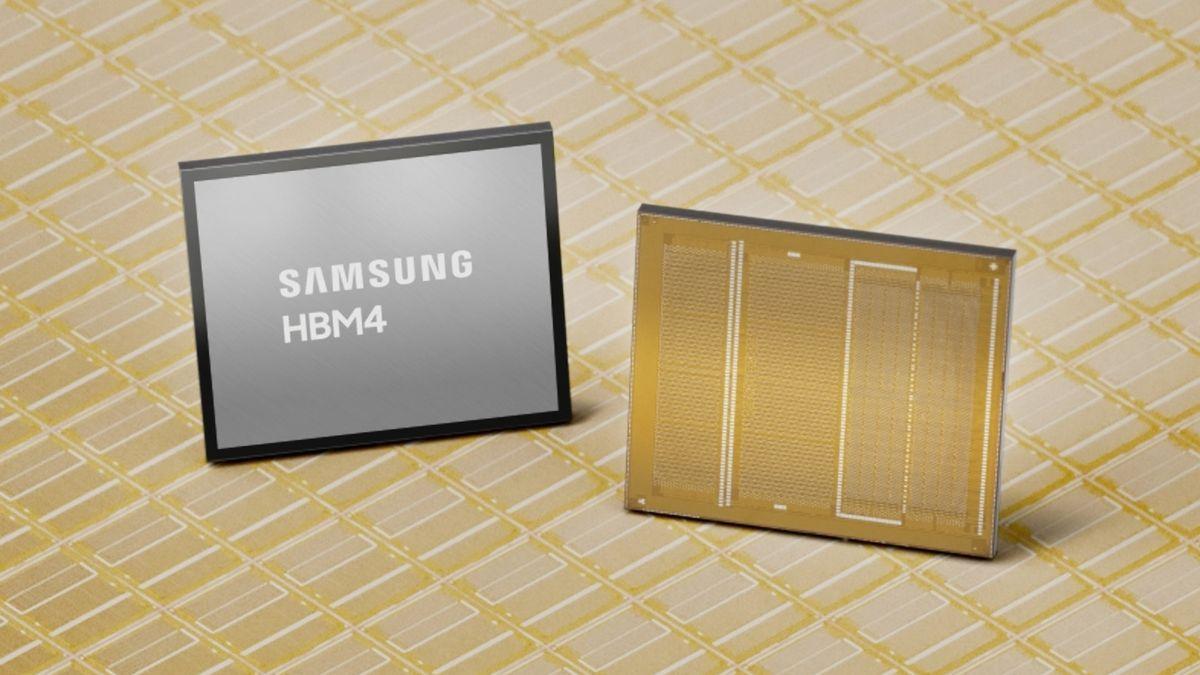
Source: PC Gamer
References
Summarized by

Navi
[3]
Related Stories
AI Demand Triggers Component Shortage as Dell and Lenovo Plan 15% Price Increases for Servers
03 Dec 2025•Business and Economy

RAM Prices Explode 240% as AI Data Centers Drain Global DRAM Supply
04 Dec 2025•Business and Economy
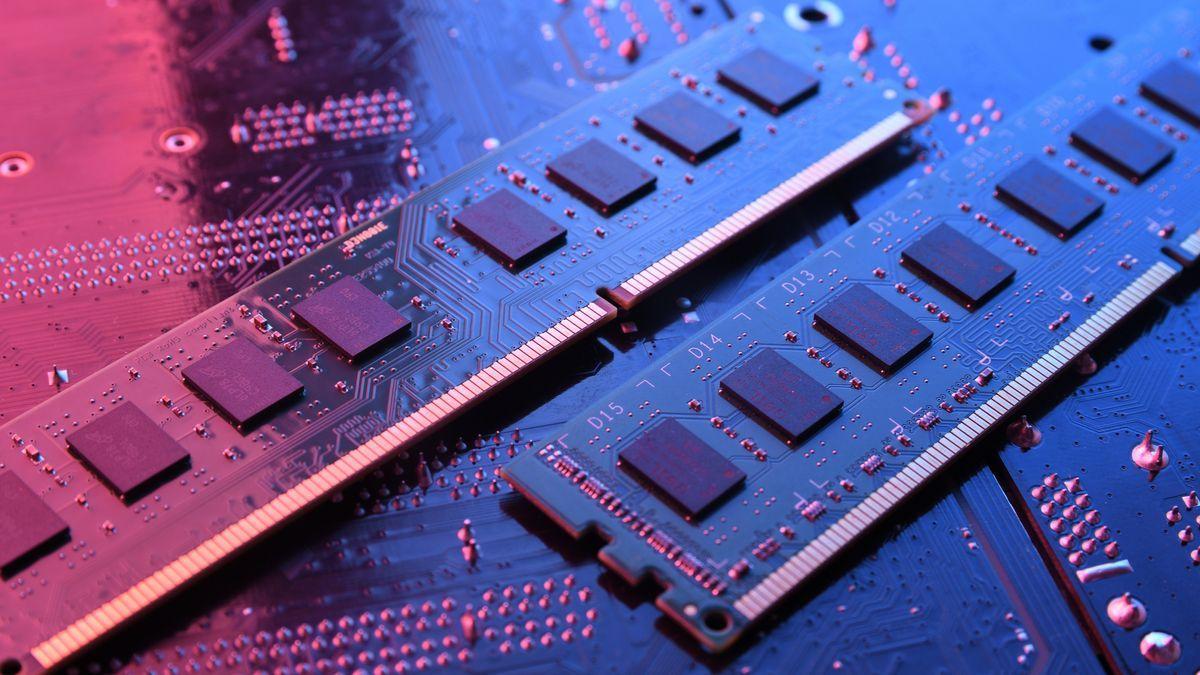
AI Demand Triggers Memory Crisis: DRAM Prices Surge 50% as Supply Chain Buckles
23 Oct 2025•Business and Economy
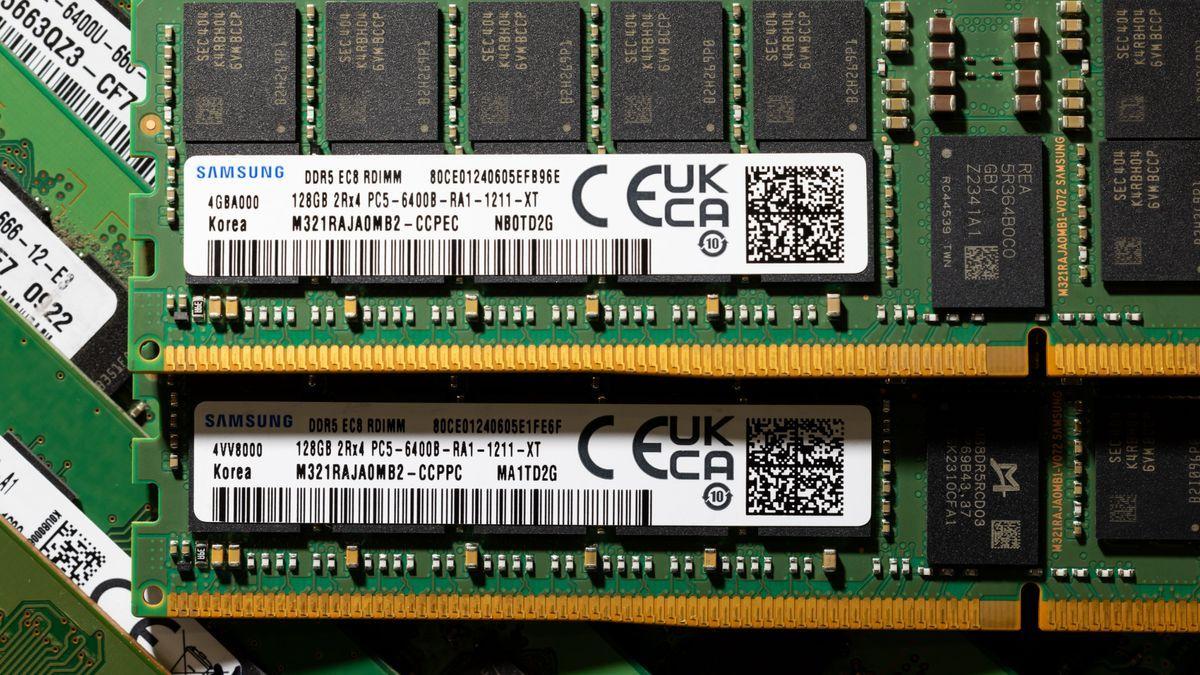
Recent Highlights
1
Apple Plans Major Siri AI Overhaul in iOS 27 With Third-Party Chatbot Integration
Technology

2
OpenAI shuts down Sora after six months, ending Disney's $1 billion licensing partnership
Technology

3
AI chatbots validate you too much, making you less kind to others, Stanford study reveals
Science and Research

Recent Highlights
Today's Top Stories



Your Daily Dose of Curated AI News
Don’t drown in AI news. We cut through the noise - filtering, ranking and summarizing the most important AI news, breakthroughs and research daily. Spend less time searching for the latest in AI and get straight to action.

