AI Power Demands Push Data Centers to Embrace Multi-Day Battery Storage for Grid Independence


2 Sources
2 Sources
[1]
Crusoe Buys Batteries That Last for Days to Power New Data Centers
Form Energy Inc. has reached an agreement to sell batteries that rely on rust and last for days to data center developer Crusoe, as technology companies rush to find resources to meet the growing power needs of artificial intelligence. The battery startup will deliver 12 gigawatt-hours of energy storage to Crusoe starting next year. The terms of the transaction were not disclosed. Form also recently struck a deal to provide a 30 gigawatt-hour battery installation to utility Xcel Energy Inc. to power a Google data center in Minnesota. "This really reaffirms the direction of a lot of the market, which is data centers need that firm, fast capacity," Form Chief Executive Officer Mateo Jaramillo said of the company's new deal. Get the Morning & Evening Briefing Americas newsletters. Get the Morning & Evening Briefing Americas newsletters. Get the Morning & Evening Briefing Americas newsletters. Start every morning with what you need to know followed by context and analysis on news of the day each evening. Plus, Bloomberg Weekend. Start every morning with what you need to know followed by context and analysis on news of the day each evening. Plus, Bloomberg Weekend. Start every morning with what you need to know followed by context and analysis on news of the day each evening. Plus, Bloomberg Weekend. Plus Signed UpPlus Sign UpPlus Sign Up By continuing, I agree to the Privacy Policy and Terms of Service. Crusoe said the agreement reflects its approach to building AI infrastructure without necessarily being dependent on the local grid, something the Trump administration has called for as well. The data center developer -- which is involved in the massive Stargate project -- said its arrangement with Form will protect ratepayers from cost increases and strengthen grid reliability. Long-duration storage remains a niche product, though, and has yet to be deployed at a wide scale. The rush to line up electricity to power data centers is boosting interest in emerging technologies such as Form's iron-air batteries, which can store and discharge electricity for up to 100 hours. Developers see energy storage as a tool that can help get data centers online faster -- and potentially without needing to rely on constrained power grids. The vast majority of batteries being installed are lithium-ion, which can typically discharge four hours of power. Long-duration storage can help operators tap power during extended periods of grid stress when electricity prices typically skyrocket. The batteries for Crusoe's data centers will be manufactured at Form's factory in West Virginia, which is ramping up production, Jaramillo said. The startup expects its first energy-storage pilot system to come online this year in Minnesota and has over 75 gigawatt-hours of commercial projects under agreement. Jaramillo said Form's technology is cost-competitive with other resources, including natural gas, though he declined to provide specifics. Form has raised $1.2 billion in financing from investors that include Breakthrough Energy Ventures, TPG Rise Climate and Energy Impact Partners, and its in the middle of raising another round. The company has been laying the groundwork for an initial public offering that could come within 12 months, Jaramillo added.
[2]
AI boom catapults batteries into the mainstream
Why it matters: It's a marriage of urgent needs: The AI sector needs reliable power -- fast. Battery companies need deep-pocketed customers. Driving the news: Form Energy will provide its multi-day storage technology to data center developer Crusoe in an announcement made Tuesday at CERAWeek by S&P Global now underway in Houston. * Also Tuesday, Crusoe expanded an existing deal with Redwood Materials, another energy storage company. * These come on the heels of at least two other deals in the last few weeks committing to deploy novel battery technologies to power data centers, including a huge one with Form and Google. "We just see that the moment for batteries is really here," said Cully Cavness, co-founder and president of Crusoe. "It's ultimately about having more control of our timelines, taking our destination into our own hands." The big picture: The race for power is driving huge investments in a series of energy technologies, ranging from traditional natural gas to fusion, as the AI industry races to secure power that correlates with more AI compute capacity. Zoom in: Under the agreement announced Tuesday, Form will deliver 12 gigawatt-hours of multi-day energy storage by 2027. State of play: Cavness said the deal also reflects pressure from President Trump for tech companies to ensure the AI buildout doesn't drive up electricity costs for others. * Form CEO Mateo Jaramillo said the company's technology can help balance renewables and reduce overall system costs. How it works: Form Energy makes ultra-long batteries that store electricity by turning iron into rust -- and then reverse the process to release that energy days later. * The system relies on iron -- a cheap, widely available material -- instead of more expensive metals used in conventional lithium-ion batteries. Zoom out: Both executives -- in separate interviews Tuesday in Houston -- say deals like this could accelerate broader adoption of new energy technologies. * "It's important because it's a large load driver, but it's also an innovation driver," Jaramillo said. * Electric utilities can show they're able to pursue new business models like those incorporating long-duration energy storage, he added. * "We also have the opportunity to plant seeds of innovation and use purchasing power to create demand signals for future energy innovation," Cavness said. Yes, but: Form has a growing list of projects -- but only one factory (in West Virginia) so far, underscoring the challenge of scaling up. * "There are a lot of challenges as we go up the ramp-up," Jaramillo said. * A key one is balancing the timeline with the amount of added capacity, and not biting off too much too fast, he added. Reality check: Natural gas is still the most ascendant of any technology, according to Cavness. * "It's the power source that is most scalable and available today," he said. The intrigue: Combining storage and natural gas plants is "maybe an under-appreciated" part of the market, Jaramillo said. What's next: Both Crusoe and Form are eyeing the public markets. Crusoe is likely to go public this year, while Form's timeline is a little less clear but still in sight.
Share
Share
Copy Link
Form Energy has secured a deal to supply 12 gigawatt-hours of iron-air batteries to data center developer Crusoe, starting in 2027. The batteries, which store energy for up to 100 hours by converting iron to rust and back, reflect the tech industry's urgent search for reliable power to meet AI's growing electricity needs without straining local grids.
Form Energy Secures Major Battery Storage Deal with Crusoe
Form Energy has reached an agreement to deliver 12 gigawatt-hours of multi-day iron-air battery storage to data center developer Crusoe, with deployment beginning in 2027
1
2
. The announcement, made at CERAWeek by S&P Global in Houston, signals a significant shift in how technology companies are addressing AI power demands. Form Energy CEO Mateo Jaramillo emphasized that the deal "reaffirms the direction of a lot of the market, which is data centers need that firm, fast capacity"1
. The transaction follows Form's recent agreement to provide a 30 gigawatt-hour battery installation to Xcel Energy for a Google data center in Minnesota, demonstrating accelerating momentum in this sector.Long-Duration Batteries Address AI Infrastructure Challenges
The partnership reflects Crusoe's strategy to develop AI infrastructure without depending heavily on constrained power grids. "We just see that the moment for batteries is really here," said Cully Cavness, co-founder and president of Crusoe. "It's ultimately about having more control of our timelines, taking our destination into our own hands"
2
. Form Energy's iron-air batteries store electricity by converting iron into rust, then reverse the process to release energy days later—capable of discharging power for up to 100 hours1
. This stands in stark contrast to conventional lithium-ion batteries, which typically discharge just four hours of power. The technology relies on iron, a cheap and widely available material, rather than expensive metals used in traditional battery systems.AI Compute Capacity Drives Energy Innovation
The race to secure AI compute capacity is catalyzing investments across multiple energy technologies, from traditional natural gas to emerging solutions like long-duration batteries. Both executives view these deals as potential accelerators for broader adoption of energy innovation. "It's important because it's a large load driver, but it's also an innovation driver," Jaramillo noted
2
. Cavness added that Crusoe has "the opportunity to plant seeds of innovation and use purchasing power to create demand signals for future energy innovation"2
. The arrangement also addresses pressure from the Trump administration for tech companies to ensure AI buildout doesn't increase electricity prices for other ratepayers, with Crusoe stating the deal will protect consumers from cost increases and strengthen grid reliability1
.Related Stories
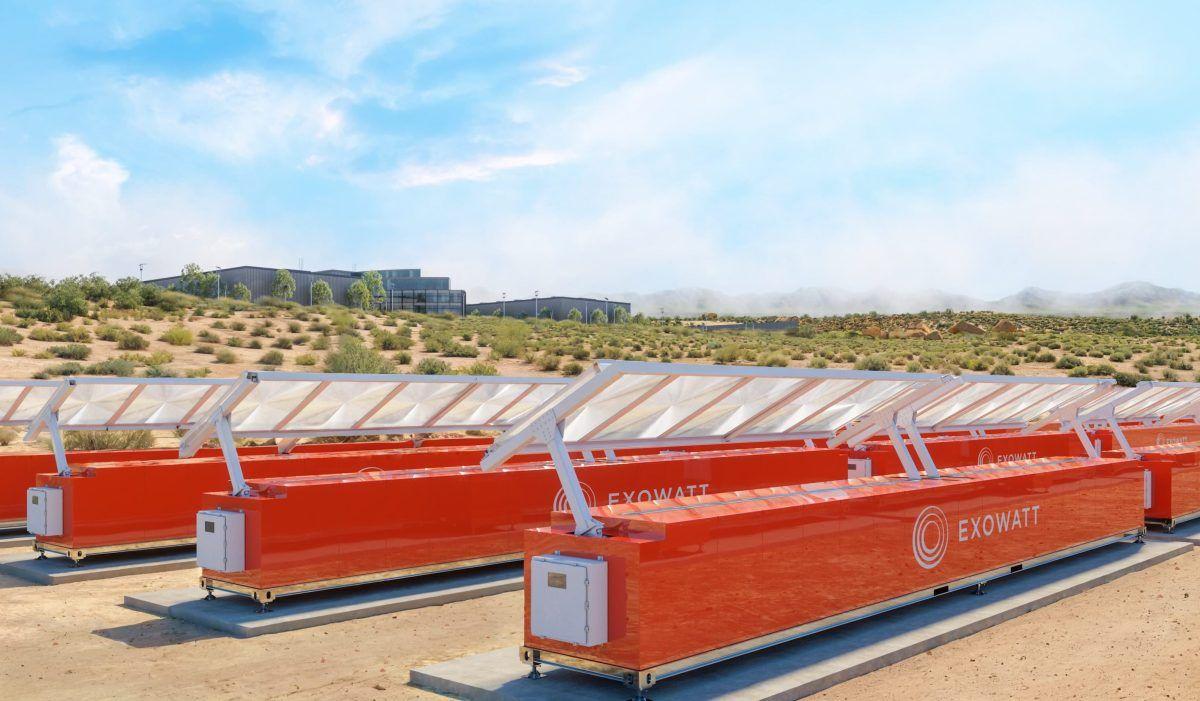
Scaling Challenges and Market Reality
Form Energy will manufacture the batteries at its West Virginia factory, which is currently ramping up production. The startup expects its first energy-storage pilot system to come online this year in Minnesota and has over 75 gigawatt-hours of commercial projects under agreement
1
. However, scaling remains a significant challenge with only one factory operational so far. "There are a lot of challenges as we go up the ramp-up," Jaramillo acknowledged, noting that balancing timeline with added capacity is crucial2
. Despite the enthusiasm for battery storage, natural gas remains "the most ascendant of any technology" and "the power source that is most scalable and available today," according to Cavness2
. Jaramillo suggested that combining battery storage with natural gas plants represents "maybe an under-appreciated" market opportunity.
Source: Bloomberg
Financial Backing and Public Market Ambitions
Form Energy has raised $1.2 billion from investors including Breakthrough Energy Ventures, TPG Rise Climate, and Energy Impact Partners, and is currently raising another funding round
1
. The company is laying groundwork for an initial public offering that could materialize within 12 months. Jaramillo claims Form's technology is cost-competitive with other resources, including natural gas, though he declined to provide specific pricing details. Long-duration storage helps operators tap power during extended periods of grid stress when electricity prices typically surge, offering both economic and reliability benefits. Crusoe, involved in the massive Stargate project, is also eyeing public markets with a likely IPO this year2
. The convergence of AI power demands with battery storage innovation creates a compelling narrative for investors watching how data centers will power the next generation of artificial intelligence while maintaining grid stability and managing costs for renewables integration.References
Summarized by

Navi
Related Stories
Redwood Materials Launches Energy Storage Business, Targeting AI Data Centers with Repurposed EV Batteries
27 Jun 2025•Technology

Bloom Energy's Stock Soars as AI Data Centers Embrace Fuel Cell Technology
13 Oct 2025•Technology

AI Data Centers Drive $580 Billion Investment Surge as Power Grid Struggles to Keep Pace
10 Nov 2025•Business and Economy
Recent Highlights
1
Anthropic's Claude AI can now control your computer to complete tasks autonomously
Technology

2
Nvidia's Jensen Huang calls OpenClaw the next ChatGPT, sending Chinese AI stocks soaring
Technology

3
Elon Musk unveils $20 billion Terafab chip manufacturing project to produce terawatt of computing
Technology

Recent Highlights
Today's Top Stories






Your Daily Dose of Curated AI News
Don’t drown in AI news. We cut through the noise - filtering, ranking and summarizing the most important AI news, breakthroughs and research daily. Spend less time searching for the latest in AI and get straight to action.

