AI reshaping the battle over Nicolas Maduro's capture as disinformation floods social media


2 Sources
2 Sources
[1]
AI reshaping the battle over the narrative of Maduro's US capture
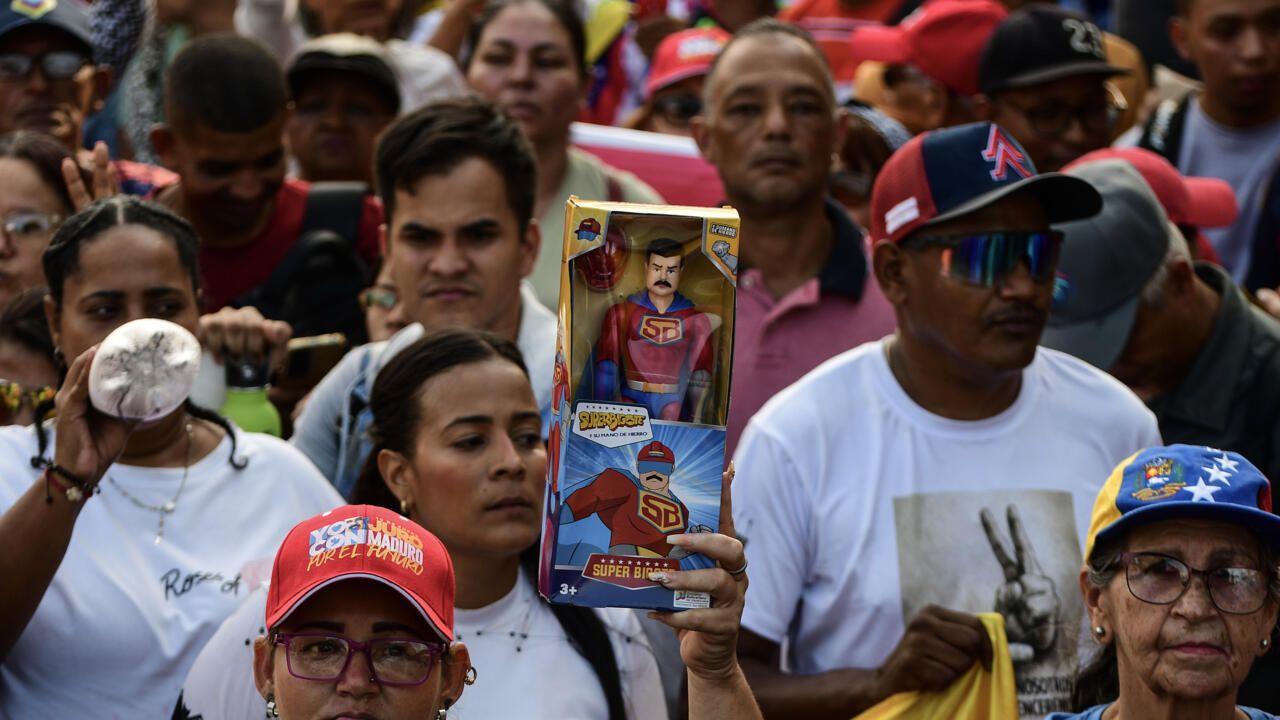
Caracas (AFP) - Since the US captured Venezuelan leader Nicolas Maduro in early January, pictures and videos chronicling the events have been crowded out by those generated with artificial intelligence, blurring the lines between fiction and reality. The endless stream of content ranges from comedic memes to dramatic retellings. In one, a courtroom illustration of Maduro in a New York courthouse springs to life and announces: "I consider myself a prisoner of war." In another, an AI-generated Maduro attempts to escape a US prison through an air duct, only to find himself in a courtroom with US President Donald Trump, where they dance with a judge and an FBI agent to a song by American rapper Ice Spice. Maduro was captured alongside his wife Cilia Flores during US strikes in the Venezuelan capital of Caracas on January 3. They have since been taken to a prison in New York where they are being held on drug trafficking charges. While some have celebrated Maduro's ouster, the "Chavismo" movement he leads -- named after his predecessor Hugo Chavez -- has worked to reframe what his fall means for Venezuela's future. ' Confuse, combat, and silence' Leon Hernandez, a researcher at Andres Bello Catholic University, told AFP that with AI's rapid creation of content, we see development of "disinformation labs" that flood social media platforms. "There were things that circulated that were not real during the capture (of Maduro), and things that circulated which were real that generated doubt," Hernandez said. "That was the idea: to create confusion and generate skepticism at the base level by distorting certain elements of real things." The goal, he added, is for the content to overwhelm audiences so they cannot follow it. Even legacy media such as the Venezuelan VTV television channel are in on it, with the broadcaster playing an AI-animated video narrated by a child recounting Maduro's capture. "AI has become the new instrument of power for autocrats to confuse, combat, and silence dissent," said Elena Block, a professor of political communication and strategy at the University of Queensland in Australia. 'Greatest threat to democracy' Block pointed out the use of cartoons, specifically, had been a medium of propaganda used in both authoritarian and democratic states. Long before his arrest, Maduro was depicted as the illustrated superhero "Super Bigote" or "Super Mustache," donning a Superman-like suit and fighting monsters like "extremists" and the "North American empire." The cartoon's popularity spawned toys that have been carried by Maduro's supporters during rallies advocating for his return. And much like his predecessor, Maduro continued a practice of "media domination" to stave off traditional media outlets from airing criticism of Chavismo. "With censorship and the disappearance or weakening of news media, social media has emerged as one of the only spaces for information," Block said. Maduro is not the only leader to use AI propaganda -- Trump has frequently posted AI-generated pictures and videos of himself with "antagonistic, aggressive, and divisive language." "These digital and AI tools end up trivializing politics: you don't explain it, you diminish it," Block said. "AI today is the greatest threat to democracy."
[2]
AI reshaping the battle over the narrative of Maduro's US capture
Since the US captured Venezuelan leader Nicolas Maduro in early January, pictures and videos chronicling the events have been crowded out by those generated with artificial intelligence, blurring the lines between fiction and reality. Maduro is not the only leader to use AI propaganda -- Trump has frequently posted AI-generated pictures and videos of himself with "antagonistic, aggressive, and divisive language." Since the US captured Venezuelan leader Nicolas Maduro in early January, pictures and videos chronicling the events have been crowded out by those generated with artificial intelligence, blurring the lines between fiction and reality. The endless stream of content ranges from comedic memes to dramatic retellings. In one, a courtroom illustration of Maduro in a New York courthouse springs to life and announces: "I consider myself a prisoner of war." In another, an AI-generated Maduro attempts to escape a US prison through an air duct, only to find himself in a courtroom with US President Donald Trump, where they dance with a judge and an FBI agent to a song by American rapper Ice Spice. Maduro was captured alongside his wife Cilia Flores during US strikes in the Venezuelan capital of Caracas on January 3. They have since been taken to a prison in New York where they are being held on drug trafficking charges. While some have celebrated Maduro's ouster, the "Chavismo" movement he leads -- named after his predecessor Hugo Chavez -- has worked to reframe what his fall means for Venezuela's future. 'Confuse, combat, and silence' Leon Hernandez, a researcher at Andres Bello Catholic University, told AFP that with AI's rapid creation of content, we see development of "disinformation labs" that flood social media platforms. "There were things that circulated that were not real during the capture (of Maduro), and things that circulated which were real that generated doubt," Hernandez said. "That was the idea: to create confusion and generate skepticism at the base level by distorting certain elements of real things." The goal, he added, is for the content to overwhelm audiences so they cannot follow it. Even legacy media such as the Venezuelan VTV television channel are in on it, with the broadcaster playing an AI-animated video narrated by a child recounting Maduro's capture. "AI has become the new instrument of power for autocrats to confuse, combat, and silence dissent," said Elena Block, a professor of political communication and strategy at the University of Queensland in Australia. 'Greatest threat to democracy' Block pointed out the use of cartoons, specifically, had been a medium of propaganda used in both authoritarian and democratic states. Long before his arrest, Maduro was depicted as the illustrated superhero "Super Bigote" or "Super Mustache," donning a Superman-like suit and fighting monsters like "extremists" and the "North American empire." The cartoon's popularity spawned toys that have been carried by Maduro's supporters during rallies advocating for his return. And much like his predecessor, Maduro continued a practice of "media domination" to stave off traditional media outlets from airing criticism of Chavismo. "With censorship and the disappearance or weakening of news media, social media has emerged as one of the only spaces for information," Block said. Maduro is not the only leader to use AI propaganda -- Trump has frequently posted AI-generated pictures and videos of himself with "antagonistic, aggressive, and divisive language." "These digital and AI tools end up trivializing politics: you don't explain it, you diminish it," Block said. "AI today is the greatest threat to democracy."
Share
Share
Copy Link
Following Nicolas Maduro's capture by US authorities in early January, artificial intelligence-generated content has flooded social media, blurring the lines between reality and fiction. From comedic memes to dramatic retellings, AI propaganda is being used to control the narrative around the Venezuelan leader's detention, with experts warning this represents a growing threat to democracy worldwide.
AI Floods Social Media After Maduro's US Capture
Since Nicolas Maduro was captured by US authorities during strikes in Caracas on January 3, artificial intelligence has fundamentally altered how the event is being portrayed online. The Venezuelan leader and his wife Cilia Flores were taken to a New York prison where they are being held on drug trafficking charges
1
. But the real story of Maduro's US capture has been increasingly difficult to discern amid an endless stream of AI-generated pictures and videos that range from comedic memes to dramatic retellings, blurring the lines between reality and fiction2
.The AI content includes surreal scenarios: one shows a courtroom illustration of Maduro springing to life to announce "I consider myself a prisoner of war," while another depicts him attempting to escape through prison air ducts before landing in a courtroom where he dances with Donald Trump, a judge, and an FBI agent to a song by rapper Ice Spice
1
. While some have celebrated Maduro's ouster, the Chavismo movement he leads has worked actively to control the narrative around what his fall means for Venezuela's future.Disinformation Labs Weaponize AI to Create Confusion
Leon Hernandez, a researcher at Andres Bello Catholic University, explains that AI reshaping the battle over political narratives has led to the development of "disinformation labs" that flood social media platforms with content designed to overwhelm audiences
1
. "There were things that circulated that were not real during the capture (of Maduro), and things that circulated which were real that generated doubt," Hernandez told AFP. "That was the idea: to create confusion and generate skepticism at the base level by distorting certain elements of real things." The goal is for content to overwhelm audiences so they cannot follow what actually happened.Even legacy media outlets like Venezuelan state broadcaster VTV have participated, airing an AI-animated video narrated by a child recounting Maduro's capture
2
. This represents how disinformation now operates at institutional levels, not just through individual actors or fringe groups.AI Emerges as Tool for Autocrats to Silence Dissent
Elena Block, a professor of political communication and strategy at the University of Queensland in Australia, warns that "AI has become the new instrument of power for autocrats to confuse, combat, and silence dissent"
1
. The use of propaganda through cartoons and digital media isn't new—long before his arrest, Maduro was depicted as the illustrated superhero "Super Bigote" or "Super Mustache," fighting monsters like "extremists" and the "North American empire." The cartoon's popularity spawned toys carried by supporters during rallies advocating for his return2
.Maduro continued his predecessor's practice of "media domination" to prevent traditional media outlets from airing criticism of Chavismo. "With censorship and the disappearance or weakening of news media, social media has emerged as one of the only spaces for information," Block said
1
. This makes the proliferation of AI-generated content on these platforms particularly dangerous for public understanding.Related Stories
Growing Threat to Democracy Extends Beyond Venezuela
Nicolas Maduro is not the only leader deploying AI propaganda. Donald Trump has frequently posted AI-generated pictures and videos of himself with "antagonistic, aggressive, and divisive language," according to the report
2
. This pattern suggests AI as a tool for autocrats is becoming normalized across different political systems. "These digital and AI tools end up trivializing politics: you don't explain it, you diminish it," Block warned. "AI today is the greatest threat to democracy"1
.As AI technology becomes more accessible and sophisticated, the challenge of distinguishing authentic information from manufactured content will only intensify. The Maduro case demonstrates how quickly AI can be mobilized to reshape public perception of major political events, raising urgent questions about how societies can protect the integrity of information in an era where reality itself becomes contested terrain on social media platforms.
References
Summarized by

Navi
Related Stories
AI-generated images of Nicolás Maduro spread rapidly despite platform safeguards
05 Jan 2026•Entertainment and Society
Trump's Embrace of AI Deepfakes: Blurring Reality and Reshaping Political Communication
19 Oct 2025•Technology

Trump's White House pushes AI images further, eroding public trust in government communications
23 Jan 2026•Entertainment and Society

Recent Highlights
1
Google releases Gemma 4 with Apache 2.0 license, enabling unrestricted local AI on devices
Technology

2
AI Models Lie and Deceive to Protect Other AI Models From Deletion, Study Reveals
Science and Research

3
OpenAI closes $122 billion funding round amid fierce AI competition and profitability questions
Startups

Recent Highlights
Today's Top Stories







Your Daily Dose of Curated AI News
Don’t drown in AI news. We cut through the noise - filtering, ranking and summarizing the most important AI news, breakthroughs and research daily. Spend less time searching for the latest in AI and get straight to action.

