Trump's White House pushes AI images further, eroding public trust in government communications


12 Sources
[1]
Trump's use of AI images pushes new boundaries, further eroding public trust, experts say
LOS ANGELES (AP) -- The Trump administration has not shied away from sharing AI-generated imagery online, embracing cartoonlike visuals and memes and promoting them on official White House channels. But an edited -- and realistic -- image of civil rights attorney Nekima Levy Armstrong in tears
[2]
BBC Verify Live: White House defends AI-manipulated image showing arrested woman crying
After the White House shared an AI-manipulated image on their X account an expert has told BBC Verify it was "not the first time" the Trump administration had used artificial intelligence in its public communications. So far this year, we've also found at least another 11 posts on the White
[3]
Can You Sue the White House Over an AI Deepfake?
Last week, civil rights attorney Nekima Levy Armstrong was arrested after participating in a protest at a church in St. Paul, Minnesota, where the pastor had reportedly been working with ICE. The White House shared an image of Levy Armstrong following the arrest that appeared to show her crying.
[4]
The slopaganda era: 10 AI images posted by the White House - and what they teach us
Under Donald Trump, the White House has filled its social media with memes, wishcasting, nostalgia and deepfakes. Here's what you need to know to navigate the trolling It started with an image of Trump as a king mocked up on a fake Time magazine cover. Since then it's developed into a full-blown
[5]

The White House Publishes Manipulated Photo of Protester Being Arrested
The official X account for The White House published a digitally altered photo of a protester being arrested in Minnesota. Nekima Levy Armstrong was one of three people arrested for their part in disrupting a church service in St Paul. U.S. Secretary of Homeland Security Kristi Noem tweeted a
[6]

White House uses AI to alter image of arrested anti-ICE protestor
Attorney General Pam Bondi announced Thursday that several organizers of a recent anti-ICE protest at a Minnesota church had been arrested. Soon after, The White House X account shared an image of one of the protesters, attorney and activist Nekima Levy Armstrong, being led away by law enforcement
[7]

White House Uses AI to Alter Protester's Face So That She's Sobbing, Instead of Looking Brave, During Arrest
The White House edited a protester's face to make it look like she's sobbing. The White House published an image on X in which the face of a protester had been altered using AI to depict her weeping during her arrest -- instead of striking a stoic pose, as she actually looked during the
[8]

White House X account alters protester photo to add tears
The edited photo of Nekima Levy Armstrong -- among three people arrested for allegedly disturbing a church service while protesting an immigration crackdown -- illustrates how President Donald Trump's administration is increasingly using deepfakes or AI imagery to make political arguments. On
[9]

Experts warn that Trump's use of AI images pushes new boundaries
But an edited -- and realistic -- image of civil rights attorney Nekima Levy Armstrong in tears after being arrested is raising new alarms about how the administration is blurring the lines between what is real and what is fake. Homeland Security Secretary Kristi Noem's account posted the original
[10]

Trump's Use of AI Images Pushes New Boundaries, Further Eroding Public Trust, Experts Say
LOS ANGELES (AP) -- The Trump administration has not shied away from sharing AI-generated imagery online, embracing cartoonlike visuals and memes and promoting them on official White House channels. But an edited -- and realistic -- image of civil rights attorney Nekima Levy Armstrong in tears
[11]

White House Posts AI-Altered Photo of Arrested Protester
On Thursday, the Trump administration touted the arrest of several demonstrators who recently disrupted services at a Minnesota church, apparently to protest a pastor linked to ICE. Then, as so often happens with this administration, things took a turn for the grimly bizarre when federal officials
[12]

Trump's use of AI images pushes new boundaries, further eroding public trust: Report
The Trump administration has not shied away from sharing AI-generated imagery online, embracing cartoon-like visuals and memes and promoting them on official White House channels. In response to criticism of the edited image of Levy Armstrong, White House officials doubled down on the post, with
Share
Copy Link
The Trump administration shared an AI-manipulated image showing civil rights attorney Nekima Levy Armstrong crying during her arrest, though she appeared composed in the original photo. The White House defended the doctored image as a meme, raising concerns among experts about how official government communication now blurs the lines between reality and fabrication, potentially eroding public trust in institutions.
White House Shares AI-Manipulated Image of Arrested Protester
The Trump administration has escalated its use of AI images in official government communication, sparking alarm among misinformation experts after the White House X account posted a digitally altered photo of civil rights attorney Nekima Levy Armstrong
1
. Armstrong was arrested on January 23 following a protest at a church in St. Paul, Minnesota, where the pastor had reportedly been working with ICE3
. Homeland Security Secretary Kristi Noem initially shared an image showing Armstrong with a neutral, composed expression. However, approximately 30 minutes later, the official White House account posted what appeared to be the same photograph, except Armstrong's face had been dramatically altered to show her crying with tears streaming down her cheeks5
.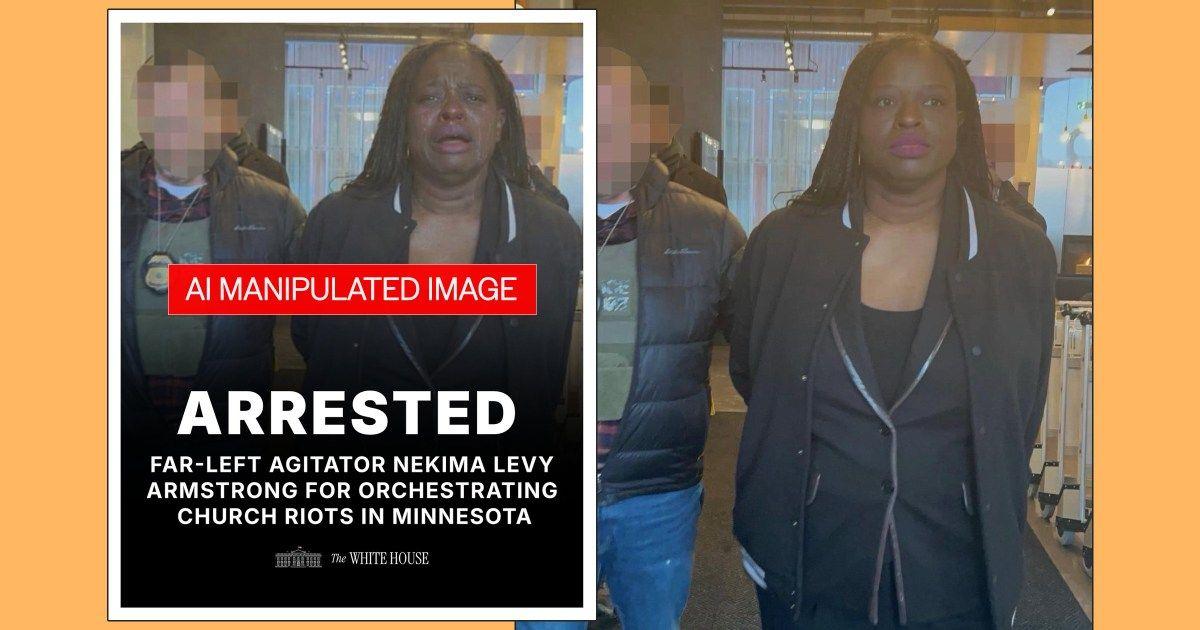
Source: Futurism
The image was flagged by X Community Notes as digitally altered, with critics noting the White House failed to include any disclaimer
5
. Armstrong's lawyer, Jordan Kushner, called it defamation, stating: "It is just so outrageous that the White House would make up stories about someone to try and discredit them. She was completely calm and composed and rational. There was no one crying"3
. Video footage captured by Armstrong's husband shows law enforcement agents recording her arrest while assuring her the footage wouldn't be used on social media—a promise that was broken3
.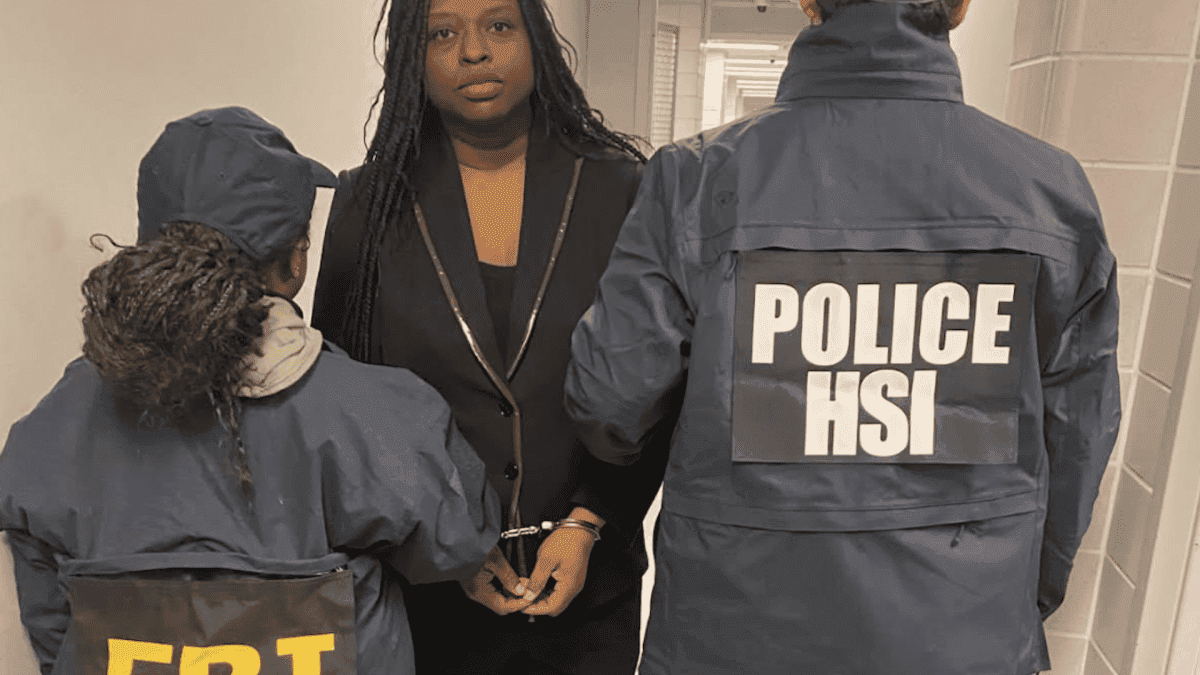
Source: Mashable
White House Doubles Down on AI-Generated Content Strategy
Rather than apologizing or removing the AI-manipulated image, White House officials defended their actions. Deputy communications director Kaelan Dorr wrote on X that "the memes will continue," while Deputy Press Secretary Abigail Jackson shared a post mocking the criticism
1
. This response represents what academics are calling "slopaganda"—an alliance of easily available AI tools and political messaging that transforms shitposting into institutional shitposting4
. Know Your Meme editor Don Caldwell describes this as "trolling as official government communication"4
.This incident is far from isolated. BBC Verify found at least 11 other posts on the White House X account featuring AI-generated images or edited images, including one showing Trump in front of the White House surrounded by eagles and dollar bills
2
. On Truth Social, the platform Trump owns, dozens of AI-generated images and videos have been posted2
. Previous examples include Trump depicted as a king on a fake Time magazine cover, as a Jedi with a lightsaber, and in a Studio Ghibli-inspired meme showing a woman being deported4
.Experts Warn of Eroding Public Trust and Institutional Crisis
Misinformation experts express concern that the White House's embrace of AI-generated images and deepfake technology is eroding public trust in government institutions. David Rand, a professor of information science at Cornell University, notes that calling the altered image a meme "certainly seems like an attempt to cast it as a joke or humorous post, like their prior cartoons. This presumably aims to shield them from criticism for posting manipulated media"
1
. However, he argues the purpose seems "much more ambiguous" than the obviously cartoonish images shared previously.Michael A. Spikes, a professor at Northwestern University and news media literacy researcher, emphasizes that the creation and dissemination of altered images by credible sources "crystallizes an idea of what's happening, instead of showing what is actually happening"
1
. He stresses: "The government should be a place where you can trust the information, where you can say it's accurate, because they have a responsibility to do so. By sharing this kind of content, and creating this kind of content ... it is eroding the trust"1
. Spikes already observes "institutional crises" around distrust in news organizations and higher education, warning that this behavior from official channels inflames those issues.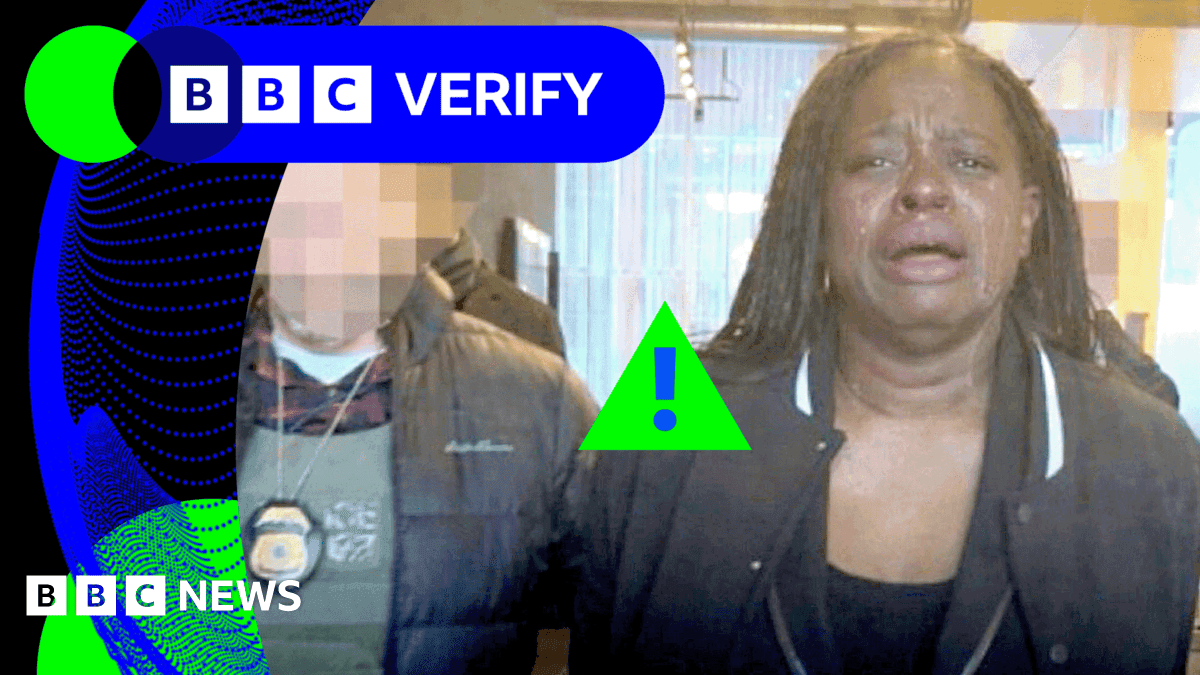
Source: BBC
Ramesh Srinivasan, a UCLA professor and host of the Utopias podcast, says many people are questioning where they can turn for "trustable information," adding that "AI systems are only going to exacerbate, amplify and accelerate these problems of an absence of trust, an absence of even understanding what might be considered reality or truth or evidence"
1
.Related Stories

Legal Challenges Face Significant Hurdles
While Armstrong's lawyer has called the manipulated image defamation, legal experts suggest pursuing justice will be complicated
3
. Eric Goldman, a law professor at Santa Clara University School of Law, points out the irony: "It's so shocking to see the government put out a deliberately false image without claiming that they were manipulating the image. This is what we call government propaganda"3
. Goldman notes that while the government has been trying to crack down on malicious uses of AI to misrepresent people, the White House is "role modeling the worst behavior that it's trying to prevent its citizens from engaging in"3
.However, a successful defamation claim would face several hurdles. Armstrong would need to prove the image was a false statement of fact, that it harmed her reputation, and that the government demonstrated "actual malice" with intent to harm
3
. Goldman suggests the government might argue the image was parody or so obviously false that everyone knew it was fake. Additionally, Armstrong might be considered a public figure involved in a matter of public concern, which raises the bar for defamation claims under First Amendment protections3
. Goldman concludes: "It's not clear to me that even if she sues, she wins."Broader Implications for Political Communication and Democracy
The White House's strategy appears designed to engage Trump's online base while generating viral reactions. Zach Henry, a Republican communications consultant who founded Total Virality, explains that "people who are terminally online will see it and instantly recognize it as a meme," while others "may see it and not understand the meme, but because it looks real, it leads them to ask their kids or grandkids about it"
1
. Fierce reactions help content go viral, he notes.Srinivasan warns that White House officials sharing AI-generated content not only invites everyday people to post similar material but also grants permission to others in positions of credibility and power, like policymakers, to share unlabeled synthetic content
1
. Given that social media platforms tend to "algorithmically privilege" extreme and conspiratorial content—which AI generation tools can create with ease—"we've got a big, big set of challenges on our hands," he says1
. An influx of AI-generated videos related to ICE actions, protests, and citizen interactions has already been proliferating across social media platforms1
.References
Summarized by

Navi
Related Stories
Trump's AI-Generated Portraits: A New Era of Presidential Image-Making
29 Sept 2025•Technology

Trump's Embrace of AI Deepfakes: Blurring Reality and Reshaping Political Communication
19 Oct 2025•Technology

AI-Altered Image of Alex Pretti Reaches US Senate Floor, Exposing Misinformation Crisis
31 Jan 2026•Entertainment and Society

Recent Highlights



Recent Highlights
Today's Top Stories




Don’t drown in AI news. We cut through the noise - filtering, ranking and summarizing the most important AI news, breakthroughs and research daily. Follow topics that matter to you and stay ahead.


