Amazon cuts 100+ robotics jobs as warehouse automation team faces restructuring


3 Sources
3 Sources
[1]
Amazon's latest round of layoffs hits its robotics unit
Serving tech enthusiasts for over 25 years. TechSpot means tech analysis and advice you can trust. What just happened? It seems even those people creating job-stealing robots are at risk of becoming unemployed. Amazon confirmed this week that it laid off staff across its robotics unit, with at least 100 white-collar jobs affected. It comes soon after the company laid off 30,000 people and canceled its Blue Jay warehouse robot. The division that was axed on Tuesday is responsible for designing robots and other conveyances, primarily in warehouses, writes Reuters. In a message to employees seen by Business Insider, Amazon Robotics VP Scott Dresser described the changes as "difficult but necessary." He stressed that robots remain a "strategic priority" for Amazon. In October 2025, Amazon said it would be reducing its corporate workforce by about 14,000 people in a move that it partly blamed on AI adoption - though reducing organizational layers was framed as the main cause. Another round of layoffs was announced in January. This time, 16,000 corporate roles were cut, bringing the total since October to around 30,000, about 10% of the company's white-collar workforce. Since late 2022, Amazon has cut more than 57,000 corporate roles. Last month, Amazon quietly shelved Blue Jay, a multi-armed robot designed to accelerate same-day deliveries, just a few months after its debut. The machine reportedly faced steep manufacturing costs and complex installation demands, particularly due to its ceiling-mounted structure. Amazon has also closed its Fresh and Go grocery chains and made smaller job cuts in its devices and services, books, podcasts, and public relations divisions. But it certainly isn't cutting back on AI spending, which is projected to account for the bulk of its $200 billion in capital expenditures throughout 2026. In October 2025, a report citing leaked company documents revealed that Amazon hopes its warehouse robots will fill more than 600,000 US positions it would have had to hire for by 2033. The report added that Amazon's robotics team aims to automate 75% of all operations at the company. Amazon responded a day later with claims that robots aren't taking human jobs. Strangely, it did so while unveiling two new machines designed to take human jobs. One was Blue Jay, which obviously didn't turn out as well as expected.
[2]
Amazon Eliminates 100 White Collar Jobs In Robotics Team: Report - Amazon.com (NASDAQ:AMZN), Block (NYSE:XYZ)
Amazon.com, Inc. (NASDAQ:AMZN) has reportedly cut additional jobs in its robotics division. Robotics Unit Hit By Latest Layoffs Amazon has laid off employees in its robotics organization, Reuters reported on Wednesday, citing two people familiar with the matter. The team was responsible for building machines and automated systems used primarily in warehouse operations. The cuts reportedly affected at least 100 white-collar roles within the division. In a statement to the publication, Amazon said it routinely reviews its internal structure to ensure teams are positioned to innovate and deliver for customers. However, it did not disclose the exact number of jobs impacted. Amazon did not immediately respond to Benzinga's request for comments. AI Efficiency Push Drives Corporate Cuts The layoffs come as Amazon continues a sweeping effort to trim corporate staff while improving efficiency with AI-powered tools. Since last year, the company has significantly reduced its white-collar workforce. Those reductions represent close to 10% of Amazon's corporate workforce. Most of Amazon's roughly 1.5 million employees work in hourly roles, particularly inside the company's vast network of fulfillment centers. 'Blue Jay' Robotics Project Halted The latest layoffs also follow Amazon's decision earlier this year to halt development of a robotics system known as Blue Jay, which the company showcased at an event in October. The system featured multiple robotic arms designed to grab several items simultaneously, helping warehouse workers operate in tighter spaces. Over the past year, Amazon has also trimmed smaller numbers of jobs across several other teams, including devices and services, books, podcasts and public relations. Amazon and its founder, Jeff Bezos has also been facing criticism for potentially replacing hundreds of human employees with robots. Price Action: Amazon shares gained 3.88% on Wednesday, closing at $216.82. The company gained further in after-hours trading, reaching $217.15, at the time of writing, according to Benzinga Pro. Benzinga's Edge Stock Rankings indicate that AMZN has a negative price trend across short, medium and long term, with the Value ranking in the 72nd percentile. Disclaimer: This content was partially produced with the help of AI tools and was reviewed and published by Benzinga editors. Photo: ACHPF via Shutterstock Market News and Data brought to you by Benzinga APIs To add Benzinga News as your preferred source on Google, click here.
[3]
Amazon cuts at least 100 jobs in robotics division
SAN FRANCISCO -- Amazon on Tuesday confirmed it laid off staff across its robotics unit, with at least 100 white-collar jobs affected, two people familiar with the matter told Reuters. This comes after a January cut of about 16,000 jobs with the company at the time hinting layoffs would continue. The division axed on Tuesday is responsible for designing robots and other conveyances for automation, primarily in warehouses. "We regularly review our organizations to make sure teams are best set up to innovate and deliver for our customers," Amazon said in the statement, without specifying the number of jobs cut. Business Insider earlier reported the robotics cuts. Starting with a round of some 14,000 white-collar employees in October, Amazon has trimmed 30,000 corporate employees, tying them to efficiency gains from artificial intelligence, as well as revising company culture. The layoffs represented nearly 10 per cent of white-collar workers, though the bulk of Amazon's 1.5 million workers are hourly staff, particularly in warehouses known as fulfillment centers. The latest job cuts come after Amazon in January halted development of a robotic arm known as Blue Jay that it demonstrated at an event in October. Blue Jay featured multiple robotic arms that could grab several items at once and was designed to help workers in smaller spaces. In addition to the broader cuts in October and January, Amazon over the past year has pared a smaller number of jobs in its devices and services, books, podcasts and public relations units, among others.
Share
Share
Copy Link
Amazon confirmed layoffs across its robotics unit this week, cutting at least 100 white-collar positions from teams building warehouse automation solutions. The cuts arrive just weeks after the company shelved its Blue Jay warehouse robot and follow 30,000 corporate job cuts since October, with AI adoption cited as a key driver of workforce reduction.

Source: Benzinga
Amazon Robotics Division Faces Job Cuts Amid Broader Restructuring
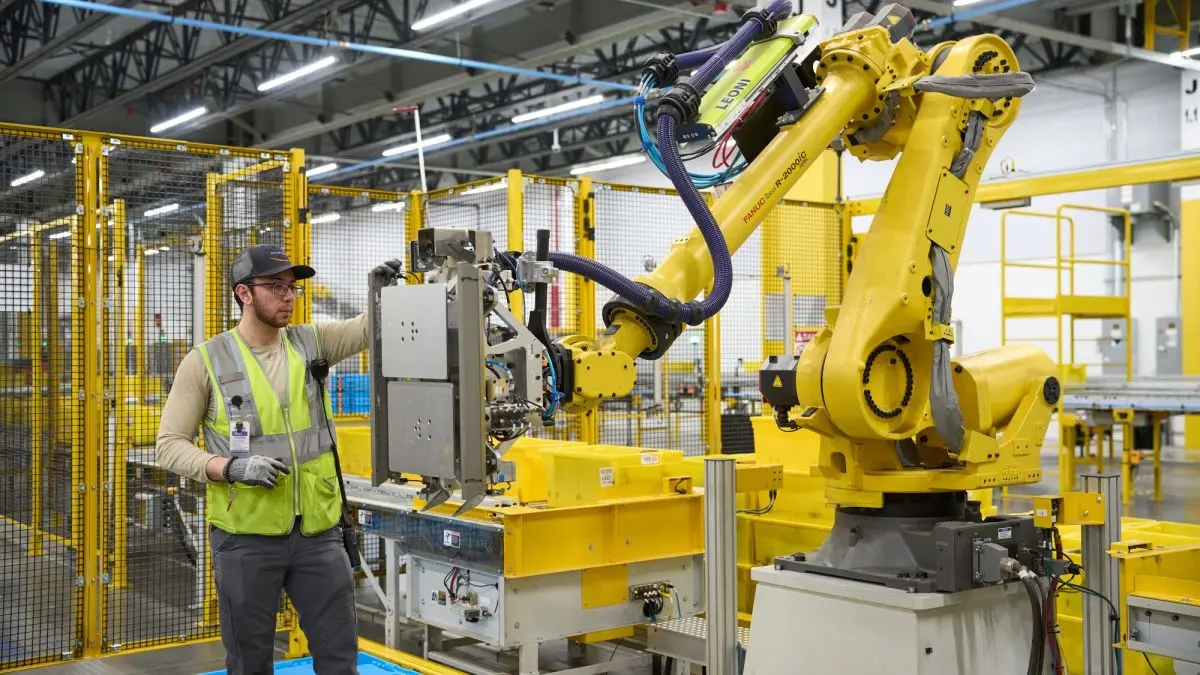
Amazon layoffs have struck the company's robotics unit this week, with at least 100 white collar jobs eliminated from teams responsible for designing warehouse automation solutions
1
. The robotics division layoffs target employees who build machines and automated systems used primarily in the company's vast network of fulfillment centers3
. In a message to employees, Amazon Robotics VP Scott Dresser described the changes as "difficult but necessary," while emphasizing that robots remain a "strategic priority" for the e-commerce giant1
.
Source: TechSpot
The company issued a standard statement noting it routinely reviews organizational structures to ensure teams are positioned to innovate and deliver for customers, though it declined to specify the exact number of positions affected
2
. These latest cuts add to a sweeping workforce reduction that has reshaped Amazon's corporate structure over recent months.Corporate Job Cuts Reach 30,000 Since October
The robotics team reductions form part of a dramatic AI efficiency push that has eliminated approximately 30,000 corporate roles since October 2025. The company first announced cuts of about 14,000 white-collar employees in October, partially attributing the decision to artificial intelligence adoption, though reducing organizational layers was framed as the primary driver
1
. A second wave in January removed another 16,000 corporate positions1
.These corporate efficiency measures represent nearly 10% of Amazon's white-collar workforce, though the bulk of the company's approximately 1.5 million employees work in hourly roles within warehouses and fulfillment centers
2
. Since late 2022, Amazon has eliminated more than 57,000 corporate roles across various divisions1
. Beyond robotics, the company has trimmed positions in devices and services, books, podcasts, and public relations units3
.Blue Jay Project Cancellation Signals Shifting Priorities
The timing of these robotics division layoffs follows Amazon's quiet decision to shelve the Blue Jay warehouse robot, a multi-armed automation system unveiled just months earlier at an October event
1
. The Blue Jay project featured multiple robotic arms designed to grab several items simultaneously, helping warehouse workers operate in tighter spaces2
. However, the warehouse robot reportedly faced steep manufacturing costs and complex installation demands, particularly due to its ceiling-mounted structure1
.Related Stories

Impact on Human Employment and Future Automation Plans
The irony hasn't escaped observers: teams building job-replacing automation are themselves facing unemployment. Yet Amazon maintains massive capital expenditures focused on AI, projected to account for the bulk of its $200 billion spending throughout 2026
1
. A leaked October 2025 report revealed Amazon hopes warehouse robots will fill more than 600,000 US positions it would have otherwise hired for by 2033, with the robotics team targeting automation of 75% of all company operations1
.Amazon and founder Jeff Bezos have faced criticism for potentially replacing hundreds of human employees with robots
2
. The company responded by claiming robots aren't taking human jobs, even while unveiling machines designed for that purpose1
. As Amazon continues balancing workforce reduction with ambitious automation goals, the impact on human employment remains a critical question for workers, policymakers, and the broader logistics industry watching how AI reshapes traditional warehouse operations.References
Summarized by

Navi
Related Stories
Recent Highlights
1
Google releases Gemma 4 with Apache 2.0 license, enabling unrestricted local AI on devices
Technology

2
AI Models Lie and Deceive to Protect Other AI Models From Deletion, Study Reveals
Science and Research

3
OpenAI closes $122 billion funding round amid fierce AI competition and profitability questions
Startups

Recent Highlights
Today's Top Stories







Your Daily Dose of Curated AI News
Don’t drown in AI news. We cut through the noise - filtering, ranking and summarizing the most important AI news, breakthroughs and research daily. Spend less time searching for the latest in AI and get straight to action.

