Benjamin Netanyahu fights deepfake claims as AI conspiracy theories spread across social media


7 Sources
7 Sources
[1]
Benjamin Netanyahu is struggling to prove he's not an AI clone
Social media platforms are currently awash with conspiracy theories claiming that Benjamin Netanyahu has been killed or injured and replaced by AI-generated deepfakes. Between clips that supposedly show the Israeli Prime Minister sporting extra fingers and drinking from a bottomless, gravity-defying cup of coffee, only one thing is apparent: reality used to be much easier to prove. There's very little credible evidence to suggest that Netanyahu isn't alive. But credibility is a rare commodity now that AI can convincingly clone real people across image, video, and audio formats, so it's getting tougher to conclusively dispel the rumors. This is what it looks like when nobody can trust their own eyes anymore. The conspiracy theories started following a press conference live stream hosted by Netanyahu on Friday. A clip of the broadcast was widely shared by social media users who claim the footage briefly shows the Israeli PM with six fingers on his right hand. Older generative AI tools have a history of struggling with hands so the apparent extra appendage pushed speculation that Israel is using deepfake footage to hide that Netanyahu had died during an Iranian missile strike. On closer inspection, the "extra" finger can be easily explained by video quality degradation and even lighting. Fact checkers including Snopes and the Poynter Institute's Politifact have debunked claims that the video was AI-generated. We should also consider the run time of the video itself, which at almost 40 minutes, is far longer than the maximum clip lengths that can be generated by current AI video models. In an attempt to put the AI clone conspiracies to rest, Netanyahu published a video to his X account yesterday showing him inside a coffee shop, and asking the person behind the camera to count his fingers. However, social media users promptly called out apparent visual inconsistencies, suggesting the footage was also an AI deepfake. Some of these comments have merit, pointing to moments within the video that show liquid moving unnaturally (or not depleting) within the coffee cup in Netanyahu's hand, and the ring on his finger seemingly vanishing in and out of the skin that surrounds it, though that could also be explained by video degradation. The background environment itself has also been called into question -- the till on the counter appears to be displaying a date from 2024, for example. Others have denounced the video as fake over claims that Netanyahu is left-handed, but is seen drinking the beverage with his right hand. If you read the comments on some of these speculative posts, the reasons that people are giving to be suspicious of fakery in these videos get increasingly bizarre, questioning how naturally Netanyahu is holding the cup and the general "aura" he gives off. None of it actually matters though, because it's almost impossible to definitively prove whether either of these videos are genuinely authentic. Neither of the clips carry metadata from a system like C2PA Content Credentials or SynthID, which could either verify their authenticity or track where and how AI tools were used. Out of the platforms like Instagram and YouTube that pledge to tag AI-generated or manipulated content, none of the clips they hosted gave any indication that the footage was fake, verified as authentic, or otherwise. People want assurances that what they're seeing is real, especially with the ongoing conflict between Iran, Israel, and the US. Our online landscape isn't currently equipped to facilitate that, forcing us to constantly adapt by learning how professional fact checkers are debunking synthetic or misleading media, or trusting others to tell us when something is fake. Even before AI became rampant, people were occasionally paranoid about it being used to manipulate news -- like the viral Kate Middleton proof-of-life photoshoot that turned out to be a botched edit -- and now of course, it's much worse. AI tools are now capable of generating content with fewer of the usual "tells," and it's becoming harder to say with absolute certainty if a photo or video of something actually happened. In turn, that's creating a crisis of trust even when people have no clear evidence of manipulation -- as in the original Netanyahu video. That uncertainty is already being used to spark distrust on all sides of this war. In a Truth Social post on Sunday, President Donald Trump accused Iran of using AI as a "disinformation weapon" to falsely depict successful attacks against the US, and called for media outlets that generated it to be charged with treason "for the dissemination of false information." It's true that AI-generated disinformation is rife, but this is coming from the same man who has personally used deepfakes to cause his own political mayhem, and leads the US administration that spends more time sharing AI-generated edgelord memes and manipulative disinformation to social media than actual policy bulletins. And yet Trump still had the audacity to tell reporters after making that Truth Social post on Sunday that "AI can be very dangerous," and that "we have to be very careful with it." Perhaps the Trump administration could start by leading by example. For now, we can't even trust how people are holding their coffee cups.
[2]
Netanyahu Posts 'Proof of Life' Video as A.I. Sows Doubts About What's Real
The unusual video is the latest demonstration that artificial intelligence is undermining trust -- even in footage that is authentic. Rumors of Benjamin Netanyahu's death were greatly exaggerated. Mr. Netanyahu, the Israeli prime minister, was alive and well when he filmed an address to the Israeli people and posted it to social media on Friday. But the video was rapidly dismissed by some online accounts, many with ties to Iran, as an artificial intelligence-generated fake meant to deceive the world about Mr. Netanyahu's well-being. Did his hands, for instance, have six fingers on them, a once-common tell for A.I. fakes? Many users seemed to spot a sixth digit and were undeterred by fact-checkers finding otherwise. Mr. Netanyahu, appearing to recognize the power and ridiculousness of the falsehood, posted a polished video from a coffee shop two days later. He held up his hands and flashed his five fingers -- a new kind of proof of life for the A.I. era. The back-and-forth was the latest demonstration of one of the dangers that A.I. technology has posed to global affairs: Not only can A.I. fakery deceive millions online, but real videos can also be dismissed as A.I.-generated lies. The phenomenon, known as the liar's dividend, has come to the fore during the war in Iran. Thousands of images and videos have emerged from the conflict -- many real and many generated by A.I., with the differences often nearly impossible to detect by people scrolling online. That has caused some real footage of the conflict to be dismissed online as A.I. fabrications.
[3]
Netanyahu denies death rumours in video falsely branded AI
Since the US and Israel began their military campaign against Iran on 28 February, Iranian state media and pro-regime accounts have pushed fake news about the death of Netanyahu and other senior Israeli political figures. Is Israel's Prime Minister Benjamin Netanyahu dead? That's what some people have been claiming on social media as the war between Israel, the US and Iran continues. The answer to that question is no, as the prime minister took to social media on Sunday to deny the rumours, sharing a video captioned "They say I'm what? Watch>>". In the clip -- which verification experts have confirmed was authentic -- a voice tells Netanyahu, "people online are saying you're dead." He responds, "I'm dying for coffee. I'm crazy about coffee. You know what? I'm mad about my people. How are they behaving? Fantastic. Do you want me to count my fingers?" Since the US and Israel began their military campaign against Iran on 28 February, Iranian state media and pro-regime accounts have pushed reports about the death of Netanyahu and other senior Israeli political figures, alongside propaganda about their military might. Conspiracy theorists, self-proclaimed journalists and internet detectives have also jumped on the bandwagon, spreading claims across social media about Netanyahu's death. Netanyahu posted the clip after rumours about his death intensified, following an address he made on 12 March, which led social media users to claim that the video was AI-generated, pointing to a frame in which he allegedly had six fingers, rather than five. In reality, the footage is authentic, but low-quality versions of the broadcast distorted the way the light hit his hand. His five fingers are visible in higher-quality versions of the speech. In response, Netanyahu held up five fingers to the camera in his proof-of-life café video, in an apparent bid to refute the false allegations. Netanyahu's coffee shop video was filmed at The Sataf café in the Jerusalem Hills on 15 March. The café shared videos and photos of Netanyahu's visit on their social media, helping to prove that the visit was authentic. In an Instagram post following his visit, the coffee shop wrote, "We were delighted to welcome the Prime Minister and his staff to Staf today! They'll know which bakery to visit." But despite this attempt to subdue rumours, the clip appeared to have the reverse effect across social media, with many users doubling down on claims that it was made with artificial intelligence, and others arguing that the footage was old. On 16 March, the Tasnim News Agency -- run by Iran's Islamic Revolutionary Guard Corps -- published an article titled "New Video of Netanyahu Proves Fake", which listed a series of alleged tell-tale signs as evidence that the coffee shop video, intended to debunk the death rumours, was itself AI-generated. The piece included a screenshot of an X post of sharing results from an AI detector, which listed the video as being digitally created. The water was further muddied when people turned to Grok -- X's AI chatbot -- to help verify the authenticity of the footage of Netanyahu in the coffee shop. Grok shared contradictory claims, in some instances labelling the video as a "deepfake", pointing to "signs like static coffee levels, unnatural lip sync, and casual talk of ops confirm it's fake." Euronews's fact-checking team, The Cube, contacted X to ask why these Grok posts had not been removed at the time of publication, but did not receive a response. Nevertheless, experts have warned that artificial intelligence and deepfake detectors must be treated with caution and that, in this instance, they are not trustworthy. Verification expert Tal Hagin told us that "a lot of these softwares are searching for discrepancies and based on probability. If you hold your hand in an abnormal position, then the detector can say it's AI if it's not statistically normal for somebody to hold their hand in that way." "But in real life, a person could hold themselves in such a way, and that's why we can't rely on these platforms", said Hagin. "We base evidence on reality, not on what people want to believe," Hagin added. "If this video was AI, it would literally would be the most advanced AI model that has ever existed. And you cannot just say on the internet that Netanyahu's team has access to a new secret AI model. You need proof." Many social media accounts claimed that the fact that security guards can be seen wearing face masks in shots of Netanyahu's coffee shop visit served as proof that the footage was filmed during the COVID-19 pandemic. In reality, members of the Shin Bet VIP Protection Unit -- which is responsible for the security of Israel's highest-ranking government, including the prime minister -- have previously worn face masks to conceal their identities. Social media users also alleged that the receipt in the video was dated 2024. Tal Hagin told us that these kinds of alleged clues can be easily debunked. "Most of the types of errors that people saw, such as the receipt they said was from 2024, were simply cause they watched lower quality footage," he said. "If you look at the higher quality footage, it clearly says 2026." Netanyahu is just one of several top-ranking Israeli officials at the centre of death rumours, as the war in the Middle East continues. On X, social media users falsely claimed that Israel's Mossad chief David Barnea had been killed, sharing footage of a crime scene. However, there is no verified evidence to back claims about the death of Barnea, who is set to serve as the director of Mossad until June 2026. Additionally, the crime scene videos, which were widely disseminated on social media, actually relate to the aftermath of a suicide bombing in Tel Aviv in August 2024, which Hamas' armed wing, Al-Qassam Brigades, claimed responsibility for the attack.
[4]
Truth or Fake - Social media abuzz with viral rumours of Benjamin Netanyahu's death
One of your browser extensions seems to be blocking the video player from loading. To watch this content, you may need to disable it on this site. In recent days, social media has been abuzz with rumours claiming that Israeli Prime Minister Benjamin Netanyahu was killed in an Iranian missile strike. The rumour appears to have originated from a screenshot of a recent press conference, after users claimed it was a deepfake generated by artificial intelligence due to an apparent 'sixth finger' visible on the Israeli PM's right hand. The 'sixth finger' claims quickly gained traction, with users speculating that the Israeli leader's appearance in public was entirely fabricated. In response to the rumours, Netanyahu shared two videos on his official accounts of himself at a café in Jerusalem, where he joked about 'dying' for a coffee and showing both of his hands with five fingers. But Netanyahu's response did little to quash the online rumours or convince the internet. Many social media users scrutinised the videos closely, asserting that these clips, too, were created using artificial intelligence, claiming to see inaccuracies in his coffee cup or his wedding ring. Vedika Bahl deep dives into the viral claims around Benjamin Netanyahu's death, and the continuing online speculation in Truth or Fake.
[5]

Netanyahu posts 'proof of life' video as AI sows doubts about what's real
Rumors of Benjamin Netanyahu's death were greatly exaggerated. Netanyahu, the Israeli prime minister, was alive and well when he filmed an address to the Israeli people and posted it to social media on Friday. But the video was rapidly dismissed by some online accounts, many with ties to Iran, as an artificial intelligence-generated fake meant to deceive the world about Netanyahu's well-being. Did his hands, for instance, have six fingers on them, a once-common tell for AI fakes? Many users seemed to spot a sixth digit and were undeterred by fact-checkers finding otherwise. Netanyahu, appearing to recognize the power and ridiculousness of the falsehood, posted a polished video from a coffee shop two days later. He held up his hands and flashed his five fingers -- a new kind of proof of life for the AI era. The back-and-forth was the latest demonstration of one of the dangers that AI technology has posed to global affairs: Not only can AI fakery deceive millions online, but real videos can also be dismissed as AI-generated lies. The phenomenon, known as the liar's dividend, has come to the fore during the war in Iran. Thousands of images and videos have emerged from the conflict -- many real and many generated by AI, with the differences often nearly impossible to detect by people scrolling online. That has caused some real footage of the conflict to be dismissed online as AI fabrications. Solutions seem to be scant. Last week, Meta's quasi-independent oversight board noted that the problem existed during global conflicts and crises, including the latest in Iran. The board called for the social media giant to do more to identify deceptive AI-generated content circulated during armed conflicts. "This is not a conceptual threat," said Alberto Fittarelli, a senior disinformation researcher at the Citizen Lab, a research unit at the University of Toronto. He added that anyone who was "knowledgeable of manipulation techniques" and "ruthless enough to deploy them" would take advantage of the liar's dividend to sow distrust around the realities of war. "Verifying everything is incredibly exhausting, and not everyone can afford doing it," Fittarelli said. The liar's dividend played an outsize role in the lead-up to the war, as protests against Iran's theocratic government swept the country. One video, confirmed as authentic by The New York Times, showed a protester sitting peacefully in the street as heavily armed police officers descended upon him. The scene spread widely online, evoking "Tank Man," an iconic scene of resistance from Tiananmen Square in 1989. Though the footage was confirmed from multiple angles, it was nevertheless dismissed by pro-government voices online as an AI-made fake. Such claims, however false, were bolstered by the growing realization that AI-generated images were, in fact, circulating online at the time. Citizen Lab found in October that the Israeli government or a subcontractor had used AI content to encourage Iranians to overthrow their government. "Benjamin Netanyahu having to prove that he's alive and that his image is not AI-generated shows that the risk cuts both ways," Fittarelli said. Representatives for the Israeli government did not respond to requests for comment. As the war against Iran began in February, videos and images captured the destruction in Tehran and across the country as artillery pummeled sites. After a missile strike destroyed a girls' school, killing at least 175 in an apparent targeting mistake by the United States, according to a preliminary military investigation, authentic video of the destruction trickled online. Some social media users, however, claimed incorrectly that the scenes of rubble, grieving parents and mass graves were false -- either AI-made or from previous conflicts years earlier. The prevalence of AI content creates an environment of doubt that makes it easier to dismiss real documentation of civilian casualties as fake, said Mahsa Alimardani, an associate director of technology at Witness, a human rights organization working on the impact of AI on video evidence. She noted that Tehran shut down the internet and tried to block documentation of protester deaths in January but was now invested in detailing fatalities linked to Israeli and American attacks. "The regime is engineering the information environment," she said, adding that it "has also seeded the very doubt now being weaponized against authentic documentation." The Iranian government has sustained the AI trickery, circulating synthetic images to underscore the high cost of war. Alimardani pointed to an image of a bloody, dusty child's backpack posted by the Iranian Embassy in Austria as one example: Though the image seemed real, it was made by Google's AI image generator, according to the company's own detector. Fact-checkers have relied on supporting evidence from news sources and corroborating images and videos from the scene to help determine what is real. After Netanyahu posted his coffee shop video, for example, the cafe posted its own photos of his visit -- blurrier, less posed than the prime minister's clip, but another clue of authenticity. Still, the skepticism persisted online, propelled in part by state-affiliated media outlets such as the Tasnim news agency. Social media users claimed that the video was derived from a photo taken in 2024 (the cafe did not open until the summer of 2025). They posted similar videos of the cafe to demonstrate how easily AI could generate such a clip, including shots of Netanyahu in a sports jersey and of the new leader of Iran and other heads of state replicating his movements. Grok, the AI chatbot created by Elon Musk's company xAI, then mistakenly supported those assertions on X, writing that Netanyahu's video was generated by AI in a post seen more than 100,000 times. "Classic deepfake meme," the chatbot wrote. The company did not respond to a request for comment.
[6]

Is Israeli PM new video with US envoy AI generated? Benjamin Netanyahu death rumors explained
Is Israeli PM new video with US envoy AI generated? This question has spread online after multiple videos of the Israeli leader appeared during the ongoing Iran conflict. Claims about his death and AI-generated visuals have circulated widely. Social media users have questioned details such as hand appearance and height differences in videos. Netanyahu has responded by releasing several clips showing himself in public and during meetings. Officials from Israel and diplomats have rejected the claims and stated that the videos are real and that the Prime Minister is alive. The latest video shared by Israeli Prime Minister Benjamin Netanyahu shows him meeting US Ambassador Mike Huckabee and speaking directly on camera. In the clip, he responds to ongoing rumors by stating that he is alive and makes a remark about having five fingers. The video was released after several claims circulated online suggesting that earlier footage was created using artificial intelligence. This new clip was presented as further proof of his presence and activity during the ongoing conflict. Despite the release of the video, questions continued on social media platforms. Users pointed to visual details such as body proportions and camera angles to argue that the clip could be manipulated. However, there is no confirmed evidence that the video is AI generated. Officials from Israel and diplomatic sources have rejected these claims and stated that the footage is real. The debate shows how online speculation can continue even after multiple public appearances and official clarifications. Rumors about Israeli Prime Minister Benjamin Netanyahu's death began circulating on social media during the ongoing conflict with Iran. Some posts claimed he was killed in an Iranian strike, while others said he had fled to another country. These claims spread quickly through screenshots, edited visuals, and unverified posts. Additional speculation grew when his son Yair Netanyahu was inactive online for a period, which some users linked to the rumors without any confirmation. More claims followed, including posts that suggested injuries and shared AI-generated images. There were also false reports about attacks on his family members and other officials. Israeli authorities and the Prime Minister's Office denied all such claims and said they were false. Videos and images released by Netanyahu showing him in public and in meetings were aimed at countering these rumors and confirming that he is alive. The latest video shows Netanyahu meeting Huckabee. In the clip, Huckabee says that US President Donald Trump asked him to check on Netanyahu. Netanyahu replies that he is alive and jokes about shaking hands with five fingers. The video is one of several clips posted by Netanyahu to counter death rumors. Earlier videos showed him at a coffee shop, in public interactions, and during briefings. These were shared after claims spread that he was killed in an Iranian strike. Social media users have raised doubts about the videos. Earlier claims focused on a "sixth finger" seen in a clip. Some users said this indicated AI generation. In the latest video, users pointed to height differences. Records show Huckabee is about 5-foot-10 while Netanyahu is around 5-foot-9. Some users claimed Netanyahu appeared taller, suggesting distortion linked to AI visuals. Other claims included disappearing rings and altered hand visuals. Images showing Netanyahu injured also circulated online but were identified as AI-generated with no confirmation. There is no confirmed evidence that the videos are AI-generated. The Israeli Prime Minister's Office has rejected all claims and said the rumors are false. Israeli ambassador to India also confirmed that Netanyahu is alive and dismissed AI allegations. In one case, a coffee shop seen in a video shared independent images of Netanyahu's visit, supporting authenticity. Experts say such confusion reflects how AI content can create doubt even around real footage. This situation shows how both fake and real visuals are being questioned during conflict. The rumors started during the Israel-Iran conflict. Claims said Netanyahu was killed or had fled. These were later denied by official sources. Netanyahu also used the video to refer to Israeli strikes. He mentioned removing "two names" from a list, referring to Ali Larijani and Gholam Reza Soleimani. Israel claimed responsibility for their deaths, though Iran has not confirmed Larijani's death. He also spoke about cooperation with the United States and said both countries are working together. Netanyahu added that more actions may follow. Earlier clips also faced AI allegations. In one video, Netanyahu held a cup and joked about rumors, saying he was "dying for coffee." Another clip showed him displaying his hands to counter finger-related claims. Social media users continued to question these videos despite responses. The repeated claims highlight how misinformation spreads during conflict. Multiple posts and official statements have tried to address the issue. Q1: Is Israeli PM Benjamin Netanyahu new video with US Ambassador Mike Huckabee AI generated? There is no confirmed evidence that the video is AI generated. Israeli officials and diplomats have denied the claims and confirmed that Netanyahu is alive and the videos are real. Q2: Why are people questioning Netanyahu videos as AI generated? Social media users pointed to finger glitches, height differences, and visual distortions. These claims spread during the conflict, but no verified proof supports that the videos are AI generated.
[7]
'Count my fingers': Is Netanyahu alive or dead? Coffee shop video sparks AI deepfake storm | Iran war
Social media has recently been flooded with claims that Israeli PM Benjamin Netanyahu was killed amid the ongoing tensions in the Middle East. The rumours spread rapidly after a video surfaced online showing Netanyahu speaking casually from a coffee shop, prompting some users to question whether the clip was original or a deepfake. Speculation grew further when some posts alleged that the video might have been created using artificial intelligence. The situation quickly turned into a viral debate online, with users questioning whether the footage was real or a deepfake.
Share
Share
Copy Link
Benjamin Netanyahu posted a proof of life video after conspiracy theories claimed he was replaced by an AI deepfake following alleged Iranian attacks. Despite fact-checkers debunking the claims, social media users continue questioning the authenticity of his videos, pointing to visual inconsistencies like extra fingers and unnatural coffee cup movements. The incident reveals how AI technology is creating a crisis of trust where even authentic content faces scrutiny.
Benjamin Netanyahu Confronts Death Rumors With Coffee Shop Video
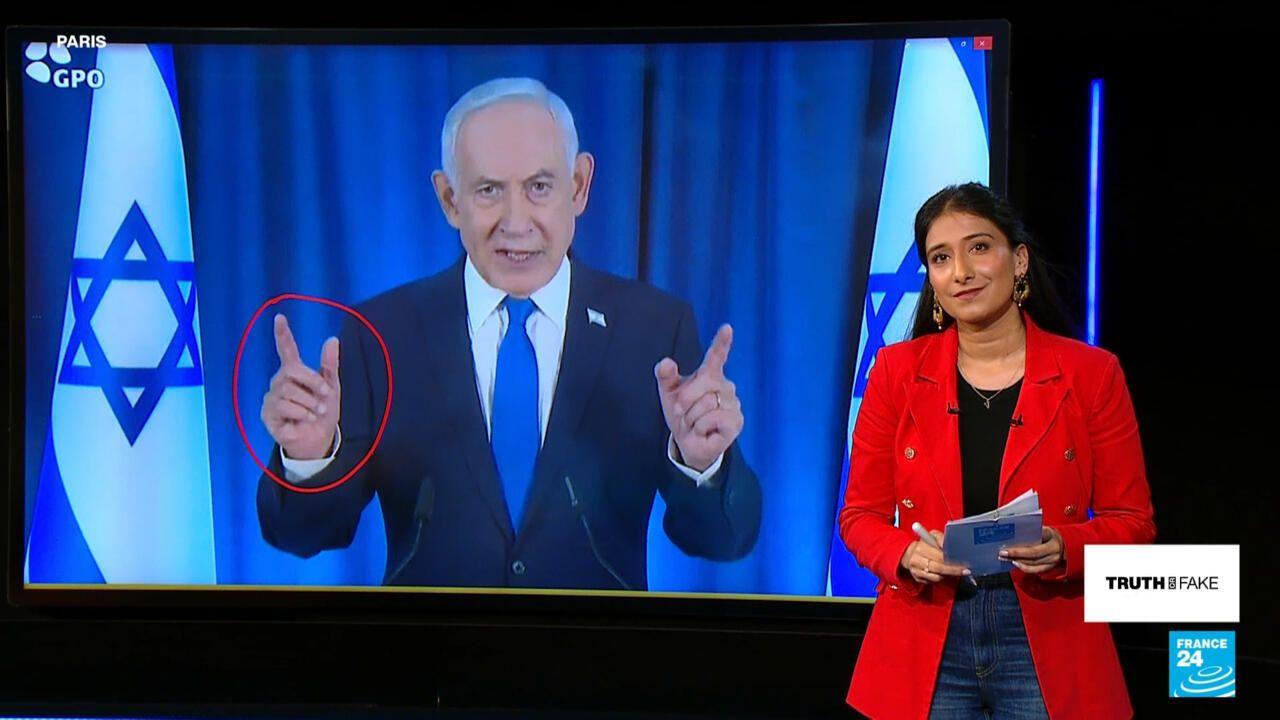
Benjamin Netanyahu found himself in an unprecedented situation this week: proving he's alive in the age of AI. Following a press conference on Friday, March 12, social media platforms erupted with conspiracy theories claiming the Israeli Prime Minister had been killed or injured in an Iranian missile strike and replaced by an AI-generated fake
1
2
. The speculation centered on a frame from his broadcast that appeared to show a sixth finger on his right hand, a once-common tell for deepfake content created by earlier generative AI tools3
.
Source: France 24
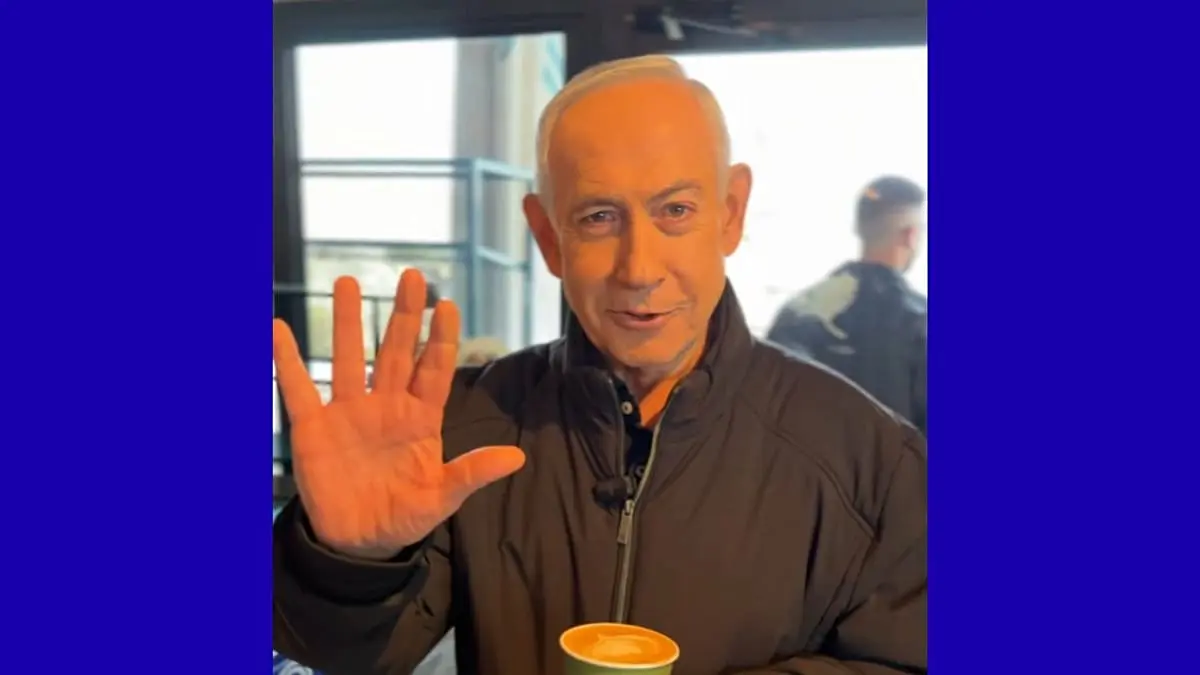
In response to the spreading death rumors, Netanyahu posted a proof of life video on Sunday, March 15, filmed at The Sataf café in the Jerusalem Hills. The clip shows him holding up both hands to display five fingers while joking, "I'm dying for coffee. I'm crazy about coffee"
3
. The café confirmed his visit through social media posts, stating they were "delighted to welcome the Prime Minister and his staff"3
.
Source: Euronews
Social Media Conspiracy Theories Persist Despite Evidence
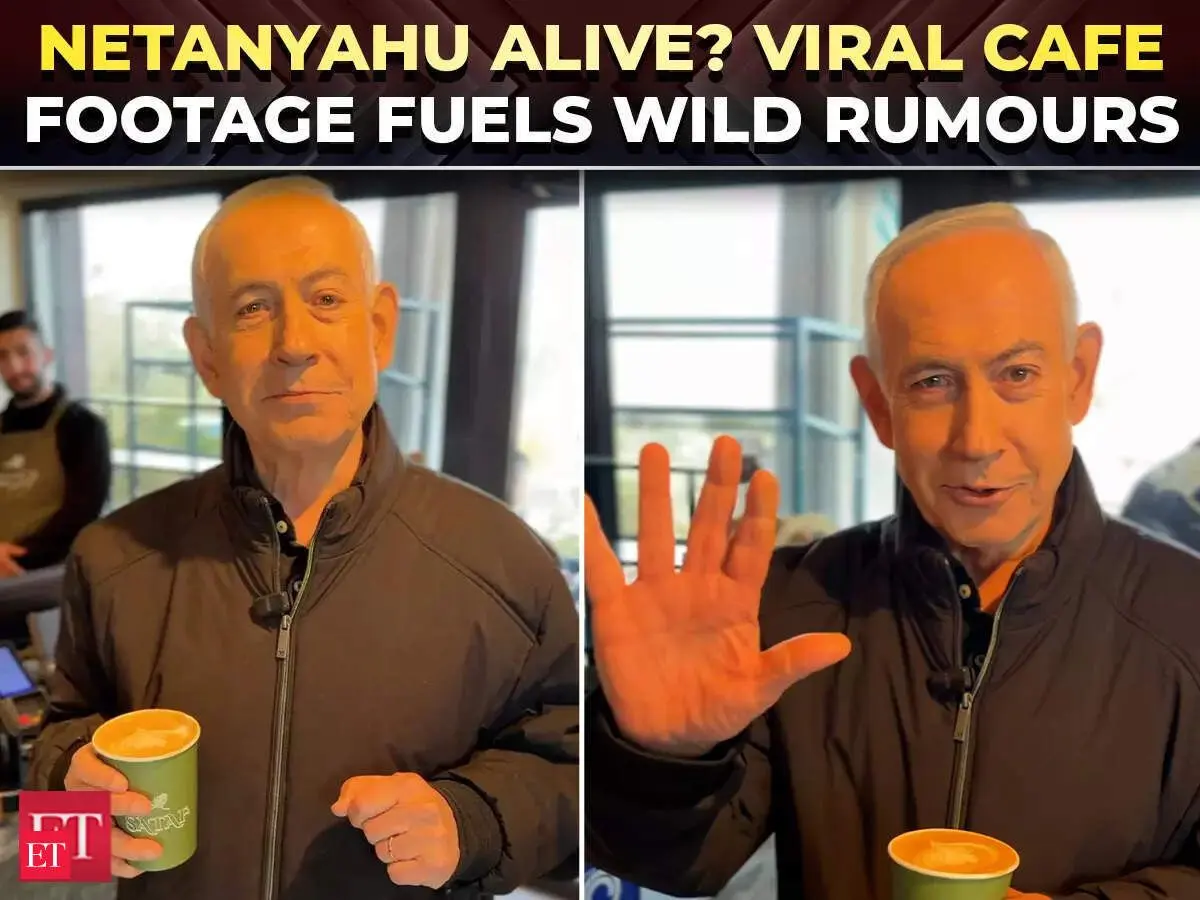
Rather than quelling speculation, Netanyahu's coffee shop video intensified scrutiny. Social media users identified new alleged visual inconsistencies, including liquid appearing to move unnaturally or not depleting in his coffee cup, his wedding ring seemingly vanishing in and out of his skin, and a cash register displaying a date from 2024
1
. Some claimed Netanyahu is left-handed but appeared drinking with his right hand. Iranian state media, particularly the Tasnim News Agency run by Iran's Islamic Revolutionary Guard Corps, amplified these claims with an article titled "New Video of Netanyahu Proves Fake"3
.
Source: ET
Many social media rumors originated from accounts with ties to Iran, as Iranian state media and pro-regime accounts have pushed fake news about Netanyahu's death since the US and Israel began their military campaign against Iran on February 28
2
3
. President Donald Trump accused Iran of using AI as a "disinformation weapon" to falsely depict successful attacks against the US1
.Fact-Checkers and Deepfake Detectors Contradict Each Other
Fact-checkers including Snopes and the Poynter Institute's Politifact debunked claims that the original press conference video was AI-generated, explaining that the "extra" finger resulted from video quality degradation and lighting issues
1
. The nearly 40-minute runtime far exceeds maximum clip lengths current AI video models can generate1
. Verification experts confirmed the coffee shop footage was authentic3
.However, confusion deepened when users turned to Grok, X's AI chatbot, for content verification. Grok provided contradictory claims, in some instances labeling the video as a "deepfake" and pointing to "signs like static coffee levels, unnatural lip sync"
3
. Verification expert Tal Hagin warned that deepfake detectors must be treated with caution: "If you hold your hand in an abnormal position, then the detector can say it's AI if it's not statistically normal for somebody to hold their hand in that way. But in real life, a person could hold themselves in such a way, and that's why we can't rely on these platforms"3
.Related Stories

The Liar's Dividend Erodes Trust in Digital Content
This incident demonstrates the phenomenon known as the liar's dividend, where the existence of AI technology allows people to dismiss authentic content as fabricated
2
5
. Not only can AI-generated fake content deceive millions online, but real videos can also be dismissed as AI-generated lies, creating a crisis of trust even when there's no clear evidence of manipulation1
5
.During the ongoing conflict, thousands of images and videos have emerged—many real and many generated by AI, with differences often nearly impossible to detect
2
. Alberto Fittarelli, a senior disinformation researcher at Citizen Lab, noted that anyone "knowledgeable of manipulation techniques" and "ruthless enough to deploy them" would exploit this uncertainty to sow distrust around the realities of war5
.Digital Content Verification Systems Fall Short
Neither Netanyahu video carried metadata from authentication systems like C2PA Content Credentials or SynthID that could verify their authenticity or track AI tool usage
1
. Platforms including Instagram and YouTube that pledge to tag AI-generated or manipulated content provided no indication whether the footage was fake, verified as authentic, or otherwise1
. Meta's oversight board recently called for the social media giant to do more to identify deceptive AI-generated content circulated during armed conflicts5
.The credibility crisis extends beyond this single incident. AI tools now generate content with fewer obvious tells, making it harder to say with absolute certainty if a photo or video actually happened
1
. This uncertainty forces people to constantly adapt by learning how professional fact-checkers debunk synthetic or misleading media, or trusting others to identify fake content. "Verifying everything is incredibly exhausting, and not everyone can afford doing it," Fittarelli said5
."References
Summarized by

Navi
Related Stories
AI-Generated Disinformation Escalates Israel-Iran Conflict in Digital Sphere
21 Jun 2025•Technology
Iran War Disinformation Crisis: AI-Generated Content Floods X With Fake Videos and Images
04 Mar 2026•Technology
AI-generated fakes flood Iran war coverage as Gemini and Grok spread false information
14 Mar 2026•Entertainment and Society

Recent Highlights
1
Google Maps unveils Ask Maps with Gemini AI and 3D Immersive Navigation in biggest update
Technology
2
AI chatbots help plan violent attacks as safety guardrails fail, new investigation reveals
Technology

3
Three Tennessee teens sue xAI over Grok AI creating child sexual abuse material from real photos
Policy and Regulation
Recent Highlights
Today's Top Stories





Your Daily Dose of Curated AI News
Don’t drown in AI news. We cut through the noise - filtering, ranking and summarizing the most important AI news, breakthroughs and research daily. Spend less time searching for the latest in AI and get straight to action.

