Iran War Disinformation Crisis: AI-Generated Content Floods X With Fake Videos and Images


14 Sources
[1]
Fake AI Content About the Iran War Is All Over X
When disinformation expert Tal Hagin asked Grok to verify a post on X about Iranian missiles that had supposedly struck Tel Aviv, Elon Musk's AI-powered chatbot failed miserably. Grok repeatedly misidentified the location and date for the video, which was originally shared on X by an Iranian
[2]
State actors are behind much of the visual misinformation about the Iran war
As attacks spread after the bombing of Iran by U.S. and Israeli forces, a video circulated widely of crowds peering up at fire, smoke and debris coming from the top of a high-rise building said to be in Bahrain. Social media users claimed an Iranian attack had hit the skyscraper. But while
[3]
AI-generated Iran war videos surge as creators use new tech to cash in
An unprecedented wave of AI-generated misinformation about the US-Israel war with Iran is being monetised by online creators with growing access to generative AI technology, experts have told BBC Verify. Our analysis has found numerous examples of AI-generated videos and fabricated satellite
[4]
Iranian TV and Social Media Project Defiant and Distorted View of the War
On Iran's official television networks and through a network of affiliated or sympathetic social media accounts, the country is striving to present a resolute image despite thousands of strikes from Israel and the United States that have hammered its cities, military bases and political
[5]

As the U.S. wages war with Iran, social media users face worsening disinformation
Disinformation engagement farming is getting worse with the help of AI. Credit: Jason Armond / Contributor / Los Angeles Times via Getty Images Before the dust had settled on the ruins of the Shajareh Tayyebeh school -- a casualty of the recent U.S.-Israel military strikes against Iran, and one
[6]

AI-enhanced images of real events distort view of Mideast war
Athens (AFP) - The Middle East war has unleashed a torrent of AI-driven disinformation. Beyond entirely fabricated visuals, another kind of content is spreading: authentic images "enhanced" in ways that experts say are subtly distorting perceptions of what's happening on the ground. In one
[7]

Did you spot these fake videos about the Iran war?
The escalation between Iran, Israel and the US has prompted a wave of viral war footage online. But many of the videos gaining millions of views are misleading, wrongly captioned, lifted from video games or entirely AI-generated. As the crisis in the Middle East escalates, social media has been
[8]
Fake AI satellite imagery spurs US-Iran war disinformation
Washington (United States) (AFP) - The satellite image posted by an Iranian news outlet looked real: a devastated US base in Qatar. But it was an AI-generated fake, underscoring the accelerating threat of tech-enabled disinformation during wartime. The rise of generative AI has turbocharged the
[9]
Iran's state media ramps up disinformation campaign, report
Disinformation is spreading on Iran's state media outlets, a new report warns. Iran's state media outlets have significantly increased disinformation efforts, including alleged battlefield victories which are supported by old or manipulated images, according to a report. Since the United States
[10]

State Actors Are Behind Much of the Visual Misinformation About the Iran War
As attacks spread after the bombing of Iran by U.S. and Israeli forces, a video circulated widely of crowds peering up at fire, smoke and debris coming from the top of a high-rise building said to be in Bahrain. Social media users claimed an Iranian attack had hit the skyscraper. But while
[11]
'Narrative war': disinformation surges as conflict roils Middle East
Washington (United States) (AFP) - Recycled images, video game footage passed off as missile strikes, and AI-generated combat visuals: the US-Israeli assault on Iran has unleashed a torrent of online disinformation that analysts are calling a war of narratives. Since US and Israeli strikes over
[12]

AI-enhanced images of real events distort view of Mideast war
Athens: The Middle East war has unleashed a torrent of AI-driven disinformation. Beyond entirely fabricated visuals, another kind of content is spreading: authentic images "enhanced" in ways that experts say are subtly distorting perceptions of what's happening on the ground. In one striking
[13]

The Latest Weapon in the Iran War Is AI-Generated Misinformation
What Former Prince Andrew's Arrest Says About the Royal Family: 'It's the Stuff of Nightmares' A photograph of a massive explosion at an Iraqi airport; satellite images depicting damage to a U.S. Naval base in Qatar; video of Iranian ballistic missiles striking the center ofTel Aviv. These are all
[14]
State actors are behind much of the visual misinformation about the Iran war
Fake videos are spreading online about the Iran war. AI and government propaganda are creating confusion about who is winning and casualty numbers. This misinformation campaign makes it hard to find real news. Social media platforms are now battlegrounds for these information wars. Users must be
Share
Copy Link
Social media platforms, particularly X, are drowning in AI-generated fake videos and images about the Iran war. State actors and engagement farmers are spreading visual misinformation that's been viewed hundreds of millions of times, while Elon Musk's Grok chatbot repeatedly fails to verify false claims, instead sharing AI-generated images as proof.
State Actors Lead Information War With Synthetic Conflict Footage
The Iran war has unleashed an unprecedented wave of AI-generated content across social media platforms, with state actors and engagement farmers flooding X with fake videos and fabricated satellite imagery that have collectively amassed hundreds of millions of views
1
3
. Since the US and Israel began strikes on Iran on February 28, the information environment has deteriorated rapidly, with disinformation expert Tal Hagin noting that Elon Musk's Grok chatbot has repeatedly failed to verify false claims, instead sharing AI-generated images as supposed proof1
.
Source: Euronews
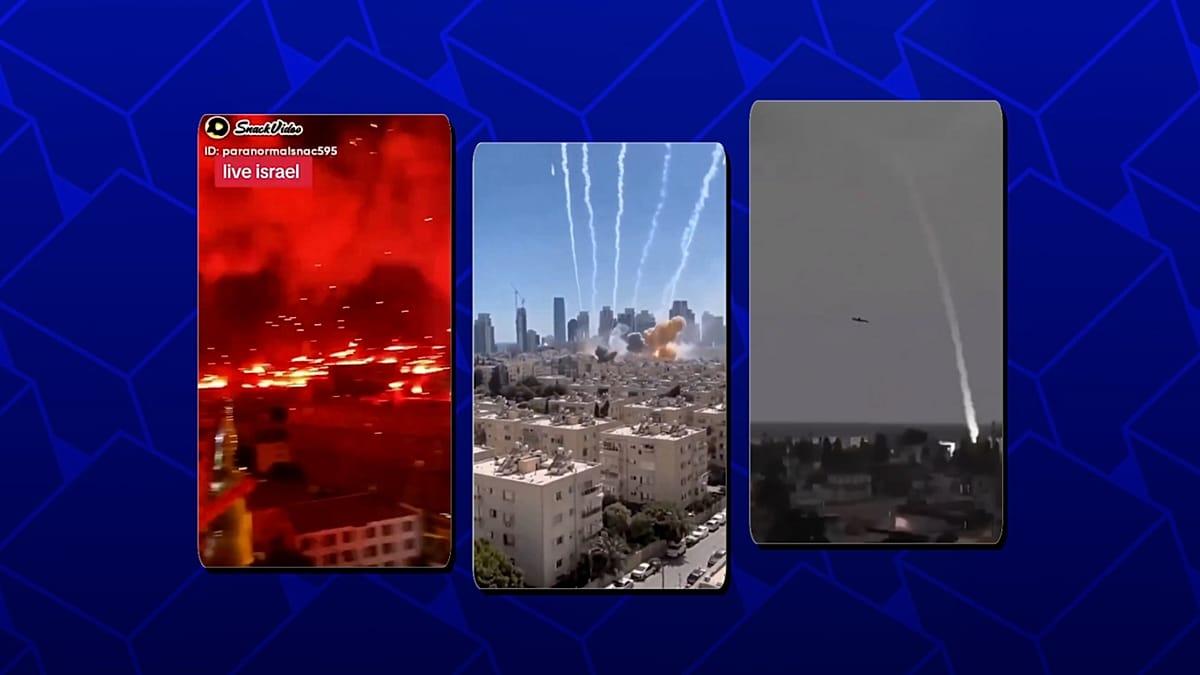
Iranian officials and state media have been at the forefront of this information war, sharing AI-generated videos of fabricated attacks and exaggerated damage. On March 2, Iranian state media circulated AI-generated videos showing a high-rise building in Bahrain on fire, while images of a US B-2 bomber allegedly shot down garnered over a million views before deletion
1
. Pro-Iran social media accounts have adopted narratives that inflate destruction and death tolls, supported by what Iranian state media reports2
.Visual Misinformation Reaches Alarming Scale Across Platforms
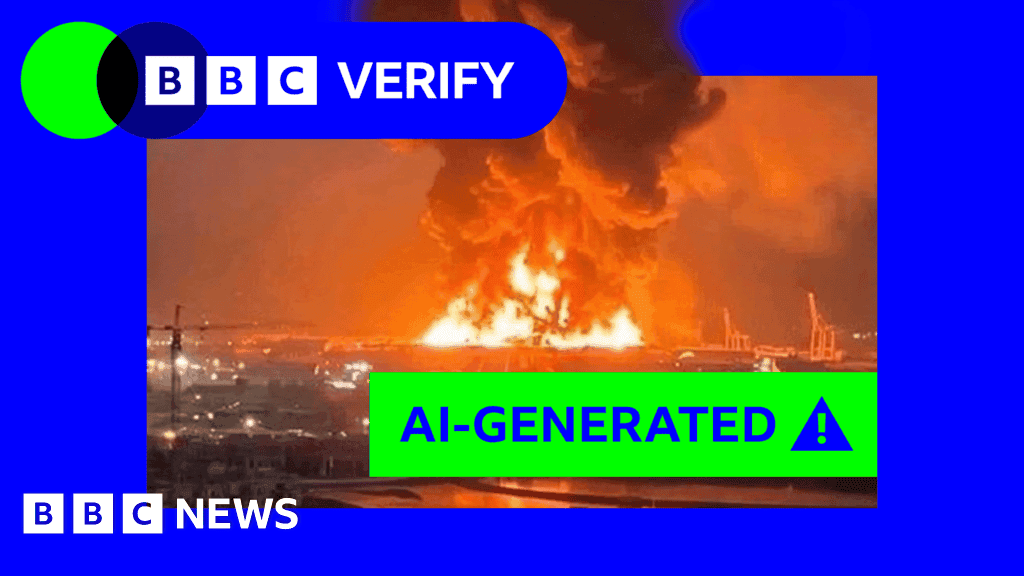
The scale of fake AI content has experts deeply concerned about the collapse of fact-based information during conflicts. "What is particularly unique about this war is the dramatic uptick in AI-generated content I find myself debunking," Hagin told WIRED, adding that "the longer we go without regulations against AI abuse, the more harm will be caused"
1
. Timothy Graham, a digital media expert at Queensland University of Technology, described the situation bluntly: "What used to require professional video production can now be done in minutes with AI tools. The barrier to creating convincing synthetic conflict footage has essentially collapsed"3
.
Source: BBC
A new feature of this conflict is the emergence of fabricated satellite imagery. The Tehran Times, a state-linked newspaper, shared an AI-generated photo claiming to show extensive damage to the US Navy's Fifth Fleet headquarters in Bahrain
3
. According to Google's SynthID watermark detector, the fake image was created using a Google AI tool, with the fabrication based on real satellite imagery from February 20253
. Meanwhile, a fake video showing Dubai's Burj Khalifa in flames was viewed tens of millions of times during a period of genuine concern about drone and missile strikes on the city3
.Engagement Farming and Monetization Drive Social Media Disinformation
The proliferation of AI-generated Iran war videos is being fueled by creators seeking to monetize viral content through X's Creator Revenue Sharing program. X's head of product stated that "99%" of accounts spreading these videos are attempting to "game monetization" by posting content designed to generate massive engagement in return for payment
3
. Graham estimates that X pays approximately "eight to 12 dollars per million verified user impressions," with creators needing to hit five million organic impressions in three months plus hold an X premium subscription to qualify3
.
Source: Wired
This engagement farming has created a dangerous ecosystem where financial incentives align with spreading propaganda. According to NewsGuard, posts circulating false claims about targeted military strikes against US and Israeli positions predominantly use repurposed video footage and recontextualized images
5
. One image of a sinking aircraft carrier, falsely claimed to show the USS Abraham Lincoln under attack, was actually from the intentional sinking of the USS Oriskany nearly 20 years ago—yet the post was viewed over 6 million times5
.Related Stories
Platform Responses and the Battle for Information Integrity
In response to the crisis, X announced it would temporarily suspend creators from its monetization program if they post AI-generated videos of armed conflict without proper labeling—90 days for a first offense and permanent thereafter
2
3
. However, X did not respond to requests about how many accounts have been demonetized since introducing the measure1
. TikTok and Meta, which owns Facebook and Instagram, did not respond to requests about whether they would take similar action3
.The Institute for Strategic Dialogue notes that state actors create particularly targeted disinformation with clear narrative structures, using videos to support specific statements about the conflict and geopolitical situation
2
. Russia-aligned influence campaigns like Operation Overload have posted videos impersonating intelligence agencies and news outlets, including false warnings attributed to Israeli intelligence2
. Melanie Smith from the Institute for Strategic Dialogue warned: "The volume of AI content is starting to just pollute the information environment in these kinds of crisis settings to a really terrifying degree"2
.The growing accessibility of generative AI tools—including OpenAI's Sora, Chinese app Seedance, Google's Veo, and Grok built into X—has made creating realistic AI manipulations easier and cheaper than ever
3
. As Emerson Brooking from the Atlantic Council's Digital Forensic Research Lab warns, social media platforms are now frontlines in war: "Your eyeballs and your attention are an asset" being actively contested by state actors and propagandists2
.References
Summarized by

Navi
Related Stories
AI Fakes About Iran War Create Unprecedented Crisis of Reality on Social Media Platforms
14 Mar 2026•Technology

AI-Generated Disinformation Escalates Israel-Iran Conflict in Digital Sphere
21 Jun 2025•Technology
AI manipulation turns Iran protests into battleground for truth as deepfakes gain millions of views
15 Jan 2026•Entertainment and Society

Recent Highlights



Recent Highlights
Today's Top Stories









Don’t drown in AI news. We cut through the noise - filtering, ranking and summarizing the most important AI news, breakthroughs and research daily. Follow topics that matter to you and stay ahead.


