Broadcom flags supply constraints as TSMC capacity hits limits from soaring AI chip demand


2 Sources
2 Sources
[1]
Broadcom flags supply constraints, says TSMC capacity a bottleneck
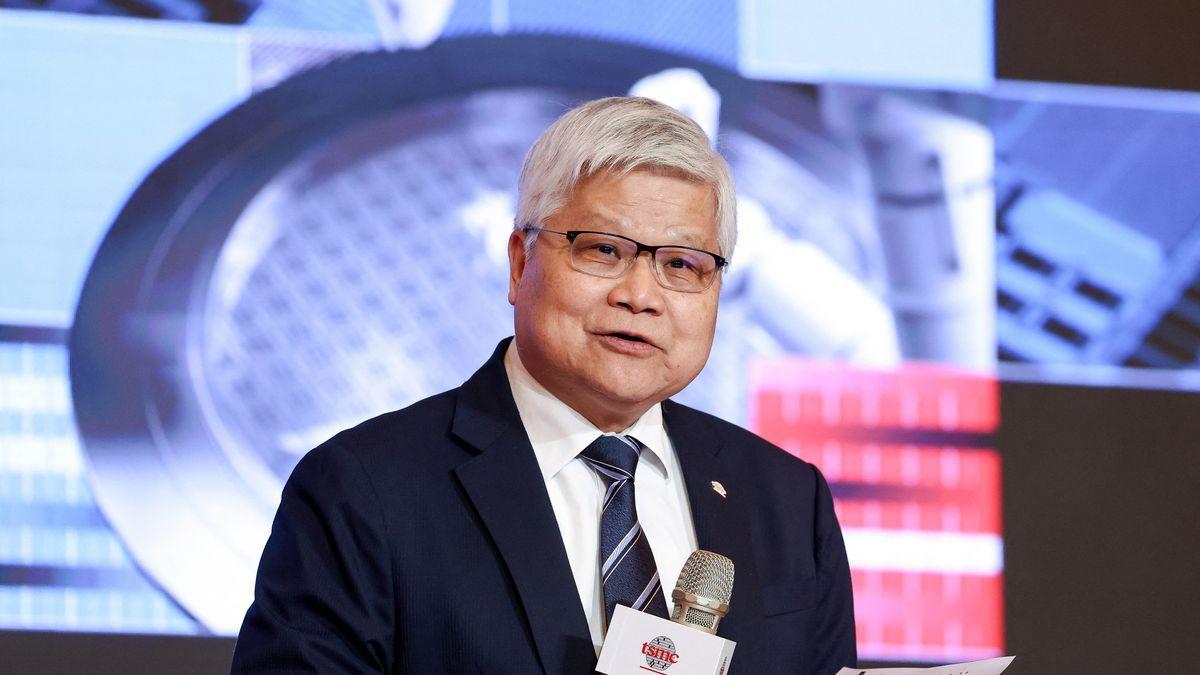
The Taiwanese firm, the world's main producer of advanced AI chips, said in January that capacity was tight, as the boom in AI infrastructure buildout has soaked up much of its advanced production lines. Chip designer Broadcom says it is experiencing supply chain constraints across the technology sector, including capacity limits at its manufacturing partner TSMC, as soaring demand for AI chips strains production. "We are seeing that TSMC is hitting (production capacity) limits," Natarajan Ramachandran, director of product marketing in Broadcom's Physical Layer Products division, told reporters on Tuesday, adding he would have described TSMC's capacity as "infinite" until a few years ago. "They will be increasing the capacity to 2027, but that has become a bottleneck, or that has kind of choked the supply chain in 2026," he said. TSMC did not immediately respond to an emailed request for comment. The Taiwanese firm, the world's main producer of advanced AI chips, said in January that capacity was tight, as the boom in AI infrastructure buildout has soaked up much of its advanced production lines. The world's largest contract chipmaker, whose major customers also include Nvidia and Apple - also said at the time that it was working hard to narrow the gap between supply and demand. Supply strains beyond chips Ramachandran said the shortages extend beyond semiconductors, affecting several adjacent supply chains. "Even though there are multiple suppliers in the industry today ... there is definitely a supply constraint in the laser space," he said, adding that printed circuit boards had also emerged as an "unexpected" bottleneck. He cited PCBs used in optical transceivers, saying lead times have stretched from about six weeks to six months. Both Taiwanese and Chinese PCB suppliers are facing capacity limits, contributing to the delays, he said, without naming the suppliers. Many customers are now entering long-term agreements with suppliers to secure capacity commitments for as long as three to four years, he added. The trend was underscored by memory chipmaker Samsung Electronics, which said last week that it is working with major customers to shift to longer contracts of three to five years. The move reflects customers' desire for longer-term supply security and suppliers' efforts to guard against demand swings.
[2]
Broadcom flags supply constraints, says TSMC capacity a bottleneck
TAIPEI, March 24 (Reuters) - Chip designer Broadcom said it is seeing supply chain constraints, including capacity limits at its manufacturing partner TSMC, highlighting the ripple effects of soaring demand for AI chips on the broader tech industry. "We are seeing that TSMC is hitting (production capacity) limits," Natarajan Ramachandran, director of product marketing in Broadcom's Physical Layer Products division, told reporters on Tuesday, adding he would have described TSMC's capacity as "infinite" until a few years ago. "They will be increasing the capacity to 2027, but that has become a bottleneck, or that has kind of choked the supply chain in 2026," he said. TSMC did not immediately reply to an emailed request for comment. The Taiwanese firm, the world's main producer of advanced AI chips, said in January that capacity was tight, as the boom in AI infrastructure buildout has soaked up much of its advanced production lines. The world's largest contract chipmaker, whose major customers also include Nvidia and Apple - also said at the time that it was working hard to narrow the gap between supply and demand. Broadcom's Ramachandran said supply constraints extend beyond chips to various tech supply chains. "Even though there are multiple suppliers in the industry today ... there is definitely a supply constraint in the laser space," he said, adding that printed circuit boards (PCBs) had also emerged as an "unexpected" bottleneck. Ramachandran said both Taiwanese and Chinese PCB suppliers are facing capacity constraints, contributing to longer lead times. He did not name the suppliers. Many customers are now entering long-term agreements with suppliers to secure capacity commitments for as long as three to four years, he said. The trend was underscored by memory chipmaker Samsung Electronics, which said last week that it is working with major customers to shift to longer contracts of three-to-five years. The move reflects customers' desire for longer-term supply security and suppliers' efforts to guard against demand swings. (Reporting by Wen-Yee Lee; Editing by Miyoung Kim and Kevin Buckland)
Share
Share
Copy Link
Broadcom reports significant supply chain constraints across the tech sector, with TSMC's production capacity becoming a critical bottleneck through 2026. The shortages extend beyond semiconductors to lasers and printed circuit boards, where lead times have ballooned from six weeks to six months. Companies are now signing three-to-five-year supply agreements to secure capacity.

Broadcom Warns of Critical Supply Constraints Across Tech Sector
Broadcom has flagged significant supply chain constraints impacting the technology industry, with its manufacturing partner TSMC emerging as a critical bottleneck. Natarajan Ramachandran, director of product marketing in Broadcom's Physical Layer Products division, told reporters that TSMC is hitting production capacity limits—a stark shift from just a few years ago when he would have described the contract chipmaker's capacity as "infinite."
1
The soaring demand for AI chips has created unprecedented pressure on TSMC's production lines. While the Taiwanese firm plans to increase capacity through 2027, Ramachandran noted that TSMC capacity a bottleneck has "choked the supply chain in 2026."
2
TSMC, which serves major customers including Nvidia and Apple, acknowledged in January that capacity was tight as the boom in AI infrastructure buildout has consumed much of its advanced production lines.1
Shortages Extend Beyond Semiconductors to Critical Components
The supply crisis reaches far beyond chips themselves. Ramachandran revealed that shortages extend beyond semiconductors, affecting multiple adjacent supply chains critical to AI infrastructure. "Even though there are multiple suppliers in the industry today, there is definitely a supply constraint in the laser space," he explained.
1
Lasers are essential components in optical transceivers used for high-speed data transmission in AI data centers.Printed circuit boards have emerged as an "unexpected" bottleneck, with lead times stretching dramatically from approximately six weeks to six months for PCB used in optical transceivers.
1
Both Taiwanese and Chinese PCB suppliers are facing capacity constraints, contributing to these extended delays.2
Related Stories
Industry Shifts to Long-Term Agreements With Suppliers
The production capacity limits have fundamentally altered how tech companies secure components. Many customers are now entering long-term agreements with suppliers to lock in capacity commitments for three to four years, according to Ramachandran.
1
This represents a dramatic shift from traditional procurement practices.Samsung Electronics underscored this trend last week, announcing it is working with major customers to shift to longer contracts of three to five years. The move reflects both customers' desire for supply security and suppliers' efforts to guard against demand swings.
2
These extended capacity commitments signal that the industry expects the boom in AI infrastructure buildout to continue straining supply chains well into the latter half of the decade, potentially limiting how quickly companies can scale their AI operations despite strong market demand.References
Summarized by

Navi
[2]
Related Stories
Nvidia CEO warns TSMC must double capacity as AI demand threatens to overwhelm chip supply
01 Feb 2026•Business and Economy

TSMC Raises Revenue Forecast Amid Surging AI Chip Demand
18 Jul 2024

TSMC's Confident Stance in AI Chip Market: "They Will All Come to Us in the End"
04 Jun 2025•Business and Economy
Recent Highlights
1
Tennessee Teens Sue Elon Musk's xAI Over Grok AI-Generated Child Abuse Images
Policy and Regulation

2
Supermicro Co-Founder Indicted in $2.5 Billion Nvidia AI Chip Smuggling Scheme to China
Policy and Regulation

3
Val Kilmer to appear posthumously in As Deep as the Grave through AI-generated performance
Entertainment and Society

Recent Highlights
Today's Top Stories









Your Daily Dose of Curated AI News
Don’t drown in AI news. We cut through the noise - filtering, ranking and summarizing the most important AI news, breakthroughs and research daily. Spend less time searching for the latest in AI and get straight to action.

