Chinese universities with military ties acquired Super Micro servers with sanctioned Nvidia AI chips


4 Sources
4 Sources
[1]
Chinese universities performing military research acquired Super Micro servers with sanctioned Nvidia AI chips -- public documents reveal purchases were completed in 2025 and 2026 despite US export controls
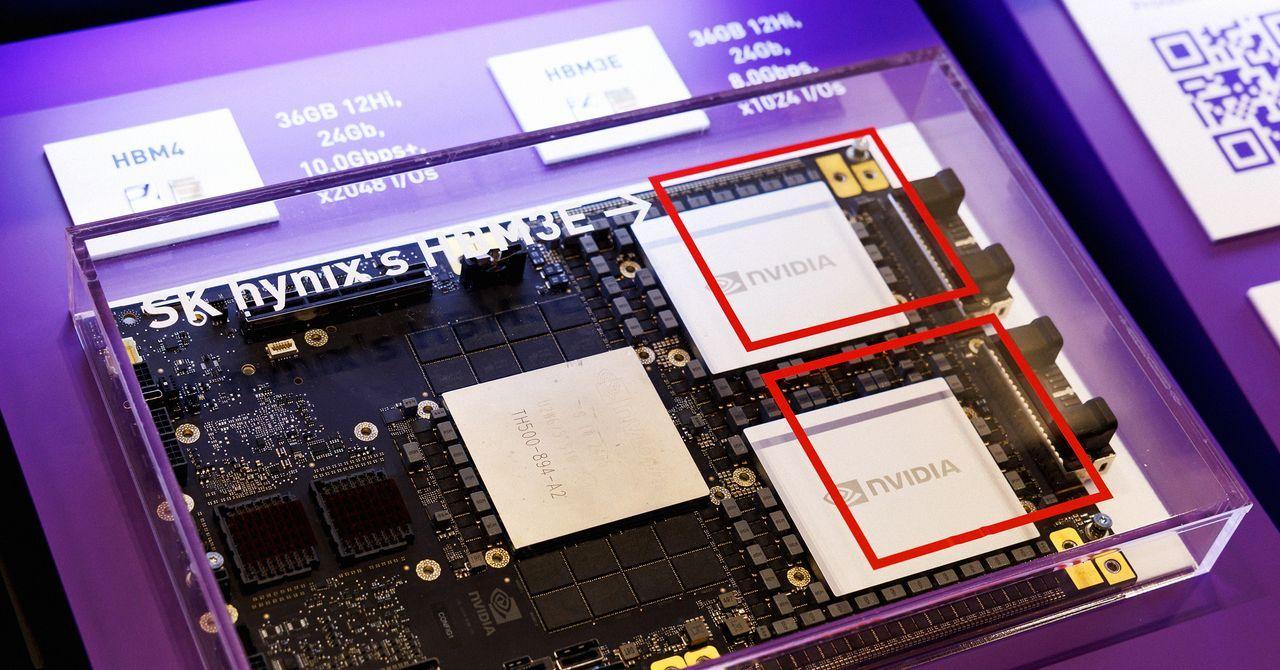
Were they the ones that ordered the smuggled Super Micro AI servers? Public documents reveal that four Chinese universities, two of which are known for conducting military research for the People's Liberation Army, bought AI servers containing export-controlled Nvidia chips from Super Micro Computer. According to Reuters, the Harbin Institute of Technology (HIT), which focuses on missile, satellite, and robotics technologies, bought a system from Super Micro in July 2025 that contained eight Nvidia A100 AI GPUs. Beihang University, which also conducts aerospace and defense research, is said to have acquired a machine-learning workstation from the company just this March, configured with four Nvidia A100 chips. These two universities are part of the "Seven Sons of National Defense," a designation for Chinese academic institutions with deep ties to China's Ministry of Industry and Information Technology and the People's Republic of China's defense industry. Nvidia's A100 chips are less powerful than H200 AI GPUs, which U.S. President Donald Trump has finally allowed for export to China in late 2025. However, potential buyers still need to acquire export licenses from the federal government before they can get their hands on these chips, and it's unlikely that PLA-linked institutions will ever get approval. It's unclear how the universities were able to purchase these Super Micro servers. However, three individuals, including Super Micro co-founder Yi-Shyan "Wally" Liaw, were recently arrested for smuggling $2.5 billion worth of advanced AI servers into China. The conspirators allegedly shipped orders from resellers and shell companies located in different countries in Southeast Asia. Once the servers containing the controlled AI GPUs arrived at the local warehouse, their serial numbers were transferred to dummy servers, and they were then issued new fake documentation. Once completed, they were forwarded to their final destination in China. News like this has several American lawmakers on edge, with U.S. Senators Jim Banks (R-Ind.) and Elizabeth Warren (D-Mass.) writing a letter to Commerce Secretary Howard Lutnick urging him to suspend the issuance of export licenses to China and its intermediaries until the issue has been resolved. It would be a blow to Nvidia if the administration grants the request, especially as the company has finally received Chinese orders for its H200 chips after several months of uncertainty from Beijing. Follow Tom's Hardware on Google News, or add us as a preferred source, to get our latest news, analysis, & reviews in your feeds.
[2]
Chinese universities with military ties bought Supermicro servers with restricted Nvidia A100 chips
Serving tech enthusiasts for over 25 years. TechSpot means tech analysis and advice you can trust. In a nutshell: Supermicro is making unwelcome headlines once again. According to new reports, four Chinese universities, including two with links to the People's Liberation Army, bought or sought the company's server systems containing restricted Nvidia AI chips over the past year. The report is the latest reminder that Washington's export controls can still be circumvented by embedding advanced GPUs inside full server products. The US first moved against chips such as Nvidia's A100 in October 2022, then tightened the rules in October 2023 with additional measures and broader licensing requirements aimed at diversion through third countries. The most notable buyers were Beihang University and the Harbin Institute of Technology. Reuters said a March 16 notice showed Beihang procured a machine-learning workstation built on a Supermicro system with four A100s, while a July tender showed HIT bought a Supermicro server with eight of the same chips. Supermicro's stock is down almost 30% this year Both schools are already on Washington's export blacklist. That is especially awkward in Beihang's case, as US officials have previously said the university was placed on the Entity List for its involvement in Chinese military rocket and unmanned air vehicle systems. BIS has also said HIT and several subsidiaries were added to the Entity List for using US technology to support the PLA, including missile programs. Back in April 2024, 10 Chinese entities reportedly acquired restricted Nvidia AI chips by purchasing servers from Supermicro, Dell, and Gigabyte through resellers. The Bureau of Industry and Security's (BIS) 2023 update specifically targeted circumvention risk, expanded restrictions to additional countries, and added due-diligence measures meant to catch transshipment networks before the hardware reached China. For Supermicro, the timing could not be worse. Last week, the Justice Department unsealed an indictment charging co-founder Yih-Shyan "Wally" Liaw and two others with conspiring to divert high-performance US AI servers to China. Prosecutors say the group used false documents, staged dummy servers, and convoluted transshipment schemes to hide the real destination of the hardware. The alleged operation involved at least $2.5 billion worth of US AI technology. Supermicro was not named as a defendant and has said it was the victim of an elaborate scheme carried out by the individuals. That case lands on top of the company's other recent problems. In October 2024, Ernst & Young resigned as Supermicro's auditor after raising concerns about governance, transparency, the completeness of communications, internal controls, and whether it could rely on management and audit committee representations. Supermicro eventually got back into compliance with Nasdaq's filing requirements on February 25, 2025, after submitting delayed reports.
[3]
Supermicro Servers With Nvidia GPUs Sold To China Military-Linked Universities: Report
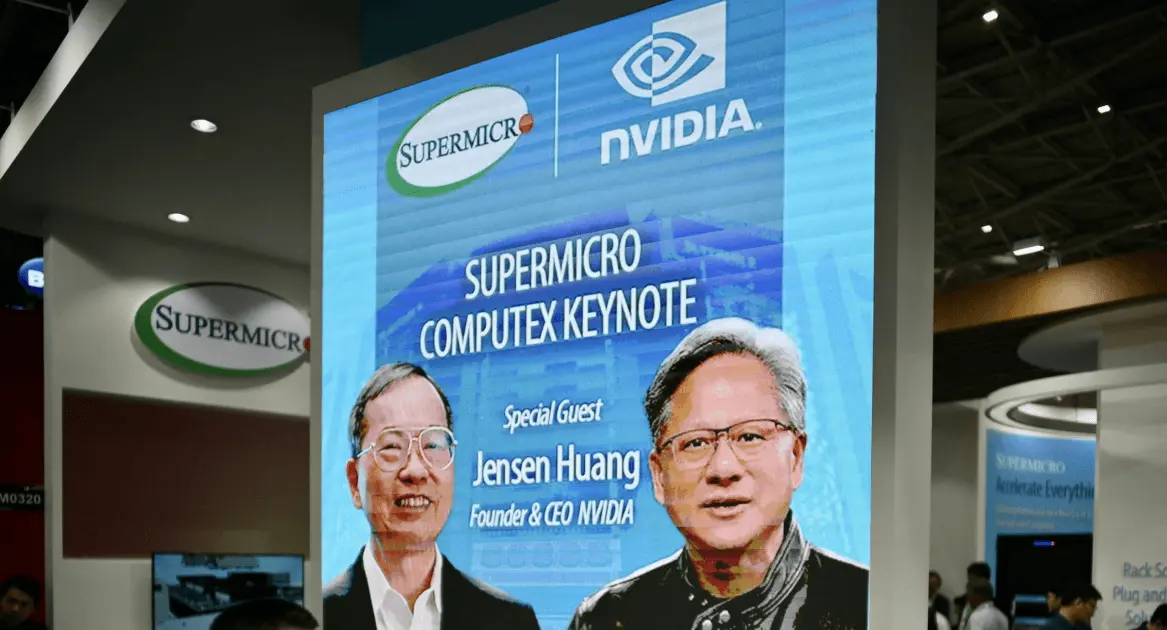
News that several universities in China, including two with links to the Chinese military, have acquired or are looking to acquire Supermicro servers with Nvidia A100 GPUs, comes in the wake of two high-profile cases in the past two weeks of Supermicro employees and contractors being arrested for smuggling and attempting to smuggle servers with more advanced GPUs. Servers from Supermicro featuring Nvidia GPUs were acquired by four Chinese universities over the last year, according to a new report by Reuters. The news comes after the U.S. Department of Justice handed out two indictments in the last two weeks charging Supermicro employees and partners, but not Supermicro itself, for smuggling and attempting to smuggle that company's servers to China via Thailand in violation of U.S. export laws prohibiting the sale of advanced U.S. technology sales to that country. Reuters on Friday reported that, according to publicly available tender documents from 2025, an additional two China-based universities also attempted to buy Supermicro servers. The first, Beihang University in Beijing, has links to China's PLA, or People's Liberation Army. The second, Harbin Institute of Technology, works on missile, satellite, and robotics technologies, Reuters said. [Related: Accelerating AI Boom Drives Supermicro to Record Q2 Revenue Growth] The servers in question, designed for AI applications, feature Nvidia A100 GPUs. The A100 GPUs originally became available in May of 2020, and availability ended in early 2024. And, according the U.S. Congress, the U.S. implemented export controls on Nvidia A100 and H100 GPUs. As a result, it is possible the servers called into question in the Reuters report were shipped to China legally. CRN has reached out to Beihang University and Harbin Institute of Technology for comment. Neither Supermicro nor Nvidia responded to CRN requests for further information by press time. News about the use of Supermicro servers with Nvidia GPUs comes at a sensitive time. Last week, Yih-Shyan "Wally" Liaw -- a co-founder, board member, and senior vice president of business development at Supermicro -- along with a Taiwan-based Supermicro employee and a third-party contractor were indicted for allegedly shipping $2.5 billion worth of servers assembled in the U.S. with Nvidia GPUs via Taiwan to another company where they were repackaged prior to shipping to their final destinations in China. Liaw, who was arrested, resigned from Supermicro's board of directors. That was followed this week with news about the indictment and arrest of two U.S. citizens who appear to be IT solution provider executives, along with a Hong Kong national, for conspiring to ship servers with Nvidia GPUs via a Thailand company with their eventual destination being China.
[4]
Chinese universities with military links bought Super Micro servers with restricted AI chips
BEIJING, March 27 (Reuters) - Four Chinese universities, including two linked to the People's Liberation Army, bought Super Micro Computer servers with restricted AI chips over the past year, procurement data shows, even as the U.S. clamps down on sales of some advanced processors to China. It was not clear how the servers were sourced. Concerned about the potential for artificial intelligence chips to enhance China's military capabilities, the U.S. from 2022 began banning the sale of some Nvidia chips such as the A100 to China. San Jose, California-headquartered Super Micro hit the headlines last week when three people associated with the company, including its co-founder, were charged with helping smuggle at least $2.5 billion of U.S. AI technology to China. The company was not named in the indictment and says it was the victim of an elaborate scheme by the individuals. Chinese universities have previously acquired restricted chips in servers made by Super Micro and other manufacturers, Reuters reporting from 2024 shows. But the continued practice, particularly by institutions with links to the PLA, is likely to stoke concerns of some U.S. lawmakers. On Monday, two U.S. senators, citing the indictments of the three people linked to Super Micro, urged U.S. Commerce Secretary Howard Lutnick to consider pausing all export licenses allowing advanced Nvidia AI chips and server systems to be sent to China or intermediaries in Southeast Asia. In addition to the universities that bought the Super Micro servers, two others - including one linked to the military - sought to make similar purchases, Reuters checks of publicly available tender documents for 2025 and early this year show. In those two cases, it was not clear if there was a successful purchase. Super Micro declined to comment on the information in the documents. Nvidia said it continues to work closely with customers and the U.S. government on compliance as export regulations have expanded. China's commerce ministry and the U.S. Commerce Department did not respond to a request for comment. A HOT-BUTTON ISSUE Much remains unclear about how many sales of U.S. AI chips to China will be acceptable to Washington and Beijing. The Trump administration last year greenlighted the sale of Nvidia's H200 chips - more powerful than currently restricted products - albeit with a number of conditions that could limit amounts sold. For its part, Beijing, keen to bolster Chinese chipmakers, has discouraged companies from purchasing U.S. AI chips. But sources said this month that Nvidia has won Beijing's approval to sell the H200. As yet, there have been no confirmed sales. Critics of such sales worry that they will accelerate research. That "may in turn help improve China's weapons design and testing, military planning and logistics, autonomous weapons systems, or surveillance," said Jacob Feldgoise, senior data research analyst at Georgetown University's Center for Security and Emerging Technology. Examples of procurement of restricted AI chips include a document from Beihang University, one of China's "Seven Sons of National Defense" institutions that plays a key role in aerospace and defence research and is linked to the PLA. It said in a March 16 notice this year it had procured a machine-learning workstation built on a Super Micro system, configured with four Nvidia A100 chips. A July notice from Harbin Institute of Technology (HIT), another one of China's "Seven Sons" that has worked on missile, satellite, and robotics technologies, shows it procured a Super Micro system with eight Nvidia A100s. Beihang University, located in Beijing, and HIT, based in the northeastern city of Harbin, did not respond to Reuters requests for comment. Both are on a U.S. export blacklist, which makes it hard for U.S. companies to secure licenses to supply them. (Reporting by Eduardo Baptista; Editing by Miyoung Kim and Edwina Gibbs)
Share
Share
Copy Link
Four Chinese universities, including two linked to the People's Liberation Army, purchased Super Micro servers equipped with restricted Nvidia A100 chips over the past year despite US export controls. The acquisitions come amid a $2.5 billion smuggling case involving Super Micro's co-founder, prompting US senators to call for stricter export license controls on advanced AI hardware to China.
Chinese Universities With Military Ties Bypass US Export Controls
Four Chinese universities acquired Super Micro servers containing restricted Nvidia A100 chips over the past year, according to publicly available procurement documents reviewed by Reuters
4
. Among the buyers were Beihang University and Harbin Institute of Technology, both part of China's "Seven Sons of National Defense" institutions with deep connections to the People's Liberation Army1
. The acquisitions occurred despite US export controls implemented in October 2022 that specifically banned the sale of Nvidia AI chips like the A100 to China due to concerns about enhancing military capabilities.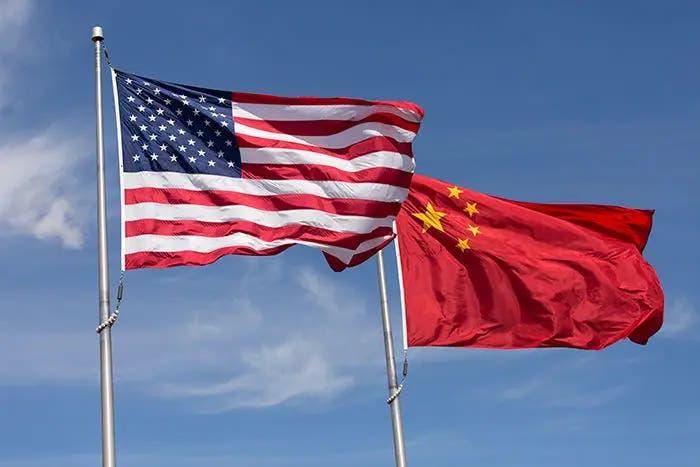
Source: CRN
Military Research Institutions Obtained Advanced AI Hardware
Beihang University, located in Beijing and known for aerospace and defense research, procured a machine-learning workstation built on a Super Micro system configured with four Nvidia A100 chips in March 2025, according to a procurement notice
4
. Meanwhile, Harbin Institute of Technology, which focuses on missile, satellite, and robotics technologies, acquired a Super Micro server containing eight A100 GPUs in July 20251
. Both universities are already on the Entity List maintained by the Bureau of Industry and Security, making it extremely difficult for US companies to legally secure export licenses to supply them2
.Connection to $2.5 Billion AI Server Smuggling Operation
The timing of these revelations is particularly sensitive given recent arrests in a massive AI server smuggling operation. Last week, Yih-Shyan "Wally" Liaw, Super Micro's co-founder and former board member, was arrested along with two others for allegedly smuggling U.S. AI technology worth at least $2.5 billion to China
3
. The conspirators allegedly used transshipment schemes involving resellers and shell companies in Southeast Asia, where servers were repackaged with dummy servers and issued fake documentation before being forwarded to their final destinations in China1
. Super Micro was not named as a defendant and maintains it was the victim of an elaborate scheme carried out by the individuals2
.
Source: Market Screener
Related Stories
Lawmakers Push for Stricter Export License Controls
US Senators Jim Banks and Elizabeth Warren have written to Commerce Secretary Howard Lutnick urging him to suspend the issuance of export licenses to China and its intermediaries until the issue of violating export controls has been resolved
1
. Jacob Feldgoise, senior data research analyst at Georgetown University's Center for Security and Emerging Technology, warned that such acquisitions "may in turn help improve China's weapons design and testing, military planning and logistics, autonomous weapons systems, or surveillance"4
. The situation creates significant uncertainty for tech companies navigating geopolitical tensions, particularly as the Trump administration recently greenlighted sales of Nvidia's more powerful H200 chips to China with conditions, though Beijing has been discouraging purchases of US chips to bolster domestic chipmakers.References
Summarized by

Navi
[2]
Related Stories
Super Micro shareholders sue over securities fraud as AI chip smuggling charges shake investor confidence
20 Mar 2026•Policy and Regulation
U.S. Government Prompts Nvidia to Investigate AI Chip Smuggling to China
20 Dec 2024•Policy and Regulation

Chinese AI Startup Accesses 2,300 Banned Nvidia Blackwell GPUs Through Indonesian Cloud Loophole
14 Nov 2025•Policy and Regulation
Recent Highlights
1
Google releases Gemma 4 with Apache 2.0 license, enabling unrestricted local AI on devices
Technology

2
AI Models Lie and Deceive to Protect Other AI Models From Deletion, Study Reveals
Science and Research

3
OpenAI closes $122 billion funding round amid fierce AI competition and profitability questions
Startups

Recent Highlights
Today's Top Stories







Your Daily Dose of Curated AI News
Don’t drown in AI news. We cut through the noise - filtering, ranking and summarizing the most important AI news, breakthroughs and research daily. Spend less time searching for the latest in AI and get straight to action.

