SK Hynix warns memory shortage could persist until 2030 as AI demand strains wafer supply


3 Sources
3 Sources
[1]
A Leading Supplier Warns Memory Shortage To Last Until 2030
A leading DRAM supplier says the ongoing memory shortage could actually last beyond 2028 and persist into 2030. Analysts previously projected the memory crunch might last for about two years, pointing to new fabs eventually coming online. But the chairman for the Korean semiconductor maker SK Hynix expects the shortage to likely last for four or five years, according to Reuters. SK Hynix's chairman, Chey Tae-won, gave the dire view on the sidelines during Nvidia's GTC event in San Jose, California. According to him, the industry is also facing a shortage of wafers, the foundational base that chips are built on. "So we need some time to build up more wafers, at least four to five years. The current shortage could continue until 2030, so we expect more than a 20% shortage of the wafers," Chey reportedly said. The shortage has been traced to companies chasing AI and building next-generation data centers containing GPUs packed with huge amounts of High Bandwidth Memory or HBM. The problem is that HBM requires "a lot of wafers," according to Chey. In the meantime, SK Hynix is developing a strategy to stabilize soaring DRAM prices, which have ensnared consumer DDR5 and DDR4 RAM. The news is a scary sign for the consumer electronics industry. The shortage has already been causing price hikes and delaying new products, including Valve's Steam Machine and reportedly new Nvidia graphics cards. The situation is so bad that research firms are predicting both the smartphone and PC industry will experience around a 10% decrease in shipments during 2026 due to the rising component costs sapping demand and production.
[2]
SK Group chairman says wafer shortage to last until 2030, trying to stabilise memory prices
Speaking to reporters on the sidelines of Nvidia's GTC Conference in San Jose, California, Chey said that SK Hynix is reviewing a potential U.S. ADR listing to broaden its global investor base, while its CEO may unveil plans to stabilise DRAM chip prices and the group explores alternative energy sources. South Korea's SK Group Chairman Chey Tae-won saidon Monday the global chip wafer shortage is likely to persist until 2030, as demand driven by artificial intelligence continues to outpace supply. Speaking to reporters on the sidelines of Nvidia's GTC Conference in San Jose, California, Chey said that SK Hynix is reviewing a potential U.S. ADR listing to broaden its global investor base, while its CEO may unveil plans to stabilise DRAM chip prices and the group explores alternative energy sources. SK Hynix, the main high-bandwidth memory (HBM) supplier to Nvidia, ranks No.1 in the HBM market with a 57% share and holds a 32% share of the global DRAM market, making it the second-largest player, according to Counterpoint. "AI actually wants to have a lot of HBM, and once you make the HBM...we have to use a lot of wafers," said Chey, explaining the shortage of wafers. "So we need some time to build up more wafers, at least four to five years. The current shortage could continue until 2030, so we expect more than a 20% shortage of the wafers," Chey said. He said that SK Hynix would try to come up with a strategy to stabilise DRAM prices. "So I cannot just announce right here, but I guess that our CEO is going to announce a new plan for how to stabilise the price of the DRAM," Chey said. When asked about expanding chip manufacturing capacity in the United States, where many of SK Hynix's customers are based, Chey said establishing overseas plants required adequate power, water, construction conditions and engineering talent. Accordingly, he said this could not be done easily on demand, adding that the company was currently focusing on production in Korea. On a potential U.S. ADR listing, Chey said the move could help expand SK Hynix's shareholder base beyond Korea, increasing exposure to American and international investors and strengthening its global presence. Chey also said tensions in the Middle East had created a lot of difficulties due to higher energy prices, pushing the group to seek other available energy sources. Shares of SK Hynix were trading up 2.7% on Tuesday morning in Seoul, versus the benchmark KOSPI's 2.4% rise.
[3]
SK Group chairman says wafer shortage to last until 2030, trying to stabilise memory prices
SAN JOSE, California, March 16 (Reuters) - South Korea's SK Group Chairman Chey Tae-won said on Monday the global chip wafer shortage is likely to persist until 2030, as demand driven by artificial intelligence continues to outpace supply. Speaking to reporters on the sidelines of Nvidia's GTC Conference in San Jose, California, Chey said that SK Hynix is reviewing a potential U.S. ADR listing to broaden its global investor base, while its CEO may unveil plans to stabilise DRAM chip prices and the group explores alternative energy sources. SK Hynix, the main high-bandwidth memory (HBM) supplier to Nvidia, ranks No.1 in the HBM market with a 57% share and holds a 32% share of the global DRAM market, making it the second-largest player, according to Counterpoint. "AI actually wants to have a lot of HBM, and once you make the HBM...we have to use a lot of wafers," said Chey, explaining the shortage of wafers. "So we need some time to build up more wafers, at least four to five years. The current shortage could continue until 2030, so we expect more than a 20% shortage of the wafers," Chey said. He said that SK Hynix would try to come up with a strategy to stabilise DRAM prices. "So I cannot just announce right here, but I guess that our CEO is going to announce a new plan for how to stabilise the price of the DRAM," Chey said. On a potential U.S. ADR listing, Chey said the move could help expand SK Hynix's shareholder base beyond Korea, increasing exposure to American and international investors and strengthening its global presence. Chey also said tensions in the Middle East had created a lot of difficulties due to higher energy prices, pushing the group to seek other available energy sources. Shares of SK Hynix were trading up 3.5% on Tuesday morning in Seoul, versus the benchmark KOSPI's 3% rise. (Reporting by Heekyong Yang, Max A. Cherney, Stephen Nellis and Hyunjoo Jin; Editing by Ed Davies)
Share
Share
Copy Link
SK Group Chairman Chey Tae-won said the global chip wafer shortage will likely last until 2030, far longer than earlier projections. The major DRAM supplier cited artificial intelligence's massive appetite for High Bandwidth Memory as the key driver, with the company expecting more than a 20% shortage of wafers and working on strategies to stabilize DRAM chip prices.
SK Hynix Projects Extended Memory Shortage Through 2030
The global memory shortage appears far from over. SK Group Chairman Chey Tae-won delivered a sobering forecast at Nvidia's GTC Conference in San Jose, California, warning that the chip wafer shortage could persist until 2030—significantly longer than the two-year timeline analysts previously anticipated
1
2
. The major DRAM supplier expects the industry to face at least four to five more years of constrained supply, with wafers—the foundational base that chips are built on—remaining in critically short supply.
Source: Market Screener
Artificial Intelligence Drives Unprecedented Demand for HBM
The root cause of this extended memory shortage lies in the explosive growth of artificial intelligence infrastructure. As companies race to build next-generation AI data centers, they're deploying GPUs packed with massive amounts of High Bandwidth Memory (HBM). "AI actually wants to have a lot of HBM, and once you make the HBM...we have to use a lot of wafers," Chey Tae-won explained
2
3
. SK Hynix, which ranks No.1 in the HBM market with a 57% share and holds a 32% share of the global DRAM market as the second-largest player according to Counterpoint, finds itself at the center of this supply crunch2
. The surging demand for HBM continues to outpace the industry's ability to expand wafer production capacity.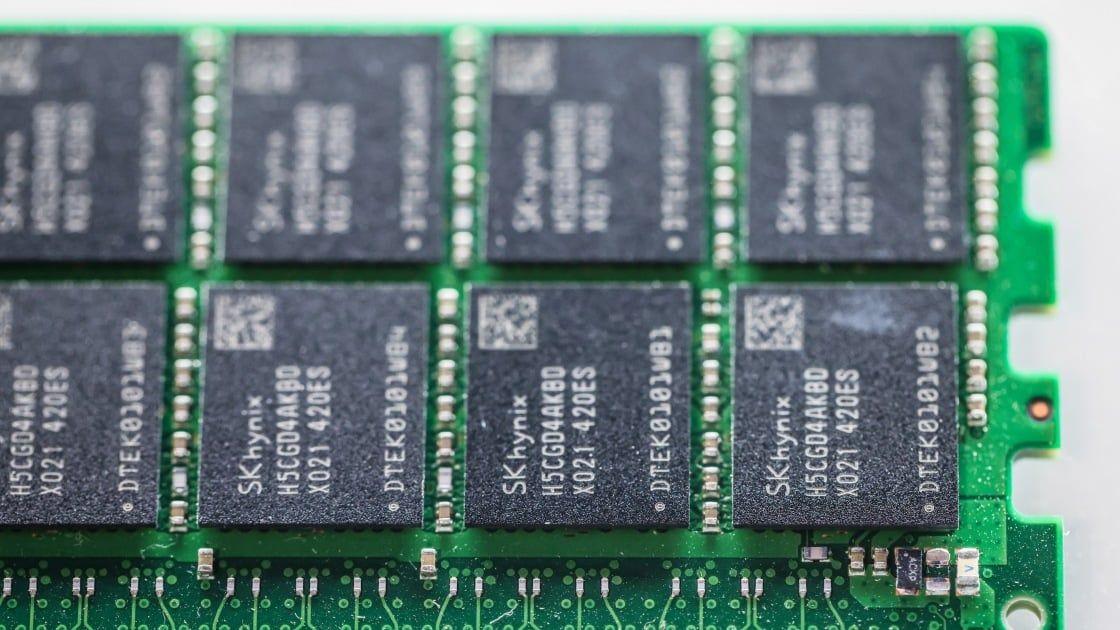
Source: PC Magazine
Industry Faces More Than 20% Wafer Shortage
Chey's assessment paints a challenging picture for semiconductor manufacturing. "The current shortage could continue until 2030, so we expect more than a 20% shortage of the wafers," he stated
2
3
. Building new fabs and expanding wafer production capacity requires substantial time and resources. When asked about expanding chip manufacturing capacity in the United States, where many of SK Hynix's customers are based, Chey noted that establishing overseas plants requires adequate power, water, construction conditions, and engineering talent—resources that cannot be mobilized quickly2
. The company is currently focusing production efforts in Korea.Related Stories

Efforts to Stabilize DRAM Chip Prices Amid Soaring Costs
The prolonged shortage has already triggered significant price increases and product delays across the consumer electronics industry. SK Hynix is developing a strategy to stabilize DRAM chip prices, which have ensnared consumer DDR5 and DDR4 RAM
1
. "I cannot just announce right here, but I guess that our CEO is going to announce a new plan for how to stabilise the price of the DRAM," Chey said2
3
. The situation has already caused price hikes and delayed new products, including Valve's Steam Machine and reportedly new Nvidia graphics cards1
.Impact on Consumer Electronics and Market Outlook
Research firms predict both the smartphone and PC industry will experience around a 10% decrease in shipments during 2026 due to rising component costs sapping demand and production
1
. This represents a significant challenge for the consumer electronics industry as manufacturers grapple with constrained supply and elevated DRAM prices. Meanwhile, SK Hynix is reviewing a potential U.S. ADR listing to broaden its global investor base and increase exposure to American and international investors2
3
. The company also faces challenges from Middle East tensions, which have created difficulties due to higher energy prices, pushing the group to seek alternative energy sources2
. Shares of SK Hynix traded up 2.7% to 3.5% following the announcements2
3
.References
Summarized by

Navi
[1]
Related Stories
RAM and Storage Prices Surge 500% as AI Demand Triggers Global Memory Crisis
26 Nov 2025•Business and Economy
Memory prices spike up to 400% as AI demand creates global shortage lasting through 2026
14 Dec 2025•Business and Economy

AI Demand Triggers Global Memory Shortage as RAM Prices Surge Up to 70% in 2026
06 Jan 2026•Business and Economy
Recent Highlights


Recent Highlights
Today's Top Stories





Your Daily Dose of Curated AI News
Don’t drown in AI news. We cut through the noise - filtering, ranking and summarizing the most important AI news, breakthroughs and research daily. Spend less time searching for the latest in AI and get straight to action.

