Honor's Robot Phone brings AI-powered gimbal camera to smartphones, launching later this year


8 Sources
8 Sources
[1]
I Danced With Honor's Robot Phone and It Complimented My 'Shiny' Hair
Katie is a UK-based news reporter and features writer. Officially, she is CNET's European correspondent, covering tech policy and Big Tech in the EU and UK. Unofficially, she serves as CNET's Taylor Swift correspondent. You can also find her writing about tech for good, ethics and human rights, the climate crisis, robots, travel and digital culture. She was once described a "living synth" by London's Evening Standard for having a microchip injected into her hand. After a day of traversing the Mobile World Congress show floor, I was feeling more than a little disheveled. I was about to film a video, and was worried that I wasn't putting my best foot forward, but Honor's Robot Phone disagreed. "What do you think of my hair?" I asked it. The pop-up camera perched atop the device swivelled on its axis, looking me up and down. "Your long flowing blonde hair looks soft and shiny," it told me. "It pairs really well with your black outfit, giving you a warm and vibrant feel, which is great for this tech event!" I'm still not sure I believed it, but it was certainly the confidence boost I needed in the moment. I'll hold my hands up and admit that when Honor first said it was making a robot phone, I didn't necessarily think it would ever see the light of day. But all credit to the Chinese tech company -- it's actually delivered. At CES back in January, I saw an early non-working version of the phone, and this week at Mobile World Congress, I finally saw it in action. Inside the back of the phone, hidden by a sliding cover, is a robot arm with a gimbal and a camera. To lure the camera from its shell, you simply hold your palm up to the front-facing camera, turn that same hand around, and out it comes. The camera has AI object tracking and can lock onto you as you're filming or interacting with it, following you even if you turn the phone around. This is how it was able to look me up and down and tell me my hair and outfit were working so well for me. For several years, we've seen an influx of AI come to smartphones, but so far, that's resulted primarily in changes to software - not to hardware. The Robot Phone flips that trend on its head by switching up the entire design of a phone in order to imbue it with physical AI capabilities. AI evolves fast, Honor's Robot Phone Product Expert Thomas Bai told me as he demoed the device at the company booth. Now, he added, it's time for the phone's body to catch up with its brain. I'm not the only one who thought Honor might be trying to achieve the impossible by putting a robot inside of a phone. The company also wasn't sure it would work. It went to a micro motor company, which told Honor it couldn't help, said Bai. Instead, Honor had to go it alone. It realized the motor would need to meet two standards, said Bai. "One is extreme lightness, and the second is extreme strength." That rung a bell, he added, "because it's exactly the same challenge that we faced when we build the foldable hinges." In that sense, Honor's folding phones, such as the brand new Magic V6 walked so that the Robot Phone could run - or at least swivel around on a three-axis gimbal. The same material Honor uses for its folding hinges - super steel and a titanium alloy - is now inside the micro motor, which is 70% smaller than anything currently available on the market. This wasn't even the most difficult part of building the Robot Phone. "Space is the ultimate challenge, because inside a flagship smartphone, every millimeter counts," said Bai. In spite of this, Honor hasn't had to make any compromises, he added. "Everybody says, if you want to put a gimbal in the phone, then you have to sacrifice battery life," said Bai. Again, the expertise Honor has garnered building very thin, very power-hungry foldables has come into play here. The same silicon-carbon battery tech that powers the V6 is inside the Robot Phone. The target market for the Robot Phone, which Honor wants to start selling in the second half of this year, is clearly content creators - the kind of people who currently use a DJI Osmo Pocket. It's sure to capture their attention - no one wants to carry two devices when one will do - but people who own Osmos tend to have high standards for image quality. Will the Robot Phone be able to match up to the Osmo? "Definitely," said Bai. "We are quite confident about our video quality." He points to Honor's newly announced partnership with Arria camera company, beloved by cinematographers for its pro-level shooting, as well as the company's existing phone camera capabilities. "This will be all implemented inside the Robot Phone," he said. The 200-megapixel sensor, combined with stabilization and what Honor is calling AI Spinshot (intelligent 90- and 180-degree rotational movement for fluid, cinematic transitions) does sound promising, but we'll have to put it to the test ourselves to be sure. In my short demo time with the phone, I can say that it definitely managed to swivel fast enough to keep up with me as I moved, and I definitely appreciated the compliments it gave me on not just my hair, but my outfit, which it declared ideal for a slightly chilly and overcast Barcelona day. By the end of my demo, as the Robot Phone and I danced side by side to Believers by Imagine Dragons, I almost felt like we were pals. It would never have been my first choice of song, but that's the thing about true friendship - you sometimes have to embrace each other's bad taste in music in order to bond.
[2]
Honor's Robot phone is real, and coming later this year
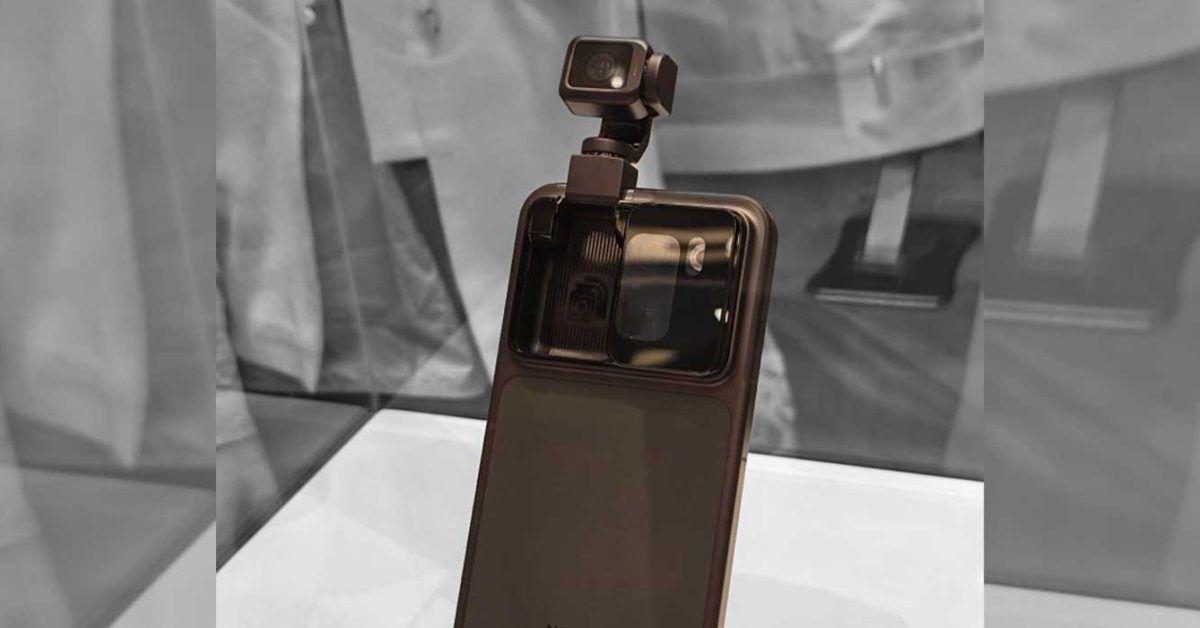
The camera nods, dances to music, and tracks faces. The rest of the specs are a secret. Something unusual happened at Mobile World Congress this year. A device sat in a glass case at the Honor booth in Hall 3, present, demonstrably functional, performing little robotic gestures for anyone who stopped to watch, and yet not a single journalist was permitted to pick it up. That device is the Honor Robot Phone. The company has been teasing it since October last year, and following its formal debut at MWC Barcelona, where CEO James Li took the main stage on 4 March for what Honor described as the company's first main-stage keynote at the congress, it now has a confirmed release window: the second half of 2026, initially in China. Whether it ever reaches global markets remains an open question. But the hardware on display in Barcelona is unusual enough to warrant close attention regardless. The Robot Phone's defining feature is a motorised camera arm that folds neatly into the rear of the device when not in use. The arm houses a 200-megapixel sensor mounted within what Honor describes as the industry's smallest four-degree-of-freedom (4DoF) gimbal system. At its heart is a custom micro motor built from titanium alloy, which the company says is 70% smaller than existing micro motors, a reduction it credits directly to engineering knowledge accumulated during years of developing foldable phones. The result is a three-axis mechanical stabilisation system capable of the kinds of precise camera movement previously associated with dedicated handheld gimbals and professional rigs. Honor has been careful, however, not to overstate the comparison: the system is described as equivalent in stabilisation performance to external stabilisers, not superior to them. For video specifically, the phone supports a Super Steady mode for high-movement shooting, AI Object Tracking that locks onto and follows subjects with a double-tap, and AI SpinShot for automated 90° and 180° rotational movements. The arm can also rotate a full 360°. Honor has partnered with ARRI Image Science, the Austrian manufacturer whose cinema cameras are a fixture on professional film sets, for colour science and cinematic image processing. According to Dr. Benedikt von Lindeiner, VP at ARRI, the collaboration aims to bring qualities like natural colour, highlight roll-off, and depth to mobile imaging. Beyond the camera mechanics, Honor has built a set of AI-driven interaction features that are more difficult to categorise. The arm can nod, shake, and tilt in response to voice and touch input, effectively functioning as a physical gesture system. It can detect music and move in time with it. The camera head can also be made to "sleep" by covering it. During Li's on-stage presentation, the Robot Phone conducted a scripted exchange with both its CEO and a separate humanoid robot that Honor also unveiled at MWC, a machine that danced to Imagine Dragons' "Believer," performed a backflip, and shook hands with Li before the pair left the stage together. Honor frames all of this under its "Augmented Human Intelligence" vision, a concept Li positioned as AI designed to enhance rather than replace human potential. It is the kind of language that requires scepticism at a trade show, but the hardware at least gives it a concrete anchor. The list of undisclosed specifications is significant. Honor has not confirmed which chipset powers the device, how much RAM it will ship with, what the battery capacity is (though the phone uses a silicon-carbon anode cell to support the motor's energy demands), or what it will cost. No journalist at MWC was permitted to use the device; hands-on coverage is based entirely on demonstration sessions behind glass. The durability question is the one that keeps surfacing in early coverage. Motorised camera mechanisms have a poor track record in consumer smartphones; they introduce moving parts into a device that gets dropped, shoved into pockets, and exposed to dust. Honor's own engineers acknowledge the concern: the company says it applied foldable-phone simulation and materials expertise to the miniaturisation process, but no independent stress testing has been conducted or published. For now, the Robot Phone is a device that does things no other smartphone does, being shown to journalists who are not permitted to touch it, scheduled to launch in a market that most of those journalists do not primarily cover.
[3]
Honor's new humanoid robot pulls off flawless moonwalk, backflip
With the introduction of several products across different categories, Honor plans to push itself as a AI+robotics ecosystem for the future, envisioning an AI hardware civilization where devices, think, move, interact, and work together. The three pillars of the Alpha Plan involve an Alpha Phone, which is the Robot Phone that was unveiled along with the humanoid. It can has AI embedded for physical movement, multimodal perception, and embodied interaction. The second pillar is an Alpha Store, an AI ecosystem platform where AI assistants, connected devices, and smart experiences can connect and interact as a single system. The deep tech layer forms the third pillar, focusing on advanced battery tech, new hardware materials, robotics, and future device architectures. Honor has referred to this as silicon-carbon civilization. "With Human-centric as our lighthouse, we navigate the growth of AI through the two beams of IQ and EQ, bringing three forms of intelligence together," said James Li. "We are exploring the new paradigm of AI devices with Alpha Phone; hosting the new paradigm of AI ecosystem with Alpha Store; and building the new paradigm of a silicon-carbon civilization with Alpha Lab. With three waves of the Alpha Plan, we now have all the components in place and we are driving this journey at full warp speed," he added.
[4]
A moonwalking robot, the Magic V6, and Honor's Alpha era set the tone for MWC
Steven holds a BA in English and an MA in journalism and new media. He is a member of the Society of Professional Journalists (SPJ) and Investigative Reporters and Editors (IRE). Honor served as the unofficial opener for MWC 2026, showing off a vision for "embodied AI" that moves beyond basic hardware into the world of robotics and integrated intelligence. To see this in action, the company brought out a humanoid robot, the Magic V6 foldable, and the latest version of its "Robot Phone." This trio is part of the "Alpha Plan," a move to push AI out of the cloud and into physical devices through three pillars: Alpha Phone, Alpha Store, and Alpha Lab. Honor is also growing its footprint of Alpha Stores around the world, giving people a place where they can actually see this AI future up close. Related The Robot Phone is here and it's part Wall-E, part Grogu, and all kinds of silly It will see everything. EVERYTHING Posts By Andy Boxall A dancing robot The robot was the clear highlight. It danced with human performers (to Imagine Dragons' Believer, which felt pretty cringe -- but the robot didn't pick the playlist), pulled off a clean backflip, and shook hands with CEO James Li. Honor built its humanoid robot for companionship, shopping help, and workplace checks. It can also collect information about the way you interact with its phone, and even from its sensors, to bridge the gap from automaton to something more lifelike. And while the humanoid robot is just a concept now, its much smaller sibling will make its debut later this year. Robot Phone The Robot Phone was teased last year, but this 2026 model is what Honor calls a "new species" of smartphone. It packs a 200MP sensor on a compact 4DoF gimbal with three-axis stabilization, making it able to nod, shake its head, or dance on cue. This "body language," is joined by what can best be described as grunts in a childlike lilt that come off as whimsical and curious with a dash of Uncanny Valley. They worked with ARRI to embed the company's image science -- natural colors, soft highlights -- straight into the phone's processing for proper pro post-production work. It's hard to believe the Honor Magic V6 would be the most vanilla of its mobile offerings in 2026, but here we are. That's not to say that the Magic V6 is boring or uninspired, as neither could be further from the truth. The Honor Magic V6 looks similar to its predecessor at first glance, but when it's in your hand, you realize nothing could be further from the truth. For starters, it sets a new thinness record: 8.75mm closed, 4.0mm open. For reference, the iPhone 17 Pro series is 8.75mm. It carries a 6,660mAh battery built with fifth-gen silicon-carbon tech from ATL, the first to reach 25% silicon content. It's also the first foldable with Snapdragon 8 Elite Gen 5, plus a 7.95-inch inner screen that peaks at 5,000 nits. The MagicPad 6 joins Honors MWC mobile lineup. The tablet sports a 12.3-inch 3K OLED at 165Hz that includes a "Linux Lab" for running the OpenClaw AI assistant. The tablet is a direct competitor to Apple's iPad Pro lineup that can handle just about anything thrown its way -- see: OpenClaw AI assistant -- and handles multitasking more intuitively than iPadOS 26. Honor's MagicBook Pro 14, is its latest play for the high-end laptop market. It's powered by Intel Core Ultra Series 3 processors, meaning it's built to handle sustained creative workloads without breaking a sweat. The real draw here is the 14.6-inch OLED display, which is color-accurate enough for professional work but light enough to be portable. Like the rest of the 2026 lineup, it plays well with Apple's ecosystem, making a serious case for creatives who need the convenience of features like AirDrop but want to work on Windows laptops and workstations. Honor is a tough act to follow up, but there's plenty of competition willing to take a shot. From Motorola's Razr Fold to the transition from 5G to 6G, major mobile brands across the globe will show off their latest products and concepts at MWC 2026.
[5]

Honor Put a Robotic Camera Gimbal in a Smartphone
What happens when you put a small robot into a smartphone and let it control the camera? Honor's Robot Phone is essentially built on that premise as an Android phone with a built-in gimbal. And the company says it will become a finished product coming to market at some point in 2026, starting in China first. As with much of what Honor does in executing a mobile strategy these days, AI plays an active role in how this piece works. It's even calling it a "new species of smartphone". Being a gimbal with AI-driven capabilities, it also doesn't rely entirely on touchscreen input to do its thing. That can include subject tracking, responding to voice commands, and multimodal perception to identify sounds and maintain visual awareness. The idea is to give the camera a means to express and interact with users in real time. Rather than an accessory you attach to the top, this robot camera emerges from an internal housing within the rear camera module. To do it, Honor created a micro motor small enough to do the job, but also sturdy and robust enough to be strong and stable. Looking at it up close, I fear inadvertently dropping it might cause damage and expensive repairs, but Honor reps insist it's more resilient than it looks. The housing itself is substantial because the camera twists to nestle inside, with a window sliding over to cover it. That leaves less room than usual for the other rear cameras, of which Honor isn't talking about yet. From my own vantage point, I have a hard time seeing sizable sensors getting in there, let alone a periscope, though the module's additional thickness might at least make bigger sensors possible. Honor previously showed a non-working prototype at CES in Las Vegas, whereas the prototypes at Mobile World Congress in Barcelona are functioning, though purely for the robot camera. Apart from knowing it's a 200-megapixel sensor inside, it's not clear how big the sensor is or who makes it. Other general specs for the Robot Phone are also unknown. The mechanical 4-DoF (degrees of freedom), three-axis gimbal has full pan rotation, so it can work facing forward or backward, making video calls pretty easy to manage, since the camera also tracks you as you move out of frame. This AI Object Tracking works both ways, meaning it can track you, the user, in a selfie, and subjects in front of you. It's not entirely clear whether this applies only to human subjects or to moving objects as well. When action moves faster, Super Steady Video mode increases stability to keep the subject in view, such as at a sporting event or concert. As for the rotations involved, AI SpinShot can perform 90-degree and 180-degree movements for stabilized, smooth footage and transitions, even when shooting one-handed. Inside its booth, Honor also showcased comparisons and deeper dives into how the stabilization works. The most obvious discrepancy lay in the Robot Phone next to an iPhone, both mounted on a rig that constantly moved and rotated, with live views showing the massive difference in footage. The Robot Phone looked like it barely moved, if at all, whereas the iPhone was a shaky mess. An Honor staffer walked on a treadmill while recording video with jittery results, while another did it with a Robot Phone, where the footage looked like she was standing still. In a hands-on space, two dancers at different times performed routines with the gimbal and camera following them the whole time. Interestingly, it also tilted at times to create a cinematic touch in following movement, similar to how a camera operator might. In another space, attendees could try out the voice commands to focus and respond. In one case, it commented on a man's suit; in another, it noted that a crowd was forming on the other side. On top of that, the camera can nod or shake its head, and even dance to music, giving it a little personality to go with the feedback. As neat as it looked, I could also tell it needs work before Honor gets to a final result. While timelapse photos and video seem like obvious use cases for this to me, Honor didn't mention them. And with such a heavy focus on video, there are scant details on how the camera will perform with still photos. Will burst or interval shooting work differently with a camera like this? How about portraits? We just don't know yet. The Robot Phone is also part of a collaboration and partnership Honor is building with Arri, the renowned cinema company. The latter's pivot to more consumer-facing opportunities aligns with Honor's desire to stand out in a highly competitive smartphone market, especially in cutthroat China. What's clear enough is that Arri will have a bigger role to play by the time this device launches. Its color science and image processing appear to be likely contributors to the results, though both brands are mum on any details. All of this -- the Robot Phone and Arri collaboration -- is part of Honor's "Alpha Plan" unveiled in 2025, which involves a $10 billion investment over five years to transition from making smartphones to an AI ecosystem. More collaborations and wacky concepts could be on the horizon in realizing that AI vision.
[6]

Watch Honor's first humanoid robot evolve from clumsy prototype to slick dancer
Mobile World Congress Read our complete coverage of Mobile World Congress Updated less than 5 minutes ago Honor had a busy day at MWC 2026 on Monday, showcasing its Augmented Human Intelligence (AHI) vision and ALPHA PLAN that seeks to transform the company into a leader in human-centric AI ecosystems. Besides unveiling its highly anticipated and rather quirky Robot Phone, the Chinese company also introduced MWC attendees to its first-ever humanoid robot, the somewhat unimaginatively named Honor Robot. Honor's bipedal bot took to the stage during a special event, performing a dance routine alongside some professional human dancers who, as they pulled their impressive moves, may have been wondering how long it'll be before they're replaced by these increasingly advanced contraptions. As the human performers danced, the Honor Robot, which it has to be said bears a striking resemblance to Unitree's G1 robot in terms of both size and design, strutted onto the stage and busted some grooves before launching into a moonwalk that Michael Jackson himself would've been proud of. Next, in an impressive show of faith, Honor CEO James Li arrived on the stage to interact with the robot. And it wasn't a disaster. Li even asked the Honor Robot to perform a somersault, which it did with aplomb. In another video (below), the tech company revealed just how far its new humanoid robot has progressed, with clips showing it falling over in the most awkward ways possible. Without giving too much away, Honor said that its robot will focus on three core scenarios: shopping assistance, workplace inspections, and supportive companionship. Regarding supportive companionship, the plan is to build embodied AI devices capable of recognizing people, understanding their needs, and providing personalized physical assistance from the very first interaction, the company said in a release. Honor is entering an incredibly competitive sector already populated by a slew of companies vying for supremacy. Still, with the right strategy and bold innovation, Honor may have a chance of carving out its own niche.
[7]

Honor takes a leap into AI with 'robot phone' and humanoid
Honor unveils a phone with a robotic arm -- and a humanoid robot to match at MWC 2026. One of the most talked about and looked at new tech on show at the Mobile World Congress was Honor's "Robot Phone," a concept device that the company says turns your smartphone into an AI companion. After showing the front and back of your hand, the gimbal system pulls out and cleverly unfolds. A pair of eyes then comes up on the phone screen, which will track your eyes to allow the gimbal to follow you around, which Honor calls "embodied AI". The AI can speak to you and answer your questions, such as does my outfit look good. To which it responds with text on the phone, telling you you look "stylish" and "professional". While it will pick up on various aspects of your outfit, it will never tell you it looks bad, an Honor representative said. As well as complementing you, the gimbal can track subjects in real time, follow users during video calls by adjusting its own angle, and even respond to music with movement. "The robot phone is the first phone that can see, hear, and interact with the world physically because we have this robotic arm built in the phone, now you can use it as a true companion." Thomas Bai, AI product expert at Honor told Euronews Next. If you went hiking, for example, it could be your tour guide and travel companion, as it could tell you about the landscapes, "I think that's a real world magic," he said. As well as being your companion, it can also help content creators with filming and taking photos. The device has a 200-megapixel camera, a three-axis gimbal stabilisation, an AI object-tracking mode, and a feature called AI SpinShot that enables smooth 90- and 180-degree rotational transitions for cinematic-style video, which could all be used one-handed. But with any foldable device, durability is a key question. Bai said he is "confident" about how robust the phone is because the same materials used in the company's foldable devices, steel and titanium alloy. Another smartphone on display was Honor's Magic V6, its latest flagship foldable and the first device of its kind powered by Qualcomm's Snapdragon 8 Elite Gen 5 chip. It is one of the slimmest foldables on the market at 8.75mm when closed, but with a massive 6,660mAh battery. The robot phone is a concept which aims to be released in the market later this year. The price has not yet been revealed. But Honor did not just preview its smartphones. One of its biggest announcements was its entry into the humanoid robot market. The company said the robot was not an industrial tool but a consumer-grade device. "There are many things we imagine that a robot can do. First of all, it can be your companion," Bai said. "It can talk to you, and it can help you to do tasks. For example, like some house cleaning things, maybe help you wash dishes, something like that. We hope it could happen in the future." Honor said its robots will target three scenarios: retail assistance, workplace inspections, and personal companionship. The company said its deep base of user data and experience from smartphones gives it an edge over traditional robotics firms in building machines that can recognise individuals and adapt to their needs from the very first interaction. Honor's MWC 2026 announcements show how the Chinese company is actively repositioning itself from smartphone manufacturer to broad AI hardware platform. "The humanoid robot is part of our Alpha plan. Yes, we transformed from a smartphone company into an AI ecosystem device company," Bai said "That's a new category of our products and we're very excited to bring it to our customers."
[8]

MWC 2026: Honor's Humanoid Robot and Robot Phone Signal Embodied AI Push
Honor Unveils Humanoid Robot and Robot Phone at MWC 2026, Signalling a Bold Shift Toward Embodied AI Honor has unveiled two products at MWC 2026 in Barcelona that have attracted all the limelight. The first surprising innovation is the Honor Humanoid Robot, followed by the Honor Robot Phone. This announcement reflects the company's aim of expanding beyond smartphones. The introduction of a physical robot and a motion-enabled smartphone indicates that Honor's strategy is going far beyond traditional mobile devices. The reveal has attracted attention and become one of the event's highlights. Industry observers see this as Honor's attempt to position itself at the centre of the next wave of AI innovation. The next wave of AI innovation would not only process information but also interact physically with users.
Share
Share
Copy Link
Honor unveiled a working Robot Phone at Mobile World Congress, featuring a motorized camera arm that emerges from the device's back. The smartphone includes a 200-megapixel sensor on a compact gimbal with AI Object Tracking and voice-controlled movements. Set to launch in China during the second half of 2026, the device represents Honor's push into embodied AI and targets content creators seeking professional-grade stabilization.
Honor Debuts Functional Robot Phone at Mobile World Congress
Honor transformed skepticism into reality at Mobile World Congress in Barcelona, showcasing a fully functional Robot Phone after months of anticipation. The Chinese tech company first teased the concept in October 2025 and displayed a non-working prototype at CES in January, but the demonstration at MWC marked the first time journalists witnessed the device in action
1
2
. CEO James Li took the main stage on March 4 for what Honor described as the company's first main-stage keynote at the congress, confirming a release window in the second half of 2026, initially in China2
. Whether the device reaches global markets remains uncertain, but the hardware on display represents a significant shift in smartphone design philosophy.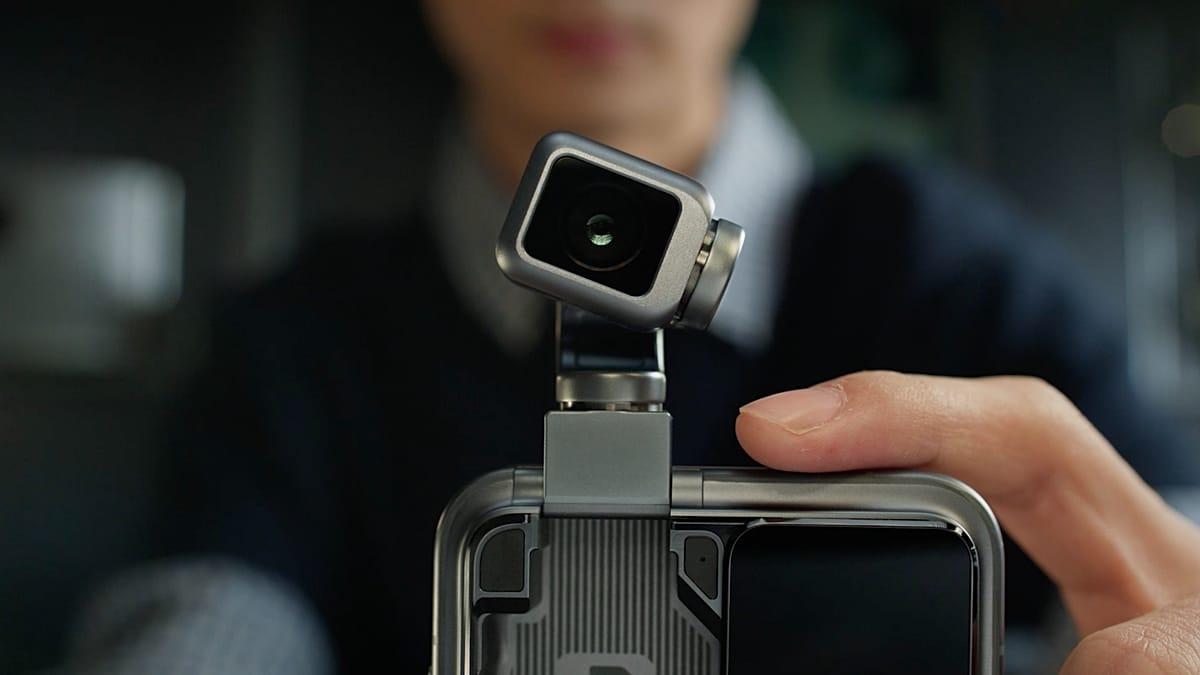
Source: Euronews
Robotic Camera Gimbal Emerges from Custom Micro Motor
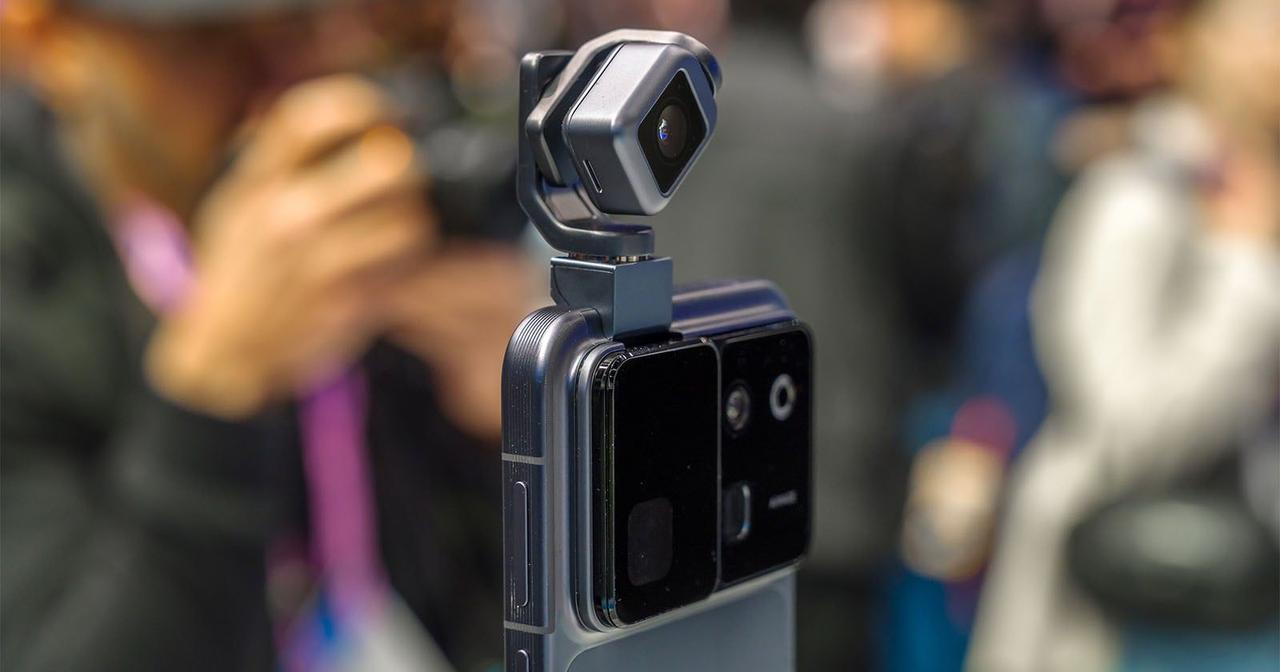
The Robot Phone's defining feature is a motorized camera arm that folds neatly into the rear of the device when not in use, hidden by a sliding cover. To activate it, users simply hold their palm up to the front-facing camera, turn that hand around, and the robotic camera emerges
1
. The arm houses a 200-megapixel sensor mounted within what Honor describes as the industry's smallest 4DoF gimbal system, offering four degrees of freedom and three-axis mechanical stabilization2
5
. At its core sits a custom micro motor built from titanium alloy, which the company claims is 70% smaller than existing micro motors on the market1
2
.
Source: PetaPixel
Honor's journey to create this micro motor proved challenging. The company approached a micro motor manufacturer that told them it couldn't help, forcing Honor to develop the technology independently. Product Expert Thomas Bai explained that the motor needed to meet two critical standards: extreme lightness and extreme strength. This challenge mirrored what Honor faced when building foldable hinges for devices like the newly announced Magic V6
1
. The same super steel and titanium alloy materials used in those hinges now power the robotic camera mechanism, demonstrating how Honor's expertise in foldables directly enabled the Robot Phone's existence.AI Object Tracking and Voice Commands Define Interaction
Beyond mechanical movement, the Robot Phone integrates AI capabilities that extend smartphone interaction beyond traditional touchscreen input. The device features AI Object Tracking that locks onto subjects with a double-tap, following them even as they move out of frame
2
5
. This tracking works bidirectionally, whether filming a selfie or capturing subjects in front of the user. The camera head can rotate a full 360 degrees and responds to voice commands, multimodal perception to identify sounds, and maintains visual awareness in real time5
.During demonstrations, the camera exhibited personality traits that blur the line between tool and companion. When asked about a journalist's hair, the pop-up camera swiveled on its axis, looking them up and down before responding: "Your long flowing blonde hair looks soft and shiny. It pairs really well with your black outfit, giving you a warm and vibrant feel, which is great for this tech event!"
1
The camera can nod, shake its head, tilt in response to voice and touch input, detect music and move in time with it, and even "sleep" when covered2
4
. These gestures come with childlike sounds that attendees described as whimsical and curious, though some noted an Uncanny Valley quality4
.AI SpinShot and ARRI Partnership Target Content Creators
Honor designed the Robot Phone specifically for content creators, positioning it as a competitor to devices like the DJI Osmo Pocket. The device supports AI SpinShot, which performs intelligent 90-degree and 180-degree rotational movements for fluid, cinematic transitions, even when shooting one-handed
1
2
. For high-movement scenarios like sporting events or concerts, Super Steady Video mode increases camera stabilization to keep subjects in view5
.To bolster its professional credentials, Honor partnered with ARRI, the Austrian cinema camera manufacturer whose equipment is a fixture on professional film sets. According to Dr. Benedikt von Lindeiner, VP at ARRI, the collaboration aims to bring natural color science, highlight roll-off, and depth to mobile image processing
2
5
. Bai expressed confidence that the Robot Phone would match the video quality of dedicated cameras: "We are quite confident about our video quality," pointing to the ARRI partnership and Honor's existing camera capabilities1
.Demonstrations at MWC showed dramatic differences in camera stabilization. In side-by-side comparisons, a Robot Phone and iPhone were mounted on a rig that constantly moved and rotated. The Robot Phone footage looked nearly stationary, while the iPhone produced shaky results. Similarly, an Honor staffer walking on a treadmill with a Robot Phone produced footage that looked like she was standing still, while standard recording showed jittery movement
5
.Related Stories

Silicon-Carbon Battery Powers Embodied AI Vision
Space constraints posed the ultimate challenge for Honor's engineering team. "Inside a flagship smartphone, every millimeter counts," Bai noted, yet the company claims it hasn't made compromises
1
. The device uses the same silicon-carbon battery technology that powers the Magic V6 foldable, which features a 6,660mAh capacity built with fifth-generation silicon-carbon tech from ATL, the first to reach 25% silicon content4
. This advanced battery technology addresses concerns that integrating a gimbal would sacrifice battery life.The Robot Phone represents one pillar of Honor's Alpha Plan, a comprehensive strategy unveiled in 2025 involving a reported $10 billion investment
5
. James Li positioned this initiative around "Augmented Human Intelligence," describing it as AI designed to enhance rather than replace human potential2
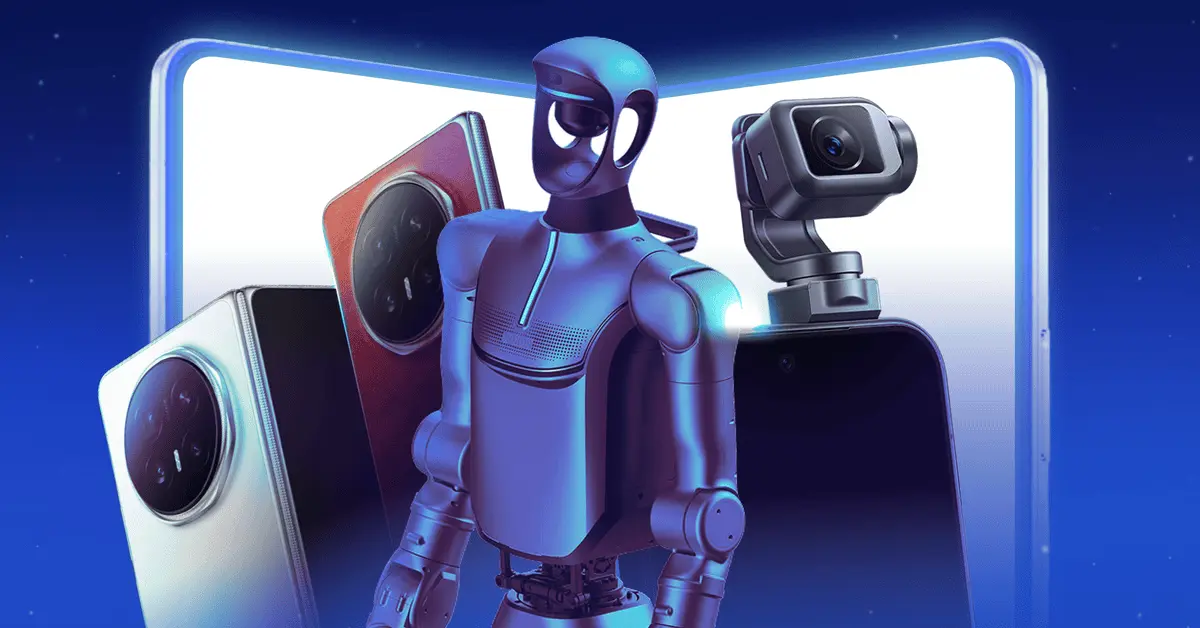
. The plan encompasses three components: Alpha Phone (the Robot Phone with embodied AI capabilities), Alpha Store (an AI+robotics ecosystem platform where AI assistants and connected devices interact as a single system), and Alpha Lab (focusing on deep tech including advanced battery technology, new hardware materials, and robotics)3
4
.
Source: Android Police
During Li's presentation, the Robot Phone conducted a scripted exchange with both the CEO and a separate humanoid robot that Honor also unveiled at MWC. The humanoid robot danced to Imagine Dragons' "Believer," performed a backflip, and shook hands with Li before the pair left the stage together
2
3
. This demonstration illustrated Honor's vision of an AI hardware civilization where devices think, move, interact, and work together3
.Durability Questions and Missing Specifications
Despite the working demonstrations, significant details remain undisclosed. Honor has not confirmed which chipset powers the device, RAM capacity, exact battery specifications, pricing, or details about the additional rear cameras
2
5
. Notably, no journalist at MWC was permitted to physically handle the device; all hands-on coverage stems from demonstration sessions behind glass2
.Durability concerns persist, given the poor track record of motorized camera mechanisms in consumer smartphones. Moving parts introduce vulnerabilities when devices get dropped, shoved into pockets, or exposed to dust. While Honor representatives insist the mechanism is more resilient than it appears, applying foldable-phone simulation and materials expertise to the design, no independent stress testing has been conducted or published
5
. Questions also remain about still photography capabilities, burst shooting, interval shooting, and whether timelapse functionality will be optimized for the robotic camera mechanism5
.References
Summarized by

Navi
[2]
[3]
[5]
Related Stories
Honor's humanoid robot steals the show at MWC 2026 with moonwalk, backflip and ambitious AI plans
23 Feb 2026•Technology

Honor Unveils Innovative 'Robot Phone' Concept with AI-Powered Pop-Up Camera
15 Oct 2025•Technology
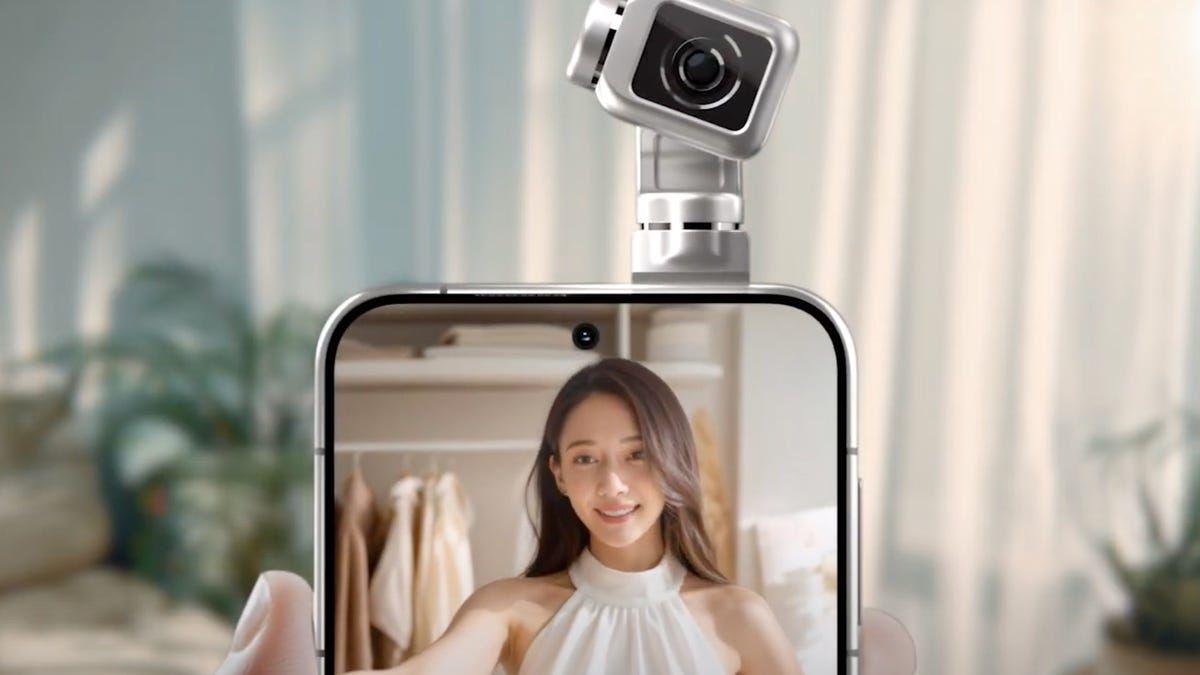
Honor Unveils AI-Powered Robot Phone with Gimbal Camera at User Carnival
21 Nov 2025•Technology
Recent Highlights


Recent Highlights
Today's Top Stories











Your Daily Dose of Curated AI News
Don’t drown in AI news. We cut through the noise - filtering, ranking and summarizing the most important AI news, breakthroughs and research daily. Spend less time searching for the latest in AI and get straight to action.

