Humanoid Robots Achieve Only Half of Human Productivity in Factory Deployments


2 Sources
2 Sources
[1]
Humanoid Robots Are Falling Short on Efficiency | PYMNTS.com
Built to walk, lift, grasp and interact in human environments, they are often positioned as a general-purpose answer to labor constraints and rising operating costs. But emerging evidence suggests their real-world productivity remains far below expectations. Recent industry research cited by the Financial Times shows that humanoid robots are operating at less than half the efficiency of human workers in early deployments, based on metrics such as task completion speed, reliability and sustained output. While robots can perform individual actions competently, they struggle to match humans when tasks require fluid sequences, adaptation or uninterrupted execution in dynamic environments. This productivity shortfall is beginning to reshape expectations. Companies experimenting with humanoid robots are increasingly treating them as long-term bets rather than short-term efficiency tools. Even well-funded pilots often require extensive human supervision, frequent resets and environmental adjustments that dilute the promised gains. Instead of accelerating output, many deployments introduce new layers of complexity that offset automation benefits. Why Physical Intelligence Remains the Limiting Factor The primary bottleneck is not cognitive intelligence but physical execution. While advances in large language models have improved robots' ability to interpret instructions and plan actions, translating those plans into reliable movement remains difficult. Real-world environments are noisy, irregular and full of edge cases that machines handle poorly. Vision systems are sensitive to lighting changes, reflections and partial occlusion. Grasping systems fail when objects vary slightly in shape or weight. Locomotion consumes significant energy and compute, limiting how long robots can operate at productive levels without recharging or recalibration. Each failure introduces downtime, eroding throughput and consistency. Academic research reinforces this pattern. A study from the Massachusetts Institute of Technology examining AI's impact on productivity found that AI systems tend to deliver weaker gains in settings that require contextual judgment, adaptation and real-time physical interaction. Productivity improvements were strongest where tasks were structured, predictable and tightly scoped, conditions that humanoid robots rarely encounter outside lab environments. Futurism pointed to mounting evidence that AI systems, including embodied AI, often fail to boost productivity at scale because performance degrades outside ideal conditions. Small inefficiencies compound over time, turning marginal slowdowns into material operational drag. The challenge is compounded by training constraints. Teaching robots to handle edge cases requires large volumes of real-world data, which is expensive and slow to collect. Simulation helps but does not fully capture physical unpredictability. As a result, improvements arrive incrementally rather than through rapid step changes, limiting short-term productivity impact. Where Robots Are Delivering Measurable Productivity Gains Despite these limitations, robots are delivering tangible productivity improvements in narrowly defined use cases. The strongest gains appear in repetitive, high-volume tasks where environments can be optimized for machines rather than humans. Warehousing and logistics stand out as early successes. Robots used for picking, sorting and transporting standardized packages have improved throughput and reduced error rates by operating continuously and consistently. These systems benefit from structured layouts, known object dimensions and fixed workflows that minimize variability. In such settings, productivity gains come from endurance and precision rather than adaptability. But Gartner has warned that humanoid robots are unlikely to deliver broad productivity gains across global supply chains in the near term, arguing that most value today comes from task-specific automation layered into existing operations rather than wholesale replacement of human workflows, according to Supply Chain Digital. The Wall Street Journal has similarly argued that productivity growth depends less on humanoid form factors and more on how well automation aligns with economic reality. Technologies that complement human labor in constrained domains tend to scale faster than those attempting full general-purpose substitution.
[2]
Humanoid robots only half as efficient as humans, says third-largest global maker UBTech
Humanoid robots achieve only up to 50% of human productivity in limited factory tasks, said Michael Tam, chief brand officer at Chinese robotics firm UBTech. Tam told the Financial Times that the company's Walker S2 robots currently match just 30-50% of human productivity and only in specific tasks such as stacking boxes and quality control. Yet manufacturers are still racing to order them to avoid losing out to competitors. "You can imagine . . . if Tesla has the advantage of deploying their own human robots into the manufacturing line, that means maybe BYD, they are staying behind." According to Counterpoint Research, 16,000 humanoid robots were installed globally in 2025, mainly for data collection and research, as well as logistics, manufacturing, and automotive use. A separate report by Omdia said global shipments jumped nearly 480% in 2025 to 13,318 units. UBTech delivered 1,000 humanoid factory robots last year, ranking third globally in shipments, and aims to produce 10,000 by the end of this year. Despite the rapid growth, Marco Wang, a Shanghai-based researcher at Interact Analysis, said many deployments remain experimental, with "a lot of challenges" before commercial operation. Interesting Engineering noted that humanoid robots face multiple constraints that limit productivity on factory floors. Most rely on torso-mounted or backpack batteries, limiting active work to a few hours, as locomotion, balance, and manipulation consume large amounts of energy. Most general-purpose humanoids handle only moderate loads comparable to humans, as higher payloads complicate balance and actuator design. Humans also remain faster and more efficient in complex environments, adapting quickly to varied items while bipedal robots move more cautiously. Tam said one challenge UBTech aims to solve this year is developing a multifunctional hand, as current Walker models require humans to swap appendages for different tasks. The company also aims to raise Walker's performance to 80% of human efficiency by 2027. Kelvin Lau, an analyst at Daiwa Capital Markets, told Financial Times that humanoid robots should be "gradually improving," adding that 80% of human efficiency may be sufficient since robots do not need breaks or holidays. Omdia expects global humanoid robot shipments to reach 2.6 million units by 2035, driven by advances in AI models, dexterous robotic hands, and self-reinforcement learning that are making humanoids viable for industrial, service, and eventual household use. Tam said future generations of the Walker robot would benefit from real-world data collected in factories where the machines are already deployed. "The more human robots that could be deployed into the real world, the more real data could be collected. And then, like a circle, it . . . [will] help human robots grow."
Share
Share
Copy Link
Humanoid robots are operating at just 30-50% of human productivity in early factory deployments, according to UBTech, the world's third-largest maker. Despite shipping 16,000 units globally in 2025, these machines struggle with battery life, adaptation, and physical execution. Companies continue investing to avoid competitive disadvantage, but experts warn most deployments remain experimental.
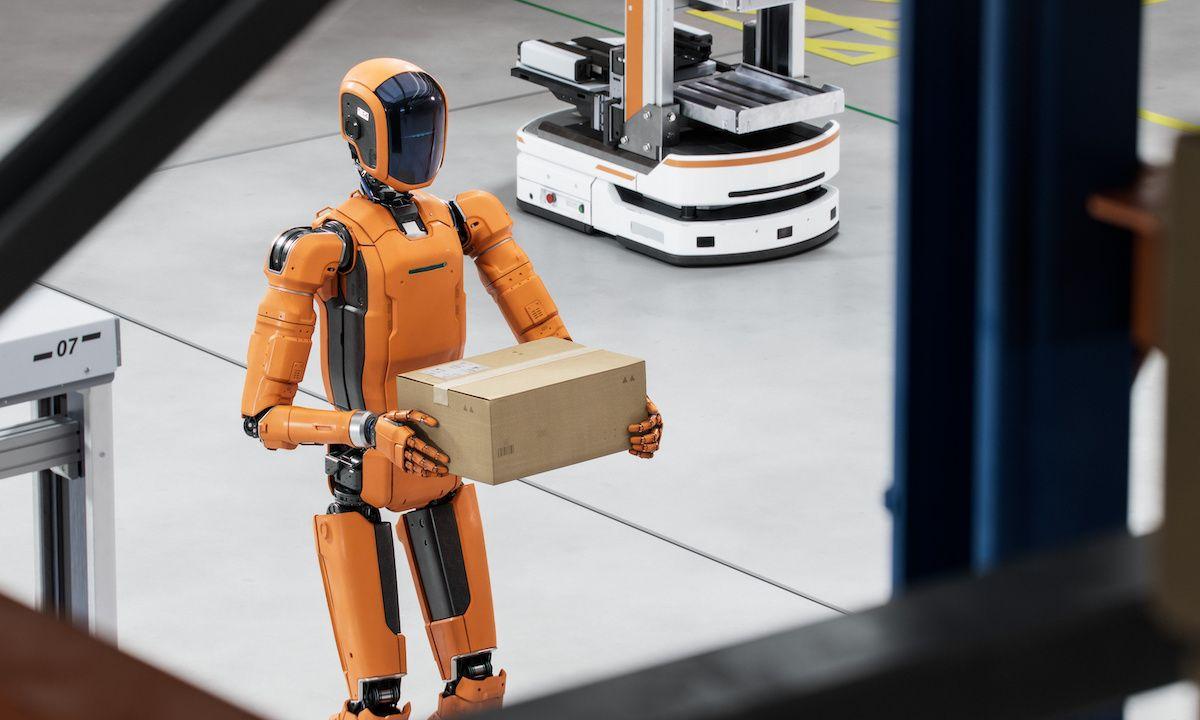
Humanoid Robots Fall Short of Human Productivity Expectations
Humanoid robots are delivering less than half the efficiency of human workers in real-world deployments, according to recent industry data and statements from leading manufacturers. Michael Tam, chief brand officer at Chinese robotics firm UBTech, told the Financial Times that the company's Walker S2 robots currently achieve only 30-50% of human productivity, and only in specific factory tasks such as stacking boxes and quality control
2
. Industry research cited by the Financial Times shows that humanoid robot productivity remains far below expectations based on metrics including task completion speed, reliability, and sustained output1
. While robots can perform individual actions competently, they struggle to match humans when tasks require fluid sequences, adaptation, or uninterrupted execution in dynamic environments.Physical Intelligence Remains the Critical Bottleneck
The primary challenge limiting robot efficiency is not cognitive intelligence but physical execution. While advancements in AI models have improved robots' ability to interpret instructions and plan actions, translating those plans into reliable movement remains difficult
1
. Vision systems are sensitive to lighting changes, reflections, and partial occlusion. Grasping systems fail when objects vary slightly in shape or weight. Locomotion consumes significant energy and compute, limiting how long robots can operate at productive levels without recharging or recalibration1
. Each failure introduces downtime, eroding throughput and consistency. Most humanoid robots rely on torso-mounted or backpack batteries, limiting active work to just a few hours, as locomotion, balance, and manipulation consume large amounts of energy2
. Humans remain faster and more efficient in complex environments, adapting quickly to varied items while bipedal robots move more cautiously.Manufacturers Race to Deploy Despite Limitations in Physical Intelligence
Despite underwhelming real-world efficiency, manufacturers are racing to order humanoid robots to avoid losing competitive ground. Tam explained the competitive pressure: "You can imagine . . . if Tesla has the advantage of deploying their own human robots into the manufacturing line, that means maybe BYD, they are staying behind"
2
. According to Counterpoint Research, 16,000 humanoid robots were installed globally in 2025, mainly for data collection and research, as well as logistics, manufacturing, and automotive use2
. A separate report by Omdia said global shipments jumped nearly 480% in 2025 to 13,318 units. UBTech delivered 1,000 humanoid factory robots last year, ranking third globally in shipments, and aims to produce 10,000 by the end of this year2
. Companies experimenting with humanoid robots are increasingly treating them as long-term bets rather than short-term efficiency tools.Related Stories

Where Automation Benefits Are Actually Materializing
Despite broad limitations, robots are delivering tangible productivity improvements in narrowly defined use cases. The strongest gains appear in repetitive, high-volume tasks where environments can be optimized for machines rather than humans. Warehousing and logistics stand out as early successes, where robots used for picking, sorting, and transporting standardized packages have improved throughput and reduced error rates by operating continuously and consistently
1
. These systems benefit from structured layouts, known object dimensions, and fixed workflows that minimize variability. However, Gartner has warned that humanoid robots are unlikely to deliver broad productivity gains across global supply chains in the near term, arguing that most value today comes from task-specific automation layered into existing operations rather than wholesale replacement of human workflows1
.Long-Term Productivity Gains Depend on Data and Dexterous Robotic Hands
Manufacturers are betting that self-reinforcement learning and real-world data will close the efficiency gap over time. Tam said one challenge UBTech aims to solve this year is developing a multifunctional hand, as current Walker models require humans to swap appendages for different tasks
2
. The company aims to raise Walker's performance to 80% of human efficiency by 2027. Kelvin Lau, an analyst at Daiwa Capital Markets, told Financial Times that humanoid robots should be "gradually improving," adding that 80% of human efficiency may be sufficient since robots do not need breaks or holidays2
. Omdia expects global humanoid robot shipments to reach 2.6 million units by 2035, driven by advances in AI models, dexterous robotic hands, and self-reinforcement learning that are making humanoids viable for industrial, service, and eventual household use2
. Tam emphasized that future generations of the Walker robot would benefit from real-world data collected in factories where the machines are already deployed, creating a feedback loop that accelerates improvement2
. Marco Wang, a Shanghai-based researcher at Interact Analysis, noted that many deployments remain experimental, with "a lot of challenges" before commercial operation2
. Battery life, vision systems, and the ability to handle varied factory tasks without extensive human supervision remain critical hurdles that will determine whether humanoid robots can deliver meaningful long-term productivity gains.References
Summarized by

Navi
Related Stories
China dominates humanoid robots race as robot coworkers move from labs to factory floors
20 Jan 2026•Technology

The $5 Trillion Challenge: Engineering the Perfect Robotic Hand
27 Oct 2025•Technology
Silicon Valley summit reveals China's dominance in humanoid robots as AI sparks new momentum
29 Dec 2025•Technology
Recent Highlights
1
Google Maps unveils Ask Maps with Gemini AI and 3D Immersive Navigation in biggest update
Technology

2
Three Tennessee teens sue xAI over Grok AI creating child sexual abuse material from real photos
Policy and Regulation

3
Meta plans to cut 20% of workforce as AI spending reaches $600 billion, mirroring broader tech trend
Business and Economy

Recent Highlights
Today's Top Stories




Your Daily Dose of Curated AI News
Don’t drown in AI news. We cut through the noise - filtering, ranking and summarizing the most important AI news, breakthroughs and research daily. Spend less time searching for the latest in AI and get straight to action.

