Silicon Valley summit reveals China's dominance in humanoid robots as AI sparks new momentum


3 Sources
[1]
Silicon Valley summit offers rare insight into humanoid robots -- and China is the clear winner | Fortune
Robots have long been seen as a bad bet for Silicon Valley investors -- too complicated, capital-intensive and "boring, honestly," says venture capitalist Modar Alaoui. But the commercial boom in artificial intelligence has lit a spark under long-simmering visions to build humanoid robots that can
[2]
Humanoid robots are having a moment, but still face an uphill battle
Robots have long been seen as a bad bet for Silicon Valley investors -- too complicated, capital-intensive, and "boring, honestly," says venture capitalist Modar Alaoui. But the commercial boom in artificial intelligence has lit a spark under long-simmering visions to build humanoid robots that
[3]
Humanoid robots take centre stage at Silicon Valley summit, but scepticism remains
Humanoid robots are drawing renewed attention as advances in artificial intelligence revive long-held ambitions, though many experts remain sceptical about how soon they will become widely useful. While China has built strong momentum through funding and policy support, the US is seeing fresh
Share
Copy Link
Over 2,000 robotics engineers and investors gathered at Silicon Valley's Humanoids Summit to showcase the latest in humanoid robots powered by artificial intelligence. While the boom in artificial intelligence has revived interest in the sector, China emerged as the clear leader with about 20 companies raising at least $100 million each. Despite growing investor interest driven by generative AI breakthroughs, skepticism remains high about when these robots will achieve widespread adoption in workplaces and homes.
Silicon Valley Gathers to Assess Humanoid Robots Progress
The Humanoids Summit brought together more than 2,000 people this week at the Computer History Museum in Mountain View, California, marking a pivotal moment for an industry once dismissed by venture capitalists as too complicated and capital-intensive
1
. Modar Alaoui, founder of the summit and general partner of ALM Ventures, assembled top robotics engineers from Disney, Google, and dozens of startups to showcase technology and debate the future of humanoid robots . The boom in artificial intelligence has reignited long-held ambitions to build robots that move like humans and perform human tasks, with many researchers now believing that physical AI embodiments "are going to become the norm," according to Alaoui2
.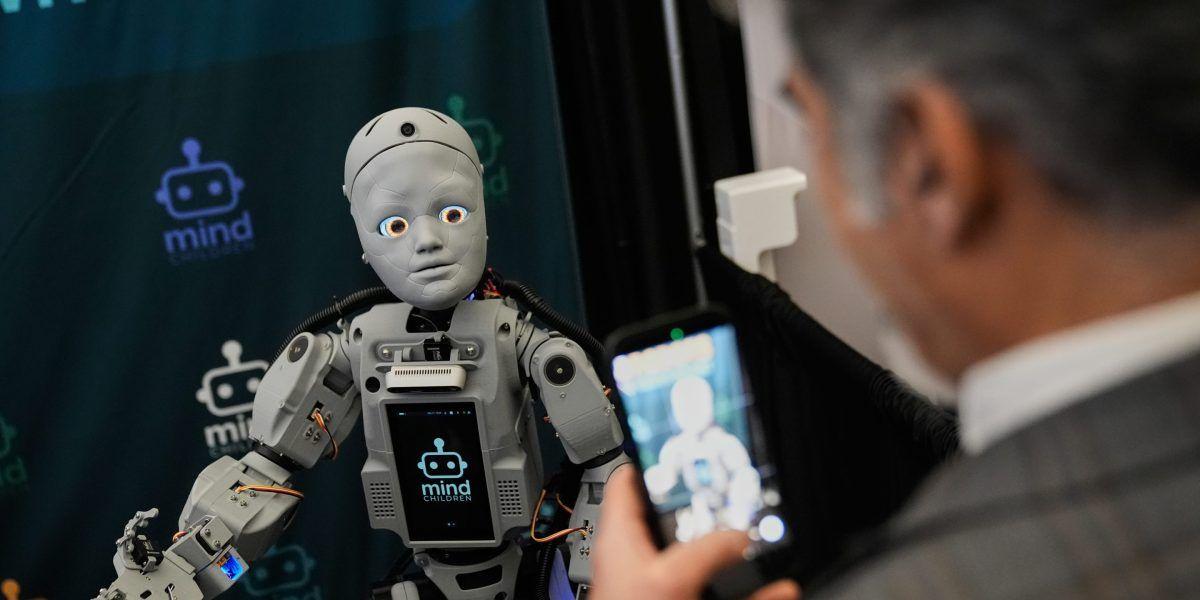
Source: Fortune
China's Lead in the Sector Becomes Evident
Researchers at McKinsey & Company have identified about 50 companies worldwide that have raised at least $100 million to develop humanoid robots, with China accounting for approximately 20 of these firms compared to 15 in North America
1
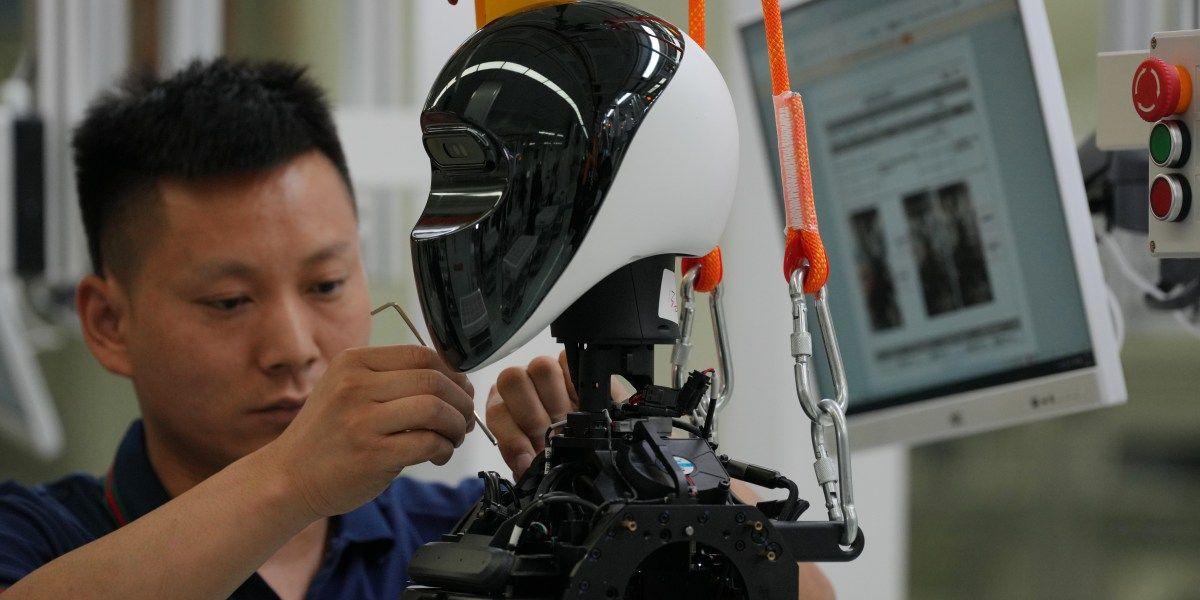
. McKinsey partner Ani Kelkar explained that China's advantage stems from government incentives for component production and robot adoption, plus a mandate issued last year "to have a humanoid ecosystem established by 2025" . Chinese firms dominated the expo section of the summit held Thursday and Friday, with prototypes from China's Unitree being the most prevalent at the conference, partly because U.S. researchers purchase the relatively cheap model to test their own software1
.Generative AI Drives Renewed Investor Interest
The advent of generative AI chatbots like OpenAI's ChatGPT and Google's Gemini has jolted the decades-old robotics industry in multiple ways . Investor interest has surged, pouring money into ambitious startups aiming to build hardware that brings physical presence to the latest artificial intelligence advances
1
. The same technical advances that made AI chatbots excel at language have played a role in teaching robots how to perform tasks more effectively. Paired with computer vision, robots powered by visual-language models are trained to learn about their surroundings .Related Stories
Skepticism Persists Despite Industry Enthusiasm
Even at a conference designed to build enthusiasm for the technology, skepticism remained high that truly humanlike robots will take root anytime soon
1
. Cosima du Pasquier, co-founder of Haptica Robotics and a Stanford University postdoctoral researcher, stated that "the humanoid space has a very, very big hill to climb" and "there's a lot of research that still needs to be solved" . Robotics pioneer Rodney Brooks, co-founder of Roomba vacuum maker iRobot, wrote in September that "today's humanoid robots will not learn how to be dexterous despite the hundreds of millions, or perhaps many billions of dollars, being donated by VCs and major tech companies"1
.Early Applications Show Promise in Specific Use Cases
While widespread adoption of general-purpose humanoid robots remains distant, some applications are already materializing. Disney will deploy a walking robotic version of "Frozen" character Olaf robot at Disneyland theme parks in Hong Kong and Paris early next year
1
. Oregon-based Agility Robotics announced shortly before the conference that it is bringing its tote-carrying warehouse Digit robot to a Texas distribution facility run by Mercado Libre, the Latin American e-commerce giant . Alaoui, who previously worked on driver attention systems for the automotive industry, sees parallels between humanoid robots and the early years of self-driving cars. Near the summit venue at the Computer History Museum, just blocks from Google's headquarters, sits Google's bubble-shaped 2014 prototype of a self-driving car—eleven years later, robotaxis operated by Google affiliate Waymo constantly ply nearby streets1
. Notably absent from the summit was representation from Tesla and Elon Musk's Optimus humanoid project, which Musk claimed three years ago would be available for purchase "within three to five years" .References
Summarized by

Navi
Related Stories
Humanoid robots draw 2,000+ to Silicon Valley summit as AI boom fuels $2.8 billion investment surge
12 Dec 2025•Technology

China Ships 97% of Global Humanoid Robots as US Struggles to Compete in Physical AI Race
11 Aug 2026•Technology
China's Humanoid Robots Claim 97% of Global Market as Embodied AI Shifts from Spectacle to Scale
19 Aug 2026•Technology

Recent Highlights
1
Microsoft and Nvidia Launch Surface Laptop Ultra: A $2,599 AI-Ready PC With RTX Spark Chip
Technology

2
OpenAI Releases 722 AI-Generated Math Papers on GitHub, Igniting Fury Among Mathematicians
Science and Research

3
Trump Consulted Grok AI Before Ordering Venezuela Invasion and Capture of Nicolás Maduro
Policy and Regulation

Recent Highlights
Today's Top Stories









Don’t drown in AI news. We cut through the noise - filtering, ranking and summarizing the most important AI news, breakthroughs and research daily. Follow topics that matter to you and stay ahead.


