Indian High Courts Ban AI Tools for Judicial Work, Citing Risks to Human Judgment


3 Sources
3 Sources
[1]
Punjab and Haryana High Court bars judicial officers from using AI tools to write judgments
Chandigarh: The Punjab and Haryana High Court has asked judicial officers not to use AI tools such as ChatGPT, Gemini and Copilot to write judgments and conduct legal research. A letter issued by the high court registrar-general on Monday to all district and sessions judges in Punjab, Haryana and Chandigarh stated that the Chief Justice has asked them "to direct the judicial officers working under your control not to use Artificial Intelligence (AI) tools, including but not limited to ChatGPT, Gemini, Copilot, Meta, et cetera, for writing of judgments and legal research. Any violation of these instructions will be viewed seriously." Also Read: Karnataka High Court orders recheck of 279 Sringeri postal ballots, stay for two weeks Earlier, the Gujarat High Court had prohibited the use of AI for any form of decision-making, judicial reasoning, order drafting, judgment preparation, bail sentencing considerations, or any substantive adjudicatory process. Also Read: Right to Education does not include right to choose school: Delhi HC According to the Gujarat High Court's AI policy, unveiled at a conference of district judiciary judges on Saturday, artificial intelligence should be used to improve the speed and quality of justice delivery, rather than as a replacement for judicial reasoning.
[2]
Punjab & Haryana High Court Restricts Use of AI Tools in Judicial Work
As per media reports, the communication was sent to all district and sessions judges across Punjab, Haryana, and Chandigarh, conveying instructions from the Chief Justice to strictly prohibit the use of AI platforms in judicial functions. In a significant development reflecting the judiciary's cautious stance on emerging technologies, the Punjab and Haryana High Court has directed judicial officers under its jurisdiction to refrain from using artificial intelligence tools for drafting judgments or conducting legal research. The directive, issued through an official communication from the Registrar-General, underscores growing institutional concerns around the role of AI in judicial decision-making.
[3]
Gujarat HC AI Policy Bans Use in Court Decisions & Orders
The Gujarat High Court has issued a policy governing the use of artificial intelligence (AI) in judicial administration, recognizing the need to regulate this rapidly expanding technology within the justice system. The court noted that AI increases efficiency in research and administration but also introduces risks such as over-reliance, bias, and erosion of human judgment. The judiciary's constitutional mandate requires delivering justice using human reasoning and accountability, so the court emphasized that it must establish a strict framework to prevent AI from encroaching on adjudication. Violations may result in disciplinary action and civil or criminal liability. Confidentiality and data protection: The policy bars users from entering confidential or case-related data into public AI tools. It restricts public tools to general, non-case-specific tasks. Even with approved enterprise AI systems, users must not input sensitive data such as witness identities, confidential court information, or special category personal data. All AI-related processing must comply with the Digital Personal Data Protection Act, 2023, and users must not repurpose personal data beyond their original judicial purpose. Verification and accountability: The policy mandates strict verification of all AI-generated outputs, including citations, legal propositions, summaries, translations, and transcripts, against primary sources. Users must not rely on formatting or plausibility as proof of accuracy and must review original documents before acting. Judges and court officers retain full personal responsibility for all outputs, including AI-assisted work. They must disclose AI use in research or briefs and cannot attribute errors to AI. Furthermore, AI use does not mitigate liability for inaccuracies, misconduct, or negligence. Other High Court policies: The Punjab and Haryana High Court has barred judicial officers in Punjab, Haryana, and Chandigarh from using AI tools such as ChatGPT and Gemini for writing judgments or conducting legal research. The directive, issued to District and Sessions Judges, warns that any violation will be treated seriously by the High Court administration. Similarly, in July 2025, the Kerala High Court barred judges in district courts from using AI tools to arrive at any findings, reliefs, orders, or judgments. Policy does not acknowledge bias in data: The policy does not address how underlying data quality can shape AI-assisted administrative outcomes. A DFL report from February 2026 highlights that judicial datasets are often incomplete, inconsistent, and unrepresentative, increasing the risk of skewed outputs. It warns that even efficiency-focused tools, such as case scheduling or prioritisation, can produce discriminatory outcomes when built on limited or uneven metadata, potentially disadvantaging certain litigants or case categories. Despite permitting metadata-based case allocation, the Gujarat policy does not mandate dataset audits, bias testing, or representativeness checks. It also omits system-level safeguards such as audit logs, explainability requirements, and institutional technical oversight needed to detect and correct such risks.
Share
Share
Copy Link
The Punjab and Haryana High Court has prohibited judicial officers from using AI tools like ChatGPT, Gemini, and Copilot for writing judgments and conducting legal research. Gujarat High Court released a comprehensive AI policy that bans AI use in decision-making while allowing limited administrative applications, highlighting the judiciary's cautious approach to integrating AI in the justice system.
Punjab and Haryana High Court Bans AI Tools in Judicial Work
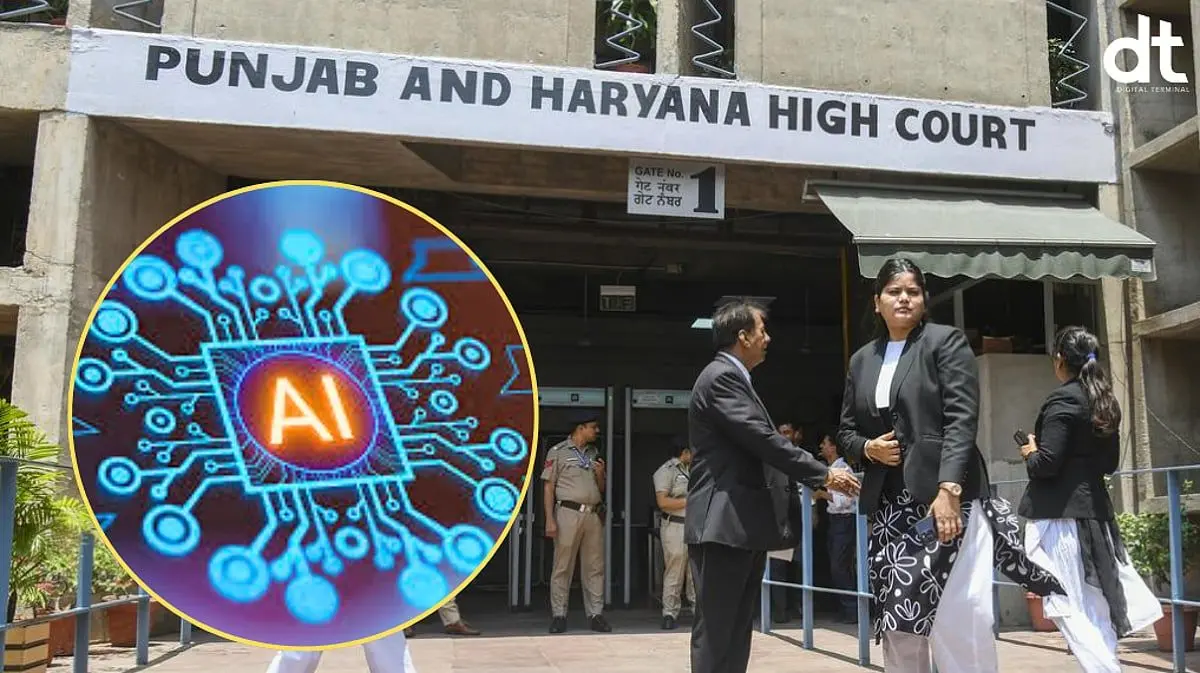
The Punjab and Haryana High Court has issued a directive prohibiting judicial officers from using AI tools in judicial work, specifically targeting platforms like ChatGPT, Gemini, and Copilot for writing judgments and conducting legal research. The instruction, communicated through a letter from the Registrar-General on Monday, was sent to all district and sessions judges across Punjab, Haryana, and Chandigarh
1
. The Chief Justice emphasized that any violation of these instructions will be viewed seriously, marking a firm stance against the use of artificial intelligence tools in core judicial functions2
.
Source: DT
Gujarat High Court Releases Comprehensive AI Policy for Courts
The Gujarat High Court unveiled a detailed AI policy at a conference of district judiciary judges on Saturday, establishing strict boundaries for AI in judiciary operations. The policy explicitly prohibits the use of AI for any form of decision-making, judicial reasoning, order drafting, judgment preparation, bail sentencing considerations, or any substantive adjudicatory process
1
. According to the policy, artificial intelligence should enhance the speed and quality of justice delivery rather than replace judicial reasoning, reflecting institutional concerns about the erosion of human judgment3
.
Source: MediaNama
Strict Verification and Accountability Requirements
The Gujarat High Court's AI policy mandates rigorous verification of all AI-generated outputs, including citations, legal propositions, summaries, translations, and transcripts against primary sources. Judges and court officers retain full personal responsibility for all outputs, including AI-assisted work, and must disclose AI use in research or briefs. The policy makes clear that AI use does not mitigate liability for inaccuracies, misconduct, or negligence, ensuring accountability remains with human decision-makers
3
. This framework underscores the judiciary's constitutional mandate to deliver justice using human reasoning and accountability.Confidentiality and Data Protection Concerns
The Gujarat policy addresses critical concerns around confidentiality and data protection, barring users from entering confidential or case-related data into public AI tools. It restricts public tools to general, non-case-specific tasks, while even approved enterprise AI systems cannot process sensitive data such as witness identities, confidential court information, or special category personal data. All AI-related processing must comply with the Digital Personal Data Protection Act, 2023, and users must not repurpose personal data beyond their original judicial purpose
3
. Violations may result in disciplinary action and civil or criminal liability.Growing Pattern of High Court Restrictions
The Punjab and Haryana directive follows a pattern emerging across Indian High Courts taking a cautious approach to integrating AI in the justice system. The Kerala High Court similarly barred judges in district courts from using AI tools to arrive at any findings, reliefs, orders, or judgments in July 2025
3
. This coordinated resistance reflects broader institutional concerns about over-reliance on AI, potential data bias, and the risk of discriminatory outcomes in the adjudicatory process.Related Stories

Unaddressed Concerns About Data Quality and Bias
Despite the comprehensive nature of Gujarat's AI policy for courts, critics note significant gaps in addressing how underlying data quality shapes AI-assisted administrative outcomes. A DFL report from February 2026 highlights that judicial datasets are often incomplete, inconsistent, and unrepresentative, increasing the risk of skewed outputs. The report warns that even efficiency-focused tools for case scheduling or prioritization can produce discriminatory outcomes when built on limited or uneven metadata, potentially disadvantaging certain litigants or case categories. The Gujarat policy does not mandate dataset audits, bias testing, or representativeness checks, nor does it include system-level safeguards such as audit logs, explainability requirements, and institutional technical oversight needed to detect and correct such risks
3
.Implications for India's Justice System
These High Court restrictions signal a deliberate choice to prioritize judicial integrity over technological efficiency in core adjudicatory functions. For legal professionals and litigants, this means drafting judgments and legal research will continue to rely exclusively on human expertise, preserving the constitutional requirement for reasoned, accountable decision-making. However, the policies leave open questions about how India's judiciary will balance the potential benefits of AI in administrative tasks against the risks of bias and data quality issues. As more High Courts develop their frameworks, the legal community will be watching whether a unified national approach emerges or whether regional variations in AI adoption create inconsistencies in justice delivery across different jurisdictions.
References
Summarized by

Navi
Related Stories
Courts worldwide resist AI in judicial decision-making despite efficiency gains
08 Apr 2026•Policy and Regulation

Supreme Court declares citing AI-generated fake verdicts as misconduct with legal consequences
03 Mar 2026•Policy and Regulation

UK High Court Warns Lawyers Against AI-Generated Fake Citations, Threatening Severe Penalties
07 Jun 2025•Technology

Recent Highlights



Recent Highlights
Today's Top Stories






Your Daily Dose of Curated AI News
Don’t drown in AI news. We cut through the noise - filtering, ranking and summarizing the most important AI news, breakthroughs and research daily. Spend less time searching for the latest in AI and get straight to action.

