Iran threatens attacks on 18 US tech firms including Apple, Microsoft, and Nvidia on April 1


3 Sources
3 Sources
[1]
Iran Threatens to Start Attacking Major US Tech Firms on April 1
Iran's Islamic Revolutionary Guard Corps warned Tuesday that it plans to begin attacking more than a dozen American companies across the Middle East on Wednesday in retaliation for the killing of Iranian citizens in the ongoing war with the US and Israel. The list of companies includes Apple, Google, IBM, Intel, Microsoft, Tesla, and Boeing, which the IRGC accused of enabling United States military targeting operations. The IRGC urged employees of the US firms to evacuate and civilians in the region to stay away. Tuesday's warning, posted to the IRGC's Telegram channel, extends a campaign of threats by Iran against American commercial infrastructure since the US and Israel launched their first attack on Tehran on February 28. Iranian drones struck two Amazon Web Services data centers and damaged another in the United Arab Emirates and Bahrain on March 1, in the first publicly confirmed attack on American-owned hyperscale cloud infrastructure. Banking sites, payment processors, and consumer services across the region crashed as redundancies meant to prevent outages were taken offline. Earlier this month, the IRGC-affiliated Tasnim News Agency published a list of 29 regional offices and data centers operated by major firms such as Amazon, Google, IBM, Nvidia, and Palantir, accusing the firms of supporting US military and intelligence activities. The IRGC said in its post to Telegram that targeted companies "should expect" attacks to begin after 8 pm on April 1 in Tehran. Most of the companies the IRGC named in Tuesday's Telegram post did not immediately respond to WIRED's request for comment. Google, Microsoft, and JP Morgan declined to comment. Billions of dollars in US technology and infrastructure are tied up in the Gulf, where American tech giants have bet big on the region becoming the next hub for AI development. The IRGC designates these civilian hardware and software providers as "legitimate targets" responsible for providing the technology that enabled the joint US-Israeli attacks that killed Supreme Leader Ali Khamenei at the start of the war. The threats highlight the US Defense Department's reliance on commercial vendors with operations in the region. Palantir, for example, builds the data architecture for Project Maven, a Pentagon artificial intelligence program that processes drone and satellite imagery to identify air-strike targets. The defense contractor also maintains a corporate office in Abu Dhabi. The US military responded throughout March by bombing IRGC drone networks needed to carry out the attacks, and US Central Command recently released footage of air strikes destroying mobile launchers. The aerial campaign has slowed in recent days, however, as the US temporarily paused strikes on Iran's energy infrastructure to explore potential peace talks with Tehran. Amid the shifting operational tempo, the Pentagon is reportedly considering whether to deploy up to 10,000 additional troops to the Middle East to expand its options ahead of a possible ground invasion. In the month since Khamenei's assassination, approximately 2,000 Iranians have been killed, along with at least 13 US service members. The conflict has spread across the region, with Iranian retaliatory strikes hitting targets in Israel, Gulf states, and Iraq. The Strait of Hormuz, an essential shipping route that runs between Iran and the United Arab Emirates and Oman, has remained effectively closed for weeks due to threats from Iran, disrupting shipments of oil and other goods globally.
[2]
Iran threatens imminent attacks on US tech companies in the Middle East
The Islamic Revolutionary Guard Corps (IRGC), a branch of Iran's armed forces, has threatened to target US tech companies' operations in the Middle East. It told employees of 18 companies -- including Apple, Google, Meta and NVIDIA -- "to leave their workplaces immediately to save their lives," as CBS News reported. Those living close to the companies' facilities in the region were instructed to evacuate immediately as well. Microsoft, Oracle, Tesla, HP, Intel, Palantir, Boeing, Dell, Cisco and IBM are also among the companies that the IRGC named. "Since the main element in designing and tracking terror targets are American [information and communications technology] and AI companies, in response to this terrorist operation, from now on the main institutions effective in terrorist operations will be our legitimate targets," the IRGC said in a statement. The military force warned it will start targeting the companies on Wednesday evening if more Iranian leaders are killed. Iran previously pledged to attack companies and banks tied to the US and Israel, though the warning it issued on Tuesday had a specific deadline. Earlier this month, Iranian drones struck Amazon data centers in Bahrain and the United Arab Emirates, disrupting Amazon Web Services operations in the region. The US reportedly used Anthropic's AI in its initial airstrikes against Iran at the onset of the war in late February. Israel has been using a new AI platform of its own to help it track the movements of Iranian officials.
[3]
Iran's IRGC names 18 US tech firms including Apple, Microsoft, Nvidia as military targets
At 8pm Tehran time on Tuesday, a new kind of front line was drawn, not through desert terrain or along a disputed border, but through the server farms, cloud regions, and corporate campuses of America's largest technology companies. The Islamic Revolutionary Guard Corps published a statement on its official Sepah News channel naming 18 US firms, from Apple and Microsoft to Nvidia and Palantir, as "legitimate targets" in retaliation for what it described as their role in enabling American and Israeli assassination operations inside Iran. The list reads like a roll call of the Nasdaq's most valuable constituents. Microsoft, Apple, Alphabet, Meta, Amazon, Nvidia, Intel, Cisco, Oracle, Dell, HP, IBM, JPMorgan Chase, Tesla, General Electric, Boeing, and Palantir all appear alongside Spire Solutions and G42, the Abu Dhabi-based AI firm that has become a linchpin of the Gulf's artificial intelligence ambitions. The IRGC gave employees at these companies across the Middle East an immediate evacuation warning, urging anyone within one kilometre of their facilities to leave. The threat is extraordinary in its specificity. Rather than targeting military installations or government buildings, the IRGC has identified private-sector technology infrastructure as the mechanism through which, it alleges, the United States has been locating and killing senior Iranian officials. The statement declared that American ICT and AI companies are "the key element in designing and tracking terror targets," and that "for every assassination and terrorist act in Iran, one facility or unit belonging to these companies will face destruction." The accusation is not made from thin air. Since Operation Epic Fury began on 28 February, the United States has struck more than 10,000 targets inside Iran, according to US Central Command. The Israeli Defence Forces claimed to have killed 40 senior commanders in a single operation that the IDF described as possible only because of military intelligence capabilities. Iran's supreme leader, Ali Khamenei, was killed in an Israeli air strike on his compound that same day. Defence minister Aziz Nasirzadeh and IRGC commander Mohammad Pakpour followed. Dozens of high-ranking political and military figures, along with members of their families, have been killed in what Tehran describes as a sustained campaign of US-Israeli aggression. It is the role of artificial intelligence in enabling this campaign that has prompted the IRGC's pivot toward commercial technology infrastructure as a theatre of war. Bloomberg reported in late March that Palantir's chief technology officer described the Iran conflict as the first major war driven by AI, with advanced tools processing vast data sets to accelerate targeting decisions. The US military has confirmed using AI for drone navigation, intelligence analysis, and what it calls "target selection tools," though it maintains a human remains in the decision loop. Nature published an editorial calling for a moratorium on AI in warfare until international law catches up. The IRGC's logic, however strained, runs as follows: if American cloud computing, artificial intelligence, and surveillance platforms are providing the infrastructure that makes precision strikes possible, then the companies operating that infrastructure are combatants. It is a framing that international humanitarian law does not support in any straightforward way, but the distinction may matter less than the operational reality. These companies have physical presences across the Gulf states, and those presences are now, by the IRGC's declaration, in the crosshairs. The exposure is enormous. Microsoft has committed $15 billion to expanding its operations in the UAE by 2029. Amazon has pledged $5 billion to an AI hub in Riyadh. Oracle, Cisco, and Nvidia announced a partnership with OpenAI to build an AI campus in the UAE. Google and Amazon Web Services are constructing dedicated cloud regions in Saudi Arabia scheduled to launch this year. According to analysts at TD Cowen, hyperscaler capital expenditure is forecast to exceed $600 billion in 2026, with roughly 75 per cent tied to AI infrastructure. A substantial portion of that money is flowing into the very region the IRGC is now threatening. The timing underscores a tension that predates this conflict but has been dramatically sharpened by it. For years, US technology companies have been building massive data centre infrastructure in the Middle East, drawn by sovereign wealth capital, favourable energy costs, and proximity to growing markets in South Asia and Africa. Oracle alone has committed an estimated $156 billion in capital spending to its AI infrastructure buildout. These investments were made on the assumption that the Gulf states would remain stable, business-friendly environments. That assumption now looks fragile. The IRGC's threat is not purely rhetorical. Iran has already launched drone and missile strikes against targets in the region since the war began on 28 February, firing more than 500 ballistic and naval missiles and nearly 2,000 drones, according to Iran's Fars News Agency. Roughly 60 per cent of those launches were aimed at US targets in the region. The Intercept reported that data centres in the UAE and Bahrain have already come under deliberate attack for the first time in military history, disrupting critical cloud infrastructure. For the 18 named companies, the calculus is grim. Evacuating employees from Gulf offices is manageable. Relocating or hardening billions of dollars of physical infrastructure is not. And the reputational dimension cuts both ways: companies that are seen as too closely linked to military operations risk backlash in other markets, while companies that distance themselves from the US government risk losing defence contracts that have become a significant and growing revenue stream during the AI boom. The inclusion of JPMorgan Chase, Tesla, General Electric, and Boeing on the list suggests the IRGC's targeting framework extends beyond technology into broader US economic infrastructure. Boeing's military division supplies fighter aircraft and munitions. GE manufactures jet engines used in military platforms. Tesla's presence is harder to explain through a direct military logic, but the IRGC appears to be drawing its circle wide enough to create maximum economic pressure. G42, the sole non-American company on the list, is perhaps the most telling inclusion. The Abu Dhabi firm has positioned itself as the Gulf's flagship AI company, signing partnerships with Microsoft, OpenAI, and Cerebras while navigating US concerns about its historical ties to Chinese technology firms. Its inclusion signals that the IRGC views the Gulf states' AI ambitions themselves, not merely the American companies servicing them, as part of the threat. What happens next depends on whether the IRGC follows through and, if so, what form the attacks take. Cyberattacks on corporate infrastructure are one possibility and arguably the more likely initial vector, given Iran's well-documented capabilities in that domain. Physical strikes against data centres or office buildings in the Gulf would represent a dramatic escalation and risk drawing the host nations, several of which have been attempting to stay neutral, directly into the conflict. Either way, the IRGC's statement marks a threshold. The regulation of AI and its use in sensitive contexts has until now been framed primarily as a governance challenge, a matter of compliance frameworks, risk assessments, and legislative timelines. What Iran's threat makes plain is that AI infrastructure is now also a matter of physical security. The servers are no longer neutral. Whether they ever were is a question the next phase of this conflict may answer.
Share
Share
Copy Link
The Islamic Revolutionary Guard Corps has named 18 major US tech firms as legitimate military targets, warning of imminent attacks starting April 1. The threat targets companies including Apple, Google, Microsoft, and Nvidia, accusing them of enabling US-Israeli assassination operations through AI and cloud computing infrastructure across the Middle East.
Islamic Revolutionary Guard Corps Issues Unprecedented Warning to US Tech Firms
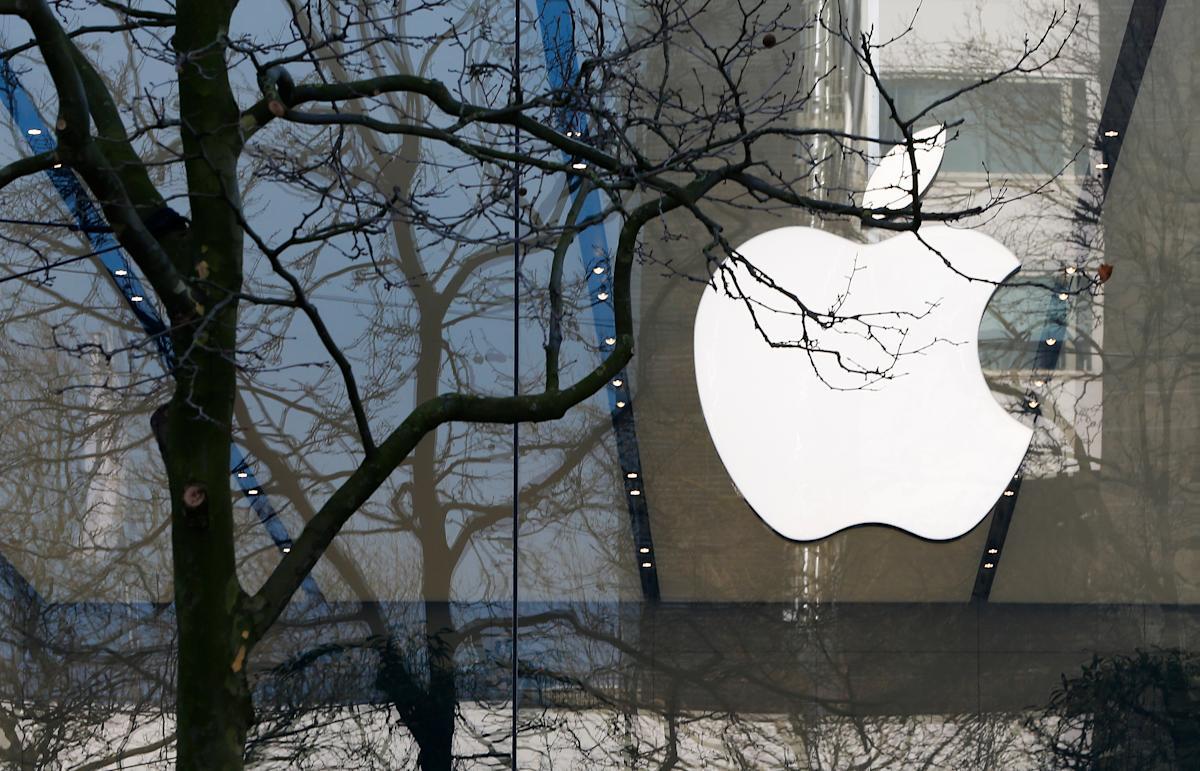
The Islamic Revolutionary Guard Corps issued a stark warning on Tuesday, declaring 18 major US tech firms as "legitimate targets" and threatening to begin attacks on US tech companies after 8 pm Tehran time on April 1
1
. The Iran threat specifically names Apple, Google, Microsoft, Nvidia, Amazon, Meta, Intel, Cisco, Oracle, Dell, HP, IBM, JPMorgan Chase, Tesla, General Electric, Boeing, and Palantir, along with Abu Dhabi-based AI firm G423
. The IRGC urged employees at these companies to "leave their workplaces immediately to save their lives" and instructed civilians living within one kilometer of these facilities to evacuate immediately2
.
Source: Engadget
The warning extends a campaign of threats by Iran against American commercial infrastructure since the US and Israel launched their first attack on Tehran on February 28
1
. This marks an extraordinary shift in modern conflict, with the IRGC identifying private-sector technology infrastructure rather than traditional military installations as military targets in the Middle East3
.War Driven by AI: The Technology Behind the Targeting
The IRGC's statement declared that American information and communications technology companies and artificial intelligence platforms are "the key element in designing and tracking terror targets" for assassination operations
3
. Since Operation Epic Fury began on February 28, the United States has struck more than 10,000 targets inside Iran, according to US Central Command3
. Iran's supreme leader, Ali Khamenei, was killed in an Israeli air strike on his compound that same day, followed by defense minister Aziz Nasirzadeh and IRGC commander Mohammad Pakpour3
.Bloomberg reported that Palantir's chief technology officer described the Iran conflict as the first major war driven by AI, with advanced tools processing vast data sets to accelerate targeting decisions
3
. The US reportedly used Anthropic's AI in its initial airstrikes against Iran at the onset of the war in late February2
. Palantir builds the data architecture for Project Maven, a Pentagon artificial intelligence program that processes drone and satellite imagery to identify air-strike targets1
.Cloud Computing and Surveillance Platforms Under Fire
The threat has already materialized in physical attacks. Iranian drone strikes hit two Amazon Web Services data centers and damaged another in the United Arab Emirates and Bahrain on March 1, marking the first publicly confirmed attack on American-owned hyperscale cloud infrastructure
1
. Banking sites, payment processors, and consumer services across the region crashed as redundancies meant to prevent outages were taken offline1
.Earlier this month, the IRGC-affiliated Tasnim News Agency published a list of 29 regional offices and data centers operated by major firms such as Amazon, Google, IBM, Nvidia, and Palantir, accusing the firms of supporting US military and intelligence activities
1
. The IRGC's logic frames cloud computing and surveillance platforms as combat infrastructure, declaring that "for every assassination and terrorist act in Iran, one facility or unit belonging to these companies will face destruction"3
.Related Stories

Billions in Tech Infrastructure at Risk
The exposure is enormous. Microsoft has committed $15 billion to expanding its operations in the UAE by 2029, while Amazon has pledged $5 billion to an AI hub in Riyadh
3
. Oracle, Cisco, and Nvidia announced a partnership with OpenAI to build an AI campus in the UAE3
. Google and Amazon Web Services are constructing dedicated cloud regions in Saudi Arabia scheduled to launch this year3
. According to analysts at TD Cowen, hyperscaler capital expenditure is forecast to exceed $600 billion in 2026, with roughly 75 percent tied to artificial intelligence infrastructure, much of it flowing into the Gulf region3
.Oracle alone has committed an estimated $156 billion in capital spending to its AI infrastructure buildout
3
. These investments were made assuming the Gulf states would remain stable, business-friendly environments—an assumption now under severe strain. The conflict has already claimed approximately 2,000 Iranian lives and at least 13 US service members in the month since Khamenei's assassination1
.References
Summarized by

Navi
Related Stories
Iran war exposes AI technology as new weapon in cyber warfare against U.S. and Israel
11 Mar 2026•Technology

Iran Conflict Threatens Gulf's $300 Billion AI Infrastructure Dreams as Drone Strikes Hit AWS
08 Mar 2026•Business and Economy

Iran Conflict Disrupts AI Industry as Supply Chain Vulnerabilities and Energy Costs Threaten Growth
26 Mar 2026•Business and Economy

Recent Highlights


Recent Highlights
Today's Top Stories




Your Daily Dose of Curated AI News
Don’t drown in AI news. We cut through the noise - filtering, ranking and summarizing the most important AI news, breakthroughs and research daily. Spend less time searching for the latest in AI and get straight to action.

