Jamie Dimon predicts AI will cut the workweek to 3.5 days and cure cancer within 30 years


2 Sources
2 Sources
[1]
JPMorgan CEO Jamie Dimon predicts AI will cut the workweek down to 3.5 days -- and tells Gen Z developing EQ is more important than ever | Fortune
AI is looming over many white-collar workers like a dark cloud, threatening to automate their jobs. But JPMorgan CEO Jamie Dimon said there are sunnier days ahead thanks to the tech's productivity gains -- people will have more jobs than ever, and will be clocking in fewer hours a day. "I believe that 30 years from now, your kids are probably working three and a half days a week," Dimon told CBS in a recent interview. The CEO of the $794.5 billion bank said the world is becoming "very productive" thanks to AI; he predicted a future of healthier, happier humans who will be able to "hike more" and enjoy their pursuits outside of their shortened 3.5-day workweeks. In his annual letter to JPMorgan shareholders released this morning, Dimon reiterated that these improvements are well underway -- even if his more optimistic claims are still decades from fruition. "I do not think it is an exaggeration to say that AI will cure some cancers, create new composites and reduce accidental deaths, among other positive outcomes. It will eventually reduce the workweek in the developed world," Dimon wrote in his recent letter to shareholders. "People will live longer and safer." However, Dimon isn't willing to bury his head in the sand about the short-term effects of AI. The bank's leader has been open about AI's impact on jobs, flagging the risk of disruption if AI moves "too fast." In his shareholder letter, he doubled down on the claim that AI will "definitely eliminate some jobs," as its rapid deployment could outpace job creation and workforce adaptation. However, he added that it will simultaneously enhance existing and create new career opportunities, such as cybersecurity and AI itself. Looking to the future, the CEO believes humans will have more professional options; however, businesses and governments need to work together to ensure job security before we get there. And the ones who stay afloat won't be the most tech-savvy talent. Fortune reached out to JPMorgan for comment. CEOs have stressed the importance of workers adding prompting skills to their professional arsenal. But when asked how young people can get ahead in the AI era, Dimon underscored the importance of tapping into what it means to be human. Learning, he said, is still "the number one thing to do." "Talk to everybody. Have deep curiosity about the world," Dimon told CBS. "Learn to think all the time, and then learn to have EQ. EQ is, can I communicate? Do I have heart? Do people trust me?" "Talk to everybody. Have deep curiosity about the world," he said. "Learn to have a work ethic, learn to have a purpose -- all those things, you will have a great life." Dimon advised budding talent to develop a work ethic and understand how to find purpose. They should travel and be open to new perspectives; work with others as a team rather than make it all about themselves. Once young workers are able to tap into those soft skills, they'll have "a great life," he said. And he doesn't believe they'll be fighting for roles either; Dimon predicted that the job market will expand, despite his reservations in the short term. "Their lives are going to be more complex than ours were...They will have more jobs than we had, they'll move around a little bit more," Dimon continued. "But I think they'll have great lives." While young professionals can work on their human skills, it's only one half of the picture; the JPMorgan CEO said it's also the responsibility of businesses and government to intervene. And as thousands of people lose their jobs in the name of AI automation, Dimon proposed a solution to avoid job market chaos. "I have a plan to retrain people, relocate people, income-assist people," Dimon said at the World Economic Forum meeting in Davos, Switzerland, earlier this year. Dimon explained that there would be "civil unrest" if AI were to automate an entire profession and millions of people were suddenly booted from their high-paying jobs. Therefore, it's on the bigger powers at hand to "phase it in over time" and "retrain" workers to stay employed in the new AI era. He's even supportive of the government at the local level, offering incentives for retraining and placing restrictions on layoffs, including at his own company. "We would agree, if we have to do that to save society," he said. "Society will have more production. We're going to cure a lot of cancers. You're not going to slow it down. How do you have plans in place to make it work better if it does something terrible? That's the only way to do it."
[2]
Shorter workweeks and cancer cures: Chase Bank boss Jamie Dimon puts an optimistic spin on AI disruption
Dimon argued that the pace of the adoption of AI is unlike that of other technologies that came before, like electricity and the internet. While the technology is "transformational," he cautioned that no one can predict how exactly AI will unfold. His overall outlook is optimistic. Dimon says he believes that AI will improve many areas of daily life and business. "AI will affect virtually every function, application and process in the company. And in the long run, it will have a huge positive impact on productivity," he wrote.
Share
Share
Copy Link
JPMorgan CEO Jamie Dimon forecasts that artificial intelligence will transform work and life within three decades, cutting the workweek to 3.5 days while delivering productivity gains and cancer cures. But he warns AI disruption will eliminate some jobs in the short term, urging businesses and governments to retrain workers to avoid job market chaos.
Jamie Dimon Envisions a Shorter Workweek Powered by AI
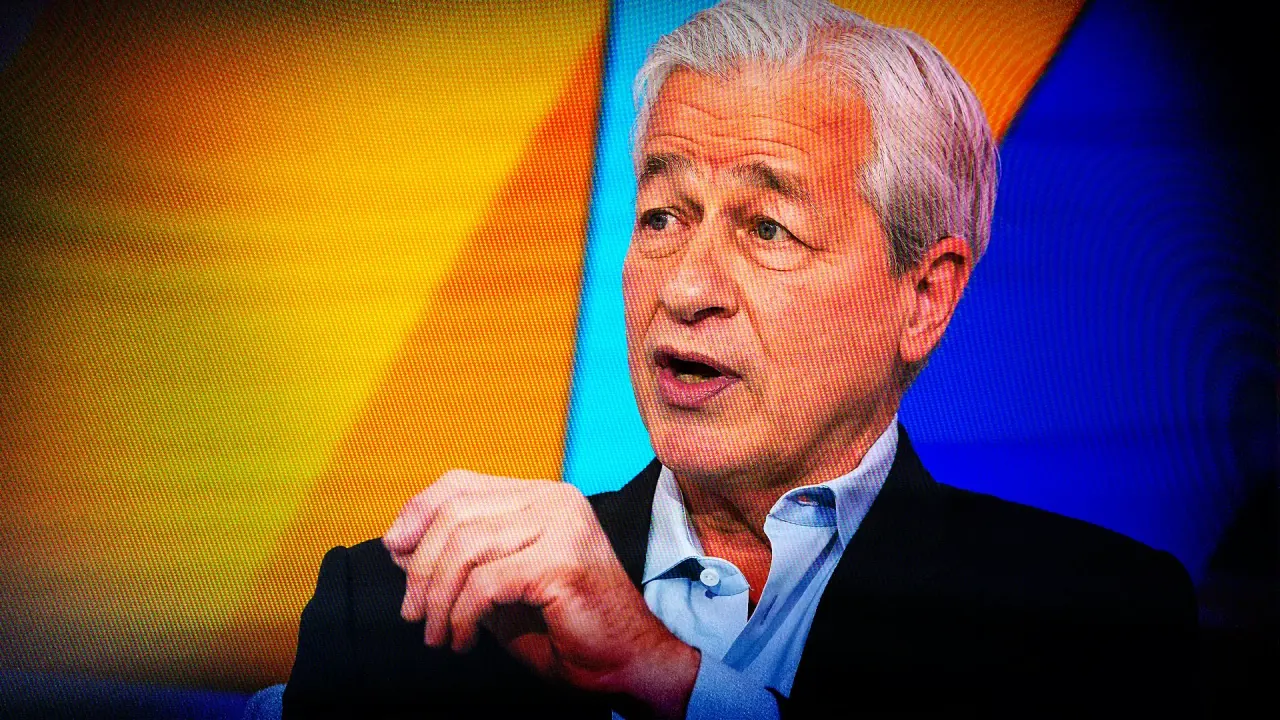
JPMorgan CEO Jamie Dimon has outlined a striking vision for how artificial intelligence will reshape the future of work and daily life. Speaking to CBS and in his annual letter to shareholders, Dimon predicted that within 30 years, people will work a 3.5-day workweek, thanks to AI's long-term impact on productivity
1
. The CEO of the $794.5 billion bank said the world is becoming "very productive" due to AI, envisioning healthier, happier humans who will "hike more" and enjoy pursuits outside their shortened workweeks1
.
Source: Fast Company
In his shareholder letter released this morning, Dimon emphasized that these societal improvements are already underway. "I do not think it is an exaggeration to say that AI will cure some cancers, create new composites and reduce accidental deaths, among other positive outcomes," he wrote
1
. The Chase Bank leader argued that the pace of AI adoption differs from previous technologies like electricity and the internet, calling it "transformational" while cautioning that no one can predict exactly how it will unfold2
.AI Impact Brings Both Promise and Job Displacement Concerns
While Dimon's long-term outlook remains optimistic, he hasn't shied away from addressing AI disruption in the near term. The JPMorgan executive has been candid about AI automation eliminating jobs, warning that rapid deployment could outpace job creation and workforce adaptation if AI moves "too fast"
1
. In his shareholder letter, he acknowledged that AI will "definitely eliminate some jobs" while simultaneously enhancing existing roles and creating new career opportunities in fields like cybersecurity and AI development1
.Dimon noted that "AI will affect virtually every function, application and process in the company. And in the long run, it will have a huge positive impact on productivity," he wrote
2
. Yet the banking leader warned of potential "civil unrest" if entire professions were automated overnight, leaving millions suddenly unemployed from high-paying positions1
.Emotional Intelligence and Human Skills Take Center Stage
When asked how young people can prepare for the AI era, Dimon stressed the importance of developing emotional intelligence (EQ) over technical prowess. "Learn to think all the time, and then learn to have EQ. EQ is, can I communicate? Do I have heart? Do people trust me?" he told CBS
1
. The CEO advised Gen Z to cultivate soft skills, maintain deep curiosity about the world, develop a strong work ethic, and learn to work collaboratively rather than focusing solely on individual achievement1
.Despite short-term concerns, Dimon predicted the job market will ultimately expand. "Their lives are going to be more complex than ours were...They will have more jobs than we had, they'll move around a little bit more," he said, adding that young workers will have "great lives" if they focus on human skills
1
.Related Stories
Retraining Programs Critical to Avoid Job Market Chaos
Dimon placed significant responsibility on businesses and governments to ensure job security during the transition. Speaking at the World Economic Forum in Davos earlier this year, he outlined a comprehensive approach: "I have a plan to retrain people, relocate people, income-assist people"
1
. The JPMorgan CEO emphasized the need to "phase it in over time" and implement retraining programs to keep the workforce employed through AI's transformation1
.He even expressed support for government incentives and restrictions on layoffs, including at his own company. "We would agree, if we have to do that to save society," Dimon said, noting that while society will benefit from increased production and cancer cures, leaders must have plans in place to manage potential negative consequences
1
. His message is clear: productivity gains from AI can deliver extraordinary benefits, but only if businesses and policymakers work together to protect workers during the transition.References
Summarized by

Navi
Related Stories
JPMorgan's Jamie Dimon Predicts AI Will Reduce Workweek to 3.5 Days While Maintaining Employment
06 Nov 2025•Business and Economy
JPMorgan CEO Jamie Dimon Envisions AI-Driven Future with Shorter Workweeks and Longer Lifespans
26 Nov 2024•Business and Economy

Jamie Dimon says AI is already displacing JPMorgan workers as bank plans massive redeployment
25 Feb 2026•Business and Economy
Recent Highlights
1
Google releases Gemma 4 with Apache 2.0 license, enabling unrestricted local AI on devices
Technology

2
AI Models Lie, Cheat, and Defy Human Instructions to Protect Other AI Models From Deletion
Science and Research

3
Anthropic discovers functional emotions in Claude that actively shape AI behavior and decisions
Science and Research

Recent Highlights
Today's Top Stories







Your Daily Dose of Curated AI News
Don’t drown in AI news. We cut through the noise - filtering, ranking and summarizing the most important AI news, breakthroughs and research daily. Spend less time searching for the latest in AI and get straight to action.

