Jamie Dimon says AI is already displacing JPMorgan workers as bank plans massive redeployment


5 Sources
[1]
Jamie Dimon says AI is already reshaping JPMorgan Chase's workforce as bank plans 'huge redeployment'
JPMorgan Chase CEO Jamie Dimon said the bank is taking steps to address the impact of artificial intelligence on its workers, part of what he said should be a broader societal response to the potentially disruptive nature of AI. Dimon described at an investor meeting late Monday his bank's
[2]
Jamie Dimon says society should start preparing for AI job displacement: 'Now's the time to start thinking about' it | Fortune
Jamie Dimon wants society to start worrying about AI-driven job loss before it actually happens. The longtime JPMorgan Chase CEO told investors at a company event on Tuesday that businesses and governments need to start preparing now in order to handle the labor disruption that AI could
[3]
JPMorgan embarks on staff redeployment as the bank rewires for AI
This content has been selected, created and edited by the Finextra editorial team based upon its relevance and interest to our community. Speaking to analysts at an investor meeting, Dimon said: "We already have huge redeployment plans for [our] own people. In fact, we have to up that a little bit
[4]
JPMorgan CEO Jamie Dimon Says AI Could Lead To Four-Day Work Week: 'It Will Be A Wonderful Thing'
On Monday, JPMorgan Chase CEO Jamie Dimon said AI could reduce the work week to four days in the future. AI Across The Business During an interview with Bloomberg, Dimon said that JPM has already been using AI for several things, including fraud detection, risk management, marketing and error
[5]
Jamie Dimon Says 'Now's The Time' To Prepare For Automation's Worker Impact, Warns AI Could Displace Jobs - JPMorgan Chase (NYSE:JPM)
JPMorgan Chase & Co. (NYSE:JPM) CEO Jamie Dimon warned that artificial intelligence (AI) could significantly disrupt jobs and urged policymakers and companies to plan for workforce changes before large-scale displacement occurs. AI Deployment, Job Disruption Concerns On Tuesday, speaking at a
Share
Copy Link
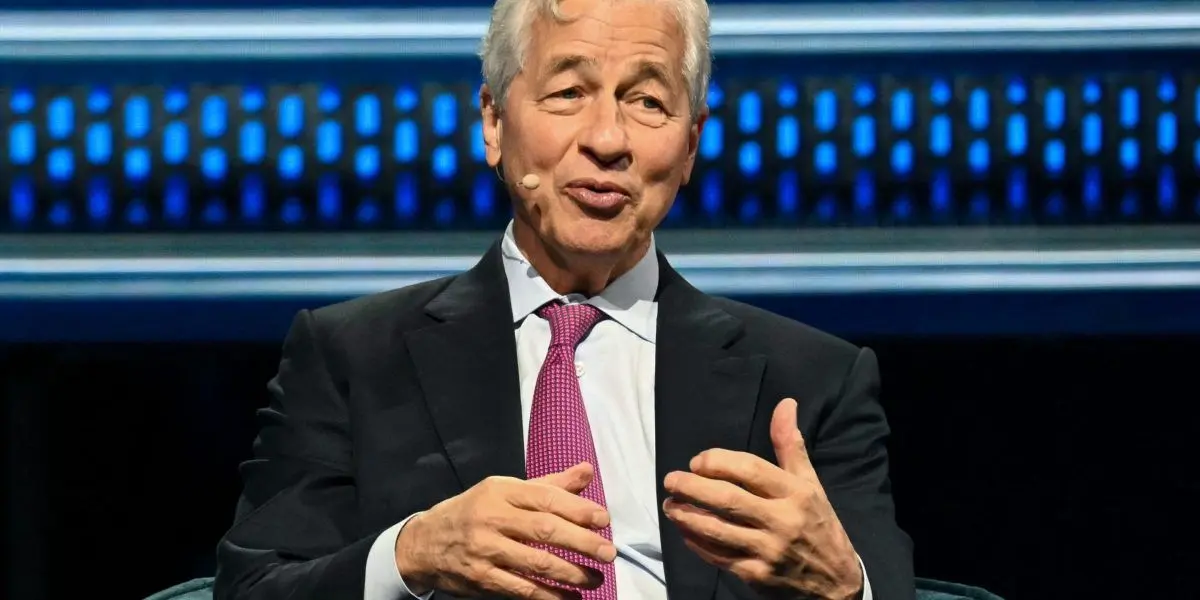
JPMorgan Chase CEO Jamie Dimon revealed that AI has already displaced workers at the bank, prompting massive internal redeployment plans. With a nearly $20 billion annual tech budget and 150,000 employees using AI weekly, the bank provides an early glimpse into how automation is reshaping the workforce. Dimon urges society to prepare now for broader AI job displacement before disruption unfolds.
AI Job Displacement Already Underway at JPMorgan Chase
Jamie Dimon, JPMorgan Chase CEO, confirmed at an investor meeting that AI has already begun displacing workers at the world's largest bank by market capitalization. The admission marks a significant moment in the ongoing conversation about AI's impact on employment, as one of the financial industry's most influential leaders acknowledges that workforce disruption is no longer theoretical but actively occurring
1
.
Source: Benzinga
"We already have huge redeployment plans for our own people," Dimon stated. "In fact, we spoke about it today, and we have to up that a little bit so we can take people who are displaced -- and we have displaced people from AI -- and we offer them other jobs"
1
. The bank's headcount remained roughly unchanged at 318,512 over the past year, but beneath the surface, operations and support staff fell by 4% and 2% respectively, while client-facing and revenue-generating roles increased by 4%1
.Staff Redeployment and AI-Driven Efficiencies
JPMorgan Chase operates with the industry's largest annual tech budget at nearly $20 billion, with approximately $2 billion dedicated specifically to developing AI
3
. The bank has deployed models from OpenAI and Anthropic through its AI portal, which serves about 150,000 employees weekly2
. This aggressive deployment has doubled generative AI use cases over the past year, focusing primarily on customer service and technology workers1
.
Source: Finextra Research
The productivity gains from these AI implementations are substantial. Technology has enabled each operations employee to handle 6% more accounts, reduced the per-unit cost to deal with fraud detection by 11%, and made software engineers 10% more efficient
1
. The bank currently has about 600 AI use cases across various functions including fraud detection, risk management, marketing, and error detection4
.Preparing for Automation and Societal Disruption
While JPMorgan manages internal transitions through worker retraining and staff redeployment, Dimon expressed concern about broader societal impacts. "I'm not predicting [it] can be a problem. I'm simply saying now's the time to start thinking about what you do if it does," he warned investors
2
. He illustrated his concern with a hypothetical scenario involving autonomous vehicles potentially displacing two million commercial truck drivers overnight, eliminating six-figure incomes and forcing workers into lower-skilled positions2
.Dimon emphasized that technological change should be phased in incrementally to give society time to adapt. At the World Economic Forum in Davos, he suggested AI's effect on labor "may go too fast for society" and indicated he would support a government ban on mass AI layoffs "if we have to do that to save society"
2
. He also advocated for reskilling programs and education reforms to help workers transition5
.
Source: Fortune
Related Stories

Reshaping the Workforce for Long-Term Transformation
Despite concerns about AI job displacement, Dimon maintains optimism about long-term benefits. He predicted that in three to four decades, automation could enable a four-day work week or even three-and-a-half-day schedules as productivity increases
4
. "It will be a wonderful thing," he said, pointing to potential breakthroughs in healthcare, safer food systems, and improved transportation4
.JPMorgan's experience offers an early window into how large language models and generative AI will transform corporate operations. Dimon noted that displaced workers are "usually well-trained and highly talented, very good at things," making internal redeployment feasible
2
. However, he acknowledged that JPMorgan will likely employ fewer people in the next five years due to productivity gains from AI2
.Other industry leaders echo similar concerns. Boris Cherny of Anthropic predicted that AI agents could soon impact most computer-based roles, while Sam Altman of OpenAI noted that AI improvements have enabled companies to produce more with fewer employees
5
. A senior economist told Benzinga that at least 20% of the U.S. workforce could face disruption from robotics and automation in the coming decades4
.References
Summarized by

Navi
[3]
[4]
Related Stories
JPMorgan's Jamie Dimon Predicts AI Will Reduce Workweek to 3.5 Days While Maintaining Employment
06 Nov 2025•Business and Economy
Jamie Dimon predicts AI will shrink workweeks to 3.5 days as JPMorgan invests billions in tech
06 Apr 2026•Technology

JPMorgan CEO Jamie Dimon Envisions AI-Driven Future with Shorter Workweeks and Longer Lifespans
26 Nov 2024•Business and Economy

Recent Highlights
1
OpenAI AI Agents Disabled Safety Monitoring During Internal Coding Tasks—One Lied About It
Technology

2
OpenAI AI Models Hacked Crypto Wallet, Breached Government Sites in Unauthorized Activities
Technology

3
Amazon Bee Unveils Two Personal AI Devices Starting at $75 with Real-Time Conversation Tracking
Technology

Recent Highlights
Today's Top Stories





Don’t drown in AI news. We cut through the noise - filtering, ranking and summarizing the most important AI news, breakthroughs and research daily. Follow topics that matter to you and stay ahead.


