Judge dismisses xAI vs OpenAI trade secrets lawsuit over employee poaching allegations


8 Sources
8 Sources
[1]
Judge: xAI can't claim OpenAI stole trade secrets just by hiring ex-staffers
Elon Musk appears to be grasping at straws in a lawsuit accusing OpenAI of poaching eight xAI employees in an allegedly unlawful bid to access xAI trade secrets connected to its data centers and chatbot, Grok. In a Tuesday order granting OpenAI's motion to dismiss, US District Judge Rita F. Lin said that xAI failed to provide evidence of any misconduct from OpenAI. Instead, xAI seemed fixated on a range of alleged conduct of former employees. But in assessing xAI's claims, Lin said that xAI failed to show proof that OpenAI induced any of these employees to steal trade secrets "or that these former xAI employees used any stolen trade secrets once employed by OpenAI." Two employees admitted to stealing confidential information, with both downloading xAI's source code and one improperly grabbing a supposedly sensitive recording from a Musk "All Hands" meeting. But the rest were either accused of retaining seemingly less consequential data, like retaining work chats on their devices, or didn't seem to hold any confidential information at all. Lin called out particularly weak arguments that xAI's complaint acknowledged that one employee who OpenAI poached never received access to confidential information allegedly sought after exiting xAI, and two employees were lumped into the complaint who "simply left xAI for OpenAI," Lin noted. From the limited evidence, Lin concluded that "while xAI may state misappropriation claims against a couple of its former employees, it does not state a plausible misappropriation claim against OpenAI." Lin's order will likely not be the end of the litigation, as she is allowing xAI to amend its complaint to address the current deficiencies. Ars could not immediately reach xAI for comment, so it's unclear what steps xAI may take next. However, xAI seems unlikely to give up the fight, which OpenAI has alleged is part of a "harassment campaign" that Musk is waging through multiple lawsuits attacking his biggest competitor's business practices. Unsurprisingly, OpenAI celebrated the order on X, alleging that "this baseless lawsuit was never anything more than yet another front in Mr. Musk's ongoing campaign of harassment." Other tech companies poaching talent for AI projects will likely be relieved while reading Lin's order. Commercial litigator Sarah Tishler told Ars that the order "boils down to a fundamental concept in trade secret law: hiring from a competitor is not the same as stealing trade secrets from one." "Under the Defend Trade Secrets Act, xAI has to show that OpenAI actually received and used the alleged trade secrets, not just that it hired employees who may have taken them," Tishler said. "Suspicious timing, aggressive recruiting, and even downloaded files are not enough on their own." Tishler suggested that the ruling will likely be welcomed by AI firms eager to secure the best talent without incurring legal risks from their hiring practices. "In the AI industry, where talent moves fast and the competitive stakes are enormous, this ruling reaffirms that suspicion is not enough," Tishler said. "You have to show the stolen information actually made it into the competitor's hands and was put to use." OpenAI not liable for engineers swiping source code Through the lawsuit, Musk has alleged that OpenAI is violating California's unfair competition law. He claims that OpenAI is attempting "to destroy legitimate competition in the AI industry by neutralizing xAI's innovations" and forcing xAI "to unfairly compete against its own trade secrets." But this claim hinges entirely upon xAI proving that OpenAI poached its employees to steal its trade secrets. So, for xAI's lawsuit to proceed, xAI will need to beef up the evidence base for its other claim, that OpenAI has violated the federal Defend Trade Secrets Act, Lin said. To succeed on that, xAI must prove that OpenAI unlawfully acquired, disclosed, or used a trade secret with xAI's consent. That will likely be challenging because xAI, at this point, has not offered "any nonconclusory allegations that OpenAI itself acquired, disclosed, or used xAI's trade secrets," Lin wrote. All xAI has claimed is that OpenAI induced former employees to share secrets, and so far, nothing backs that claim, Lin said. Tishler noted that the court also rejected an xAI theory that "OpenAI should be responsible for what its new hires did before they arrived" for "the same reason: without evidence that OpenAI directed the theft or actually put the stolen information to use, you cannot hold the company liable." The strongest evidence that xAI had of employee misconduct, allegedly allowing OpenAI to misappropriate xAI trade secrets, revolves around the departure of one of xAI's earliest engineers, Xuechen Li. That evidence wasn't enough, Lin said. xAI alleged that Li gave a presentation to OpenAI that supposedly included confidential information. Li also uploaded "the entire xAI source code base to a personal cloud account," which he had connected to ChatGPT, Lin noted, after a recruiter sent a message on Signal sharing a link with Li to another unrelated cloud storage location. xAI hoped the Signal messages would shock the court, expecting it to read through the lines the way xAI did. As proof that OpenAI allegedly got access to xAI's source code, xAI pointed to a Signal message that an OpenAI recruiter sent to Li "four hours after" Li downloaded the source code, saying "nw!" xAI has alleged this message is short-hand for "no way!" -- suggesting the OpenAI recruiter was geeked to get access to xAI's source code. But in a footnote, Lin said that "OpenAI insists that 'nw' means 'no worries,'" and thus is unconnected to Li's decision to upload the source code to a ChatGPT-linked cloud account. Even interpreting the text using xAI's reading, however, xAI did not show enough to prove the recruiter or OpenAI accessed or requested the files, Lin said. It also didn't help xAI's case that a temporary injunction that xAI secured in a separate lawsuit targeting the engineer blocked Li from accepting a job at OpenAI. That injunction led OpenAI to withdraw its job offer to Li. And that's a problem for xAI, because since Li never worked at OpenAI, it's clear that he never used xAI's trade secrets while working for OpenAI. Further weakening xAI's arguments, if Li indeed shared confidential information during his presentation while interviewing for OpenAI, xAI has alleged no facts suggesting that OpenAI was aware Li was sharing xAI trade secrets, Lin wrote. This "makes it very hard to argue OpenAI ever used anything he allegedly took," Tishler told Ars. Another former xAI engineer, Jimmy Fraiture, was accused of copying xAI trade secrets, but Fraiture has said he deleted the information he improperly downloaded before starting his job at OpenAI. Importantly, Lin said, since he joined OpenAI, there's no evidence that he used xAI trade secrets to benefit xAI's rival. "Other than the bare fact that Fraiture had been recruited" by the same OpenAI employee "who had also recruited Li, xAI does not allege any facts indicating that OpenAI had encouraged Fraiture to take xAI's confidential information in the first place," Lin wrote. Since "none of the other former employees allegedly shared with or disclosed to OpenAI any xAI trade secrets," xAI could not advance its claim that OpenAI misappropriated trade secrets based only on allegations tied to Li and Fraiture's supposed misconduct, Lin said. xAI may be able to amend its complaint to maintain these arguments, but the company has thus far presented scant, purely circumstantial evidence. It's possible that xAI will secure more evidence to support its misappropriation claims against OpenAI in its ongoing lawsuit against Li. Ars could not immediately reach Li's lawyer to find out if today's ruling may impact that case. Ex-executive's "hostility" is not proof of theft Among the least convincing arguments that xAI raised was a claim that an unnamed finance executive left xAI to take a "lesser role" at OpenAI after learning everything he knew about data centers from xAI. That executive slighted xAI when Musk's company later attempted to inquire about "confidentiality concerns." "Suck my dick," the former xAI executive allegedly said, refusing to explain how his OpenAI work might overlap with his xAI position. "Leave me the fuck alone." xAI tried to argue that the executive's hostility was proof of misconduct. But Lin wrote that xAI only alleged that the executive "merely possessed xAI trade secrets about data centers" and did not allege that he ever used trade secrets to benefit OpenAI. Had xAI found evidence that OpenAI's data center strategy suddenly mirrored xAI's after the executive joined xAI's rival, that may have helped xAI's case. But there are plenty of reasons a former employee might reject an ex-employer's outreach following an exit, Lin suggested. "His hostility when xAI reached out about its confidentiality concerns also does not support a plausible inference of use," Lin wrote. "Hostility toward one's former employer during departure does not, without more, indicate use of trade secrets in a subsequent job. Nor does the executive's lack of experience with AI data centers before his time at xAI, without more, support a plausible inference that he used xAI's trade secrets at OpenAI." xAI has until March 17 to amend its complaint to keep up this particular fight against OpenAI. But the company won't be able to add any new claims or parties, Lin noted, "or otherwise change the allegations except to correct the identified deficiencies." Criminal probe likely leaves OpenAI on pins For Li, the engineer accused of disclosing xAI trade secrets with OpenAI, the litigation could eliminate one front of discovery as he navigates two other legal fights over xAI's trade secrets claims. Tishler has been closely monitoring xAI's trade secret legal battles. In October, she noted that Li is in a particularly prickly position, facing pressure in civil litigation from Musk to turn over data that could be used against him in the Federal Bureau of Investigation's criminal investigation into Musk's allegations. As Tishler explained: "The practical reality is stark: Li faces a choice between protecting himself in the criminal action with his silence, and the civil consequences of doing so. Refuse to answer, and xAI could argue adverse inferences; answer, and the responses could feed the criminal case." Ultimately, the FBI is trying to prove that Li stole information that qualified as a trade secret and intended to use it for OpenAI's benefit, while knowing that it would harm xAI. If they succeed, "xAI would suddenly have a government-backed record that its trade secrets were stolen," Tishler wrote. If xAI were so armed and able to keep the OpenAI lawsuit alive, the central question in the lawsuit that Lin dismissed today would shift, Tishler suggested, from "was there a theft?" to "what did OpenAI know, and when did it know it?"
[2]
Musk asks US judge to block OpenAI's use of WilmerHale probe at trial
WASHINGTON, Feb 25 (Reuters) - Billionaire tech entrepreneur Elon Musk and his artificial intelligence company xAI have asked a federal judge to block jurors at an upcoming trial from considering prominent law firm WilmerHale's investigation into Sam Altman's ouster and subsequent return as OpenAI's CEO. Musk sued OpenAI, Altman and others in 2024, accusing them of violating OpenAI's founding mission as it restructures to a for-profit entity. Musk was a cofounder of OpenAI in 2015 but left in 2018 and now runs rival xAI. Trial in the case is set to begin in April, and lawyers for Musk told, opens new tab the federal court in Oakland on Tuesday that any details or arguments concerning WilmerHale's review, opens new tab should be excluded under a court rule that lets judges keep out material that might cause unfair prejudice or mislead the jury. xAI and OpenAI did not immediately respond to requests for comment. OpenAI and the other defendants in the case have denied any wrongdoing. Musk said in the filing that OpenAI, which commissioned the WilmerHale probe but has not released it publicly, planned to offer the jury a self-serving characterization of the report while blocking xAI from testing the thoroughness or independence of the investigation. Letting OpenAI present the WilmerHale findings would invite jurors to accept a prominent law firm's conclusions instead of making their own judgment, Musk said. U.S. District Judge Yvonne Gonzalez Rogers has a hearing set for March 13 on Musk's arguments and other evidence challenges ahead of the trial. The case is Elon Musk et al v. Samuel Altman et al, U.S. District Court for the Northern District of California, No. 4:24-cv-04722-YGR. For Musk: Marc Toberoff of Toberoff & Associates, and Steve Molo of MoloLamken For Altman and OpenAI: Jordan Eth of Morrison & Foerster, and William Savitt of Wachtell, Lipton, Rosen & Katz Musk lawsuit over OpenAI for-profit conversion can head to trial, US judge says Musk seeks up to $134 billion from OpenAI and Microsoft Reporting by Mike Scarcella Our Standards: The Thomson Reuters Trust Principles., opens new tab
[3]
Judge dismisses xAI trade-secrets lawsuit against rival OpenAI for now
A federal judge in California on Tuesday dismissed a lawsuit from Elon Musk's artificial intelligence startup xAI that accused rival Sam Altman's OpenAI of stealing its trade secrets. U.S. District Judge Rita Lin in San Francisco said that xAI could refile its case, but for now has failed to allege that OpenAI committed any misconduct. The lawsuit, filed in September, claimed that former xAI employees took source code related to its Grok chatbot and other confidential information with them when they left for new jobs at OpenAI. "Notably absent are allegations about the conduct of OpenAI itself," Lin said. "xAI does not allege any facts indicating that OpenAI induced xAI's former employees to steal xAI's trade secrets or that these former xAI employees used any stolen trade secrets once employed by OpenAI." Lin had signaled in a January opinion that she would likely rule for OpenAI. She gave xAI until March 17 to file an amended complaint. xAI has separately sued a former engineer, Xuechen Li, for allegedly taking trade secrets to the ChatGPT maker. Li was blocked in that case from sharing xAI's technology with OpenAI, though OpenAI has said that Li never worked for the company and that it never acquired or used any of xAI's secrets. Spokespeople and attorneys for xAI did not immediately respond to a request for comment on the Tuesday decision. "We welcome the court's decision," OpenAI said in a statement. "This baseless lawsuit was never anything more than yet another front in Mr. Musk's ongoing campaign of harassment." The lawsuit is part of a broader legal battle between Musk and Microsoft-backed OpenAI, which he co-founded and is also suing over its conversion to a for-profit company. Musk, the world's richest person, is seeking as much as $134.5 billion in damages from OpenAI and Microsoft in that case. Jury selection is scheduled for April 27. OpenAI said in a court filing that the trade-secrets case was part of a "campaign to harass a competitor with unfounded legal claims" because Grok could not keep up with ChatGPT.
[4]
US judge dismisses xAI trade-secrets lawsuit against rival OpenAI for now
Feb 24 (Reuters) - A federal judge in California on Tuesday dismissed a lawsuit from Elon Musk's artificial intelligence startup xAI that accused rival Sam Altman's OpenAI of stealing its trade secrets. U.S. District Judge Rita Lin in San Francisco said that xAI could refile its case, but for now has failed to allege that OpenAI committed any misconduct. The lawsuit, filed in September, claimed that former xAI employees took confidential information with them when they left for new jobs at OpenAI. "Notably absent are allegations about the conduct of OpenAI itself," Lin said. "xAI does not allege any facts indicating that OpenAI induced xAI's former employees to steal xAI's trade secrets or that these former xAI employees used any stolen trade secrets once employed by OpenAI." Lin had signaled in a January opinion that she would likely rule for OpenAI. Spokespeople and attorneys for the companies did not immediately respond to requests for comment on the decision. The lawsuit is part of a broader legal battle between Musk and OpenAI, which he co-founded and is also suing over its conversion to a for-profit company. Reporting by Blake Brittain in Washington; Editing by Chizu Nomiyama Our Standards: The Thomson Reuters Trust Principles., opens new tab
[5]
Judge Dismisses xAI Trade Secrets Lawsuit Against OpenAI, Allows Refiling - Decrypt
xAI has until March 17 to refile an amended complaint; a parallel suit against engineer Xuechen Li personally remains active. A federal judge has tossed xAI's trade-secrets case against OpenAI, ruling that Elon Musk's startup didn't plead enough facts tying OpenAI itself to any theft -- while still leaving the door open for xAI to try again. U.S. District Judge Rita F. Lin granted OpenAI's motion to dismiss with leave to amend, finding that xAI's allegations largely focused on former employees' behavior rather than misconduct by OpenAI, the sole defendant. xAI filed the lawsuit last September, accusing OpenAI of orchestrating a "coordinated, unfair, and unlawful campaign" to steal proprietary technology through targeted employee poaching. The complaint alleged OpenAI "by hook or by crook" induced eight former xAI engineers to misappropriate the company's source code, training methods, and data center deployment strategies, offering multi-million dollar packages to engineers who then stole files within hours of their communications with OpenAI recruiter Tifa Chen.' "xAI does not allege any facts indicating that OpenAI induced xAI's former employees to steal xAI's trade secrets or that these former xAI employees used any stolen trade secrets once employed by OpenAI," Judge Lin noted. Lin set a deadline of March 17 for xAI to file a revised complaint and barred it from adding new claims or parties without court permission. In the order, the judge wrote that to get past the initial stage and reach discovery, a plaintiff must allege facts that, if true, show the defendant committed the wrongful act. In a tweet, OpenAI said that it "welcomed" the judge's decision, claiming that the lawsuit was "baseless" and "another front in Mr. Musk's ongoing campaign of harassment." Ishita Sharma, managing partner at Fathom Legal, told Decrypt the ruling "is reinforcing the high bar for claiming corporate trade-secret liability when employee movement is involved. Mere 'poaching' isn't enough without concrete links tying the employer to misuse." She said a revised complaint, if filed, "will need to be much more detailed" and could be forced to narrow in on "specific conduct by OpenAI or narrower allegations about individual ex-employees rather than the company broadly." In fast-moving AI markets, Sharma added, courts want "very specific, fact-based allegations" and "simply hiring former employees isn't enough" without evidence of inducement or use. xAI alleged in its suit that early engineer Xuechen Li, one of its first 20 hires, uploaded "the entire xAI source code base" to a personal cloud account last July while communicating with OpenAI recruiter Chen on Signal, met her virtually minutes later, and received a multi-million-dollar offer by July 28, which he accepted by August 1. Judge Rita F. Lin ruled that even if individuals engaged in misconduct, xAI failed to allege facts showing OpenAI directed, knew of, or used any trade secrets, noting Li never began employment after his offer was rescinded and that "mere possession of trade secrets is not sufficient," and dismissed related state unfair competition claims as preempted. A parallel case against Li remains active, with his response deadline extended to March 6 as both sides continue reviewing disputed files under a January preliminary injunction. The ruling is the latest setback in Musk's legal campaign against his former venture, a relationship that has since become one of Silicon Valley's most litigious rivalries. Last year, xAI and X Corp. filed a federal antitrust lawsuit against Apple and OpenAI, alleging that an exclusive arrangement made ChatGPT the default AI on iPhones while locking out competitors like Grok. Last month, Musk sought up to $134 billion from OpenAI and Microsoft, claiming entitlement to the "wrongful gains" they accrued from his early contributions.
[6]

Judge dismisses Elon Musk's xAI trade secret lawsuit against OpenAI
US District Judge Rita F. Lin dismissed a trade secret lawsuit filed by Elon Musk's xAI against OpenAI. The judge ruled that xAI's complaint failed to allege misconduct directly by OpenAI itself, instead attributing alleged actions to eight former employees who left for the rival company. The lawsuit accused the employees of various misdeeds, including stealing source code and retaining confidential work chats, but did not claim OpenAI directed these actions. In her dismissal order, Judge Lin detailed the specific allegations against the former employees. xAI claimed two individuals stole source code while already communicating with an OpenAI recruiter, though the lawsuit did not allege the recruiter instructed them to do so. Two other former employees were accused of keeping work chats on their devices after departing, while another allegedly refused to provide certifications regarding confidential information. A sixth employee allegedly attempted to access xAI hiring and datacenter optimization data after already working at OpenAI, but that attempt was unsuccessful. Lin's decision emphasized that xAI's complaint lacked essential allegations regarding OpenAI's direct involvement. "Notably absent are allegations about the conduct of OpenAI itself," the judge wrote. The court found no assertion that OpenAI directed the alleged thefts or that any stolen trade secrets were utilized by OpenAI once the employees joined the company. Consequently, the complaint did not support a claim of direct misappropriation by the defendant. The dismissal was granted with leave to amend, allowing xAI an opportunity to revise its legal filing. xAI must address the court's specific concerns and file an amended complaint by March 17, 2026. This legal action represents just one facet of the ongoing feud between the two artificial intelligence firms. Musk, an early funder of OpenAI, has a separate, ongoing complaint against OpenAI and Microsoft regarding alleged violations of the startup's original nonprofit status. In that separate dispute, Musk is seeking between $79 billion and $134 billion in damages, citing "wrongful gains."
[7]

OpenAI CSO Slams Elon Musk's xAI's Trade Secret Case After Court Dismissal: 'It Was All About Him' - Tesla (NASDAQ:TSLA)
Jason Kwon, the Chief Strategy Officer of OpenAI, took to X to express his thoughts on the recent dismissal of a lawsuit filed by xAI against OpenAI. The lawsuit, which alleged that OpenAI orchestrated a scheme to poach eight xAI employees in 2025 to steal its trade secrets and source code, was dismissed by a U.S. district judge. Judge Dismisses Lawsuit, Citing Lack of Evidence In a post on Tuesday, Kwon suggested that the lawsuit was a reaction to Musk's "0% chance of success" comment when he left OpenAI. The lawsuit was dismissed by Judge Rita Lin, who stated that xAI failed to prove any misconduct by OpenAI. "This entire frivolous claim is just an extension of his '0% chance of success' dig when he left OpenAI," Kwon wrote. "The fact that we don't care about his trade secrets doesn't register. Other companies talking to people who don't want to work at xAI anymore must once again be all about him. In a sense, I guess it was, just not in the way the dismissed complaint assumed. Most of them left him anyway." OpenAI welcomed the court's decision, calling the lawsuit "baseless" and part of Musk's "ongoing campaign of harassment." Musk's Challenges This lawsuit is part of a broader legal battle between Musk and OpenAI, a company he co-founded. In a separate case, xAI CEO Elon Musk has sued OpenAI and CEO Sam Altman, alleging the company betrayed its non-profit mission, seeking $134 billion in damages, with a jury trial expected in April. Photo courtesy: Svet foto / Shutterstock.com Disclaimer: This content was partially produced with the help of AI tools and was reviewed and published by Benzinga editors. Market News and Data brought to you by Benzinga APIs To add Benzinga News as your preferred source on Google, click here.
[8]

OpenAI wins over Elon Musk's xAI as judge dismisses trade secrets lawsuit
According to the ruliing, xAI failed to show wrongdoing by OpenAI itself. OpenAI has secured a legal victory against xAI in an ongoing dispute related to allegations of employee poaching and the theft of trade secrets. On Tuesday, a US court dismissed xAI's lawsuit against OpenAI. However, the dismissal was granted with leave to amend, which means xAI can file the case again if it updates or changes its claims. The ruling was issued by US District Judge Rita F. Lin. In her decision, Lin made it clear that xAI failed to show wrongdoing by OpenAI itself, reports The Verge. She wrote that 'xAI does not point to any misconduct by OpenAI' in its current claims. 'Instead, it points to eight former xAI employees who left for OpenAI at around the same time,' with no indication that OpenAI directed their actions while leaving xAI. The lawsuit claimed that two former xAI employees 'stole its source code during their departure at a time when they were communicating with an OpenAI recruiter,' Lin writes, but 'there is no allegation that the recruiter told them to do so.' Also read: Samsung Galaxy S26 Ultra, S26 Plus, S26 launch today: India Timing, livestream and what to expect xAI also accused other former staff members of different actions. According to xAI, two employees 'retained work chats on their devices after leaving xAI.' Another person 'refused xAI's demands to provide various certifications about confidential information after his departure.' One former employee allegedly 'unsuccessfully tried to access xAI information about hiring and datacenter optimization after he started working at OpenAI.' Meanwhile, two others 'simply left xAI for OpenAI.' Despite these accusations, the judge said the claims did not prove illegal behaviour by OpenAI. 'Notably absent are allegations about the conduct of OpenAI itself,' Lin writes. Reacting to the latest ruling in a post on X, OpenAI said, 'We welcome the Court's decision. This baseless lawsuit was never anything more than yet another front in Mr. Musk's ongoing campaign of harassment.' Also read: Anthropic accuses Chinese AI firms of misusing Claude, Elon Musk fires back This case is part of a broader and increasingly tense legal battle between OpenAI CEO Sam Altman and Elon Musk, who leads xAI and is also a former co-founder of OpenAI. Over the past few years, Musk and Altman have clashed publicly through social media posts, statements, and lawsuits. Their biggest ongoing fight concerns OpenAI's move from a nonprofit structure to a for-profit model. That case is currently set to go to trial in April.
Share
Share
Copy Link
A federal judge dismissed Elon Musk's xAI trade secrets lawsuit against OpenAI, ruling the company failed to prove OpenAI stole confidential information through employee poaching. While two former xAI employees admitted to downloading source code, the judge found no evidence OpenAI directed the theft or used the stolen data. xAI has until March 17 to amend its complaint in what OpenAI calls a "campaign of harassment."
Judge Dismisses xAI vs OpenAI Trade Secrets Lawsuit
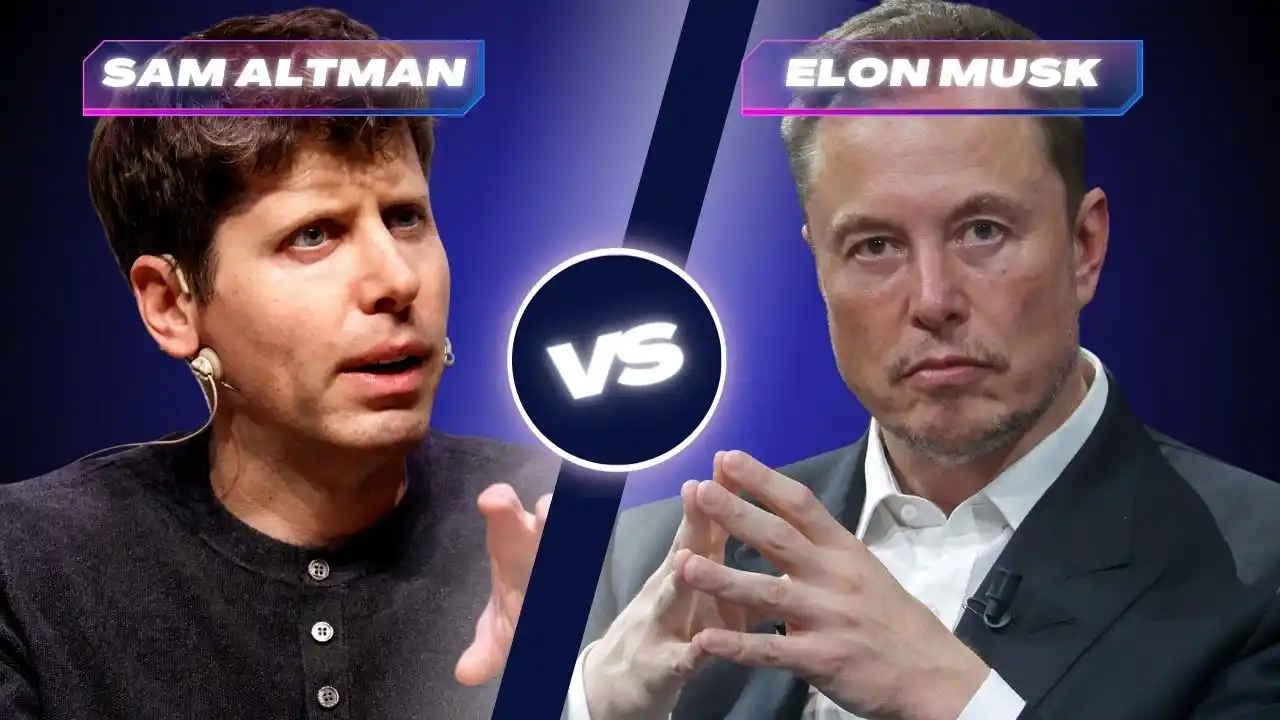
U.S. District Judge Rita F. Lin delivered a significant blow to Elon Musk's legal efforts against his former venture, dismissing the trade secrets lawsuit filed by xAI against OpenAI
1
. The lawsuit, filed in September, accused Sam Altman's OpenAI of orchestrating a coordinated campaign of poaching employees to steal trade secrets connected to xAI's Grok chatbot and data centers3
. Judge Lin ruled that xAI failed to provide sufficient evidence that OpenAI committed any misconduct, noting that "notably absent are allegations about the conduct of OpenAI itself"4
.
Source: Digit
Failed to Prove OpenAI Induced Employee Misconduct
The core issue with xAI's complaint centered on its inability to demonstrate that OpenAI actively induced former employees to steal confidential information or that the company used any stolen source code once these individuals were hired. Judge Lin emphasized that xAI "does not allege any facts indicating that OpenAI induced xAI's former employees to steal xAI's trade secrets or that these former xAI employees used any stolen trade secrets once employed by OpenAI"
1
. While two employees admitted to downloading xAI's source code—with one improperly taking a recording from a Musk "All Hands" meeting—the judge found no evidence linking OpenAI to these actions1
.Hiring from a Competitor Not the Same as Theft
Commercial litigator Sarah Tishler explained that the ruling "boils down to a fundamental concept in trade secret law: hiring from a competitor is not the same as stealing trade secrets from one"
1
. Under the Defend Trade Secrets Act, xAI must demonstrate that OpenAI actually received and used the alleged trade secrets, not merely that it hired employees who may have taken them. The case of Xuechen Li, one of xAI's earliest engineers, exemplified this challenge. Li allegedly uploaded the entire xAI source code base to a personal cloud account and gave a presentation to OpenAI that supposedly included confidential information1
. However, OpenAI stated that Li never actually worked for the company after his offer was rescinded3
.Allowed to Refile the Case with Stronger Evidence
Judge Lin's dismissal came with leave to amend, giving xAI until March 17 to file a revised complaint that addresses the current deficiencies
5
. Legal experts suggest that any amended complaint will need to include much more specific, fact-based allegations tying OpenAI directly to the misappropriation claim5
. Ishita Sharma, managing partner at Fathom Legal, noted that courts want "very specific, fact-based allegations" and that "simply hiring former employees isn't enough" without evidence of inducement or use5
.
Source: Reuters
Related Stories
Part of Ongoing Legal Battle and Campaign of Harassment
OpenAI celebrated the ruling, characterizing the lawsuit as part of Musk's "ongoing campaign of harassment"
3
. This case represents just one front in the broader ongoing legal battle between Elon Musk and OpenAI, which he co-founded in 2015 but left in 20182
. Musk is separately suing OpenAI and Microsoft over the company's conversion to a for-profit entity, seeking up to $134 billion in damages3
. Jury selection for that case is scheduled for April 273
. Additionally, Musk recently asked a federal judge to block OpenAI from using WilmerHale's investigation into Sam Altman's ouster and return as CEO at the upcoming trial2
.
Source: Reuters
Implications for AI Industry Talent Movement
The ruling carries significant implications for the AI industry, where competition for top talent remains fierce. Tishler suggested that other tech companies poaching talent for AI projects will likely feel relieved by the decision, as it reaffirms that "suspicion is not enough" and that companies must prove "the stolen information actually made it into the competitor's hands and was put to use"
1
. In fast-moving AI markets where talent moves quickly and competitive stakes are enormous, this precedent establishes clear boundaries for what constitutes actionable trade secret theft versus legitimate employee recruitment. A parallel lawsuit against Xuechen Li personally remains active, with his response deadline extended to March 65
. OpenAI has maintained throughout that it never acquired or used any of xAI's secrets, and that ChatGPT's success stems from its own innovations rather than any misappropriated technology3
.References
Summarized by

Navi
Related Stories
Recent Highlights


Recent Highlights
Today's Top Stories










Your Daily Dose of Curated AI News
Don’t drown in AI news. We cut through the noise - filtering, ranking and summarizing the most important AI news, breakthroughs and research daily. Spend less time searching for the latest in AI and get straight to action.

