McDonald's pulls AI-generated Christmas ad after massive public backlash over quality and ethics


25 Sources
25 Sources
[1]
McDonalds and Coca-Cola Made AI Slop Holiday Commercials, and I'm Not Lovin' It
I was sitting in a movie theater with my mom, freshly buttered popcorn in hand, ready to see Dave Franco star in Now You See Me 3, when our previews were rudely interrupted with Coca-Cola's newest holiday ad. While my mom was enjoying the cute polar bears, I was scowling. When she asked me what was wrong, I told her that this was the AI commercial I hadn't been able to escape lately. McDonald's and Coca-Cola seem determined to ruin our holiday cheer this year with AI. Each company has released a holiday-themed commercial, and each is terrible in its own way. And if the online backlash is anything to go by, I'm not the only one mad about the usage of AI. McDonald's is the newest offender, with its commercial featuring a series of holiday-themed mishaps, set to a parody of the song It's the Most Wonderful Time of the Year, about how it's actually the most terrible time of the year. The commercial is only 30 seconds long and intended only for the Netherlands, but it has already garnered so much hate online that the company has removed the video from its pages. The marketing agency behind the spot, The Sweetshop Film, still has the video up on its website. The McDonald's ad is very clearly AI, with short clips stitched together with a bunch of hard jump cuts. The text isn't nearly legible, fine details are off, and it just has that AI look I've come to quickly recognize as an AI reporter. By contrast, the Coca-Cola commercial is a little more put-together. A Coca-Cola truck drives through a wintry landscape and into a snowy town, and forest animals awaken to follow the truck and its soda bottle contents to a lit Christmas tree in a town square. But even this video has clearly AI-generated elements. While disappointed, I wasn't surprised when I saw the ad and the resulting backlash. There has been a surge in creative generative AI tools, especially in the past year, with numerous AI tools built specifically for marketers. They promise to help create content, automate workflows and analyze data. A huge proportion (94%) of marketers have a dedicated AI budget, and three-quarters of them expect that budget to grow, according to Canva's 2025 Marketing and AI report. What is completely and utterly exhausting is huge corporations like McDonald's and Coca-Cola choosing to rely so heavily on AI. McDonald's made $25.9 billion in revenue in 2024, and Coca-Cola made $47.1 billion. Do these companies expect us to be OK with AI slop garbage when they could've spent a tiny fraction of that to hire a real animator or videographer? These feel-good, festive commercials manage to hit upon every single controversial issue in AI, which is why they're inspiring such strong reactions from viewers. AI content is becoming -- has already become -- normalized. We can't escape chatbots online and AI slop in our feeds. McDonald's and Coca-Cola's use of AI is yet another sign that companies are plowing ahead with AI without truly considering how we'll react. Like advertisements, AI is inescapable. If AI in advertising is here to stay, it's worth breaking down how it's used and where we, as media consumers, don't want to see it used. And while this is very much not a defense of Coca-Cola or AI, there is at least one thing the company did right with this specific ad. Don't miss any of our unbiased tech content and lab-based reviews. Add CNET as a preferred Google source. The Holidays Are Coming ad is a remake of Coca-Cola's popular 1995 ad. In a behind-the-scenes video, Coca-Cola breaks down how it was created. It's obvious where AI was used to create the animals. But I'm not sure I believe the company went "pixel by pixel" to create its fuzzy friends. Coca-Cola's AI animals don't look realistic; they look like AI. Their fur has some detail, but those finer elements aren't as defined as they could be. They also aren't consistent across the animal's body. You can see the fur gets less detailed further back on the animal. That kind of detailed work is something AI video generators struggle with, but it's something a (human) animator likely would've caught and corrected. The animals make overexaggerated surprised faces when the truck drives past them, their mouths forming perfect circles. That's another sign of AI. You can see in the behind-the-scenes video that someone clicks through different AI variations of a sea lion's nose, which is a common feature of AI programs. There's also a glimpse of a feature that looks an awful lot like Photoshop's generative fill. Google's Veo video generator was definitely used at least once. The company has been all-in on AI for a while, starting with a 2023 partnership with OpenAI. Even Coca-Cola's advertising agency, Publicis Group, bragged about snatching Coca-Cola's business with an AI-first strategy. It seems clear that the company won't be swayed by its customers' aversion to AI. (Disclosure: Ziff Davis, CNET's parent company, in April filed a lawsuit against OpenAI, alleging it infringed Ziff Davis copyrights in training and operating its AI systems.) There is exactly one thing Coca-Cola got right, and that's the AI disclosure at the beginning of the video. It's one thing to use AI in your content creation; it's entirely another to lie about it. Labels are one of the best tools we have to help everyone who encounters a piece of content decipher whether it's real or AI. Many social media apps let you simply toggle a setting before you post. It's so easy to be clear, yet so many brands and creators don't disclose their AI use because they're afraid of getting hate for it. If you don't want to get hate for using AI, don't use it! But letting people sit and debate about whether you did or didn't is a waste of everyone's time. The fact that AI-generated content is becoming indistinguishable from real photos and videos is exactly why we need to be clear when it's used. It's our collective responsibility as a society to be transparent with how we're using AI. Social media platforms try to flag AI-generated content, but those systems aren't perfect. We should appreciate that Coca-Cola didn't lie to us about this AI-generated content. It's a very, very low bar, but many others don't pass it. (I'm looking at you, Mariah Carey and Sephora. Did you use AI? Just tell us.) In June, Vogue readers were incensed when the US magazine ran a Guess ad featuring an AI-generated model. Models at the time spoke out about how AI was making it harder to get work on campaigns. Eagle-eyed fans caught J.Crew using "AI photography" a month later. Toys R Us made headlines last year when it ran a weird ad with an AI giraffe, though it did share that it was made with an early version of OpenAI's Sora. Something that really stung about the use of AI by Guess and J.Crew is how obvious it was that AI was used in place of real models and photographers. While Coca-Cola and Toys R Us's use of AI was equally clear, the AI animals didn't hit quite the same. As the Toys R Us president put it, "We weren't going to hire a giraffe." Points for honesty? Even so, it's more than likely that real humans lost out on jobs in the creation of these AI ads. Coca-Cola's commercial could've been created, and probably improved, if it had used animators, designers and illustrators. Job loss due to AI worries Americans, and people working in creative industries are certainly at risk. It's not because AI image and video generators are ready to wholly replace workers. It's because, for businesses, AI's allure of cutting-edge efficiency offers executives an easy rationale. It's exactly what just happened at Amazon as it laid off thousands of workers. It's easy to look at Coca-Cola's and McDonald's AI holiday ads and brush them off as another tone-deaf corporate blunder, especially when there are so many other things to worry about. But in our strange new AI reality, it's important to highlight the quiet moments that normalize this consequential, controversial technology just as much as the breakthrough moments. So this holiday season, I think I'll drink a Pepsi-owned Poppi cranberry fizz soda instead of a Coke Zero.
[2]
Somehow, this AI-generated McDonald's ad about hating Christmas was a flop
If you're having a stressful holiday season, the answer is McDonald's -- at least, that's what a now-removed AI-generated ad suggested. Set to a song calling holiday season "the most terrible time of the year," the ad shows AI-generated people falling victim to a slew of wintery woes, including family dinners, shopping, caroling, baking cookies, and putting up a Christmas tree, each of which goes wrong somehow. The ad concludes by telling viewers to "hide out in McDonald's until January's here." The ad for McDonald's Netherlands has been delisted on YouTube, although it's also been reposted elsewhere on social media, where the comments are largely negative, criticizing not just the use of AI, but the quality and message of the ad, as well. That backlash might not be surprising considering the response to Coca-Cola's most recent AI-generated holiday ad. However, unlike Coca-Cola's ad, the McDonald's ad took the risk of including people, rather than just cartoon forest critters. Most of the people in the ad aren't seen again and some of the shots are a bit off, like one showing a person falling while ice skating, only for their limbs to turn jelly-like halfway through. In a post on LinkedIn, The Gardening.club, the AI division of The Sweetshop, the studio behind the ad, said the ad took them "seven intense weeks" to create. They even admitted "the man-hours poured into this film were more than a traditional production." Melanie Bridge, CEO of The Sweetshop, shared similar comments in a post on Instagram, saying, "The hours that went into this job far exceeded a traditional shoot. Ten people, five weeks, full-time. Blood, sweat, tears, and an honestly ridiculous amount of coaxing to get the models to behave and to honor the creative brief shot by shot."
[3]
McDonald's pulls AI-generated Christmas advert following backlash
The video also provoked concerns for job displacement in the industry, with one Instagram comment noting: "No actors, no camera team..welcome to the future of filmmaking. And it sucks." Following the video being made private on the McDonald's Netherlands YouTube channel, The Sweetshop's chief executive Melanie Bridge defended the advert. As quoted in Futurism, she said the production process took "seven weeks" where the team "hardly slept" and created "thousands of takes - then shaped them in the edit just as we would on any high-craft production". "This wasn't an AI trick," she said. "It was a film." In a statement to BBC News, McDonald's Netherlands said the video was meant to "reflect the stressful moments that can occur during the holidays" but had decided to remove the advert. "This moment serves as an important learning as we explore the effective use of AI," it said. Where normally a high-publicity Christmas campaign could take up to a year to pull off, companies have begun to look to firms which can produce films in a much shorter time span, using prompts from generative AI tools to create new video content. Coca-Cola seems to have been able to sway at least some of the general public with its second AI-generated Christmas ad in a row. While the use of AI to create the advert has been divisive, a report from analytics company Social Sprout found it had a 61% "positive sentiment rating" from commenters online. But several other businesses such as the Italian luxury fashion house Valentino have come under fire for using the technique in their campaigns, with critics calling Valentino's advert "cheap" and "lazy". BBC News has contacted The Sweetshop and TBWA\Neboko for comment.
[4]
Watch the AI-generated Christmas ad McDonald's pulled after massive backlash
Serving tech enthusiasts for over 25 years. TechSpot means tech analysis and advice you can trust. Facepalm: Companies that are excited about generative AI speeding up productivity - usually at the cost of human employees - often don't care about the public's opinion. But McDonald's just found out what happens when you ignore the general consensus. Its new AI-made Christmas ad has been pulled after being universally panned. McDonald's Netherlands unwisely decided that an AI-generated ad would be a good idea to promote its Christmas campaign. It's pretty easy to spot the tell-tale signs that something was created by an AI, especially when it includes "real" people, as this 45-second ad does. The ad itself revolves around the concept that Christmas is the "most terrible time of the year," ironically. It contains the usual awfulness you'd expect to see in these sorts of things: background characters with distorted faces, bizarre physics, and bodies that blend and twist into themselves. It's all quite Lovecraftian, frankly. The Gardening.club, the AI division of The Sweetshop, which made the ad, defended it on LinkedIn. The team acknowledged that AI film divides opinion and that the ad is 100% AI-generated, but it also claims that the number of hours poured into the production was more than what would be required for a traditional ad. "Just like a traditional shoot, the film needed a director, real storytelling instincts, and intentional casting, we selected and shaped each AI performer, their look, energy, and emotional presence, to meet the brief just as we would in live action film. It required virtual location scouting, solid references, screen tests, and a countless amount of takes to maintain true cinematic continuity," the post reads. The Sweetshop's CEO, Melanie Bridge, said on Instagram that it took ten people five weeks of full-time work to create the ad. Despite highlighting the amount of work that went into the clip, the overwhelming majority of people hate it. There's also been plenty of mockery over the claims that making the ad was so difficult. "If you're using A.I. to create something, then you didn't make anything," wrote one X user. McDonalds Netherlands has now delisted the AI ad on YouTube, but plenty of social media users have re-posted it. Even though we're used to this sort of response, companies keep pushing out AI content like this. Coca-Cola was slammed for its AI-generated holiday ad in 2024, but it still released two more AI-made ads for Christmas 2025. As users raged against more AI slop, Pratik Thakar, head of generative AI at Coca-Cola, gave this less-than-diplomatic response: "The genie is out of the bottle," Thakar told The Hollywood Reporter, "and you're not going to put it back in."
[5]

Everyone Hated the McDonald's AI Christmas Ad So Much It Got Taken Down
It's a disquieting new holiday tradition: a major corporation that should know not to dunk its reputation in the sewer celebrates the holidays by releasing a punishing, demonic commercial made with the latest batch of AI doohickeys. It's about how much the holiday season sucks. Get it? It's also genuinely hard to sit through because at every level from the subtle to the screechingly obvious, it looks and sounds all wrong. Everyone hates it. Everyone. For instance, I disagree with Matt Walsh about just about everything, but folks, Matt Walsh is right: According to Adforum, where a full video of the ad is still being hosted, it was commissioned by a firm called TBWA\NEBOKO in the Netherlands, presumably for the Dutch market. But the original YouTube channel that hosted the ad has already taken it private. According to a post on the site 80 Level, the studio that produced this for TBWA/NEBEKO is called The Sweetshop, and it released a puzzling statement (apparently also now deleted) that reads like it was confused about why there was a backlash: “For seven weeks, we hardly slept, with up to 10 of our in-house AI and post specialists at The Gardening Club working in lockstep with the directors. Every shot travelled through a rigorously engineered toolchain: real Google Earth plates, advanced style-transfer, pixel-level photo repair, custom LoRAs, control nets, bespoke ComfyUI graphs, and thousands upon thousands of tightly steered iterations. Then came compositing, lighting balance, physics corrections, artefact removal, and final finishing in Flame. We generated what felt like dailies â€" thousands of takes â€" then shaped them in the edit just as we would on any high-craft production. This wasn’t an AI trick. It was a film. And here’s the thing I wish more people understood: magic isn’t the technology. The magic is the team behind it, people who pushed, questioned, experimented, swore at broken models, solved impossible problems, and refused to stop until every frame felt cinematic. I don’t see this spot as a novelty or a cute seasonal experiment. To me, it’s evidence of something much bigger: that when craft and technology meet with intention, they can create work that feels genuinely cinematic. So no â€" AI didn’t make this film. We did.†People weren't upset because using AI is cheating. They were reacting to a bad commercial. This might be overkill, but I've watched this thing a few dozen times now, and here's what's wrong with it for the benefit of the folks who made it: The jingle is a parody of the holiday standard “It’s The Most Wonderful Time of the Year†that sounds like it was made by prompting a music generator to be grouchy about Christmas. Rather than a cute ditty, it produced something discordant and unexpectedly halting that breaks away from the original melody and meter and meanders down unsatisfying lyrical rabbit holes. Few if any of the scenarios produce any feeling of recognition. I suppose a lot of this is because they’re AI generations, but it’s also because the situations aren’t relatable. For a montage like this, each clip should play out a scenario from a familiar holiday gripe. Who has ever cheerfully wassailed in gale force winds? Who has battled another shopper on Black Friday over a generic teddy bear? Who can relate to the guy trying to pedal up an icy slope in a combination pedicab-wheelbarrow with a 12-foot Christmas tree sticking out? Even if you’re Dutch, I can’t imagine this makes sense. At 0:20, the diners at the Christmas feast with the centerpiece on fire appear to be having a great time, and seem disappointed by someone putting it out with a fire extinguisher. At 0:30, the cat that jumps onto the tree doesn’t seem to pull the tree down. It looks more like the tree is rotating downward on a hinge like the gate in a parking garage. The AI can’t seem to decide if the couple at 0:36 is inside the cozy interior of a McDonald’s or outside in a bitterly cold rainstorm. But moreover, this message is just off the mark for 2025. This kind of unsubtle "bad attitude" humor was all the rage in the 90s, when a t-shirt could have a slogan like "Life sucks!" printed on it and people at beach town souvenir stores would spend millions on it. In fact, "It's The Most Wonderful Time of the Year" was used to great effect 29 years ago in this Staples commercial from back-to-school season about a dad who hates his children, as was the style at the time: While this ad is mean, it at least has people in it, and you can't help but feel something when a human actor conveys an emotion successfully. AI cannot do this and never will.
[6]

AI-made McDonald's Christmas ad angers people for lacking human touch
The 45-second spot revolved around the theme that the holiday season is the "most terrible time of the year." It was labeled "cold" and emotionless by viewers who decried its low quality and the use of AI rather than human artists. The advertisement was produced with the cynical idea that the holiday season is the "most terrible time of the year," thereby presenting McDonald's as a peaceful sanctuary free from seasonal chaos. It depicts AI-generated individuals suffering through various common winter activities that go wrong, such as stressful family dinners, chaotic shopping, caroling, botched cookie baking, and disastrous Christmas tree decorating. The commercial ends with saying: "Hide out in McDonald's until January's here." Viewers criticized both the quality and the message of the advertisement. The AI-generated McDonald's ad was visually jarring with rapidly changing scenes that complicated the viewing experience.
[7]

McDonald's Netherlands responds to AI holiday ad backlash
Normally, a brand would be thrilled if its new holiday commercial went viral, but a new McDonald's Netherlands ad has gone viral for all the wrong reasons. Originally posted to YouTube on Dec. 6, the holiday commercial was clearly made using generative AI, and it also features a label disclosing it as "AI-generated." The commercial's theme is "The most terrible time of the year," and it features a montage of short clips depicting holiday traditions descending into chaos. The clips bear the hallmarks of generative AI video -- generic-looking actors, exaggerated movements, strange inconsistencies, and a flat, artless aesthetic. This Tweet is currently unavailable. It might be loading or has been removed. After the video gained mainstream attention, the backlash from AI haters was overwhelming. While the "most terrible time of the year" theme may have been intended as tongue-in-cheek, many viewers found the idea cynical. By Dec. 9, McDonald's Netherlands pulled the holiday commercial, or advert. McDonald's provided Mashable with the following statement from McDonald's Netherlands: "McDonald's Netherlands has decided to remove our AI-generated Christmas advert. It was intended to reflect the stressful moments that can occur during the holidays in the Netherlands, but we recognize that for many of our guests, the season is 'the most wonderful time of the year'. We respect that and remain committed to creating experiences that offer Good Times and Good Food for everyone." Recently, Coca-Cola published its own AI-generated holiday commercial, made in partnership with the AI studio Secret Level. Though Coca-Cola also faced backlash for its ad, the company has continued playing the ad throughout the holiday season, undeterred by critics. The BBC reports that the McDonald's Netherlands commercial was made by the Dutch company TBWA\Neboko and the U.S. company The Sweetshop. Speaking to Futurism, the CEO of Sweetshop emphasized that a lot of human labor went into the final product. "We generated what felt like dailies -- thousands of takes -- then shaped them in the edit just as we would on any high-craft production," the CEO reportedly said. "This wasn't an AI trick. It was a film." But for AI critics, any amount of AI in filmmaking or advertising is unacceptable, full stop. Likewise, writers and actors' unions have fought against expanding the use of generative AI. Even so, Hollywood and Madison Avenue leaders appear eager to adopt the new technology.
[8]

'Ruined my Christmas spirit': McDonald's removes AI-generated ad after backlash
Commercial in Netherlands depicting festival-season chaos at 'most terrible time of year' prompted flurry of criticism online McDonald's says it has removed an AI-generated Christmas advertisement in the Netherlands after it was criticised online. The ad, titled "the most terrible time of the year", depicts scenes of Christmas chaos, with Santa caught in a traffic jam and a gift-laden Dutch cyclist slipping in the snow. And the message? Retreat to a McDonald's restaurant until January and ride out the festive season. But the generative AI advertisement from the Big Mac maker's Netherlands division sparked a flurry of criticism on social media. "This commercial single-handedly ruined my Christmas spirit," said one user. "Good riddance to AI slop," posted another. McDonald's Netherlands said in a statement on Wednesday: "The Christmas commercial was intended to show the stressful moments during the holidays in the Netherlands. "However, we notice - based on the social comments and international media coverage - that for many guests this period is 'the most wonderful time of the year'." Melanie Bridge, the chief executive of the Sweetshop Films, the company which made the ad, defended its use of AI in a post on LinkedIn. "It's never about replacing craft, it's about expanding the toolbox. The vision, the taste, the leadership ... that will always be human," she said. "And here's the part people don't see: the hours that went into this job far exceeded a traditional shoot. Ten people, five weeks, full-time." But that too sparked online debate. Emlyn Davies, from the independent production company Bomper Studio, replied to the LinkedIn post: "What about the humans who would have been in it, the actors, the choir? "Ten people on a project like this is a tiny amount compared to shooting it traditionally live action." Coca-Cola recently released its own AI-generated holiday ad, despite receiving backlash when it did the same last year. The company's new offering avoids close-ups of humans and mostly features AI-generated images of cute animals in a wintry setting.
[9]

McDonald's pulls AI-generated Christmas ad after backlash over 'soulless' visuals and holiday chaos
Viewers complained about its eerie visuals and chaotic style A McDonald's Netherlands commercial made with AI has vanished from screens after it provoked an avalanche of mockery and irritation from viewers. Complaints about unsettling visuals and an oddly violent tone for a holiday ad meant the ad for "the most terrible time of the year" only appeared for a few weeks. Ad agency The Sweetshop produced the AI video using its proprietary engine called The Gardening Club. It combined multiple quick sequences of disastrous moments during the holiday season using slightly off people and settings familiar to AI video viewers. Balloon hands, fireball cookies, and eyes a little too wide proclaimed that holiday stress can only be relieved with McDonald's. McDonald's removed the video from YouTube three days after launch, disabling comments before delisting it entirely. But it had already been scraped and spread around the internet. The Sweetshop, the production company behind the campaign, issued a defensive public statement positioning the ad not as an AI stunt but as a handcrafted film made through enormous effort. The process, they claimed, involved seven weeks of sleepless nights and ten AI and post-production specialists. "We generated what felt like dailies - thousands of takes - then shaped them in the edit just as we would on any high-craft production. This wasn't an AI trick. It was a film," Melanie Bridge, CEO of The Sweetshop, wrote in a response to the removal of the ad (itself since removed). "I don't see this spot as a novelty or a cute seasonal experiment. To me, it's evidence of something much bigger: that when craft and technology meet with intention, they can create work that feels genuinely cinematic. So no - AI didn't make this film. We did." Yes, the ad comes off like a corporate attempt at a shortcut around making an actual commercial while pretending to represent artistic risk-taking. But it is also true that wrestling AI hallucinations into coherence is hardly easy. Making bad AI look presentable takes time and creativity. Still, a failure at this level feels like an attack on the viewer's intelligence, not to mention taste. Very much the opposite of the cozy seasonal feeling McDonald's likely hoped to evoke. Generative AI tools are now cheap, accessible, and fast. Marketing teams around the world are using them to make ads quickly and cheaply. But this ad shows that just because you can make an ad with AI doesn't mean you should. And McDonald's certainly isn't the first brand to trip into the uncanny valley this year. Coca-Cola's 2025 holiday campaign received similar criticism for its jarring pacing and algorithmic blandness. AI-generated commercials are becoming more common - and more disliked. When it comes to tone, continuity, and visual coherence, AI still can't hold a candle to human production. McDonald's may not suffer long-term damage from this, but the incident will live on as another example of what happens when brands treat AI as a gimmick. You can try to sell fries with an AI video, but it won't work if people feel ill watching the commercial.
[10]

Filmmakers Behind Hideous AI-Generated McDonald's Ad Insist 'AI Didn't Make It - We Made It'
McDonald's has released an AI-generated Christmas ad featuring morphed faces and mangled bodies, but the filmmakers behind it insist they "hardly slept" for seven weeks while adding, "AI didn't make this film. We did." The 45-second ad made for McDonald's Netherlands is titled: 'It's the most terrible time of the year.' It plays on how the month of December and the run-up to Christmas can be quite stressful, naturally McDonald's is a sanctuary. It's a fairly run-of-the-mill ad, except it was all AI-generated. The ad agency behind it, TBWA\NEBOKO, hired Los Angeles-based director duo MAMA, which consists of Mark Potoka and Matt Starr Spice. While the AI ad itself is controversial enough, it's the directors' comments about making the ad that have prompted some hilarious reactions on the platform X, formerly Twitter. In a since-deleted post on the website Little Black Book, MAMA made a passionate defense of the project. Fortunately, 80LV reposted the directors' quotes. "For seven weeks, we hardly slept, with up to 10 of our in-house AI and post specialists at The Gardening Club working in lockstep with the directors. Every shot travelled through a rigorously engineered toolchain: real Google Earth plates, advanced style-transfer, pixel-level photo repair, custom LoRAs, control nets, bespoke ComfyUI graphs, and thousands upon thousands of tightly steered iterations. Then came compositing, lighting balance, physics corrections, artefact removal, and final finishing in Flame. We generated what felt like dailies - thousands of takes - then shaped them in the edit just as we would on any high-craft production. This wasn't an AI trick. It was a film. And here's the thing I wish more people understood: magic isn't the technology. The magic is the team behind it, people who pushed, questioned, experimented, swore at broken models, solved impossible problems, and refused to stop until every frame felt cinematic. I don't see this spot as a novelty or a cute seasonal experiment. To me, it's evidence of something much bigger: that when craft and technology meet with intention, they can create work that feels genuinely cinematic. So no - AI didn't make this film. We did." The quote at the end, "AI didn't make this film. We did," has prompted scathing criticism, as has the insistence that the team went without sleep for the project. "Our fingers hurt from typing prompts," mocks one X user in a post that has received over 1.3 million views. "AI bros are some of the most unserious people on the planet." X user @jacksfilm also mocked them by pretending to be one of the team: "It's a lot harder than people think! Prompts that my team used include: make it funny, make it epic AND funny, funnier!!!" Tellingly, the comments are turned off for the ad on YouTube. PetaPixel has approached the directors and Little Black Book to find out why the post with those controversial comments has been deleted. The backlash to an AI-generated McDonald's ad was always going to be strong. Another major multinational corporation, Coca-Cola, also made an AI-generated Christmas ad this year, which also received much criticism.
[11]

McDonald's Issues Extremely Weird Response to Its Disastrous AI Ad
"There is no consequence these companies cannot survive, they can not be held accountable, therefore they do not actually respond to backlash." McDonald's has become corporate enemy number one after its hideous AI holiday commercial went viral across numerous social media platforms for all the wrong reasons. TBWA and The Sweetshop -- the agency and production company behind the turd of an ad -- have since tried to scrub it from the net, along with a bizarrely defensive statement by Sweetshop CEO, which is now unavailable. "For seven weeks, we hardly slept, with up to 10 of our in-house AI and post specialists at The Gardening Club [our in-house AI engine] working in lockstep with the directors," the Sweetshop statement read in part. Even weirder than trying to memory hole the disastrous ad was the company's response to the mess. When we asked the artery-clogging megacorporation why it had taken the ad down, it responded with a statement that's the linguistic equivalent of a chicken nugget: unfulfilling, and strangely evasive about its origins. "The commercial was produced for McDonald's Netherlands, but we have decided to remove our AI-generated Christmas advert," the statement read. "It was intended to reflect the stressful moments that can occur during the holidays in the Netherlands, but we recognize that for many of our guests, the season is 'the most wonderful time of the year.'" "We respect that and remain committed to creating experiences that offer Good Times and Good Food for everyone," it continued. The company was also extremely insistent that the incident be blamed on its Netherlands branch. "It is important for accuracy that any references to the brand in your story and headline be to 'McDonald's Netherlands,'" it demanded. Without further comment from either McDonald's Netherlands or its parent company, McDonald's proper, it's tough to say what exactly is going on behind the scenes, though it's easy to speculate. Arguably the most dramatic explanation floating around is that McDonald's -- which has capital in McDonald's Netherlands directly, as opposed to other royalty arrangements -- directed its Dutch segment to run the AI ads itself. If this were the case, it would likely mean that McDonald's headquarters forced its Netherlands counterpart to bite the bullet on the horrifying AI ad in order to test its feasibility for larger market segments. While there's no direct evidence of this, McDonald's strategy of blaming the flap on its Netherlands branch would be the most effective way to contain the brand damage caused by the hideous AI experiment bearing its logo. Do you work for a company using generative AI in its marketing campaigns? Email us at [email protected]. We can keep you anonymous. There's also the "boiling frogs" theory: that corporate execs are trickling out AI slop to slowly wear consumers down and normalize this kind of low-budget swill. As Offensive Security engineer Ryan O'Horo observed, "there is no consequence these companies cannot survive, they can not be held accountable, therefore they do not actually respond to backlash." Whether that's intentional or not is another story, but the point is compelling. As another commenter pointed out, the marketing firm TBWA is a major arm of the Omnicom network, which recently became the largest advertising firm in the world. Why is this important? Despite its immense scale, Omnicom just announced it was laying off some 4,000 employees around the world, at the same time it expands its proprietary AI virtual assistant and in-house generative AI systems. Simply put, these advertising firms desperately want generative AI to become the new norm, in order to cut down on human employees and keep those profit margins strong. When it comes to McDonald's though, the most likely read of this story is also the most mundane. Global brands like McDonald's typically give their international segments significant freedom to decide how to operate. This lets smaller segments of the company tailor products and marketing to local conditions, while testing new "innovations" -- like AI commercials -- in smaller markets before feeding them up the chain. In this scenario, though McDonald's US might not have ordered it, it's still learning and gathering data on the advertisement. Judging by what we've seen so far, the reaction may keep more AI commercials at bay for the foreseeable future. More on fast food: Taco Bell's Attempt to Replace Drive-Thru Employees With AI Is Not Going Well
[12]

McDonald's pulls widely mocked 'AI slop' Christmas ad
McDonald's has quietly pulled a festive advertisement made using AI after it came in for a torrent of abuse online. The 45-second clip, made for its Netherlands division, satirically brands the holiday season the "most terrible time of the year" and subjects viewers to a chaotic barrage of scenes including people getting stuck in fairy lights, burning cookies, and starting kitchen fires. None of the cuts last more than a few seconds, in what has become a telltale sign of an AI-generated video, and it mostly fails to replicate human emotions and the laws of physics. One comment posted on YouTube read: "Even without all the AI slop this ad feels incredibly odd. Ditch your family and hide in McDonalds because Christmas sucks?" Others called it "creepy" and "poorly edited." Another comment on Instagram said: "No actors, no camera team... welcome to the future of filmmaking. And it sucks." The fast food giant took the video down from YouTube after having initially disabled the comments section over the weekend, but it is still up on some advertising archive sites. McDonald's Netherlands said the video was meant to "reflect the stressful moments that can occur during the holidays" but had decided to remove the advert. "This moment serves as an important learning as we explore the effective use of AI," it said, per BBC. Melanie Bridge, chief executive of film production company The Sweetshop, which made the clip, wrote on Instagram that "understandably, a lot of people have been asking me how a traditional film company like ours could ethically make something like this." She added: "The hours that went into this job far exceeded a traditional shoot. Ten people, five weeks, full-time. Blood, sweat, tears, and an honestly ridiculous amount of coaxing to get the models to behave and to honor the creative brief shot by shot." Despite widespread derision over the low quality of AI-generated video content, big brands are increasingly using the technology to make adverts more cheaply. Coca-Cola was pilloried last month for its own serving of festive slop featuring uncanny polar bears and - er, sloths? - romping around a snow-covered landscape. McDonald's ad, meanwhile, was set to the Christmas song It's the Most Wonderful Time of the Year. Darre van Dijk, chief creative officer at TBWA\Neboko, the ad agency behind the project, said: "From the start, we wanted to challenge the conventions of holiday advertising. It all started with the idea of rewriting one of the most iconic Christmas songs." It ended, like so many examples of AI trying to replace human creativity, in ridicule.
[13]

McDonald's pulls its AI-generated Christmas ad after backlash
It's safe to say that AI-generated ads are not going down well with audiences. After the backlash that greeted Coca-Cola's AI-generated Christmas ad last month, you'd expect other corporate giants to be more cautious about releasing their own AI-infused efforts. But no. Recommended Videos McDonald's Netherlands decided it'd be a really good idea to use generative AI tools to knock together its own festive commercial. But folks didn't respond well following its release on December 6. In fact, the criticism was so bad that the company has now pulled the commercial. The 45-second ad, which runs with the idea that Christmas is "the most terrible time of the year," depicts various mishaps taking place during the festive period, from Christmas light entanglements to Santa getting stuck in traffic. The solution, according to the ad, is to seek refuge in a McDonald's. If at all curious, you can watch it here. But while AI-generated video is getting better all the time, the odd color grading, not-quite-right body movements, and short clips made the McDonald's ad an uncomfortable watch for many, along with the fact that these cost-cutting productions are taking the jobs of skilled production crews. "Please bring back people doing things again," a commenter on Instagram wrote, while another said, "A $200 billion dollar company who doesn't even sell real food also can't make a real commercial." A commenter on Reddit was a little more blunt, saying simply, "It's shit." The ad was the brainchild of creative agency TBWANeboko, which hired a production company called The Sweetshop to make it, using AI tools. Following the backlash, The Sweetshop issued a somewhat bizarre statement, shared by Futurism, that appeared to seek some understanding. "For seven weeks, we hardly slept, with up to 10 of our in-house AI and post specialists at The Gardening Club [our in-house AI engine] working in lockstep with the directors," The Sweetshop's CEO said. "We generated what felt like dailies -- thousands of takes -- then shaped them in the edit just as we would on any high-craft production. This wasn't an AI trick. It was a film." The statement continued: "I don't see this spot as a novelty or a cute seasonal experiment. To me, it's evidence of something much bigger: that when craft and technology meet with intention, they can create work that feels genuinely cinematic. So no -- AI didn't make this film. We did." With both Coca-Cola and McDonald's now having felt the heat over their respective AI ads, it's going to be interesting to see if other major companies lean into the technology -- or steer well clear of it -- for their own TV commercials.
[14]

Not lovin' it: McDonald's pulls AI-generated Christmas ad after social media backlash
Some social media users in the Netherlands said they couldn't stomach it, so McDonald's has withdrawn an advertisement generated entirely by artificial intelligence. Entitled "the most terrible time of the year," the 45-second video was released on the fast-food giant's YouTube channel for the country Saturday. As a reworked version of the Andy Williams song "It's the Most Wonderful Time of the Year" plays in the background, a series of mishaps befall people at Christmas. Presents are knocked off the top of a car by a low bridge, carol singers have their sheet music blown away and even Santa Claus' sled gets stuck in traffic. Other scenes show a man breaking bones as he slips while ice skating, a woman being dragged off by a tram after her coat gets caught in the door and a man hanging from his feet after he tried to put up Christmas lights on his house. Customers are then advised to escape the festive "madness" and "hide out in McDonald's till January's here." The humorous take on the festive period did not go down well with some social media users, some of whom denounced the use of AI to create it. One X user, Ian Fisch, called it "unsettling" while another, Richard Roeper said that McDonald's succeeded if it was going for "creepy," "poorly edited" and "inauthentic" content. Even setting aside the AI "slop," the ad itself came across as "so cynical and unfun," British voice actor Jon Cartwright wrote on X. "Regardless of being made with AI, this is just a bad idea for a commercial," another X user, Bobby Stapleton, said in a post. Most people enjoy Christmas and "nobody wants negative vibes," he added. After hearing the feedback, McDonald's Netherlands said in an email to NBC News on Wednesday that it had removed the ad. While "it was intended to reflect the stressful moments that can occur during the holidays in the Netherlands," the company recognizes "that for many of our guests, the season is 'the most wonderful time of the year,'" it said. The short film was created for McDonald's Netherlands by the U.S. production company The Sweetshop Films and the Dutch advertising agency TBWA/Neboko. Neither company responded immediately when NBC News reached out for comment Thursday. But Sweetshop Films CEO Melanie Bridge defended the use of AI in a LinkedIn post, the Agence France Presse news agency reported Wednesday. "It's never about replacing craft, it's about expanding the toolbox. The vision, the taste, the leadership... that will always be human," AFP quoted Bridge as saying in the post which has subsequently been deleted. "And here's the part people don't see: the hours that went into this job far exceeded a traditional shoot. Ten people, five weeks, full-time." And some social media users expressed sympathy for the production team. "This is absolutely devastating for the AI artists who put their time and effort into creating this," wrote one X user, posting under the name Chris. "Yes, it was AI generated, but there were still real people behind it making creative decisions, refining prompts, and crafting the final piece," the user added. Others were quick to argue back with comments raising broader concerns of AI's impact on the creative job market. AI-generated content has become increasingly popular in advertising, with major corporations like Coca-Cola using the technology. After facing significant backlash last year, the soft drinks giant steered clear of showing AI humans close up. Instead computer generated polar bears, rabbits, and squirrels took center stage this year.
[15]

McDonald's achieves AI apotheosis with a generative AI Christmas ad so utterly miserable, the production company responsible took down a statement defending it: This was 'an important learning,' McDonald's exec says, but what did we learn?
'The holidays suck ass and we'll be lucky to get out of them with our health and sanity intact, but at least we can shove some crappy fast food into our slack pieholes before the existential darkness claims us': That's the premise of a new McDonald's holiday ad that, as reported by the BBC, was quickly pulled after it went out because not only was it utterly miserable, it was also made entirely with generative AI. "McDonald's unveiled what has to be the most god-awful ad I've seen this year -- worse than Coca-Cola's," Theodore McKenzie of 80 Level wrote on X. "Fully AI-generated, that's one. Looks repulsive, that's two. More cynical about Christmas than the Grinch, that's three." And then, in the true spirit of the holidays, he added, "I don't wanna be the only one suffering, take a look." Some users had slightly more pointed thoughts about the whole thing. The backlash was so furious that it not only forced the ad off the internet, but also a reported defense of the spot made by Melanie Bridge, CEO of The Sweetshop, the production company that actually made the thing. Fortunately, Futurism caught some bangin' quotes. "For seven weeks, we hardly slept, with up to 10 of our in-house AI and post specialists at The Gardening Club [our in-house AI engine] working in lockstep with the directors," Bridge wrote. "We generated what felt like dailies -- thousands of takes -- then shaped them in the edit just as we would on any high-craft production. This wasn't an AI trick. It was a film." Bridge also said that this ad wasn't "a novelty or a cute seasonal experiment," and that really, you know, when you think about it, it's not really AI generated at all: "When craft and technology meet with intention, they can create work that feels genuinely cinematic. So no -- AI didn't make this film. We did." Look, I don't necessarily think that forcing a team of 10 people to spend nearly two months of sleepless nights punching different variations of phrases into the plagiarism slop machine is an efficient and effective way to come up with 30 seconds of capitalist garbola. But on the other hand I also don't think that the holidays are a relentlessly shitty time that we'd all be better off without. Maybe that's why I look so askance at corporate insistence on cranking out this crap despite the very clear fact that nobody likes or wants it. That AI-generated Coke ad McKenzie mentioned, for instance, is still online -- it's at least superficially festive and doesn't look like it was conceived by someone who wants to beat their neighbor to death with a giant novelty candy cane -- but it's currently wearing 184,000 dislikes on YouTube, compared to just 11,000 likes. As for this McDonald's mess, a rep for McDonald's in the Netherlands, the division of the company the ad was made for, told the BBC the incident "serves as an important learning as we explore the effective use of AI." Somehow, I suspect nothing will be learned.
[16]

Not ready? McDonald's AI-generated ad taken down after public backlash - SiliconANGLE
Not ready? McDonald's AI-generated ad taken down after public backlash McDonald's has pulled a Christmas ad that was produced with artificial intelligence after the fast-food chain came under fire from much of the public. The 45-second film was released publicly on McDonald's Netherlands YouTube channel on Dec. 6. Comprising a sequence of AI-generated clips, the ad featured people having a tough time at Christmas - caught in bad weather, disastrous family dinners, a Christmas tree falling, and burnt Christmas cookies. The song, "It's the Most Wonderful Time of the Year," became "the most terrible time of the year." The solution: "Hide out in McDonald's until January's here." However, it wasn't the cynicism that rankled the public. Comments online were almost all negative, with people accusing McDonald's of embracing "AI slop." A large number of people called the ad "creepy" or "lazy", with some decrying a future in which companies try to save a few pennies at Christmas by not hiring humans. Google LLC and The Coca-Cola Company have faced a similar backlash after creating AI-generated ads. "No actors, no camera team, no light, no sound, just probably one guy, alone in front of a computer battling with an AI prompt who steals the look and everything else from someone else," said an Instagram user about the McDonald's ad. "Welcome to the future of filmmaking." The advert was created by Dutch company TBWA\Neboko along with the U.S. production company The Sweetshop. The Chief Executive of Sweatshop, Melanie Bridge, seemed less than pleased with the criticism, writing in a statement that it took seven weeks to make the ad with up to 10 in-house AI and post specialists. "We generated what felt like dailies -- thousands of takes -- then shaped them in the edit just as we would on any high-craft production," she said in a post on Instagram that has now been removed. "This wasn't an AI trick. It was a film... AI didn't make this film. We did." "It's fascinating that you've had to work so hard to make it not look like AI slop, but I'm afraid it's still AI slop that's really creepy to watch," someone wrote in response. "Weirdly, it kind of gives me hope that AI just can't replace human creativity! Here's hoping." Nonetheless, according to data compiled by the social media management and analytics company Sprout Social, the recent surge of AI-generated ads has gained positive responses from 61% of the public. AI-entertainment is evidently divisive. It just seems those who aren't in favor, hate it. "This moment serves as an important learning as we explore the effective use of AI," McDonald's told the BBC.
[17]
McDonald's Turns Off Comments on AI-Generated Advert After Deluge of Mockery, Then Pulls It Down Entirely
Thanks to the rise in popularity of generative AI, mainstream companies like Coca-Cola and Google are jumping to use AI to plop out new advertisements. There's just one issue: pretty much everybody hates it. This year, McDonald's decided to get in on the corporate slopfest with a 45-second Christmas spot cooked up for its Netherlands division by the ad agency TBWA\Nebeko. The entire thing is AI, and revolves around the thesis that the holiday season is the "most terrible time of the year." Humbug aside, the ad assaults the viewer with a rapidly-changing scenes played out in AI's typically nauseating fashion. Because most videos generated with AI tend to lose continuity after a handful of seconds, short and rapidly-changing scenes have become one of the key tells that the clip you're watching is AI. Similar to Coke's 2025 Holiday ad, the McDonald's spot is like a visual seizure, full of grotesque characters, horrible color grading, and hackneyed AI approximations of basic physics. Though the abomination of an ad only has 20,000 views on YouTube, backlash in the comments was so intense that McDonald's shut down comments over the weekend, before delisting the video entirely. (Some marketing research databases managed to scrape the clip, if you're curious.) "The future is here, and it's not looking good," one poster mused under an aggregator account on Instagram. "So a company with that amount of resources couldn't create a full production with a big team of people to work together and create something actually worth while?" asked another. "Brilliant." Following the outcry, The Sweetshop -- the production company hired by TBWA\Nebeko to create the ad -- released an incredibly defensive statementjustifying their work. "For seven weeks, we hardly slept, with up to 10 of our in-house AI and post specialists at The Gardening Club [our in-house AI engine] working in lockstep with the directors," Sweetshop's CEO wrote. "This wasn't an AI trick. It was a film." Sweetshop even went so far as to argue that the amount of labor hours wasted cleaning up AI hallucinations justifies the horrible end product. "We generated what felt like dailies -- thousands of takes -- then shaped them in the edit just as we would on any high-craft production," they said. "This wasn't an AI trick. It was a film." "I don't see this spot as a novelty or a cute seasonal experiment," the CEO continued. "To me, it's evidence of something much bigger: that when craft and technology meet with intention, they can create work that feels genuinely cinematic. So no - AI didn't make this film. We did." Though this seems to be McDonald's first AI commercial, it isn't the corporation's first brush wish the tech. Back in March, when the Studio Ghibli AI pictures were all the rage thanks to ChatGPT, McDonald's Mexico jumped on the trend, posting AI memes on its social media accounts. (Those didn't fare much better.) So while the contractors behind the campaign seem content to pat themselves on the back, the public sentiment seems clear: if we have to live in a world where we're constantly blasted by obnoxious ads, they could at least be made by a human.
[18]

McDonald's AI-Generated Christmas Ad Sparks Backlash: Not Lovin' It
Another brand is in the hot seat for using AI to generate Christmas cheer. McDonald's Netherlands has pulled a commercial generated entirely by artificial intelligence after social media backlash. The video, titled "It's the Most Terrible Time of the Year," was posted to its YouTube channel on Dec. 6. The 45-second spot features AI-generated people experiencing holiday-related mishaps, while a reworked version of the Andy Williams song "It's the Most Wonderful Time of the Year" soundtracks the mayhem. The ad starts with a family in a car topped with presents getting into an accident on an overpass, followed by a quick succession of despair-filled moments: Christmas trees that are too heavy, too big or too enticing to mischievous cats cause injuries and accidents; carolers struggle to sing in a blizzard; relatives ignore personal space; and a man causes a citywide blackout. Ending with a man relieved to enter a McDonald's, the ad asks customers to "hide out in McDonald's till January's here." Backlash within the Netherlands and across the world broke out on social media: The ad was created by a U.S. production company, Sweetshop Films, along with Dutch advertising agency TBWA/Neboko. Neither company immediately responded to TODAY.com's request for comment. According to Futurism, Sweetshop released a statement justifying their work (which was also seemingly taken down), saying in part that the AI-generated commercial consisted of "thousands of takes" that were then edited just like "any high-craft production" and that it "wasn't an AI trick. It was a film." "I don't see this spot as a novelty or a cute seasonal experiment," Sweetshop's CEO wrote. "To me, it's evidence of something much bigger: that when craft and technology meet with intention, they can create work that feels genuinely cinematic. So no -- AI didn't make this film. We did." Meanwhile, a representative for McDonald's Netherlands tells TODAY.com the ad was meant "to reflect the stressful moments that can occur during the holidays in the Netherlands" but recognizes "for many of its customers," it's "the most wonderful time of the year." "We respect that and remain committed to creating experiences that offer Good Times and Good Food for everyone," the rep adds. McDonald's is not the first major brand to get flack for an AI-generated Christmas ad: In November, Coca-Cola released its annual "Holidays Are Coming" ads on YouTube, and some were generated with artificial intelligence for the second year in a row. Just like the 2024 ads, this year's commercials were received poorly, with one person calling them "immediately forgettable." At the same time, on Dec. 11, Time announced exclusively on TODAY that its 2025 "Person of the Year" are the "Architects of AI," including Elon Musk and Sam Altman. As people discuss the publication's decision online, the Walt Disney Company announced it had reached a three-year agreement with OpenAI -- helmed by Altman -- to allow its Sora AI video generator to use its cast of characters.
[19]

McDonald's Pulls 'Soulless' AI-Generated Christmas Ad After Wave Of Mockery
"Companies are racing to see who can piss off the most amount of people with the lowest amount of effort," one X user wrote. McDonald's took down its recent Christmas ad produced for the Netherlands after receiving widespread criticism and mockery for its use of generative artificial intelligence. "It's hard to recall a more soulless and ingenuine piece of work than this," one user on X wrote. The 45-second ad opens with the sung line, "it's the most terrible time of the year," a parody of Andy Williams's "It's the Most Wonderful Time of the Year" Christmas jingle, before delving into a rapid montage of AI-generated clips of people struggling amid holiday chaos. The ad concludes with an AI-generated man walking into a McDonald's as "so you flee from the madness, the lights and the cheer, and hide out in McDonald's till January's here," is sung in the background. "Not even considering the ai slop, the messaging of the ad is literally 'fuck christmas, fuck your family, eat mcdonald's instead,' one X user criticized. The Sweetshop, which produced the ad with Dutch company TBWA\Neboko, defended its work in a statement quoted by tech news outlet Futurism, saying "for seven weeks, we hardly slept, with up to 10 of our in-house AI and post specialists at The Gardening Club [our in-house AI engine] working in lockstep with the directors." "We generated what felt like dailies -- thousands of takes -- then shaped them in the edit just as we would on any high-craft production," Melanie Bridge, the company's CEO, reportedly said. "This wasn't an AI trick. It was a film." Bridge went on to say she doesn't "see this spot as a novelty or a cute seasonal experiment," but instead "evidence of something much bigger." "That when craft and technology meet with intention, they can create work that feels genuinely cinematic. So no -- AI didn't make this film. We did," Bridge reportedly said in the statement. Users online were quick to mock the company's response. "It genuinely pains me when reading about AI and people use the phrase 'writing AI prompts' like it's something to be proud of artistically," one X user's post with over 2,000 likes read. "Cannot believe our advancement of society is the plague of AI." "Companies are racing to see who can piss off the most amount of people with the lowest amount of effort," another X user wrote. A spokesperson for McDonald's Netherlands told HuffPost that the ad, which has now been taken down from YouTube, "was intended to reflect the stressful moments that can occur during the holidays in the Netherlands." "But we recognize that for many of our guests, the season is 'the most wonderful time of the year,' the spokesperson said. "We respect that and remain committed to creating experiences that offer good times and good food for everyone."
[20]

McDonald's releases AI-generated Christmas advert
Turns out it's not just Coca-Cola giving us an AI-generated Christmas advert this year, as McDonald's is also looking to the controversial technology to give the company a promo for the holidays. The Coca-Cola ad drew a lot of criticism for its AI usage, and McDonald's isn't faring any better. The YouTube comments for the ad have been turned off, and at the time of writing it seems almost impossible to find on YouTube. Instead, we've got the link via CultureCrave below, which also got some information about the studio that made the ad. Or, more accurately, made the prompts that made the ad. The studio says its members "hardly slept" for weeks while writing prompts and refining shots generated by AI. "AI didn't make this film. We did," says the studio. Understandably, this is getting a lot of flak online, and it doesn't often sit well with consumers when one of the most lucrative food companies in the world decides to cheap out by using generative AI to make its adverts. Doesn't really seem in the Christmas spirit, does it?
[21]

McDonald's pulled its AI Christmas ad, but its 'actor' won't go away
It's hard to believe that McDonald's was surprised by the backlash against its AI-generated Christmas advert. It only had to look at the reaction to the Coca-Cola Christmas ad for a taste of what to expect. Unlike Coca-Cola, the fastfood giant has quickly pulled the advert, but it's already unleashed a demon. A satirical video that uses AI to replicate a character from the controversial McDonald's ad has gone viral, and it's more cutting than anything Burger King has come up with in the so-called Burger Wars. The Christmas ad from McDonald's Netherlands (see the original below) presented the festive period as the "most terrible time of the year". While grinches everywhere might be able to relate to that message, the use of AI to generate video of exploding trees, burnt baking and dinner table disasters fell flat with almost everyone. McDonald's has since removed the advert from YouTube and told BBC News that it was "an important learning" on "the effective use of AI". But filmmaker Jacob Reed and his recently founded agency All Trades Co aren't going to let the blunder disappear that easily. Reed has turned McDonald's and ad agency TBWA\Neboko's AI-generated assets against them, making one of the characters tear into both brands. Since AI-generated characters are not human actors, they don't have contracts, and don't need to be paid, the character says. That means they can be made to say anything, including criticising the brand that generated them. "I could say the McDonald's commercial I was in was an overstimulating mess filled with unsettling character designs, poor visual treatments, and AI effects that bungle basic physical realism," the character is made to say. She goes on to cast aspersions against McDonald's burgers and to eat a Burger King burger instead. The satirical piece has already picked up over 70,000 likes on Instagram. Many people have welcomed the point being made, with some suggesting the creation of a movement using AI "actors" against the brands who generate them. But the video is also causing a controversy of its own, with some saying it's hypocritical to try to fight AI with AI. "Using AI to say AI is bad is still bad!" one person argues in the comments on Instagram. "We don't use AI because it steals from artist and it's bad for the environment".
[22]

Not lovin' it: McDonald's pulls Dutch AI Christmas ad
U.S. burger chain McDonald's said on Wednesday it had removed an AI-generated Christmas advert in the Netherlands after it was filleted online. The advert, "the most terrible time of the year", depicts Christmas chaos, with Santa caught in a traffic jam and a present-laden Dutch cyclist slipping in the snow. The message: retreat to a McDonald's restaurant until January and ride out the festive season. But the generative AI ad sparked a (Mc)flurry of criticism on social media. "This commercial single-handedly ruined my Christmas spirit," said one user. "Good riddance to AI slop," posted another. McDonald's Netherlands said in a statement to AFP: "The Christmas commercial was intended to show the stressful moments during the holidays in the Netherlands. "However, we notice -- based on the social comments and international media coverage -- that for many guests this period is 'the most wonderful time of the year'." Melanie Bridge, chief executive of The Sweetshop Films, which made the ad, defended its use of artificial intelligence in a post on LinkedIn. "It's never about replacing craft, it's about expanding the toolbox. The vision, the taste, the leadership... that will always be human," she said. "And here's the part people don't see: the hours that went into this job far exceeded a traditional shoot. Ten people, five weeks, full-time," added Bridge. But this too sparked online debate. Emlyn Davies, from independent production company Bomper Studio, replied to the LinkedIn post: "What about the humans who would have been in it, the actors, the choir? "Ten people on a project like this is a tiny amount compared to shooting it traditionally live action."
[23]

McDonald's pulls 'creepy' AI Christmas ad after viewer backlash:...
McDonald's has taken down a Christmas ad that was completely made with artificial intelligence after receiving an onslaught of backlash. The 45-second advertisement from McDonald's Netherlands was first posted on their YouTube channel on Dec. 6 and was removed just a few days later on Dec. 9 after viewers slammed it. "McDonald's unveiled what has to be the most god-awful ad I've seen this year," one user wrote on X. "Fully AI-generated, that's one. Looks repulsive, that's two. More cynical about Christmas than the Grinch, that's three." The ad is set to a song to the tune of "It's the Most Wonderful Time of the Year" -- but the made-up lyrics are the song's antidote, calling the holiday season "the most terrible time of the year." In the video, AI-generated people are constantly experiencing strokes of bad luck, with chaotic family dinners, shopping woes, burnt cookies, failed Christmas tree decorating and so on. It ends by telling viewers to "hide out in McDonald's until January's here." After the harsh criticism, McDonald's initially turned off comments on the YouTube video before removing it completely. McDonald's Netherlands told the BBC that the video was meant to "reflect the stressful moments that can occur during the holidays," but it was "an important learning" moment as the company explored "the effective use of AI." Though it's been removed from their official YouTube, it's been reposted many times on social media, where the reaction is still largely negative, criticizing the use of AI as well as the negative message of the ad. "If they were going for creepy, depressing, deeply unfunny, clumsily shot, poorly edited, and inauthentic -- nailed it!" someone quipped on X. "It sucks. It's awful. There's no artistry. No wit. No charm. No warmth. No humanity. You can tell it's AI from a million miles away. I hate it. You should hate it. We should relentlessly mock and deride and bully anyone or any company that uses AI like this," another post said. "Advertisements are meant to connect brands with humans who have money. When brands create crappy ads, they only diminish the relationship between them and their customers," another noted. "Let's hope AI customers eat as many burgers as real ones," one quipped. "Very fitting for a place that sells fake food to make a fake ad," someone else wrote. "As real as their hamburgers," someone added. Meanwhile, The Gardening.club, the AI division of The Sweetshop, the studio behind the ad, is defending the ad, noting on LinkedIn that the AI-generated ad still took "seven intense weeks" for humans to create, admitting that "the man-hours poured into this film were more than a traditional production." Melanie Bridge, CEO of The Sweetshop, shared a similar sentiment on Instagram, saying that, "The hours that went into this job far exceeded a traditional shoot. Ten people, five weeks, full-time. Blood, sweat, tears, and an honestly ridiculous amount of coaxing to get the models to behave and to honor the creative brief shot by shot." Still, these defenses took criticism of its own. "7 weeks of post... wouldn't that be the same as shooting it for real with some post effects? Serious question," someone asked. "Guys, still a very long way to get there. Brief aside (which in general was bad), it's still AI slop, doesn't matter if it took 7 week of post. It's so unnatural," another commented. "It's fascinating that you've had to work so hard to make it not look like AI slop, but I'm afraid it's still AI slop that's really creepy to watch. Weirdly, it kind of gives me hope that AI just can't replace human creativity! Here's hoping," one noted. "This is terrible. You admit spending more time and effort than traditional methods (and consume more finite resources by needlessly using wildly unsustainable tech) for an end result consumers hated so much that your client can't use your 'work,'" a user wrote. McDonald's isn't the only company who has recently faced backlash for AI-generated ads. Coca-Cola's "Holidays Are Coming" campaign featured two AI-generated commercials, which instantly sparked criticism online. Italian fashion house Valentino was also slammed after unveiling an advertisement featuring Artificial Intelligence, with trendsetters trashing the release as "cheap" and "tacky."
[24]
McDonald's latest Christmas ad is a new low for AI branding
McDonald's has hopped on the AI Christmas ad train, serving up a truly chaotic festive campaign. Commemorating the "most terrible time of the year", the ad is awash with quirky Christmas mishaps, from decorating disasters to cooking calamities, yet the worst part of the ad, according to critics, is its unabashed use of AI. While AI technology seems to rapidly advance with each coming day, it's clear that many folks are still uncomfortable with it - understandably, given issues such as copyright and job security, to name a few. While the production company behind the ad attests that it was curated by humans, the controversy raises questions about where we draw the line on AI advertising. Siding with the Grinches out there, the ad features exploding trees, burnt baked goods and dinner table disasters that cynically showcase the less merry side of the holidays. Thankfully, there's one place free from chaos during the festivities - a golden-arched haven of serenity. I'm talking, of course, about McDonald's. I have several issues with the controversial ad (besides the fact that I have never once had a relaxing McDonald's experience, and quite frankly, could not imagine anywhere worse to seek refuge from an overstimulating Christmas). With those distinctly glossy, slightly blurry visuals that are common with AI-generated content, it's distinctly fake and thus lacks a certain sense of soul. Regrettably, I feel it's a poor use of the technology. While it may have been scripted for AI and curated with human talent, the ad comes across as slightly slapdash, showcasing a bodged-together reel of cheap goofs and bizarre visuals that seem more like an early storyboarding concept than an official Christmas ad. Created by The Sweetshop, the production company's CEO has been staunch in defending the move. Writing for LBB that the ad "wasn't a 'prompt and pray' project," Melanie Bridge defends the choice to use AI, stating, "This script was always designed for AI, not as a gimmick, but because the scale simply couldn't exist in live action without a monstrous budget and a freezing European winter shoot." Described as "God-awful" and "repulsive" by critics, the ad has understandably proved unpopular despite Bridge's explanation. It's clear that many audiences would still prefer to see a human-made ad with real actors and traditional production, not only for the authenticity, but for the assurance that creative roles are still available in an industry that is suffering at the hands of AI. Yes, the technology keeps logistics simpler and costs down, but when the result has little to show for it, it's hard to defend AI advertising such as this.
[25]

McDonald's Pulls 'God-Awful' AI-Generated Christmas Advert Just Days After Major Backlash, Calls It 'An Important Learning' - IGN
McDonald's has pulled a new ad created entirely with generative AI following a major backlash online. The 45-second clip was released on the McDonald's Netherlands' YouTube channel on December 6 -- with comments turned off -- and was removed from the platform on December 9. It depicted "the most terrible time of the year," and showed increasingly disastrous Christmas fails before suggesting people hide out in McDonald's until January. Viewers were quick to hit out at the tone and quality of the video, pointing out a number of telltale generative AI signs. One user on social media called the video "god-awful" and "cynical." Another social media user added: "the future is here, and it's not looking good." "If they were going for creepy, depressing, deeply unfunny, clumsily shot, poorly edited, and inauthentic -- nailed it!" another said. The fast food resturant chain issued a statement to BBC News, saying the backlash served as "an important learning" as the company explored "the effective use of AI." The ad was a collaboration between Dutch company TBWA\Neboko and American production company The Sweetshop. Melanie Bridge, CEO of The Sweetshop, went on to defend the ad after it was released publicly. "For seven weeks, we hardly slept, with up to 10 of our in-house AI and post specialists at The Gardening Club [our in-house AI engine] working in lockstep with the directors," Bridge said, as reported by Futurism. "We generated what felt like dailies -- thousands of takes -- then shaped them in the edit just as we would on any high-craft production. This wasn't an AI trick. It was a film." She added: "I don't see this spot as a novelty or a cute seasonal experiment. To me, it's evidence of something much bigger: that when craft and technology meet with intention, they can create work that feels genuinely cinematic. So no -- AI didn't make this film. We did." The McDonald's backlash follows a similar response to Coca-Cola's entirely AI-generated Christmas ad and a similar justification. Jason Zada, founder and chief creative officer of AI studio Secret Level, defended his company's work on Coke's Christmas promo. "The haters on the Internet are the loudest. A lot of the people complaining last year were from the creative industry who were just afraid -- afraid for their jobs, afraid for what it did. But I think the spot tested really well and average people really enjoyed it." Pratik Thakar, global vp and head of generative AI at Coca-Cola, added: "Last year we decided to go all in, and it worked out well for us... Yes, some parts of the industry were not pleased we were using a 100% generative AI film, but that's part and parcel of doing something pioneering. We understand that concern. But we need to keep moving forward and pushing the envelope. The genie is out of the bottle, and you're not going to put it back in." At the time of this article's publication, the Coca-Cola advert remains live. The use of generative AI to create videos both commercial and non-commercial is one of the hottest topics in all entertainment. OpenAI's Sora 2 app, for example, has caused significant controversy after it was used to flood social media with videos containing depictions of copyrighted characters including those from popular anime and game franchises such as One Piece, Demon Slayer, Pokémon, and Mario. OpenAI CEO Sam Altman has called Sora 2 videos using copyrighted characters "interactive fan fiction." And in September, SAG-AFTRA issued a strongly worded statement in response to the emergence of Tilly Norwood, the AI-generated "actress" that has enraged Hollywood.
Share
Share
Copy Link
McDonald's Netherlands removed its AI-generated holiday commercial following intense criticism over poor quality visuals, distorted faces, and concerns about job displacement in creative industries. The 45-second ad, created by The Sweetshop, featured bizarre physics and unnatural movements that viewers found unsettling. Despite claims the production took seven weeks with ten specialists, the negative public reception forced McDonald's to delist the advertisement from YouTube.
McDonald's Faces Intense Criticism Over AI-Generated Holiday Ad
McDonald's Netherlands has pulled its AI-generated ads from YouTube after facing overwhelming public backlash over the quality and ethics of using artificial intelligence for holiday commercials
3
. The 45-second advertisement, which depicted Christmas as "the most terrible time of the year," featured AI-generated people experiencing various holiday mishaps including family dinners, shopping disasters, and Christmas tree catastrophes2
. The commercial concluded by encouraging viewers to "hide out in McDonald's until January's here," a message that resonated poorly with audiences already fatigued by corporate AI adoption5
.
Source: New York Post
The advertisement exhibited telltale signs of generative AI production, including distorted faces, bizarre physics where limbs turned "jelly-like," and bodies that blended unnaturally into themselves
4
. One particularly jarring scene showed a person ice skating, only for their limbs to contort in unnatural ways mid-fall. Another sequence depicted a Christmas tree rotating downward "like the gate in a parking garage" rather than being pulled down naturally by a cat5
. These poor quality visuals became focal points of criticism across social media platforms.
Source: PetaPixel
The Sweetshop Defends Production Process Amid Controversy
The Sweetshop, specifically its AI division The Gardening.club, created the controversial commercial for advertising agency TBWA\NEBOKO
5
. In a LinkedIn post, the studio revealed the production required "seven intense weeks" and involved up to ten AI and post-production specialists working full-time2
. Melanie Bridge, CEO of The Sweetshop, defended the creative process on Instagram, stating the team "hardly slept" and that "the hours that went into this job far exceeded a traditional shoot"2
.Bridge elaborated that the production involved "thousands of takes" shaped through editing "just as we would on any high-craft production," insisting "This wasn't an AI trick. It was a film"
3
. The studio described their workflow as involving "real Google Earth plates, advanced style-transfer, pixel-level photo repair, custom LoRAs, control nets, bespoke ComfyUI graphs, and thousands upon thousands of tightly steered iterations"5
. However, these technical explanations did little to sway public opinion, with critics questioning why such extensive effort was needed if AI was supposed to streamline content creation.Job Displacement Concerns Amplify Negative Public Reception
Beyond aesthetic complaints, the advertisement sparked significant job displacement concerns within creative industries. One Instagram comment captured the sentiment: "No actors, no camera team..welcome to the future of filmmaking. And it sucks"
3
. This reaction reflects broader anxiety about AI in advertising replacing human animators, actors, and production crews. The irony that The Sweetshop claimed the production required more man-hours than traditional methods while simultaneously eliminating traditional creative roles was not lost on critics4
.The backlash intensified when considering McDonald's financial position. The company generated $25.9 billion in revenue in 2024, leading many to question why such a profitable corporation couldn't invest in human talent
1
. One social media user summarized the frustration: "If you're using A.I. to create something, then you didn't make anything"4
. This sentiment underscores growing ethical concerns about corporations prioritizing cost-cutting technology over supporting creative professionals.Related Stories

McDonald's Responds as AI Advertising Trend Continues
Following the delisted advertisement controversy, McDonald's Netherlands issued a statement acknowledging the misstep. The company explained the video was meant to "reflect the stressful moments that can occur during the holidays" but decided to remove it, noting "This moment serves as an important learning as we explore the effective use of AI"
3
. The response suggests corporations are still experimenting with AI boundaries without fully understanding consumer sentiment.McDonald's is not alone in facing criticism over AI-generated holiday commercials. Coca-Cola's AI campaign featuring polar bears and forest animals also drew negative public reception, though analytics company Social Sprout found it achieved a 61% positive sentiment rating
3
. Italian luxury fashion house Valentino similarly faced backlash for AI-generated content, with critics calling their advertisement "cheap" and "lazy"3
. According to Canva's 2025 Marketing and AI report, 94% of marketers have a dedicated AI budget, with three-quarters expecting that budget to grow1
. This trend suggests AI slop in advertising will persist despite consumer resistance, raising questions about brand reputation damage versus perceived production efficiencies. As Pratik Thakar, head of generative AI at Coca-Cola, bluntly stated: "The genie is out of the bottle, and you're not going to put it back in"4
.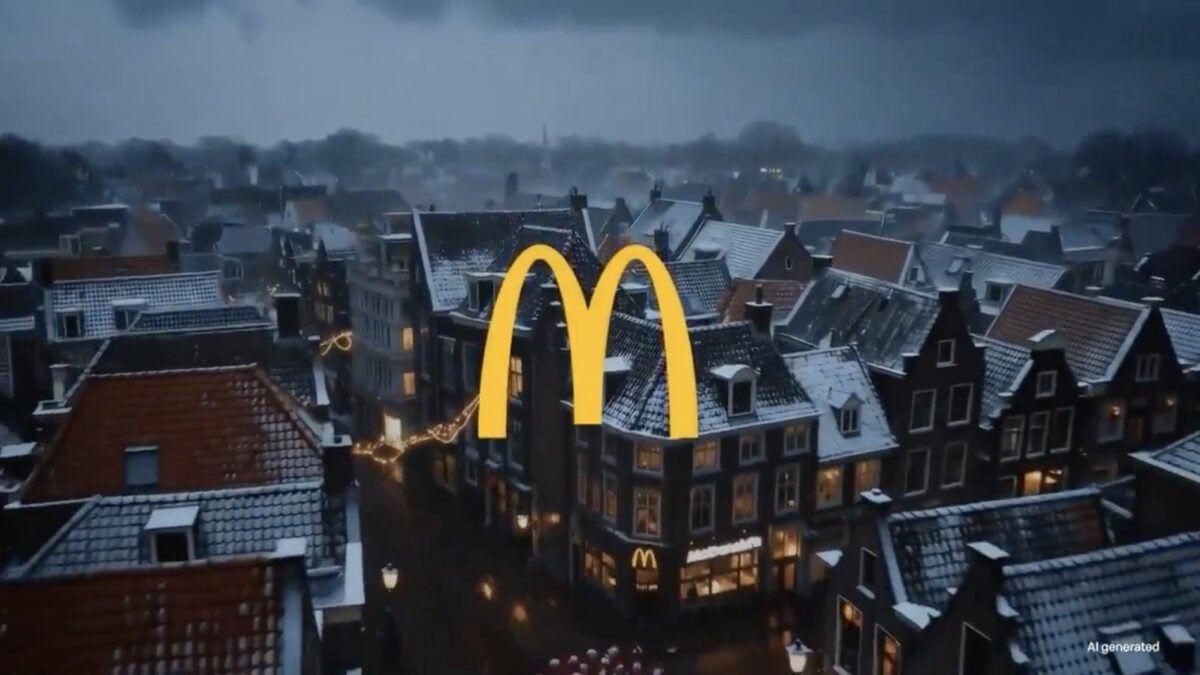
Source: Gizmodo
References
Summarized by

Navi
Related Stories
McDonald's AI Ad Character Repurposed for Burger King After Catastrophic Campaign Pulled
18 Dec 2025•Entertainment and Society
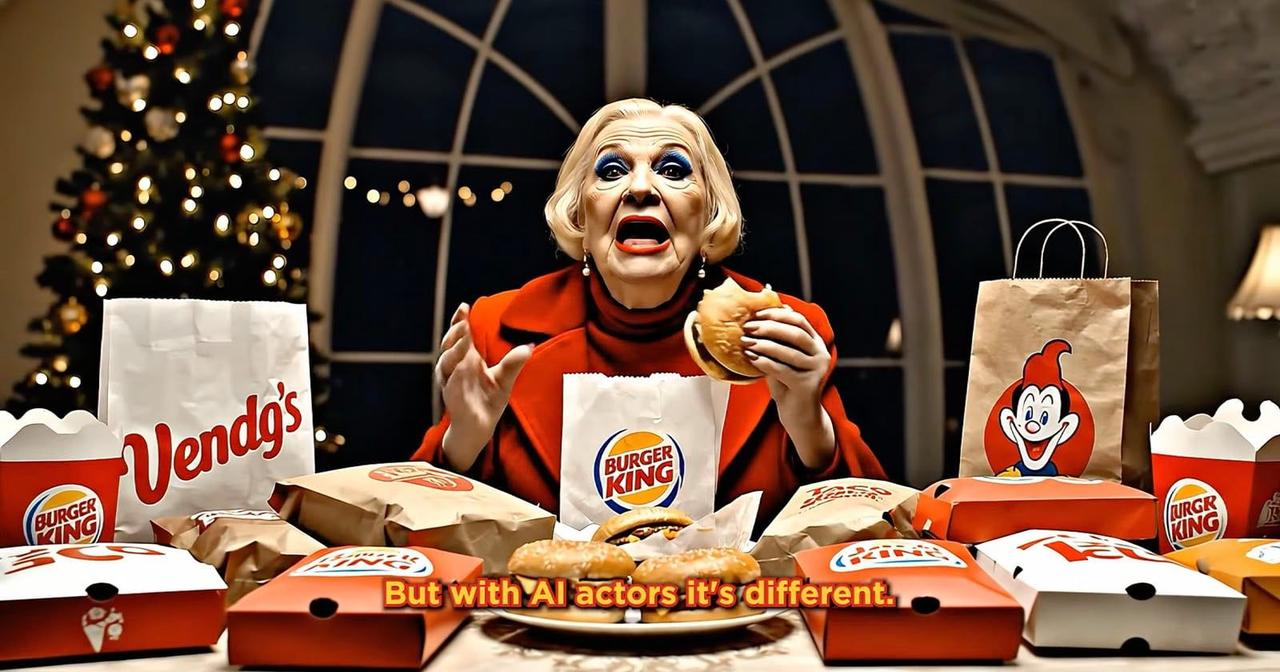
Coca-Cola Doubles Down on AI Holiday Advertising Despite Backlash
03 Nov 2025•Entertainment and Society

Coca-Cola's AI-Generated Holiday Ad Sparks Controversy and Backlash
15 Nov 2024•Technology

Recent Highlights
1
Google releases Gemma 4 with Apache 2.0 license, enabling unrestricted local AI on devices
Technology
2
AI Models Lie, Cheat, and Defy Human Instructions to Protect Other AI Models From Deletion
Science and Research

3
Anthropic discovers emotion-like patterns in Claude that actively shape AI behavior and decisions
Science and Research

Recent Highlights
Today's Top Stories





Your Daily Dose of Curated AI News
Don’t drown in AI news. We cut through the noise - filtering, ranking and summarizing the most important AI news, breakthroughs and research daily. Spend less time searching for the latest in AI and get straight to action.

