Meta readies new Ray-Ban AI glasses designed for prescription wearers as privacy concerns mount


13 Sources
13 Sources
[1]
Meta gets ready to launch two new Ray-Ban AI glasses
This is Lowpass by Janko Roettgers, a newsletter on the ever-evolving intersection of tech and entertainment, syndicated just for The Verge subscribers once a week. Meta and its AI glasses hardware partner EssilorLuxottica are getting ready to launch the next generation of their Ray-Ban AI glasses. That's according to a series of FCC filings for two new Meta Ray-Ban models that were published by the agency earlier this month. The filings describe the tested devices as production units, suggesting that Meta may launch them soon. When the company unveiled its second-generation Ray-Bans in late 2023, it did so a little over a month after the devices passed through the FCC. Meta did not immediately respond to a request for comment. As is customary, the FCC filings are heavily redacted, so we don't know yet exactly what the two models will look like, or what new features they will offer. However, the filings did reveal a few interesting details: Some of the included documents identify the marketing names for the new models as "RayBan Meta Scriber" and "RayBan Meta Blazer," while also noting that the "Blazer" model will be available in a regular and a large size. The documents do mention a charging case as being part of the tests, suggesting that the new Ray-Bans will once again feature a case you can use to charge them on the go. The model numbers for Meta's Blazer and Scriber glasses are RW7001 and RW7002, respectively. That in itself is noteworthy, as currently available first- and second-gen Meta Ray-Ban model numbers range from RW4002 to RW4014. The big jump in the model number could suggest a significant hardware upgrade, perhaps including a newer chipset. Another difference between current-gen Ray-Bans and the two new models revealed in these FCC filings: The new models make use of the Wi-Fi 6 UNII-4 band, which could add reliability to high-speed data transfers -- a feature that could come in handy for both livestreaming and any AI features that require live video transmission. Ray-Ban AI glasses have proven to be a hit for Meta and EssilorLuxottica: The two companies sold more than seven million pairs last year, according to EssilorLuxottica's most recent earnings report. Sales for 2023 and 2024 combined amounted to two million units. The company is looking to ramp up manufacturing capacity to 20-30 million units annually by the end of this year, Bloomberg reported in January. Meta also expanded its partnership with EssilorLuxottica in 2025, launching a first pair of Oakley-branded AI glasses, as well as a first pair of Ray-Ban Display glasses with an integrated monocular display. "Sales of our glasses more than tripled last year, and we think that they're some of the fastest growing consumer electronics in history," said Mark Zuckerberg during the company's most recent earnings call, adding: "For Reality Labs, we're directing most of our investment towards glasses and wearables going forward." As part of this shift in priorities, Meta has been significantly reducing its VR investments. The company laid off 1,000 Reality Labs employees earlier this year, shuttered multiple VR game studios, and followed up with additional job cuts Wednesday. As part of these cutbacks, Meta also planned to shut down its Horizon Worlds metaverse project in VR. However, the company reversed this decision last week in response to pleas from VR users.
[2]
Meta to Launch New AI Glasses Aimed at Prescription Wearers
Meta Platforms Inc. plans to debut two new Ray-Ban smart glasses models next week intended for prescription wearers. While the company's glasses -- sold in tandem with EssilorLuxottica SA -- have long supported prescription lenses, this will mark the first time the companies are introducing Ray-Bans designed specifically for that cohort, according to people with knowledge of the matter. The new models, which will come in rectangular and rounded styles, are expected to be sold primarily through traditional prescription eyewear channels, said the people, who asked not to be identified discussing unannounced products. They do not represent a new generation of Meta's smart glasses. The social networking giant, which has made AI-enabled glasses a major part of its broader AI strategy, released its latest iteration of the Ray-Ban glasses last year, and also introduced its first model with a built-in display, the Meta Ray-Ban Displays. Codenamed Scriber and Blazer, the prescription-focused versions were first spotted in US Federal Communications Commission filings by the Verge. Details about the design and prescription-first positioning haven't been previously reported. A Meta spokesperson declined to comment. Earlier this year, Chief Executive Officer Mark Zuckerberg hinted at a broader push toward prescription users. On an earnings call, he noted that "billions of people wear glasses or contacts for vision correction," adding that "it's hard to imagine a world in several years where most glasses that people wear aren't AI glasses." Meta has had early success with the smart glasses category, which other technology companies, including Apple Inc., are racing to match. Apple is planning to begin shipping its first glasses -- models without displays or augmented reality -- as soon as next year, Bloomberg News has reported.
[3]
Meta's next AI glasses are reportedly designed with prescription lenses in mind
Two new models of Meta Ray-Ban AI glasses are on the way, and they're going to be catered towards those who use prescription lenses, according to a Bloomberg report. While these are supposed to be announced next week, Bloomberg noted that these won't be a "new generation" of Meta's smart glasses. You can already add prescription lenses to Meta Ray-Ban's AI glasses, but the upcoming models will come in rectangular and rounded styles and will be sold through traditional prescription eyewear channels. Bloomberg didn't specify how these new glasses will differ from existing options, but noted that it's the first time Meta and Ray-Ban are releasing a pair of AI glasses specifically designed for this demographic. The two models are likely the codenamed products Scriber and Blazer, which were first spotted by The Verge in filings with the Federal Communications Commission. The filings described the devices as production units, meaning Meta could be close to the actual product launch. Looking at the filings, it's unlikely these upcoming prescription AI glasses will have a display like the Meta Ray-Ban Displays. Meta CEO Mark Zuckerberg has hinted at AI glasses that are meant for prescription glasses wearers in a previous earnings call. As noted by Bloomberg, Zuckerberg previously said that "billions of people wear glasses or contacts for vision correction," adding that, "it's hard to imagine a world in several years where most glasses that people wear aren't AI glasses."
[4]
Meta launches prescription Ray-Ban smart glasses to reach billions of eyewear buyers
Meta is preparing to launch two new Ray-Ban smart glasses models designed specifically for prescription wearers, according to a Bloomberg report published on Thursday. The models, codenamed Scriber and Blazer, were first spotted in Federal Communications Commission filings and are expected to reach consumers as early as next week. They do not represent a new generation of hardware. They represent something potentially more important: a distribution strategy. Prescription eyewear accounts for roughly 69 per cent of the $223 billion global eyewear market. Meta sold more than seven million Ray-Ban and Oakley AI frames in 2025, an impressive figure for a product category that barely existed three years ago, but a rounding error against the estimated 1.5 billion people worldwide who wear corrective lenses. The new models are Meta's clearest attempt yet to move smart glasses from consumer electronics into mainstream optical retail, where the customers, the margins, and the scale are all substantially larger. Scriber and Blazer are non-display AI glasses, similar in capability to the existing Ray-Ban Meta line: camera, microphone, speakers, and Meta AI integration, but no screen. Blazer will come in regular and large sizes; Scriber appears to be a single-size offering. Both include Wi-Fi 6 UNII-4 band support, an upgrade over current models, and will ship with charging cases. The distinction matters because Meta already sells a display-equipped model. The Ray-Ban Meta Display, launched at Connect 2025, includes a full-colour heads-up display, a 12-megapixel camera with 3x zoom, and pairs with a neural wristband that reads muscle signals to navigate the interface. It costs $799. Orion, Meta's full augmented reality prototype with holographic displays, remains a research project with no consumer launch date. Scriber and Blazer sit below both in the product hierarchy. Their purpose is not to showcase Meta's most advanced technology but to put Meta AI into the frames that people already need to buy. The insight behind the move is straightforward: if someone requires prescription lenses and is going to spend several hundred dollars at an optician regardless, the incremental cost of making those lenses smart drops significantly. Mark Zuckerberg made the strategic logic explicit on a recent earnings call, noting that "billions of people wear glasses or contacts for vision correction" and suggesting it is "hard to imagine a world in several years where most glasses that people wear aren't AI glasses." The prescription pivot also runs directly into the most complex relationship in Meta's hardware business. EssilorLuxottica, the Franco-Italian conglomerate that owns Ray-Ban, Oakley, LensCrafters, and Sunglass Hut, manufactures all of Meta's smart glasses and controls the optical retail channel through which the new models will be sold. The partnership has delivered results, but it has also generated friction. Bloomberg reported in February that the two companies are working through disagreements over pricing and strategy. EssilorLuxottica's adjusted gross margin fell 2.6 percentage points in 2025 to 60.9 per cent, partly because of the higher component costs that smart glasses require compared with conventional frames. Meta wanted to offer Black Friday discounts in 2023; EssilorLuxottica, which guards its luxury positioning carefully, rejected the idea. The tension is structural: Meta wants to maximise adoption and lock users into its AI ecosystem. EssilorLuxottica wants to protect margins on a product line that is eroding them. Prescription models could ease that tension. Prescription lenses carry higher retail prices and fatter margins than non-prescription sunglasses. The lens coatings, custom grinding, and fitting appointments that prescription orders require generate additional revenue at every stage of the value chain. If smart glasses move into the prescription channel at scale, the economics improve for EssilorLuxottica even as volumes increase for Meta. The companies are reportedly considering doubling their combined production target to 20 million units per year, up from an estimated 10 million capacity by the end of 2026. Selling smart glasses through optical retail introduces complications that consumer electronics channels do not. Opticians are trained to fit lenses, not to explain AI assistants, camera privacy settings, or software updates. The customer experience in a LensCrafters is fundamentally different from the experience in a Meta Store or an Apple Store, and the staff training, product support, and return handling required for a connected device are orders of magnitude more complex than for a pair of Wayfarers. There is also the legal exposure. Solos Technology filed a patent infringement suit against Meta and EssilorLuxottica in January 2026, claiming that the Ray-Ban Meta line violates several patents covering core smart eyewear technologies and seeking "multiple billions of dollars" in damages. A second patent front, on top of the partnership tension and the margin pressure, adds risk to a product line that Meta is treating as the foundation of its wearable AI strategy. The smart glasses market itself is growing rapidly, from an estimated $2.5 billion in 2025 to a projected $14.4 billion by 2033 according to Grand View Research, but nearly all of that growth is speculative and dependent on whether consumers will choose connected frames when ordinary ones are cheaper, lighter, and carry no privacy concerns. Meta's bet is that AI functionality, specifically the ability to ask questions, get real-time information, and interact with digital services without reaching for a phone, will be compelling enough to overcome those objections. Scriber and Blazer are not the product that will test that bet definitively. They are the product that puts Meta's AI into opticians' fitting trays, onto the faces of people who were going to buy new glasses anyway, and into a distribution channel that reaches billions of potential customers. The technology is incremental. The strategic ambition is not.
[5]

Meta Has More Smart Glasses Coming Whether You Want Them or Not
After releasing (checks notes) four new pairs of smart glasses late last year, Meta appears to be back to the Ray-Ban grindstone. As noted by The Verge, the company has listings with the FCC made public earlier this month that reference two separate models with codenames. The two unreleased models referenced are the "Ray-Ban Meta Blazer" and the "Ray-Ban Meta Scriber." There's a third reference, but given the fact that it's the "Ray-Ban Meta Blazer Large," I am going to assume it's just a size variant of the Blazer. As is the case with FCC listings like this, there's not much information, and some of it is redacted, but I can make some inferences based on the language used. For me, the first thing that jumps out is that the name "Ray-Ban" is in front as opposed to "Meta," which indicates that these are likely non-display versions of its smart glasses, unlike the Meta Ray-Ban Display. There's always the chance that Meta is just tossing naming conventions to the wind and flip-flopping this time around, but that feels like an outside chance; the company has previously tried to educate us about the differences in name order. For now, we can assume that neither the Blazer nor the Scriber has a display in it. Adding to that hunch is the fact that the smart glasses are listed as "AI glasses," which is, again, the convention that Meta uses to reference its non-display models. From what we can glean from the FCC listings, there are similarities to previous models, including the AI glasses' use of Bluetooth in concert with Wi-Fiâ€"current Ray-Ban models (display and non-display) connect to your phone to do all the hardcore computing, which sounds like it's still the case here. As noted by The Verge, there are also references to a charging case, which is something that all versions of Meta's smart glasses (including Oakley-branded HSTN ones) currently have. There's nothing surprising about what we've seen or the fact that Meta has new models of Ray-Ban glasses in the pipelineâ€"clearly, it sees opportunity in that landscape. It does, however, feel oddly soon to be seeing references to new pairs. The Meta Ray-Ban Display and the Ray-Ban Meta Gen 2 AI glasses were released just last September, and, in the case of the former pair, hardware still isn't widely available for some people who want to buy one. There's also the fact that backlash against Meta's smart glasses has been building over privacy concerns. Propelling that pushback are revelations over the company's use of sensitive customer videos for training AI models (those videos showed people having sex, using the bathroom, and more) and its reported plans to add facial recognition to its smart glasses. That last possibility has already drawn the attention of U.S. senators who sent a letter to Meta asking questions about its plans while also characterizing the potential move as a threat to personal privacy. And Meta, for its crucial part in all of this, has been radio silentâ€"on both accounts. Maybe the company can just march forward and launch new pairs of Ray-Ban-branded smart glasses without scrutiny, but something tells me it may not be that easy. Either way, whether people are open to more Meta smart glasses or not, we can expect new pairs at some pointâ€"that is, if the company hasn't stumbled into getting itself banned or regulated by then.
[6]

Meta's reportedly launching Ray-Ban smart glasses designed for prescription lenses
As Meta continues to double down on smart glasses, the company is apparently gearing up to launch a pair of Ray-Ban smart glasses that are specifically designed for those who already wear prescription glasses. Bloomberg reports that Meta is planning to launch two new pairs of AI smart glasses with "rectangular and rounded styles" that would specifically be designed for those who require prescription lenses. You can already add prescription lenses to existing Ray-Ban Meta smart glasses, but these new models would apparently be designed especially for that use case. How they might differ is unclear, but we'd speculate that battery life and frame thickness/weight could be a part of the equation. Again, that's just a guess. These new models would apparently be sold through "traditional prescription eyewear channels." The Verge reports that these two new models, "Scriber" and "Blazer," hit FCC filings with the note that they are production models, suggesting a launch is coming sooner than later. Those filings also reveal that "Blazer" would be available in a larger size, and that the glasses will support the Wi-Fi 6 UNII-4 band, which existing models do not. That suggests improvements under the hood, and this band in particular is good at high-speed data transfers, perhaps to be used for livestreaming. It's further noted by Bloomberg that Mark Zuckerberg said during a Meta earnings call that "billions of people wear glasses or contacts for vision correction" and that "it's hard to imagine a world in several years where most glasses that people wear aren't AI glasses," possibly hinting at this launch. There's no indication of a display on these glasses, not that it would be expected.
[7]

Meta is finally building Ray-Ban smart glasses designed for prescription lenses
Meta is already miles ahead of the competition when it comes to the best smart glasses, but now the company's reportedly gearing up to debut a pair of Ray-Ban smart glasses aimed at users who actually wear glasses everyday. Codenamed Scriber and Blazer, the prescription-focused versions could launch as soon as next week, Bloomberg reports. Meta and its AI glasses hardware partner EssilorLuxottica are working on two pairs of AI smart glasses designed for people who require prescription lenses. Granted, you can already get prescription lenses fitted into existing Ray-Ban Meta smart glasses, but these new models are being built specifically with that in mind. Exactly how they'll differ isn't immediately clear, though I'd guess factors like battery life, design, and weight would be comparable to Meta's existing line. For now, though, that's just speculation. The Verge first spotted evidence of these new products in a series of FCC filings published by the agency earlier this month. The filings note Scriber and Blazer as production models, which suggests we'll see them on store shelves sooner rather than later. Since the filings are heavily redacted per usual, there's precious few details about the design or features we can expect. One interesting tidbit to note: The new models will use the Wi-Fi 6 UNII-4 band, a handy feature for reliable high-speed data transfers used for livestreaming and AI features that use live video transmission. Sources that spoke with Bloomberg on condition of anonymity said the models will come in "rectangular and rounded styles" and will be sold through "traditional prescription eyewear channels." Meta's emerging new focus All of this marks part of a broader push toward prescription users that Meta CEO Mark Zuckerberg teased in an earnings call earlier this year. "Billions of people wear glasses or contacts for vision correction. And I think that we're at a moment similar to when smartphones arrived, and it was clearly only a matter of time until all those flip phones became smartphones," he said. "It's hard to imagine a world in several years where most glasses that people wear aren't AI glasses." For those of us who have spent years navigating the world through prescription lenses, smart glasses have always felt like a gadget designed for someone else. But Meta's upcoming launch of the 'Scriber' and 'Blazer' Ray-Ban AI glasses feels like the first time the tech giant is actually speaking our language. Unlike previous models that felt like tech first and eyewear second, these new frames seem built from the ground up with four-eyes like me in mind. With sleek new rectangular and rounded styles -- and rumored Wi-Fi 6 support for faster Meta AI response times -- this might finally be the moment I trade my traditional frames for a pair that can actually talk back. Follow Tom's Guide on Google News and add us as a preferred source to get our up-to-date news, analysis, and reviews in your feeds.
[8]

Meta Ray-Ban smart glasses might soon get new Scriber and Blazer models
Meta's push into AI wearables isn't slowing down anytime soon. A new FCC filing has revealed that two upcoming Ray-Ban Meta smart glasses, namely "Scriber" and "Blazer". This listing hints at the launch being right around the corner. Recommended Videos It also describes the devices as production units, which means that Meta is already past the prototype stage and gearing up for release. What's next in Meta's smart glass lineup? The FCC database has confirmed two distinct models: Ray-Ban Meta Scriber and Ray-Ban Meta Blazer. Interestingly, the Blazer model could arrive in two sizes, including a larger variant that Meta hasn't offered before in the lineup. Both models are also expected to arrive with a portable charging case, continuing the design choice from the previous generations. It's not just a new design While finer details are still unknown, there are clear hints at meaningful upgrades. The new models carry model numbers RW7001 and RW7002, a noticeable jump from earlier generations, which could point to significant internal changes. This might include a newer chipset and support for WiFi 6 UNII-4 band that brings data speeds, connectivity reliability, and access to livestreaming and real-time AI processing. This might be more than an incremental product update. Meta's Ray-Ban smart glasses have already seen strong growth, with millions of units sold and production targets ramping up significantly. At the same time, the company is shifting focus away from VR and toward wearables. Although there are still plenty of details we don't have about Scriber and Blazer. Aspects like its final design, camera hardware, and features (like AI) are still unknown. And based on the name, these might be non-display AI glasses rather than AI-focused devices.
[9]

Meta to launch AI glasses tailored for prescription lens users
Meta is set to announce two new models of AI glasses designed specifically for users of prescription lenses next week. These models will introduce rectangular and rounded styles but will not represent a new generation of Meta's existing Ray-Ban AI glasses. This upcoming announcement is significant as it marks the first time Meta and Ray-Ban are targeting prescription glasses wearers with AI glasses. The new models will be available through traditional prescription eyewear channels, expanding accessibility for millions in the market. The glasses are likely codenamed Scriber and Blazer, as identified in recent Federal Communications Commission (FCC) filings. These documents classify the models as production units, suggesting that a product launch is imminent. While current Meta Ray-Ban AI glasses can accommodate prescription lenses, it appears that the new models will not include a display feature, unlike the existing line. Bloomberg highlighted that specific differences between the new and existing glasses have not been detailed. Meta CEO Mark Zuckerberg previously hinted at the developments, stating in an earnings call, "billions of people wear glasses or contacts for vision correction." He emphasized the potential impact of AI in eyewear, declaring, "it's hard to imagine a world in several years where most glasses that people wear aren't AI glasses." Meta, a leading technology firm, has been at the forefront of integrating artificial intelligence into consumer products. The company's Ray-Ban partnership has also explored various smart eyewear applications, fostering innovative developments in the market.
[10]

Meta Might Be Preparing to Launch These New Ray-Ban Smart Glasses Soon
Model number jump suggests major hardware upgrade is coming Meta appears to be gearing up for its next generation of AI smart glasses, as new regulatory filings hint at an upcoming launch. Recent reports suggest the company is preparing new Ray-Ban Meta models, reportedly named Ray-Ban Meta Scriber and Ray-Ban Meta Blazer. While full details are still unclear, the filings indicate updated hardware that could arrive sooner rather than later. If this turns out to be true, it would mark another step in Meta's growing focus on AI-powered wearables and connected devices. Meta May Launch New Ray-Ban AI Glasses With Big Upgrades Soon In his Lowpass newsletter, Janko Roettgers claims that filings submitted to the FCC earlier this month reference two new Ray-Ban Meta smart glasses. The filings reportedly suggest the devices are final units, which points to an imminent launch. Notably, Meta launched its previous Ray-Ban smart glasses in late 2023, a little over a month after they cleared FCC certification. Much of the information in the filings remains redacted, but a few details have surfaced, according to the report. The documents list the names Ray-Ban Meta Scriber and Ray-Ban Meta Blazer. The Blazer model is expected to be available in both regular and large sizes. The filings are also said to mention a charging case, indicating that Meta may continue offering on-the-go charging. The new models reportedly carry the numbers RW7001 and RW7002, marking a significant jump from earlier generations. Current first and second-generation Meta Ray-Ban models range from RW4002 to RW4014, so this leap in model number could point to notable hardware upgrades. The report noted that another upgrade for the next-generation Ray-Ban Meta smart glasses could include support for the Wi-Fi 6 UNII-4 band, which may improve connection stability and enable better performance for features like livestreaming and AI-based video functions. According to the report, Meta and EssilorLuxottica's smart glasses have seen strong sales momentum. The companies are said to have sold more than seven million units last year, compared to a combined two million units across 2023 and 2024. They are now reportedly aiming to scale production to tens of millions of units annually. Meta has also expanded its wearable lineup with Oakley-branded AI glasses and Ray-Ban models featuring a built-in display. The report noted that at the same time, the company has reduced its focus on virtual reality, cutting around 1,000 jobs in Reality Labs, shutting down multiple VR studios, and planning to close Horizon Worlds before reversing that decision following user feedback.
[11]

Meta Ray-Ban prescription glasses could finally replace your normal specs
Mark Zuckerberg wants to turn your everyday specs into AI-powered assistants They might be a bit niche, but Meta's Ray-Ban glasses have their place among the best gadgets. I'm using them to listen to Spotify by the pool on holiday right now, as I type these very words. And for those of you with glasses, the next iteration could see Meta Ray-Ban prescription glasses become a reality. According to a new report from Bloomberg (via Engadget), the next pair of Meta Ray-Ban AI glasses are being designed specifically with prescription glasses wearers in mind. At least, if the latest rumours - and some rather revealing FCC filings - are to be believed. While you can technically already get prescription lenses for the current Meta Ray-Bans, these new models (reportedly codenamed Scriber and Blazer) are expected to be sold through traditional eyewear channels from the jump. They'll likely come in both rounded and rectangular styles, catering to those who prefer more traditional spec designs. Don't expect any other extras like a full augmented reality experience just yet, though. Despite Zuckerberg's frequent hints that "most glasses" will eventually be AI glasses, these upcoming models aren't expected to feature a built-in display. Instead, they'll likely stick to the camera and audio-led AI features we've seen before, albeit in a form factor that's likely more comfortable for full-time wearers. The move makes plenty of sense. Zuckerberg has previously noted that billions of people wear glasses or contacts for vision correction, and capturing that market is the quickest way to normalise wearing a computer on your face. We're expecting an official announcement as early as next week, though these are tipped to be a refinement of the current tech rather than a new generation overhaul. Either way, it's set to be unveiled soon, so watch this space.
[12]

Meta to launch new AI glasses aimed at prescription wearers - The Economic Times
While the company's glasses -- sold in tandem with EssilorLuxottica SA -- have long supported prescription lenses, this will mark the first time the companies are introducing Ray-Bans designed specifically for that cohort, according to people with knowledge of the matter.Meta Platforms Inc. plans to debut two new Ray-Ban smart glasses models next week intended for prescription wearers. While the company's glasses -- sold in tandem with EssilorLuxottica SA -- have long supported prescription lenses, this will mark the first time the companies are introducing Ray-Bans designed specifically for that cohort, according to people with knowledge of the matter. The new models, which will come in rectangular and rounded styles, are expected to be sold primarily through traditional prescription eyewear channels, said the people, who asked not to be identified discussing unannounced products. They do not represent a new generation of Meta's smart glasses. The social networking giant, which has made AI-enabled glasses a major part of its broader AI strategy, released its latest iteration of the Ray-Ban glasses last year, and also introduced its first model with a built-in display, the Meta Ray-Ban Displays. Codenamed Scriber and Blazer, the prescription-focused versions were first spotted in US Federal Communications Commission filings by the Verge. Details about the design and prescription-first positioning haven't been previously reported. A Meta spokesperson declined to comment. Earlier this year, Chief Executive Officer Mark Zuckerberg hinted at a broader push toward prescription users. On an earnings call, he noted that "billions of people wear glasses or contacts for vision correction," adding that "it's hard to imagine a world in several years where most glasses that people wear aren't AI glasses." Meta has had early success with the smart glasses category, which other technology companies, including Apple Inc., are racing to match. Apple is planning to begin shipping its first glasses -- models without displays or augmented reality -- as soon as next year, Bloomberg News has reported.
[13]

Meta's Ray-Ban Gen 3 Smart Glasses to Feature Screenless Design
Meta's Ray-Ban Meta Gen 3 smart glasses, expected to launch in 2026, mark a notable development in wearable devices. As detailed by TechAvid, these glasses will include advanced AI capabilities for real-time object and location recognition, enhanced audio through upgraded microphones and a Qualcomm Snapdragon AR chipset for improved performance. The screenless design will be available in two models: the "Apparel" version, offering extended battery life and advanced features and the "Bellini" version, tailored for prescription glasses users seeking a more discreet option for daily wear. Discover the balance these glasses aim to strike between technological advancements and practical user needs, including features like extended battery life and privacy considerations. Gain insight into Meta's dual-model approach, the role of AI in enhancing contextual awareness and the ethical challenges tied to data use in smart eyewear. Meta's journey in wearable technology has been marked by consistent innovation, with each iteration building on the strengths of its predecessor. Below is a timeline of key milestones that have shaped the evolution of its smart glasses: While the official release is planned for 2026, logistical challenges could delay widespread availability until 2027. Despite this, the anticipation surrounding these glasses highlights their potential to influence the wearable tech landscape. The Ray-Ban Meta Gen 3 smart glasses will reportedly be available in two distinct variants, each tailored to meet the needs of different user groups: This dual-variant strategy ensures that the glasses appeal to both style-conscious individuals and those seeking practical, unobtrusive wearables. Learn more about smart glasses with other articles and guides we have written below. The third-generation Ray-Ban Meta smart glasses are expected to introduce several key upgrades, making them a versatile tool for both casual users and tech enthusiasts. These features aim to enhance usability, performance and convenience: These upgrades reflect Meta's commitment to blending innovative technology with user-friendly design, making the glasses a practical and appealing choice for a wide range of users. Privacy remains a critical issue for AI-powered wearables and the Ray-Ban Meta Gen 3 smart glasses are no exception. Reports suggest that contractors may review sensitive footage to train AI models, raising ethical questions about data handling and user consent. Additionally, the potential for real-time identification of people and objects through public databases has sparked debates about surveillance and privacy rights. To build consumer trust, Meta will need to address these concerns transparently. This could involve implementing robust data protection measures, offering clear user controls and making sure that all data collection practices comply with ethical standards. By prioritizing privacy, Meta can position its smart glasses as a responsible and trustworthy choice in the wearable tech market. Meta's strategy for the Ray-Ban Meta line focuses on enhancing cameras, audio and AI capabilities while maintaining a screenless design for the Gen 3 glasses. This approach sets them apart from display-equipped models, which are positioned as premium offerings for AR enthusiasts. By differentiating these product lines, Meta aims to cater to a broader audience, from casual users to tech-savvy individuals seeking advanced features. This strategy aligns with Meta's broader ambitions in augmented reality and wearable technology, emphasizing innovation without compromising accessibility. The Gen 3 glasses represent a key step in this vision, offering a glimpse into the future of smart eyewear. The Ray-Ban Meta Gen 3 smart glasses are poised to redefine the wearable technology landscape. With enhanced AI capabilities, improved hardware and thoughtfully designed variants, these glasses aim to seamlessly integrate functionality and style. However, their success will depend on how effectively Meta addresses privacy concerns and balances innovation with ethical considerations. As the 2026 release date approaches, these glasses could transform how you interact with the world, offering a unique blend of practicality and technological sophistication. Whether you're a casual user or a tech enthusiast, the Ray-Ban Meta Gen 3 smart glasses promise to deliver a compelling experience that bridges the gap between fashion and functionality. Disclosure: Some of our articles include affiliate links. If you buy something through one of these links, Geeky Gadgets may earn an affiliate commission. Learn about our Disclosure Policy.
Share
Share
Copy Link
Meta is preparing to launch two new Ray-Ban smart glasses models specifically designed for prescription wearers, targeting billions who need corrective lenses. The Scriber and Blazer models represent a strategic shift toward mainstream optical retail rather than consumer electronics channels. However, the launch comes amid growing scrutiny over privacy concerns and Meta's use of customer videos for AI training.
Meta Targets Prescription Eyewear Market with New Smart Glasses Models
Meta and its hardware partner EssilorLuxottica are preparing to launch two new smart glasses models specifically designed for prescription lenses, according to FCC filings published earlier this month and confirmed by multiple reports
1
2
. The new models, codenamed Scriber and Blazer, mark the first time Meta has introduced Ray-Ban smart glasses specifically designed for prescription wearers, though the company has long supported prescription lenses in existing models2
.
Source: The Next Web
The FCC filings describe the devices as production units, suggesting an imminent launch. When Meta unveiled its second-generation Ray-Bans in late 2023, it did so just over a month after FCC approval
1
. The Blazer model will be available in regular and large sizes, while the Scriber appears to be a single-size offering2
4
.Strategic Shift Toward Optical Retail Channels
The new models represent a significant distribution strategy for Meta, targeting the $223 billion global eyewear market where prescription eyewear accounts for roughly 69 percent of sales
4
. Mark Zuckerberg hinted at this broader push during a recent earnings call, noting that "billions of people wear glasses or contacts for vision correction" and suggesting it's "hard to imagine a world in several years where most glasses that people wear aren't AI glasses"2
3
.The new models will come in rectangular and rounded styles and are expected to be sold primarily through traditional prescription eyewear channels rather than consumer electronics stores
2
. This approach could ease tensions with EssilorLuxottica, whose adjusted gross margin fell 2.6 percentage points in 2025 to 60.9 percent, partly due to higher component costs in smart glasses compared to conventional frames4
.
Source: Bloomberg
Hardware Upgrade and Technical Specifications
The model numbers for the Blazer and Scriber glasses are RW7001 and RW7002, respectively, a significant jump from current-generation models which range from RW4002 to RW4014, suggesting a potential hardware upgrade
1
. The new models incorporate Wi-Fi 6 UNII-4 band support, which could add reliability to high-speed data transfers for livestreaming and AI features requiring live video transmission1
4
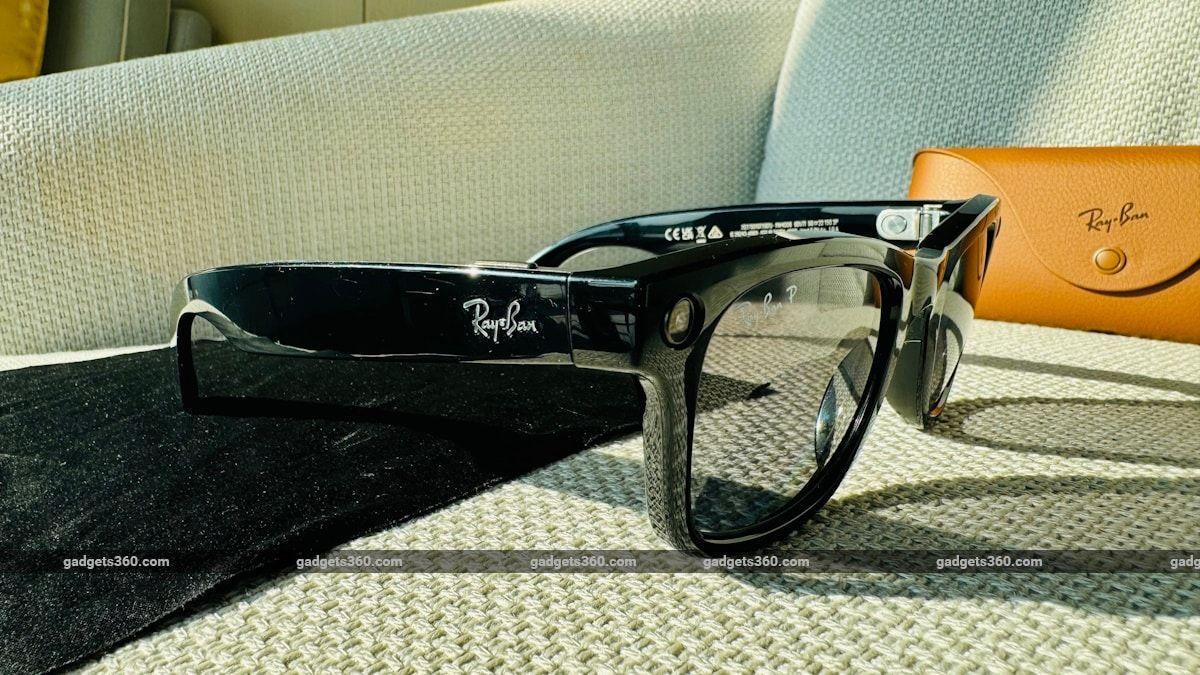
.These are non-display AI glasses, similar in capability to the existing Ray-Ban Meta line, featuring camera, microphone, speakers, and Meta AI integration but no heads-up display
4
. The filings mention a charging case, consistent with all current Meta wearables1
5
.
Source: Gadgets 360
Related Stories


Strong Sales Amid Privacy Concerns
Ray-Ban AI glasses have proven commercially successful for Meta and EssilorLuxottica, with more than seven million pairs sold in 2025 alone
1
4
. "Sales of our glasses more than tripled last year, and we think that they're some of the fastest growing consumer electronics in history," Zuckerberg stated during the company's most recent earnings call1
. The companies are reportedly considering doubling production capacity to 20 million units annually4
.However, backlash against Meta AI glasses has been building over privacy concerns. Revelations about the company's use of sensitive customer videos for training AI models, including footage of people in private moments, and reported plans to add facial recognition capabilities have drawn scrutiny
5
. U.S. senators have sent letters to Meta characterizing potential facial recognition features as a threat to personal privacy, though Meta has remained silent on these concerns5
.Reality Labs Investment Shift
Meta has been directing most of its Reality Labs investment toward glasses and wearables going forward, significantly reducing VR investments
1
. The company laid off 1,000 Reality Labs employees earlier this year, shuttered multiple VR game studios, and implemented additional job cuts, though it reversed plans to shut down its Horizon Worlds metaverse project after user pushback1
. Meta also expanded its partnership with EssilorLuxottica in 2025, launching Oakley-branded AI glasses and Ray-Ban Display glasses with an integrated monocular display1
.References
Summarized by

Navi
[1]
[4]
Related Stories
Recent Highlights
1
Apple Plans Major Siri AI Overhaul in iOS 27 With Third-Party Chatbot Integration
Technology

2
OpenAI shuts down Sora after six months, ending Disney's $1 billion licensing partnership
Technology

3
AI chatbots validate you too much, making you less kind to others, Stanford study reveals
Science and Research

Recent Highlights
Today's Top Stories









Your Daily Dose of Curated AI News
Don’t drown in AI news. We cut through the noise - filtering, ranking and summarizing the most important AI news, breakthroughs and research daily. Spend less time searching for the latest in AI and get straight to action.

