Meta's Ray-Ban Smart Glasses: Advancing Towards Mixed Reality with Display Integration


10 Sources
[1]
Ray-Ban Meta glasses: the future of mixed reality is getting closer and closer - Softonic
Meta plans to incorporate screens into the Ray-Ban Meta smart glasses starting next year, according to Financial Times. This new advancement reinforces its goal of creating lightweight devices that can replace smartphones as the main computing tool. In collaboration with EssilorLuxottica, Meta will
[2]
Meta's display-equipped Ray-Bans could make smartphones look old-school
Want to add a display to your shades? Meta thinks the answer is yes. Meta plans to incorporate display technology into its Ray-Ban smart glasses by 2025, according to Financial Times, aiming to enhance the user experience and solidify its position in the competitive wearables market. This
[3]
Ray-Ban Meta Glasses May Soon Get Small Screens to Display Notifications
Meta accelerates AR glasses development amid positive feedback Ray-Ban Meta Glasses could soon benefit from a huge upgrade with the addition of small screens, according to a report. The next iteration of the wearable device is said to be launched as soon as next year, and screens may be leveraged
[4]
Report: Meta to Add Displays to Ray Ban Smart Glasses in 2025
Meta plans to add displays to its Ray Ban Smart glasses as soon as the second half of 2025, The Financial Times reports. The second-generation glasses -- which Meta released in partnership with eyewear giant EssilorLuxottica in November 2023 -- already offer consumers a slew of AI integrations.
[5]

The upcoming Ray-Ban Meta smart glasses may feature the display upgrade we've been hoping for
The upcoming Ray-Ban smart glasses will reportedly feature similar 'in-lens' displays as Meta's Orion prototype for augmented reality experiences. When Meta teased its prototype Orion smart glasses at Meta Connect, CEO Mark Zuckerberg confidently said they were "the most advanced glasses the world
[6]

Meta to add display to Ray-Bans as race over smart glasses intensifies
Meta plans to add displays to its Ray-Ban smart glasses as soon as next year, as the US tech giant accelerates its plans to build lightweight headsets that can usurp the smartphone as consumers' main computing device. The $1.5tn social media group is planning to add a screen inside the $300
[7]

Ray-Ban Meta smart glasses could get a display next year - 9to5Mac
Ray-Ban Meta have been the most successful smart glasses to date, offering an appealing mix of features in a form factor which is visually indistinguishable from normal sunglasses. So far, all of the AI functionality, notifications, and messaging features have relied on the glasses reading things
[8]

Display Option on Smart Glasses Shows How Meta May Succeed Where Google Glass Failed
Since 2023, when Meta entered a partnership between sunglasses-making icon Ray-Ban, that's been an evolving success, resulting in last year's release of audio-only AR glasses that have sold like hotcakes, even outselling boring low-tech Ray-Bans in some places. Now a strong rumor says that Meta
[9]

Meta reportedly adding display to Ray-Ban smart glasses in 2025 as Android XR nears
A new report claims that Meta's next Ray-Ban smart glasses will be adopting a display of some sort, right as Google and Samsung are pushing for Android XR to do the same. Financial Times reports that Meta is planning to debut a pair of Ray-Ban smart glasses "as soon as next year" which integrate a
[10]

Meta Plans Display-Equipped Ray-Ban Glasses By 2025: FT - Meta Platforms (NASDAQ:META)
Meta accelerates AR innovation with Ray-Ban glasses and Orion prototype. Meta Platforms, Inc META, the parent company of Facebook, Instagram, and Threads, aims to advance wearable technology by integrating displays into its Ray-Ban smart glasses by 2025, the Financial Times reports. The $300
Share
Copy Link
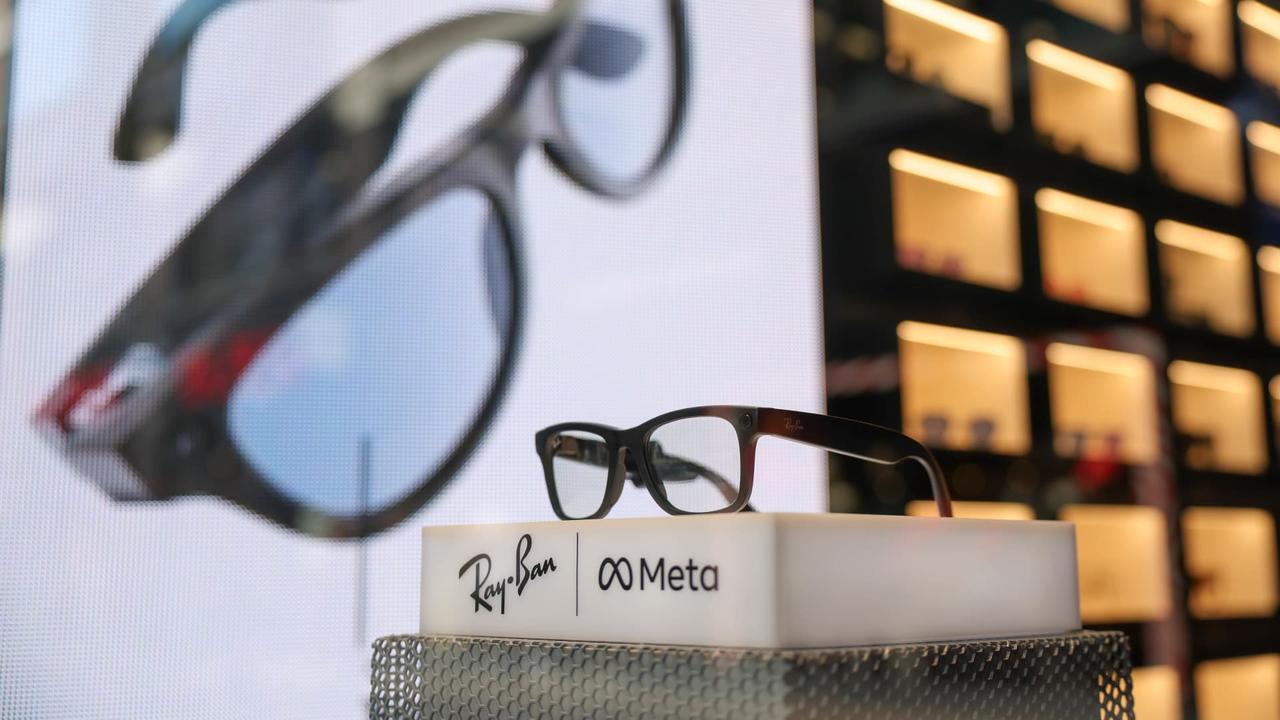
Meta plans to incorporate small displays into Ray-Ban smart glasses by 2025, aiming to enhance functionality and challenge smartphone dominance. This move represents a significant step towards mixed reality technology in wearable devices.

Meta's Vision for Next-Generation Smart Glasses
Meta, in collaboration with EssilorLuxottica, is set to revolutionize the wearable technology market with its plans to integrate small displays into Ray-Ban smart glasses by 2025. This development marks a significant step towards Meta's goal of creating lightweight devices that could potentially replace smartphones as primary computing tools
1
2
.Current Ray-Ban Meta Glasses and Market Reception
The current generation of Ray-Ban Meta glasses, launched in 2023, has been well-received in the market. Priced at $299, these glasses feature a 12-megapixel ultra-wide camera, open-ear speakers, and microphones, allowing users to capture photos, listen to music, and engage in conversations on the go
3
. According to EssilorLuxottica's CEO, Francesco Milleri, sales of these glasses have surpassed those of previous models within months, reflecting a 73% growth in the wearable glasses market in 20241
2
.Planned Upgrades and Features
The upcoming iteration of Ray-Ban Meta glasses is expected to include small displays, primarily for showing notifications and responses from Meta's AI assistant
1
2
3
. While the initial version will likely display simple text and images, it represents a crucial step towards Mark Zuckerberg's vision of augmented reality (AR) glasses that can "transpose a virtual world" upon real life3
.Orion: Meta's Advanced AR Prototype
In September, Meta unveiled its Orion AR glasses prototype, showcasing more advanced features:
- Compact design with holographic displays
- Ability to overlay 3D content onto the real world
- Integration with Meta AI
- Potential for neural interface control and gesture recognition
1
2
4
The development of Orion has been accelerated due to positive feedback from early testers, although its consumer release is still years away
1
2
.Challenges and Future Prospects
Meta faces several challenges in bringing these advanced smart glasses to market:
- Balancing adequate performance and battery life with a desirable price point
- Overcoming supply chain issues, particularly in producing silicon carbide lenses
1
5
- Integrating gesture control, possibly through a wristband or similar input device
2
5
Despite these hurdles, Meta's CTO, Andrew Bosworth, remains optimistic about the feasibility of integrating live AI and heads-up displays in future models
2
.Related Stories



Market Competition and Industry Trends
The smart glasses market is becoming increasingly competitive, with other tech giants also making moves:
- Apple is rumored to be developing a cheaper version of its Vision Pro headset for release after 2027
4
- Qualcomm is partnering with Samsung and Google to develop mixed-reality glasses that can connect to smartphones
4
- The broader wearable glasses market experienced significant growth, with a 73% increase in shipments in 2024
2
Conclusion
As Meta continues to invest in AI technology and mixed reality, the future of Ray-Ban Meta glasses looks promising. The integration of displays and potential AR features could position these devices at the forefront of wearable technology, potentially reshaping how we interact with digital information in our daily lives.
References
Summarized by

Navi
[1]
Related Stories
Recent Highlights



Recent Highlights
Today's Top Stories






Don’t drown in AI news. We cut through the noise - filtering, ranking and summarizing the most important AI news, breakthroughs and research daily. Follow topics that matter to you and stay ahead.


