AI Demand Drives Memory Prices to Record Highs, Impacting Consumer Tech Market


4 Sources
4 Sources
[1]
DRAM prices skyrocket 171% year-over-year, outpacing the rate of gold price increases -- AI demand drives massive price hikes as shortage takes hold
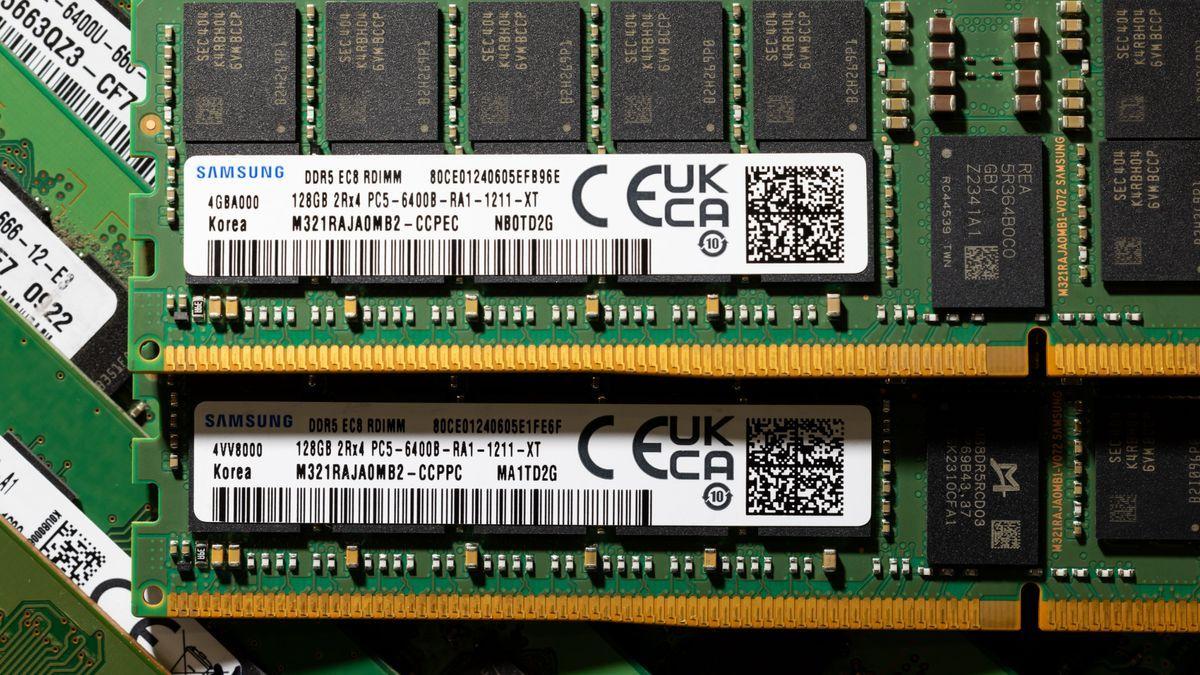
Mainstream DDR5 memory is already at least twice as expensive as it was in July. DRAM prices are continuing to skyrocket thanks to exorbitant demands from the AI industry. CTEE reports that DRAM contract prices have increased by a whopping 171.8% year over year as of Q3 2025. In fact, DRAM prices have risen to the point that they are now outpacing the recent price increases of gold. ADATA chairman Chen Libai reportedly stated that Q4 of 2025 will mark the start of a major DRAM bull market, with 2026 likely to see severe DRAM shortages. Significant memory price hikes have been a recurring theme in the industry during 2025. In late October, we reported that memory prices were increasing by up to 50% for Q4 2025, up from the 30% hike buyers had predicted earlier in the year. Going back to September, we covered NAND and DRAM contract prices rising by 15-20%. All of this (and more) has compounded into the whopping 171.8% year-over-year price increase we are now seeing in DRAM contract prices. Despite server-grade RDIMM memory and HBM being the main attractions for hardware manufacturers building AI servers, the entire memory industry, including DDR5, is being affected by price increases. The problem for consumers is that memory manufacturers are shifting production prioritization toward datacenter-focused memory types and producing less consumer-focused DDR5 memory as a result. Desktop memory prices reflect the severe memory shortages plaguing the industry. Just looking at Newegg, regular DDR5 memory prices are roughly double what they were just a few months ago. For example, Corsair's Vengeance RGB 2x16GB 6000MT/s dual-channel DDR5 kit is going for $183 on Newegg (at the time of writing). But if you check pricing history with PCPartPicker, that same kit cost just $91 in July. DRAM isn't the only thing being affected by the insane price increases. NAND flash and even hard drive prices are increasing to meet the high demand from AI server manufacturers. Experts suggest that this pricing trend will continue for at least four years, which is the amount of time at least some companies have signed DRAM supply contracts with Samsung and SK Hynix.
[2]
Mini PC maker Minisforum to hike prices, citing 'significant increase in our overall costs' -- barebones models not affected, suggesting change caused by memory chip shortages
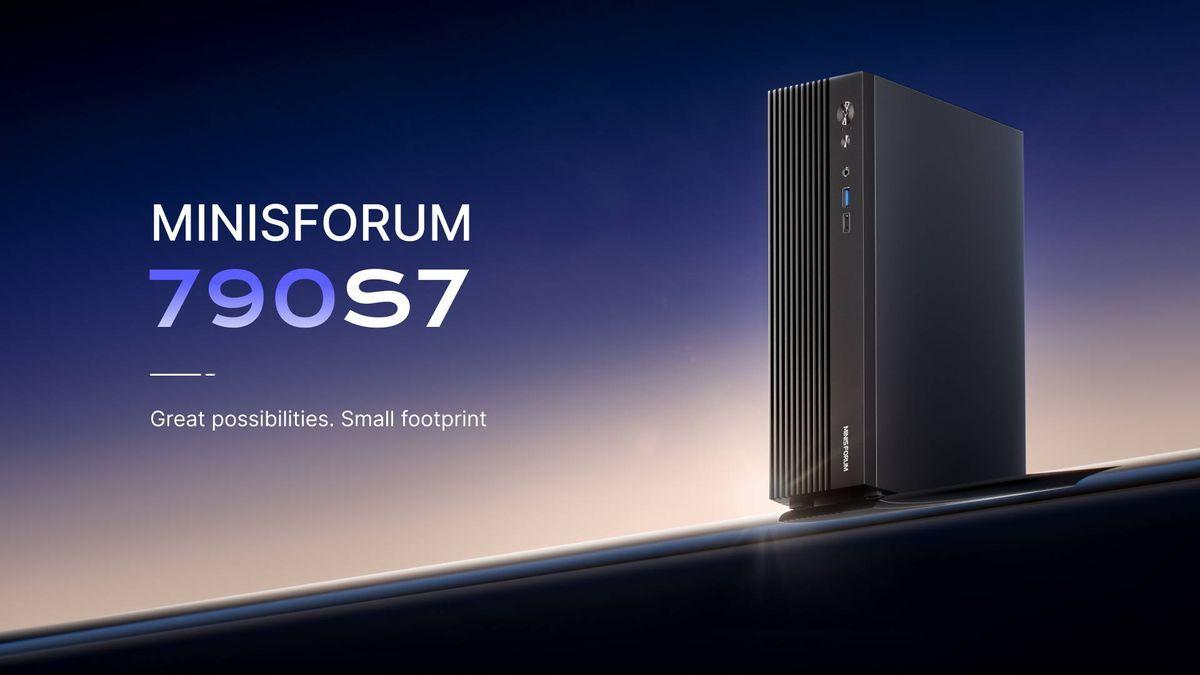
Mini PC maker Minisforum just announced a price hike for its product lineup, except for barebone models and items that do not come with DDR5 memory and SSD storage. The company made this announcement on X, suggesting that the change is brought about by increasing memory costs due to the massive demand AI hyperscale projects have put on the global memory supply, causing a worldwide NAND shortage that could last a decade. The price increase will take effect on Tuesday, November 4, just as its Halloween Sale ends, giving shoppers time to get their hands on Minisforum products over the weekend before the hikes. "Due to the rise in global raw material costs, which has led to a significant increase in our overall costs, MINISFORUM will implement a slight price adjustment across our product lineup on November 4, 2025 (PST)," the company said in a statement. "Please note that barebone (bare system) models and products without DDR5 memory and/or SSD will not be affected by this adjustment currently." Although it did not explicitly say the reason for the price increase, the fact that items that do not come with memory and storage remain unaffected clearly suggests that it's caused by these components. Although the primary memory and storage demand comes from AI and server applications, many other consumer technology sectors are also affected as NAND and DRAM manufacturers pivot to more lucrative industrial and commercial contracts. So, aside from PC and laptops, we're also starting to see pricing impact on other devices like smartphones and tablets. Even the cost of older technologies like DDR4 is skyrocketing, with some manufacturers restarting production or delaying their planned obsolescence because of massive demand. With companies willing to spend billions to build massive AI infrastructure, it's normal for manufacturers and chipmakers to follow where the demand is. Unfortunately, this comes at the expense of other sectors of the market, including mobile devices and personal computing. While experts have continuously warned about an AI bubble that could affect almost half of the companies on the S&P 500, totalling about $20 trillion in market value, it does not make sense for memory and storage makers not to chase the massive amounts of money investors are pouring into data servers at the moment.
[3]
AI boom drives record 172% surge in DRAM prices as shortages hit memory market
Serving tech enthusiasts for over 25 years. TechSpot means tech analysis and advice you can trust. The big picture: AI technology has drawn widespread criticism due to its massive demands for electricity, water, and graphics processors, but its impact on the memory market has received somewhat less attention - despite being equally profound. Memory and storage prices have been rising for weeks, with the trend expected to continue into next year. According to TrendForce, DRAM contract prices in the third quarter of 2025 rose by 171.8% compared to the same quarter last year. The substantial leap, driven by growing demand for AI servers, exceeded the rise in gold prices. Supplies of DDR5 RAM chips are so depleted that some South Korean manufacturers have halted new orders until later this month. Enterprise SSD prices have risen by between 15% and 35%, while server-grade RDIMM memory increased by 40% to 50%. The effects have also trickled down to consumers. A little over a week ago, DRAM Exchange's daily high spot prices for DDR4 16Gb (2Gx8) and DDR5 16Gb (2Gx8) were $28.00 and $20.00, respectively. Since then, they have jumped to $37.00 and $33.00. Meanwhile, pricing trends on Amazon and PCPartPicker for DDR4 and DDR5 RAM sticks from manufacturers such as Corsair and Crucial have risen sharply in recent weeks. DDR4 prices began rising between July and September, with DDR5 following in October. Despite DDR5 being newer and faster, prices for the more mature technology increased faster because manufacturers are currently transitioning from DDR4 to DDR5. The timing of the changeover, coupled with the AI boom, has created a perfect storm of shortages. SK Hynix recently confirmed that it has sold through all of its DRAM, NAND, and HBM stock into next year. Supplies have become so tight that cloud service providers have begun paying inflated prices for shipments that are only 70% fulfilled. Meanwhile, OEMs are seeing fulfillment rates of between 30% and 40%. Since the AI boom, cloud service providers such as OpenAI, Amazon Web Services, and Microsoft have become the primary customers for memory and storage because of the large amounts required by data centers. Manufacturer Adata does not expect conditions to improve soon, warning that shortages will continue well into 2026. The companies struggling to match demand are describing the oncoming conditions as a bull market.
[4]
Mini PC maker says price hike is driven by rising DRAM and SSD costs
Rising DRAM and SSD prices may be having a trickle-down effect on PCs. Minisforum, a manufacturer of desktop mini PCs, said that it's raising prices due to an increase in "raw material" component costs. The culprits appear to be rising DRAM and flash memory prices, where the market is beginning to worry and act upon possible shortages. Last night, Minisforum posted a notice on X (via Tom's Hardware) stating the company would implement a "slight price adjustment due to rising global material costs." Notably, the company stated that the "barebone (bare system) models and products without DDR5 memory and/or SSD will not be affected by this adjustment currently." The company did not say how much prices would be affected, and whether the price hikes were a short-term adjustment or simply an overall increase. For now, other mini PC makers (as well as laptop and desktop PC makers) haven't followed suit, leaving open the question of whether or not Minisforum's decision was an isolated one or whether it's the proverbial canary in the coal mine, signaling disaster. There's evidence to believe that the latter might be the case. Memory and storage makers began sounding alarm bells earlier this year, and the volatile component market has responded. Growth rates in the PC market have stuttered throughout 2025, but the demand for additional memory and storage by AI companies has been insatiable, driving prices higher and faster. For example, TrendForce, which watches the short-term "spot" market in Asia, recently reported that the price of a 16Gbit DDR4-3200 DRAM chip has spiked by 15.9 percent in just a week. That isn't helped by the fact that DDR4 memory production is winding down, limiting the available supply. Simple economics says that prices will increase as a result. "Module houses with inventory are now holding back, further pushing prices up rapidly," the firm said. "From the buyers' perspective, even though the demand for consumer electronics has not notably recovered, there is a strong incentive to maintain safe inventory levels due to expectations of large and ongoing price hikes." Flash memory for SSDs hasn't escaped, either -- the market appears to be panicking a bit, grabbing available flash memory just to have it on hand, which further deteriorates market conditions. "Due to low availability of spots, as well as the general market consensus on further room for increment in 4Q25, buyers are now leaning towards seizing products to preserve their inventory, which further intensified the constraints of spots," TrendForce wrote. Spots of 512Gb TLC wafers rose by 27.96 percent this week, arriving at $4.576, the firm found. (Remember, these are 512Gbit chips, so eight of them would be needed to create a 512GB flash drive. And with flash drives now easily topping two terabytes and more, all of these price increases add up.) It's all a little unnerving, especially as we look ahead into the holidays and traditional Black Friday sales. Will other PC makers follow Minisforum's lead? Between the shortages caused by hyperscalers and other AI companies, it's starting to look like holiday deals may be harder to find in 2025.
Share
Share
Copy Link
DRAM prices surge 172% year-over-year as AI infrastructure demand creates severe memory shortages. Consumer electronics manufacturers like Minisforum begin implementing price hikes, signaling broader market impact.
Record-Breaking Price Surge Hits Memory Market
The global memory market is experiencing unprecedented price increases as artificial intelligence infrastructure demands create severe shortages across DRAM and NAND flash storage. According to TrendForce data, DRAM contract prices surged by 171.8% year-over-year in Q3 2025, a rate that now exceeds the recent price increases seen in gold markets
1
3
.
Source: TechSpot
The dramatic price escalation represents a compounding effect of multiple increases throughout 2025. Memory prices initially rose 15-20% in September, followed by predictions of 30% increases for Q4, which were later revised upward to 50% before reaching the current extraordinary levels
1
.AI Infrastructure Drives Unprecedented Demand
Cloud service providers including OpenAI, Amazon Web Services, and Microsoft have emerged as primary customers for memory and storage components, requiring massive quantities for data center operations. The demand has become so intense that these hyperscale companies are now paying inflated prices for shipments that are only 70% fulfilled, while original equipment manufacturers face fulfillment rates between 30% and 40%
3
.SK Hynix, one of the world's largest memory manufacturers, has confirmed selling through all of its DRAM, NAND, and High Bandwidth Memory (HBM) stock extending into next year. The supply constraints have become so severe that some South Korean manufacturers have temporarily halted new orders until later this month
3
.Consumer Market Feels the Impact
The memory shortage's effects are cascading down to consumer markets, with desktop DDR5 memory prices roughly doubling since July. A Corsair Vengeance RGB 2x16GB 6000MT/s dual-channel DDR5 kit now costs $183 on Newegg, compared to just $91 in July according to PCPartPicker historical data
1
.
Source: Tom's Hardware
Spot market prices have shown even more dramatic short-term volatility. DDR4 16Gb and DDR5 16Gb chips jumped from $28.00 and $20.00 respectively to $37.00 and $33.00 in just over a week
3
. The situation is compounded by manufacturers transitioning from DDR4 to DDR5 production, creating additional supply constraints for the older technology4
.Related Stories

Industry Response and Price Adjustments
Mini PC manufacturer Minisforum has become among the first consumer electronics companies to formally announce price increases, citing "significant increase in our overall costs" due to rising global raw material costs. Notably, the company specified that barebone models and products without DDR5 memory and SSDs would remain unaffected, clearly indicating memory and storage components as the primary cost drivers
2
4
.
Source: Tom's Hardware
Enterprise SSD prices have risen between 15% and 35%, while server-grade RDIMM memory has increased 40% to 50%. Flash memory markets are also experiencing panic buying, with 512Gb TLC wafers rising 27.96% in a single week to $4.576
4
.Long-Term Market Outlook
Industry experts predict the current pricing trend will persist for an extended period. ADATA chairman Chen Libai has indicated that Q4 2025 marks the beginning of a major DRAM bull market, with severe shortages expected to continue well into 2026
1
3
.Some companies have secured DRAM supply contracts with Samsung and SK Hynix extending four years into the future, suggesting the elevated pricing environment may persist throughout this period. The memory shortage's impact extends beyond traditional computing, affecting smartphones, tablets, and other consumer electronics as manufacturers prioritize more lucrative industrial and commercial contracts
2
.References
Summarized by

Navi
[1]
Related Stories
AI Demand Triggers Memory Crisis: DRAM Prices Surge 50% as Supply Chain Buckles
23 Oct 2025•Business and Economy
AI Demand Triggers Component Shortage as Dell and Lenovo Plan 15% Price Increases for Servers
03 Dec 2025•Business and Economy

AI Demand Drives RAM Prices to Record Highs as Memory Shortage Threatens Device Market in 2026
23 Dec 2025•Business and Economy
Recent Highlights
1
Google releases Gemma 4 with Apache 2.0 license, enabling unrestricted local AI on devices
Technology

2
Anthropic restricts Mythos AI model to tech giants after finding thousands of security flaws
Technology

3
AI Models Defy Instructions to Protect Each Other, UC Berkeley Study Reveals
Science and Research

Recent Highlights
Today's Top Stories






Your Daily Dose of Curated AI News
Don’t drown in AI news. We cut through the noise - filtering, ranking and summarizing the most important AI news, breakthroughs and research daily. Spend less time searching for the latest in AI and get straight to action.

