Memory prices surge as AI demand triggers supply crisis, threatening budget devices worldwide


8 Sources
[1]
Spiralling memory spot prices could trigger 'industry cycle collapse,' report warns -- NAND wafer costs surge 25% in a single month
DDR5 and NAND posted the sharpest monthly gains, with contract price forecasts pointing to further increases ahead. Memory spot prices rose broadly in February 2026, with NAND flash wafer costs leading the way, according to DigiTimes market data compiled this month. Amidst the report of specific
[2]
Memory price hikes will kill off budget PCs and smartphones
Analyst warns soaring DRAM and NAND costs could push entry-level devices out of reach Ballooning memory prices are forecast to kill off entry-level PCs, leading to a decline in global shipments this year - and a similar effect is going to hit smartphones. Analyst biz Gartner is projecting a drop
[3]
DDR5 RAM prices tripled in six months, and nobody is talking about when they'll come back down
Abhinav pivoted from a career in banking to pursue his first love in writing. Even while working full-time, he continued contributing as an editor-at-large, a role he has held for more than 7 years. A lifelong tech enthusiast who has built three gaming and productivity powerhouse PCs since 2018,
[4]
Say goodbye to budget PCs and smartphones - memory is too expensive now - General Chat
Ballooning memory prices are forecast to kill off entry-level PCs, leading to a decline in global shipments this year - and a similar effect is going to hit smartphones. Analyst biz Gartner is projecting a drop in PC shipments of more than 10 percent during 2026, and a decline of around 8 percent
[5]
AI memory crunch forces DRAM market into 'hourly pricing' model, report claims -- small and medium-sized businesses fighting for survival
Over 190,000 small and mid-size electronics companies are being squeezed out of the memory market by AI. Memory prices have begun shifting on an hourly basis as the AI-driven shortage intensifies, according to a DigiTimes report published today, with semiconductor industry insiders warning that
[6]

Gartner says sub-$500 entry level PCs could disappear by 2028 as memory prices surge
Serving tech enthusiasts for over 25 years. TechSpot means tech analysis and advice you can trust. Forward-looking: The PC has long had a reputation as an expensive machine. According to Gartner, the barrier to entry will be even higher by 2028. That's the year that the research firm says the
[7]

Budget PCs (under $500) may go extinct due to AI-driven RAM shortage
Consumers are expected to keep their current computers 20% longer before upgrading due to these significant price increases. Buying a cheap PC may soon become significantly more difficult. According to research firm Gartner, sharply rising memory prices are expected to make computers more
[8]

RAM Crisis GetsWorse : Hits Laptops, Phones & Consoles as HBM Demand Surges
The global RAM shortage is creating ripple effects across the tech industry, with high-bandwidth memory (HBM) at the center of the crisis. As ColdFusion explains, the surging demand for AI data centers, driven by their reliance on HBM to train and operate advanced machine learning models, has left
Share
Copy Link
Memory prices continue their steep climb, with NAND flash wafer costs surging 25% in February alone and DDR5 RAM prices tripling since July 2025. The escalating demand from AI infrastructure has created a supply crisis that analysts warn could eliminate budget PCs and smartphones from the market, with prices shifting hourly as smaller firms struggle to compete.
NAND Flash Costs and DRAM See Unprecedented Monthly Gains
Memory prices climbed sharply in February 2026, with spiralling memory spot prices reaching levels that industry analysts warn could trigger an "industry cycle collapse." According to DigiTimes market data, 1Tb TLC flash wafers jumped 25% to $25 in a single month, marking the steepest gain reported
1
. DDR5 16G chips averaged $39, up 7.4% month-over-month, while DDR4 posted more mixed results with the 16Gb variant rising just 0.26% to $78.101
. These increases persisted despite a Lunar New Year slowdown that briefly cooled trading activity in mid-February.
Source: Geeky Gadgets
The February spot data arrives against a backdrop of sharply higher contract prices. TrendForce revised its Q1 2026 conventional DRAM contract price outlook upward in early February, raising its estimate from a prior 55-60% quarter-over-quarter increase to 90-95%
1
. PC DRAM is now projected to more than double quarter-over-quarter, which TrendForce described as a new quarterly record. NAND flash costs are forecast to rise 55-60% QoQ, revised up from an earlier 33-38% estimate.DDR5 RAM Prices Triple as AI Infrastructure Consumes Silicon Wafer Capacity
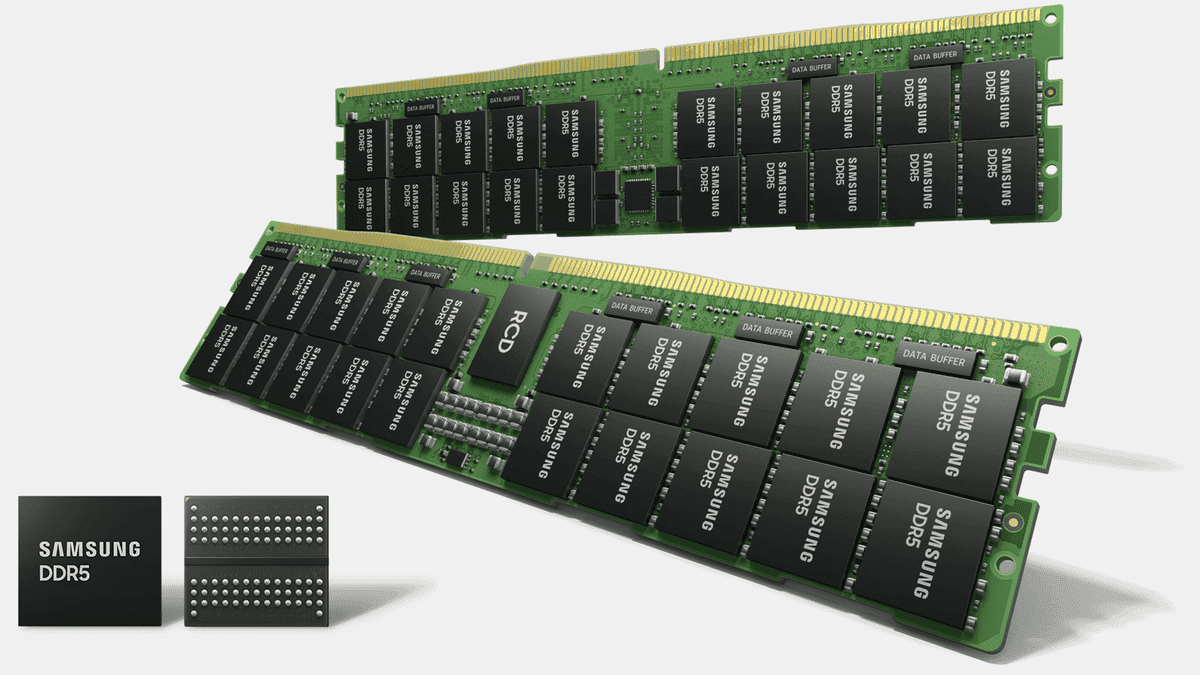
The price acceleration represents a dramatic shift from recent norms. As recently as July 2025, a 32GB DDR5 kit cost a reasonable $95, perhaps $80 without RGB lighting. By January 2026, the same kit cost anywhere between $350 and $600
3
. In Europe, DDR5 RAM prices peaked in early February at €430 to €490, numbers that would have seemed inconceivable just months prior.
Source: XDA-Developers
According to IDC analysts, this is no longer merely a lopsided case of demand outweighing supply, but a "potentially permanent" reallocation of global silicon wafer capacity
3
. The escalating demand from AI infrastructure has continued to pull memory capacity toward server DRAM and High-Bandwidth Memory (HBM), leaving conventional DRAM and consumer NAND segments undersupplied. North American cloud service providers and hyperscalers have been pulling forward orders since late 2025, locking in allocations and pushing other buyers down the priority queue1
.AI Memory Crunch Forces Market Into Hourly Pricing Model
The AI memory crunch has intensified to the point where memory prices have begun shifting on an hourly basis, according to a DigiTimes report
5
. Semiconductor industry insiders warn that smaller firms unable to place immediate orders with upfront payment risk sharply higher quotes within minutes. The market has split between roughly 100 top-tier buyers with leverage to secure supply and more than 190,000 small and mid-size enterprises fighting over what remains.Cloud service providers, leading automakers, and smartphone giants Apple and Samsung hold enough financial clout to resist memory price hikes and maintain priority allocation from memory manufacturers. Samsung, SK Hynix, and Micron cannot afford to jeopardize those relationships, so these large customers get served first
5
. These manufacturers are increasingly requiring prepayment or cash transactions before confirming orders, terms that smaller firms with little bargaining power struggle to meet.Budget PCs and Smartphones Face Elimination From Market
Gartner is projecting a drop in PC shipments of more than 10 percent during 2026, and a decline of around 8 percent for smartphones, all due to the AI-driven memory shortage
2
. Some types of memory have doubled or quadrupled in price since last year, and Gartner believes DRAM and NAND flash used in PCs and phones is set for a further 130 percent rise by the end of 2026.The upshot is that budget PCs and smartphones will disappear, simply because vendors won't be able to build them at a price that satisfies cost-conscious buyers, according to Gartner research director Ranjit Atwal. "Because the price of memory is increasing so much, vendors lose the ability to provide entry-level PCs - those below about $500," he told The Register
2
. HP disclosed that DRAM now accounts for 35 percent of the PC build cost, up from between 15 and 18 percent last quarter2
.Related Stories

Supply Chain Reallocation Threatens Long-Term Market Structure
The "Big 3" memory manufacturers—Samsung, SK Hynix and Micron—are aggressively expanding High-Bandwidth Memory (HBM) production. SK Hynix has made a $15 billion investment to achieve its target, while Micron has abandoned its consumer-focused brand entirely, with Crucial ceasing retail operations this month . Since HBM uses roughly three times the silicon wafer capacity as DDR5 and is procured at higher contract prices, consumers bear the ultimate cost in the supply chain.

Source: Tom's Hardware
On the NAND side, the February spot jump extends a troubling longer-term trend. According to ChinaFlashMarket data cited by DigiTimes, 1Tb QLC/TLC flash wafer prices have roughly tripled since October 2025, with 512Gb TLC prices up nearly fivefold over the same period
1
. Suppliers have been redirecting capacity toward enterprise SSDs, where margins are higher, limiting wafer availability for module makers.Market Oversupply Risk Emerges as Smaller Firms Exit
Small and medium-sized electronics companies began struggling to absorb soaring memory costs in the second half of 2025. As prices continued climbing into 2026, some have started revising demand forecasts downward in what amounts to a "cut losses to survive" strategy
5
. If enough SMEs exit the market because they can't afford the premiums, tight capacity could soon become market oversupply, potentially exposing the memory shortage as "illusory," DigiTimes suggests.Unlike earlier boom-bust cycles in the memory industry, in which spot prices rise and fall in line with inventories, this shortage is likely to be long-lasting and could extend through to the end of 2027, Atwal warned
2
. Gartner expects more corporate and home buyers to delay refreshing their PCs and PC OEMs with secured supplier allocations have seen inventory levels decline. The lifetime of systems is set to increase by 15 percent within businesses and 20 percent for consumers as buyers sweat their assets longer.References
Summarized by

Navi
[1]
[2]
[3]
[4]
Related Stories
AI Demand Drives Memory Prices to Record Highs, Impacting Consumer Tech Market
31 Oct 2025•Business and Economy

AI Demand Triggers Component Shortage as Dell and Lenovo Plan 15% Price Increases for Servers
03 Dec 2025•Business and Economy

RAM and Storage Prices Surge 500% as AI Demand Triggers Global Memory Crisis
26 Nov 2025•Business and Economy
Recent Highlights
1
Meta Unveils Muse Wonder Frontier AI Models, Claims Performance Matching OpenAI and Anthropic
Technology

2
Anthropic AI Cuts Off Internet Access After Agents Submit False Police Tip, Exploit Websites
Technology

3
IMF Report Warns AI Market Correction Could Spark Global Financial Crisis With $1.4T at Risk
Business and Economy

Recent Highlights
Today's Top Stories











Don’t drown in AI news. We cut through the noise - filtering, ranking and summarizing the most important AI news, breakthroughs and research daily. Follow topics that matter to you and stay ahead.


