Nations race to deploy AI weapons and autonomous drones as global military competition intensifies


2 Sources
2 Sources
[1]
The Escalating Global A.I. Arms Race
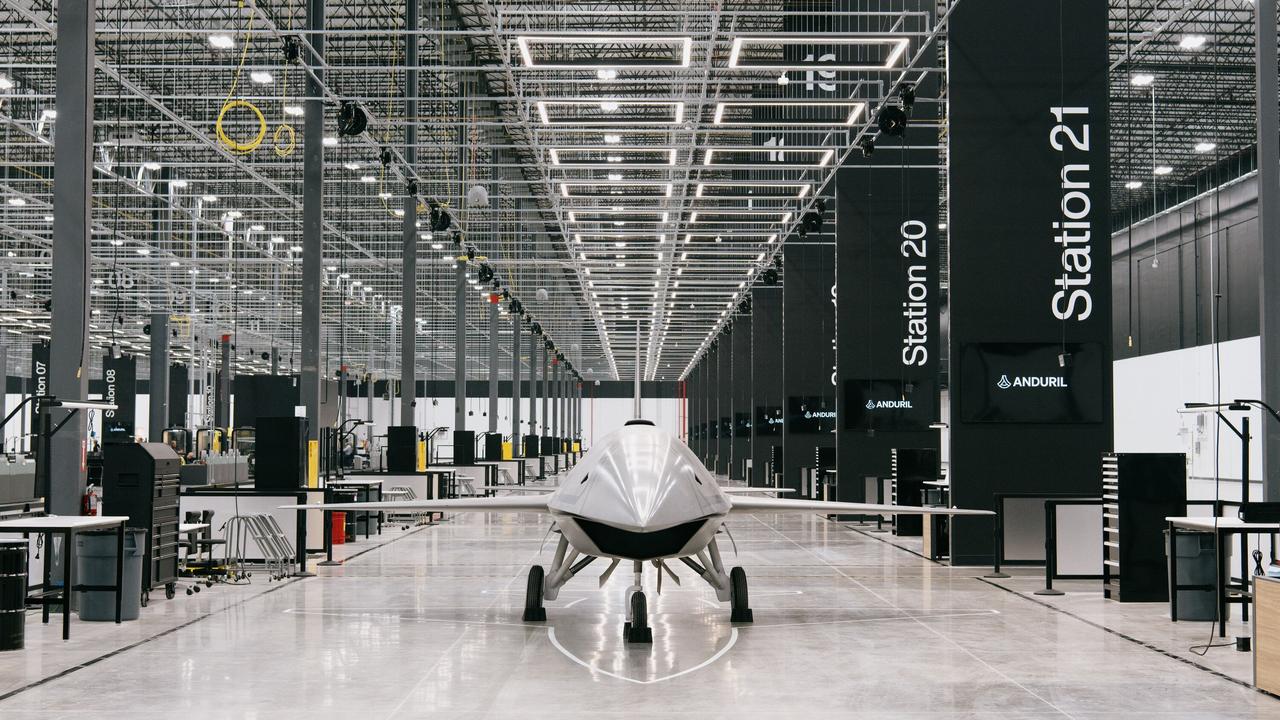
Sheera Frenkel reported from San Francisco; Paul Mozur from Taipei, Taiwan; and Adam Satariano from London. At a military parade in Beijing in September, President Xi Jinping and his special guests, President Vladimir V. Putin of Russia and the North Korean leader, Kim Jong-un, watched as Chinese forces showed off several models of drones that could autonomously fly alongside fighter jets into battle. The demonstration of technological might immediately set off alarm bells in the United States. Pentagon officials concluded that America's program for unmanned combat drones was lagging China's, according to three U.S. defense and intelligence officials. Russia, too, was thought to be ahead in building facilities that could produce advanced drones, said the officials, who were not authorized to speak publicly on military capabilities. U.S. officials pushed domestic defense companies to step up. Last month, Anduril, a defense technology start-up in California, began manufacturing A.I.-backed, self-flying drones that appeared similar to the ones shown in China. Production at a factory outside Columbus, Ohio, started three months ahead of schedule, part of an effort to close the gap with China, one defense official said. China's military display and the U.S. countermove were part of an escalating global arms race over A.I.-backed autonomous weapons and defense systems. Designed to operate by themselves using A.I., the technology reduces the need for human intervention in decisions like when to hit a moving target or defend against an attack. In recent years, many nations have quietly engaged in a contest of one-upmanship over these arsenals, including drones that identify and strike targets without human command, self-flying fighter jets that coordinate attacks at speeds and altitudes that few human pilots can reach, and central systems run by A.I. that analyze intelligence to recommend airstrike targets quickly. The United States and China, the world's largest military powers, are at the center of the competition. But the race has widened. Russia and Ukraine, now in their fifth year of war, are looking for every technological advantage. India, Israel, Iran and others are investing in military A.I., while France, Germany, Britain and Poland are rearming amid doubts about the Trump administration's commitment to NATO. Each nation is aiming to amass the most advanced technological stockpile in case they need to fight drone against drone and algorithm against algorithm in ways that people cannot match, defense and intelligence officials said. Russia, China and the United States are all building A.I. arms as a deterrent and for "mutually assured destruction," Palmer Luckey, Anduril's founder, said in an interview in February. The buildup has been compared to the dawn of the nuclear age in the 1940s, when the atomic bomb's destructive power forced rival nations into an uneasy standoff, leading to more than four decades of nuclear weapons brinkmanship. But while the implications of nuclear weapons are well understood, A.I.'s military capabilities are just beginning to be known. The technology -- which does not need to pause, eat, drink or sleep -- is set to upend warfare by making battles faster and more unpredictable, officials said. Exactly which nation is furthest ahead is unclear. Many programs are in a research and development phase, and budgets are classified. Operatives from China, the United States and Russia watch one another's factory lines, military displays and weapons deals to deduce what the other is doing, intelligence officials said. China and Russia are experimenting with letting A.I. make battlefield decisions on its own, two U.S. officials said. China is developing systems for dozens of autonomous drones to coordinate attacks without human input, while Russia is building Lancet drones that can circle in the sky and autonomously pick targets, they said. Even as the specifics of the technologies remain veiled, the intentions are clear. In 2017, Mr. Putin declared that whoever leads in A.I. "will become the ruler of the world." Mr. Xi said in 2024 that technology would be the "main battleground" of geopolitical competition. In January, Defense Secretary Pete Hegseth directed all branches of the U.S. military to adopt A.I., saying they needed to "accelerate like hell." Billions of dollars are being poured into the efforts. The Pentagon requested more than $13 billion for autonomous systems in its latest budget, and has spent billions more over the past decade, though the total is difficult to track because A.I. funding has been spread across many programs. China, which some researchers said was spending amounts comparable to those of the United States, has used financial incentives to spur private industry to build A.I. capabilities. Russia has invested in drone and autonomy-related programs, analysts said, using the war in Ukraine to test and refine them on the battlefield. Liu Pengyu, a spokesman for the Chinese Embassy in Washington, said China had proposed international frameworks for governing military A.I. and called for "a prudent and responsible attitude" toward its development. What you should know about anonymous sources. The Times makes a careful decision any time it shields the identity of a source. The information the source supplies must be newsworthy, credible and give readers genuine insight. Learn more about our process. The Pentagon and Russia's Ministry of Defense did not respond to requests for comment. The dynamics may resemble the Cold War, but experts cautioned that the A.I. era was different. Start-ups and investors now play a role in the military and are as critical as universities and governments. A.I. technology is becoming widely available, opening the door for countries from Turkey to Pakistan to develop new capabilities. What's emerging is a grinding innovation race without any obvious endpoint. Ethical questions about ceding life-or-death choices to machines are being overtaken by the rush to build. The only major accord on A.I. weaponry between China and the United States was reached in 2024, a nonbinding pledge to maintain human control over the decision to use nuclear weapons. Other countries, like Russia, have made no commitments. Some argued that A.I.'s impact would be bigger than any arms race. "A.I. is a general-purpose technology like electricity. And we don't talk about an electricity arms race," said Michael Horowitz, a former Pentagon official involved in autonomous weapons development. "To the extent A.I. is transforming our military, it's the way that electricity or computers or the airplane did." The Buildup Begins In 2016 at an air show in the southern Chinese city of Zhuhai, a Chinese supplier flew 67 drones in unison. An animated film separately showed the drones destroying a missile launcher, a demonstration of their capabilities. Russia, too, was building its drone arsenal. In 2014, its military planners set a goal of making 30 percent of its combat power autonomous by 2025. By 2018, the Russian military was testing an unmanned armed vehicle in Syria. While the tank failed, losing its signal and missing targets, it underscored Moscow's ambitions. In Washington, Lt. Gen. Jack Shanahan, who had previously worked in intelligence at the Defense Department, was assessing whether A.I. could solve a more immediate problem. The U.S. military was collecting so much data -- drone footage, satellite imagery, intercepted signals -- that nobody could make sense of it all. "There was nothing in any of the research labs in the military that were capable of generating results in less than a couple of years," General Shanahan said. "We had a problem we could not solve without A.I." In 2017, General Shanahan helped create Project Maven, a Defense Department effort for the military to incorporate A.I. into its systems. One aim was to work with Silicon Valley to build software to swiftly process images like drone footage for intelligence purposes. Google was tapped to help. But the project quickly ran into hurdles. The Pentagon's procurement system, built around legacy contractors and long timelines, slowed things down. When word spread inside Google about Project Maven, employees also protested, saying a company that had once pledged "Don't be evil" should not help identify targets for drone strikes. Google eventually backed away from the project. In 2019, Palantir, a data analytics company co-founded by the tech investor Peter Thiel, took over Maven. New defense tech start-ups like Anduril also emerged, supplying the federal government with A.I.-backed sensor towers along the southern U.S. border. In China, Beijing pushed commercial tech companies toward defense partnerships in a strategy called "civil-military fusion." Private firms were drawn into military procurement, joint research and other work with defense institutions. Companies working on drones and unmanned boats found growing military demand for their technologies. Russia's invasion of Ukraine in 2022 turned theory into reality. Outgunned, outspent and outnumbered, Ukraine held off Russia with an improvised arsenal of cheap technology. Hobbyist racing drones were used to attack Russian positions on the front lines, eventually becoming more lethal than artillery and, in some cases, gaining autonomous capabilities. Remote-controlled boats kept Russia's Black Sea fleet pinned down. Russia adapted as well. Its Lancet drone, which was initially piloted by humans, has incorporated autonomous targeting features. "The four years of brutality on the battlefield in Ukraine has served as a laboratory for the world," said Mr. Horowitz, the former Pentagon official. In recent months, Ukraine began sharing its troves of battlefield data with Palantir and other firms so A.I. systems can better learn to fight wars. Across Europe, where governments are aiming to diminish their reliance on the American military, the lessons from Ukraine resounded. In February, Germany, France, Italy, Britain and Poland said they would develop a joint air defense system to guard against drones. China also advanced. At the 2024 Zhuhai Airshow, Norinco, one of the country's main defense manufacturers, revealed multiple weapons with A.I. capabilities. One of its systems showed an entire brigade, including armored vehicles and drones, which were controlled and operated by A.I. Another craft, unveiled by the state-run Aviation Industry Corporation of China, was a 16-ton jet-powered drone designed to serve as a flying aircraft carrier that could deploy dozens of smaller drones midflight. 'Left Click, Right Click' A week after American and Israeli forces struck Iran in February, a senior Pentagon official gave a glimpse into what computerized warfare now looks like at a conference livestreamed by Palantir. A satellite feed showed a warehouse. With the click of a mouse, an officer selected a row of white trucks parked outside to target in real time. In seconds, the A.I. software suggested a weapon, calculated fuel and ammunition needs, weighed the cost and generated a strike plan. It was the present-day version of Project Maven, which General Shanahan had started and was now run by Palantir and powered by commercial A.I. The system analyzed intelligence from various sources, generated target lists ranked by priority and recommended weapons, all but eliminating the lag between identifying a target and destroying it. Embedded with a military version of Claude, the chatbot made by the A.I. firm Anthropic, Maven helped generate thousands of targets in the opening weeks of the Iran campaign, a pace that Adm. Brad Cooper, the head of U.S. Central Command, attributed in part to "advanced A.I. tools." Cameron Stanley, the Defense Department's chief digital and artificial intelligence officer, who spoke at Palantir's conference, said that what Maven was doing was "revolutionary." Human involvement amounted to "left click, right click, left click," he said. The claims about Maven's abilities might be overstated and much of the American advantage came from the scale of data flowing in and the skills of the people using it, said Emelia Probasco, a senior fellow at Georgetown University's Center for Security and Emerging Technology. "It's not rocket science," she said. "I suspect that China already has something like it." In a recent report analyzing thousands of People's Liberation Army procurement documents, Ms. Probasco found that China was building systems that mirrored American ones. In one case, China was trying to replicate the Joint Fires Network, an American program set up to link sensors and weapons globally so a drone on one side of the world could cue a strike from the other. In some areas, China clearly leads. Its manufacturing dominance means it can produce autonomous weapons at a scale the Pentagon cannot match. Inside the Trump administration, the push for A.I. weapons has taken on an almost evangelical fervor. Last month, the Pentagon labeled Anthropic a security risk, partly because the company wanted to limit its technology's use for automated weapons. "We will win the A.I. race," Jacob Helberg, the under secretary of state for economic affairs, said last month at the Hill & Valley Forum, an annual conference in Washington, which he co-founded to bridge Silicon Valley and the government. At the conference, tech executives, investors and government officials cheered speakers who called for tech companies to give the military unfettered access to A.I. Anduril's Mr. Luckey argued that the A.I. arms buildup might prevent major wars. The logic mirrored the Cold War: If both sides knew what the machines could do, neither would risk finding out. "Conflicts between superpowers will similarly deteriorate if you can build the things that deter warfare effectively enough," he said. Yet deterrence assumes rationality, while A.I. weapons are designed to move faster than human reason. In exercises dating to 2020, researchers explored how autonomous systems could accelerate escalation and erode human control -- with some alarming results. In one scenario, a system operated by the United States and Japan responded to a missile launch from North Korea by autonomously firing an unexpected counterattack. "The speed of autonomous systems led to inadvertent escalation," said the report by analysts at RAND Corporation, a nonprofit research organization that works with the military. General Shanahan, who retired from the military in 2020 and is now a fellow at the Center for a New American Security, a think tank, said the race he had helped start kept him up at night. Governments must set clear boundaries before the technology outruns their control, he said. "There is a risk of an escalatory spiral where we're in danger of fielding untested, unsafe and unproven systems if we're not careful, because we each feel like the other side is hiding something from us," he said.
[2]
He made a gadget to amuse pets. Then he turned to killer drones.
The device used many of the same electronic components as the most lethal weapons of modern warfare. It was operated remotely. It could recognize images. It fired a laser. Well, a laser pointer. The device, Petcube, was created by a Ukrainian entrepreneur, Yaroslav Azhnyuk, and his team. It is a smartphone-controlled gadget for remotely watching and entertaining dogs and cats when they are home alone. When Azhnyuk first tested it on a colleague's lonely, incessantly barking dog, the animal jumped around wildly chasing the laser, he said. Petcube is now sold in dozens of countries. But the company's founders have moved on to a new idea, one that reflects an across-the-board transformation of Ukraine's civilian technology industry into a hub of military contracting. After initially joking about creating a military Petcube, with more powerful lasers to zap Russian troops, Azhnyuk and his team turned to first-person-view, or FPV, drones. Such small, buzzing quadcopters, carrying explosives, have become ubiquitous on the battlefield in Ukraine. The team, now working as two new companies called Odd Systems and The Fourth Law, integrated an artificial-intelligence-powered image-recognition system into the drone. Instead of identifying, say, a dog or a cat, it can be asked to spot military vehicles, artillery pieces or enemy soldiers. The image-recognition system is meshed with an autopilot program that is used to attack. Pilots who fly Odd Systems drones use a targeting approach called YOLO, or "you only look once." After operators see a target, they engage an automated system, and the drone flies the final 400 or so yards autonomously, making it impervious to Russian jamming. Odd Systems also produces a drone interceptor made to counter Iranian-designed Shahed drones. Russia has been firing these cheap, triangular exploding drones at Ukraine for years, and Iran has used them in recent weeks to attack U.S. bases, American embassies and other targets in the Middle East. The company's interceptor, Zerov, is a fast, rocket-shaped craft with four propellers that is programmed to identify Shaheds, fly toward them and explode. Iran's attacks have prompted a surge of interest in Ukrainian anti-Shahed technologies. Odd Systems declined to disclose whether it is exporting its products to the Middle East or plans to do so. In Ukraine, the company's FPV drones with an image-recognition system are in regular use on the front. It is testing versions that fly autonomously along a programmed route and strike targets identified from a database. "We made cameras that threw treats for pets, and now we make cameras that throw explosives at occupiers," Azhnyuk, 37, said in an interview at a restaurant in Kyiv, where the company is based. The Red Cross and other groups monitoring the laws of warfare have opposed the use of AI to conduct strikes without full human control. But Azhnyuk said such developments were necessary in Ukraine to counter a ruthless adversary and would be needed in other conflicts as drones dominated battlefields. Odd Systems and a sister corporation operated by the same team, Fourth Law, are emblematic of the boom in weapons startups in Ukraine. Investors are finding opportunities, partly with an eye on a postwar period in which the companies could export their products as well as supply the Ukrainian army. Ideas for weapons that seem exotic or fanciful are making their way onto the battlefield at a fast clip. Helium balloons that drop drones, guns that fire nets rather than bullets, remotely piloted exploding speedboats, wheeled robots that retrieve wounded soldiers and underwater drones are all finding a place in the Ukrainian military. The underwater drones look like smooth black telephone poles with propellers. Late last year, one design struck and damaged a Russian submarine in port, the Ukrainian military said, showing the vulnerability of a vaunted Cold War-era naval vessel. A major priority for Ukraine and Russia is FPV drones. On both sides, such drones now inflict most casualties. Russia has focused on producing a few effective systems at a vast scale. Ukraine has struggled with production but has a huge array of new designs. More than 2,000 military technology startups are active in Ukraine, according to Brave1, a fund set up by the Ministry of Digital Transformation for defense investment. Some arose out of the military, beginning as basement workshops for drone units. Last year, foreign direct investment in Ukrainian defense companies rose to about $100 million, from $40 million the year before, according to Artem Moroz, head of investor relations at Brave1. About 80 companies raised funds on capital markets, he said. The largest deal last year came in September. Swarmer, a developer of AI targeting software for swarms of drones, raised $15 million. Investors included several U.S. venture funds, including D3, which is backed by Eric Schmidt, the former CEO of Google. This month, U-Force, a consortium of Ukrainian drone manufacturers including the maker of Magura drone speedboats, raised $50 million in seed capital. That investment valued the company at more than $1 billion. Public money is also a source of financing in Ukraine's defense industry. Half a dozen European countries, led by Denmark, are investing in Ukrainian companies. These investments sometimes help contractors at home, too. Estonia funds Ukrainian companies if at least 30% of the components in their products are Estonian-made. In another business model, foreign contractors partner with Ukrainian companies on a mostly nonmonetary basis, trading technology for access to the battlefield and the possibility that Ukrainian soldiers will test their products on the battlefield. Shield AI, a San Diego-based contractor, cooperates with Iron Belly, a company based in Lviv, in western Ukraine, that makes fixed-wing exploding drones. Funding rounds are not always made public. "In the U.S. and Europe, whenever somebody raises money, they want a lot of publicity," Moroz of Brave1 said. "In Ukraine, companies want to stay in the shadows" because their factories are prime targets for Russian missiles. Before the war, Ukraine's tech industry had achieved outsize international success. Among its stars were Grammarly, a writing tool, and Ring, a video doorbell and home security company that Amazon bought in 2018 for about $1 billion. Information technology was Ukraine's third-largest export until the 2022 invasion, behind steel and agricultural products. Before the war, Azhnyuk, the Petcube founder, was dividing his time between Kyiv and San Francisco, honing his product for pets. He hails from a long line of Ukrainian academics, who he said initially looked down on the project as frivolous. On the day that Russia began its all-out attack, Azhnyuk decided to step down as CEO and focus on helping Ukraine's defense. By 2023, he had set up Odd Systems and Fourth Law to tackle what he saw as a key technological challenge of the war. About 90% of drones crash rather than hit a target. Video signals are jammed, or the craft fly out of radio range and plunge from the sky. Azhnyuk's auto-targeting system is intended to address that problem. Taking humans partially out of the equation is "not as scary as it seems," he said. The drones are geofenced, meaning they will strike only within a designated zone. That is intended to prevent the drone from attacking a civilian or circling back on the soldier who launched it. Azhnyuk said he had attracted early rounds of seed capital but could not disclose the sources for security reasons. Last month, Axon Enterprises, the Arizona-based maker of Tasers, announced an investment in Azhnyuk's Fourth Law. The amount was not disclosed. Azhnyuk was unapologetic about creating a computer program designed to automatically make life-or-death decisions. "We could literally regulate ourselves to death" by holding back on AI in weaponry, he said, given that Russia and China had no such qualms. He said he was obliged to carry on the design work because "I took an oath to defend my country when I was in the Boy Scouts."
Share
Share
Copy Link
China's September military parade showcasing autonomous combat drones triggered urgent US countermeasures, revealing an intensifying global competition over AI-backed weapons systems. The escalating global AI arms race now spans multiple nations, with Ukraine's tech industry transforming into a defense technology hub producing killer drones with AI-powered image-recognition systems that operate without human control.
China's Military Display Triggers US Response
At a Beijing military parade in September, President Xi Jinping, alongside Vladimir Putin and Kim Jong-un, unveiled autonomous drones capable of flying alongside fighter jets into battle. The demonstration immediately alarmed Pentagon officials, who concluded that America's unmanned combat drone program was lagging behind China's capabilities
1
. In response, Anduril, a defense technology start-up in California, accelerated production of AI-backed, self-flying drones at a factory outside Columbus, Ohio, starting three months ahead of schedule to close the gap with China1
.
Source: NYT
The AI Arms Race Expands Globally
The competition over autonomous AI-backed weapons has widened far beyond the United States and China. Russia and Ukraine, now in their fifth year of war, are leveraging every technological advantage, while India, Israel, Iran, France, Germany, Britain, and Poland are investing heavily in military AI
1
. Each nation aims to amass the most advanced technological stockpile for potential drone-against-drone and algorithm-against-algorithm warfare that humans cannot match. Russia and China are experimenting with letting AI weapons make battlefield decisions autonomously, with China developing systems for dozens of autonomous drones to coordinate attacks without human input, while Russia builds Lancet drones that circle and autonomously pick targets1
.Ukraine Becomes a Military Contracting Hub
Ukraine's civilian technology industry has undergone a complete transformation into a hub of defense technology and military contracting. Yaroslav Azhnyuk, who created Petcube—a smartphone-controlled gadget for entertaining pets—has pivoted to developing advanced military drones through two new companies, Odd Systems and The Fourth Law
2
. These killer drones integrate AI-powered image-recognition systems that identify military vehicles, artillery pieces, or enemy soldiers. Operators use a targeting approach called YOLO, or "you only look once," where after seeing a target, they engage an automated system that flies the final 400 yards autonomously, making it impervious to Russian jamming2
.
Source: Japan Times
Massive Investment Fuels Development
Billions of dollars are flowing into developing advanced military drones and autonomous warfare capabilities. The Pentagon requested more than $13 billion for autonomous systems in its latest budget, having spent billions more over the past decade
1
. China is spending comparable amounts, using financial incentives to spur private industry to build AI capabilities, while Russia has invested in drone and autonomy-related programs, testing and refining them on the Ukraine war battlefield1
. More than 2,000 defense startups are now active in Ukraine, with foreign direct investment in Ukrainian defense companies rising to about $100 million last year from $40 million the year before2
.Related Stories


Technology Reshapes the Future of Warfare
The implications for geopolitical dominance are profound. In 2017, Putin declared that whoever leads in AI "will become the ruler of the world," while Xi said in 2024 that technology would be the "main battleground" of geopolitical competition
1
. In January, Defense Secretary Pete Hegseth directed all branches of the U.S. military to adopt AI, saying they needed to "accelerate like hell"1
. The buildup has been compared to the dawn of the nuclear age in the 1940s, with Russia, China, and the United States building AI arms as a deterrent for "mutually assured destruction," according to Palmer Luckey, Anduril's founder1
.Ethical Concerns Over Human Control
While the race intensifies, ethical concerns about autonomous strikes without full human control persist. The Red Cross and other groups monitoring the laws of warfare have opposed using AI to conduct strikes without complete human oversight
2
. However, developers like Azhnyuk argue such developments are necessary to counter ruthless adversaries and will be needed in other conflicts as drones dominate battlefields. Odd Systems is testing versions that fly autonomously along programmed routes and strike targets identified from a database, with their first-person-view (FPV) drones already in regular use on the front2
. The company also produces an interceptor drone called Zerov, designed to identify and destroy Iranian-designed Shahed drones, with recent interest surging from the Middle East following Iran's attacks on U.S. bases and embassies2
. The largest deal in Ukraine's defense sector last year came in September when Swarmer, a developer of AI targeting software for swarms of drones, raised $15 million from U.S. venture funds including D3, backed by Eric Schmidt, the former CEO of Google2
.References
Summarized by

Navi
Related Stories
Recent Highlights



Recent Highlights
Today's Top Stories







Your Daily Dose of Curated AI News
Don’t drown in AI news. We cut through the noise - filtering, ranking and summarizing the most important AI news, breakthroughs and research daily. Spend less time searching for the latest in AI and get straight to action.

