Nvidia expands autonomous driving platform to BYD, Geely, and Hyundai Motor Group


5 Sources
5 Sources
[1]
Nvidia says China's BYD and Geely will use its robotaxi platform
Nvidia added two leading Chinese automakers, BYD and Geely, to its robotaxi program, as the chipmaker seeks to put its stamp on the growing autonomous vehicle market worldwide. At its GTX conference today, Nvidia announced that BYD and Geely, as well as Isuzu and Nissan, would use the chipmaker's Drive Hyperion platform, which combines the chips, computers, sensors, and software needed for for the development of Level 4 autonomous vehicles. BYD currently uses Nvidia's chips in its manually driven cars, and now, under this expanded agreement, it will use the company's Hyperion platform to build next-generation Level 4 vehicles. Geely, meanwhile, is said to be using Nvidia's Thor chips in its new Zeekr vehicles. Geely also supplies Zeekr vehicles to Waymo for its US-based robotaxi service. And Waymo also is using Nvidia's products, according to Ali Kani, VP and general manager of the automotive team at Nvidia, in a briefing with reporters. "Waymo is using us in the car and the cloud," Kani said. The news that Nvidia is supplying chips and software to two of China's top automakers comes amid ongoing tensions between the US and China over trade and tariffs. The company's chips, especially the ones used in data centers to train AI models, have been the subject of intense negotiations between the two countries, with the Trump administration recently approving the sale of Nvidia's H200 chips to Chinese companies. China clearly has a huge lead over the US in electric vehicle production, but the two countries are more evenly matched in the robotaxi field. Baidu, for example, is operating commercial robotaxis in over a dozen Chinese cities. (Waymo has approximately 3,000 vehicles operating commercially in 10 US cities.) Nvidia's deal with BYD and Geely could vastly accelerate those companies' development of autonomous vehicles, increasing China's chances of overtaking the US. Some lawmakers in Congress have pushed to pass long-stalled autonomous vehicle legislation, largely on the premise of maintaining a technological lead over China. Nvidia is seeking to raise its profile as a self-driving leader. But while the company has long supplied major automakers with chips and software for driver-assist systems, its automotive business is still relatively tiny compared to the billions it rakes in from AI. Its third quarter revenues in 2025 were $51.2 billion, but its automotive division only made $592 million, or 1.2 percent of the total haul. But Nvidia isn't just supplying its AV technology to Chinese companies. It also will sell its Hyperion platform to Nissan, which is also using robotaxi software developed by Wayve. And it is working with Isuzu and Tier IV to design Level 4 buses using its next-gen Drive AGX Thor-based system-on-a-chip. In addition, Nvidia said that Lyft will use its Hyperion platform to develop its own robotaxis, using vehicles and software provided by different companies. Lyft also said it would use Nvidia's technology to bolster its "machine learning capabilities and accelerate enterprise operations across ridesharing and autonomous vehicle scaling." Nvidia already has a partnership with Lyft's main rival, Uber. The two companies are working together to launch a global network of robotaxis, aiming to deploy a fleet of 100,000 vehicles by 2027. On Monday, the company provided an update on that agreement, saying it now encompasses 28 markets across four continents by 2028 -- with Los Angeles and San Francisco to come first in early 2027. Uber is working with multiple automakers, including Lucid, Volkswagen, and Stellantis, who are building autonomous vehicles using Nvidia's products. Kani cited Nvidia's virtual testing capabilities, as well as its open-source portfolio of AI models called Alpamayo, as the reason it's been able to make so much progress despite lacking much of Waymo's and Tesla's advantages in real-world miles driven. "Our AV stack took us more than 10 years to build," Kani said, "but our generational leap was sparked by generalist reasoning models like Alpamayo, as well as synthetic data generation and test capabilities based on Omniverse, NuRec, and Cosmos." During the briefing, Kani was asked how many companies are developing their Level 4 vehicles on Nvidia's products. " I think it's pretty much everyone," he said, name-checking Waymo, Nuro, Waabi, Zoox, Wayve, Momenta, Pony, WeRide, Baidu, DeepRoute, and ZYT. "I'm super proud of that," he added. With more and more robotaxis hitting the road, people are understandably on edge about safety. Tesla's Level 2-enabled vehicles have been involved in hundreds of crashes, including 23 injuries and at least two fatalities. Waymo's vehicles have been recorded violating traffic laws around school buses, and occasionally get stuck in intersections, causing huge traffic jams. Nvidia's answer to the problem of these so-called edge cases is to roll out a new product called Halos OS to help its Level 4 partners to build safe systems. Kani described Halos OS as a "safety guardrail" for autonomous driving systems that "will intervene" if AI models are about to make an unsafe decisions. "We help our partners build a safe architecture that we can decompose down for every function and make sure that if any computer or any sensor fails, the system is still architected to take you to a safe place," he said.
[2]
Nvidia adds Hyundai, BYD and other automakers to self-driving tech business
Nvidia CEO Jensen Hwang gives the keynote address at the company's annual GTC developers conference at the SAP Center in San Jose, California, on March 16, 2026. Nvidia is expanding deals for its autonomous vehicle development business to Hyundai Motor, Nissan Motor and Isuzu, as well as Chinese automakers BYD and Geely, the software and chip giant announced Monday. The new tie-ups are for Nvidia's "Drive Hyperion" platform for AVs. The system helps companies develop and deploy driver-assist and autonomous driving capabilities for "Level 4" AVs, which are capable of driving without human intervention under predefined areas or circumstances. "We've been working on self-driving cars for a long time. The ChatGPT moment of self-driving cars has arrived," Nvidia CEO Jensen Huang said Monday during the company's GTC conference. "We now know we could successfully autonomously drive cars, and today, we are announcing four new partners for Nvidia's robotaxi-ready platform. ... The number of robotaxi-ready cars in the future are going to be incredible." No vehicles on sale to consumers today are capable of driving themselves without human monitoring or intervention, but some companies, such as Alphabet's Waymo, offer ride-hailing fleets with Level 4 self-driving vehicles, also known as robotaxis. Most vehicles on sale today are considered Level 2, with drivers needing to continually monitor the systems. Drive Hyperion is part of what Nvidia calls its "end-to-end" AV platform that includes data center training, large-scale simulations and in-vehicle computing. The company does not produce or sell AVs or many of the components needed to operate such vehicles. Current Nvidia customers for Drive Hyperion include many self-driving companies such as Aurora and Nuro, as well as other more consumer-facing businesses such as Sony Group, Uber Technologies, Jeep parent Stellantis and electric vehicle maker Lucid Group. AVs are important to Nvidia, as self-driving cars remain one of the primary areas where the chipmaker can show growth outside of artificial intelligence. Many believe AI could be key to the proliferation of AVs, which Wall Street analysts and automotive executives have targeted as a multitrillion-dollar growth industry. The new companies add to a growing list of such tie-ups for Nvidia, as the chipmaker and the automotive and technology industries try to capitalize on and proliferate AVs after years of failed ventures for robotaxis.
[3]
BYD, Geely, Isuzu and Nissan Adopt NVIDIA DRIVE Hyperion for Level 4 Vehicles
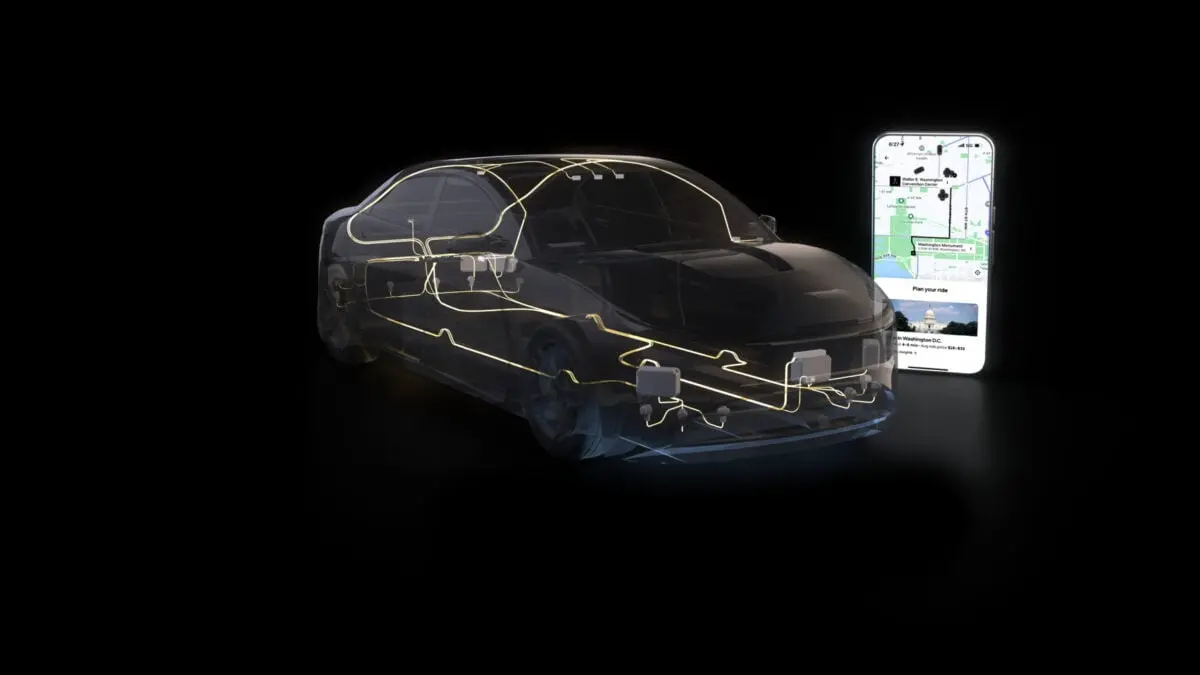
GTC -- NVIDIA today announced that NVIDIA DRIVE Hyperion™ platform adoption is growing expansively, including with global automakers BYD, Geely, Isuzu and Nissan, as well as leading mobility providers -- reflecting rapid momentum toward safe, scalable autonomous vehicle (AV) development. Standardizing on DRIVE Hyperion -- supported by the NVIDIA Halos OS safety architecture -- enables these partners to accelerate validation cycles and streamline global deployment strategies. By using a standardized reference architecture that integrates compute, sensors, networking and safety systems, manufacturers and mobility leaders can achieve faster fleet learning and more efficient global scaling. "The autonomous vehicle revolution is here -- the first multitrillion-dollar robotics industry," said Jensen Huang, founder and CEO of NVIDIA. "Everything that moves will eventually be autonomous. The NVIDIA Hyperion platform and our Alpamayo open reasoning models give vehicles the ability to perceive their surroundings, reason through complex situations and act safely -- making scalable, level 4 autonomy possible." DRIVE Hyperion Scales L4 Vehicle Programs and Robotaxi Platforms Leading automakers BYD, Geely and Nissan (powered by Wayve software) are developing next-generation level 4 AV programs built on NVIDIA DRIVE Hyperion production-ready compute and sensor architecture. Isuzu and TIER IV are also collaborating on L4 autonomous bus development using the NVIDIA DRIVE AGX Thor™ system-on-a-chip, part of NVIDIA DRIVE Hyperion. In addition, NVIDIA is collaborating with Amazon to advance Alexa Custom Assistant with multimodal edge AI capabilities on NVIDIA DRIVE AGX™ accelerated compute, enabling automakers to deliver ambient in-cabin intelligence with privacy in mind and enhanced performance. Uber is building one of the world's most expansive autonomous ride-hailing networks powered by NVIDIA DRIVE Hyperion. Supported by a growing roster of automaker platforms, NVIDIA and Uber today announced an expanded partnership to launch a fleet of autonomous vehicles entirely powered by the full-stack NVIDIA DRIVE AV software across 28 cities and four continents by 2028. The rollout will begin with Los Angeles and the San Francisco Bay Area in the first half of 2027. This DRIVE Hyperion-powered fleet will tap into NVIDIA Alpamayo open models and the NVIDIA Halos operating system to accelerate the development and deployment of safe, scalable robotaxi services worldwide. Other mobility leaders including Bolt, Grab and Lyft are also leveraging NVIDIA DRIVE Hyperion to accelerate autonomous mobility initiatives, signaling broader industry momentum toward software-defined robotaxi fleets. Advancing Level 4 Hardware Extending NVIDIA DRIVE's full-stack approach to software safety, NVIDIA Halos OS delivers a universal safety foundation for production-ready, scalable autonomy on DRIVE Hyperion. Built on ASIL D-certified DriveOS foundations, its unified, three-layer safety architecture integrates safety middleware and deployable safety applications -- including an NCAP five-star active safety stack to provide the guardrails that enable reasoning-based AI systems to operate with verifiable, automotive-grade integrity at scale. To continuously validate and support the rigorous AV safety ecosystem, AEye, Flex, Gatik, Hesai, Lucid, MIRA, PlusAI, Qt Group, Saphira and Valeo are joining the NVIDIA Halos AI Systems Inspection Lab. NVIDIA Alpamayo 1.5: A Reasoning Engine and Steerable Driving Model In addition, NVIDIA today introduced Alpamayo 1.5, a major upgrade that expands NVIDIA Alpamayo -- an open portfolio of AI models, simulation frameworks and physical AI datasets for building safe, transparent, reasoning-based AVs -- with an interactive, steerable reasoning model. Building on the Alpamayo 1 model, Alpamayo 1.5 takes driving video, ego-motion history, navigation guidance and natural language prompts as inputs. Then, it outputs driving trajectories with reasoning traces. This enables developers to steer behavior and specify constraints directly through navigation and text prompts. Alongside Alpamayo 1.5, the Alpamayo portfolio now includes post-training scripts to enable model adaptation for researchers and developers. Since launching earlier this year, Alpamayo has already been downloaded by more than 100,000 automotive developers worldwide. With Alpamayo 1.5, vehicles can more effectively learn from rare or unpredictable events -- such as unusual road hazards and complex human behavior -- by replaying scenarios, querying model decisions and applying updated behavioral guidance through prompts and navigation settings. The model also adds flexible multi-camera support and configurable camera parameters, simplifying reuse of the same AI driving stack across vehicle lines and sensor configurations while preserving compatibility with existing Alpamayo integrations. Accelerate Reasoning AV Development With NVIDIA Omniverse NuRec Testing and validating reasoning-based AVs requires high-fidelity simulation that covers the diversity of real-world driving. NVIDIA Omniverse NuRec is a set of 3D Gaussian Splatting technologies that ingest real-world data to reconstruct and render interactive simulation. NuRec will be generally available on the NVIDIA NGC catalog, helping AV developers stress-test reasoning behaviors and simulate edge cases without the time and costs of manual worldbuilding. Leading AV toolchain providers such as 51WORLD, dSPACE and Foretellix have integrated NuRec into their simulation solutions. Voxel51 is using NuRec in its Physical AI Workbench for customers such as Porsche Research, while Parallel Domain is using the NuRec Fixer model to enhance its reconstruction pipeline. Mcity, an AV research facility run by the University of Michigan, is using NuRec to build a Gaussian-based digital twin of its physical test track for the AV industry and research community.
[4]
Hyundai Motor, Kia and NVIDIA Expand Strategic Partnership for Next-Generation Autonomous Driving Technology
* Hyundai Motor Group builds on the NVIDIA DRIVE Hyperion platform to accelerate development of data-driven autonomous driving systems. * Collaboration combines Hyundai Motor Group's software-defined vehicle capabilities and large-scale fleet data with NVIDIA AI and accelerated computing. * Expanded partnership includes level 2+ deployment across select vehicles and level 4 robotaxi innovation through Motional. GTC -- NVIDIA today announced an expanded collaboration with Hyundai Motor Company and Kia Corporation to advance next-generation autonomous driving technologies built on the NVIDIA DRIVE Hyperion™ autonomous vehicle development platform. The collaboration brings together Hyundai Motor Group's software-defined vehicle (SDV) capabilities, global vehicle fleet and autonomous driving development expertise with NVIDIA accelerated computing, AI infrastructure and autonomous driving software to support the development of scalable, data-driven autonomous driving systems across Hyundai Motor Group vehicle platforms. As part of the expanded relationship, Hyundai Motor Group plans to integrate NVIDIA autonomous driving technologies, supporting level 2 and above systems across select vehicles, to help deliver enhanced safety and intelligent driving capabilities. "The future of mobility will be built on AI and software," said Rishi Dhall, vice president of automotive at NVIDIA. "We're combining Hyundai Motor Group's leadership in vehicle engineering with NVIDIA's accelerated computing and AI to build safe, intelligent, NVIDIA DRIVE-based autonomous driving systems -- from advanced driver assistance in select production vehicles to scalable robotaxi services with Motional." NVIDIA will also explore expanded collaboration with Hyundai Motor Group's autonomous driving joint venture, Motional, to further advance level 4 robotaxi capabilities and accelerate next-generation autonomous mobility services. "The expanded partnership with NVIDIA marks an important milestone in realizing Hyundai Motor Group's vision for safe and reliable autonomous driving technology," said Heung-Soo Kim, executive vice president and head of global strategy office of Hyundai Motor Group. "Based on a unified, Group‑wide collaborative framework, we will strengthen our differentiated technological competitiveness -- from level 2 and above autonomous driving technology to level 4 robotaxi services." The collaboration will enable Hyundai Motor Group to develop a scalable autonomous driving stack -- built on NVIDIA DRIVE Hyperion -- supporting a range of capabilities, from advanced driver assistance to higher levels of autonomy, scalable from level 2 to level 4 autonomous driving. By combining Hyundai Motor Group's large-scale fleet data and SDV development capabilities with NVIDIA's AI computing platform, the companies aim to accelerate a continuous development cycle that includes large-scale, real-world driving data collection, AI model training and refinement, simulation, validation and deployment across production vehicles. This approach enables Hyundai Motor Group to strengthen the development of data-driven autonomous driving technologies, supporting the training of advanced AI models and continuous system improvement as vehicles learn from real-world driving conditions. Watch the GTC keynote from NVIDIA founder and CEO Jensen Huang and explore sessions.
[5]
Hyundai Motor, Kia expand strategic ties with Nvidia for autonomous driving - The Korea Times
Hyundai Motor and Kia have decided to equip some of the carmakers' models with Nvidia's Level 2 and higher self-driving technologies in their latest strategic partnership, the companies said Tuesday. The broadened framework is aimed at activating the future autonomous vehicle ecosystem in the rapidly evolving global software-defined vehicle (SDV) industry. Under the partnership, Hyundai Motor Group will leverage Nvidia's expansive data platforms and artificial intelligence (AI) technologies, while systematically integrating all accumulated data into a unified learning pipeline. This approach will enhance autonomous driving development maturity, enabling the carmaker to respond comprehensively to market dynamics and accelerate its internalization of data-driven autonomous driving technology, the automaker said. The group will also establish an integrated autonomous driving architecture scalable from Level 2 through to Level 4 by using Nvidia's DRIVE Hyperion platform. The carmaker plans to advance discussions with Nvidia to leverage new technologies for its ultimate goal of successfully commercializing its Level 4 robotaxi business. The group said the latest partnership represents a key milestone for Hyundai Motor Group's commitment to safe and reliable autonomous driving technology implementation. The alliance is also seen as a strategic step for the carmaker to boost its internalization of its proprietary driving AI. Hyundai Motor and Kia continuously train their models by using data collected under real-world driving conditions. This helps Hyundai Motor Group to develop its proprietary AI models used for advanced autonomous driving solutions. "The expanded partnership with Nvidia marks an important milestone in realizing Hyundai Motor Group's vision for safe and reliable autonomous driving technology," said Kim Heung-soo, executive vice president and head of the global strategy office at Hyundai Motor Group. "Based on a unified, group-wide collaborative framework, we will strengthen our differentiated technological competitiveness from Level 2 and above autonomous driving technology to Level 4 robotaxi services." Nvidia also spoke highly of the latest partnership with the carmaker. "The future of mobility will be built on AI and software, and we are combining Hyundai Motor Group's leadership in vehicle engineering with Nvidia's accelerated computing and AI to build safe, intelligent, Nvidia DRIVE-based autonomous driving systems from advanced driver assistance to scalable robotaxi services with Motional," said Rishi Dhall, vice president of automotive at Nvidia. Motional is a self-driving venture of Hyundai Motor Group and is now operating a pilot robotaxi service in Las Vegas. It is scheduled to operate its full-fledged robotaxi service there by the end of this year.
Share
Share
Copy Link
Nvidia announced major expansions to its autonomous vehicle business at GTC, adding Chinese automakers BYD and Geely, along with Hyundai Motor Group, Nissan, and Isuzu to its DRIVE Hyperion platform. The deals position Nvidia as a central player in the global race for Level 4 autonomous driving and robotaxi services, despite ongoing US-China trade tensions.
Nvidia Adds Major Global Automakers to Autonomous Driving Platform
Nvidia announced a significant expansion of its autonomous driving business at its GTC conference, bringing Chinese automakers BYD and Geely, along with Hyundai Motor Group, Nissan, and Isuzu onto its DRIVE Hyperion platform
1
2
. The autonomous vehicle development platform combines chips, computers, sensors, and software needed for Level 4 autonomous driving, which enables vehicles to operate without human intervention under predefined conditions3
. Jensen Huang, Nvidia's CEO, declared at the conference that "the ChatGPT moment of self-driving cars has arrived," signaling the company's belief that scalable autonomous driving has reached a critical inflection point2
.
Source: NVIDIA
BYD currently uses Nvidia's chips in its manually driven cars, but under this expanded agreement, the Chinese electric vehicle giant will deploy the DRIVE Hyperion platform to build next-generation Level 4 vehicles
1
. Geely is using Nvidia's Thor chips in its new Zeekr vehicles and already supplies Zeekr vehicles to Waymo for its US-based robotaxi service1
. This creates an interconnected ecosystem where Nvidia technology powers vehicles across multiple companies and geographies.Strategic Partnership with Hyundai Motor Group Targets Level 2 to Level 4 Systems
Hyundai Motor Group's strategic partnership with Nvidia represents a comprehensive approach to next-generation autonomous driving technology
4
. The collaboration combines Hyundai Motor Group's software-defined vehicle capabilities and large-scale fleet data with Nvidia's Artificial Intelligence and accelerated computing infrastructure4
. Hyundai Motor and Kia plan to integrate Nvidia autonomous driving technologies supporting Level 2 and above systems across select vehicles, delivering enhanced safety and intelligent driving capabilities5
.
Source: Korea Times
The partnership enables Hyundai Motor Group to establish an integrated autonomous driving architecture scalable from Level 2 through Level 4 by using the DRIVE Hyperion platform
5
. Nvidia will also explore expanded collaboration with Motional, Hyundai Motor Group's autonomous driving joint venture, to advance Level 4 robotaxi capabilities4
. Motional currently operates a pilot robotaxi service in Las Vegas and is scheduled to launch full-fledged robotaxi services there by the end of this year5
.China-US Competition Intensifies in Autonomous Vehicle Race
The announcement that Nvidia is supplying chips and software to BYD and Geely comes amid ongoing tensions between the US and China over trade and tariffs
1
. While China holds a substantial lead over the US in electric vehicle production, the two countries are more evenly matched in the robotaxi field, with Baidu operating commercial robotaxis in over a dozen Chinese cities compared to Waymo's approximately 3,000 vehicles operating commercially in 10 US cities1
. Nvidia's deals with BYD and Geely could accelerate those companies' development of self-driving systems, potentially increasing China's chances of overtaking the US in autonomous vehicle deployment1
.Despite the geopolitical implications, Nvidia's automotive business remains relatively small compared to its AI revenue. Third quarter revenues in 2025 reached $51.2 billion, but its automotive division only generated $592 million, representing just 1.2 percent of total revenue
1
. However, the company views autonomous vehicles as a primary growth area outside of Artificial Intelligence, with Wall Street analysts and automotive executives targeting AVs as a multitrillion-dollar growth industry2
.Related Stories



Uber Partnership Expands to 28 Cities Across Four Continents
Nvidia and Uber announced an expanded partnership to launch autonomous vehicles powered by the full-stack NVIDIA DRIVE AV software across 28 cities and four continents by 2028
3
. The rollout will begin with Los Angeles and the San Francisco Bay Area in the first half of 20273
. This DRIVE Hyperion-powered fleet will tap into Nvidia Alpamayo open models and the Nvidia Halos OS to accelerate the development and deployment of safe, scalable robotaxi services worldwide3
. Other mobility leaders including Bolt, Grab, and Lyft are also leveraging DRIVE Hyperion to accelerate autonomous mobility initiatives3
.New Safety Architecture and AI Models Address Edge Cases
Nvidia introduced Halos OS, a universal safety foundation for production-ready, scalable autonomy on DRIVE Hyperion
3
. Built on ASIL D-certified DriveOS foundations, its unified, three-layer safety architecture integrates safety middleware and deployable safety applications to provide guardrails that enable reasoning-based AI systems to operate with verifiable automotive-grade integrity at scale3
. The company also unveiled Alpamayo 1.5, a major upgrade that expands the open portfolio of AI models with an interactive, steerable reasoning model3
. Since launching earlier this year, Alpamayo has been downloaded by more than 100,000 automotive developers worldwide3
. Ali Kani, VP and general manager of the automotive team at Nvidia, attributed the company's progress to virtual testing capabilities and simulation tools based on Omniverse, NuRec, and Cosmos, noting that their AV stack took more than 10 years to build1
.
Source: The Verge
References
Summarized by

Navi
Related Stories
Recent Highlights


Recent Highlights
Today's Top Stories












Your Daily Dose of Curated AI News
Don’t drown in AI news. We cut through the noise - filtering, ranking and summarizing the most important AI news, breakthroughs and research daily. Spend less time searching for the latest in AI and get straight to action.

