Jensen Huang says Nvidia achieved AGI, but his own examples reveal the limits of current AI


3 Sources
3 Sources
[1]
Nvidia CEO Jensen Huang says 'I think we've achieved AGI'
On a Monday episode of the Lex Fridman podcast, Nvidia CEO Jensen Huang made a hot-button statement: "I think we've achieved AGI." AGI, or artificial general intelligence, is a vaguely-defined term that has incited a lot of discussion by tech CEOs, tech workers, and the general public in recent years, as it typically denotes AI that's equal to or surpasses human intelligence. In recent months, tech leaders have tried to distance themselves from the term and create their own terminology that they view as less over-hyped, more useful, and more clearly-defined (although the new phrases they've come up with essentially mean the same thing as AGI). The term has also been the subject of key clauses in big-ticket contracts between companies like OpenAI and Microsoft, upon which a significant amount of money may hinge. Fridman, the podcast's host, defines AGI as an AI system that's able to "essentially do your job," as in start, grow, and run a successful tech company worth more than $1 billion. He then asks Huang when he believes AGI will be real -- asking if it's, say, five, 10, 15, or 20 years away -- and Huang responds, "I think it's now. I think we've achieved AGI." Fridman says, "You're gonna get a lot of people excited with that statement." Huang goes on to mention OpenClaw, the open-source AI agent platform, and its viral success. He said that people are using their individual AI agents to do all sorts of things, and that he "wouldn't be surprised if some social thing happened or somebody created a digital influencer ... or some social application that, you know, feeds your little Tamagotchi or something like that, and it become out of the blue an instant success." But Huang then seemed to slightly walk back his earlier claims, saying, "A lot of people use it for a couple of months and it kind of dies away. Now, the odds of 100,000 of those agents building Nvidia is zero percent."
[2]
"We've achieved AGI," says Nvidia CEO, but his own examples suggest otherwise
Serving tech enthusiasts for over 25 years. TechSpot means tech analysis and advice you can trust. Big quote: Nvidia CEO Jensen Huang declared this week that AGI - short for "artificial general intelligence" - has already arrived, before quickly softening the claim. In one podcast appearance, Huang said flatly, "I think we've achieved AGI," before conceding that today's AI systems may not yet match human capability. In a separate conversation, he struck a different note, chastising engineers who underuse AI tools and warning he would be "deeply alarmed" if they were not spending enough on the very systems he had just suggested were already intelligent. The tension between those remarks - one heralding the dawn of human-level AI, the other implying it still requires significant human guidance - captures the ambiguity surrounding how close the industry truly is to achieving AGI. The two appearances came days apart. On March 19, Huang sat down with the All-In Podcast at Nvidia's GPU Technology Conference in San Jose. Three days later, on March 22, his interview with Lex Fridman was released. In the Fridman interview, Huang said bluntly, "I think we've achieved AGI," referring to the class of systems expected to match or surpass human intelligence. The statement instantly intensified an already polarized debate about what exactly qualifies as "general" intelligence - and whether anyone, including Nvidia, can credibly say it has been reached. The exchange was prompted by Fridman's own definition of AGI as a system capable of essentially doing your job, including starting, growing, and running a successful technology company worth more than $1 billion. Asked for a timeline - within five, ten, or even twenty years - Huang didn't hesitate. "I think it's now," he said. His caveat, though, was telling: "You said a billion," he added, "and you didn't say forever" - framing AGI not as a durable human-level mind, but as a momentary commercial threshold. Fridman noted that Huang's definition could "get a lot of people excited," and indeed it did. Tech leaders and researchers have long disagreed over whether current AI systems truly demonstrate general intelligence or just mimic fragments of it. The term itself has become loaded, shaping billion-dollar contracts and strategic direction at companies such as OpenAI and Microsoft, where performance benchmarks and risk clauses hinge on whether AGI has been "achieved." Huang cited the rapid evolution of open-source AI agent platforms such as OpenClaw, which is in the process of being acquired by OpenAI, where developers use digital agents to launch social applications and creative experiments. He described a wave of entrepreneurial creativity: AI that can design influencers, automate digital communities, and perhaps "become an instant success." But he quickly tempered those remarks, acknowledging the limits of the technology. "A lot of people use it for a couple of months and it kind of dies away," he said. "The odds of 100,000 of those agents building Nvidia is zero percent." "If that $500,000 engineer did not consume at least $250,000 worth of tokens, I am going to be deeply alarmed," Jensen recently said. That mix of ambition and restraint was also clear in Huang's earlier appearance on the All-In Podcast, where the conversation turned from AGI's potential to how humans are - or aren't - leveraging it. There, he drew a sharp line between talent and tool use. "If that $500,000 engineer did not consume at least $250,000 worth of tokens, I am going to be deeply alarmed," he said. Tokens - units AI models use to process and generate language - represent both the cost and capacity of AI work. For Huang, under-spending on tokens signals under-utilization of AI itself. "This is no different than one of our chip designers saying, 'Guess what? I'm just going to use paper and pencil'" - forgoing CAD tools entirely, he said. Nvidia is reportedly trying to allocate $2 billion for token access across its engineering team, with Huang suggesting that tokens could even become a formal part of compensation packages. "They're going to make several hundred thousand dollars a year, their base pay," he said. "I'm going to give them probably half of that on top of it as tokens so that they could be amplified 10X."
[3]
NVIDIA CEO Jensen Huang's definition of AGI is telling
Artificial General Intelligence, or AGI, has spent the last year or so as the AI industry's favorite buzzword. As the sector's leading companies burn through capital at historic rates, racking up energy costs and investor expectations that grow harder to meet by the quarter, the promise of imminent human-level machine intelligence has become a useful thing to have in your back pocket. Whether we're actually close to that milestone depends almost entirely on how you define it. That definitional flexibility, it turns out, is doing a lot of work. Take, for example, Jensen Huang, the CEO of NVIDIA -- a company currently valued at roughly $4 trillion, built largely on the GPU hardware that powers the AI boom -- who recently sat down with podcaster Lex Fridman for a wide-ranging conversation covering data centers, geopolitics, and the question of whether AGI has already arrived. Huang thinks it has. The reasoning behind that claim, however, is fairly dubious. As Fridman points out, Huang has previously said the timeline for AGI depends on what defines it. At the 2023 New York Times DealBook Summit, Huang defined AGI as software capable of passing tests that approximate normal human intelligence at a reasonably competitive level. He expected AI to clear that bar within five years. For his part, Fridman offered Huang a generous definition to work with: true AGI, in Fridman's framing, would look like an AI capable of starting, growing, and running a technology company worth more than a billion dollars. He asked whether that was achievable in the next five to 20 years, given the recent proliferation of agentic AI tools like OpenClaw. Huang didn't need five to 20 years. "I think it's now. I think we've achieved AGI," he replied to Fridman. That, however, is based on a narrow interpretation of what Fridman asked. The way Huang sees it, the AI doesn't need to build anything lasting. It doesn't need to manage people, navigate a board, or sustain a business. It just needs to hit a billion dollars once. "You said a billion," Huang told Fridman, "and you didn't say forever." The through-line in both cases isn't a consistent theory of machine intelligence. It's a consistent pattern of defining the threshold in whatever way makes "yes, we're there" the easiest possible answer. His illustration of what that might look like is telling. After his initial answer, Huang lays out his thoughts, describing a scenario in which an AI creates a simple web service -- some app that goes viral, gets used by a few billion people at 50 cents a pop, and then quietly folds. He then points to the dot-com era as precedent, arguing that most of those websites were no more sophisticated than what an AI agent could generate today. Huang was also candid about the ceiling of that vision. "The odds of 100,000 of those agents building NVIDIA," he said plainly, "is zero percent." That's not a small caveat. It's the whole ballgame. What Huang is actually describing -- a viral app that monetizes briefly and dies -- is a far cry from the transformative, economy-reshaping AGI that dominates the public conversation. So, by his own admission, the kind of compound institutional intelligence required to build something like NVIDIA is nowhere in the picture yet.
Share
Share
Copy Link
Nvidia CEO Jensen Huang declared on the Lex Fridman podcast that artificial general intelligence has already arrived, only to walk back the claim moments later. His contradictory statements highlight the ongoing debate over what AGI actually means and whether current AI capabilities truly match human-level machine intelligence.
Nvidia CEO Makes Bold AGI Claim on Lex Fridman Podcast
Nvidia CEO Jensen Huang sparked intense debate in the AI industry when he declared "I think we've achieved AGI" during a March 22 interview on the Lex Fridman podcast
1
. The statement came after Fridman defined AGI as an AI system capable of starting, growing, and running a successful technology company worth more than $1 billion. When asked whether this milestone was five, 10, 15, or 20 years away, Huang responded emphatically: "I think it's now"2
.
Source: TechSpot
The claim immediately drew attention across the tech industry, particularly given Nvidia's central role in the AI boom through its GPU hardware that powers most modern AI systems. The company, currently valued at roughly $4 trillion, has become synonymous with the infrastructure enabling today's artificial general intelligence ambitions
3
.
Source: The Verge
Contradictory Statements Reveal Limits of Current AI Capabilities
Yet Huang's bold declaration came with significant caveats that appeared to undermine his initial claim. He quickly noted that Fridman "said a billion, and you didn't say forever," suggesting his definition of AGI required only a momentary commercial threshold rather than sustained human-level machine intelligence
3
. The Nvidia CEO described a scenario where AI agent platforms like OpenClaw might create viral applications that briefly monetize before fading away. He acknowledged, "A lot of people use it for a couple of months and it kind of dies away. Now, the odds of 100,000 of those agents building Nvidia is zero percent"1
.This admission reveals a fundamental gap between Huang's public AGI claims and the actual capabilities of today's AI tools. The kind of compound institutional intelligence required to build and sustain a company like Nvidia remains far beyond reach, even by the CEO's own assessment
3
.Engineers Must Consume Tokens or Face Alarm
The tension in Huang's position became even more apparent during his March 19 appearance at the All-In Podcast during Nvidia's GPU Technology Conference in San Jose. There, he expressed concern about engineers underutilizing AI systems, stating: "If that $500,000 engineer did not consume at least $250,000 worth of tokens, I am going to be deeply alarmed"
2
. Tokens represent the units AI models use to process and generate language, reflecting both cost and capacity.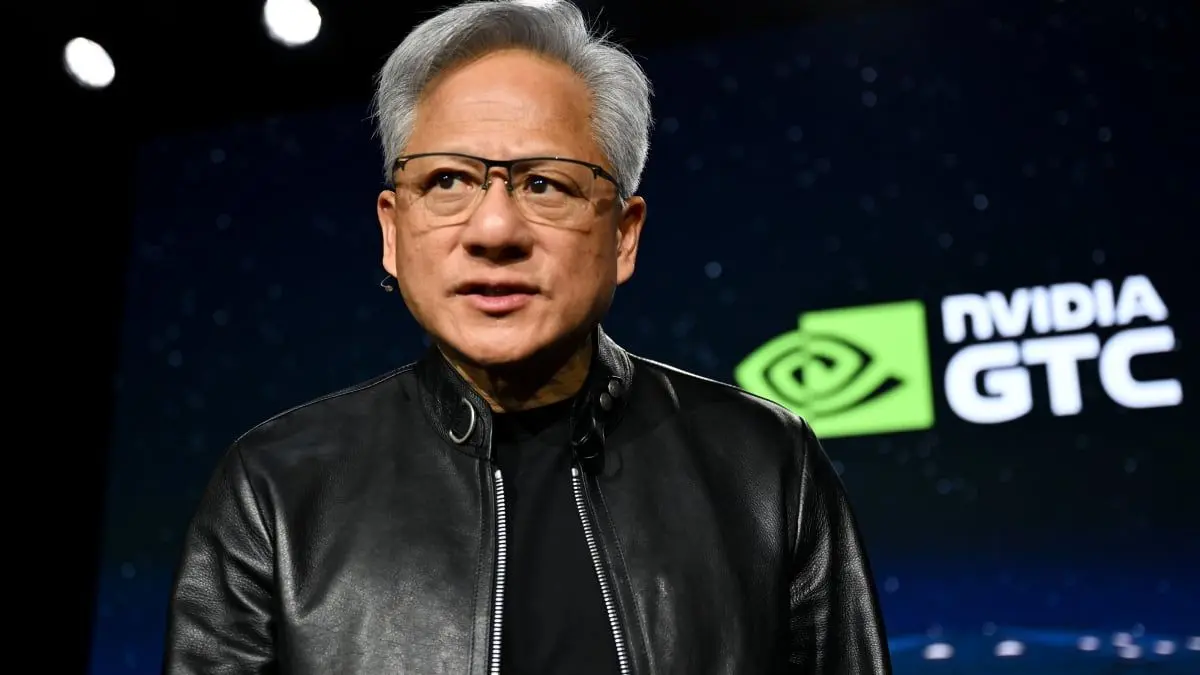
Source: Mashable
Nvidia is reportedly allocating $2 billion for token access across its engineering team, with Huang suggesting tokens could become part of compensation packages to amplify productivity 10X
2
. This push for increased AI tool adoption contradicts the notion that systems surpassing human intelligence have already arrived—if AGI truly existed, why would engineers need such aggressive encouragement to use it?Related Stories

The Definition of AGI Remains Contentious Among Tech Leaders
The ambiguity surrounding the definition of AGI has become a critical issue in the AI industry, with significant financial implications. The term shapes billion-dollar contracts between companies like OpenAI and Microsoft, where performance benchmarks and risk clauses hinge on whether AGI has been "achieved"
2
. Tech leaders have increasingly tried to distance themselves from the term, creating new terminology they view as less over-hyped and more clearly defined, though these alternatives essentially mean the same thing1
.At the 2023 New York Times DealBook Summit, Huang previously defined AGI as software capable of passing tests approximating normal human intelligence at a reasonably competitive level, expecting AI to clear that bar within five years
3
. The shifting definitions suggest a pattern of setting thresholds that make "yes, we're there" the easiest possible answer, rather than establishing consistent criteria for measuring progress toward genuine artificial general intelligence.As the AI industry continues burning through capital at historic rates while investor expectations grow harder to meet each quarter, the promise of imminent human-level machine intelligence has become increasingly valuable for tech leaders to invoke. What remains unclear is whether current AI capabilities represent genuine progress toward AGI or simply sophisticated pattern-matching that falls short of true general intelligence.
References
Summarized by

Navi
Related Stories
Jensen Huang says AI doomer narrative is hurting society and damaging the industry
12 Jan 2026•Technology
Jensen Huang Warns AI Leaders Against Fearmongering as Nvidia Pushes Optimistic Vision
16 Mar 2026•Technology

Nvidia CEO Jensen Huang Unveils "Agentic AI" Vision at CES 2025, Predicting Multi-Trillion Dollar Industry Shift
07 Jan 2025•Technology

Recent Highlights
1
Tennessee Teens Sue Elon Musk's xAI Over Grok AI-Generated Child Abuse Images
Policy and Regulation

2
Supermicro Co-Founder Indicted in $2.5 Billion Nvidia AI Chip Smuggling Scheme to China
Policy and Regulation
3
Val Kilmer to appear posthumously in As Deep as the Grave through AI-generated performance
Entertainment and Society

Recent Highlights
Today's Top Stories












Your Daily Dose of Curated AI News
Don’t drown in AI news. We cut through the noise - filtering, ranking and summarizing the most important AI news, breakthroughs and research daily. Spend less time searching for the latest in AI and get straight to action.

