7 Sources
7 Sources
[1]
OpenAI CEO Sam Altman exits Helion Energy's board as firms explore partnership
March 23 (Reuters) - OpenAI Chief Executive Sam Altman said on Monday he has stepped down from the board of directors of Helion Energy, the fusion startup he has backed since 2015, as the companies start to explore working together "at significant scale". Altman, who is also on the OpenAI board, said the dual roles had become untenable as the ChatGPT maker eyes future partnerships with Helion. In a post on social media platform X, Altman added that he will have a financial interest in Helion and will recuse himself from any deal negotiations. "Sam has played an integral role in Helion's development... I look forward to working with (Altman) in this new capacity," Helion CEO David Kirtley said in an X post separately. OpenAI is also in advanced talks to buy electricity from Helion Energy, Axios reported on Monday, citing a person familiar with the situation. Under the terms being discussed, OpenAI could secure a guaranteed portion of Helion's production, initially 12.5%, with talks centering on OpenAI receiving the equivalent of 5 gigawatts by 2030, scaling to 50 gigawatts by 2035, the report added. OpenAI did not immediately respond to Reuters request for comment on the Axios report. A spokesperson for Helion said: "beyond the previously announced deals with Microsoft and Nucor, Helion has not made any new customer announcements." A potential deal underscores a broader race among the world's largest technology companies to lock in long-term energy supplies as the explosive growth of artificial intelligence strains power grids. Microsoft (MSFT.O), opens new tab, Google (GOOGL.O), opens new tab, and Amazon (AMZN.O), opens new tab have all struck deals with nuclear and fusion companies that would have seemed far-fetched just a few years ago. Helion was founded in 2013 by Kirtley, along with John Slough, Chris Pihl, and George Votroubek. It has raised over $1 billion in total funding, with a $425 million Series F closed in January 2025 that valued the company at $5.4 billion. Reporting by Kritika Lamba in Bengaluru; Editing by Shailesh Kuber Our Standards: The Thomson Reuters Trust Principles., opens new tab
[2]
Scoop: OpenAI bets on Altman-backed fusion startup
Why it matters: The move shows OpenAI is serious about tapping fusion energy to help meet massive power demands. Driving the news: OpenAI could secure a guaranteed portion of Helion's production, initially 12.5%, per the source. * The talks center on OpenAI receiving the equivalent of 5 gigawatts by 2030, scaling to 50 gigawatts by 2035. Between the lines: OpenAI CEO Sam Altman, who is an investor in Helion, has stepped down as Helion's board chair and is no longer involved in the company's board, the source told Axios. * Altman has also recused himself from the deal discussions, according to the same source. * Altman holds a sizable stake in Helion, though the size has not been disclosed. He led the company's $500 million Series E round in 2021. Helion closed a further $425 million funding round in January 2025. * Helion is also backed by SoftBank, Peter Thiel's Mithril Capital and Facebook co-founder Dustin Moskovitz. How it works: Fusion energy -- which creates energy using the same process as the sun and stars -- could be a key step in giving AI companies an abundant clean energy source to match its needs. * Helion believes it is on the cusp of "scientific breakeven" -- a key step to reaching the point where the company's fusion process can generate more energy than it consumes, the source said. * No private company has yet achieved this milestone. Yes, but: The talks with OpenAI involve the basic framework of an agreement, with many conditions yet to be fulfilled, including the selection of a site for Helion to produce the energy. * An OpenAI representative declined to comment. The big picture: Google has several agreements with Helion rival Commonwealth Fusion Systems, including a deal to buy 200 megawatts worth of power. * Helion also inked a power purchase deal with Microsoft in 2023, calling for it to deliver 50 megawatts to the software giant. What we're watching: Whether Helion can hit scientific breakeven on a timeline that makes those 2030 and 2035 power commitments a reality.
[3]
OpenAI's Obsession With Data Centers Is Running Into Trouble
Can't-miss innovations from the bleeding edge of science and tech In January 2025, just one day after Donald Trump's second inauguration, AI tech leaders convened in the Oval Office as part of the announcement of a flashy $500 billion AI infrastructure deal, dubbed "Stargate." OpenAI CEO Sam Altman gushed over his newfound adoration for Trump, telling him during the event that "for AGI to get built here, we wouldn't be able to do this without you, Mr. President." The company said it was committing $100 billion immediately, sparking a heated debate over whether it had secured the necessary financing with Elon Musk, founder of competitor xAI, who was notably absent from the proceedings. Over a year later, OpenAI has dramatically reined in its ambitions as reality continues to settle in. For one, its astronomical commitments to spending $1.4 trillion before the end of the decade on AI infrastructure was recently more than halved to a still-hefty $600 billion. Meanwhile, panicked executives are looking to cut out any distracting "side quests" to double down on enterprise and coding, two areas potentially capable of generating some desperately-needed revenue. The company's remaining ambitions to secure computing power have landed it between a rock and a hard place -- without more compute, the company could risk falling further behind the competition. On the other hand, attempts to secure more of the resource could balloon its spending even further, potentially scaring investors. Ahead of its rumored IPO, pressure continues to mount over the company's calamitous finances. As a result, as CNBC reports, OpenAI has started to sing a dramatically different tune compared to early 2025. "OpenAI has come to the realization that the market doesn't necessarily appreciate the reckless approach to growth and spending," Futurum Group CEO Daniel Newman told CNBC. "The market wants to see OpenAI's revenues rolling at a pace in which the spending can be justified. The pivot has been to try to show a little bit more fiscal responsibility." As inside sources told CNBC, the company still doesn't own any data centers outright, instead relying on purchasing cloud capacity from other companies such as Oracle, Microsoft, and Amazon. Meanwhile, its own ambitions to build data centers have remained on shaky ground. AI chipmaker Nvidia's $100 billion investment in OpenAI, a plan to have the latter deploy ten gigawatts of computing power using the former's chips, may encounter major headwinds. That is, if it ever turns into a viable project. Nvidia CEO Jensen Huang effectively admitted earlier this month that the $100 billion figure was largely plucked out of thin air, saying that his company's recent $30 billion investment in OpenAI "might be the last" before OpenAI goes public. Even with a massively scaled down plan, actually bringing data centers online could prove extremely challenging. Virginia Tech engineering professor Walid Saad told CNBC that it could take three to ten years to build a one-gigawatt data center. OpenAI claims such an inaugural data center will be ready to be deployed before the end of this year. "There's regulations, there are permits, different locations have different processes," he said. "There are processes they cannot control. You never know what pops up." Meanwhile, investors will be looking extremely closely at any of OpenAI's upcoming moves as the company continues to light billions of dollars on fire. "To their credit, they built an incredible growth story," Newman told CNBC. "It's just -- the rest of the ride won't be a free one." "And because their cost structure is so high, their route to profitability will be scrutinized every step of the way," he added.
[4]
Sam Altman Resets OpenAI and Personal Priorities Ahead of High-Stakes IPO
As compute and energy constraints loom, Altman is repositioning OpenAI around infrastructure and enterprise demand. OpenAI CEO Sam Altman recently made two moves that say more about the company's future than any product launch could. On March 23, he stepped down as chairman of Helion Energy, the fusion startup he has backed for more than a decade, as OpenAI explores a large-scale power deal with the company. A day later, OpenAI pulled the plug on its popular video-generating model, Sora, saying it would reallocate resources to its next major large language model, codenamed "Spud," as well as a growing suite of coding agents and enterprise tools. Sign Up For Our Daily Newsletter Sign Up Thank you for signing up! By clicking submit, you agree to our <a href="http://observermedia.com/terms">terms of service</a> and acknowledge we may use your information to send you emails, product samples, and promotions on this website and other properties. You can opt out anytime. See all of our newsletters Together, the decisions point to a CEO stripping away distractions, tightening control and preparing for a highly anticipated IPO. OpenAI has reinforced that shift by strengthening its financial leadership, including appointing former DocuSign CFO Cynthia Gaylor to oversee investor relations. According to The Information, Altman has also relinquished direct oversight of OpenAI's safety and security teams to focus on "capital, supply chains, and building data centers at unprecedented scale." The company has folded its safety team into the research organization led by chief research officer Mark Chen, while moving security under the "scaling" division run by co-founder and president Greg Brockman. At the same time, OpenAI has renamed its product organization -- led by Fidji Simo, CEO of applications -- to "A.G.I. Deployment." Altman has also reportedly narrowed reporting lines, reducing the number of executives directly accountable to him, marking another step toward operational clarity ahead of a potential IPO. Reuters first reported in October 2025 that OpenAI could file as early as the second half of 2026, targeting a valuation of up to $1 trillion. In early-stage discussions, the company has floated raising at least $60 billion in the offering, depending on market conditions and revenue growth. For much of the past year, Altman described A.I. infrastructure in sweeping terms, invoking figures approaching $1 trillion to reach artificial general intelligence (A.G.I.). That rhetoric is now giving way to something more concrete: roughly $600 billion in compute spending by 2030. Sora, launched in December 2024, was one of OpenAI's most compelling demonstrations of how far A.I. had advanced. But it also exposed a fundamental constraint. Forbes estimates that generating a 10-second Sora video costs between $1 and $5 in compute, with higher costs for premium versions. At scale, that could exceed $5 billion annually, or roughly $15 million a day. OpenAI is now shifting resources toward more profitable enterprise products, particularly coding agents. Internal communications and recent reporting from CNBC and The Information suggest the company is "orienting aggressively" toward enterprise use cases, with ChatGPT evolving from a general-purpose chatbot into a productivity layer -- a front end for software development, business operations and knowledge-work automation. As OpenAI leans into enterprise systems, it is also confronting another constraint: energy. Training and running advanced A.I. models at scale requires enormous amounts of electricity, making power one of the industry's most significant bottlenecks. Altman has long argued that solving A.I. at scale requires solving energy at scale, and OpenAI's interest in Helion reflects that reality. His departure from Helion clears a potential conflict as OpenAI explores a partnership with the fusion startup. Reports suggest a deal could grant OpenAI access to as much as 12.5 percent of Helion's projected output -- roughly 5 gigawatts by 2030 and up to 50 gigawatts by 2035. Helion has yet to begin commercial power generation but is moving quickly from prototypes toward grid-tied fusion plants. The company is currently constructing Orion, its first commercial facility in Washington state, with development beginning in July 2025 and a target of delivering an initial 50 megawatts to Microsoft by 2028. If that timeline holds, Orion could serve as a template for scaling to multi-gigawatt fleets over the following decade. Altman built his reputation on ambitious, system-level thinking, often speaking in abstractions about the future of intelligence. Now, he is operating as a CEO preparing a company for public markets, where ambition must be matched with discipline and vision must translate into returns. Altman must convince investors that OpenAI can turn unprecedented capital expenditure into sustainable returns while still pursuing the long-term goal of A.G.I.
[5]
OpenAI In Talks With Helion Energy To Secure Fusion Power Supply
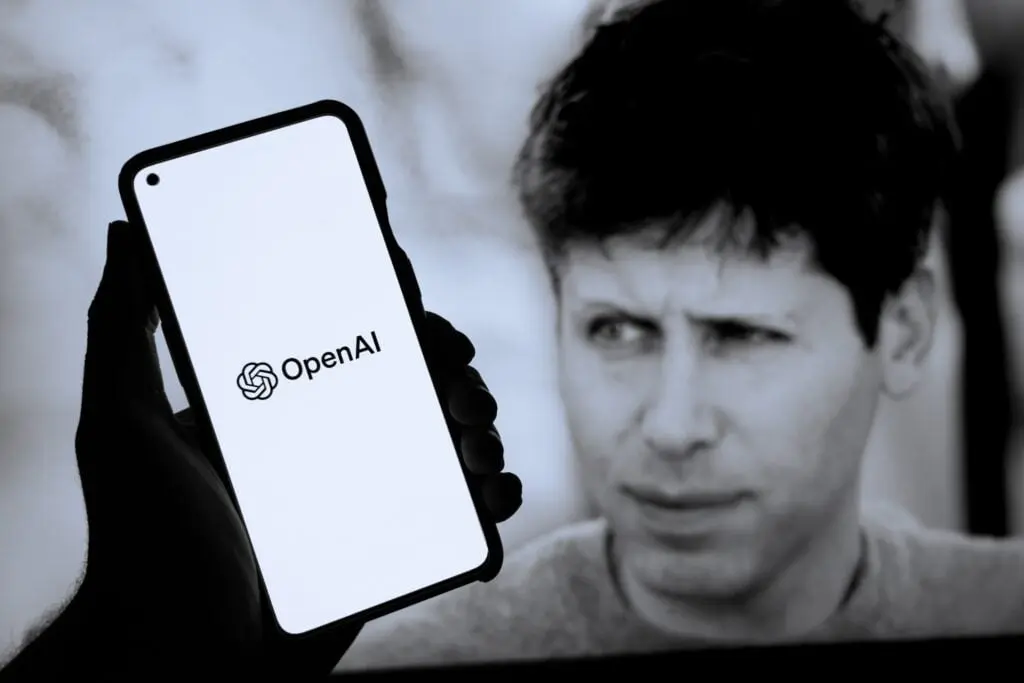
OpenAI CEO Sam Altman is understood to be holding conversations with Helion Energy as the artificial intelligence company seeks to buy fusion energy. Fusion energy, which mimics the Sun's process of energy creation, offers AI companies like OpenAI a potential source of abundant clean energy. Altman is reportedly in discussions to lock in a fixed share of Helion's output, starting at about 12.5%, sources told Axios. The proposed agreement would give OpenAI access to roughly 5 gigawatts of power by 2030, with plans to scale that up to 50 gigawatts by 2035. Helion aims to achieve "scientific breakeven," where the energy produced surpasses the energy consumed, a milestone no private firm has yet reached, according to Axios. The agreement with OpenAI is still in its early stages, with numerous conditions pending, such as determining a production site for Helion's energy generation. Meanwhile, Helion has already secured a power purchase agreement with Microsoft for 50 megawatts and competes with Commonwealth Fusion Systems, which has deals with Google. Altman, who has invested in Helion, has stepped down from his role as the company's board chair and is not participating in these negotiations, sources told the publication. Altman, who led Helion's $500 million Series E funding round in 2021, owns a significant, though undisclosed, stake in the company. In January 2025, Helion announced a $425 million Series F funding round. Investors included Lightseed Venture Partners, Softbank, Sam Altman, Mithril Capital and Capricorn Investment Group. OpenAI has also presented a 17.5% return for private equity investors as it seeks to establish joint ventures aimed at expanding enterprise AI adoption. Last week it was reported that OpenAI is set to significantly expand its workforce this year. OpenAI has been making significant strides. In February, the company secured $110 billion in a private round, with a pre-money valuation of $730 billion, setting the stage for a potential blockbuster IPO. Photo: Shutterstock This content was partially produced with the help of AI tools and was reviewed and published by Benzinga editors. Market News and Data brought to you by Benzinga APIs To add Benzinga News as your preferred source on Google, click here.
[6]
Sam Altman steps down from Helion Energy board as OpenAI eyes partnership By Investing.com
Investing.com -- Sam Altman has stepped down from the board of directors at Helion Energy, the fusion startup he has supported since 2015, as OpenAI begins exploring collaboration with the company at significant scale. Altman, who serves as chief executive of OpenAI and sits on its board, said Monday that holding both positions had become untenable as the ChatGPT maker considers future partnerships with Helion. In a post on social media platform X, Altman stated he will maintain a financial interest in Helion and will recuse himself from any deal negotiations. Helion CEO David Kirtley said in a separate X post that Altman has played an integral role in Helion's development and expressed his anticipation of working with Altman in this new capacity. OpenAI is in advanced talks to purchase electricity from Helion Energy, according to an Axios report Monday citing a person familiar with the situation. This article was generated with the support of AI and reviewed by an editor. For more information see our T&C.
[7]
OpenAI CEO Sam Altman exits Helion Energy's board as firms explore partnership
March 23 (Reuters) - OpenAI Chief Executive Sam Altman said on Monday he has stepped down from the board of directors of Helion Energy, the fusion startup he has backed since 2015, as the companies start to explore working together "at significant scale". Altman, who is also on the OpenAI board, said the dual roles had become untenable as the ChatGPT maker eyes future partnerships with Helion. In a post on social media platform X, Altman added that he will have a financial interest in Helion and will recuse himself from any deal negotiations. "Sam has played an integral role in Helion's development... I look forward to working with (Altman) in this new capacity," Helion CEO David Kirtley said in an X post separately. OpenAI is also in advanced talks to buy electricity from Helion Energy, Axios reported on Monday, citing a person familiar with the situation. Under the terms being discussed, OpenAI could secure a guaranteed portion of Helion's production, initially 12.5%, with talks centering on OpenAI receiving the equivalent of 5 gigawatts by 2030, scaling to 50 gigawatts by 2035, the report added. OpenAI did not immediately respond to Reuters request for comment on the Axios report. A spokesperson for Helion said: "beyond the previously announced deals with Microsoft and Nucor, Helion has not made any new customer announcements." A potential deal underscores a broader race among the world's largest technology companies to lock in long-term energy supplies as the explosive growth of artificial intelligence strains power grids. Microsoft, Google, and Amazon have all struck deals with nuclear and fusion companies that would have seemed far-fetched just a few years ago. Helion was founded in 2013 by Kirtley, along with John Slough, Chris Pihl, and George Votroubek. It has raised over $1 billion in total funding, with a $425 million Series F closed in January 2025 that valued the company at $5.4 billion. (Reporting by Kritika Lamba in Bengaluru; Editing by Shailesh Kuber)
Share
Share
Copy Link
OpenAI is in advanced talks with Helion Energy to secure fusion power, potentially accessing 5 gigawatts by 2030 and scaling to 50 gigawatts by 2035. Sam Altman has stepped down from Helion's board to avoid conflicts as the companies explore working together at significant scale, highlighting the tech industry's race to lock in energy for AI's growing power demands.
OpenAI CEO Sam Altman has stepped down from the board of directors of Helion Energy, the Altman-backed fusion startup he has supported since 2015, as the two companies begin exploring a partnership that could reshape how AI companies secure long-term energy supplies
1
. Altman announced his departure on social media platform X, explaining that dual roles had become untenable as OpenAI eyes future collaborations with Helion Energy. While stepping down from the board, Altman will maintain a financial interest in the company and has recused himself from any deal negotiations to avoid conflicts of interest1
.
Source: Observer
According to reports, OpenAI is in advanced talks to buy electricity from Helion Energy, with discussions centering on the company securing an initial 12.5% of Helion's production
2
. The proposed framework would give OpenAI access to the equivalent of 5 gigawatts by 2030, scaling dramatically to 50 gigawatts by 20352
. This potential agreement underscores the broader race among technology giants to lock in power sources as the power demands of artificial intelligence continue to strain electrical grids worldwide1
.Fusion energy, which creates energy using the same process as the sun and stars, represents a potentially abundant clean energy source capable of matching the massive compute constraints facing AI companies
2
. Helion believes it is approaching scientific breakeven, a critical milestone where the fusion process generates more energy than it consumes2
. No private company has yet achieved this breakthrough, making the timeline for delivering on the 2030 and 2035 commitments a key question for investors and industry observers2
.Helion was founded in 2013 and has raised over $1 billion in total funding, including a $425 million Series F round closed in January 2025 that valued the company at $5.4 billion
1
. Altman led the company's $500 million Series E round in 2021 and holds a sizable, though undisclosed, stake2
. The company is currently constructing Orion, its first commercial facility in Washington state, with development beginning in July 2025 and a target of delivering an initial 50 megawatts to Microsoft by 20284
.The talks with Helion Energy come as OpenAI confronts significant challenges around AI infrastructure and energy constraints. Training and running advanced models at scale requires enormous amounts of electricity, making power one of the industry's most significant bottlenecks
4
. Microsoft, Google, and Amazon have all struck deals with nuclear and fusion companies that would have seemed far-fetched just a few years ago, reflecting the urgency of securing energy deals1
.
Source: Benzinga
OpenAI's energy challenges are compounded by its struggles with data centers. The company still doesn't own any data centers outright, instead relying on purchasing cloud capacity from companies such as Oracle, Microsoft, and Amazon
3
. Virginia Tech engineering professor Walid Saad told CNBC that building a one-gigawatt data center could take three to ten years, yet OpenAI claims such a facility will be ready before the end of this year3
.Related Stories
Altman's departure from Helion's board is part of a broader strategic repositioning as OpenAI prepares for a highly anticipated IPO. The company has dramatically scaled back its infrastructure ambitions, reducing its commitment from $1.4 trillion to $600 billion by the end of the decade
3
. "OpenAI has come to the realization that the market doesn't necessarily appreciate the reckless approach to growth and spending," Futurum Group CEO Daniel Newman told CNBC. "The market wants to see OpenAI's revenues rolling at a pace in which the spending can be justified"3
.According to The Information, Altman has relinquished direct oversight of OpenAI's safety and security teams to focus on "capital, supply chains, and building data centers at unprecedented scale"
4
. The company is now orienting aggressively toward enterprise use cases and coding agents, shutting down its popular video-generating model Sora to reallocate resources toward its next major large language model and enterprise tools4
. OpenAI has also strengthened its financial leadership, appointing former DocuSign CFO Cynthia Gaylor to oversee investor relations4
.Reuters first reported in October 2025 that OpenAI could file for an IPO as early as the second half of 2026, targeting a valuation of up to $1 trillion and potentially raising at least $60 billion
4
. In February, the company secured $110 billion in a private round with a pre-money valuation of $730 billion5
. As Altman works to convince investors that OpenAI can turn unprecedented capital expenditure into sustainable returns while pursuing artificial general intelligence (AGI), the Helion partnership represents a critical piece of the infrastructure puzzle needed to power its AI operations at scale.
Source: Axios
Summarized by
Navi
06 Apr 2026•Business and Economy

19 Jan 2026•Business and Economy

19 Feb 2026•Business and Economy