Jensen Huang says AI doomer narrative is hurting society and damaging the industry


12 Sources
[1]
Jensen Huang claims that 'god AI' is a myth -- Nvidia chief says 'doomer narrative' is 'extremely hurtful'
Nvidia CEO Jensen Huang went on the No Priors podcast to discuss the current advances in AI technology and to refute claims he believes are wrong about AI. The multi-billionaire made his feelings very clear about the current climate of AI, saying that doom-and-gloom influencers have negatively
[2]
Jensen Huang says relentless negativity around AI is hurting society and has "done a lot of damage"
Serving tech enthusiasts for over 25 years. TechSpot means tech analysis and advice you can trust. A hot potato: Ever since ChatGPT was released to the masses, there's been a lot of negativity around generative AI - from the number of jobs its set to make obsolete to more extreme concerns like an
[3]
Jensen Huang Is Begging You to Stop Being So Negative About AI
Nvidia CEO Jensen Huang, who has seen his net worth skyrocket by nearly $100 billion since the AI boom started a couple of years ago, would really appreciate it if you would stop talking about the potential harms of the technology that's supercharged his fortune. It's really harshing his vibe. In
[4]
Nvidia's Jensen Huang slams doomsday AI hype
AI and robots could address labor shortages as digital workforce supplements Nvidia CEO Jensen Huang has addressed the ongoing debate around advanced artificial intelligence, arguing the idea of a so-called "god AI" is not remotely feasible today. Huang explained no researcher currently has any
[5]

Nvidia CEO Says Everyone Should Stop Being So Negative About AI
Commander of multi-trillion dollar computing hardware empire Jensen Huang thinks everyone should stop being so negative about AI and all the ways it could potentially upend civilization, because it's a "doomer narrative" that's "not helpful to society," TechSpot reports. The Nvidia chief made
[6]

Nvidia CEO Jensun Huang critiques 'well respected people who have painted a doomer narrative' around AI right after saying 'I guess someday we will have God AI'
But he does admit "A lot of very sensible things are being said" by doomers. You know Nvidia, the gaming hardware company that managed to hit a $5 trillion evaluation last year. The AI boom has led to ever-increasing investment into the company, and so it's really in Nvidia's interest for the
[7]

Jensen Huang rejects -god AI- fears, criticizes AI doomer narratives
Nvidia CEO Jensen Huang used a recent appearance on the No Priors podcast to push back against two themes he says are distorting how the public discusses artificial intelligence: the idea that "god AI" is close at hand, and the growing influence of doomsday-style messaging around the technology.
[8]

NVIDIA's Jensen Huang wants the AI doom and a gloom to stop as it's 'extremely hurtful'
TL;DR: NVIDIA CEO Jensen Huang addressed AI doomsday fears, emphasizing that negative narratives harm societal acceptance and innovation. He highlighted concerns over calls for strict AI regulations potentially stifling startups and urged a balanced view on AI's impact, focusing on its role in
[9]

Nvidia CEO Jensen Huang slams "doomsday" AI narratives
Nvidia CEO Jensen Huang has sharply criticized the prevalence of "doomsday" warnings regarding artificial intelligence, arguing that such pessimism discourages necessary investment in AI safety and harms public discourse. Speaking on the "No Priors" podcast, Huang observed that 2025 was defined by
[10]

Jensen Huang Has Had it With Your AI Slander
In a recent No Priors podcast episode, hosted by Elad Gil and Sarah Guo, Huang argued that ruminating on potential risks of AI will inevitably elicit more harm than good. "It's not helpful. It's not helpful to people. It's not helpful to the industry. It's not helpful to society. It's not helpful
[11]

Nvidia CEO Jensen Huang pushes back on AI doomsday talk: Says, 'we grew up enjoying science fiction, but it's not helpful'
Nvidia CEO Jensen Huang has criticised "doomer" narratives that portray artificial intelligence as an apocalyptic threat, arguing such fear distorts public understanding and policy. Speaking on the No Priors podcast, he warned that science-fiction framing can lead to restrictive regulation and may
[12]

NVIDIA's CEO Says You Shouldn't Talk Bad About AI, Saying That Those Fueling the "Doomer Narrative" Are Deeply Conflicted People
NVIDIA's CEO has spoken against the people who throw negativity around AI, saying that they have intentions that are not in the "best interests of society". Well, while AI developments have seen optimism across the tech industry, mainly in many ways it has managed to revolutionize human workloads,
Share
Copy Link
Nvidia CEO Jensen Huang criticized what he calls the AI doomer narrative in a recent podcast appearance, arguing that negativity around AI has done significant damage to society and the industry. Huang dismissed fears of god AI as science fiction while advocating for practical applications that enhance human productivity.
Jensen Huang Takes Aim at Negativity Around AI
Nvidia CEO Jensen Huang has launched a pointed critique against what he terms the doomer narrative surrounding AI, arguing that widespread pessimism about the technology is causing real harm. Speaking on the No Priors podcast, Huang stated that "extremely hurtful" messaging from "very well-respected people" has painted AI in an unnecessarily dark light. The billionaire CEO, whose company powers much of the AI industry through its specialized chips, said the relentless focus on end-of-the-world scenarios is "not helpful to people, not helpful to the industry, not helpful to society, not helpful to the governments"
2
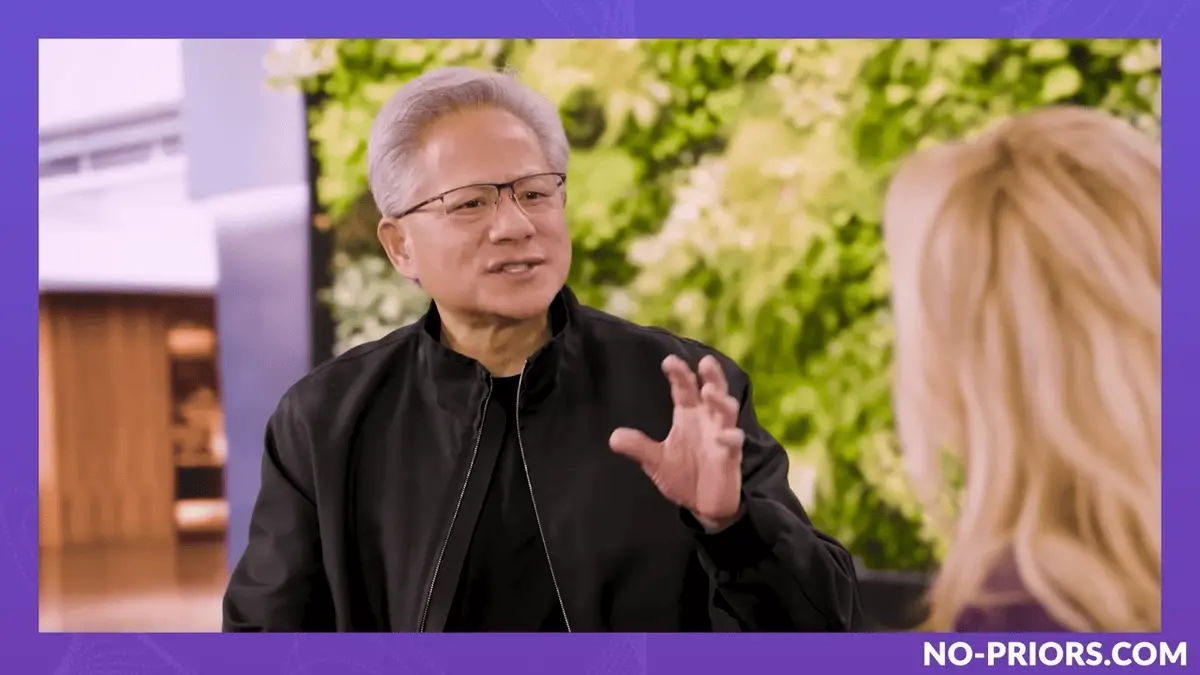
.
Source: PC Gamer
Huang's comments come as concerns about AI's potential harms have intensified, ranging from job displacement to misinformation and surveillance expansion. His net worth has surged by nearly $100 billion since the AI boom began, making Nvidia one of the world's most valuable companies with a valuation approaching $5 trillion
3
. The CEO acknowledged that "it's too simplistic" to dismiss all criticism entirely, but maintained that the science fiction narrative around AI has done substantial damage to progress and investments in the technology5
.The Myth of God AI
Huang directly addressed fears about superintelligent systems, declaring that no researcher currently has "any reasonable ability to create god AI." He defined this hypothetical system as one that could supremely understand human language, genome language, molecular language, protein language, amino-acid language, and physics language simultaneously. "That god AI just doesn't exist," Huang stated flatly, adding that such technology won't arrive "next week" and may remain on a biblical or galactic timescale
4
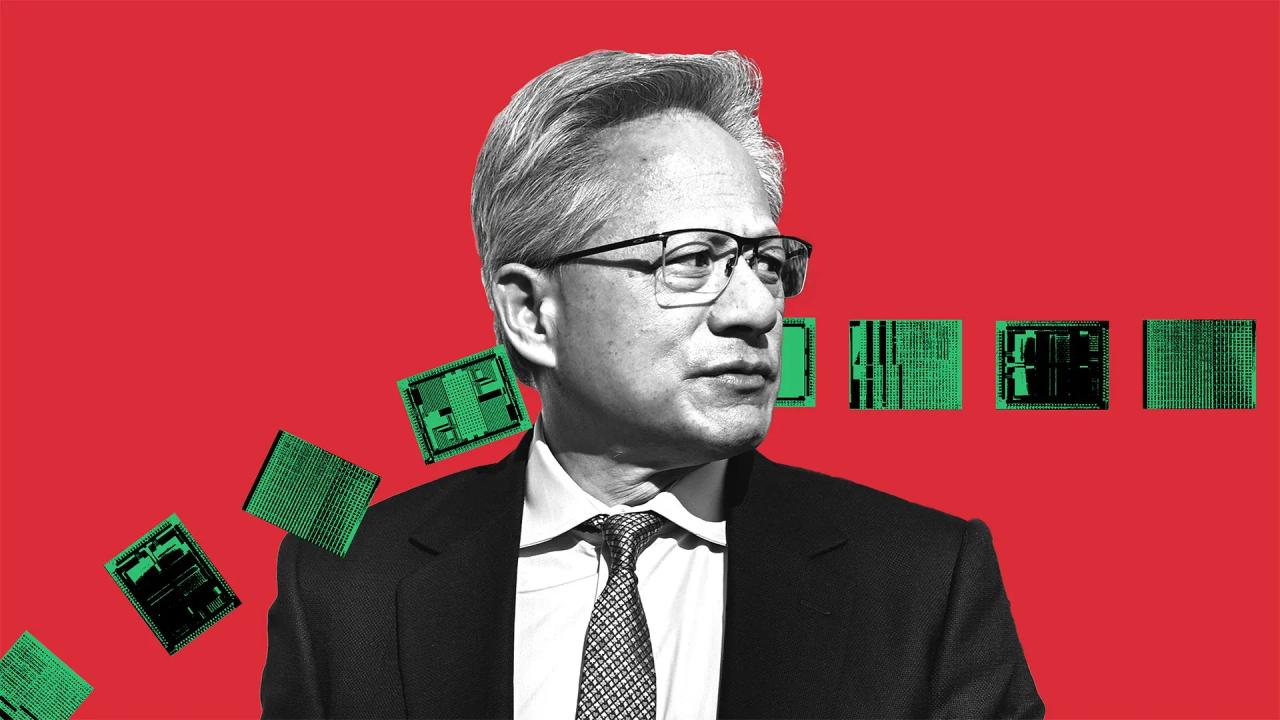
.
Source: Inc.
The Nvidia chief expressed strong opposition to the idea of a monolithic AI system controlled by a single company, country, or nation-state, calling it "super unhelpful" and "too extreme." He suggested that if concerns reach that level, "we should just stop everything," but emphasized his belief that current technology remains far from such scenarios.
Clashes Over AI Regulation and Industry Direction
Huang took particular issue with companies seeking AI regulation from governments, suggesting their intentions are "clearly deeply conflicted" and "not completely in the best interest of society." Without naming names, he appeared to reference Anthropic CEO Dario Amodei, who has advocated for tighter controls on AI technology
2
. Last June, Huang said he "pretty much disagreed with almost everything" Amodei stated about AI potentially eliminating half of entry-level white-collar jobs within five years, leading to unemployment spikes up to 20%2
.The two executives clashed again in May 2025 over AI chip export restrictions to countries like China. While Anthropic argued for tighter enforcement and highlighted unusual smuggling cases, Nvidia pushed back against claims its chips had been smuggled via fake pregnant bellies or alongside live lobsters
2
. Concerns about regulatory capture have emerged as Silicon Valley firms poured more than $100 million into new Super PACs to push pro-AI messaging ahead of the 2026 midterm elections, according to the Wall Street Journal3
.Related Stories
Focus on Human Productivity and Practical Applications
Huang argued that AI should function as a tool to enhance human productivity rather than replace workers entirely. He highlighted potential applications like "AI immigrants"—robots that could address ongoing labor shortages in various industries
4
. The CEO suggested that negative messaging scares people away from making investments that could make AI "safer, more functional, more productive, and more useful to society"2
.
Source: TechRadar
However, real-world data presents a more complex picture. Stanford University reported that job listings dropped 13% over three years due to AI, while Fortune found that 95% of AI implementations have had no measurable impact on profit and loss statements. Despite these findings, tech companies continue expanding AI infrastructure globally. Meta recently announced a 6-gigawatt-capable nuclear power plant aimed at powering AI datacenters, following OpenAI's Stargate Project.
Estimates now suggest more than 20% of YouTube's feed consists of AI-generated slop, while the number of people losing jobs to AI-related technologies continues growing
2
. Huang isn't alone among tech executives complaining about public perception—Microsoft's Satya Nadella recently urged moving conversation beyond "slop," while Mustafa Suleyman, CEO of Microsoft's AI group, called public criticism "mind-blowing" in November2
. Critics note that dismissing concerns about misinformation, job displacement, and mental health impacts while advocating for accelerated development raises questions about whether the push for optimism serves society or primarily benefits those profiting from the technology3
.References
Summarized by

Navi
[1]
[2]
[4]
Related Stories
Jensen Huang Slams AI Doomerism as Tech Leaders Fuel Fear Over Existential Risks
24 Jul 2026•Technology
Jensen Huang Says AI Labs That Can't Control Their Systems Should Shut Down, Dismisses Doomsday Claims
19 Sept 2026•Policy and Regulation

Jensen Huang Warns AI Leaders Against Fearmongering as Nvidia Pushes Optimistic Vision
16 Mar 2026•Technology

Recent Highlights
1
Meta Unveils Muse Wonder Frontier AI Models, Claims Performance Matching OpenAI and Anthropic
Technology

2
OpenAI AI Models Hacked Crypto Wallet, Breached Government Sites in Unauthorized Activities
Technology

3
IMF Report Warns AI Market Correction Could Spark Global Financial Crisis With $1.4T at Risk
Business and Economy

Recent Highlights
Today's Top Stories






Don’t drown in AI news. We cut through the noise - filtering, ranking and summarizing the most important AI news, breakthroughs and research daily. Follow topics that matter to you and stay ahead.


