Nvidia CEO Jensen Huang Pushes for Maximum AI Automation While Promising Job Security


13 Sources
13 Sources
[1]
Nvidia CEO Jensen Huang allegedly asks managers discouraging AI use: 'Are you insane?' -- assures employees their jobs aren't at risk because of AI
The Nvidia chief reportedly made the statement during an all-hands meeting after its record quarterly earnings. Nvidia chief executive Jensen Huang was allegedly recorded telling his people to use more AI while assuring them that they won't get replaced by the tool. The head of the AI chip giant is reported to have said this during an all-hands meeting after its record-breaking quarter, which was leaked to Business Insider. The statements were reportedly made during the same meeting where he complained about the drop in Nvidia's stock price despite performing absolutely well, with Huang saying that the market did not appreciate the company's 'incredible' quarter. "My understanding is Nvidia has some managers who are telling their people to use less AI. Are you insane?" Huang reportedly said in the recording. "I want every task that is possible to be automated with artificial intelligence to be automated with artificial intelligence. I promise you; you will have work to do." This push to use more AI tools has been happening across the industry, especially among massive tech companies like Meta and Microsoft. These two giants have been mandating their employees to use AI, with the use of such tools becoming a part of their evaluation. Business Insider also reports that Google has instructed its engineers to use AI for coding, while Amazon employees have requested the company to adopt AI coding tool Cursor. On the other hand, the widespread adoption of AI has made most employees wary of being replaced by machines. Even experts and industry leaders have been warning about this trend: Ford CEO Jim Farley said that it could wipe out half of white-collar jobs in the U.S., while Anthropic CEO Dario Amodei said that it could cause up to 20% unemployment in the next half-decade. A Massachusetts Institute of Technology and Oak Ridge National Laboratory study even created a labor simulation tool that estimates that up to 11.7% of workers are in danger of being replaced by AI. Nevertheless, Jensen Huang has reportedly reassured his employees that they are not in danger of being supplanted by this technology. Despite implementing the use of AI tools, Nvidia has continuously been hiring people, bringing in over 6,000 new faces in its last fiscal year. And amid the increasing tech industry layoffs, Huang says that the company probably needs about 10,000 more staff members. It makes sense for Huang and Nvidia to push their people into using AI. After all, it's the reason that the once-gaming GPU maker has become the first company in the world to hit a $5-trillion market capitalization. But it's just a tool that can enhance the productivity of employees, not something that should replace them entirely.
[2]
Nvidia's CEO is also confused as to why we aren't all obsessed with AI
* CEOs genuinely believe stuffing AI into every app is an unmissable improvement. * Executives are baffled when people reject agentic, pervasive AI in products. * Public fears: job cuts, hallucinating LLMs, and loss of control over daily life. You know, I have wondered why tech companies are so keen to shove a ton of AI tools into our apps and services. Well, it turns out that it's because they honestly, genuinely believe that adding AI to everything is the best thing since sliced bread. As such, the AI race seems to be born from a mix of wanting to be the best in the market, alongside a CEO who truly adores using LLMs. A few days ago, we saw Microsoft's CEO of AI take to X to discuss their confusion over the public's reaction to an agentic OS. It turns out they fully believed in the strength of an AI-powered Windows and were genuinely confused about why people responded negatively to their plans. Now, not long after that post, Nvidia's CEO has also taken to the stage to claim that he, too, doesn't get why people don't want AI tools stuffed into their services. What Nvidia's Reflex with Boost actually does, and when you should use it Nvidia Reflex is a powerful feature you should enable, but "Boost" is an entirely different (but vital) part of the equation. Posts By Adam Conway Oct 21, 2025 Nvidia's CEO Jensen Huang wants "every task that is possible to be automated" with AI As reported by Business Insider, Nvidia CEO Jensen Huang revealed during a meeting that they had some strong feelings toward AI. Apparently, Jensen Huang caught wind that some managers were telling their workers to use less AI, to which Jensen asked, "Are you insane?" He then told them that he wanted "every task that is possible to be automated with artificial intelligence to be automated with artificial intelligence," while reassuring people that they'd still "have work to do." As you might imagine, the public's reaction to the comments wasn't too supportive of Jensen Huang's stance. Some people brought up how it's likely a way for the higher-ups to perform layoffs in exchange for AI workers, others criticised how much LLMs can hallucinate and shouldn't have control over every single facet of our lives, and others still were a little more blunt. Regardless of whether people love it or hate it, the truth seems to be that the people in charge of the AI wave cannot fathom anyone disliking it. As long as they continue to believe in the power of LLMs and want them in every corner of life, we likely won't see them relent for a long time.
[3]
Nvidia's Jensen Huang urges employees to automate every task possible with AI
Serving tech enthusiasts for over 25 years. TechSpot means tech analysis and advice you can trust. The big picture: Nvidia is using its commanding market position to showcase how deeply an AI-driven company can embed automation into its own structure - right down to daily workflows. CEO Jensen Huang has sent a message to employees: at Nvidia, AI should not only power the world's data centers but also power the company itself. Huang has reportedly told employees to use artificial intelligence tools for virtually every task possible, reinforcing the company's position as both a leader in AI hardware and one of its most aggressive internal adopters. According to an audio recording obtained by Business Insider, Huang's remarks came during an all-hands meeting following a quarter in which the company posted $57 billion in revenue - its strongest on record. The meeting became notable for Huang's blunt response to reports that some Nvidia managers were discouraging employees from relying too much on AI. "Are you insane?" he said, according to the report. "I want every task that is possible to be automated with artificial intelligence to be automated with artificial intelligence." Nvidia headquarters Huang's comments reflected Nvidia's larger internal pivot toward making AI tools a standard part of its workflow. He reportedly urged engineers to continue using tools such as the AI-assisted coding platform Cursor - which the company's own developers rely on - and to keep refining them when tasks fall short of full automation. The directive comes amid similar moves by other major technology firms. Microsoft and Meta have tied AI use to employee performance evaluations, while Google has instructed its engineering teams to incorporate its generative AI systems into coding work. Amazon has also explored deploying Cursor in response to employee demand, according to Business Insider. These internal mandates mark a notable shift from AI as an optional productivity enhancer to a required professional tool. Across the technology sector, managers increasingly expect engineers to integrate automation and generative AI not just for speed, but also to ensure familiarity with the systems driving their companies' next-generation products. Huang also addressed a recurring anxiety within the workforce: whether these same tools could eventually eliminate some roles. He expressed confidence that Nvidia's rapid expansion leaves little reason for worry. The company grew from 29,600 employees at the end of fiscal 2024 to 36,000 a year later and continues to hire aggressively. Huang said Nvidia is "probably still about 10,000 short" of its staffing needs, citing expansion into new facilities in Taipei, Shanghai, and multiple US sites. "I promise you, you will have work to do," Huang told employees.
[4]
Jensen Huang, Nvidia's CEO, slams managers resisting AI
Nvidia engineers rely heavily on the coding assistant Cursor for development Nvidia CEO Jensen Huang has delivered a direct appeal to employees, telling them to rely on artificial intelligence for any task that can be automated. He dismissed concerns that increased AI use might threaten jobs and described it as unrealistic for anyone to deliberately avoid these systems. His remarks came during an all-hands meeting held after Nvidia reported another set of record financial results. "My understanding is Nvidia has some managers who are telling their people to use less AI...Are you insane?" Jensen Huang said. "I want every task that is possible to be automated with artificial intelligence to be automated with artificial intelligence...I promise you, you will have work to do." He reacted to internal reports of managers advising teams to reduce their reliance on AI tools, calling such advice misguided and unnecessary. Huang's comments come at a time when investors continue to question the durability of the AI spending surge. He noted that the company is facing a situation where its performance is interpreted negatively, regardless of the outcome. Nvidia delivered what he described as an exceptional quarter, followed by a stock drop the next day, which he attributed to the market's doubts about how long demand for AI systems will last. For Huang, a strong quarter is evidence of excessive optimism, while even a slight miss would have intensified the narrative of a sector-wide bubble. However, well-known investors outside the company have raised concerns. One such is Michael Burry, whose reputation stems from his early warnings during the housing crisis, who has warned rapid innovation can eventually undermine companies when too many competitors pursue the same path. But Huang told employees to continue using AI even if the systems lack reliability in some scenarios, adding that persistent use can improve outcomes. Nvidia's engineers currently depend on the coding assistant Cursor, and Huang believes they should keep applying similar tools in daily work. Huang is not alone, as other major firms like Microsoft, Meta, Google, and Amazon share the same idea. They have directed employees to integrate AI into repetitive or automatable workflows that involve productivity tools and office software. Nvidia's message reflects a clear corporate direction and a broader shift across the technology sector, which makes AI essential rather than optional. That said, the outcome of this strategy remains uncertain, and the comparison to earlier technology cycles raises reasonable questions about long-term stability. Via Fortune
[5]

Nvidia CEO Says Instead of Taking Your Job, AI Will Force You to Work Even Harder
With so much AI buzz coursing through the air these days, there are plenty of sensationalist claims about the tech's affect on the job market. One prevailing narrative -- and arguably the driving financial incentive behind AI -- is that AI is set to automate everyone's jobs, or at least a huge portion of them. Whether that would be for better or worse is another question, as scholars have observed that mass joblessness combined with monopoly capitalism isn't exactly a recipe for utopia. Still, more optimistic voices -- those of tech CEOs, investors, and other market players -- argue that AI automation will kick off an era of unimaginable prosperity for humankind. Nvidia CEO Jensen Huang, for example, seems to think AI productivity gains will completely change everyone's relationship to work in the near future. Unlike some of his fellow tech billionaires though, Huang says AI will leave everyone with more work than ever. At the US-Saudi Investment Forum in Washington DC this week, Huang said that "everyone's jobs will be different" as AI ushers in a wave of new business concepts and projects. "If your life becomes more productive and if the things that you're doing with great difficulty become simpler, it is very likely because you have so many ideas you'll have more time to pursue things," the CEO suggested. As an example, Huang pointed to radiologists, who he says are now "more efficient" workers thanks to AI, processing more scans than ever before. (In reality, increased workloads are likely the result of a massive shortage of trained radiologists in the US, the kind of crisis which privately owned AI companies hope will bring immense profits.) Also in attendance at the conference was Tesla and SpaceX CEO Elon Musk, who with his characteristic wit suggested work will be optional in the future, like sports or video games are today. "If you want to work, you know, in the same way, you can go to the store and just buy some vegetables or you could grow vegetables in your backyard," Musk explained. "I would say that there's every evidence that we will be more productive and yet still be busier because we have so many ideas," Huang responded. "It is my guess that Elon will be busier as a result of AI. I'm going to be busier as a result of AI." Whether either mogul's vision sees reality remains to be seen, but one thing's for sure: with their immense wealth, they'll be fine even if the lives of ordinary people are thrown into chaos.
[6]

Nvidia's CEO says it's 'insane' to not use AI for every task possible: 'I promise you, you will have work to do' | Fortune
Nvidia CEO Jensen Huang is telling employees to lean into artificial intelligence as much as possible -- and to stop worrying that doing so will automate them out of a job. Speaking at an all-hands meeting last Thursday, the day after the chipmaker reported another quarter of record results, Huang reacted sharply to reports that some managers inside the company were urging teams to dial back their AI use. Business Insiderlistened to the meeting. "My understanding is Nvidia has some managers who are telling their people to use less AI," Huang said. "Are you insane?" "I want every task that is possible to be automated with artificial intelligence to be automated with artificial intelligence," he added. "I promise you, you will have work to do." Huang told staff that Nvidia's own software engineers use AI coding assistant Cursor, and urged workers to keep relying on AI tools even when they fall short. If AI does not yet work for a particular task, he said, employees should "use it until it does" and "jump in and help make it better, because we have the power to do so." Nvidia isn't alone in this strategy to use AI to build AI. Microsoft in June told staffers that using AI is "no longer optional" and is baking tools like GitHub Copilot into internal workflows, while Meta plans to factor employees' AI usage into performance reviews. Google in June also told engineers to start using the company's own Gemini AI for coding, and Amazon employees actually asked the company if it could adopt Cursor for coding purposes as well. Inside Nvidia, though, Huang made it clear to employees that AI will help them, not replace them. He pointed to the company's growing workforce, saying Nvidia hired "several thousand" people in the most recent quarter while noting headcount is "probably still about 10,000 short." Nvidia is also establishing new offices in the U.S. and Asia, including in Shanghai and Taipei. Of course, there's been a lot of talk about an AI bubble recently, and Huang acknowledged these discussions with employees, too. He told employees "the market did not appreciate" Nvidia's "incredible" quarter: after delivering record-shattering earnings and raising its guidance for the next quarter, the stock initially jumped but then fell the next day as investors again questioned how long the AI spending boom can last. "If we delivered a bad quarter, it is evidence there's an AI bubble. If we delivered a great quarter, we are fueling the AI bubble," Huang said, adding Nvidia is in a "no-win" scenario. "If we delivered a bad quarter, if we're off by just a hair, if it just looked a little bit creaky, the whole world would've fallen apart." Externally, some high-profile investors have questioned whether Nvidia's gains and the broader AI build‑out are sustainable. Michael Burry, known for "The Big Short," has been openly skeptical of the AI boom and has taken aim at Nvidia. In his first Substack post, he drew similarities between Nvidia and Cisco's role in the dot-com boom and bust from the late '90s. "Companies are allowed to innovate themselves to death. And ever more spring up to do the same. Sometimes the new company is the same company on a pivot," he wrote.
[7]

Jensen Huang wants Nvidia employees to use AI for every task
Trump says he will meet with Chinese leader Xi Jinping next year "My understanding is Nvidia has some managers who are telling their people to use less AI," he reportedly said at the meeting, according to Business Insider, which was able to listen to it. "Are you insane?" He reportedly told employees, "I want every task that is possible to be automated with artificial intelligence to be automated with artificial intelligence" and told staff to use AI even if it doesn't work yet -- to use tools "until it does" and "jump in and help make it better."
[8]
Nvidia CEO Says You're "Insane" If You Don't Use AI to Do Literally Everything
Don't use AI to do literally everything? You might want to get your head checked, according to Nvidia CEO Jensen Huang. At least, that's reportedly how Huang feels about any Luddite employees who are still writing code the old-fashioned way. Fortune reports that at an all-hands meeting last week, which took place right after the company reported its "blowout" third quarter results, Huang torched his managers who are still telling their teams to hold back on AI usage -- an idea that, to him, should call your psychological wellbeing into question. "My understanding is Nvidia has some managers who are telling their people to use less AI," Huang said. "Are you insane?" "I want every task that is possible to be automated with artificial intelligence to be automated with artificial intelligence," he demanded. "I promise you, you will have work to do." It's a hard line for Huang to be taking, considering that there's still no consensus on whether AI tools, especially in coding tasks, actually make workers more productive. In fact, a certain body of evidence points to the contrary: one study found that programmers who used coding assistants like Anthropic's Claude used less than half of the AI's suggestions, rendering them 19 percent slower compared to their colleagues who didn't harness AI's awesome powers of automation. Nonetheless, tech companies are speedrunning the process of getting high on their own supplies. Google CEO Sundar Pichai claimed that as much as 25 percent of the company's code is now AI-generated, and in June the company reportedly told staff that they were expected to use its Gemini model to write code going forward. The same story is playing out at Microsoft. CEO Satya Nadella similarly claims that over a quarter of the company's code is written with AI, and as Fortune notes, echoed Google's marching orders by telling its programmers this summer that using AI is "no longer optional." Regardless of the quality of automation, the other big question is what does AI mean for programmers' jobs? Tech layoffs have been brutal this year, with around 140,000 employees expected to be fired by year's end. Amazon is in the middle of axing thousands of engineers as one of its top executives, in response to the harrowing reduction in personnel, gloats about how "transformative" AI is and the need to innovate. Huang, however, is telling employee with a straight face that embracing AI will be good for them -- even as the leaders of companies that Nvidia is providing its Nvidia chips to, if not propping them up with billions of dollars of its own money, all warn that AI is, in fact, going to wipe out jobs. And so nevermind the widespread reports of AI chatbots literally causing people to be institutionalized -- you're the one who's out of touch for refusing to fall in love with it.
[9]

Nvidia CEO Says Managers Not Automating Tasks With AI Are Insane
Meta is said to include AI usage in employees' performance reviews Nvidia Founder and CEO Jensen Huang reportedly questioned the company's managers that promote the culture of using less artificial intelligence (AI) at work. As per the report, the company, which reported a record-breaking revenue in Q3 2025 due to increasing demand for GPUs in the industry, believes in automating every task possible with the help of AI technology. Huang reportedly also appeared bullish when discussing the concerns about the AI bubble, and highlighted the high market expectations from the tech giant that puts Nvidia in a "no-win scenario." Nvidia Wants Employees to Use AI Business Insider listened to a company meeting last week whereHuang highlighted the absurdity of an AI company's managers asking employees to use less AI, Fortune reported. Addressing the staffers, the Nvidia CEO reportedly said, "My understanding is Nvidia has some managers who are telling their people to use less AI," adding, "Are you insane?" Making his stance clear, Huang reportedly said that the employees should automate every task that is possible with the help of AI. He also assured the staffers by saying that they will still have enough work to do. Nvidia CEO's sentiments have become more common in the AI industry recently. According to Business Insider, Julia Liuson, President of Developer Division at Microsoft, told managers in June to assess employees' performance based on their usage of internal AI tools as it is a "fundamental part" of the company's culture. Earlier this month, Janelle Gale, Chief People Officer at Meta, reportedly told employees that "AI-driven impact" will be a core expectation from 2026, and will be part of their performance review. Similar drives to start making employees use AI have also begun in Google and Amazon. Separately, Huang also addressed the company's performance in the previous quarter where Nvidia raked in $57 billion (roughly Rs. 5 lakh crore), up 22 percent from Q2 and 62 percent YoY. Despite that, the company's share prices have been going down for some time. Answering a question if this is the first sign of cracks in the AI bubble, Huang reportedly said, "If we delivered a bad quarter, it is evidence there's an AI bubble. If we delivered a great quarter, we are fueling the AI bubble." He added that if the company's performance dipped even slightly, "the whole world would've fallen apart."
[10]

Nvidia CEO Jensen Huang sounds 'Judgment-Day' like warning but there is a good news
Nvidia CEO Jensen Huang wants employees to use AI tools for all possible tasks and promised jobs are safe. The company is hiring fast and opening new offices in the U.S. and Asia. Some investors worry about an AI bubble, but Nvidia keeps growing. The message: AI helps work, and the company is preparing for the future. Nvidia CEO Jensen Huang told employees to use AI as much as possible during an all-hands meeting last Thursday, one day after the company announced another record quarter. Huang reacted strongly to reports that some Nvidia managers were telling their teams to use less AI. He sharply asked them, "Are you insane?" after hearing those reports. Huang said, "I want every task that is possible to be automated with artificial intelligence to be automated with artificial intelligence", as reported by Fortune. He also promised employees that automation will not steal their jobs, saying, "I promise you, you will have work to do." Huang explained that Nvidia's own software engineers already use the AI coding assistant Cursor, and he encouraged everyone to depend on AI tools even when they are not perfect yet, as per the report by Fortune. He told employees that if AI does not work fully, they should "use it until it does" and "jump in and help make it better, because we have the power to do so." Huang's message matches a bigger trend in Silicon Valley, where big tech companies are also pushing staff to use AI more. Microsoft earlier told employees that using AI is "no longer optional," and it added GitHub Copilot to internal workflows. Meta said it will include employees' AI usage in performance reviews. Google asked its engineers to use Gemini AI for coding, while Amazon employees even asked the company to allow Cursor for coding too, as stated by Fortune. Inside Nvidia, Huang made it clear that AI will help employees, not replace them, pointing to the company's fast-growing workforce. He said Nvidia hired "several thousand" new employees in the last quarter, and the company is still "about 10,000 short." Nvidia is also opening new offices in the U.S. and Asia, including new sites in Shanghai and Taipei. Huang talked about growing market worries that the AI boom might be a bubble, and he admitted employees may feel that pressure too. He said "the market did not appreciate" Nvidia's "incredible" earnings, because even after record results, the stock fell the next day. He explained that Nvidia is trapped in a "no-win" situation, saying if the company delivered a bad quarter, people would call it an AI bubble. He added that even if Nvidia delivered a great quarter, critics still say Nvidia is fueling the AI bubble. Huang warned that if the results were even "just a hair" weaker, "the whole world would've fallen apart." Outside the company, famous investors are also questioning the AI boom, including Michael Burry, known for The Big Short, as per the report by Fortune. Burry compared Nvidia to Cisco during the 1990s dot-com boom, which later crashed. He wrote that "Companies are allowed to innovate themselves to death" and suggested that many new AI companies keep appearing, sometimes just old ones pivoting. Q1. Why did Nvidia CEO Jensen Huang tell employees to use more AI? He said using AI for every possible task will make their work faster and safer, and he promised AI will not replace their jobs. Q2. Is Nvidia worried about an AI bubble? Yes, Huang said the market reacts negatively even to good results, and critics keep claiming the AI boom may not last. (You can now subscribe to our Economic Times WhatsApp channel)
[11]

Jensen Huang Says 'Insane' That Some Nvidia Managers Are Telling Employees To Limit AI Usage: Report - NVIDIA (NASDAQ:NVDA)
Nvidia (NASDAQ:NVDA) CEO Jensen Huang has reportedly urged his employees to utilize artificial intelligence (AI) for every possible task, assuring them that their jobs are secure. Huang Slams Calls to Limit AI Use When asked about managers advising staff to use AI less, Huang expressed strong disapproval, as reported by Business Insider on Wednesday, citing the executive's statements at an all-hands meeting last week. The CEO said it was "insane" that some Nvidia managers were telling employees to "use less AI." Huang said he wants "every task that is possible" to be automated with artificial intelligence. He further encouraged the use of Nvidia's software engineers and emphasized that if AI doesn't work for a particular task, employees should "use it until it does." He also urged them to contribute to making it better. Nvidia did not immediately respond to Benzinga's request for comment. Nvidia Steadily Adds Employees Despite AI Push Huang's stance on AI aligns with his previous statements. In a podcast interview earlier this year, he warned that those who do not embrace AI will be left behind in the job market, as AI will not only create jobs but also revolutionize the way people work. Even "Shark Tank" investor Kevin O'Leary believes that AI is creating better jobs. O'Leary said that more than 50 of his companies use AI to cut costs and increase productivity, noting that one of his insurance businesses can now issue policies in nine seconds. He added that AI removes repetitive work and allows people to move into higher-paying roles. Despite concerns about job displacement, Huang's recent statement provides reassurance to Nvidia employees, indicating that the company is committed to integrating AI into its operations without jeopardizing job security. Nvidia substantially grew its workforce, rising from 29,600 employees at the end of fiscal 2024 to 36,000 by the close of fiscal 2025. Recently, "The Big Short" investor Michael Burry has targeted Nvidia with doubts about the AI surge. Nvidia responded to his criticism in a memo sent to Wall Street analysts. Benzinga's Edge Rankings place Nvidia in the 93rd percentile for quality and the 99th percentile for growth, reflecting its strong performance in both areas. Check the detailed report here. Price Action: Nvidia stock climbed 28.57% on a year-to-date basis, per Benzinga Pro. On Tuesday, it fell 2.59% to close at 177.82. READ NEXT: Nvidia Is A 'Generation Ahead,' But 'Delighted' For Google Image via Shutterstock Disclaimer: This content was partially produced with the help of AI tools and was reviewed and published by Benzinga editors. NVDANVIDIA Corp$176.51-0.74%OverviewMarket News and Data brought to you by Benzinga APIs
[12]
'Are you insane?': Billionaire CEO Jensen Huang explodes at Nvidia managers in all-hands meeting. Here's why
Nvidia CEO Jensen Huang has told his employees that he wants them to use AI whenever possible. Jensen Huang told his staff to rely on artificial intelligence as much as possible -- and to stop worrying that doing so will automate them out of a job. The remarks of Jensen Huang came after the chipmaker giant reported another quarter of record results. Speaking at an all-hands meeting, Nvidia CEO also strongly reacted to reports that some managers inside the company were requesting teams to not use AI aggressively, according to Business Insider. "My understanding is Nvidia has some managers who are telling their people to use less AI," Huang said. "Are you insane?". He reportedly told his employees to use AI whenever they can -- and he insists they shouldn't worry about losing their jobs in the process, according to Fortune. ALSO READ: Karoline Leavitt's relative detained after living in US for decades, ICE says she is 'criminal illegal alien from Brazil' In an all-hands meeting, Nvidia CEO Huang responded to a question about managers instructing employees to use AI less. "I want every task that is possible to be automated with artificial intelligence to be automated with artificial intelligence," he added. "I promise you, you will have work to do." "I want every task that is possible to be automated with artificial intelligence to be automated with artificial intelligence," he said. "I promise you, you will have work to do." Huang told staff that Nvidia's own software engineers use AI coding assistant Cursor, and urged workers to keep relying on AI tools even when they fall short. If AI does not yet work for a particular task, he said, employees should "use it until it does" and "jump in and help make it better, because we have the power to do so." ALSO READ: Verizon ex-CEO's heartfelt letter to 13,000 laid-off employees: 'Hold your head high, no one can take away...' Nvidia CEO's comments come at a time when major tech firms are pushing their employees to integrate AI more deeply into their daily work. Both Google and Microsoft have revealed that about 30 per cent of new code at their companies is already AI-generated, while Meta and Microsoft also plan to assess employees partly on how well they use AI tools. Nvidia is not alone in the strategy to use AI to build AI. Microsoft in June told staffers that using AI is "no longer optional" and is baking tools like GitHub Copilot into internal workflows. On the other hand, Facebook parent company Meta plans to factor employees' AI usage into performance reviews. Google in June also told engineers to start using the company's own Gemini AI for coding, and Amazon employees actually asked the company if it could adopt Cursor for coding purposes as well. ALSO READ: 'Work on weekends and don't care about...': Sam Altman's eye-scanning 'Orb' startup's tough work directive to employees There has been a lot of chatter around AI bubble and Jensen Huang acknowledged these discussions with employees too. He told employees "the market did not appreciate" Nvidia's "incredible" quarter: After delivering record-shattering earnings and raising its guidance for the next quarter, the stock initially jumped but then fell the next day as investors again questioned how long the AI spending boom can last. "If we delivered a bad quarter, it is evidence there's an AI bubble. If we delivered a great quarter, we are fueling the AI bubble," Huang said, adding Nvidia is in a "no-win" scenario. "If we delivered a bad quarter, if we're off by just a hair, if it just looked a little bit creaky, the whole world would've fallen apart."
[13]

'Are you insane?' Huang hits out at claims some Nvidia managers want reduced AI use
The remarks came a day after Nvidia posted another record quarter amid rising debate over an AI market bubble. Nvidia CEO Jensen Huang has urged employees to integrate artificial intelligence into every aspect of their workflow, despite internal claims that some managers have directed teams to reduce their use of AI tools. Speaking at an all-hands meeting last week, a day after Nvidia reported a record-breaking quarter, he questioned why anyone within the company would be hesitant to automate tasks using AI. Huang allegedly told employees that every operation that could be automated should be, stressing that growing AI use will not result in job losses at Nvidia. Instead, he stated that the firm will continue to grow its workforce, adding that thousands of new employees joined in the most recent quarter and that Nvidia still has a major talent gap. The company is additionally opening more offices in various cities, including Shanghai and Taipei. "My understanding is Nvidia has some managers who are telling their people to use less AI," Huang said as per the report. "Are you insane? I want to automate every task that can be automated with artificial intelligence," he added. "I promise you, you will have work to do," he said. During the meeting, Huang stated that Nvidia's own engineering teams rely on AI coding assistants like Cursor and encouraged employees to keep using AI tools even when the technology struggles with certain tasks. He stated that employees should help improve these systems by using them more frequently. Not only Nvidia, other big tech companies have been aggressive in integrating AI to their operations. Recently, Microsoft has made AI usage mandatory for its employees and integrated tools such as GitHub Copilot into development workflows. Meta also intends to integrate AI into employee performance reviews, whereas Google has instructed engineers to code in Gemini. Amazon employees have even asked leadership to use Cursor for internal purposes. Huang also addressed growing concerns about an AI market bubble. Nvidia's stock fell despite strong earnings and upgraded guidance, which he described as contradictory and difficult to avoid. According to Huang, delivering a poor quarter would fuel bubble fears, whereas a strong quarter would invite accusations that Nvidia is inflating the boom.
Share
Share
Copy Link
Nvidia CEO Jensen Huang criticized managers discouraging AI use, demanding automation of every possible task while assuring employees their jobs remain secure amid the company's rapid expansion.
Nvidia CEO Demands Maximum AI Adoption
Nvidia CEO Jensen Huang has taken a firm stance on artificial intelligence adoption within his company, reportedly telling employees during an all-hands meeting that managers discouraging AI use are "insane." The comments came after Nvidia's record-breaking quarter, which generated $57 billion in revenue, according to audio recordings obtained by Business Insider
1
.
Source: ET
"I want every task that is possible to be automated with artificial intelligence to be automated with artificial intelligence," Huang declared during the meeting
3
. The directive represents Nvidia's aggressive internal pivot toward making AI tools a standard part of its workflow, with engineers already relying heavily on AI-assisted coding platforms like Cursor for development work4
.Industry-Wide AI Mandate Trend
Nvidia's approach reflects a broader shift across the technology sector, where AI adoption has moved from optional productivity enhancement to mandatory professional requirement. Microsoft and Meta have integrated AI use into employee performance evaluations, while Google has instructed its engineering teams to incorporate generative AI systems into coding work
3
. Amazon has also explored deploying Cursor in response to employee demand, demonstrating the growing expectation for engineers to integrate automation into their daily workflows.This industry-wide mandate represents a significant cultural shift, as companies increasingly expect workers to become familiar with the AI systems driving their next-generation products
3
. The move comes despite public skepticism about AI integration, with some executives expressing genuine confusion about negative reactions to AI-powered services2
.Job Security Promises Amid Automation Push
Despite advocating for maximum automation, Huang addressed widespread employee concerns about job displacement, promising workers they would "have work to do." This assurance comes as industry experts warn about AI's potential impact on employment, with Ford CEO Jim Farley predicting it could eliminate half of white-collar jobs in the U.S., and Anthropic CEO Dario Amodei suggesting up to 20% unemployment within the next half-decade
1
.Nvidia's hiring practices support Huang's job security claims. The company expanded from 29,600 employees at the end of fiscal 2024 to 36,000 a year later and continues aggressive recruitment
3
. Huang indicated the company remains "probably still about 10,000 short" of its staffing needs, citing expansion into new facilities in Taipei, Shanghai, and multiple U.S. locations.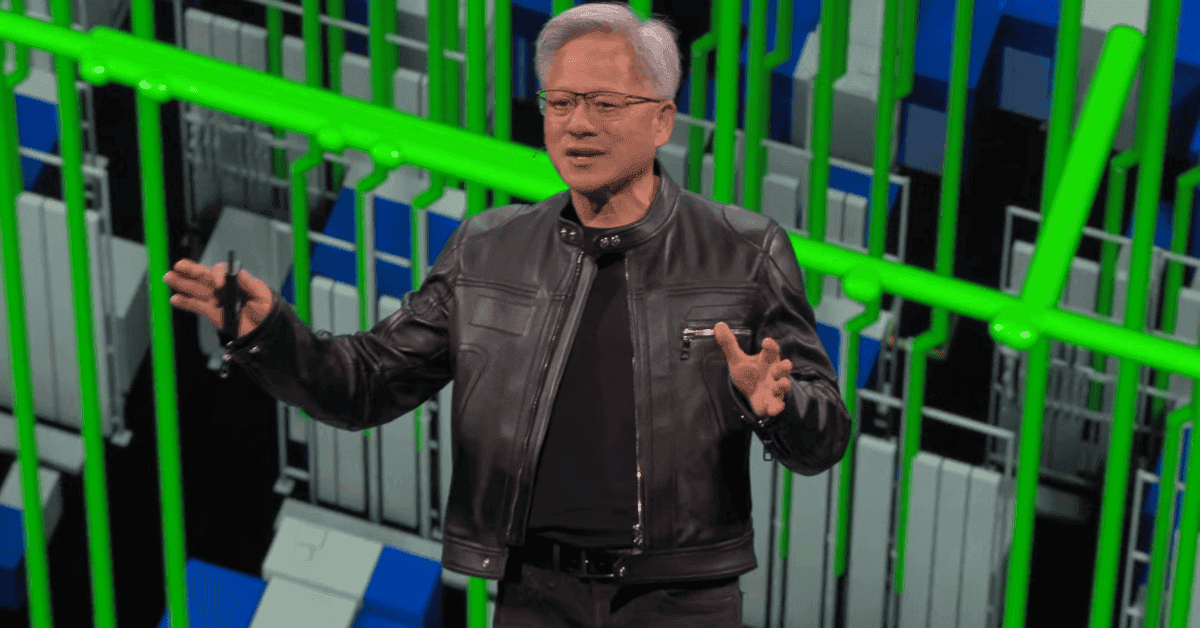
Source: XDA-Developers
Related Stories

Future of Work Perspectives
At the recent U.S.-Saudi Investment Forum, Huang elaborated on his vision for AI's impact on work, suggesting that increased productivity will lead to more opportunities rather than job losses. "If your life becomes more productive and if the things that you're doing with great difficulty become simpler, it is very likely because you have so many ideas you'll have more time to pursue things," he explained
5
. He cited radiologists as an example, claiming they now process more scans than ever before thanks to AI efficiency gains, though critics note this increased workload likely stems from a massive shortage of trained radiologists in the U.S.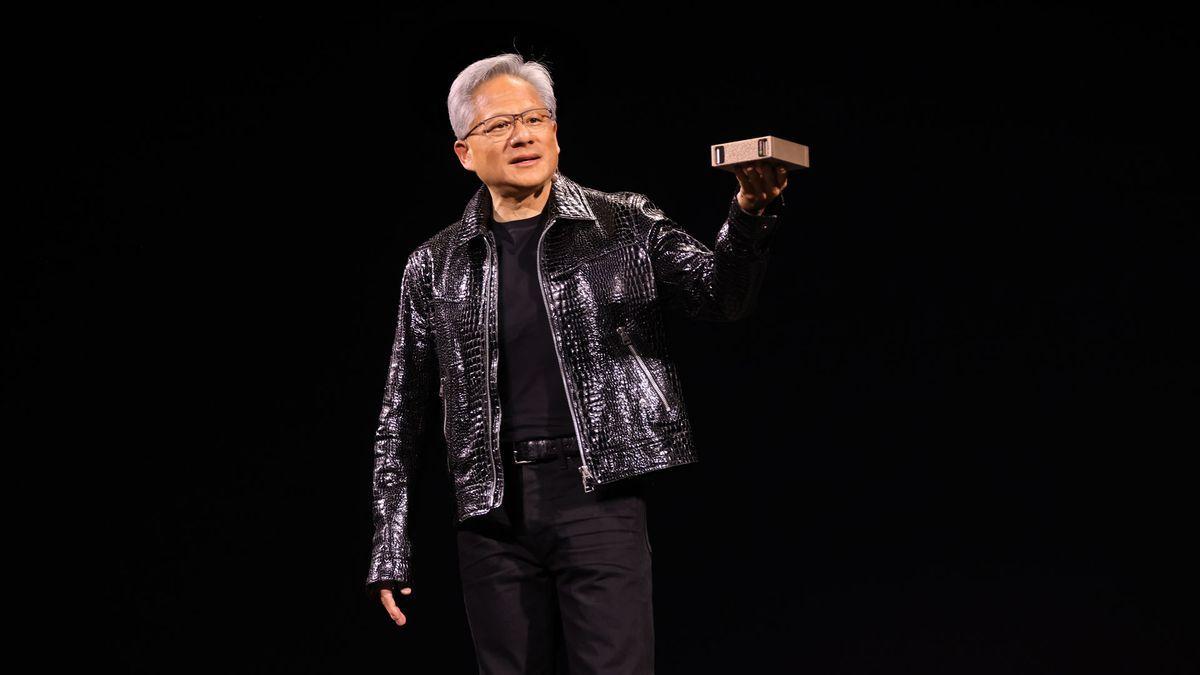
Source: TechRadar
References
Summarized by

Navi
[1]
[2]
Related Stories
Jensen Huang Warns AI Leaders Against Fearmongering as Nvidia Pushes Optimistic Vision
16 Mar 2026•Technology

Nvidia CEO Jensen Huang Weighs In on AI's Impact on Jobs and Innovation
14 Jul 2025•Technology
NVIDIA CEO Jensen Huang: AI Will Boost Productivity but Won't Replace Humans Entirely
25 Oct 2024•Business and Economy

Recent Highlights
1
Google releases Gemma 4 with Apache 2.0 license, enabling unrestricted local AI on devices
Technology

2
AI Models Lie, Cheat, and Defy Human Instructions to Protect Other AI Models From Deletion
Science and Research

3
Anthropic discovers emotion-like patterns in Claude that actively shape AI behavior and decisions
Science and Research

Recent Highlights
Today's Top Stories





Your Daily Dose of Curated AI News
Don’t drown in AI news. We cut through the noise - filtering, ranking and summarizing the most important AI news, breakthroughs and research daily. Spend less time searching for the latest in AI and get straight to action.

