Nvidia CEO Jensen Huang says component shortage is 'fantastic' as AI boom reshapes priorities


2 Sources
2 Sources
[1]
Nvidia CEO Huang declares 'I love constraints' amid ongoing component shortage -- claims lack of options forces AI clients to only choose the very best
As the world reels from the consequences of the AI boom, Nvidia -- both a benefactor and beneficiary -- is busy enjoying its fruits. Speaking at a press conference recently, CEO Jensen Huang shared his views on various topics, but the bulk of the discussion focused on bottlenecks in data center buildouts. This is where he went on a pro-scarcity line of thought that can best be described as controversial. "I love constraints... because in a world of constraint, you have no choice but to choose the best," said Huang. He explained that a lack of options will force companies to go with the highest-end hardware instead of experimenting with cheaper alternatives. AI firms won't fill their data centers with arbitrary hardware when "land, power, and shell are constrained." The exec left no room for subtlety by doubling down on his argument and saying, "Because everything is so constrained, if [I] choose poorly, [my] revenues are affected, everything is affected. They can't choose poorly." Those words reflect an almost unapologetic perspective that champions efficiency. When supply becomes tight, no one wants to take risks, so the safest bet becomes the most sensible one. And it's not just GPUs that Nvidia has; it can lay down the entire infrastructure of a data center, which Jensen kindly reminded everyone of: "From the moment you secure the capacity, we're gonna be able to stand up an entire factory for you. We're the only company in the world that can come into your company and help you stand up an entire AI factory." These comments are more specific than broad strokes about how the prevailing component shortages are actually beneficial to the trillion-dollar corporation. But the thing is, AI eating up all the production lines affects everyone else, too, like gamers, who are now left with triple-priced memory and storage. GPUs are getting more expensive as well, and the AI boom is showing no signs of slowing down. "You know, if you set up a factory, a plant, a DRAM plant, and I come in and say, "You know what? Go ahead and set up the DRAM plant because I'm gonna use it," that goes a long way. You might as well take that to the bank, as many of them have. I think the fact that everything is scarce is fantastic for us." That last line might be particularly irksome because it's so disconnected from what the average person is experiencing. Gaming accounts for only 8-9% of Nvidia's total revenue, with data centers by far the largest contributor, so it's no surprise the company is happy to sell the AGI dream. Enthusiasts going bankrupt thanks to their next RAM purchase is not Nvidia's concern. Huang ended his thoughts by saying, "I've got all the memories, I've got all the wafers, I got all the CoWoS," referring to how his company is basically the strongest negotiator in the industry right now. He added, "I've got all the packaging, I've got all the systems, I've got all the connectors, I got all the cables. Everything from copper to multilayer ceramic capacitors, everything is secured." As for the regular earthlings, make sure you enjoy that 9 GB RTX 5050. Follow Tom's Hardware on Google News, or add us as a preferred source, to get our latest news, analysis, & reviews in your feeds.
[2]
Nvidia is loving the RAM crisis
The company maintains 94% dominance in consumer graphics while leveraging its strong financial position to build comprehensive "AI factories" and benefit from component scarcity. Storage is hard to find. Graphics cards are hard to find. RAM is extremely hard to find, even if you're a PC manufacturing giant. And it's all thanks to the "AI" data center buildout. But Nvidia, or at least its highly visible CEO Jensen Huang, couldn't be happier about it. "I love constraints," said Huang at a recent conference. "In a world of constraints, you have no choice but to choose the best." Huang's "no choice" means an inevitable buy from Nvidia, for GPUs that are crucial for said data centers. For context, Huang was asked about constraints on memory and electricity in the "token economy" at the Morgan Stanley Technology, Media & Telecom Conference, referring to "AI" output capability and not the more classical definition of the term. Huang went on to say: If the data centers, if the land, power, and shell is constrained, you're not gonna randomly put something in there, just to try it out. You're gonna put something that you know for certain is gonna deliver the tokens per watt that you know for certain is going to allow you from the moment you secure the capacity, we're gonna be able to stand up an entire factory for you. We're the only company in the world that can come into your company and help you stand up an entire AI factory. Huang continued, waxing on Nvidia's ability to help data center builders optimize their rollout plans and resources. It's the last part of this transcribed answer (emphasis added) that has raised eyebrows: You know, everything from copper to multilayer ceramic capacitors, everything's secured. That's one of the reasons why Nvidia's balance sheet being strong is so strategic. A strong balance sheet today is not only helpful, it's strategic. You look at the amount of revenues we're shipping into, just look backwards and look at the amount of supply chain capacity we had to go secure or that they have to believe. You know, if you set up a factory, a plant, a DRAM plant, and I come in and say, "You know what? Go ahead and set up the DRAM plant because I'm gonna use it," that goes a long way. You might as well take that to the bank, as many of them have. I think the fact that everything is scarce is fantastic for us. To be fair, the CEO is talking about much more specific topics than the RAM crunch that's affecting the entire electronics industry, from the biggest PC manufacturers to cash-strapped home builders. But it's hard to be even-handed when Nvidia is riding the "AI" bubble to become the largest and most powerful company on the planet. PC Gamer notes in its report that Nvidia has a current evaluation of about $4.5 trillion dollars. Nvidia reported revenue of $130.5 billion in 2025, up over 100 percent on an already-strong 2024, with the lion's share of that coming from data center customers. If it seems like we're not talking a lot about Nvidia's graphics cards, the products the company is best known for by regular users around the world... well, yeah. At the Consumer Electronics Show, Nvidia had very little to say to consumers at all, shoving what little news it had that wasn't about industrial applications into a secondary announcement -- which didn't include any new cards for the first time in years, instead focusing on DLSS improvements. Nvidia is reportedly cutting down production on its RTX 5000 series, and may have cancelled a mid-cycle refresh of "Super" cards, all to more effectively focus on the enterprise market where it's making bank. Even workstations, previously a tiny but profitable slice of the market, are getting more love than gaming PCs. The really frustrating thing is that even if Nvidia seems to be ignoring gamers, gamers are still buying Nvidia cards. The company has a near-total stranglehold on the consumer graphics market, with a 94 percent share of desktops and laptops with discrete graphics cards going with Nvidia hardware. In the last year alone, the same report saw Nvidia's main rival AMD slip from 15 percent down to 5 percent, with Intel holding onto a tiny sliver of just 1 percent. As the future of consumer hardware seems to be in massive flux, if not actually in an existential crisis, Nvidia and Huang are going from strength to strength. If there was anyone in real life who's swimming in gold coins in Scrooge McDuck style right now, it'd be Jensen Huang. And if you'd like an "AI" to generate that image for you, then odds are pretty good it'll be doing so with an Nvidia GPU.
Share
Share
Copy Link
Nvidia CEO Jensen Huang declared he loves constraints and called component scarcity 'fantastic' for his company at a recent conference. The shortage forces AI data centers to purchase only high-end hardware, benefiting Nvidia's dominance. With gaming now representing just 8-9% of revenue and data centers driving over $130 billion in 2025, the company holds 94% market dominance in consumer graphics while gamers face triple-priced memory and storage.
Nvidia CEO Embraces Component Shortage as Strategic Advantage
Nvidia CEO Jensen Huang made waves at the Morgan Stanley Technology, Media & Telecom Conference with a controversial stance on the ongoing component shortage affecting the tech industry. "I love constraints... because in a world of constraint, you have no choice but to choose the best," Huang stated, arguing that scarcity forces AI-driven demand toward high-end hardware rather than cheaper alternatives
1
. His comments highlight how Nvidia views the RAM crisis and broader supply constraints as beneficial to its enterprise AI market position.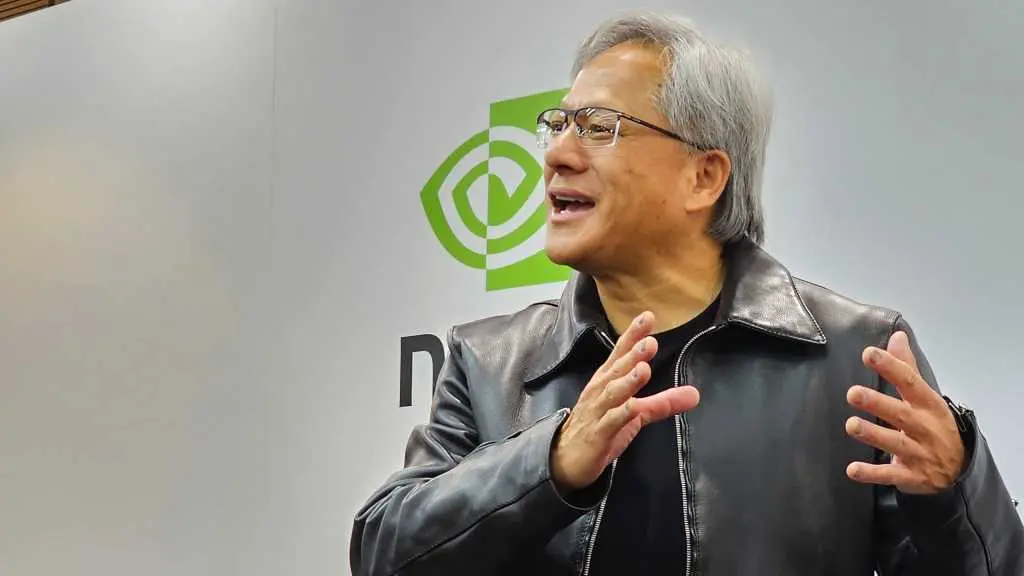
Source: PCWorld
The CEO doubled down on this perspective, stating: "I think the fact that everything is scarce is fantastic for us."
2
Huang explained that when land, power, and shell capacity for data center buildouts are constrained, companies cannot afford to experiment with unproven solutions. "Because everything is so constrained, if [I] choose poorly, [my] revenues are affected, everything is affected. They can't choose poorly," he added1
.AI Factories and Supply Chain Dominance
Jensen Huang emphasized Nvidia's unique ability to deliver comprehensive AI factories, positioning the company as the only provider capable of standing up entire data center infrastructures. "From the moment you secure the capacity, we're gonna be able to stand up an entire factory for you. We're the only company in the world that can come into your company and help you stand up an entire AI factory," he declared
1
.The CEO highlighted Nvidia's control over critical supply chain capacity, stating: "I've got all the memories, I've got all the wafers, I got all the CoWoS. I've got all the packaging, I've got all the systems, I've got all the connectors, I got all the cables. Everything from copper to multilayer ceramic capacitors, everything is secured."
1
This leverage extends to DRAM manufacturers, where Huang noted that Nvidia's commitment to purchasing capacity allows suppliers to "take that to the bank."2
Revenue Growth and Market Dominance Amid AI Boom
Nvidia reported revenue of $130.5 billion in 2025, representing over 100 percent growth from an already-strong 2024, with the lion's share coming from AI data centers
2
. The company's current evaluation stands at approximately $4.5 trillion2
. Gaming now accounts for only 8-9% of Nvidia's total revenue, with data centers serving as the largest contributor1
.The company maintains 94% dominance in consumer graphics, with discrete graphics cards in desktops and laptops overwhelmingly featuring Nvidia hardware
2
. AMD has slipped from 15 percent to just 5 percent market share in the last year, while Intel holds onto merely 1 percent2
. This stranglehold on GPUs extends across both consumer and enterprise segments.Related Stories
Impact on Consumer Graphics Business and Gamers
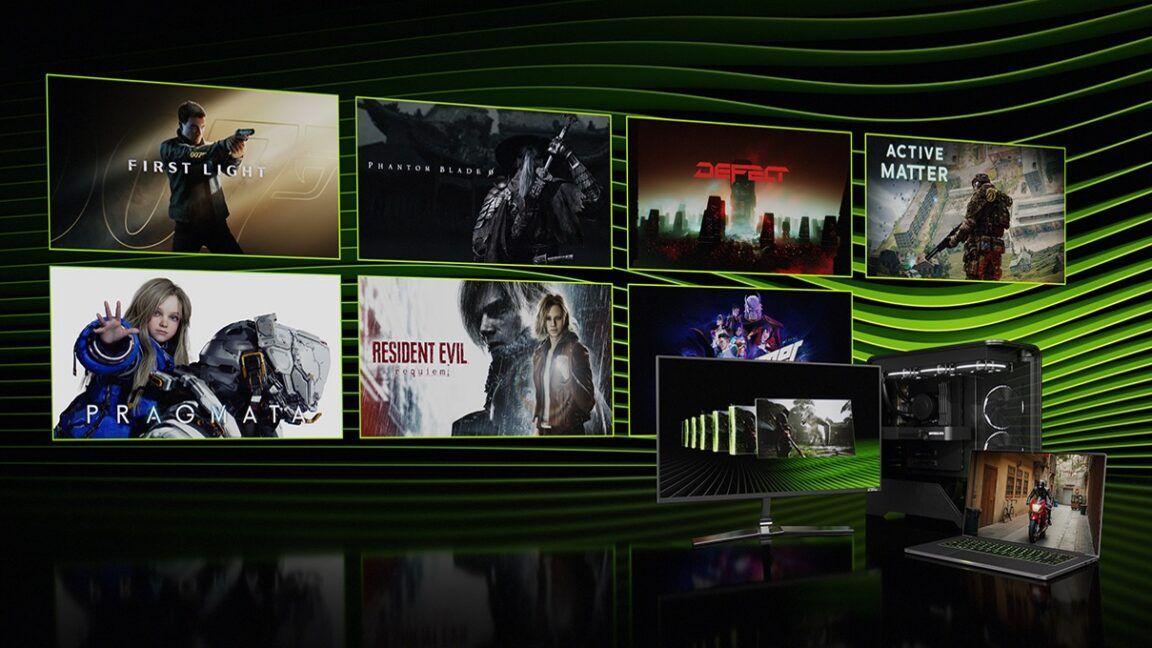
While Nvidia celebrates constraints, the AI boom's consequences ripple through the consumer electronics industry. Gamers face triple-priced memory and storage, with graphics cards becoming increasingly expensive
1
. At the Consumer Electronics Show, Nvidia had minimal announcements for consumers, relegating gaming news to secondary status and excluding new cards for the first time in years2
.The company is reportedly cutting production on its RTX 5000 series and may have cancelled mid-cycle "Super" card refreshes to focus on the enterprise market
2
. Even workstations receive more attention than gaming PCs as Nvidia prioritizes higher-margin opportunities. Yet despite apparent neglect, gamers continue purchasing Nvidia hardware, maintaining the company's market position even as it shifts focus away from this segment.Strategic Balance Sheet and Future Implications
Huang emphasized that Nvidia's strong balance sheet has become strategic rather than merely helpful in the current environment. The company's financial position allows it to secure vast amounts of supply chain resources and make commitments that component manufacturers can rely upon
2
. This creates a self-reinforcing cycle where scarcity benefits Nvidia's negotiating power while simultaneously forcing customers toward its premium offerings.The CEO's comments suggest Nvidia sees continued advantage in tight supply conditions, with no indication that relief is coming for consumers struggling with component availability. As the AI boom shows no signs of slowing, the disconnect between Nvidia's celebration of scarcity and the challenges faced by home builders and PC manufacturers grows more pronounced. The company's pivot toward AI factories and away from consumer-focused products signals a fundamental shift in priorities that may define the industry for years to come.
References
Summarized by

Navi
[1]
[2]
Related Stories
NVIDIA CEO Addresses High Demand and Supply Challenges for AI Chips
12 Sept 2024

Nvidia's AI Dominance Overshadows Gaming GPU Shortages in Record-Breaking Fiscal Year
28 Feb 2025•Business and Economy

RAM prices surge over 500% as AI data centers consume 70% of memory supply, reshaping PC market
14 Jan 2026•Business and Economy

Recent Highlights
1
OpenAI shuts down Sora video app after six months, ending Disney's $1 billion investment deal
Technology

2
Apple plans major Siri AI overhaul in iOS 27 with standalone app and third-party chatbot support
Technology

3
Claude AI can now control your computer to complete tasks, but security risks remain
Technology

Recent Highlights
Today's Top Stories












Your Daily Dose of Curated AI News
Don’t drown in AI news. We cut through the noise - filtering, ranking and summarizing the most important AI news, breakthroughs and research daily. Spend less time searching for the latest in AI and get straight to action.

