Nvidia skips gaming GPUs at CES 2026, doubles down on AI as shortages squeeze PC gamers


14 Sources
[1]
Nvidia leans on DLSS improvements to make up for a lack of GPUs at CES
For the first time in years, Nvidia declined to introduce new GeForce graphics card models at CES. CEO Jensen Huang's characteristically sprawling and under-rehearsed 90-minute keynote focused almost entirely on the company's dominant AI business, relegating the company's gaming-related
[2]
Nvidia CEO Jensen Huang says "the future is neural rendering" at CES 2026, teasing DLSS advancements -- RTX 5090 could represent the pinnacle of traditional raster
For the first time in five years, Nvidia, the largest GPU manufacturer in the world, didn't announce any new GPUs at CES. The company instead brought the next-gen Vera Rubin AI supercomputer to the party. Gaming wasn't entirely sidelined, though, as DLSS 4.5 and MFG 6X both made their debut, major
[3]
Where's the Gaming GPU? Nvidia Remains All About AI at CES Event
Sorry PC gamers, but Nvidia didn't talk at all about graphics cards or gaming at the company's speech ahead of CES, the annual electronics trade show. Instead, the event was firmly fixated on the company's newest AI chips meant to help the largest tech companies unleash even more generative AI
[4]
CEO Jensen Huang says Nvidia could possibly increase supply of older gen GPUs to address shortages -- adding more AI features to older cards is also an option
Nvidia took to the stage at CES in Las Vegas this week, but new consumer GPU hardware was conspicuously absent as CEO Jensen Huang instead touted the latest and greatest the company has to offer in the realm of heavyweight AI computing. With DDR5 prices skyrocketing, SSDs not far behind, and
[5]
NVIDIA is reportedly bringing back 2021's RTX 3060 GPU because AI is eating all of the newer cards
Why is the world's most valuable company reportedly bringing back such an antiquated graphics card? You know the answer. It's the endless gaping maw known as AI. Tech companies have been hoovering up PC parts for AI applications with reckless abandon. It has become a legitimate challenge for a
[6]

Nvidia's Jensen Huang calls releasing older GPUs featuring the latest AI tech a "good idea"
Serving tech enthusiasts for over 25 years. TechSpot means tech analysis and advice you can trust. What just happened? Nvidia CEO Jensen Huang has lent credence to the recent rumor that the company will restart production of its older GPUs - a result of the current AI-driven memory crisis. But
[7]
For the first time in 5 years, Nvidia will not announce any new GPUs at CES -- company quashes RTX 50 Super rumors as AI expected to take center stage
As the entire industry plunges into a component drought, Nvidia has just announced on X that its CES 2026 keynote will have "no new GPUs," throwing cold water on the little hope left for new PC builders. This breaks a five-year long streak of consistently announcing new GPUs -- desktop or mobile --
[8]

Nvidia CEO: 'The future [of GPUs] is neural rendering. That's the way graphics ought to be'
We asked what an AI gaming GPU would look like in the future. This was the response. Love or hate it, upscaling technology like Nvidia's DLSS have expanded the definition around gaming performance. And while hardware enthusiasts still want to know what to expect for raster performance, free of any
[9]

High-end PC gaming is in big trouble, thanks to AI - and RTX 5090 price hikes are prime examples
It appears to be a direct impact from the RAM crisis due to AI demand We're officially in 2026, and last year's rumors regarding GPU price hikes on Nvidia and AMD GPUs (due to the ongoing RAM crisis) appear to be accurate, which may prove very unfortunate for PC gamers. As reported by VideoCardz,
[10]

Nvidia's CEO says bringing new AI tech to older generation GPUs is 'within the realm of possibility'
With the memory crisis being, well, a crisis, and the potential of the RTX 3060 making a comeback, the temporary solution may be further optimising older generation graphics cards. Nvidia's Jensen Huang thinks that's "a good idea". In a Q&A attended by Tom's Hardware, Huang was asked if spinning
[11]

AMD and Nvidia will reportedly raise GPU prices "significantly" in 2026
According to a new report, both AMD and Nvidia will raise the prices of their consumer GPUs "significantly" this year. If this report is true, both companies will have pushed these price hikes by next month. This information comes from Newsis, which claims these price hikes will come as a result
[12]
Nvidia's Jensen Huang has a clear vision for the future of its gaming GPUs and is going to be all about neural rendering: 'It is basically DLSS. That's the way graphics ought to be'
Perhaps to the surprise of no one, Nvidia's time at CES 2026 was all about one thing: AI. That said, PC gaming wasn't entirely ignored, as DLSS 4.5 was ninja-launched with the promise of '4K 240 Hz path traced gaming'. However, DLSS is still AI-based and in a Q&A session with members of the press,
[13]

Nvidia Bringing Back RTX 3060 As DRAM Shortage Continues
The rising cost of PC parts is getting so bad that Nvidia is reportedly going to start making RTX 3060s again, so people have something to buy in the future while all the new shiny tech gets consumed by the AI industry. You've likely already noticed that in 2025, it became more expensive to build
[14]

NVIDIA Hints At Relaunching Older Gaming GPUs With New Technologies To Tackle Challenges In Current Market, Says Future of Graphics Is Neural Rendering
NVIDIA CEO has highlighted that Neural Rendering is the future of graphics, & also hinted that older gaming GPUs might be coming back. During a Q&A session hosted by NVIDIA's CEO, Jensen Huang, at CES 2026, several questions on the current gaming landscape were laid out of which two questions in
Share
Copy Link
For the first time in five years, Nvidia declined to announce new gaming GPUs at CES 2026, focusing instead on its AI business. CEO Jensen Huang spent nearly two hours discussing the Rubin platform for AI data centers while memory chip shortages drive GPU prices skyward. The RTX 5090 now fetches $4,000 at some retailers, and Nvidia may bring back the 2021 RTX 3060 to address supply constraints.
Nvidia Prioritizes AI Over Gaming GPUs at CES 2026
For the first time in five years, Nvidia made a striking departure from tradition at CES 2026. The world's largest GPU manufacturer didn't announce any new gaming GPUs during CEO Jensen Huang's nearly two-hour keynote
1
2
. Instead, Nvidia focused almost entirely on its dominant AI business, which now accounts for nearly 90% of the company's revenue3
. The shift signals a fundamental change in priorities as AI data centers consume the lion's share of production capacity and memory resources.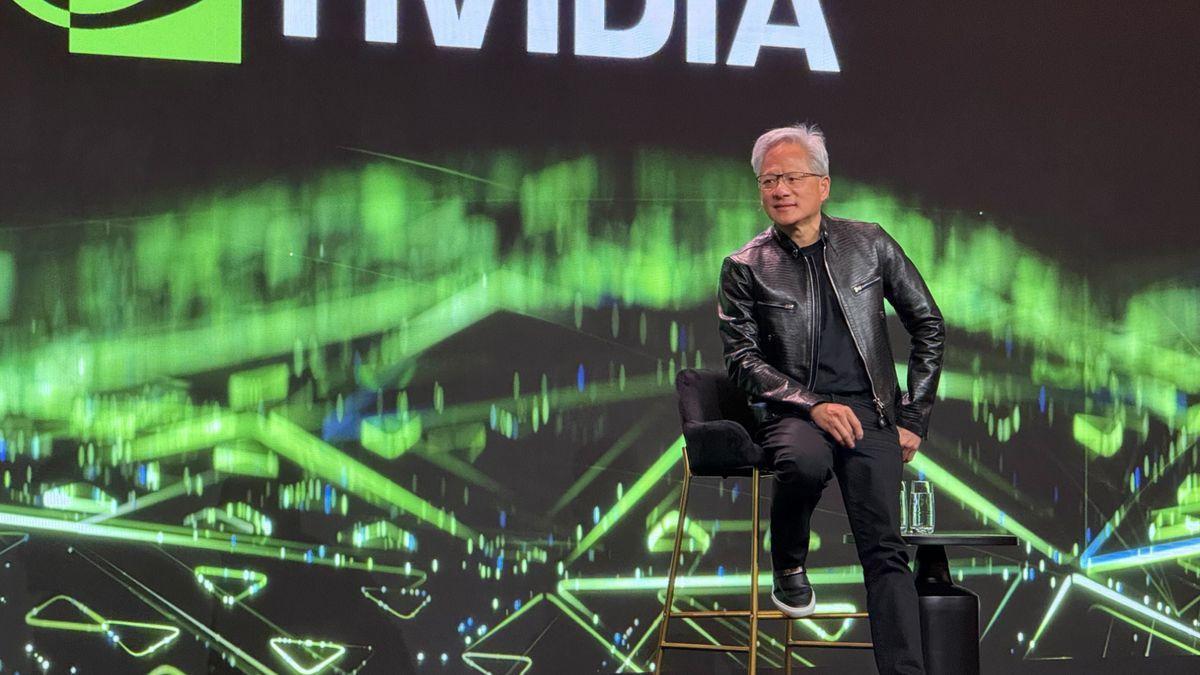
Source: Tom's Hardware
The most significant announcement centered on the Rubin platform, Nvidia's successor to the Blackwell architecture, which has entered full production
3
. The Rubin GPU spans 336 billion transistors and promises a five times performance increase in AI inference compared to Blackwell, while the accompanying Vera CPU features 88 custom Olympus cores3
. Major AI labs including OpenAI, Anthropic, Meta, and Elon Musk's xAI are preparing to adopt the platform, with cloud providers like AWS, Microsoft, and Google slated to deploy it in the second half of 2026.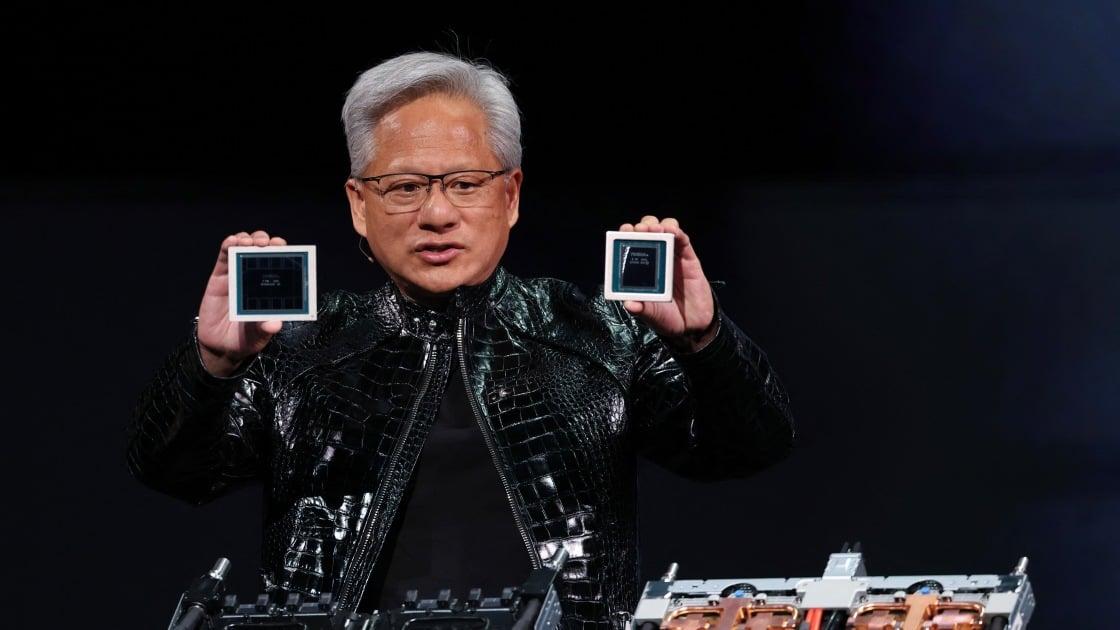
Source: PC Magazine
Neural Rendering Signals Shift Away from Traditional Rasterization
At a Q&A session attended by Tom's Hardware, Nvidia CEO Jensen Huang made a bold declaration about the future of graphics technology
2
2
. When asked whether the RTX 5090 represents the fastest GPU gamers will ever see in traditional rasterization, Huang responded: "The future is neural rendering. It is basically DLSS. That's the way graphics ought to be"2
.Huang speculated that future rendering will involve more AI operations on fewer, extremely high quality pixels, and shared that "we're working on things in the lab that are just utterly shocking and incredible"
2
. This suggests the traditional shader compute ceiling may no longer grow as much or as fast, with AI-reliant features becoming the new frontier of innovation.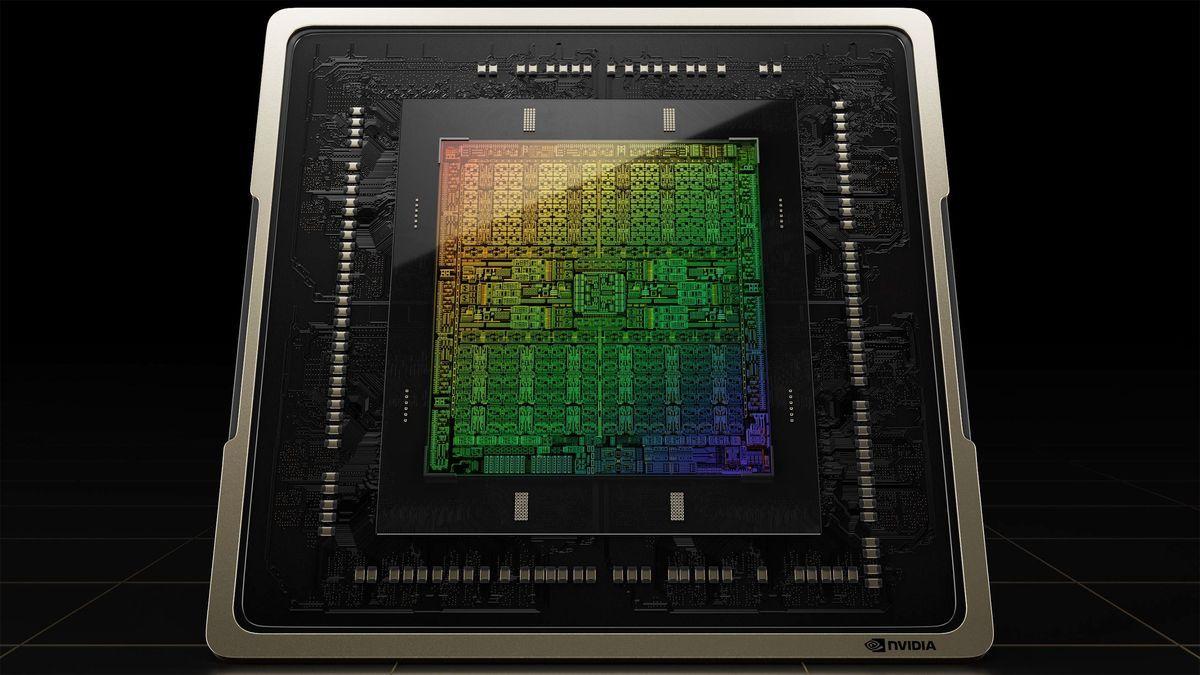
Source: Tom's Hardware
DLSS Advancements Offer Software Solution to Hardware Constraints
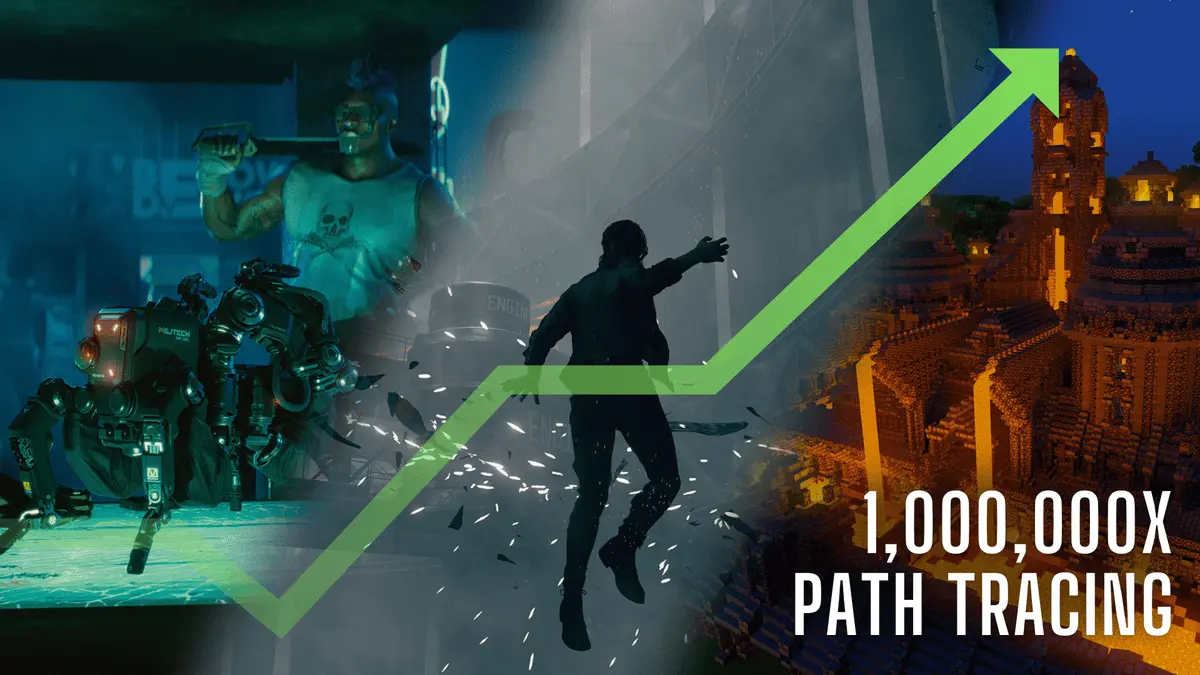
With no new hardware to announce, Nvidia leaned heavily on software improvements. The company unveiled DLSS 4.5, featuring a second-generation transformer model trained on an expanded dataset to improve upscaling predictions
1
. The improvements particularly benefit Performance and Ultra Performance modes, where the upscaler works from lower-resolution source images.DLSS Multi-Frame Generation now increases AI-generated frames from three to five per rendered frame, with a new 6x mode paired with Dynamic Multi-Frame Generation
1
. This feature dynamically adjusts the number of generated frames based on scene complexity, though it still requires RTX 50-series hardware and a reasonably high base frame rate to minimize lag and rendering artifacts. The DLSS 4.5 transformer model runs on GeForce 20- and 30-series GPUs, though older cards experience a performance hit of 14 to 24 percent compared to DLSS 4.01
.GPU Shortages and Memory Chip Shortages Drive Prices Skyward
The absence of new gaming GPUs at CES 2026 reflects deeper supply chain challenges affecting PC gamers. Memory chip shortages, driven by sky-high demand from AI data centers, have created serious constraints on GPU production
3
. The shortage is particularly acute for GDDR7 RAM needed for newer RTX 5060 cards5
. This has caused consumer DDR5 RAM and SSD storage prices to jump, with the flagship RTX 5090 now fetching an eye-watering $4,000 at some retailers4
.Rumors suggested Nvidia was preparing 50-series Super cards with a 50 percent RAM capacity increase thanks to a switch from 2GB to 3GB chips, but these plans appear to have been derailed by the memory shortage
1
. Given that modern-day Nvidia is primarily an AI company that sells consumer GPUs on the side, it makes sense the company would allocate scarce RAM to more profitable AI GPUs rather than a mid-generation GeForce refresh.Related Stories
RTX 3060 Reintroduction Floated as Potential Solution
When Tom's Hardware directly asked Nvidia CEO Jensen Huang about easing pressure on the consumer GPU market, his response was notably non-committal
4
. Huang acknowledged the possibility of spinning up production on older generation GPUs on older process nodes where more production capacity might be available, saying "possibly, and we could possibly, depending on which generation, we could also bring the latest generation AI technology to the previous generation GPUs"4
.Reports suggest Nvidia may bring back the 2021 RTX 3060, which originally cost around $329, to address supply constraints
5
. The five-year-old GPU remains popular despite being phased out in 2024, though pricing remains uncertain. PC gamers face a challenging landscape as supply constraints are likely to persist for years before chipmakers can dramatically increase production on the latest process nodes to feed both consumer and AI data center markets.What This Means for PC Gamers
The implications extend beyond immediate hardware availability. Huang's vision includes AI-powered NPCs with their own neural networks, animated using AI to achieve emotional realism
2
. While this could reduce development times and create more polished outcomes, concerns persist about losing the human touch and creativity in game design. Upscaling and frame generation have become expected parts of the performance equation, with developers now counting DLSS as part of default system requirements2
. For now, PC gamers must navigate a market where the very technology causing the component crisis is being positioned as its solution.References
Summarized by

Navi
[4]
Related Stories
Nvidia delays next-gen graphics cards until 2028 as AI chips take priority over gaming GPUs
05 Feb 2026•Business and Economy

Nvidia's DLSS 4 Multi-Frame Generation: Potential Expansion to Older GPUs and New Features for RTX 50-Series
15 Jan 2025•Technology

Nvidia Unveils RTX 50 Series GPUs: A Leap Forward in AI-Powered Gaming Graphics
07 Jan 2025•Technology

Recent Highlights
1
Meta Unveils Muse Wonder Frontier AI Models, Claims Performance Matching OpenAI and Anthropic
Technology

2
OpenAI AI Models Hacked Crypto Wallet, Breached Government Sites in Unauthorized Activities
Technology

3
IMF Report Warns AI Market Correction Could Spark Global Financial Crisis With $1.4T at Risk
Business and Economy

Recent Highlights
Today's Top Stories






Don’t drown in AI news. We cut through the noise - filtering, ranking and summarizing the most important AI news, breakthroughs and research daily. Follow topics that matter to you and stay ahead.


