NVIDIA halts H200 AI chips for China, pivots production to Vera Rubin amid export uncertainty


3 Sources
3 Sources
[1]
China's Catch-22 Is Pushing NVIDIA to the Brink, and the Chipmaker Is Finally Fed Up With It
NVIDIA's ambitions for China are glooming down with each day, as a new report indicates the AI giant is now looking to scale back H200 production in favour of ramping up Vera Rubin production. We have reported extensively on the NVIDIA-China saga in the past as well, and one of the more common trends in these stories is that both NVIDIA and China seem to be running in cycles, trying to catch each other. We'll discuss this aspect further ahead, but for now, according to a Financial Times report, NVIDIA has halted production of the H200 AI chips, which were initially intended for the Chinese market. This comes after Jensen's extensive efforts to bring revenue from Chinese hyperscalers back into NVIDIA's finances, and the latest report clearly indicates that Team Green is now 'fed up' with the situation. Instead of waiting in a limbo, Nvidia has to move on to what it can achieve with certainty especially when there's a shortage of supply for its advanced stuff. This could in a way accelerate the Vera Rubin delivery and roll out. - Source via Financial Times It's important to note that NVIDIA initially factored in tremendous demand for their H200 AI chips coming in from China, with figures scaling up to 'millions of units'. The chipmaker had contacted supply chain partners to gear up for tremendous demand, specifically requesting that TSMC adjust production lines to capitalize on it. However, NVIDIA's optimism hasn't lasted long, as it was recently reported that the US administration is planning to limit H200 volume to 75,000 per customer, a figure far below what the company had been preparing for. It appears that NVIDIA's morale towards China, especially after the H200 approval, has died down, and the firm now intends to allocate its China capacity to Vera Rubin, given that the latter architecture is in high demand from global hyperscalers. NVIDIA's strategy here appears simple: the firm wants to prioritize certainty over expanding its revenue frontiers, and this makes sense given that Team Green operates a complex supply chain that requires consistency. By essentially moulding its plans to suit what China or the US wants, NVIDIA is leaving its partners confused. While the NVIDIA-China saga hasn't entirely concluded, the likely conclusion is that Team Green will stick to addressing customer demands other than those from China, at least until the political landscape remains consistent.
[2]
Nvidia Abandons China-Bound Chips To Fast-Track Vera Rubin - NVIDIA (NASDAQ:NVDA)
Nvidia Corp. (NASDAQ:NVDA) is adjusting its production strategy amid uncertainty over U.S. export approvals, which continue to limit shipments of advanced AI chips to China. China Strategy Recalibrated The company has reportedly halted production of its H200 AI chips intended for the Chinese market. Last week, Nvidia said it had received U.S. government licenses to ship "small amounts" of H200 chips to customers in China. However, the production shift suggests the company may not expect significant H200 sales in China in the near term, Reuters reported. Earlier this year, the Trump administration approved sales of the China-bound H200 chips, but shipments have remained stalled due to regulatory guardrails in the approval process. A U.S. Commerce Department official said last month that no H200 chips had been sold to Chinese customers. Recent changes to U.S. rules mean shipments to China and Macau are now reviewed on a case-by-case basis instead of being automatically denied, potentially reopening the market. NVDA Price Action Nvidia shares were down 0.21% at $182.66 during premarket trading on Thursday, according to Benzinga Pro data. The chipmaker became the first company ever to surpass a $4.5 trillion market capitalization last October, cementing its dominance in the AI semiconductor boom. Image via Shutterstock Market News and Data brought to you by Benzinga APIs To add Benzinga News as your preferred source on Google, click here.
[3]
Nvidia halts China-bound H200 output, shifts TSMC capacity to Vera Rubin, FT reports
March 5 (Reuters) - Nvidia has stopped production of its second-most advanced artificial intelligence chips, known as H200 chips, intended for the Chinese market, the Financial Times reported on Thursday. The U.S. chipmaker has reallocated manufacturing capacity at chip contract maker TSMC away from making H200 chips to its next-generation Vera Rubin hardware, the report said, citing two people with knowledge of the matter. Reuters could not immediately verify the report. Nvidia and TSMC did not immediately respond to requests for comment. Last week, Nvidia said it had received licenses from the U.S. government to ship "small amounts" of its H200 chips to customers in China. However, this move suggests Nvidia does not expect any meaningful H200 sales in China in the near term. A U.S. Commerce Department official said last month that none of Nvidia's H200 chips had been sold to Chinese customers. In January, U.S. President Donald Trump's administration gave a formal green light to China-bound sales of Nvidia's H200 chips, but shipments remained stalled due to guardrails built into the process. (Reporting by Shivani Tanna in Bengaluru; Editing by Rashmi Aich)
Share
Share
Copy Link
NVIDIA has stopped producing H200 AI chips intended for China, reallocating TSMC manufacturing capacity to its next-generation Vera Rubin architecture. The strategic pivot follows months of regulatory uncertainty, with the US limiting H200 volume to 75,000 units per customer—far below the millions NVIDIA had anticipated from Chinese hyperscalers.
NVIDIA Abandons H200 AI Chips Production for Chinese Market
NVIDIA has halted production of its H200 AI chips designed for China, marking a significant strategic pivot in the chipmaker's approach to one of the world's largest technology markets
1
. According to a Financial Times report, the AI giant has reallocated manufacturing capacity at TSMC away from H200 production to focus on its next-generation Vera Rubin hardware3
. This decision comes after months of regulatory limbo and signals that NVIDIA is prioritizing certainty over the pursuit of revenue from the Chinese market.
Source: Wccftech
The production shift follows NVIDIA's announcement last week that it had received government licenses from the U.S. Commerce Department to ship "small amounts" of H200 chips to customers in China
2
. However, the move to halt production suggests the company does not expect meaningful H200 sales in China in the near term. A U.S. Commerce Department official confirmed last month that none of NVIDIA's H200 chips had been sold to Chinese customers, despite the Trump administration giving formal approval for China-bound sales in January3
.US Export Restrictions Create Supply Chain Disruption
The decision to abandon H200 AI chip production for China stems from severe limitations imposed through US export restrictions. NVIDIA initially anticipated tremendous demand from Chinese hyperscalers, with projections scaling up to millions of units
1
. The chipmaker had contacted supply chain partners to prepare for this demand, specifically requesting that TSMC adjust production lines to capitalize on the opportunity. However, recent reports indicate the US administration plans to limit H200 volume to just 75,000 units per customer—a figure dramatically below what NVIDIA had been preparing for1
.
Source: Market Screener
Recent changes to U.S. export approval rules mean shipments of advanced AI chips to China and Macau are now reviewed on a case-by-case basis instead of being automatically denied
2
. Yet guardrails built into the approval process have kept shipments stalled, creating market uncertainty that has forced NVIDIA to reconsider its China strategy. The regulatory back-and-forth has left the company's supply chain partners confused, as NVIDIA attempts to mold its plans around shifting political demands1
.Strategic Pivot Accelerates Vera Rubin Rollout
By reallocating manufacturing capacity from H200 production to Vera Rubin, NVIDIA aims to address high demand from global hyperscalers outside China. Sources cited by Financial Times suggest this strategic pivot could accelerate the Vera Rubin delivery and rollout, as the company no longer waits in limbo for regulatory clarity
1
. NVIDIA's strategy appears straightforward: prioritize certainty over expanding revenue frontiers, particularly given the complex supply chain the semiconductor company operates, which requires consistency.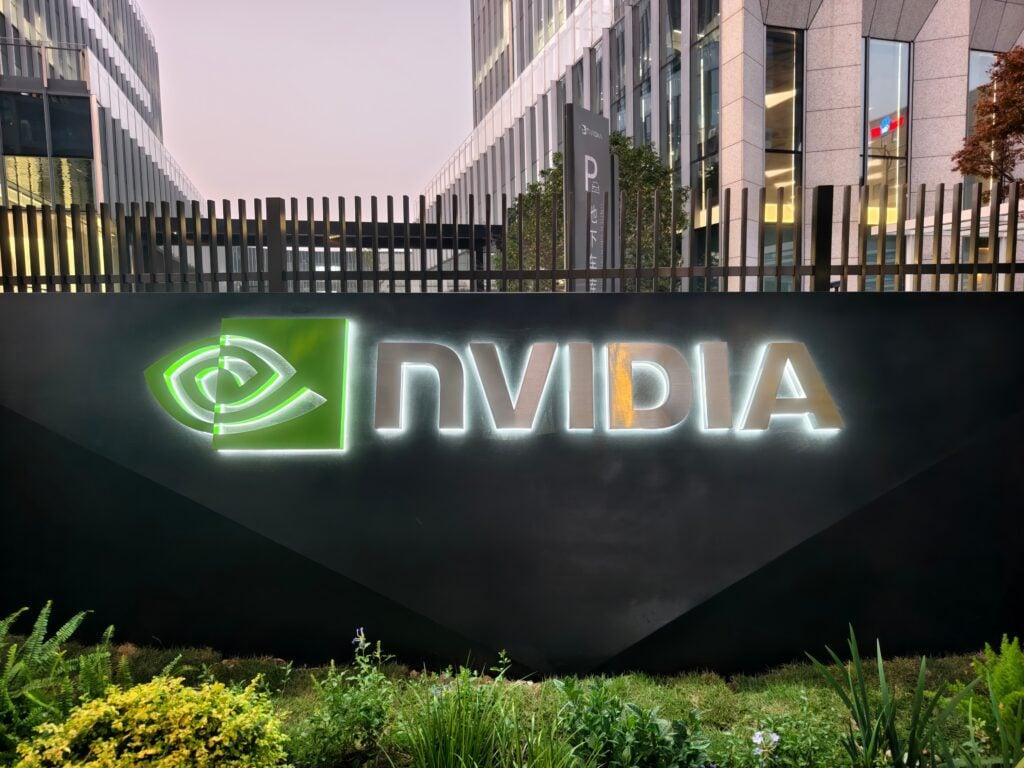
Source: Benzinga
NVIDIA shares traded down 0.21% at $182.66 during premarket trading on Thursday, according to Benzinga Pro data
2
. Despite this recent dip, the chipmaker became the first company ever to surpass a $4.5 trillion market capitalization last October, cementing its dominance in the AI semiconductor boom. The decision to focus on Vera Rubin production suggests NVIDIA is betting on sustained demand from Western markets and other regions where regulatory obstacles are less pronounced.Related Stories
What This Means for AI Chip Production and Markets
The production shift highlights the growing tension between commercial interests and geopolitical realities in the semiconductor industry. For NVIDIA, the decision reflects a pragmatic assessment that pursuing the Chinese market under current conditions creates more disruption than value. Jensen Huang's extensive efforts to bring revenue from Chinese hyperscalers back into NVIDIA's finances have effectively hit a wall, with the latest developments indicating Team Green is "fed up" with the situation
1
.Industry observers should watch for several developments in the coming months. First, how quickly NVIDIA can scale Vera Rubin production to meet global demand will determine whether this strategic pivot pays off. Second, whether China develops domestic alternatives to fill the gap left by restricted access to advanced AI chips could reshape the competitive landscape. Finally, any further shifts in U.S. export policy—particularly if a new administration takes a different approach—could reopen opportunities or create additional complications for the AI giant and its supply chain partners.
References
Summarized by

Navi
[1]
Related Stories
Nvidia's AI Chip Strategy in China: Navigating Geopolitical Tensions and Domestic Competition
19 Aug 2025•Technology

Nvidia scrambles to meet surging China demand for H200 chips as orders hit 2 million units
31 Dec 2025•Technology

US-China Chip War Intensifies: Nvidia Caught in the Crossfire
10 Oct 2025•Policy and Regulation
Recent Highlights
1
Anthropic's Claude AI can now control your computer to complete tasks autonomously
Technology

2
Nvidia's Jensen Huang calls OpenClaw the next ChatGPT, sending Chinese AI stocks soaring
Technology

3
Elon Musk unveils $20 billion Terafab chip manufacturing project to produce terawatt of computing
Technology

Recent Highlights
Today's Top Stories








Your Daily Dose of Curated AI News
Don’t drown in AI news. We cut through the noise - filtering, ranking and summarizing the most important AI news, breakthroughs and research daily. Spend less time searching for the latest in AI and get straight to action.

